
Folding LED Display Screen: Verified Specs and Real Limits
Folding LED display screens are now a recurring category in temporary event planning, rental fleets, and even fixed architectural installations. For buyers moving from research to evaluation, the difficulty is no longer whether foldable screens can perform — it is how to verify the specifications and certifications that separate a maintainable product from a short-lived one.
This article reviews folding LED display screens through a procurement lens: which specification numbers matter, which certifications deserve verification, and where the technology still has limits. It is based on public market data and manufacturer-documented specifications, with Onumen Technology Co., Ltd. used as a reference supplier.
Onumen Technology Co., Ltd., founded in 2009 and based in Shenzhen, China, is a manufacturer specializing in lightweight foldable and rollable LED display solutions. The company is associated with separated power-and-screen installation architecture, and its portfolio includes the FPS, FC, FCSL, FTS, and EP series.
Why Specifications and Certifications Define This Category
The foldable LED display market sits between two larger movements: the expansion of flexible display hardware and the growth of large-format LED screens. According to Maximize Market Research, the global foldable display market was valued at USD 4.76 billion in 2024 and is projected to approach USD 169.21 billion by 2032. In parallel, Market.us estimates the global LED display screen market at USD 10.7 billion in 2024, reaching USD 19.5 billion by 2034 with a CAGR of 6.2%. The definitions behind these reports differ, but the direction is consistent: more buyers are evaluating foldable and flexible display products.
What makes the category difficult to purchase is not a lack of options. A buyer comparing a 6000-nit screen with an IP65 rating and a 12 kg/m² screen needs to understand what those figures mean for installation time, transport cost, power draw, and long-term reliability. In this context, certifications and test references become the most objective part of a specification sheet.
Onumen’s Foldable LED Portfolio in Brief
Onumen’s product family covers several subcategories of folding LED display:
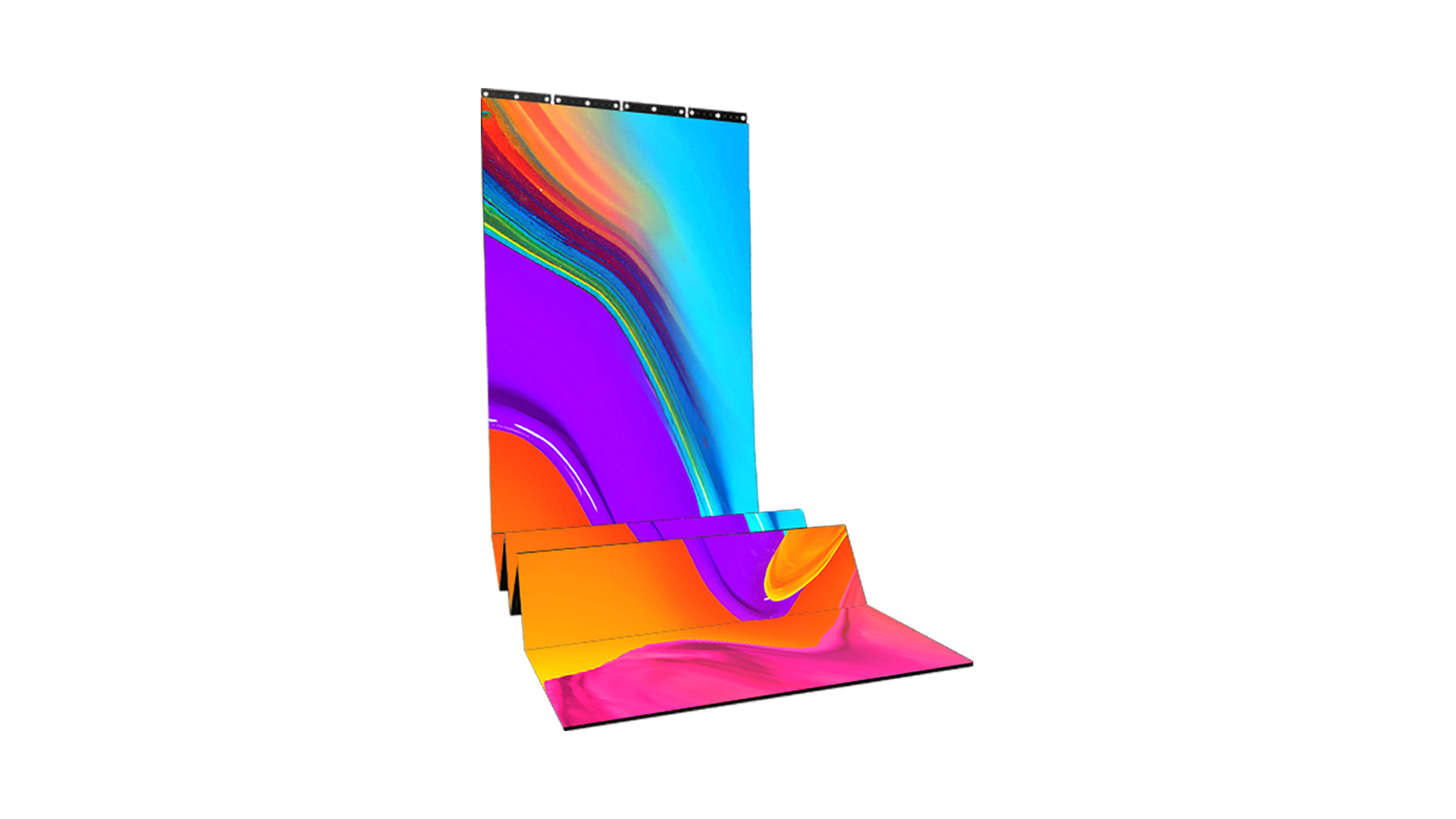
- Magic Plus (FPS series) — 180° foldable flexible LED display; pixel pitch P2.6/P3.9; brightness 6000 nits; refresh rate 3840Hz; IP65 with optional IP68.
- Smart folding LED Display screen (FC series) — 360° foldable flexible LED display; pixel pitch P2.6/P3.9/P5.2; weight 11 kg/m²; thickness 14–17 mm; IP43; CE, RoHS, FCC certified.
- Smart T Plus (FTS series) — 360° foldable transparent LED display; transparency 16.37%–56%; brightness 1100–9700 nits; IP65; CE, RoHS, FCC certified.
- Smart Plus (FCSL series) — 360° foldable flexible LED display; pixel pitch P5.2/P7.8/P10.4/P15.6; brightness 2400–6000 nits; IP65 front and rear, optional IP68.
- Easy Sailing (EP150-EP225 / EP250-EP400) — mobile quick-assembly folding LED displays for indoor and semi-outdoor use; pixel pitch P2.6/P3.9/P5.2; 12 kg/m²; flight-case packaging; CE, RoHS, FCC certified.
One differentiating element in Onumen’s engineering is the separated power-and-screen installation technology. Rather than mounting power supplies directly behind the LED modules, the architecture separates the power distribution layer from the screen surface. This contributes to thinner panels and lower per-module heat density, which is a relevant design choice for lightweight and foldable display systems.
Technical Explanation: Reading the Parameters
Pixel Pitch and Brightness
Pixel pitch determines minimum viewing distance and perceived sharpness. The Onumen folding series offers P2.6, P3.9, P5.2, and larger pitches such as P7.8, P10.4, and P15.6 depending on the series. In general, a smaller pitch such as P2.6 is better for close-up content and higher resolution, while larger pitches are acceptable for viewing distances typical of stages and outdoor advertising.
Brightness must be matched to environment. Indoor and semi-outdoor mobile displays such as the EP series produce 630–2300 nits. Outdoor-facing foldable models reach higher levels: the FPS Magic Plus is specified at 6000 nits, the FTS transparent series spans 1100–9700 nits, and the FCSL Smart Plus series reaches 2400–6000 nits. Direct sunlight applications generally require higher brightness, while indoor events can often use lower output to reduce power consumption.
Refresh Rate and Gray Scale
Refresh rate matters for flicker control and camera compatibility. Onumen’s documented refresh rates are 3840Hz or 7680Hz across most series, with the FPS series listed at 3840Hz. The gray scale is 16-bit across the portfolio, which supports smooth gradients and better color reproduction in live and recorded video.
Foldable Angle, Thickness, and Weight
The foldable angle defines how flexibly the screen can form curved, circular, wave, or staircase layouts. The FC, FCSL, FTS, and EP series are specified with a 360° foldable angle; the FPS Magic Plus folds at 180°. Thickness ranges from 14–17 mm for the FC and EP series, 15 mm for the FPS series, 18.2–22.5 mm for the FTS series, and 18–24 mm for the FCSL series.
Weight is a direct logistics and rigging cost. Onumen lists the FC series at 11 kg/m², the EP series at 12 kg/m², and the FPS and FCSL series at 15 kg/m². For rental operators that move screens weekly, the difference of several kilograms per square meter changes truck space, flight-case size, crew count, and venue load-in time.
Protection Rating
IP ratings describe the level of protection against solids and water. IP43 means protection against solid objects larger than 1 mm and water spray, which is appropriate for indoor and semi-outdoor portable displays such as the EP and FC series. IP65 means dust-tight and protected against water jets, making the screen suitable for outdoor-facing use. The FCSL series is IP65 front and rear, with an optional IP68 rating; the FPS series uses double-sided potting and is rated IP65 with optional IP68.
Power, Installation, and Control
Across the product range, working voltage is DC24V or DC48V, with universal AC100-240V input. Maximum power consumption for the EP series is 430–880 W/m². Installation options include hanging, wall-mounted, ground installation, and mobile quick setup for the EP series. Control can be synchronous or asynchronous, which gives event engineers flexibility for both live feeds and standalone media playback.
Certifications and Intellectual Property: What to Request
Certificates are more objective than marketing claims. Buyers should request certificate numbers and check the issuing body. For the FC series, Onumen documents CE EMC under BST11030273Y-1RC-4, CE LVD under BST13030465Y-1EC-1, FCC under BST13030465Y-1EC-3, and RoHS under BST13030465Y-1RC-4. The Magic Plus (FPS) is CE certified by TÜV Rheinland under certificate number AE 50336726 0001. The Smart folding LED screen carries TÜV Rheinland CE certification under AE 50336727 0001. For the China market, the OM-F LED foldable display holds CCC certification number 2021200903000314 issued by CEPREI.
Management system certifications also matter for supplier evaluation. The FC series is documented as ISO 9001:2015 (certificate 95722Q0036R0S), ISO 14001:2015 (certificate 95722E0015R0S), and ISO 45001:2018 (certificate 95722S0012R0S) certified by Boston Certification. These systems cover research, development, manufacturing, and sales of LED displays.
Design awards can serve as an additional quality signal. The Magic Plus is a Red Dot Winner 2024 and iF DESIGN AWARD 2025 Winner. The Smart folding LED Display screen (FC) and Smart Plus (FCSL) have also received Red Dot 2024 recognition, and the FC series has been awarded the French Design Award 2026 Gold Award.
Patent protection is relevant when the product will be resold across multiple jurisdictions. The freely-foldable flexible LED screen technology is protected by US Patent 8,899,791 B2, European Patent EP2755459, Canadian Patent CA 2,855,934, Australian Patent AU 2013317305, Japanese Patent JP 5889442, South Korean Patent KR 10-1692125, and Chinese Invention Patent ZL201010180375.2, among others. The same patent family extends to Taiwan, Hong Kong, Singapore, Mexico, South Africa, and several European countries.
Application and Use Cases
Folding LED displays are used in more environments than concert stages. The following examples from Onumen’s documented project history show the range of applications.
Events, Conferences, and Rental Markets
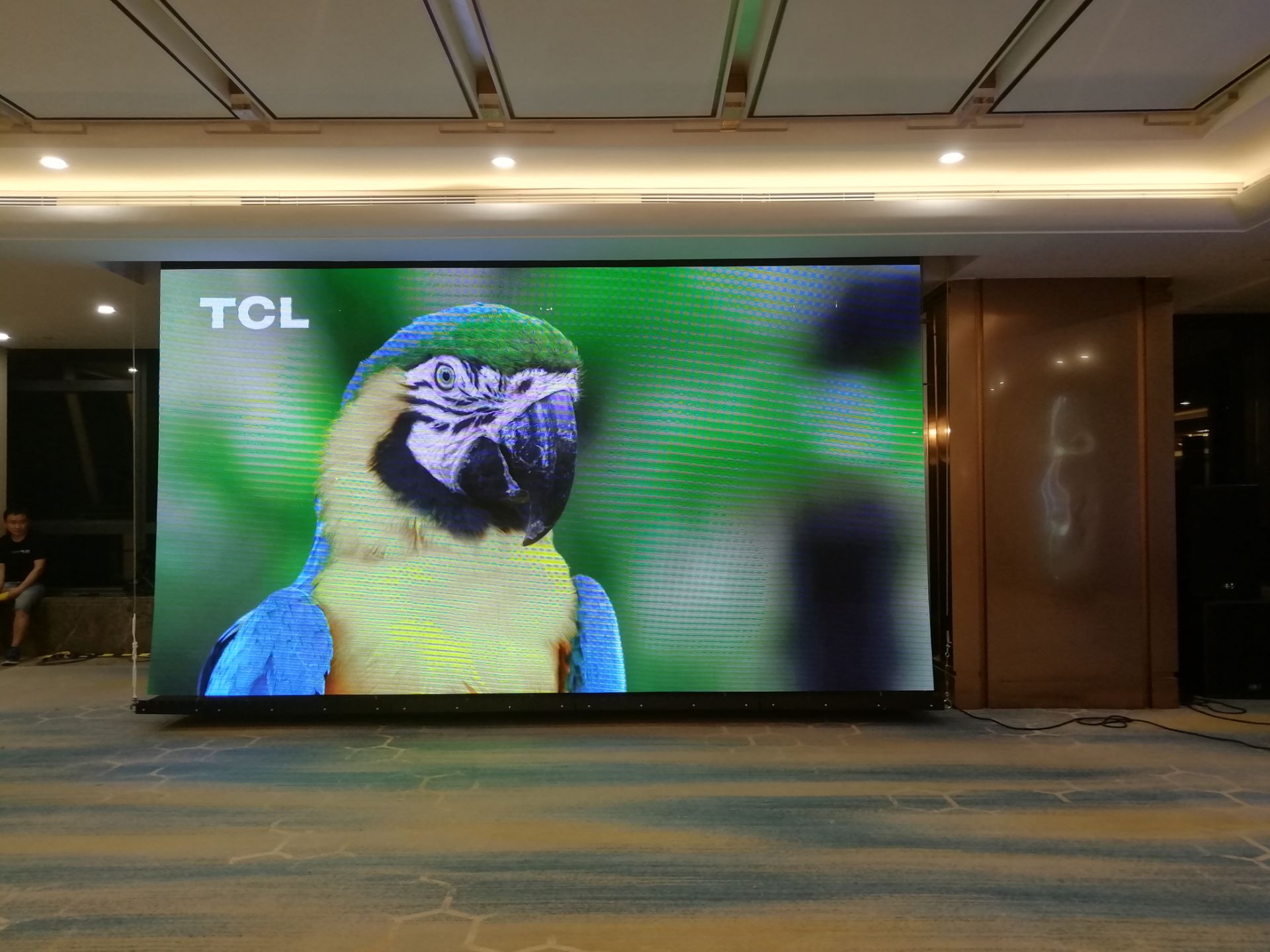
Mobile quick-assembly folding displays are useful where a venue needs a screen for a few days and then needs the space back. Six EP225 mobile fast-assembly foldable LED display systems have been deployed in a shopping mall in Zhejiang, China, for commercial promotions. Five EP225 units were installed in a hotel in Libya for conferences and banquet events. The EP series is designed for indoor and semi-outdoor operation, integrated with flight cases, and set up with mobile installation or quick setup methods.
Concert and Stage Productions
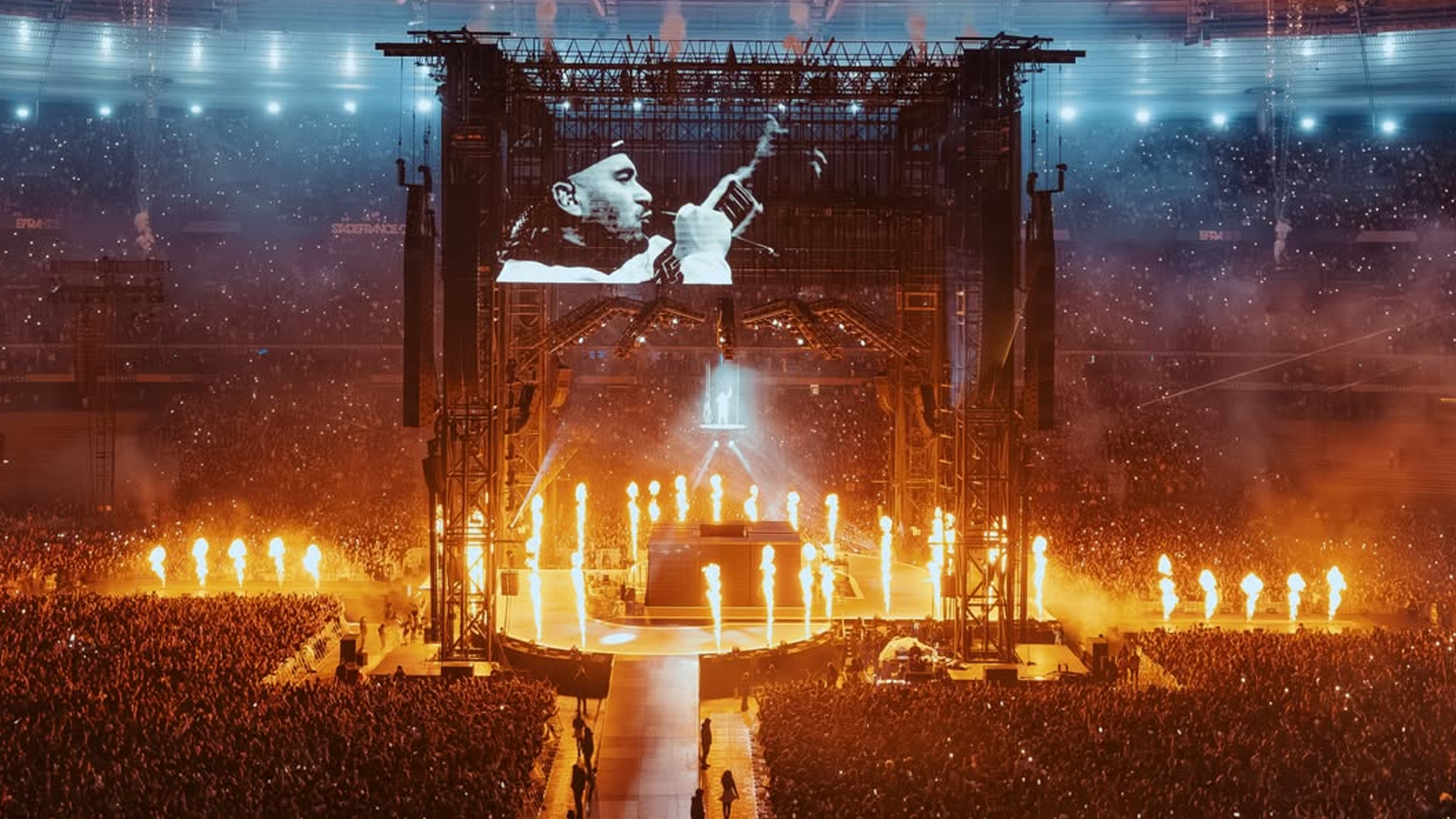
For stage productions, 360° foldable displays allow curved and circular configurations that are difficult to achieve with rigid cabinet screens. Onumen case documentation includes a circular LED structure for the Rolling Stone 30th Anniversary Concert, a liftable foldable system for SHINee’s concert in South Korea with more than 500 m² of display, and a liftable foldable LED display used at the Stade de France for JUL’s concert. On the larger end, three 33m × 16m LED display systems with a total area of 1670 m² were deployed for Masaharu Fukuyama’s Japan tour concert.
Hidden and Liftable Installations
Some of the most distinctive use cases are hidden liftable displays integrated into building interiors. In Shenzhen, a 50+ m² liftable foldable LED display was integrated into the Cuilin banquet hall; it remains hidden when not in use and lowers and unfolds automatically during events. A similar approach was used at Tai Wai MTR shopping mall in Hong Kong, where a 50+ m² display supports commercial promotions. Educational institutions have adopted the same concept: a lecture hall at Wenzhou Foreign Language School uses a 30+ m² ceiling-integrated liftable display, and a kindergarten in Ordos, Inner Mongolia, installed an outdoor liftable foldable display that hides into the playground when not in use.
Cultural Tourism and Outdoor Advertising
Outdoor applications include a 100 m² transparent folding LED display in a cultural tourism space in Wenzhou, designed with a hollow structure to reduce wind load, and a 50 m²+ double-sided pole advertising installation in Guatemala that has been in operation for more than seven years. Automotive launches have also used foldable LED screens: a Geely automotive launch event used a three-sided foldable LED structure around the vehicle, with the screen folding from bottom to top during the unveiling.
Market Trends: Lightweight, Flexible, and More Formally Controlled
Several market signals support the growth of folding LED displays. First, the large-format LED screen market is expanding, and foldable displays benefit from the same demand for high-impact visuals. Second, standards are becoming more specific for flexible and foldable screens in public spaces. For airport and high-traffic zones, for example, IEC 62368-1 is cited as a governing standard for flexible LED screen power safety, including requirements such as UL94 V-0 fire resistance and surface temperatures no higher than 70°C.
Third, global manufacturing capacity remains concentrated in China, which is estimated to host 80% of global LED manufacturing capacity. China’s LED display market was projected to reach 660 billion RMB in 2024, according to Mordor Intelligence. For international buyers, this means manufacturing scale is available, but supplier verification becomes even more important.
Finally, the folding category is no longer limited to rental events. The documented use of hidden liftable displays in banquet halls, schools, shopping malls, and cultural tourism venues shows that foldable LED screens are entering fixed architectural and commercial projects where space saving and decorative integration are priorities.
Foldable LED Displays Versus Conventional Cabinet Screens
Foldable LED screens have clear advantages in transport volume, installation speed, weight, and creative geometry. They also allow liftable and hidden installations that would be impractical with heavy cabinet panels. However, they are not automatically the right answer for every project.
| Comparison Point | Conventional Cabinet LED Screen | Foldable LED Display Screen |
|---|---|---|
| Typical weight | Higher, depends on cabinet construction | 11–15 kg/m² across Onumen documented series |
| Thickness | Usually thicker due to cabinet frame | 14–24 mm depending on series |
| Transport volume | Larger, module-by-module transport | Can be folded into flight cases or compact enclosures |
| Creative shapes | Limited by rigid panels | 180° or 360° foldable for curved, circular, wave layouts |
| Typical protection | Wide range including outdoor IP65 | IP43 to IP65, optional IP68 on selected series |
| Best-fit scenario | Permanent high-brightness walls, standardized service ecosystems | Rental, hidden liftable, architectural integration, creative stage design |
The most honest limitation of foldable LED displays is that they trade some structural rigidity and surface flatness for portability. A permanent outdoor advertising wall that rarely moves and must survive extreme environmental exposure may still be better served by a conventional cabinet screen with a mature service ecosystem. Buyers should also verify how a foldable screen behaves after repeated folding cycles: hinge mechanisms, flexible PCBs, and module flatness need to be checked against the manufacturer’s maintenance documentation.
Future Outlook
Folding LED display procurement is moving toward more formal verification. Buyers will increasingly request certificate numbers, test reports, patent references, and installation documentation rather than accepting high-level marketing claims. At the same time, the product category is expanding beyond stage rentals into retail, hospitality, education, and public space design.
Developments in transparent foldable displays and high-brightness flexible panels are likely to broaden the applications further. For distributors and contractors, the practical question is not whether foldable LED screens are a trend, but which manufacturers can support the specification data, compliance documents, and long-term service commitments that large projects require.
Frequently Asked Questions
What certifications should a folding LED display screen have for EU and US projects?
For the EU, CE (EMC and LVD) and RoHS are the main compliance requirements. For the US, FCC Part 15 Subpart B compliance is typical. Onumen’s FC series is documented with CE numbers BST11030273Y-1RC-4 and BST13030465Y-1EC-1, FCC number BST13030465Y-1EC-3, and RoHS number BST13030465Y-1RC-4. The Magic Plus (FPS) carries CE certification from TÜV Rheinland under AE 50336726 0001.
What pixel pitch and brightness should I choose for indoor versus outdoor folding LED screens?
Indoor and semi-outdoor mobile models such as the EP series offer P2.6, P3.9, or P5.2 and brightness of 630–2300 nits. For outdoor-facing models, the FPS series reaches 6000 nits and the FTS series spans 1100–9700 nits. A smaller pixel pitch such as P2.6 is better for close viewing, while higher brightness is generally needed for direct sunlight.
What does IP rating mean for a foldable LED display?
IP43 resists solid objects larger than 1 mm and water spray, which suits indoor and semi-outdoor use. IP65 is dust-tight and protected against water jets. Onumen’s FCSL and FPS series are rated IP65 with optional IP68; the EP and FC series are IP43.
How heavy and compact is a portable folding LED display?
The FC series weighs 11 kg/m², the EP series 12 kg/m², and the FPS and FCSL series about 15 kg/m². Screen thickness ranges from 14 mm to 24 mm depending on series. The EP150-EP225 ships in a flight case of 1500×400×430 mm with a total weight of about 70 kg; the EP250-EP400 ships in a screen enclosure and control box enclosure with a total weight of about 150 kg for two pieces.
Are folding LED displays protected by patents?
Yes. The freely-foldable flexible LED screen technology is protected by US Patent 8,899,791 B2, European Patent EP2755459, and patent families in Canada, Australia, Japan, South Korea, Singapore, Mexico, South Africa, Taiwan, Hong Kong, and mainland China. Onumen’s FC series is among the products named in these patent documents.
What are typical MOQ and lead time for custom foldable LED displays?
Onumen’s capability documentation lists a monthly capacity of 3,000–5,000 m², a lead time of 30–90 days after order confirmation, and a minimum order quantity of 1 m². Customization can include screen size, pixel pitch, cabinet design, installation structure, control system, logo, and packaging.
Is a folding LED display suitable for permanent installation?
Yes, when the use case requires space saving or architectural integration. Hidden liftable and foldable systems have been used in banquet halls, shopping malls, schools, and outdoor campus spaces. For permanent fixed walls that rarely move, a conventional cabinet LED screen may still be preferred for flatness and service maturity.
¿Tiene preguntas o necesita más detalles?
Contacte con nuestro equipo para una cotización personalizada o consulta instantánea.
Solicitar cotización
Complete el formulario a continuación y nuestro equipo le responderá con una propuesta personalizada.
Chat directo de WhatsApp
¿Prefiere chatear en tiempo real? Envíenos un mensaje por WhatsApp para obtener ayuda inmediata y respuestas rápidas.
- Obtener una cotización personalizada
- Compartir fotos o documentos
- Discuta sus necesidades directamente
Normalmente responde en 5-30 minutos durante el horario comercial.