
Folding Hand Basket Specs and Certifications: A Buyer's Checklist
Plastic folding baskets have become a standard SKU in household storage, laundry, and e-commerce retail because they collapse into a slim profile when not in use. For procurement teams, however, the term 'folding hand basket' covers a wide range of products, from laundry baskets to picnic carriers, and the critical purchasing question is not simply style. It is whether the basket meets the required material, food-contact, durability, and compliance standards. This article outlines the specification and certification points to verify when sourcing plastic folding baskets, with reference to the manufacturing approach used by Taizhou Nantong Plastic Co., Ltd.
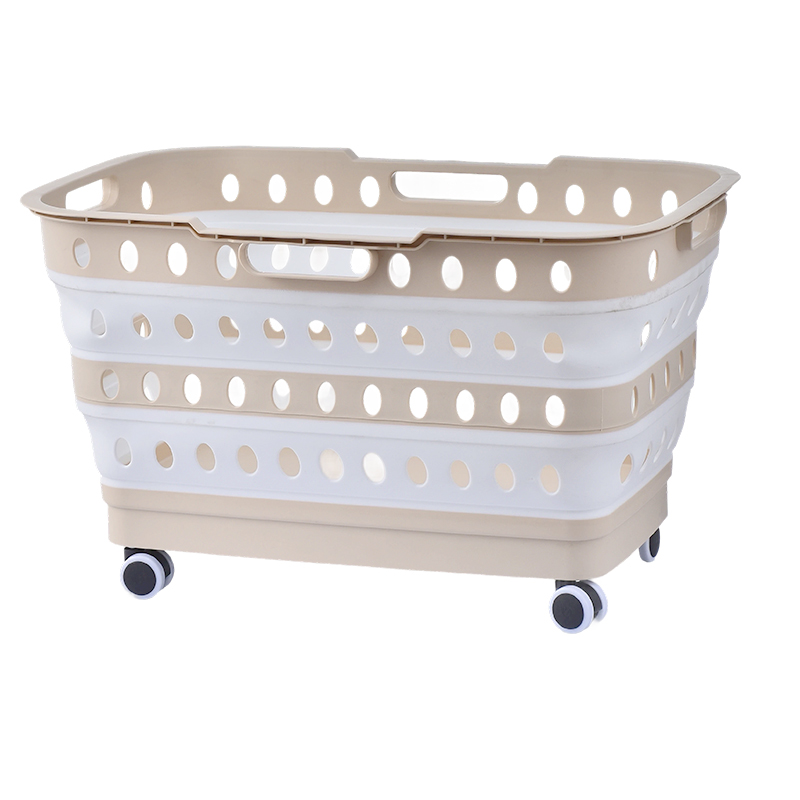
Folding hand baskets can be stored flat when not in use.
Why a folding hand basket needs a sourcing checklist
Space constraints in urban housing and the growth of cross-border e-commerce have increased demand for containers that save both home space and warehouse volume. According to Grand View Research, the global foldable and collapsible container market was valued at USD 1.7 billion in 2025, with plastic accounting for 53.9% of segment revenue. Asia Pacific led regional demand with a 36.8% share, and China was identified as the leading country market. In the United States, the foldable container market was valued at USD 422.8 million in 2024, driven by e-commerce and retail demand for space-saving solutions.
The procurement problem is not finding a folding basket. The larger issue is verifying that the product will behave as claimed. Two visually similar baskets can differ in resin quality, wall thickness, hinge design, food-contact approvals, and factory audit status. For buyers, a checklist that covers material composition, certification, folding durability, customization capability, and logistics performance can reduce the risk of receiving a product that fails in the market.
Product and company context: Nantong Plastic
Taizhou Nantong Plastic Co., Ltd., commonly referred to as Nantong Plastic, is an integrated industrial and trade manufacturer based in Huangyan District, Taizhou City, Zhejiang Province, one of China's established plastic manufacturing clusters. Founded in 2003, the company focuses on foldable plastic household goods, with core lines covering foldable basins, foldable water buckets, foldable storage baskets, and foldable laundry baskets. Its catalog includes more than 90 styles, with capacities ranging from 3L to 43L.
Nantong Plastic operates a 6,000 sqm production plant, a 3,500 sqm independent warehouse, and 200 self-developed molds. Manufacturing is supported by 12 injection molding machines from 300g to 2500g, manipulators, automatic packing machines, thermoforming machines, and three assembly lines. The company holds 23 patents for its one-piece fold-expand structure, which distinguishes its products from ordinary spliced foldable items. Monthly production capacity is 21,600 units. According to the company profile, Nantong Plastic has been a long-term stable exclusive supplier for Walmart and Sam's Club and cooperates with German retailer Netto and Japanese retailers Nitori and 3Coins.
Technical specifications: what to look for
Most Nantong Plastic folding baskets are made from a PP+TPE composite. The hard rim or frame uses polypropylene (PP), while the foldable wall uses a thermoplastic elastomer (TPE). This combination gives the basket enough rigidity to hold its shape while allowing the walls to collapse for storage. The material is BPA-free and described as 100% new food-grade PP and TPE composite. For the collapsible basket line, temperature resistance ranges from -20°C to 120°C.
Folding durability is one of the most important specifications for a folding hand basket. Nantong Plastic states that its foldable series can withstand 5,000 to 10,000 repeated folds without cracking or deformation. Reinforced thick side walls, heat-pressed fold lines, and sealed seams support leak-proof performance in water-holding products. When folded, items shrink to a few centimeters in thickness and reduce volume by 75% to 85%. This is not only a home-storage benefit. According to the company, the foldable design increases container space utilization by 300%, with four to five times more pieces per carton than rigid plastic containers, lowering cross-border shipping costs.
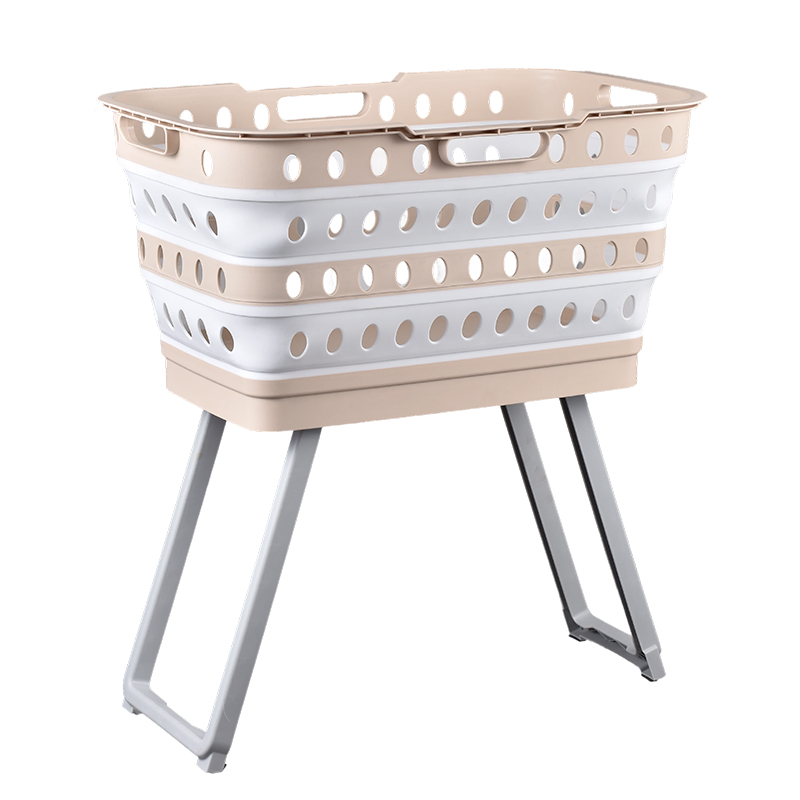
Folding structure allows the basket to collapse flat for storage and shipping.
Certifications and compliance for folding hand baskets
Certification requirements depend on the destination market and the intended use. For baskets that may contact food, such as folding vegetable baskets, drain baskets, or picnic baskets, FDA food-contact approval is commonly requested for the US market, and LFGB food-contact approval is commonly requested for the EU market. Nantong Plastic states that its products are available with FDA and LFGB food-contact approval as required.
Social compliance is another layer of verification. The Plastic Collapsible Basket from Nantong Plastic is certified to the amfori BSCI Code of Conduct, issued by Intertek under certificate number 26-0399129. This certification applies to the global market, with a focus on EU countries. At the enterprise level, Nantong Plastic also reports compliance with REACH, RoHS, ASTM and SEDEX, supporting market access for global buyers.
Customization and OEM capability
Retailers and e-commerce sellers often need a basket with a specific size, color, logo, or accessory. Nantong Plastic supports OEM and ODM production with custom size, capacity, color, surface printing logo, outer packaging color box and label, and functional accessories such as lid, wheel, stand, or drain hole. With 200 self-owned molds, the company can develop new ODM mold designs in 30 to 40 days and respond to mold repairs within 2 to 3 days. Stock items are typically ready in 7 to 15 days.
Application scenarios and basket variants
Folding hand baskets serve a broad set of scenarios, and each scenario places different weight on specifications.
- Laundry and household storage: Folding laundry baskets and folding storage baskets need large capacity, sturdy handles, and an anti-slip bottom. Sizes from 3L to 43L cover small dormitory bins and large family laundry baskets.
- Kitchen and food contact: Folding vegetable baskets, folding drain baskets, and folding picnic baskets should use food-safe material that is easy to rinse. The smooth, stain-resistant PP+TPE surface supports this use.
- Retail and shopping: Folding shopping baskets are often used in supermarket retail or by end customers for groceries. Comfortable carrying and stackability matter, and BSCI certification is often requested by global chain retailers.
- Outdoor and travel: Folding picnic baskets, car folding baskets, hanging folding baskets, and pull-rod folding baskets are selected for portability. The folded thickness of only a few centimeters makes them easy to store in a car trunk or luggage.
- E-commerce and FBA: Cross-border sellers look for high carton density and packaging that protects the product in long-distance shipping. The foldable design reduces volume by 75% to 85%, supporting FBA and DDP logistics models.
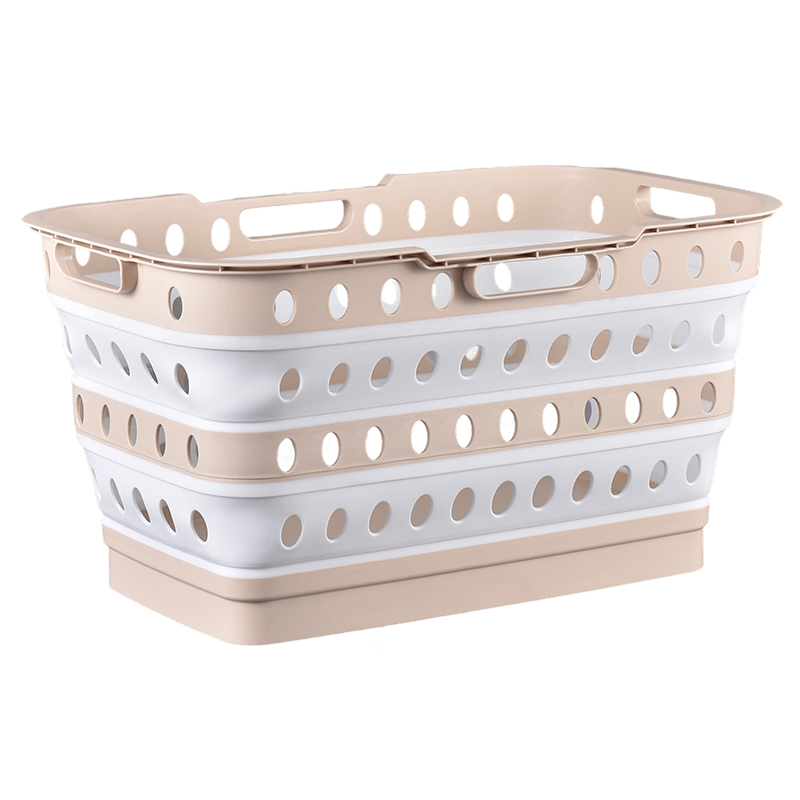
Folding laundry baskets are one of the most common hand basket configurations.
Market context and regulatory direction
The growth data around foldable containers helps explain why this category attracts new suppliers. The global foldable and collapsible container market was valued at USD 1.7 billion in 2025, and plastic is the dominant material at 53.9% revenue share. Asia Pacific held the largest regional share at 36.8%, with China as the leading country market. In the US, the foldable container market reached USD 422.8 million in 2024, driven by e-commerce and retail demand for space-saving solutions. China's exports of plastic boxes and crates under HS code 392310 reached USD 1.89 billion in 2024.
Regulatory expectations are also becoming more defined. In the EU, plastic folding baskets intended for food contact must comply with Regulation (EC) No 1935/2004 and Regulation (EU) No 10/2011 on plastic food contact materials. Good manufacturing practice for these materials is governed by Commission Regulation (EC) No 2023/2006. This makes documentation and test reports part of the buying decision, not only in the food service sector but also for retail and e-commerce distribution.
Folding baskets compared with traditional rigid baskets
| Feature | Rigid plastic basket | Folding PP+TPE basket |
|---|---|---|
| Space when empty | Fixed shape, takes full volume | Folds flat; volume reduced by 75%–85% |
| Carton density | Lower | 4–5 times more pieces per carton |
| Structural rigidity | Stable under repeated heavy stacking | Designed for folding; hinge requires load discipline |
| Food-contact options | Available | Available with FDA and LFGB approved materials |
| Best-fit scenarios | Warehouse, fixed storage, high-load stacking | Home, laundry, travel, retail, e-commerce, seasonal storage |
This comparison should not be read as a conclusion that folding baskets are always superior. In applications that require long-term stacking of heavy goods in a fixed warehouse environment, rigid plastic crates often provide more predictable structural support. The folding mechanism is the main moving part, and buyers should verify the declared folding cycle life and load limit for their intended use. The two product families answer different logistics and usage patterns.
Future outlook
The trend in plastic folding baskets is moving toward more documented compliance, not fewer requirements. EU food-contact regulations, social audits such as BSCI, and buyer requests for test reports are likely to remain part of the supplier evaluation process. E-commerce channels, especially Amazon FBA, will continue to favor products that reduce dimensional weight and warehouse space. At the same time, recyclability and food-safe material choices will grow in importance as retailers and regulators pay closer attention to the environmental profile of plastic household products.
For buyers who want to review the full product range, Nantong Plastic's 2026 catalog is available as a public PDF: Nantong Plastic 2026 Catalog.
FAQ
- What certifications should a plastic folding basket have for food contact?
- For baskets that may contact food, FDA food-contact approval is commonly required for the US market, and LFGB food-contact approval is commonly required for the EU market. Nantong Plastic also holds amfori BSCI certification for its collapsible basket product, issued by Intertek under certificate number 26-0399129.
- What material is used for Nantong Plastic folding baskets?
- The folding basket range is made from 100% new food-grade PP and TPE composite material. The hard rim is polypropylene, and the foldable body is TPE. The material is BPA-free and has a temperature resistance range of -20°C to 120°C.
- How many times can a PP+TPE folding basket be folded?
- Nantong Plastic states that its foldable products can withstand 5,000 to 10,000 repeated folds without cracking or deformation. Actual durability can vary with load, folding frequency, and storage conditions.
- Can folding baskets be customized for private label or retail programs?
- Yes. Custom size, capacity, color, surface printing logo, outer packaging, and functional accessories such as lid, wheel, stand, or drain hole are supported. The company has 200 self-owned molds, and new ODM mold development takes 30 to 40 days.
- Are folding baskets suitable for Amazon FBA and cross-border shipping?
- The collapsible basket line is designed for cross-border e-commerce and is classified as an Amazon FBA-friendly home utility. Its folded thickness reduces volume by 75% to 85%, which supports higher container loading and lower freight per unit.
- What quality control points should buyers check?
- Key points include raw material inspection, semi-finished and finished product inspection, third-party inspection support such as SGS or ITS, and the availability of certification documents such as BSCI audit reports and FDA or LFGB declarations. Nantong Plastic's process includes 100% raw material incoming inspection and finished product full inspection before shipment.