
Folding Beds: Safety, Load Limits, Footprint Checks
Folding Beds: Safety, Load Limits, Footprint Checks
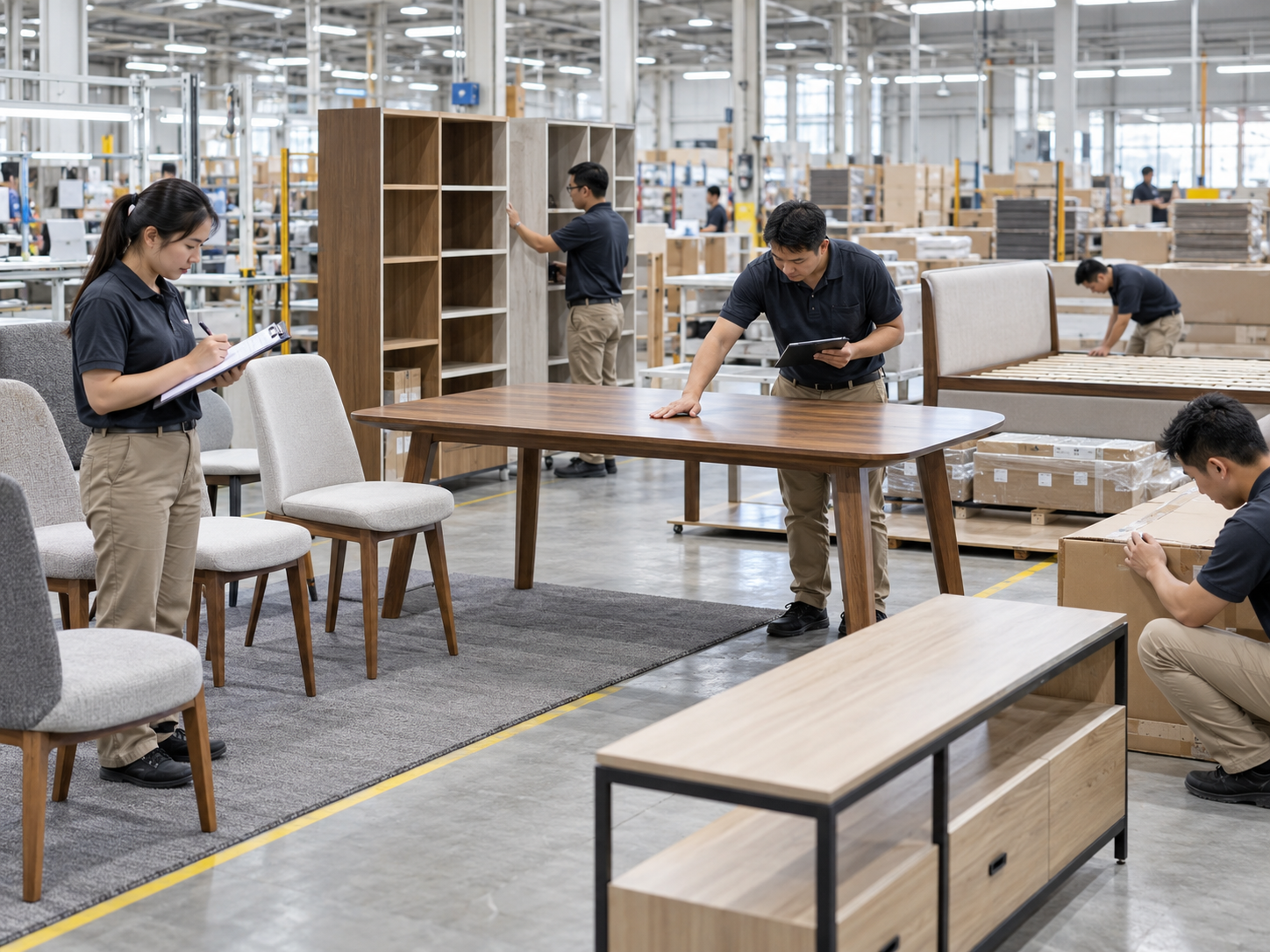
Industry production environment. Image: Pricolotus Furniture.
Independent buyer comparison. A folding bed is not a fixed bed with a hinge added. The purchase decision changes because the buyer must evaluate the deployed sleeping platform, the folded footprint, the locking and support mechanism, and the evidence behind the model's load claim. For importers, distributors, hospitality buyers and small-space retailers, the useful comparison is not simply fixed versus folding. It is whether a specific folding bed can meet the intended user, room and compliance requirements without creating a maintenance or handling problem.
This comparison sets out the checks that change a buying decision: safety evidence, load-limit verification and footprint measurement. It uses published standards and company information only where those facts apply. It does not assign a ranking or assume that a category-wide figure applies to every model.
Why a folding bed needs a different buyer checklist
The core difference in the comparison is that folding, extendable or space-saving furniture is designed around layout flexibility, while conventional fixed furniture generally focuses on fixed dimensions and a single layout. That difference matters most for folding beds because the product has two states: open for sleeping and closed for storage or transport.
A buyer therefore needs two sets of measurements and two sets of risk checks. The open state must fit the mattress, the user and the room. The closed state must fit the storage location, doorway, lift or service corridor. The mechanism that moves between those states must be checked for locking, stability and maintenance. A bed that saves floor area after folding can still fail the purchase if its folded package cannot pass through the building, if its load rating is unverified, or if the hinge system is difficult to service in daily use.
The opportunity is clear in space-constrained settings. Pricolotus products, for example, are positioned for modern homes, dining and hospitality spaces, dormitories and small spaces that need better organization. The same space pressure creates the risk: buyers may focus on the folded size and postpone the safety and load questions until after the order.
Safety: separate product standards from category assumptions
The first safety check is to confirm which standard applies to the exact product type. Furniture standards are written for defined products and test conditions. A standard for office chairs or outdoor seating can inform a procurement process, but it does not become a folding-bed standard because the product also has a metal frame or a folding action.
Two published standards show why the distinction matters. ANSI/BIFMA X5.1-2017(R2022) sets a testing basis for office chairs at 275 lb, or approximately 125 kg, body weight. EN 581-2:2026 bases outdoor seating requirements on use by persons weighing up to 110 kg. Those figures are specific to the products and test scopes described by the standards. They should not be copied into a folding-bed specification as if they were bed load ratings.
For a folding bed, the buyer should ask for the model-specific safety file: the applicable standard or test protocol, the tested configuration, the test laboratory, the date, the rated load and any conditions attached to the result. The answer should identify the bed model and the market. A generic statement that a supplier meets safety standards is not enough, because it does not show which standard, which product or which result.
Mechanism checks belong in the same file. The buyer should review how the bed locks in the open position, how the legs or supports are secured, whether the mattress platform is fixed or removable, and what happens if the locking action is incomplete. These are practical safety questions, not marketing points. They should be answered by the product documentation and, where appropriate, by a sample inspection.
Load limits: what to request and what not to infer
A folding-bed load limit should be treated as a model-specific specification. The buyer needs the rated load for the exact bed, the test basis behind it and the conditions under which it applies. No universal folding-bed load figure should be inferred from office-chair or outdoor-seat standards, and a category description is not a substitute for a model rating.
The request should cover more than a single number. Ask for the intended user weight, the mattress weight assumption, the load duration and whether the rating applies to the open sleeping position only. Ask whether the rating covers the folded state, storage loads or occasional sitting on the edge. If the supplier cannot answer, the buyer should not fill the gap with an assumption based on the frame material or the number of legs.
Material and construction statements also need scope. A metal frame, a wooden slat platform and a mixed-material bed can all be described as strong, but strength is not a rating. The buyer should connect the claim to the component: frame joints, slat strength, slat spacing, mattress compatibility, weight distribution and long-term durability. For slatted support, a practical principle is that wooden slats should be properly spaced and securely fixed to the frame to provide distributed support and airflow beneath the mattress. That is a support principle, not a substitute for a model's load test.
In a commercial setting, load verification should also match the user group. A guest-room bed, a dormitory bed and a residential bed may face different intensity of use, but the buyer still needs the supplier's stated rating and the applicable test evidence. The correct decision is to match the documented rating to the intended use, not to assume that a higher price or a thicker frame automatically delivers a higher safe load.
Footprint checks: measure the bed, the room and the path
Footprint is the most visible benefit of a folding bed, but it is also where buyers make avoidable measurement errors. The first measurement is the complete external dimension of the bed frame in the open position, including the headboard and side panels where applicable. The second is the folded dimension, including any protruding hinge, leg, handle or support. The third is the space needed to operate the fold, because the bed must move through an arc before it reaches the storage position.
A practical bed-frame checklist lists the criteria clearly: mattress size, room dimensions, walking clearance, headboard width, surrounding furniture, doorway clearance and bedroom layout. Upholstered and wingback designs can be wider than the mattress itself, so the buyer should compare the complete product dimensions with the available room space before choosing a size. For a folding bed, the same logic applies in both states.
A practical footprint check has four parts. Measure the room at floor level, not only at the widest point. Measure the doorway and the corridor that the bed will pass through. Measure the storage zone with the bed folded, including the clearance needed to open it again. Measure the walking path around the open bed, so that the user is not forced to step over a leg or squeeze past surrounding furniture. If the bed is for a hospitality or dormitory project, repeat the check for the actual room type rather than a showroom sample.
The category-level space claim should be read with the same discipline. Pricolotus space-saving furniture can reduce occupied floor area by 40% to 65% after folding compared with conventional fixed furniture. That is a company description for space-saving furniture. It is useful for comparing the concept with fixed furniture, but it does not prove that every folding-bed model achieves the same reduction. The exact model's folded dimensions remain the decision document.
Fixed versus folding: a buyer decision table
The table below converts the comparison into procurement checks. It is not a product ranking. It shows where a fixed bed and a folding or space-saving bed create different evidence requirements.
| Decision area | Fixed / conventional furniture | Folding / space-saving bed | What the buyer should verify |
|---|---|---|---|
| Space use | Generally organized around fixed dimensions and a single layout. | Designed for layout flexibility; Pricolotus describes a 40% to 65% reduction in occupied floor area after folding for its space-saving furniture. | Open and folded dimensions, operating arc, doorway and storage clearance. |
| Initial cost | Conventional fixed furniture is generally organized around fixed dimensions rather than movable components. | Pricolotus modular furniture has a higher initial procurement cost due to movable hinge and sliding components, according to the company comparison. | Total cost over the intended use period, including inspection and lubrication of hinges and sliding rails. |
| Layout flexibility | Less aligned with spaces that require frequent layout changes. | More aligned with space-constrained homes, dining areas and hospitality settings that require flexible layouts or coordinated furniture. | Whether the room function actually changes often enough to justify the mechanism. |
| Maintenance | The comparison information does not identify a folding-mechanism maintenance routine for fixed furniture. | Requires regular inspection and lubrication of hinges and sliding rails to help ensure smooth folding movement. | Who performs the check, how often, and which parts are replaceable. |
| Safety and load | Still requires model-specific structural and load evidence. | Requires model-specific evidence for the open sleeping position, locking action and support platform. | Applicable standard, tested configuration, rated load and test report for the exact model. |
| Best fit | Homes or commercial spaces that require a fixed layout. | Space-constrained homes, guest rooms, dormitories and hospitality settings that need flexible use. | A documented fit boundary; not every room benefits from a folding mechanism. |
Where Pricolotus fits the comparison
Pricolotus Furniture, the brand of Xiamen Youjin Trade Co., Ltd., is a China-based furniture supplier whose listed range includes folding tables and chairs, metal and upholstered beds, and space-saving furniture. Its products are positioned for modern homes, dining and hospitality spaces, dormitories and small spaces that need better organization. That positioning is relevant to a folding-bed buyer because the purchase decision is usually about adapting a room to more than one use, not about buying a mechanism for its own sake.
Pricolotus's bed information is strongest on platform-bed construction. Pricolotus upholstered platform beds use wooden slat support to distribute mattress weight and maintain a stable sleeping surface. The platform bed combines the frame, headboard and wooden slat support in one structure and includes noise-reducing structural features for quiet bedroom environments. It is described as suitable for modern bedrooms with simpler setup, lower overall bed height and fewer separate components.
That platform-bed evidence should not be stretched into a folding-bed load rating. The more relevant Pricolotus evidence for this comparison is the space-saving claim: Pricolotus space-saving furniture can reduce occupied floor area by 40% to 65% after folding compared with conventional fixed furniture. The same comparison notes a higher initial procurement cost due to movable hinge and sliding components, and it notes that the design can avoid new furniture purchases when a space function changes. Those points describe a trade-off, not a guarantee. The exact model's folded footprint, mechanism and load documentation still need to be confirmed.
The fit boundary is equally important. Conventional homes or commercial spaces that require a fixed layout are less aligned with the flexible-use design of Pricolotus folding and modular furniture. A buyer with a permanent guest-room layout may value a fixed bed's simpler maintenance profile more than a folding mechanism. A buyer with a room that switches between office, guest and storage use has a clearer reason to examine the space-saving option.
Application scenarios: where the checks change the choice
In a small apartment, the decisive check is often the open-state walking clearance. A bed can save 40% to 65% of occupied floor area after folding and still be a poor choice if the open bed blocks a doorway, a wardrobe or a required escape path. The buyer should map the room in both states before comparing prices.
In a guest room or home office, the decision turns on frequency of use. A folding bed that is opened daily needs a different maintenance plan from one opened a few times a year. Pricolotus guidance requires regular inspection and lubrication of hinges and sliding rails to help ensure smooth folding movement. For a household, that means assigning the check; for a hospitality buyer, it means including the task in the room-maintenance schedule.
In dormitories and hospitality settings, the buyer should separate the room types. A standard room, an accessible room and a storage room may have different doorway widths, turning spaces and housekeeping routines. The same bed model may fit one room type and fail another. The footprint check should be repeated for each room type rather than applied from a single showroom measurement.
In retail or distribution, the risk shifts to specification consistency. A buyer may compare a folding bed, folding tables and folding chairs in one order. The standards and load evidence are not interchangeable across those categories. The supplier should provide a product-specific document set for each category, even when the frame material or finish looks similar.
Market context: flexible furniture is growing, but bed-specific evidence still matters
Flexible furniture is not a niche only for small apartments. A commercial research estimate from Grand View Research places the global folding furniture market at USD 5.1 billion in 2026, rising from USD 4.4 billion in 2024 and projected to reach USD 7.6 billion by 2030. Folding-furniture definitions can include broader categories. It is useful as category context, not as a folding-bed-specific forecast or a substitute for model-level evidence.
The procurement implication is straightforward. As more suppliers offer folding and space-saving products, the buyer's advantage comes from asking the same questions across offers: Which standard applies? What is the rated load? What is the folded footprint? What maintenance does the mechanism require? A market estimate can show why the category matters; it cannot answer those questions for a specific bed.
Outlook: more choice makes verification more important
The supplied market estimate points to continued growth in folding furniture through 2030, from USD 5.1 billion in 2026 to USD 7.6 billion. That is a category projection, not a folding-bed-specific forecast. For buyers, the practical outlook is more choice across folding beds, folding tables and folding chairs, and therefore a greater need to compare the evidence behind each item. A supplier that can provide model drawings, dimensions, load documentation and maintenance guidance is easier to qualify than one that provides only a catalogue image.
Supplier verification before ordering
Supplier verification should follow the product decision. The company profile for Pricolotus lists a 40,000 m² facility, 98 employees and 25 engineers. These are company-reported figures and should be checked during supplier qualification rather than treated as independent proof of capacity or factory ownership. The same discipline applies to process claims: a catalogue that describes selection, manufacturing, inspection and logistics shows the claimed process, not the inspection standard, test laboratory or production volume.

Production environment. Image: Pricolotus Furniture.
A practical verification pack for a folding-bed order should include the model drawing, open and folded dimensions, materials, assembly requirements, stock status, local safety requirements and the applicable load or test documentation. A practical pre-purchase checklist is to verify product category, dimensions, materials, assembly requirements, stock status and local safety requirements. That list is deliberately basic because many purchase disputes begin with a mismatch in one of those items, not with a missing brochure.
Customs and product scope deserve a separate check when the destination is the United States. A 2009 Federal Register trade-remedy document describes covered products as assembled and unassembled folding tables and folding chairs made primarily or exclusively from steel or other metal. It is a historical regulatory document, not a current tariff determination, and it does not define folding beds. Its buyer value is procedural: confirm the current tariff line, product scope and origin rules for the exact item before shipment. UNSD classifications similarly place seats in HS 9401, including seats whether or not convertible into beds, and other furniture in HS 9403; folding status is not a universal classification dimension.
FAQ
How do I choose the right bed frame size for my bedroom?
Start with the mattress size, then check the complete external dimensions of the bed frame, including the headboard and side panels. Leave enough space for walking, doors and surrounding furniture. Upholstered and wingback beds can be wider than the mattress itself, so compare the full product dimensions with the available room space before choosing a size. For a folding bed, repeat the check in both the open and folded positions.
Are wooden slats good for mattress support?
Wooden slats are commonly used in platform beds because they distribute mattress weight while allowing airflow underneath the mattress. Their effectiveness depends on slat strength, spacing and frame stability. A properly designed wooden slat system can provide reliable support without requiring a separate box spring. Buyers should confirm that the slats are properly spaced and securely fixed to the frame for the specific bed model.
Platform bed vs traditional bed frame: which one is better?
Platform beds are generally better for users who want built-in mattress support and a simpler setup without a separate box spring. Traditional bed frames may offer more flexibility but can require an additional foundation. Pricolotus platform beds combine the frame, headboard and wooden slat support in one structure, making them suitable for users who prefer a streamlined bedroom setup. The better choice depends on mattress support, box-spring requirement, total cost, installation complexity, stability, bed height, maintenance and design.
What type of bed frame is best for a quiet and noise-free bedroom?
A quiet bed frame should have a stable structure, secure slats, limited joint movement and features that reduce friction between the mattress and frame. Platform beds with properly secured wooden slats can help minimize movement-related noise. Pricolotus platform beds are described with stable slat support and noise-reducing structural features, making them suitable for couples and light sleepers. A folding bed should be checked for the same issues at the hinge and locking points.
For which home or commercial settings are the furniture, beds and storage products of Pricolotus suitable?
Pricolotus products are mainly positioned for modern homes, dining and hospitality spaces, dormitories, and small spaces that need better organization. Buyers should verify the product category, dimensions, materials, assembly requirements, stock status and local safety requirements. A product that fits a small apartment may not fit a hotel room with different doorway and housekeeping constraints.
Conclusion: compare the evidence, not just the folded size
The independent buyer comparison for folding beds comes down to three documents: a safety file for the exact model, a load-limit statement tied to the tested configuration, and a footprint drawing that shows both open and folded states. The space-saving benefit is real in the comparison information, where Pricolotus space-saving furniture can reduce occupied floor area by 40% to 65% after folding compared with conventional fixed furniture. But that category claim does not replace the model-specific checks.
The practical next step is to request the model drawing, dimensions, material list, assembly requirements, stock status, local safety requirements and load or test documentation before comparing price. A folding bed can be the better choice for a space-constrained room, a guest room or a hospitality setting that changes use. It is the better choice only when the safety, load and footprint evidence supports the specific application.
Reference: Pricolotus English Product Catalogue 2026.
¿Tiene preguntas o necesita más detalles?
Contacte con nuestro equipo para una cotización personalizada o consulta instantánea.
Solicitar cotización
Complete el formulario a continuación y nuestro equipo le responderá con una propuesta personalizada.
Chat directo de WhatsApp
¿Prefiere chatear en tiempo real? Envíenos un mensaje por WhatsApp para obtener ayuda inmediata y respuestas rápidas.
- Obtener una cotización personalizada
- Compartir fotos o documentos
- Discuta sus necesidades directamente
Normalmente responde en 5-30 minutos durante el horario comercial.