
Flow Sensor Supply Reliability: What OEM Buyers Should Verify
When an OEM selects a flow sensor, the decision reaches beyond the datasheet. In industries such as medical devices, bioprocessing, semiconductor fabrication, and liquid cooling, the sensor supplier becomes part of the host system's long-term risk chain. A delayed shipment, a drift in calibration, or an unresponsive engineering team can disrupt production schedules and final product quality. This article examines the criteria that define a dependable long-term flow sensor supply relationship, using Shanghai Xunyin Technology Co., Ltd (XY-TEK) — a manufacturer specializing in ultrasonic flow sensors for small tubing and low flow rate measurement — as a case reference for what buyers can verify before committing to a multi-year supply agreement.
From Component Purchase to Supply Partnership
The global flow meter market was estimated at USD 10.64 billion in 2024 and is projected to reach USD 15.17 billion by 2030, according to Grand View Research. Within this market, ultrasonic flow meters represent a fast-growing segment: Mordor Intelligence values the global ultrasonic flow meter market at USD 1.52 billion in 2025, with growth to USD 2.28 billion by 2031. Buyers in this space do not lack options — but the number of qualified, dependable suppliers is much smaller than the number of available products suggests.
The reasons are practical. A flow sensor is not a commodity component. It must match the fluid path, the tubing material, the flow range, the output interface, and the regulatory environment of the host device. OEM buyers that treat sensor sourcing as a one-time purchase often discover hidden costs after the contract is signed: calibration drift, batch-to-batch variation, limited engineering support, and difficulty scaling orders as production ramps.
The opportunity, equally, is clear. Manufacturers that combine focused R&D with documented quality practices and predictable order terms can substantially reduce these risks. For a buyer at the Decision and Execution stage, supplier selection is not only about which sensor meets the specifications — it is about which supplier can sustain that performance over multiple production cycles.
What Long-Term Flow Sensor Supply Actually Requires
Long-term supply reliability rests on verifiable, repeatable practices across four areas:
- Order consistency. A defined minimum order quantity, predictable delivery lead times, and transparent payment terms allow the buyer to plan production without last-minute uncertainty.
- Quality verification. Pre-shipment testing and independently verifiable inspection options confirm that each batch meets the stated specification.
- Calibration control. Structured methods to prevent or correct sensor drift — factory calibration, on-site calibration, remote support calibration, or automatic compensation — protect the measurement performance over the product's operating life.
- After-sales responsiveness. Access to engineering support and quality warranty coverage becomes critical when the sensor is embedded in a regulated device or mission-critical system.
These factors frequently matter more than initial unit price. A flow sensor that fails after integration can cost the buyer far more than the component price in rework, requalification, and downtime.
Supplier Qualification Checklist for Flow Sensor OEMs
- Confirm the minimum order quantity matches your production ramp plan.
- Verify lead time commitments: standard delivery and typical production lead time.
- Ask whether 100% pre-shipment testing is standard practice.
- Confirm whether third-party inspection or customer factory inspection is available.
- Review calibration support: factory, on-site, remote, or automatic compensation options.
- Clarify after-sales services: engineering support, remote technical support, warranty terms.
XY-TEK as a Supply Reference
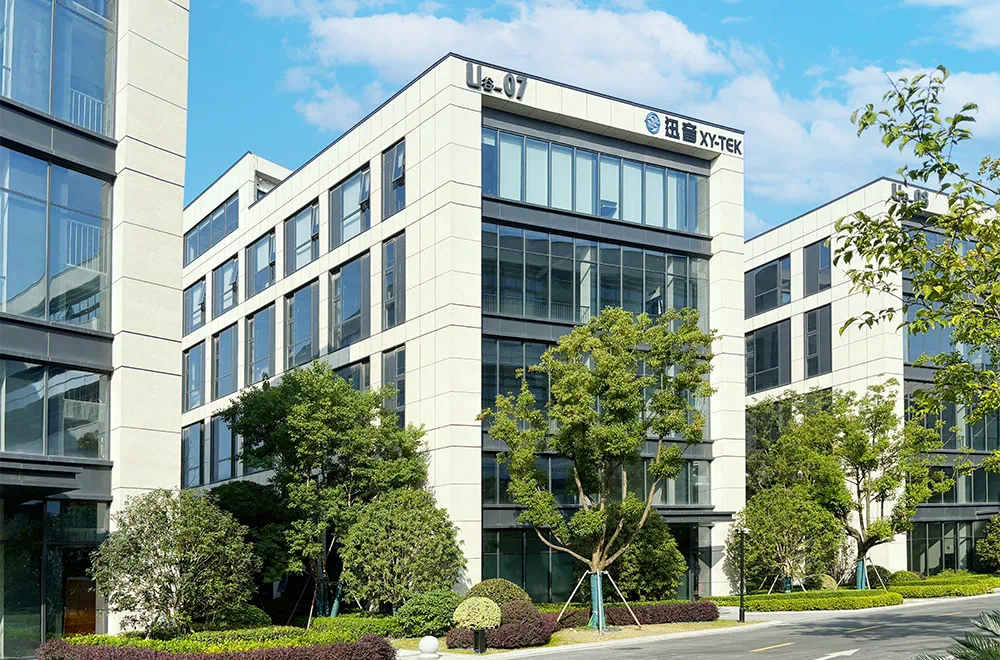
Shanghai Xunyin Technology Co., Ltd (XY-TEK), established in 2018, operates a 5,000-square-meter facility in Shanghai, China. The company specializes in ultrasonic flow sensors and flow meters, with particular focus on small tubing and low flow rate measurement. Its product lines cover clamp-on sensors, in-line sensors, single-use sensors, bubble detectors, and OEM flow meter modules for medical devices, bioprocessing, scientific research, industrial automation, semiconductor equipment, and food and beverage production.
Several capacity facts are relevant to a long-term procurement evaluation. XY-TEK employs 50 people, of which 30 are in R&D. Annual output exceeds 8,000 units, and approximately 50% of production is exported to global markets. For a focused ultrasonic flow sensor manufacturer, this scale indicates that its production line is not a secondary activity of a larger conglomerate, but a specialized operation.
The company's stated order terms are also concrete and verifiable:
- Minimum order quantity: 50 units.
- Standard delivery time: 1–2 months.
- Typical production lead time: 1–2 months.
- Quality control: 100% pre-shipment testing; third-party inspection available.
- Acceptance: factory inspection and calibration before shipping.
- Payment: full payment before shipment.
- After-sales services: online engineering support, remote technical support, and quality warranty.
These terms are not remarkable because they differ from industry norms — they are useful because they are explicit. A buyer evaluating any long-term flow sensor supplier can use the same questions as a baseline and require the same level of clarity.
Technical Foundations: Ultrasonic Measurement and Risk Control
Ultrasonic flow measurement operates on the transit-time difference principle. The sensor transmits ultrasonic signals in the direction of flow and against the direction of flow; the time difference between the two signals is proportional to the fluid velocity. Because the measurement is non-invasive, there are no moving parts, no pressure drop, and no contact with the medium. This makes ultrasonic sensors particularly suitable for clean, low-flow, and small-diameter tubing applications.
XY-TEK's product engineering addresses two primary measurement risks:
Sensor drift. Drift control methods include an automatic compensation algorithm, factory calibration, on-site calibration, and remote support calibration. At the enterprise level, routine performance validation and in-time after-sales support are documented practices. For an OEM buyer, the availability of multiple calibration routes means the sensor can be re-verified without returning the unit to the factory in every case.
Liquid contamination. Because the sensor measures through the tubing wall without touching the fluid, the risk of contamination is inherently low. XY-TEK further applies clean-room assembly and strict quality inspection to maintain the integrity of the measurement path. For medical and bioprocess applications, this non-contact design removes a whole class of contamination failure modes.
In practical terms, clamp-on ultrasonic sensors clamp directly onto flexible plastic tubing — such as PVC, silicone, PFA, PE, and PUR — or rigid plastic tubing such as PFA, PTFE, Teflon, PVDF, PP, and Nylon, depending on the series. They measure flow rate and can detect air bubbles without external circuitry. In-line sensors integrate directly into a flow system, providing real-time flow monitoring with no moving parts and low maintenance requirements.
Product Portfolio: A Multi-Application Supply Base
One indicator of a supplier's long-term value is whether its product range can evolve with the buyer's application needs. XY-TEK's portfolio spans ten series across clamp-on, in-line, single-use, pulsatile, low-flow, and bubble-detection categories:
| Series | Type | Flow Scope | Accuracy | Key Characteristics |
|---|---|---|---|---|
| CG | Clamp-on | 0.02–20 L/min | ±3% | Flexible PVC/silicone tubing; non-invasive; bi-directional; air bubble detection |
| CS | Clamp-on industrial | 0.1–50 L/min | ±3% | Rigid PFA/PTFE/PVDF tubing; up to 90°C; digital output |
| CPD | Clamp-on compact | 0.1–50 L/min | ±2% | LED display; bubble detection; 0–80 L/min max range |
| TPK | In-line | 0.5–100 L/min | ±2% | DN4–DN50; PPS or stainless steel body; no moving parts |
| TPD | In-line | 0.5–100 L/min | ±2% | DN15–DN50; PPS/stainless steel; real-time flow monitoring |
| CM | OEM clamp-on flow meter | 0.05–30 L/min | ±3% | RS485 output; compact; stable signal for OEM integration |
| TGU | Low-flow | 0.1–1000 mL/min | ±1% | U-shaped channel; resolution to ±0.1 mL/min; biocompatible materials |
| SU | Single-use | 0.05–10 L/min | ±2% | Single-use measuring channel; sterile application support; biocompatible polymer |
| TH | Pulsatile | 0.01–15 L/min | ±2% | High-speed pulsation capture; hemodynamic and cardiovascular testing |
| BG | Bubble detector | Customizable | 1/3 bubble size of tubing ID | Non-contact gas-liquid detection; customizable response time |
For an OEM, the practical implication is that a single supplier can potentially serve multiple product lines — or successive generations of a device — without the buyer needing to qualify a new vendor each time. This reduces the administrative burden of supplier audits, quality agreements, and logistical coordination.
Application Contexts Where Long-Term Supply Matters Most
Medical devices. Clamp-on CG series sensors attach to flexible tubing for infusion or diagnostic systems without contacting the liquid. TH series pulsatile sensors are designed for cardiovascular flow testing, capturing high-speed pulsation in a 0.01–15 L/min range. TGU low-flow sensors support precision drug delivery and laboratory analysis where measurement resolution to ±0.1 mL/min is required.
Bioprocessing. SU series single-use sensors provide hygienic fluid monitoring with high repeatability and support sterile single-use bioprocess systems. TGU series monitors low flow rates in cell culture media preparation, where non-contact ultrasonic detection avoids contamination risk.
Semiconductor manufacturing. CS and CPD series clamp-on sensors measure flow in rigid plastic tubing such as PFA, PTFE, and PVDF — the materials commonly used for high-purity chemical delivery in semiconductor fabs. The non-invasive design maintains fluid purity, and clamp-on installation avoids pipe cutting that could introduce particles.
Industrial automation and liquid cooling. TPK and TPD in-line sensors (DN4–DN50) measure coolant flow in battery manufacturing, liquid cooling loops, and general automation. Because ultrasonic measurement creates zero pressure drop, it reduces pump energy consumption. The comparison data notes that this can reduce PUE by approximately 0.02–0.05 and cut annual power use by 8%–15% in cooling systems.
Food and beverage. CPD and CS series clamp-on sensors support filling, dosing, and spraying lines without interrupting production. BG series bubble detectors identify air in dosing systems, protecting downstream processes from gas intrusion.
Market Context: Demand Drivers and Standards in 2026
Several independently verifiable market signals support the case for building long-term supply capacity now.
According to Global Information, Inc., the clamp-on ultrasonic flowmeter segment was valued at USD 1.25 billion in 2024 and is growing at a CAGR of 7.4% through 2032. The Asia Pacific region held the largest share of the ultrasonic flow meter market in 2025 at 38.6%, driven by industrial expansion. In a closely related segment, flow control in the semiconductor industry was estimated at USD 5.83 billion in 2024, reflecting the demand for high-purity fluid management.
The standards environment is also maturing. ISO 24062:2023 specifies requirements for clamp-on ultrasonic transit-time meters for liquids and gases in closed conduits — a clear reference point for buyers evaluating clamp-on products. For medical sensors used in ventilators and drug delivery systems, EN ISO 13485 quality management system requirements apply. Buyers in 2026 should expect suppliers to document alignment with these frameworks.
The competitive landscape includes global instrumentation groups such as Emerson Electric, Siemens AG, Endress+Hauser, and Honeywell. However, specialized manufacturers like XY-TEK occupy a different segment: application-specific ultrasonic sensors for low-flow, small-tubing, and OEM integration scenarios where the generalist product catalogs of large corporations are not always optimized.
Ultrasonic vs. Traditional Flow Measurement: A Procurement Comparison
The choice of measurement technology is itself part of long-term cost planning. XY-TEK's ultrasonic approach can be compared with three traditional alternatives:
Ultrasonic vs. Coriolis
Coriolis meters deliver higher accuracy (±0.2%) but cost 3–5 times more than XY-TEK ultrasonic meters and introduce a 15%–30% pressure drop. XY-TEK ultrasonic meters offer ±1% to ±2% accuracy (depending on series) at lower cost with zero pressure drop, and clamp-on installation eliminates contact with the medium. For liquid cooling scenarios, retrofits, and CDU/cold plate integration, the ultrasonic approach provides a markedly better cost-performance profile. The boundary: for ultra-high-precision metering in small-bore, cost-insensitive projects, Coriolis remains the reference standard.
Ultrasonic vs. Turbine
Turbine meters offer ±0.2% initial accuracy but suffer at least 5% annual drift due to blade wear, and they fail at low flow rates. XY-TEK ultrasonic meters use no mechanical moving parts, eliminating wear-related drift and maintaining long-term stability. Turbine meters may still be justified for clean-fluid, short-term projects with low maintenance sensitivity; however, their total cost increases by approximately 15% when filters and periodic blade replacements are included.
Ultrasonic vs. Electromagnetic
Electromagnetic meters work only with conductive fluids. They cannot measure fluorinated liquids or mineral oils — the fluids commonly used in immersion cooling. XY-TEK ultrasonic meters measure both conductive and non-conductive liquids, offer a 1:100 turndown ratio, cover a DN6–DN6000 pipe range, and have no medium conductivity restrictions. Furthermore, clamp-on ultrasonic installation saves roughly 30% in installation cost by eliminating pipe cutting. The boundary: electromagnetic meters remain a mature option in secondary loops where the fluid is known to be conductive, such as DI water or glycol.
Limitations Buyers Should Acknowledge
A balanced supplier assessment also recognizes boundaries:
- Accuracy ceiling. XY-TEK ultrasonic sensors specify ±1% to ±3% accuracy depending on series. For custody-transfer-grade metering requiring ±0.2%, a Coriolis meter remains the appropriate tool.
- Tubing surface requirements. Clamp-on sensors need smooth inner and outer tubing surfaces for stable propagation of ultrasonic signals. Heavily textured or irregular tubing will degrade measurement stability.
- Fluid temperature range. Most XY-TEK series are rated for 0°C to 60°C or 0°C to 90°C. They are not intended for high-temperature steam or fluids above these limits.
- Batch minimums. The MOQ for OEM orders is 50 units. Buyers needing a small number of prototype units outside a production run should coordinate sampling terms with the manufacturer in advance.
Future Outlook: Supply Relationships as Product Strategy
Three converging trends will define the next phase of ultrasonic flow sensor procurement.
First, the adoption of ultrasonic measurement in liquid cooling — particularly immersion cooling with fluorinated fluids and mineral oils — will continue to expand because competing technologies cannot handle non-conductive media. The zero-pressure-drop characteristic aligns directly with energy efficiency targets in data centers and energy storage systems.
Second, medical and bioprocess OEMs will continue moving toward single-use components and non-invasive measurement. The SU series single-use sensor and the non-contact clamp-on designs illustrate how ultrasonic technology supports sterile fluid handling without compromising measurement accuracy.
Third, semiconductor equipment manufacturers will require tighter precision in small-diameter, high-purity fluid paths. Clamp-on sensors for rigid fluoropolymer tubing are already present in this space, and the market for semiconductor flow control is projected to remain one of the largest application segments.
For OEM buyers, the strategic conclusion is that flow sensor supply should be managed as a partnership rather than a transaction. The supplier's order terms, documented quality practices, calibration support, and after-sales responsiveness determine whether a relationship can sustain multiple years of production. XY-TEK, with its specialized ultrasonic flow sensor focus, explicit quality controls, and multi-series product architecture, illustrates the profile of a supplier that can support long-term execution. Every buyer, however, should benchmark these same criteria against their own application requirements.
Frequently Asked Questions
What is the minimum order quantity for XY-TEK ultrasonic flow sensors?
The minimum order quantity is 50 units. This threshold is stated consistently across the manufacturer's website, whitepaper, and customer-facing procurement materials. Buyers planning initial sampling or pilot runs should factor this into their ordering strategy.
What are the standard delivery and production lead times?
Standard delivery time is 1–2 months, and typical production lead time is also 1–2 months. Buyers should include this window in production planning, particularly when sensor orders are tied to device assembly schedules.
How does XY-TEK verify product quality before shipment?
The manufacturer conducts 100% pre-shipment testing on all units and offers third-party inspection as an additional quality control option. Factory inspection and calibration are performed before shipping as part of the standard acceptance process.
What after-sales support is available after delivery?
After-sales services include online engineering support, remote technical support, and a quality warranty. For calibration-related issues, remote support calibration is available in addition to factory and on-site calibration options.
How does XY-TEK manage sensor drift over the product lifecycle?
Sensor drift is managed through an automatic compensation algorithm, factory calibration, on-site calibration, and remote support calibration. Routine performance validation and in-time after-sales support are documented enterprise-level measures.