
Flow Sensor Selection by Application: A Project-Fit Guide
Selecting a flow sensor is rarely a one-spec decision. Project fit depends on the fluid being measured, the tubing material, the expected flow range, the installation space, and whether the fluid path can tolerate a wetted sensor. For OEM buyers evaluating ultrasonic technology, the real question is how to translate application conditions into the right sensor type and output. This guide walks through the main scenarios and model-level options from XY-TEK.
XY-TEK (Shanghai Xunyin Technology Co., Ltd) is a Shanghai-based high-tech company founded in 2018 that develops, manufactures, and sells ultrasonic flow sensors and flow meters. The company focuses on fluid measurement in small tubing and low-flow rate applications, serving medical devices, bioprocessing, scientific research, industrial automation, and food and beverage production.

The problem: standard flow sensors often miss application fit
OEM engineers face a common problem when specifying flow sensors: a product that works on paper may fail in the field because the fluid is pulsating, the line is too small, or the process cannot tolerate contamination. Many traditional flow sensors require cutting into the pipeline, adding dead volume, or placing mechanical parts in contact with the liquid. These constraints are especially difficult in medical devices, biopharmaceutical production, and automated industrial processes where cleanliness, low pressure loss, and compact installation matter.
Ultrasonic flow sensors solve part of this problem by measuring flow from outside the tube using ultrasound. Because the sensor does not need to be inside the fluid, there is no mechanical wear, no fluid contamination, and no pressure loss from a protruding element. The remaining challenge is choosing the right mounting style, flow range, and output for each project. Published market data supports the growing interest in this technology: the global flow meter market was estimated at USD 10.64 billion in 2024 and is projected to reach USD 15.17 billion by 2030, according to Grand View Research. Mordor Intelligence valued the ultrasonic flow meter market at USD 1.52 billion in 2025, with growth to USD 2.28 billion projected by 2031.
XY-TEK's solution: a project-oriented ultrasonic portfolio
XY-TEK offers a wide range of ultrasonic flow sensors and flow meters designed around distinct installation and process requirements. The portfolio includes clamp-on sensors for non-invasive retrofit, in-line meters for permanent integration, single-use sensors for sterile bioprocess lines, bubble detectors for safety-critical medical tubing, and pulsatile sensors for cardiovascular research. This breadth allows project teams to select a sensor family that matches the application rather than forcing one technology into every process.
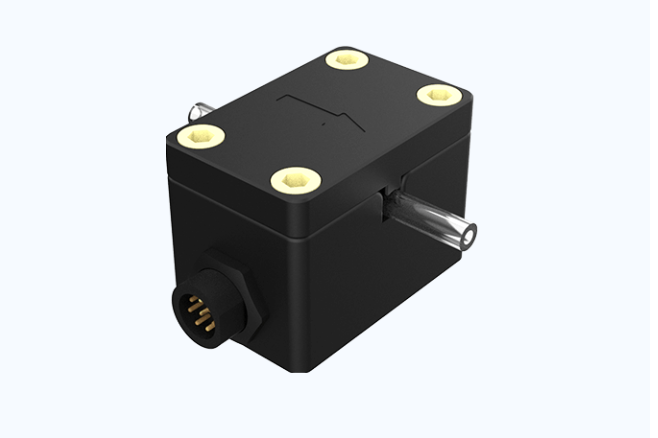
The CG Series clamp-on ultrasonic flow sensor is compact and can measure flow rate and output results without external circuitry. It can be clamped directly onto flexible plastic tubing to measure liquid flow rate and detect air bubbles. The CM Series ultrasonic flow meter is an OEM-oriented clamp-on design with RS485 output, compact size, and stable signal transmission for laboratory equipment and fluid control systems. For very low flow, the TGU Series low-flow ultrasonic flow sensor uses a U-shaped measuring channel and is compatible with PVC, silicone, and PE tubing, with measurement accuracy up to ±0.1 mL/min across a 0.1-1000 mL/min operating scope.
For projects that require a wetted connection, XY-TEK also provides the TPK and TPD Series in-line ultrasonic flow sensors. These integrated in-line flow meters have no moving parts and low maintenance requirements, with ±2% accuracy and compatibility with plastic and stainless steel process piping. The TPK Series covers line sizes DN4-DN50, while the TPD Series is specified for DN15-DN50 installations. Both are used in industrial automation, battery manufacturing, chemical processing, and liquid cooling applications.
| Product Series | Type | Flow Range | Typical Applications |
|---|---|---|---|
| CG Series | Clamp-on Ultrasonic Flow Sensor | 0.02-20 L/min | Medical devices, biopharmaceutical, industrial automation |
| CM Series | OEM Clamp-on Flow Meter | 0.05-30 L/min | Medical devices, OEM equipment, fluid control systems, lab equipment |
| TGU Series | Low-flow Ultrasonic Flow Sensor | 0.1-1000 mL/min | Bioprocess, medical equipment, pharmaceutical production, semiconductor |
| CPD Series | Clamp-on Industrial Flow Sensor | 0.1-50 L/min | Industrial automation, food and beverage, water treatment, semiconductor |
| TPK Series | In-line Ultrasonic Flow Meter | DN4-DN50 line sizes | Industrial automation, battery manufacturing, chemical processing, liquid cooling |
| TPD Series | In-line Ultrasonic Flow Meter | DN15-DN50 line sizes | Industrial automation, battery manufacturing, chemical processing, liquid cooling |
| SU Series | Single-use Ultrasonic Flow Sensor | 0.05-10 L/min | Biopharma, single-use systems, medical manufacturing, bioprocess |
| BG Series | Ultrasonic Bubble Detector | Customizable detection range | Medical devices, bioprocess, food and beverage dosing, industrial |
| TH Series | Pulsatile Flow Sensor | 0-15 L/min | Cardiovascular research, hemodynamic testing, medical laboratories |
How ultrasonic flow sensing works in practice
XY-TEK's ultrasonic flow sensors operate using the transit-time difference method, often called the ultrasonic time-difference method. Two transducers send sound waves through the tube wall and the liquid, and the sensor measures the difference in arrival time caused by flow. Because the measurement path can pass through flexible or rigid plastic tubing, the sensor does not need to touch the liquid. This is the basis of non-contact clamp-on measurement.
For real-time process control, XY-TEK's measurement approach supports online monitoring with millisecond-level response, automatic bubble or blockage detection, and alarm capability. In medical and bioprocess environments, the special requirements include non-invasive, non-contact, no contamination, and no pressure loss. The CG Series, for example, is compact and can be directly clamped on flexible plastic tubing to accurately measure liquid flow rate and detect air bubbles. It also supports bidirectional flow detection and analog, pulse, or RS485 output, making it flexible for OEM integration.
For reference, ISO 24062:2023 specifies requirements for clamp-on ultrasonic transit-time meters for liquids and gases in closed conduits. In the medical device field, process controls are also influenced by quality management expectations such as EN ISO 13485. Project teams should confirm which standards apply to their target market and intended installation class.
Application scenarios: matching XY-TEK sensors to project needs
Industrial automation
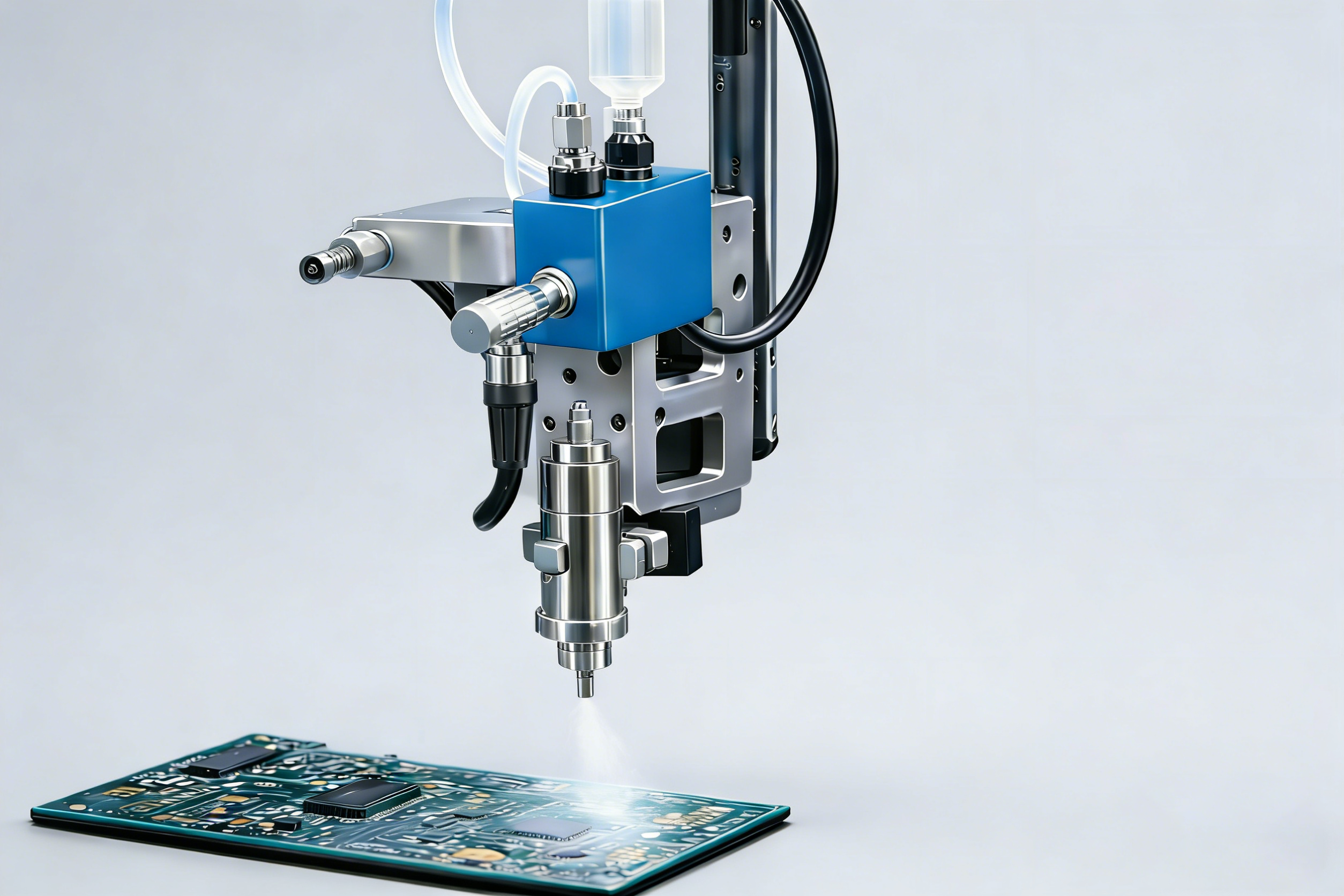
In industrial automation scenarios, XY-TEK sensors monitor pulsating and micro-flow liquids in spraying, dispensing, and cleaning systems. They detect bubbles, blockage, or abnormal flow conditions in industrial pipelines. Typical supporting equipment includes dispensing machines, selective wave soldering equipment, coating machines, cleaning equipment, liquid supply pumps, industrial control systems, and automated production lines. The CPD Series is a compact integrated clamp-on sensor with a built-in LED display and digital output compatibility, which makes it easy to retrofit into existing equipment without cutting pipes.
Medical devices
Medical device applications require strict hygiene and biocompatibility. XY-TEK's non-invasive ultrasonic approach is designed to monitor blood flow and pump operation in systems such as dialysis machines, ECMO systems, and artificial heart support. The CG Series and CM Series are both relevant here because they mount on the outside of medical-grade flexible tubing and do not contaminate the fluid path. The TH Series pulsatile flow sensor is designed specifically for cardiovascular flow testing, with high-speed pulsation capture and ±2% measurement accuracy.
Bioprocess and pharmaceutical production
In biopharmaceutical production, flow sensors must handle sanitary tubing, low flow rates, and strict cleanliness requirements. XY-TEK's clamp-on sensors monitor perfusion pump performance, detect bubbles during filtration and transfer, and provide flow data for tangential flow filtration and chromatography systems. The SU Series single-use ultrasonic flow sensor is an additional option for single-use systems, using a single-use measuring channel and biocompatible polymer materials. It supports sterile applications and offers ±2% accuracy over a 0.05-10 L/min range.
Selected project examples
In liquid cooling loops for data centers and industrial equipment, XY-TEK's non-invasive ultrasonic sensors have been used to monitor non-conductive coolant flow, prevent overheating, and detect leaks or blockages. Reported project results include stable cooling performance, reduced energy consumption, reduced downtime, and extended equipment life over a service period of roughly two to four years. In lithium-ion battery production, CPD Series clamp-on sensors have been applied to electrolyte injection lines, enabling non-invasive monitoring without pipeline cutting and contributing to improved battery consistency and reduced rejection rates. In electronics manufacturing, TGU Series low-flow sensors have been used on selective wave soldering lines to monitor pulsed micro-flux flow, with fast response and no moving parts, helping reduce flux waste and rework.
Market trend analysis
Three verifiable market trends reinforce the importance of project-specific ultrasonic flow sensor selection. First, the ultrasonic segment is growing faster than many traditional flow meter categories: Mordor Intelligence estimates the global ultrasonic flow meter market at USD 1.52 billion in 2025, rising to USD 2.28 billion by 2031. Second, the clamp-on ultrasonic flowmeter segment was valued at USD 1.25 billion in 2024, with a projected compound annual growth rate of 7.4% through 2032, according to Global Information. Third, Asia Pacific held the largest regional share of the ultrasonic flow meter market in 2025 at 38.6%, according to Fortune Business Insights, due to ongoing industrial expansion.
In specialized verticals, precision fluid management is also expanding. Flow control in the semiconductor industry was estimated at USD 5.83 billion in 2024, according to Market Research Future, reflecting demand for high-purity fluid handling. XY-TEK's product portfolio includes low-flow and clamp-on sensors used in semiconductor-adjacent processes such as chemical dispensing, liquid cooling, and high-purity water monitoring. For project teams, these trends suggest that suppliers with both clamp-on and in-line product lines can support a wider range of future applications than vendors limited to one technology.
Ultrasonic versus traditional flow sensing: an honest limitation
Compared with traditional in-line technologies such as turbine or Coriolis flow meters, ultrasonic clamp-on sensors offer a clear structural advantage: they have no moving parts, do not require cutting into the line, and keep the fluid path closed. This makes them attractive for sterile bioprocess lines, medical tubing, and retrofitted industrial equipment. In-line ultrasonic models provide similar benefits while adding a wetted connection that can be permanently integrated into new equipment designs.
One honest limitation of clamp-on ultrasonic measurement is that it depends on acoustic coupling between the sensor and the tube wall. If the tube surface is heavily scaled, or if the fluid contains a very high concentration of bubbles or solids, ultrasonic signal quality may degrade. In such cases, a wetted in-line ultrasonic sensor or an alternative technology may be more reliable. XY-TEK addresses this by offering both clamp-on and in-line product families, so project teams can choose the measurement approach that fits the actual process condition rather than defaulting to a single sensor format.
Future outlook for project-specific flow sensing
As original equipment manufacturers continue to integrate flow measurement into compact, application-specific devices, projects will increasingly require customized sensor geometry, communication protocols, and output signals. XY-TEK's manufacturing base includes a 5,000 m² factory in Shanghai, an R&D team of more than 30 engineers, and an annual output capacity of over 8,000 units. For OEM and ODM projects, customization options include sensor size, interface, logo printing, communication protocol, and housing material, with a typical MOQ of 50 units and lead time of one to two months.
Quality control is another dimension of project fit. XY-TEK applies 100% pre-shipment testing for OEM/ODM production, and third-party inspection is available for custom design orders. After-sales support includes online engineering support, remote technical support, and quality warranty coverage. These capabilities matter for buyers who need predictable integration and long-term supply, especially when the sensor is designed into a medical device, an automated production tool, or a liquid cooling system.
FAQ
What is an ultrasonic flow sensor?
An ultrasonic flow sensor measures flow by sending sound waves through a liquid and analyzing how movement affects the signal. It can detect flow rate and air bubbles without inserting mechanical parts into the fluid line. XY-TEK specializes in ultrasonic flow sensors for small tubing and low-flow applications, including clamp-on, in-line, single-use, and bubble-detection variants.
When should a project choose a clamp-on ultrasonic flow sensor over an in-line type?
A clamp-on sensor mounts on the outside of existing tubing and does not touch the fluid, which is useful for sterile processes, retrofit projects, and applications where pressure loss must be avoided. An in-line sensor is built into the flow path and may be more appropriate when acoustic coupling through the tube wall is unreliable or when a permanent wet connection is preferred for the equipment design.
Which XY-TEK product family matches low-flow applications?
The TGU Series low-flow ultrasonic flow sensor covers a 0.1-1000 mL/min operating scope, with a U-shaped measuring channel and compatibility with PVC, silicone, and PE tubing. It is specified with measurement accuracy up to ±0.1 mL/min and is used in bioprocess, medical equipment, pharmaceutical production, and semiconductor-related applications.
Can XY-TEK customize sensors for OEM integration?
XY-TEK offers OEM/ODM and custom design services. Customization options include sensor size, interface, logo printing, communication protocol, and housing material. For OEM/ODM orders, the MOQ is 50 units, with a typical lead time of one to two months for customized production.
What quality control does XY-TEK apply to flow sensors?
XY-TEK applies 100% pre-shipment testing for OEM/ODM production. Third-party inspection is available for custom design orders. After-sales support includes online engineering support, remote technical support, and quality warranty coverage.
Project-specific flow sensor discussions
For engineering support on a specific fluid path, flow range, or OEM integration project, contact XY-TEK at global@xy-tek.cn or visit xy-tek.com.