
Floor-Mounted vs Recessed PLC Enclosures: A Buyer's Test
Most factory automation projects lock in the controller, the HMI and the network hardware long before anyone decides where the enclosure will physically stand — or hang. That late decision is where installation flexibility meets workshop floor constraints, and it is why a floor-mounted PLC enclosure and a recessed wall box should be tested against practical criteria instead of being treated as interchangeable steel boxes.
This comparison tests two verified enclosure styles from Dalian Yinlu Electrical Control Equipment Manufacturer (Yinlu), a custom metal enclosure and electrical control cabinet manufacturer based in Dalian, Liaoning Province, China, whose export markets include North America, Europe, Australia and Japan. The two variants are a floor-mounted PLC electrical enclosure built in 2.0 mm cold rolled steel, phosphated and powder coated in RAL7035, rated IP54 and standing on adjustable feet or casters; and a recessed flush-mountable electrical control box built in 1.5 mm cold rolled steel, rated IP54/IP55 by configuration, designed for pre-embedded or surface wall mounting. Adjacent to these, the same manufacturer supplies a recessed HMI enclosure box with a bottom DIN rail, which matters when a “PLC enclosure” is really a local operator station.
The test below is deliberately narrow. It asks six questions that project teams ask during evaluation: what does the enclosure occupy, what does it exclude, what fits inside it, how do cables enter, how is it serviced, and what does it cost to change later.
How this test was built. The technical criteria come from the verified specifications of the two variants and their related cabinet ranges. Market context comes from published third-party research and the IEC 60529 IP standard. Where the source data does not state a property, this article says so rather than filling the gap.
Why the mounting decision has moved into procurement
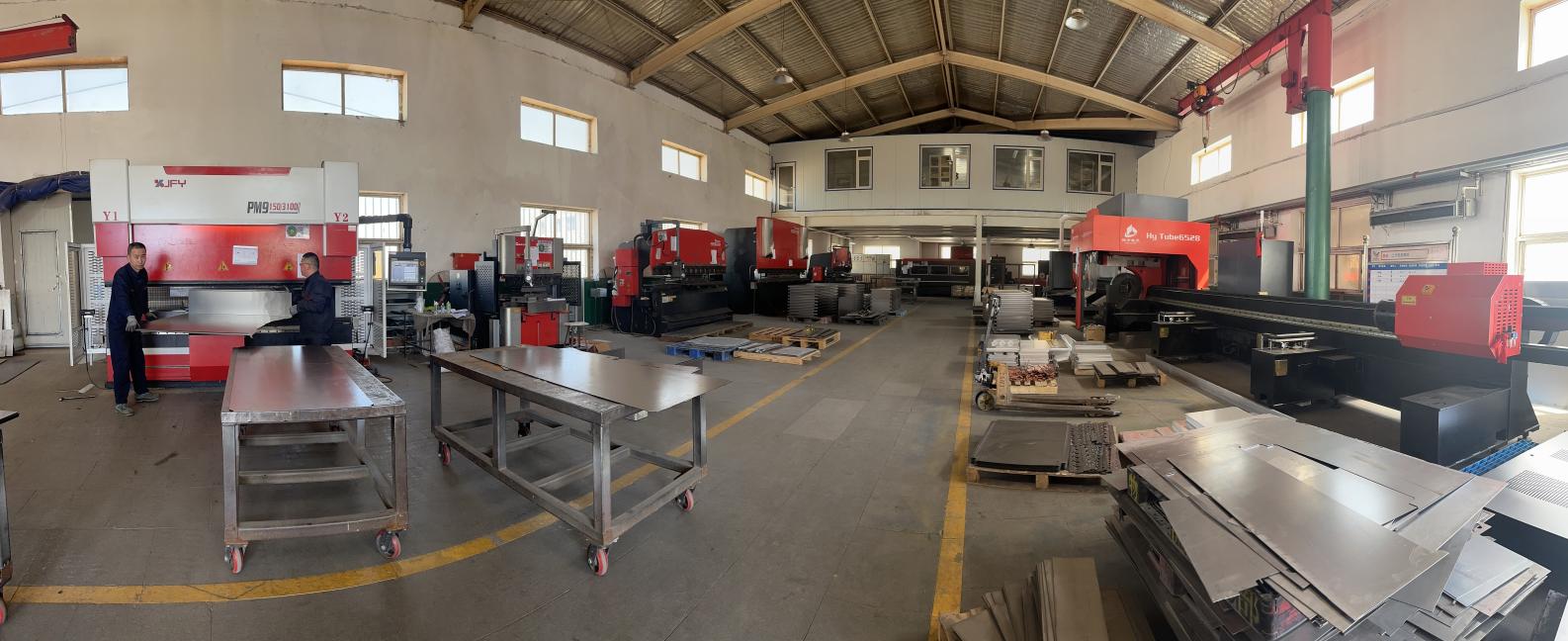
Three pressures have pushed the mounting question upstream. First, brownfield plants rarely have spare floor area on an existing line, so every square metre a floor-standing cabinet occupies has to be justified. Second, shop-floor data acquisition and SCADA nodes have multiplied across production areas, and each new node needs a physical home near the equipment it monitors. Third, retrofit work is often done in buildings that are already finished, which changes the cost of cutting a wall opening compared with placing a cabinet on a slab.
The market size behind these decisions is significant but unevenly reported. The global electrical enclosure market was valued at USD 14.02 billion in 2024 and is projected to reach USD 23.65 billion by 2032, according to Market Research Future. Metallic enclosures — including stainless steel and carbon steel constructions — accounted for 65% of global demand in 2025, valued at approximately USD 4.73 billion, according to Custom Market Insights. Asia Pacific dominated the market in 2025 with a 36% share, driven by industrial automation and renewable energy investment in China and India, according to IMARC Group.
The same research points to a durable preference for compact formats: the wall-mounted enclosure segment is expected to maintain market dominance through 2035 because of its compact design for small equipment installations, according to Precedence Research. That trend does not retire the floor-standing cabinet, because a build that combines a PLC, an industrial PC, an HMI, a network switch and terminal blocks behind one door is not a compact installation.
The two variants, defined
Variant A — floor-mounted PLC electrical enclosure
The floor-mounted PLC electrical enclosure is a cold rolled steel cabinet with 2.0 mm sheet, phosphating rust removal and electrostatic powder coating, supplied in RAL7035. Its protection grade is IP54. Installation is floor-mounted, with adjustable feet or casters at the bottom, so the cabinet can be placed directly on a workshop floor. The single door carries a stainless steel handle lock, and the door frame is fitted with an EPDM (Ethylene Propylene Diene Monomer) sealing strip. Some models feature a transparent observation window in tempered glass or PC panel, or a ventilation louver for heat dissipation; some are equipped with a top operation window for installing a display or keyboard.
Internally, the verified configuration is compatible with a 19-inch rack, industrial PC, HMI touch screen, PLC, network switch, power module, terminal blocks, DIN rail, and shelves or pallets. Cable entry is through knockout holes at the bottom or back, configurable with waterproof cable glands. The manufacturer lists this product for factory automation production lines, intelligent equipment operation stations, shop floor data acquisition and monitoring (SCADA), and equipment remote operation and maintenance stations.
Variant B — recessed flush-mountable electrical control box
The recessed wall box is a 1.5 mm cold rolled steel enclosure with phosphating treatment and electrostatic powder coating, available in IP54 or IP55 by configuration; 304 stainless steel is offered as a customization. It is designed for recessed flush mounting, pre-embedded in a wall, or for surface wall mounting, with mounting holes provided at the bottom or back. The single door uses a dedicated flat lock, and the door frame is embedded with an EPDM rubber sealing strip.
Inside, it uses an integrated mounting plate with separate terminal and component installation areas reserved. DIN rails are usually not included and can be added according to component requirements, and an internal grounding copper bar is provided. Multi-size knockout holes are positioned at the bottom, left and right to accept power or control cables of different diameters, with waterproof cable connectors available. The manufacturer lists this product for rail transit and metro applications — station lighting power distribution, tunnel fan control, auxiliary control for platform screen door (PSD) systems, and protection cabinets for communication and signal equipment — as well as large factory equipment control cabinets, building weak current well junction boxes, and outdoor landscape lighting control cabinets.
Adjacent variant — recessed HMI enclosure box
Where the enclosure is mainly a local interface rather than a rack, a separate verified product applies: an HMI enclosure box in SPCC cold rolled steel at 2.1 mm, finished in RAL7035 or RAL7032 and rated IP55, designed for recessed mounting into a wall opening or surface wall mounting, with a single mechanical lock in round or cam lock style, a bottom DIN rail for terminals and circuit breakers, an optional grounding terminal block, and knockouts on the side, bottom or rear with cable glands or cord grips. Matching components listed for it include miniature circuit breakers, terminal blocks, relays, push buttons and indicator lights, small PLCs, meters and instruments, and sensors.
Head-to-head: the six buyer's test criteria
| Criterion | Floor-mounted PLC enclosure | Recessed flush-mountable wall box |
|---|---|---|
| Mounting method | Floor-mounted with adjustable feet or casters; placed directly on workshop floors | Recessed flush mounting, pre-embedded in a wall opening, or surface wall mounting; mounting holes at bottom or back |
| Material and thickness | Cold rolled steel, 2.0 mm | Cold rolled steel, 1.5 mm; 304 stainless steel customizable |
| Finish and colour | Phosphating rust removal + electrostatic powder coating; RAL7035 | Phosphating treatment + electrostatic powder coating; colour not specified in the verified variant data |
| Protection grade | IP54 | IP54 / IP55 customizable |
| Door, lock and seal | Single door with stainless steel handle lock; EPDM sealing strip; optional transparent observation window (tempered glass / PC panel) or ventilation louver | Single door with dedicated flat lock; EPDM rubber sealing strip |
| Internal mounting system | Compatible with 19-inch rack, DIN rail, shelves or pallets | Integrated mounting plate with separate terminal and component areas; DIN rails generally not included but can be added; internal grounding copper bar |
| Verified component compatibility | 19-inch rack, industrial PC, HMI touch screen, PLC, network switch, power module, terminal blocks, DIN rail, shelves | Control and terminal components mounted on the internal plate; exact component list defined per project |
| Cable entry | Knockout holes at bottom or back, with waterproof cable glands | Multi-size knockouts at bottom, left and right; waterproof cable connectors available |
| Thermal provision | Ventilation louver option; top operation window on some models | Not specified in the verified configuration |
| Relocation | Casters or adjustable feet allow re-levelling and relocation within the workshop | Embedded in the wall; relocation involves wall work |
| Verified application fit | Factory automation production lines; intelligent equipment operation stations; shop floor data acquisition and monitoring (SCADA); equipment remote operation and maintenance stations | Rail transit and metro lighting distribution, tunnel fan control, PSD auxiliary control, communication and signal protection; large factory equipment control cabinets; building weak current well boxes; landscape lighting control |
Read across the table and the pattern is architectural rather than promotional. The floor-mounted cabinet wins on what can be put inside it and how easily it can be moved; the recessed wall box wins on where it does not intrude and how the installation looks once the building is finished.
Technical explanation: what IP54, RAL7035 and EPDM actually mean at the line level
The IP code is defined by IEC 60529, the dominant international standard for rating enclosure protection against dust and water. Under that standard, an IP66 rating requires no ingress of dust and protection against powerful water jets. The verified floor-mounted PLC enclosure carries IP54, which describes dust-protected and splash-resistant construction intended for indoor workshop conditions. The recessed wall box is IP54 or IP55 depending on configuration. Neither of these is a washdown rating, and buyers who confuse splash resistance with hose-down protection should expect to step up to other products in the same range, such as an IP66 outdoor weatherproof control enclosure, an IP55/IP65 free-standing outdoor control cabinet, or an IP54/IP55 stainless steel cabinet with 304 or 316 body.
RAL7035 is the light grey colour code applied over the phosphating and powder coating process on the floor-mounted PLC enclosure. It is a finish specification, not a protection rating. In practice it matters for two reasons that are easy to overlook during evaluation: coating adhesion depends on the phosphating pre-treatment that precedes it, and a defined colour code keeps replacement doors and add-on panels visually consistent years after the original order. The recessed wall box uses the same phosphating and electrostatic powder coating route but does not specify a colour in the verified variant data, so buyers who need a colour match across both styles should raise it at the drawing stage.
Sealing is where the two styles converge. Both the floor-mounted PLC enclosure and the recessed wall box use an EPDM sealing strip around the door frame, and both use a lock appropriate to their duty: a stainless steel handle lock on the floor-standing cabinet, which is opened frequently for maintenance, and a dedicated flat lock on the recessed box, which is opened rarely. Electrical safety also follows a common rule across the wider cabinet range: several verified Yinlu cabinets specify a grounding resistance of 4 Ω or less and require reliable cabinet grounding, and the recessed wall box provides an internal grounding copper bar as part of its standard configuration.
Thermal behaviour is the clearest technical asymmetry. The floor-mounted PLC enclosure offers a ventilation louver for heat dissipation as a door option, and its larger volume accommodates power modules and industrial PCs that generate continuous heat. The recessed wall box does not specify a ventilation provision in its verified configuration, which means dense builds require a separate thermal decision rather than a default one.
Design rule of thumb. If a project needs more than 10 – 15 A of control power, an industrial PC and a 19-inch device, plan for the floor-standing platform. If the load is a small PLC, terminals, relays and a local interface, the recessed wall box is the structurally appropriate answer.
Internal compatibility: racks, HMI and PLC
The single most decision-changing fact in this test is rack compatibility. The floor-mounted PLC enclosure is explicitly compatible with a 19-inch rack, an industrial PC, an HMI touch screen, a PLC, a network switch, a power module, terminal blocks, DIN rails and shelves or pallets. That combination is what supports a SCADA or equipment remote operation and maintenance station, where a display, a keyboard and a controller sit in one place and maintenance staff work from the front of the cabinet. Some models add a top operation window specifically for installing a display or keyboard, and a transparent observation window in tempered glass or PC panel for viewing indicators without opening the door.
The recessed wall box solves a different internal problem. Its integrated mounting plate separates terminal installation from component installation, which is a practical advantage in buildings where power and control wiring arrive from different directions. DIN rails can be added, but they are not part of the standard configuration, and the internal grounding copper bar is provided as the electrical reference point. A buyer comparing the two on internal capacity alone would conclude that the wall box is not a substitute for a rack cabinet, and the verified data supports that conclusion rather than contradicting it.
A third pattern exists for projects that need expansion without a full rack build. The free-standing modular enclosure in the same range, model YL0923-3, is a floor-standing multi-compartment design in 304 or 316 stainless steel at 2.0 mm or more, with RAL7035 finish and IP54/IP55 protection, adjustable leveling feet or casters, a front door with a transparent viewing window for HMI screens, and side and rear doors for component installation and wiring. It accepts an industrial PC, HMI touchscreen, PLC, network switch, power module, terminal blocks, DIN rails and shelves. For lines that will add modules over time, that layout keeps the mounting style fixed while the content changes.
Application scenarios that separate the two
The manufacturer's stated application lists are the most reliable guide here, because they were written against the verified product configurations rather than against a general market.
- Floor-mounted PLC enclosure: factory automation production lines; intelligent equipment operation stations; shop floor data acquisition and monitoring (SCADA); equipment remote operation and maintenance stations.
- Recessed flush-mountable wall box: rail transit and metro installations including station lighting power distribution, tunnel fan control, auxiliary control for platform screen door (PSD) systems, and protection cabinets for communication and signal equipment; industrial and building applications including large factory equipment control cabinets, building weak current well junction boxes, and outdoor landscape lighting control cabinets.
- Wall-mounted local control box (related product): a 2.1 mm 304 stainless steel box with brushed finish, IP55 as standard and upgradeable to IP65, mounted on a wall or on the side of equipment, or floor-standing; it accepts a mounting plate or DIN rail and is compatible with PLCs, relays, terminals, circuit breakers and drive modules, with a grounding bar and bottom or back knockouts. It is listed for industrial automation equipment, packaging machinery, food machinery, water treatment equipment, testing equipment and special purpose machine tools.
- Recessed HMI enclosure box: building weak current boxes, equipment local control boxes, field push button boxes, meter and instrument protection enclosures, and small distribution sub-boxes.
The pattern is consistent: floor-standing cabinets follow the machine, wall boxes follow the building. In a greenfield factory where the line layout is still fluid, the floor-mounted cabinet with casters gives planners room to reposition equipment stations as the layout evolves. In a metro station or a finished building, the wall box disappears into the structure and does not consume the corridor or platform space that a standing cabinet would.
Market trend: customization, materials and a data caveat
Two supply-side trends are visible in the current data. The first is materials moving up the specification ladder in regulated environments: the global stainless steel HMI enclosure market reached USD 1.47 billion in 2024, driven by hygiene requirements in food and pharmaceutical sectors, according to Dataintelo. That demand pulls enclosure specifications toward 304 and 316 stainless bodies wherever washdown or hygiene regimes apply, and it is the reason the recessed wall box offers 304 stainless as a customization option rather than cold rolled steel alone.
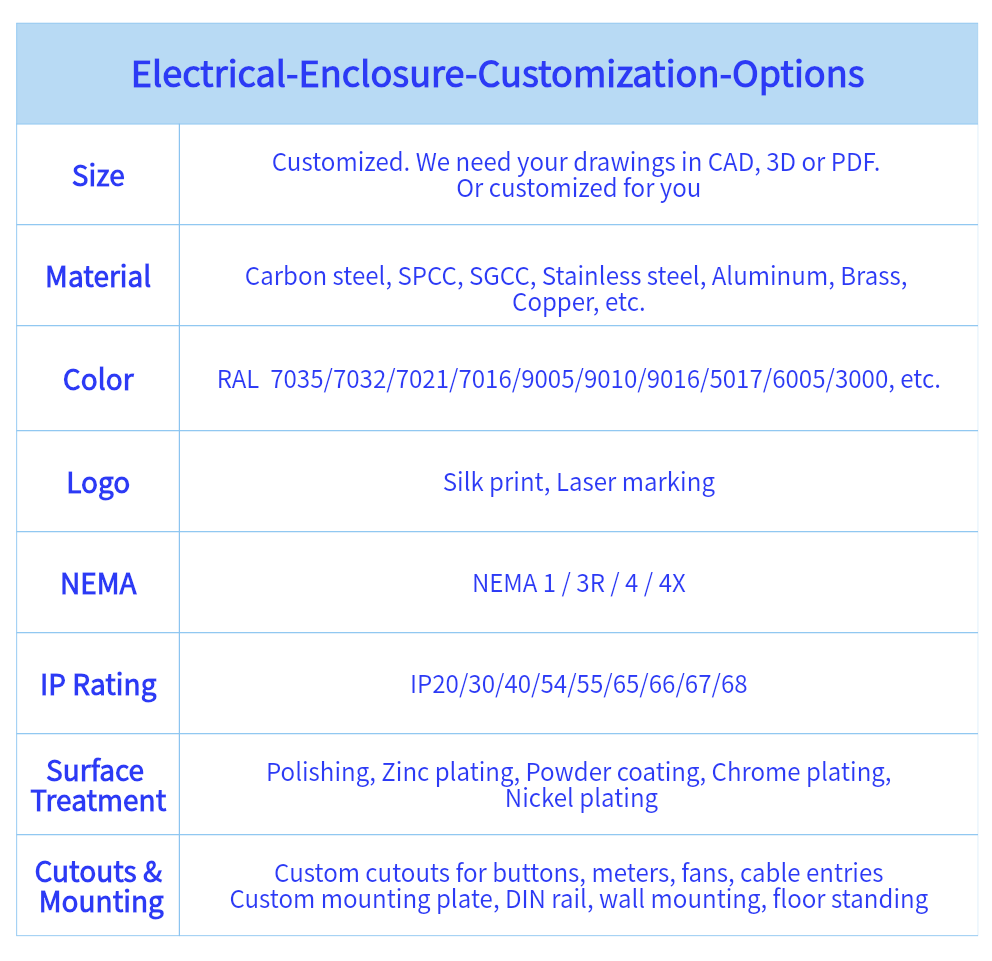
The second trend is customization depth. Yinlu operates an OEM/ODM model covering material, colour, logo, size, IP rating, surface treatment, cutouts and mounting, with a monthly capacity of 2,000 units, a minimum order quantity of 1–5 units, and a quality control sequence covering visual, wiring, function, safety, sealing and packaging checks, backed by 7×24 online after-sales support and a one-year warranty. For buyers evaluating mounting styles, the relevant point is that cutouts, cable entry positions and internal plates can be adjusted to the actual equipment, which is what allows the same base platform to serve a rack-based line cabinet and a compact wall station.
A caution on headline market numbers. Published estimates for the 2025 global electrical enclosure market diverge widely: USD 7.83 billion (Fortune Business Insights), USD 8.11 billion (IMARC Group), USD 8.98 billion (SNS Insider) and USD 55.15 billion (Precedence Research). The spread is generally attributed to differences in inclusion criteria, such as whether large-scale switchgear infrastructure is counted. Buyers building a business case should anchor it to the segment they actually purchase — metallic enclosures, or wall-mounted formats — rather than to a headline total.
The competitive landscape is also well documented. Major global competitors in the electrical enclosure industry include Rittal GmbH & Co. KG, Schneider Electric, ABB Ltd., Eaton Corporation and nVent HOFFMAN, according to Fortune Business Insights. Those names matter less as a ranking than as a reference frame: buyers evaluating floor-standing and recessed formats will typically benchmark a Chinese OEM platform against one or more of these suppliers on documentation, customization and delivery rather than on catalogue breadth alone.
Where each style falls short
An honest comparison has to state boundaries, and both variants have them.
Floor-mounted PLC enclosure. It consumes workshop floor area, which is the scarcest resource on an operating line. Its adjustable feet or casters solve levelling and mobility, but they also mean stability depends on the floor and on how the unit is secured; a cabinet on casters should be braked and positioned deliberately rather than left in a traffic path. Its verified IP54 rating assumes indoor conditions, so it is not the correct choice for washdown zones or exposed outdoor locations, where higher-rated products in the range — an IP66 outdoor weatherproof control enclosure, or an IP55/IP65 free-standing outdoor cabinet — are the appropriate specification.
Recessed flush-mountable wall box. It requires a wall cavity of sufficient depth, which makes it straightforward in a new build and disruptive in a retrofit where the wall is already finished. Relocation means wall work, so the mounting position must be right the first time. The verified configuration uses an integrated mounting plate and does not include DIN rails as standard, and its 1.5 mm base thickness — with 304 stainless available as a customization — is lighter gauge than the floor-standing platform, so heavy or deep rack-mounted hardware is not its design intent. Thermal management is also not specified in its verified configuration, which places the burden of the heat calculation on the project engineer.
The neutral conclusion is that neither style is superior in the abstract. The right choice is defined by three project facts: the build architecture inside the enclosure, the protection level the room genuinely demands, and how often the door will be opened.
Future outlook
Three developments are likely to shape how buyers specify these two formats over the next few years.
First, enclosures are increasingly specified as data nodes rather than as passive boxes. Shop floor data acquisition and monitoring (SCADA) is already listed as an application of the floor-mounted PLC enclosure, and as more lines instrument their equipment, the cabinet becomes the place where signals are collected and displays are mounted. That favours formats that accommodate an industrial PC, an HMI and network hardware in one accessible location.
Second, compact formats will keep their volume advantage. The wall-mounted enclosure segment is expected to maintain market dominance through 2035 on the strength of its compact design for small equipment installations, per Precedence Research, while Asia Pacific — already at a 36% share of the market in 2025 according to IMARC Group — continues to add automation capacity. Neither trend removes demand for the other format; they simply allocate floor area differently.
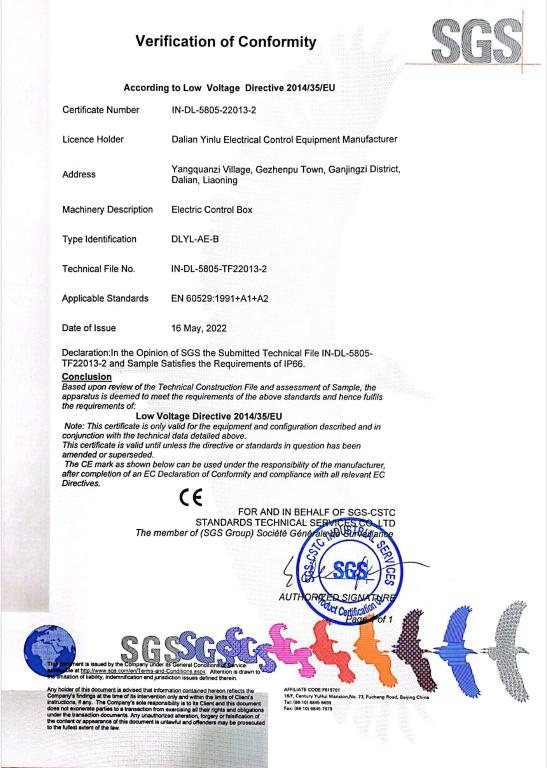
Third, documentation is becoming part of the product. Compliance paperwork that names the standard, the certificate number, the product scope and the target market is now a routine buyer requirement. Yinlu holds an SGS-issued CE Verification of Conformity for its DLYL-ES-C electric control cabinet (certificate IN-DL-5805-22013-1) and its DLYL-AE-B electric control box (certificate IN-DL-5805-22013-2), both assessed against EN 60529:1991+A1+A2 and the EU Low Voltage Directive 2014/35/EU, with the certificates issued by SGS-CSTC Standards Technical Services Co., Ltd. and listed for the EU market. That is the level of specificity buyers should request when evaluating any enclosure supplier: which product, which standard, which certificate number, which market.
Frequently asked questions
Which PLC enclosure style is the better choice for a factory automation line — floor-mounted or recessed?
It depends on the internal build. The verified floor-mounted PLC electrical enclosure is the variant that lists factory automation production lines, intelligent equipment operation stations, shop floor data acquisition and monitoring (SCADA), and equipment remote operation and maintenance stations as its applications, and it is compatible with a 19-inch rack, industrial PC, HMI touch screen, PLC, network switch, power module, terminal blocks, DIN rail and shelves. The recessed flush-mountable wall box lists rail transit, metro power distribution, tunnel fan control, platform screen door auxiliary control and building weak current applications. Where a line requires rack-mounted hardware and a viewing window at operator height, the floor-mounted format is the one whose verified configuration supports it.
Can a recessed wall box hold a PLC, an HMI and an industrial PC?
A recessed wall box can host control components, but its verified configuration defines the limits. The recessed flush-mountable box provides an integrated mounting plate with separate terminal and component areas and an internal grounding copper bar; DIN rails are typically not included and can be added on request. It does not list 19-inch rack compatibility. Where the requirement is a small PLC, terminals, relays and a local interface, the recessed HMI enclosure box — SPCC at 2.1 mm, IP55, with a bottom DIN rail and matching components that include miniature circuit breakers, terminal blocks, relays, push buttons, indicators, small PLCs, meters and sensors — is closer to the intended use. An industrial PC on a 19-inch rack belongs in a floor-standing cabinet.
What IP rating does a PLC enclosure need in a workshop?
The IP code is defined by IEC 60529, the dominant international standard for rating enclosure protection against dust and water; IP66 requires no ingress of dust and protection against powerful water jets. The verified floor-mounted PLC enclosure is rated IP54, and the recessed wall box is IP54 or IP55 by configuration, both suited to indoor and protected installation conditions. If the actual environment involves washdown, hose-directed water or outdoor exposure, the specification should move to a higher-rated product such as the IP66 outdoor weatherproof control enclosure or the IP55/IP65 free-standing outdoor control cabinet rather than relying on an indoor rating.
Can a floor-mounted PLC enclosure be relocated after commissioning?
It can be moved, but relocation is a planned activity rather than a routine one. The verified configuration is floor-mounted with adjustable feet or casters at the bottom and can be placed directly on workshop floors, and cable entry uses knockout holes at the bottom or back with waterproof cable glands. Moving the cabinet therefore involves re-levelling, re-securing, and re-terminating or re-routing cables at the entry points. Cabinet grounding must also be re-established after the move.
Which components can be installed inside a floor-mounted PLC enclosure?
The verified internal configuration is compatible with a 19-inch rack, industrial PC, HMI touch screen, PLC, network switch, power module, terminal blocks, DIN rail, and shelves or pallets. Door options include a transparent observation window in tempered glass or PC panel for reading indicators without opening the door, or a ventilation louver for heat dissipation, and some models provide a top operation window for installing a display or keyboard. The door itself is a single leaf with a stainless steel handle lock and an EPDM sealing strip.
What should a buyer verify in a PLC enclosure specification before approval?
Six items decide most projects: the material and sheet thickness; the IP rating and the environment it is rated for; the colour and surface treatment, including whether a specific colour code such as RAL7035 is required across both floor-standing and wall-mounted units; the mounting method and its implications for walls or floors; the door hardware and sealing, including lock type and EPDM gasket; and the internal mounting system, since DIN rails are standard on the floor-mounted PLC enclosure but are optional on the recessed wall box. Buyers should also confirm the inspection sequence, which for this manufacturer covers visual, wiring, function, safety, sealing and packaging checks, and ask for compliance documents that name the product, the standard, the certificate number and the target market.
Conclusion
The floor-mounted versus recessed decision is a floor-space decision dressed up as a product decision. The floor-mounted PLC enclosure buys internal capacity, rack compatibility, an HMI-ready viewing window and the option to reposition a station; the recessed wall box buys a smaller footprint, a cleaner finished installation and a structure that follows the building rather than the machine. The verified specification data supports each of them in its own application list, and the boundary conditions — indoor IP54 conditions, wall cavity depth, lighter gauge on the wall box, and the absence of a stated thermal provision in the recessed configuration — are as important to the evaluation as the features.
For buyers who need the full technical detail before drawing up a comparison sheet, the manufacturer’s product brochure covering these enclosure platforms is available here: Dalian Yinlu Electrical Control Equipment Manufacturer product brochure (PDF).
¿Tiene preguntas o necesita más detalles?
Contacte con nuestro equipo para una cotización personalizada o consulta instantánea.
Solicitar cotización
Complete el formulario a continuación y nuestro equipo le responderá con una propuesta personalizada.
Chat directo de WhatsApp
¿Prefiere chatear en tiempo real? Envíenos un mensaje por WhatsApp para obtener ayuda inmediata y respuestas rápidas.
- Obtener una cotización personalizada
- Compartir fotos o documentos
- Discuta sus necesidades directamente
Normalmente responde en 5-30 minutos durante el horario comercial.