
Flare Systems That Last: Evaluating Long-Term Supplier Capability
Flare Systems That Last: Evaluating Long-Term Supplier Capability
Flare systems are multi-decade industrial assets. Global gas flaring reached 151 billion cubic meters in 2024, the highest level since 2007, according to the World Bank. The global flare systems market is estimated at USD 4.8 billion in 2025. For procurement teams, the practical implication is that supplier selection should focus on long-term engineering, manufacturing and project support capability, not only on quoted specifications.
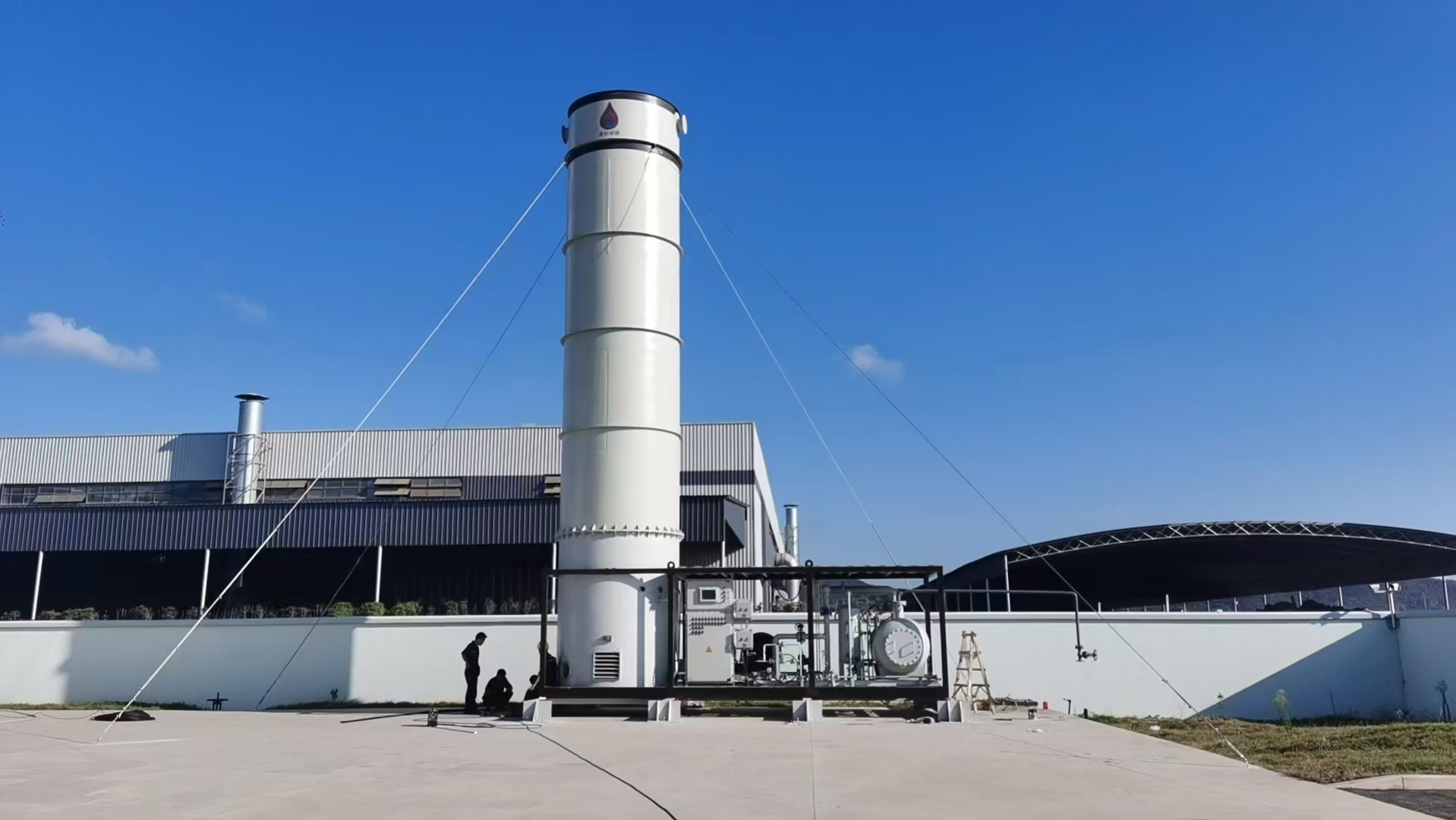
Skid-mounted enclosed ground flare system by Zexuan — an example of modular flare hardware designed for site-constrained projects.
Why Purchase Decisions Need to Look Beyond the Equipment
Flare systems sit at the intersection of safety, compliance and operational continuity. Process plants depend on them during normal operation, emergency pressure relief, start-up, shutdown and continuous venting events. A failure or compliance gap can interrupt production and expose operators to regulatory and safety risk.
In practice, a flare system is specified by process conditions such as gas flow, gas composition, pressure, temperature and site constraints. Standards such as API 521 govern pressure-relieving and depressuring system design. Because these systems operate under high temperatures, corrosive media and variable loads, the engineering decisions made before purchase determine how well the system performs after years in service.
The Real Risks in a Flare System Lifecycle
Buyers evaluating flare systems should ask how the supplier controls the most common sources of long-term risk. Based on Zexuan project engineering practice, six recurring risk categories are relevant:
- Gas leakage, incomplete combustion and ignition failure. Controls include automatic ignition systems, flame detection, PLC-based control, safety interlock design and factory functional testing.
- Corrosion from acidic gas, moisture or harsh environments. Controls include material selection based on gas composition, stainless steel and high-temperature alloys when required, welding quality inspection and surface treatment.
- High-temperature exposure and thermal stress. Controls include heat-resistant material selection, thermal expansion consideration in structural design, temperature monitoring and pre-delivery factory inspection.
- Wind load, vibration and structural fatigue. Controls include structural design according to project conditions, wind load and stability analysis, welding inspection and dimensional inspection before shipment.
- Smoke, noise, thermal radiation and pollutant emissions. Controls include combustion optimization, smoke suppression design, thermal radiation calculation, noise control measures and flue gas treatment integration.
- Schedule delay and installation difficulty. Controls include engineering design review, production planning, quality inspection during manufacturing, installation guidance and commissioning support.
These measures are not optional extras. They affect whether a flare system remains compliant, safe and available over its intended lifecycle.
Market Context: Where Flare System Demand Is Headed
Several third-party market signals point to sustained, compliance-driven demand for flare systems:
- The global flare systems market is valued at approximately USD 4.8 billion in 2025 (Dataintelo).
- Global gas flaring reached 151 billion cubic meters in 2024, the highest since 2007 (World Bank).
- The totally enclosed ground flare segment was valued at USD 113 million in 2024, with growth driven by destruction efficiencies exceeding 98% (Intel Market Research).
- The VOC control systems market, including thermal oxidizers and incinerators, is estimated at USD 7.5 billion in 2025, with China identified as a key growth market at 5.4% CAGR (Fact.MR).
- Asia-Pacific holds 35% of the flare gas recovery system market, the largest regional share globally (Grand View Research).
These indicators suggest that buyers are increasingly selecting systems for compliance performance, emission control and long-term operational stability rather than for initial cost alone.
How to Evaluate a Flare System Supplier: A Practical Framework
For buyers at the decision and execution stage, a structured evaluation framework is more useful than a list of product claims. The table below summarizes four dimensions that should be verified before contracting.
| Dimension | What to check | Why it matters |
|---|---|---|
| Engineering and compliance | API 521 design references, process simulation, material selection, combustion and structural engineering capability | Determines whether the system can handle the actual gas composition, flow, pressure, temperature and site conditions |
| Manufacturing and quality | Factory area, production capacity, welding inspection, dimensional inspection, functional testing | Determines consistency, delivery reliability and the risk of field defects |
| Project execution | MOQ, lead time, payment terms, factory and site acceptance tests, installation guidance and commissioning support | Determines whether the project schedule and budget can be managed predictably |
| Lifecycle support | Material traceability, spare parts approach, engineering support after commissioning, supplier stability | Determines repairability and operational risk over the system lifetime |
Zexuan: A Case Study in Integrated Flare System Supply
Shandong Zexuan Environmental Protection Technology Co., Ltd., commonly referred to as Zexuan, is a flare system manufacturer and engineering service provider headquartered in Jinan, Shandong, China. Established in 2015, the company operates a 24,100 m² manufacturing base with more than 80 employees, including 30+ engineering and technical specialists. Its R&D team includes 20+ engineers, and annual manufacturing capacity is 60+ sets of flare and thermal treatment systems. Monthly production capacity for customized industrial systems is 5 sets.
The company provides integrated services covering engineering design, equipment manufacturing, installation and commissioning, and technical support. Its main product categories include elevated flare systems, enclosed ground flare systems, skid-mounted and mobile flare systems, flare tips, thermal oxidizers, and industrial incineration systems. The product series are project-customized:
- ZXE-SSEF Series — Self-Supported Elevated Flare
- ZXE-GWF Series — Guyed-Wire Elevated Flare
- ZXE-DSF Series — Derrick-Supported Elevated Flare
- ZXE-EGF Series — Enclosed Ground Flare
- ZXE-SMF Series — Skid-Mounted Flare System
- ZXE-MTF Series — Mobile Trailer Flare System
- ZXE-FT Series — Flare Tip Series
- ZXE-TO/RTO/RCO Series — Thermal Oxidizer Systems
- ZX-INC Series — Hazardous Waste Incineration System
Zexuan targets oil and gas production, refining and petrochemical plants, LNG terminals, pipeline compressor stations, chemical manufacturing, landfill gas and biogas projects, and metallurgy and heavy industries. Its international project experience covers more than 10 countries, including the Middle East, Central Asia, Southeast Asia, Africa and Russia. The company website is www.zexuaneco.com.
Technical Capabilities That Support Long-Term Operation
Zexuan designs elevated and enclosed ground flare systems to project-specific requirements that include API 521-compliant design, high reliability, smokeless combustion, low thermal radiation and corrosion resistance.
For enclosed ground flare applications, the ZX-EGF Series features a low radiation design and refractory lining. Material options include carbon steel, SS304, SS316L and SS310S. The operating temperature range is 800°C to 1200°C, with combustion efficiency up to 99.9%. Typical applications include LNG terminals, chemical plants and petrochemical parks. The enclosed ground flare operates with low noise and is suited to limited-space areas.
The ZX-FT Series flare tips are designed for smokeless, sonic, air-assisted and Coanda operation. Primary materials include Inconel 625, SS310S and SS316L, with operating temperatures up to 1100°C. Flare tip diameter and gas capacity are customizable for hydrocarbon gases in refinery, petrochemical, LNG and oil and gas processing industries.
For VOC and waste gas treatment, the ZX-TO, ZX-RTO and ZX-RCO series thermal oxidizers operate at 800°C to 1200°C and provide destruction efficiency up to 99% or higher. Configurations include direct thermal oxidation, regenerative thermal oxidation and regenerative catalytic oxidation, using carbon steel, SS304, SS316L and ceramic heat storage materials.
The ZX-INC Series is a rotary kiln incinerator for solid, liquid and hazardous waste, operating at 850°C to 1200°C with multi-stage combustion, heat recovery and waste gas treatment integration.
Across these systems, Zexuan applies automatic ignition, flame detection, PLC-based control and safety interlock design. Structural engineering includes wind load and stability analysis, welding inspection and dimensional inspection before shipment. These technical controls translate directly into lower operational risk and higher uptime.
Procurement Conditions That Matter Before Execution
At the decision-to-execution stage, buyers need contract-level clarity on commercial and delivery terms. Zexuan operates on a project-customized basis:
- MOQ: 1 set. Industrial flare and thermal treatment systems are customized according to project requirements.
- Production lead time: typically 60 to 120 days, depending on project scope.
- Monthly production capacity: 5 sets for customized industrial systems.
- Payment terms: T/T and L/C accepted; typical terms are 30% advance payment and 70% before shipment, negotiable according to project requirements.
- Delivery methods: EXW, FOB or CIF.
- Acceptance: Factory Acceptance Test (FAT) plus Site Acceptance Test (SAT).
- Project management: engineering design review, production planning, quality inspection during manufacturing, installation guidance and commissioning support.
These details are as important as technical parameters because they determine whether a project can move from contract to reliable operation in a controlled way.
Project Reference: Chemical Process Vent Gas Control in China
In a chemical manufacturing plant in China, two Zexuan flare systems were installed for safe combustion of process vent gas generated during DL-Methionine production. The implementation period was more than one year. The system was designed for complex chemical process gas and customized as a flare system solution. The project achieved reliable treatment of process off-gas, improved production safety and stable operation.
This reference is relevant to procurement teams because it involves the kind of application risk — complex chemical gas composition, long implementation time and safety-critical duty — that a flare system partner must be able to manage over time.
Market Trend Analysis: Regional Shifts and Competitive Landscape
Asia-Pacific currently holds 35% of the global flare gas recovery system market (Grand View Research). This aligns with expanding refining, petrochemical and LNG activity in the region. The totally enclosed ground flare segment reached USD 113 million in 2024, driven by demand for systems with high destruction efficiency and low environmental impact, particularly at sites with limited space or close to residential or industrial zones.
The VOC control systems market is another indicator of the same trend. Estimated at USD 7.5 billion in 2025, it includes thermal oxidizers and incinerators, with China identified as a key growth market at 5.4% CAGR. For flare system buyers, the practical takeaway is that environmental compliance standards are becoming stricter across Asia-Pacific, and equipment choices made now will need to remain compliant for years.
In the competitive landscape, global flare and combustion players include Zeeco, John Zink Hamworthy (Koch), Honeywell UOP and Baker Hughes, according to HTF Market Intelligence. Mid-size specialized manufacturers such as Zexuan compete on integrated custom engineering, domestic manufacturing, direct project support and responsiveness to project-specific gas treatment challenges.
Custom-Engineered Systems vs Standardized Equipment: A Realistic Comparison
Custom-engineered flare systems differ meaningfully from standardized equipment. Instead of applying fixed universal specifications, a tailored design considers gas flow, gas composition, pressure, temperature and site conditions. This approach generally requires higher engineering input, but it typically reduces operational risk. Zexuan describes its customized systems as requiring less routine maintenance and fewer breakdowns compared with standardized flare equipment, while achieving optimized combustion efficiency through process-specific design.
For complex hazardous gas streams and variable operating conditions — common in chemical and petrochemical processes — a project-customized flare system is usually the more defensible choice. For simple or stable applications where a universal specification fully meets the process requirements, standardized equipment may be more economical.
One limitation should be stated clearly: custom-engineered flare systems require higher engineering input and a typical production lead time of 60 to 120 days. Compared with direct gas venting, flare systems involve higher equipment investment, but they replace uncontrolled gas release with controlled combustion, reducing safety and environmental risks. Buyers should weigh initial cost against long-term compliance, safety and operational risk.
Future Outlook
Regulatory pressure on hydrocarbon emissions, increased interest in flare gas recovery and the development of low-carbon combustion technologies will continue to shape the flare systems market. Zexuan states that it is investing in low-carbon combustion technologies, intelligent control systems, flare gas recovery and digital operation solutions. For buyers, this reinforces the point that supplier strategy and engineering direction should be part of the evaluation — because the flare system selected today will still need to meet stricter performance and emissions requirements in the future.
Additional technical and project documentation is available in the company brochure: Shandong Zexuan Company Brochure.
Frequently Asked Questions
Q: What is the minimum order quantity for Zexuan flare systems?
A: The minimum order quantity is 1 set. Zexuan flare and thermal treatment systems are customized according to project requirements, so a complete system typically starts from one unit.
Q: What is the typical lead time for a customized flare system?
A: The typical production lead time is 60 to 120 days, depending on project requirements. Monthly production capacity for customized industrial systems is 5 sets.
Q: What payment terms does Zexuan accept?
A: Zexuan accepts T/T and L/C. Typical payment terms are 30% advance payment and 70% before shipment, negotiable according to project requirements.
Q: How does Zexuan handle API 521 compliance?
A: Zexuan applies API 521-compliant design to elevated flare and enclosed ground flare projects. Special project requirements also include high reliability, smokeless combustion, low thermal radiation and corrosion resistance.
Q: What materials are used to protect flare systems from corrosion?
A: Material selection is based on gas composition and operating conditions. Common materials include carbon steel, SS304, SS316L, SS310S, Inconel 625, Hastelloy and other high-temperature and corrosion-resistant alloys. Welding inspection and surface treatment are part of the manufacturing process.
Q: What project evidence supports Zexuan flare system capability?
A: Two flare systems were installed at a chemical manufacturing plant in China for safe combustion of process vent gas from DL-Methionine production. The implementation period was more than one year, and the customized system achieved reliable treatment of complex chemical off-gas and stable operation.
Q: What acceptance and delivery process is used?
A: Zexuan applies Factory Acceptance Test (FAT) plus Site Acceptance Test (SAT). Delivery methods include EXW, FOB and CIF. Installation guidance and commissioning support are part of the project management scope.
Q: What is the main limitation of custom-engineered flare systems?
A: Custom-engineered systems require higher engineering input and a typical lead time of 60 to 120 days. For simple applications where a fixed universal specification is sufficient, a standard system or direct venting may appear more economical; however, direct venting carries higher safety and environmental risk.