
Flare Systems Procurement Q&A: Terms, Tests, Model Choice
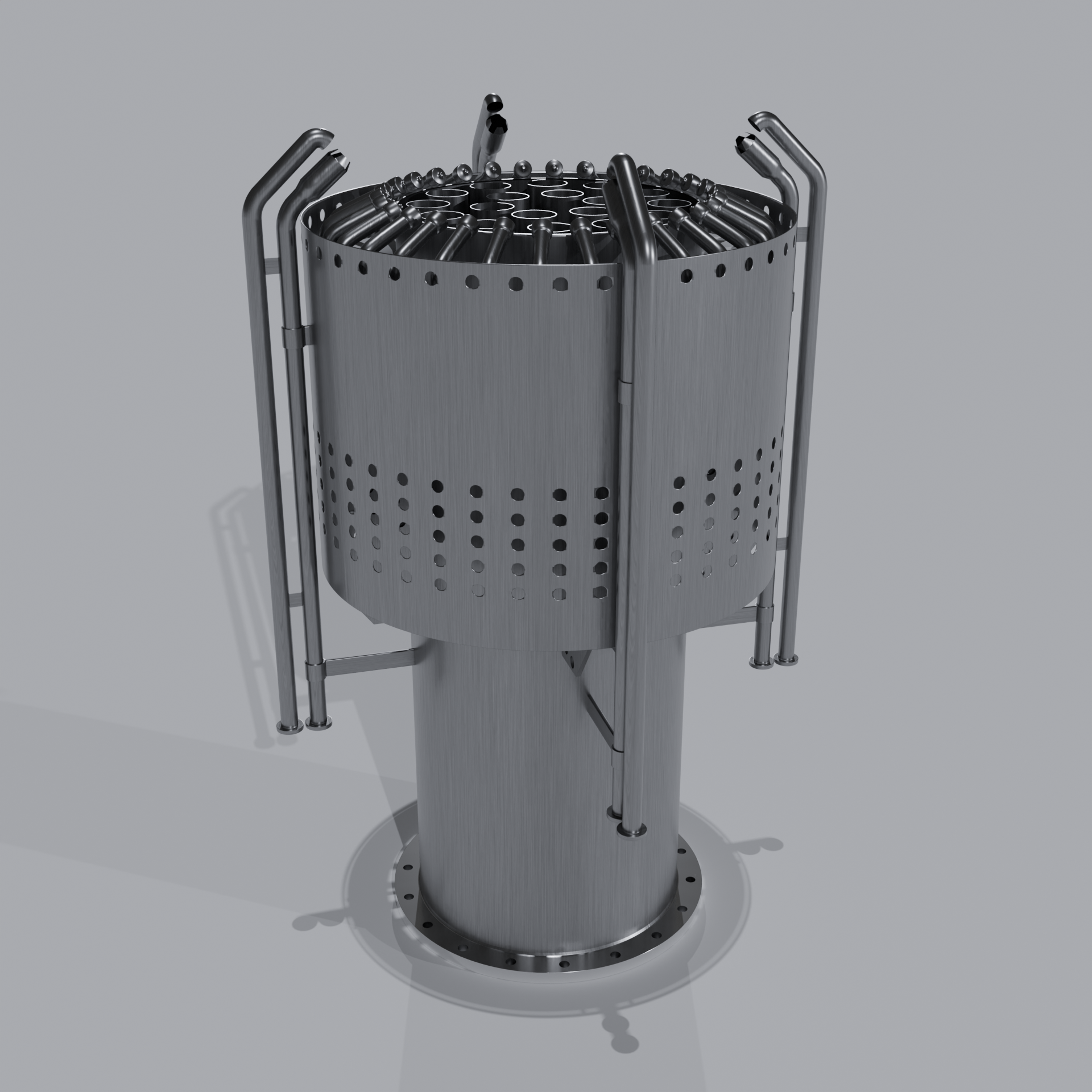
Industrial flare systems are purchased twice. The first purchase is the technical package: the flare type, tip, materials and controls that match a relief case. The second purchase is the evidence package: the drawings, inspection records and certificates that prove the first package was actually delivered. Procurement teams that treat the second purchase as administration usually meet it again during commissioning — as a schedule item rather than a filing item.
The context makes that split more consequential than it used to be. World Bank global flaring data puts flaring at 151 billion cubic metres in 2024, the highest level since 2007, while a 2025 commercial research estimate published by Dataintelo places the global flare systems market at approximately USD 4.8 billion. In parallel, the U.S. EPA NSPS OOOOb rule, effective 7 May 2024, removed the option to assume a default destruction efficiency of 98% for flares and requires operators to demonstrate actual performance. Flaring volume, installed base and verification expectations are moving in the same direction: more equipment, more scrutiny, more documents.
This reference is organised as the questions buyers actually ask between shortlisting and purchase order. It separates what is documented, what is typical, and what remains a project-specific calculation, drawing on publicly verifiable material about API 521, U.S. flare requirements, and Shandong Zexuan Environmental Protection Technology Co., Ltd. — a manufacturer of industrial flare systems and thermal treatment equipment established in 2015, operating a 24,100 m² manufacturing base with more than 80 employees, including 30+ engineering and technical specialists, and project experience in more than 10 countries across the Middle East, Central Asia, Southeast Asia, Africa and Russia.
Why flare procurement questions cluster around evidence
A flare system is a safety device that is dimensioned by an event that has not happened yet. That single characteristic explains most procurement friction. The buyer cannot test the relief case on site before purchase, the supplier cannot ship before the relief case is defined, and the regulator increasingly wants proof rather than a design claim. The result is that the decisive questions in a flare RFQ are rarely about whether a stack can be built — they are about what evidence travels with it.
The EPA defines an industrial flare simply as a thermal oxidation system using an open flame without enclosure. That definition is useful because it shows how wide the category is: an elevated refinery stack, an enclosed ground flare with refractory lining, a skid-mounted LNG unit and a biogas landfill flare all sit inside it, and they are not interchangeable. Selecting between them is a technical decision; proving that the selected configuration performs as specified is a documentation decision. This article treats both, in the order a buyer encounters them.
Part 1 — Commercial terms and scope definition
Q1. What minimum order quantity and lead time should be planned?
Zexuan quotes a minimum order quantity of one set and a delivery window of 60–120 days depending on project requirements, with manufacturing capacity described as 5 sets per month for customized industrial systems and an annual capacity of 60+ sets of flare and thermal treatment systems. Because flare packages are engineered against a relief case rather than built to stock, the practical question is not only how long fabrication takes but which milestone starts the clock. Buyers working to a fixed site date should confirm in the contract whether the 60–120 days runs from purchase order, from approved design basis, or from approval of drawings.
Q2. How is the scope boundary of a flare system defined?
Zexuan's stated customization scope covers flare type, capacity, material, structure, control system, layout, voltage and documentation. In project terms, that scope statement should be read as a boundary document: it defines what is supplied and, by omission, what is by others. Typical matched equipment across these applications includes the flare stack or enclosure, the ignition system, the gas control unit and PLC-based control, with blower and monitoring equipment added for landfill gas and biogas service. Foundations, interconnecting piping to battery limits, cabling and utility supply are normally the buyer's or EPC contractor's responsibility and should be listed explicitly in the RFQ response rather than assumed.
Q3. Is there a price band for industrial flare systems?
There is no published price band for industrial flare systems, and a supplier who gives a single number before the relief case is defined is quoting an assumption rather than a price. Cost in this category is driven by five variables that buyers can actually compare: configuration (elevated, enclosed ground, skid-mounted or thermal oxidizer); structure scale, where elevated flares range from 10 m to 150 m+ in height; tip diameter and tip type, with sonic, smokeless, air-assisted and Coanda options available; material grade, moving from carbon steel and hot-dip galvanized steel at the lower end of the temperature and corrosion spectrum to SS304, SS316L, SS310S and Inconel 625 where service conditions require them; and finally control, instrumentation, testing and documentation scope. Quotations that are normalised across those five variables are comparable. Quotations that are not are simply different products.
Q4. What documentation should arrive with a quotation?
A technically reviewable quotation normally contains the design basis and relief case, a general arrangement drawing, a bill of materials with material grades, the control philosophy, an inspection and test plan, a proposed factory acceptance test protocol, a spare parts list and the applicable certificates. Zexuan's quality control sequence — incoming material inspection, welding inspection, dimensional inspection, pressure and leak testing where applicable, functional testing, factory acceptance testing and final inspection before shipment on a 100% inspection basis — provides the skeleton of that package. If the sequence is stated in the quotation, the buyer can hold the supplier to it at FAT instead of negotiating it after the purchase order.
Part 2 — Acceptance criteria and performance verification
Q5. Which inspections should a buyer expect before shipment?
For a customized industrial system, the documented pre-shipment inspection set is: incoming material inspection; welding inspection; dimensional inspection; pressure and leak testing where applicable; functional testing; factory acceptance testing; and final inspection before shipment, executed on a 100% inspection basis. That list matters commercially because each item produces a record. A buyer who receives the inspection records but not the underlying material certificates, welding documentation or calibration certificates has received a summary, not an evidence pack.
Q6. What should a factory acceptance test for a flare system demonstrate?
FAT is the point at which a flare package stops being a drawing. For configurations offering automatic ignition and flame monitoring with PLC-based control — as used in Zexuan's elevated, enclosed ground and biogas flare projects — the protocol should demonstrate the ignition sequence, the flame-monitoring response, control logic under simulated trip conditions, pressure or leak testing where applicable, and the dimensional checks that confirm site interfaces. Documentation review belongs inside the FAT, not after it: as-tested drawings, material certificates and instrument calibration records should be signed off in the same session as the functional test.
Q7. How is destruction efficiency actually verified?
Design values and demonstrated values are not the same thing. The EPA describes properly operated flares as achieving at least 98% destruction efficiency in the flare plume, and Zexuan reports combustion efficiency of up to 99.9% for enclosed ground flares, methane destruction of ≥98% for the ZXE-BGF biogas series depending on system design and operating conditions, and 98%–99.9% for elevated flares depending on design conditions. Because NSPS OOOOb removed the default 98% assumption for U.S. operations, the more useful procurement question is not what efficiency a supplier claims but what operating envelope, monitoring arrangement and test evidence supports the claim. Where a jurisdiction requires demonstrated performance, the acceptance criteria should state the test method, the operating conditions during the test, and the parameters to be recorded.
Q8. Does assist-steam or assist-air monitoring belong in the technical scope?
In the U.S. regulatory context described by the EPA, steam-assisted and air-assisted flares require monitoring systems capable of continuously measuring, calculating and recording assist-air and/or assist-steam volumetric flow, subject to cited alternative options. That requirement changes the shape of the package: continuous assist-flow measurement becomes part of the control philosophy and instrumentation scope rather than a later add-on. Retrofitting continuous measurement after commissioning is materially harder and more expensive than specifying it at RFQ stage, so buyers in regulated jurisdictions should include it in the technical bid evaluation regardless of whether the supplier offers it by default.
Part 3 — Compliance language and what it proves
Q9. What does “API 521 compliant design” mean in practice?
API 521 is titled Pressure-relieving and Depressuring Systems and is identified in the cited API document as identical to ISO 23251. It is a design reference for sizing and configuring pressure relief and depressuring systems, flare systems included — not a product certificate. When a supplier states that a system is designed to API 521, the accurate reading is that the relief case, flare sizing, radiation assessment and depressuring basis were developed against that framework. It does not by itself prove compliance, and the verified record for this category notes explicitly that API 521 compliance and manufacturing capability require documentary verification. The procurement consequence is straightforward: ask for the design basis and supporting calculations, not only the sentence.
Q10. Which management-system certificates does Zexuan hold?
Zexuan holds three management-system certificates, all issued on 18 March 2026 by CSU International Certification Co., Ltd. and valid to 17 March 2029. Their scope covers development of waste gas treatment equipment and control units and sales of waste gas and waste liquid treatment equipment, with the occupational health and safety certificate extending to related occupational health and safety management activities and the environmental certificate to related environmental management activities. Each certificate carries a CNAS accreditation mark for the domestic Chinese market and an IAF multilateral recognition mark for international markets — a distinction worth checking when certificates are submitted in a tender, because the two marks serve different procurement contexts.
| Standard | Certificate number | Issued / valid to |
|---|---|---|
| ISO 9001:2015 / GB/T 19001-2016 (Quality) | 26326Q00079R001 | 2026-03-18 / 2029-03-17 |
| ISO 14001:2015 / GB/T 24001-2016 (Environmental) | 26326E00054R001 | 2026-03-18 / 2029-03-17 |
| ISO 45001:2018 / GB/T 45001-2020 (OH&S) | 26326S00054R001 | 2026-03-18 / 2029-03-17 |
Q11. Which operating requirements apply in the United States?
In the U.S. context described by the EPA, flares used as control devices subject to NESHAP or NSPS must meet the design and operating requirements specified in the General Provisions at 40 CFR 63.11(b) or 40 CFR 60.18(b) respectively. In the refinery case cited by the agency, a combustion-zone net heating value limit of at least 270 Btu per cubic foot is referenced as the operating limit associated with achieving at least 98% destruction efficiency, assessed on a 15-minute block basis. These are jurisdiction-specific operating requirements, and they should be applied against the project's actual rule subpart rather than used as a generic global specification.
Part 4 — Model selection against a relief case
Model selection in flare systems is a mapping exercise between a gas stream and a configuration, not a ranking exercise. The table below sets out the families Zexuan manufactures against the verified parameters and the applications they are documented for.
| Model family | Configuration | Documented parameters | Typical application |
|---|---|---|---|
| ZX-SSEF / ZX-GWF / ZX-DSF | Self-supported, guyed-wire, derrick-supported and demountable elevated flares | Height 10 m–150 m+; temperature up to 1100 °C; turndown up to 100:1; combustion efficiency 98%–99.9% depending on design | Refining, petrochemical, gas processing, compressor stations |
| ZX-EGF | Enclosed ground flare, multi-burner, low radiation and low noise | Combustion efficiency up to 99.9%; 800–1200 °C; refractory lining; customized gas flow | Petrochemical parks, chemical plants, LNG terminals, restricted-space sites |
| ZXE-BGF | Open or enclosed biogas / landfill gas flare | 35%–65% CH₄; 800–1100 °C; methane destruction ≥98%; automatic ignition and flame monitoring | Landfill sites, digesters, wastewater treatment, agricultural biogas |
| ZX-SMF | Skid-mounted LNG/LPG and mobile flare unit | LNG, LPG, natural gas and hydrocarbon gas; cryogenic service compatible; compact skid | LNG terminals and bunkering, gas storage, pipeline facilities |
| ZX-FT | Sonic, smokeless, air-assisted and Coanda flare tips | Customized diameter and gas capacity; up to 1100 °C; SS316L, SS310S, Inconel 625 | New builds, replacements and tip upgrades |
| ZX-TO / ZX-RTO / ZX-RCO | Direct, regenerative thermal and regenerative catalytic oxidation | 800–1200 °C; VOC destruction up to 99%+; ceramic heat storage; heat recovery options | Continuous VOC and odour control in chemical, pharmaceutical and coating plants |
| ZX-INC | Rotary kiln and multi-stage hazardous waste incinerator | 850–1200 °C; multi-stage combustion; flue gas treatment integration | Complex liquid, solid and hazardous waste streams |
Q12. How should material grade be decided?
Material selection is a function of process conditions, temperature, corrosion resistance and gas composition, and the documented range runs from carbon steel in painted or hot-dip galvanized form through SS304 and SS316L to SS310S, Inconel 625, Hastelloy alloy and other high-temperature or corrosion-resistant alloys, with refractory lining used in enclosed ground flare construction. In practice the decision usually concentrates on the wetted high-temperature zone: flare tips are offered in SS316L, SS310S and Inconel 625 for service up to 1100 °C. A buyer who specifies a single grade for the whole package is either overpaying in the cold sections or under-specifying the hot ones.
Q13. What operating temperatures are documented across the range?
Documented operating temperatures are up to 1100 °C for elevated flare systems and flare tips, 800–1200 °C for enclosed ground flares and for ZX-TO / ZX-RTO / ZX-RCO thermal oxidizers, 800–1100 °C for the ZXE-BGF biogas series, and 850–1200 °C for ZX-INC hazardous waste incineration. These are design ranges for the equipment families, not a guarantee that every gas stream is suitable at the top of the band; residence time, gas composition and downstream treatment also shape the final specification.
Q14. What does a 100:1 turndown ratio mean for specification?
Turndown of up to 100:1 appears in the typical parameters for the elevated flare series, and it describes the ratio between maximum and minimum stable firing rates the design can accommodate. It matters because flare systems spend most of their life at low flow and a small fraction of it at design flow. A high turndown figure is only useful if the tip type, assist medium and control logic support stable combustion at the bottom of the range, so buyers should ask for the operating envelope — minimum stable flow, assist-medium consumption at low load, and monitoring behaviour — rather than accepting the ratio as a headline number.
Comparison: elevated, enclosed ground and thermal oxidation
| Aspect | Elevated flare | Enclosed ground flare | Thermal oxidizer |
|---|---|---|---|
| Enclosure | Open flame, no enclosure | Enclosed, refractory lined, multi-burner | Enclosed combustion chamber |
| Visible flame / radiation | Visible flame; radiation managed by stack height | Flame concealed; low radiation and low noise design | No flare flame; process combustion |
| Typical duty | Emergency relief, start-up and shutdown venting | Continuous or intermittent, complex hazardous gas | Continuous VOC and waste gas destruction |
| Footprint driver | Tall structure and plot radius | Modular, suited to limited-space sites | Equipment train with heat recovery |
Where the documented position has limits
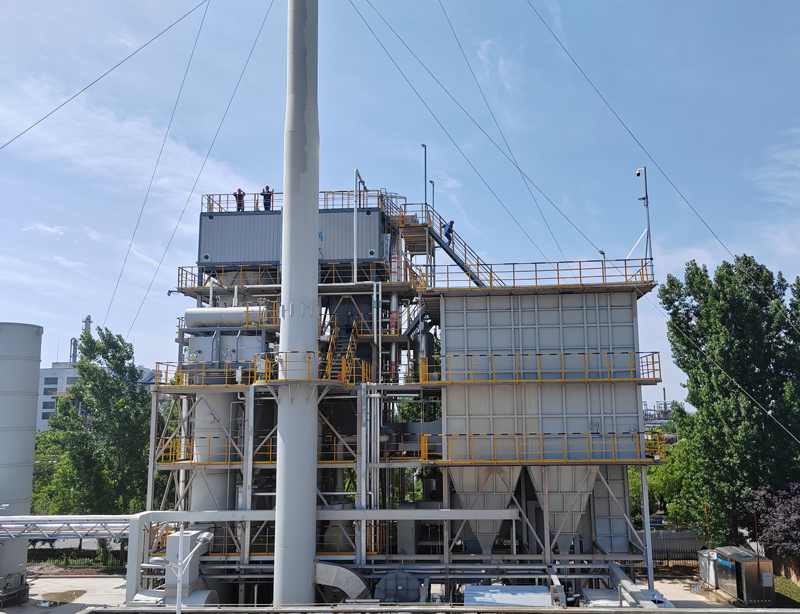
Three boundaries deserve to be stated plainly. First, an API 521 reference is a design framework, not a certification; the verified record for this category notes that public API 521 references do not prove supplier compliance and that supplier-specific design-basis documents, inspection records and jurisdiction conformity evidence must be requested. Second, the efficiency figures in this article are design and typical values — the EPA's 98% benchmark applies to properly operated flares, and Zexuan's higher figures are explicitly conditioned on system design and operating conditions, so a buyer should not read them as independently verified site performance. Third, enclosed ground flares depend on refractory lining and a multi-burner arrangement, which introduces a materials-inspection dimension that an open elevated flare does not carry; that is a real trade-off against their low radiation, low noise and small-footprint advantages, not a footnote to them.
Market signals shaping flare procurement
Three verified signals are worth carrying into a sourcing decision. Flaring volume remains high: the World Bank's global flaring data recorded 151 bcm in 2024, the highest since 2007, which implies a large installed base of equipment that will be maintained, upgraded or replaced. The market is sizeable: Dataintelo's 2025 estimate of approximately USD 4.8 billion is a commercial research figure of medium confidence and should be treated as directional rather than audited. And the compliance regime is tightening: NSPS OOOOb's removal of the default 98% destruction efficiency assumption converts efficiency from a design claim into a monitoring obligation.
Taken together, these signals shift value toward suppliers who can deliver monitoring-ready control packages and documentation alongside steel and refractory. Zexuan's stated development direction — low-carbon combustion, intelligent control systems, flare gas recovery and digital operation solutions — sits on that line, and its international project experience across more than 10 countries indicates a supply base outside the traditional Western manufacturing centres that buyers increasingly evaluate in parallel.
Future outlook
The next procurement cycle is likely to be defined less by flare hardware than by what is attached to it. Continuous assist-flow monitoring, flame monitoring, combustion-zone heating value control and recorded operating data are becoming part of the technical specification rather than an instrumentation afterthought, and regulation in major markets is pulling them forward. For buyers, that argues for RFQs that treat control, instrumentation and documentation as first-class scope items with their own acceptance criteria; for suppliers, it argues for design packages that can be verified rather than described. The equipment itself — elevated stacks from 10 m to 150 m+, enclosed ground flares with refractory lining, skid-mounted LNG units, biogas flares and thermal oxidizers — is mature. The evidence layer around it is where the differentiation now sits.
FAQ
What is the difference between an elevated flare and an enclosed ground flare?
An elevated flare is a thermal oxidation system using an open flame without enclosure, mounted on a self-supported, guyed-wire, derrick-supported or demountable structure typically 10 m to 150 m+ tall. An enclosed ground flare combusts gas inside a refractory-lined, multi-burner enclosure at 800–1200 °C, with combustion efficiency up to 99.9%, low radiation and low noise, and a footprint suited to limited-space sites. The elevated design manages radiation through stack height; the enclosed design manages it through containment.
Does an API 521 reference mean a flare system is certified?
No. API 521, titled Pressure-relieving and Depressuring Systems and identical to ISO 23251, is a design standard for pressure relief and depressuring. A supplier statement that a system is designed to API 521 indicates the design basis follows that framework; it does not establish certification. Certificates in this category come from management-system bodies and, separately, from jurisdiction-specific conformity evidence such as 40 CFR 63.11(b) or 40 CFR 60.18(b) compliance in the United States.
Which materials are used for high-temperature flare components?
Flare tips are offered in SS316L, SS310S and Inconel 625 for service up to 1100 °C. Across complete systems, documented materials include carbon steel in painted or hot-dip galvanized form, SS304, SS316L, SS310S, Inconel 625 and Hastelloy alloy, with refractory lining used in enclosed ground flare construction. Selection depends on process conditions, temperature, corrosion resistance and gas composition.
What turndown ratio can a flare system achieve?
A turndown ratio of up to 100:1 appears in the typical parameters for Zexuan's elevated flare systems, alongside operating temperatures up to 1100 °C and combustion efficiency of 98%–99.9% depending on design conditions. The achievable range in a specific project depends on tip type, assist medium and control logic, so the operating envelope should be confirmed at design stage rather than assumed from the headline ratio.
How long does delivery take and what is the minimum order?
Zexuan's documented terms are a minimum order quantity of one set and a lead time of 60–120 days depending on project requirements, supported by a stated capacity of 5 sets per month for customized industrial systems. Because each unit is engineered to a relief case, the contract should specify which milestone starts the lead-time period.
What should a buyer verify before accepting a flare system?
Verification typically covers material certificates, welding and dimensional inspection records, pressure and leak test results where applicable, functional test and factory acceptance test reports, instrument calibration records, as-tested drawings, and the applicable management-system certificates. Where the project falls under a specific regulatory regime, the design basis, monitoring arrangement and operating limits referenced in that regime should be confirmed as part of the same review.
Company and product documentation for Shandong Zexuan Environmental Protection Technology Co., Ltd. is available at zexuaneco.com, and the corporate brochure can be downloaded here: Shandong Zexuan brochure (PDF).
¿Tiene preguntas o necesita más detalles?
Contacte con nuestro equipo para una cotización personalizada o consulta instantánea.
Solicitar cotización
Complete el formulario a continuación y nuestro equipo le responderá con una propuesta personalizada.
Chat directo de WhatsApp
¿Prefiere chatear en tiempo real? Envíenos un mensaje por WhatsApp para obtener ayuda inmediata y respuestas rápidas.
- Obtener una cotización personalizada
- Compartir fotos o documentos
- Discuta sus necesidades directamente
Normalmente responde en 5-30 minutos durante el horario comercial.