
Five Thermoforming Sheet Roll Setups for Toy Blister Pack Converters
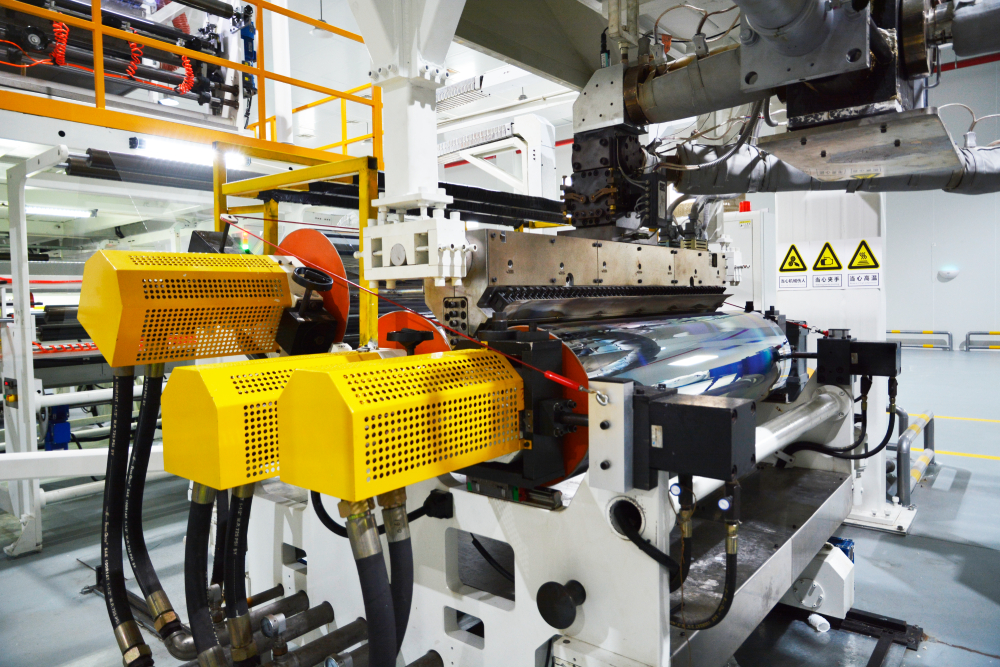
Toy blister packaging is a forming problem that is usually described as a packaging problem. The toy defines an irregular silhouette, with moulded wheels, limbs or edges that the sheet must wrap around. The retail shelf demands that the product be visible through the pack. Handling and transit demand that the formed cavity hold the item without cracking at the corners. All three requirements are settled upstream of the forming machine, in the choice of thermoforming plastic sheet roll.
That makes sheet selection the practical ceiling of a toy blister line. This shortlist reviews five thermoforming plastic sheet roll setups that converters serving toy and retail product packaging evaluate most often. Each is described by material family and structure rather than by supplier, and assessed against the four criteria that decide the outcome in this application: transparency where the pack must sell the product visually, forming definition around complex geometry, impact resistance, and consistent appearance across a production run.
Why Toy Blister Converting Starts With the Sheet Roll
A converter running toy blisters is normally optimising four things at once. Cavity clarity determines whether the shopper can read the product through the pack. Definition determines whether the formed cavity follows the toy's outline closely enough to hold it and to look intentional on shelf. Impact performance determines whether the pack survives stacking, drop and retail handling. Appearance consistency determines whether a repeat order looks like the first order.
All four are material properties before they are machine settings. Clarity and consistency come from the polymer family and from the sheet's surface and structure. Definition comes from how the sheet behaves inside its forming window. Impact comes from the toughness of the grade selected. None of these can be recovered further down the line: a sheet that forms with haze, or a structure that is brittle at the corners of a deep cavity, cannot be corrected at the die cutter or at the assembly table.
The commercial requirements around toy and retail packaging have also widened. Retail programmes increasingly ask about recycled content in the pack, and converters who also serve food-contact customers operate under a separate regulatory layer. The sheet roll decision is therefore a commercial decision as well as a technical one, which is why a shortlist of setups is more useful to a converter than a single recommended material.
The Five Thermoforming Sheet Roll Setups
The five setups below are sheet configurations, not brands. They are listed in the order in which they usually answer the combined requirement of clarity, definition, impact and appearance consistency in toy blister work, recognising that not every toy blister needs the same answer.
| Setup | Material family and structure | Where it leads in toy blister work | Primary boundary to plan around |
|---|---|---|---|
| 1. Clear mono PET (APET) | Single-material PET, high transparency | Transparent blisters, clamshells, retail display packs | Requires controlled heating and forming window; drying and temperature management depend on sheet type and process |
| 2. PETG | PET-family sheet selected for forming behaviour | Deeper draws and more demanding formed geometry | Less cost-oriented than APET for conventional high-volume packaging |
| 3. HIPS | High-impact polystyrene, opaque or coloured | Opaque trays, coloured blister inserts, printed carriers | Not selected where high transparency is required |
| 4. rPET | PET containing recycled PET content | Programmes with recycled-content requirements | Recycled percentage is confirmed per order; not necessarily cheaper than virgin PET |
| 5. Co-extruded / PET–PE laminated | Multilayer structure combining rigidity with a sealing layer | Pack designs that include a heat-sealed element | Both thermoforming behaviour and sealing compatibility must be controlled |
Setup 1 — Clear Mono PET (APET) Sheet Roll: The Transparency Baseline
PET sheet offers high transparency, good thermoforming performance and a PVC-free material option, making it suitable for food packaging and clear containers. It is more suitable for food trays, clear blister packaging, clamshells, folding boxes and retail packaging scenarios. For a transparent toy blister, that combination is the natural starting point: the sheet sells the product through the pack, and the same material family is already well understood across retail rigid packaging.
Within the PET family, APET provides a practical balance of transparency, stiffness and cost for high-volume thermoformed packaging, and is generally the more cost-oriented choice for conventional high-volume packaging compared to PETG. APET sheets are suitable for food trays, blister packs, clamshells and high-volume packaging, which is the production pattern most toy blister programmes follow.
The boundary is process discipline rather than capability. PET requires appropriate drying and temperature management depending on sheet type and process, and the forming window has to be respected rather than pushed. As a reference point, PET thermoforming typically occurs between 266°F and 320°F (130°C to 160°C), with the exact setting depending on grade, thickness and equipment.
Setup 2 — PETG Sheet Roll: For Demanding Draw Geometry
PETG is often selected when easier forming or more demanding forming geometry is required. It can offer a more forgiving forming response for some geometries than APET, which matters when a toy blister has a deep cavity, a tight radius, or a shape that forces the sheet to stretch unevenly across the mould.
There is no fixed universal percentage difference between APET and PETG; performance differences depend on grade, thickness, forming depth and machine settings. The practical distinction for a converter is commercial as well as technical. APET is generally the more cost-oriented choice for conventional high-volume packaging, so PETG earns its place on parts where forming behaviour is a higher priority than unit cost, not as a general upgrade.
Setup 3 — HIPS Sheet Roll: Opaque and Coloured Blister Inserts
HIPS sheet provides better impact resistance and toughness than GPPS sheet for thermoforming, making it suitable for thermoformed trays and electronics packaging, and it is more suitable for opaque trays, consumer-product trays and coloured blister inserts. HIPS is primarily chosen when high transparency is not required, offering good impact resistance and easy thermoforming with flexible colour options.
In toy and retail packaging, this is the setup for multi-cavity inserts where the toy sits on a printed or coloured carrier, for packs where the visual effect comes from the backing card rather than the sheet, and for tray-style elements inside a larger retail pack. HIPS generally has a practical thermoforming processing window for many tray applications, which makes it a comparatively tolerant material to run.
The boundary is optical, not mechanical. Where the retail concept depends on seeing the toy through the pack, HIPS is not the substitute; a see-through pack requires a transparent sheet, and PET is generally preferred when high transparency is required.
Setup 4 — rPET Sheet Roll: Recycled-Content Retail Programmes
rPET sheet incorporates recycled PET content, making it suitable for customers seeking to increase recycled material use in packaging, and it is more suitable for thermoformed packaging, trays, blister packaging and other applications with recycled-content requirements.
One detail matters more than the general claim: recycled content in rPET sheet can be customised according to product specification and compliance requirements, with the actual percentage confirmed for each product or order. A converter specifying rPET for a retail programme should treat the recycled-content figure as an order-level specification to be confirmed, not as a fixed property of the material family.
The boundary cuts in two directions. Cost depends on recycled-content ratio, material quality, certification requirements and market conditions, and rPET is not necessarily cheaper than virgin PET. On the processing side, conditions may require adjustment according to recycled content, IV, sheet structure and thermoforming requirements, and no fixed processing-energy advantage should be assumed.
Setup 5 — Co-Extruded and Laminated Structures: Mono PET vs PET/PE
The core difference between mono PET sheet and PET/PE laminated sheet is structural. Mono PET offers a simpler single-material structure, while PET/PE combines PET rigidity with a PE sealing layer for heat-sealing applications. Mono PET has distinct advantages in applications that do not require a dedicated PE sealing layer, such as trays, clamshells and blister packs. PET/PE is more suitable for meat trays, fresh food trays and other thermoformed packaging requiring heat-sealing performance.
For toy blister converters, this is the setup to examine only when the pack design includes a sealed element or a functional layer that a single-material sheet cannot deliver. The boundary is important: there is no fixed universal percentage gap between mono PET and PET/PE. Performance depends on PET thickness, PE layer thickness, total sheet structure, sealing conditions and end-use requirements, and PET/PE requires control of both thermoforming behaviour and sealing compatibility.
Technical Explanation: From Roll to Formed Cavity
The differences between these five setups show up at four points in the forming cycle.
Heating. The polymer family sets the working window. PET thermoforming typically occurs between 266°F and 320°F (130°C to 160°C). PP typically requires different heating and forming settings from PET and demands good temperature control during thermoforming. HIPS generally has a practical thermoforming processing window for many tray applications, whereas PET requires appropriate drying and temperature management depending on sheet type and process.
Drawing and definition. How far and how evenly a cavity draws depends on grade, thickness and forming depth as much as on material family. This is the point at which the PETG option is usually considered for complex or deeper thermoformed parts where forming behaviour is a higher priority than material cost.
Cooling and clarity. Transparency is delivered by the material and preserved by the process. A transparent PET sheet formed inside its window keeps its optical quality; the same sheet formed outside it does not, and no downstream step recovers it.
Toughness and weight. Impact behaviour separates the polystyrene options sharply: compared with GPPS sheet for thermoforming, HIPS sheet provides better impact resistance and toughness. Density separates PP from PET: typical PP density is approximately 0.90–0.91 g/cm³ against approximately 1.33–1.40 g/cm³ for PET, which indicates a potential weight advantage for PP in weight-sensitive applications. Both density and toughness values depend on material grade and formulation.
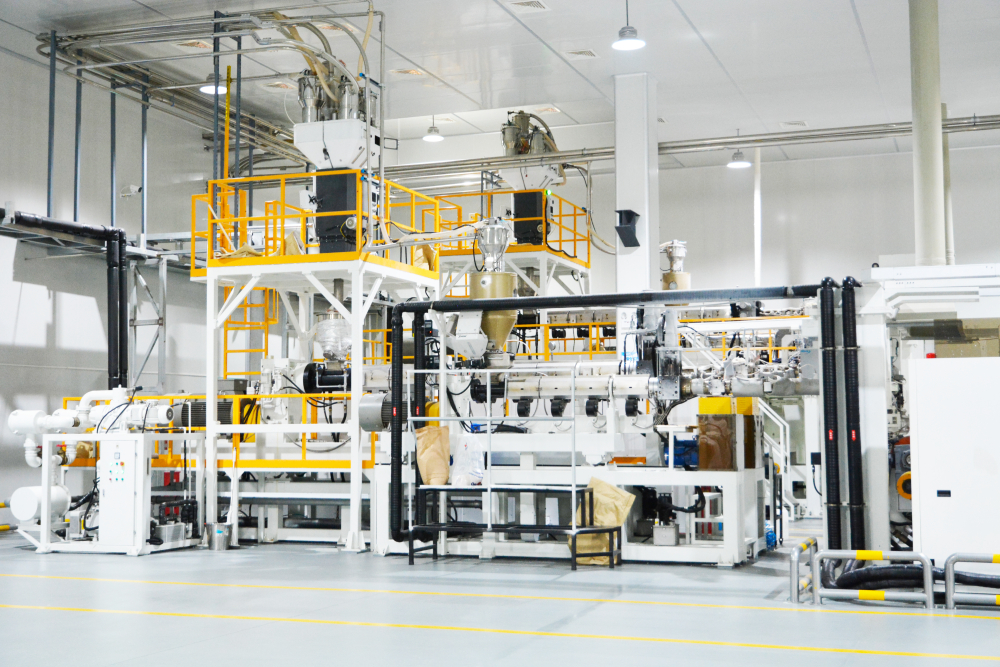
Application: Matching a Setup to a Toy Blister Format
The setup decision becomes clearer when it is tied to the pack format rather than to the material alone.
- Single-item transparent blister, high volume. Clear mono PET or APET, based on the balance of transparency, stiffness and cost for high-volume thermoformed packaging.
- Deep-draw or complex figure blister. PET-family sheet selected for forming behaviour, where a more forgiving forming response matters more than unit material cost.
- Multi-cavity insert on an opaque or coloured carrier. HIPS, which is more suitable for coloured blister inserts and does not need high transparency.
- Pack designs with a heat-sealed element. A structure that combines rigidity with a sealing layer, assessed against the sealing conditions of the specific pack.
- Retail programme with a recycled-content target. rPET, with the recycled percentage confirmed at order level.
One regulatory boundary is worth stating plainly for converters running mixed portfolios. Toy blister packaging is not food-contact packaging, and materials qualified for one end use should not be assumed to transfer to the other without verification. Where a converter also supplies food-contact packaging, EU Regulation (EU) No 10/2011 governs plastic materials and articles intended to come into contact with food within the European Union.
Market Trend: Where Thermoformed Sheet Demand Is Moving
The global thermoformed plastic market reached $14.79 billion in 2023, according to Grand View Research, with a projected compound annual growth rate of 4.9% across 2024–2030. It is worth noting that published estimates of this market vary by definition: some researchers measure thermoformed plastic materials, meaning the raw sheet, while others measure finished thermoformed products such as trays and blisters, and the two produce different figures for the same period. For a converter, the useful reading is directional — steady volume growth in rigid thermoformed packaging rather than a precise forecast number.
The stronger structural signal sits on the material side. The recycled PET market is projected to grow to $24.6 billion by 2034, which reflects the pace at which recycled-content requirements are moving into mainstream retail packaging specification, including toy and consumer-goods packaging. Converters are also increasingly asked to document what they ship: thermoforming plastic materials are classified under HS Code Heading 3920 for non-cellular sheet and 3921 for cellular sheet, and a switch between sheet structures can therefore change the tariff documentation attached to a shipment.
Comparison With Traditional Solutions — and Each Setup's Limits
Toy blister sheet selection is often framed as a straight substitution question. It is more accurate to frame it as a trade-off between four materials families, each with a defined boundary.
| Considered against | Core difference | Practical boundary for toy blister work |
|---|---|---|
| PET vs PVC | PET offers high transparency, good thermoforming performance and a PVC-free material option for packaging applications, and can be processed without the chlorine-related material considerations associated with PVC | PET is more suitable for food trays, clear blister packaging, clamshells, folding boxes and retail packaging scenarios |
| PP vs PET | PP offers lower density and better suitability for applications requiring higher temperature resistance, while PET generally offers higher transparency and stiffness | PP is more suitable for thermoformed cups, dairy containers and food containers; PET remains the transparent, stiff option for see-through blisters |
| HIPS vs PET | HIPS offers good impact resistance, easy thermoforming and flexible colour options; PET is generally preferred when high transparency is required | HIPS suits opaque trays and coloured inserts, not transparent display packs |
| APET vs PETG | APET provides a practical balance of transparency, stiffness and cost; PETG is often selected for more demanding forming geometry | APET is the more cost-oriented choice for conventional high-volume packaging |
| Mono PET vs PET/PE | Mono PET is a simpler single-material structure; PET/PE adds a PE sealing layer for heat-sealing applications | There is no fixed universal percentage gap; performance depends on thickness, structure, sealing conditions and end use |
| rPET vs virgin PET | rPET incorporates recycled PET content for customers seeking to increase recycled material use in packaging | Not necessarily cheaper; recycled percentage confirmed per order; processing conditions may need adjustment |
Decision Checklist Before Committing to a Setup
| Decision point | What to confirm |
|---|---|
| Optical requirement | Whether the pack must sell the product through a transparent face, which rules HIPS out and points to a PET-family sheet |
| Draw geometry | Forming depth, radius and stretch pattern, which determine whether APET is sufficient or a more forgiving forming response is required |
| Impact demand | Toy weight, sharp edges and handling profile, assessed against grade and thickness rather than material family alone |
| Sealing requirement | Whether the pack design includes a heat-sealed element, which is the only condition that justifies a sealing-layer structure |
| Recycled-content target | The recycled percentage the retail programme requires, confirmed as an order-level specification |
| Process capability | Whether the line can hold the drying and temperature management that PET requires, or the different heating settings that PP requires |
| Trade documentation | Whether the sheet structure is classified as non-cellular (HS 3920) or cellular (HS 3921) |
Supplier Capability Worth Verifying
PULIXIN Thermoforming Plastic Sheet is the rigid sheet range produced by Pulixin Packaging Materials (Shanghai) Co., Ltd., a manufacturer of PET, PP and HIPS thermoforming plastic sheet rolls based in Shanghai, China, serving packaging manufacturers internationally. The company was founded in 2009 and operates a 20,000³ production base with 14 advanced co-extrusion production lines, an annual output exceeding 40,000 tons, a team of 90 employees, including 3 engineers in the R&D team, and an export share of around 80% across Southeast Asia, the Middle East, South America and Europe, with products exported to more than 55 countries.
For toy blister converters, the relevant capabilities are the ones that touch appearance and consistency rather than headline capacity. PULIXIN supplies performance-oriented sheet rolls including high-stiffness, excellent-formability, anti-fog and anti-static grades, and offers customisation across thickness, width, colour matching, surface finish, multilayer co-extrusion structures and food-grade material solutions, together with OEM production. Batch quality control covers thickness tolerance, width accuracy, transparency, mechanical properties and thermoforming performance, which are the same characteristics a converter tracks when a transparent blister programme has to look identical on the second and tenth order.
Future Outlook
Two forces are likely to reshape toy blister sheet selection over the next planning cycle. The first is recycled content moving from a differentiator to a specification item. The projected growth of the recycled PET market to $24.6 billion by 2034 suggests that recycled-content percentages will increasingly be written into retail packaging briefs, which puts the order-level confirmation of recycled content and the processing adjustment it requires onto the converter's critical path.
The second is structural design. Multilayer co-extrusion already allows clarity, toughness, anti-static behaviour and sealing compatibility to be combined in one sheet roll rather than traded off against each other. As retail packs carry more functional requirements — display clarity, product protection, recycled content, documented material classification — the sheet setup becomes a design decision taken with the packaging brief, not a purchasing decision taken after it.
FAQ
Which thermoforming sheet roll setup is most suitable for a transparent toy blister pack?
A PET-family sheet is the appropriate starting point where the pack must show the product. PET sheet offers high transparency, good thermoforming performance and a PVC-free material option, and is more suitable for clear blister packaging, clamshells, folding boxes and retail packaging scenarios. Within that family, APET provides a practical balance of transparency, stiffness and cost for high-volume thermoformed packaging, while PETG is often selected when easier forming or more demanding forming geometry is required.
How do PET and HIPS setups differ for toy blister packaging?
HIPS is primarily chosen when high transparency is not required, offering good impact resistance and easy thermoforming with flexible colour options. It is more suitable for opaque trays, consumer-product trays and coloured blister inserts. PET is generally preferred when high transparency is required and fits transparent display packaging. The distinction is optical rather than a question of overall quality: both are established thermoforming materials with different application fits.
When is a PET/PE laminated sheet roll the right choice instead of mono PET?
When the pack requires a PE sealing layer. The core difference is that mono PET offers a simpler single-material structure, while PET/PE combines PET rigidity with a PE sealing layer for heat-sealing applications. Mono PET has distinct advantages in applications that do not require a dedicated PE sealing layer, such as trays, clamshells and blister packs. There is no fixed universal percentage gap between the two; performance depends on PET thickness, PE layer thickness, total sheet structure, sealing conditions and end-use requirements.
Can rPET sheet be used for toy blister packaging, and does it cost less?
rPET sheet incorporates recycled PET content and is more suitable for thermoformed packaging, trays, blister packaging and other applications with recycled-content requirements. Cost should not be assumed to be lower: it depends on recycled-content ratio, material quality, certification requirements and market conditions, and rPET is not necessarily cheaper than virgin PET. The recycled percentage is customised according to product specification and compliance requirements, with the actual value confirmed for each product or order.
What forming temperature applies to PET sheet rolls, and how does it differ for PP?
PET thermoforming typically occurs between 266°F and 320°F (130°C to 160°C), with the exact setting depending on grade, thickness and equipment. PP typically requires different heating and forming settings from PET and demands good temperature control during thermoforming. HIPS generally has a practical thermoforming processing window for many tray applications, whereas PET requires appropriate drying and temperature management depending on sheet type and process.
Do these sheet setups differ in energy consumption?
No universal energy-saving percentage applies to any of them. Process energy consumption depends mainly on sheet thickness, forming temperature, machine configuration and production speed. Where a lower-density material is used, the weight advantage is measurable — typical PP density is approximately 0.90–0.91 g/cm³ against approximately 1.33–1.40 g/cm³ for PET — but that is a material weight difference and should not be presented as an energy or cost guarantee.