
Five Screw and Barrel Types, One Comparison Framework
Five Screw and Barrel Types, One Comparison Framework
A screw and barrel set is not one purchase. It is the point where process type, material chemistry, surface hardness, certification status, order scale and expected service life converge on a single specification decision. Buyers who compare quotations without normalising these five dimensions usually discover the mismatch during the first wear cycle, not before the purchase order.
This article sets out a practical comparison framework for the five configurations most often quoted to plastics and rubber processors: single screw extruder barrels, parallel twin screw barrels, conical twin screw barrels, injection moulding screw barrels and rubber machine screw barrels. Each type is examined against the same criteria, so that a quotation for a nitrided single screw and a quotation for a bimetallic parallel twin can be placed side by side and judged on equivalent terms.
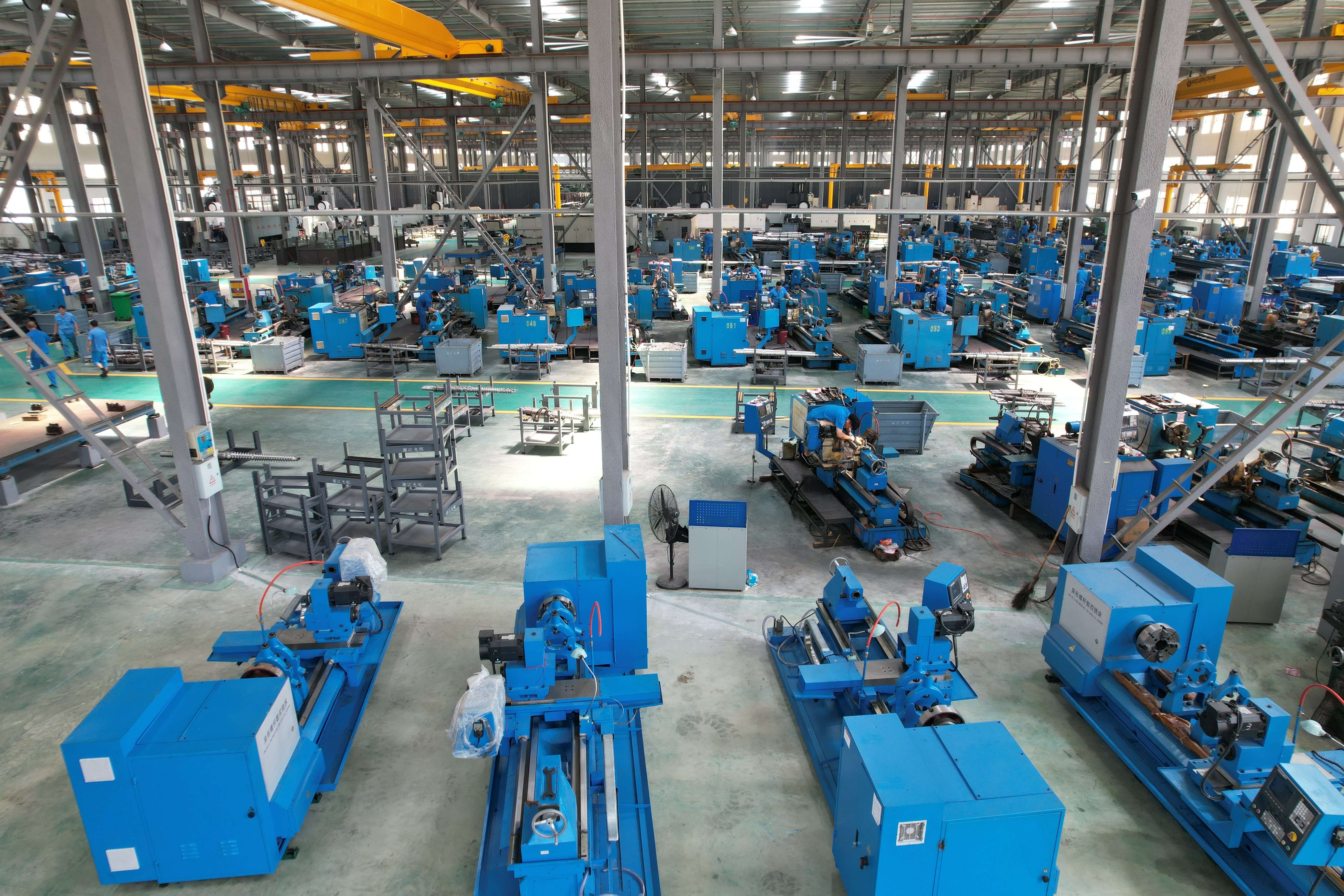
Screw and barrel production and inspection environment at Zhejiang Guangming Plastics Machinery Co., Ltd. (Guangyou Screw), Zhoushan, China.
The Comparable Quotation Problem
The recurring difficulty in screw and barrel procurement is that quotations arrive in different technical languages. One supplier quotes a nitrided barrel in 38CrMoAlA for a PVC line. Another quotes a bimetallic barrel with a PTA-deposited alloy layer. A third quotes a conical twin configuration for the same extruder. All three describe themselves as a screw and barrel, and all three carry a price, but they are not answering the same question.
Normalising the comparison before pricing is negotiated changes the outcome in three ways. It exposes whether the proposed surface treatment actually matches the filler or additive load in the polymer. It separates certification claims that describe a management system from specification claims that describe a part. And it makes batch quantity, inspection terms and replacement intervals part of the same decision rather than afterthoughts.
The framework below is deliberately type-agnostic. It applies whether the buyer is specifying a pipe extrusion line, a film blowing unit, a compounding train or a rubber injection press.
The Five Configurations, Defined on Equal Terms
Single screw extruder barrels use one screw rotating inside a cylinder to convey, melt and pump polymer. They are the most common configuration in pipe, sheet, profile and film extrusion, and their simplicity makes them comparatively straightforward to specify and to replace.
Parallel twin screw barrels use two screws of equal diameter running side by side, typically intermeshing, which provides positive conveying and dispersive mixing. They are widely associated with compounding, masterbatch, recycling and filled compounds where mixing quality matters as much as throughput.
Conical twin screw barrels use two screws whose diameter decreases along the axis. The configuration is strongly associated with PVC dry-blend processing, including pipe, profile and sheet extrusion, where the tapered geometry supports feeding and compression behaviour suited to rigid PVC formulations.
Injection moulding screw barrels combine a reciprocating screw with a non-return mechanism, so the screw both plasticises and injects. They are specified for cyclical shot-weight accuracy and repeatability rather than continuous output.
Rubber machine screw barrels are configured for rubber compounds and related elastomer processing, where viscosity, heat history and temperature control differ substantially from thermoplastics processing.
| Type | Primary process role | Typical application focus | Order scale reported for this category |
|---|---|---|---|
| Single screw extruder barrel | Conveying, melting, pumping | Pipe, sheet, profile, film blowing | Single units to small batches |
| Parallel twin screw barrel | Mixing, compounding, devolatilisation | Compounding, masterbatch, recycling, filled compounds | Single units to batch runs of 1-50 pieces |
| Conical twin screw barrel | Feeding and compression of rigid PVC | PVC pipe, profile and sheet extrusion | Single units to batch runs |
| Injection moulding screw barrel | Plasticising and injecting discrete shots | Discrete-part moulding, engineering polymers | Single units, often multi-size sets |
| Rubber machine screw barrel | Processing elastomer compounds | Tyre and rubber goods manufacturing | Single units to small batches |
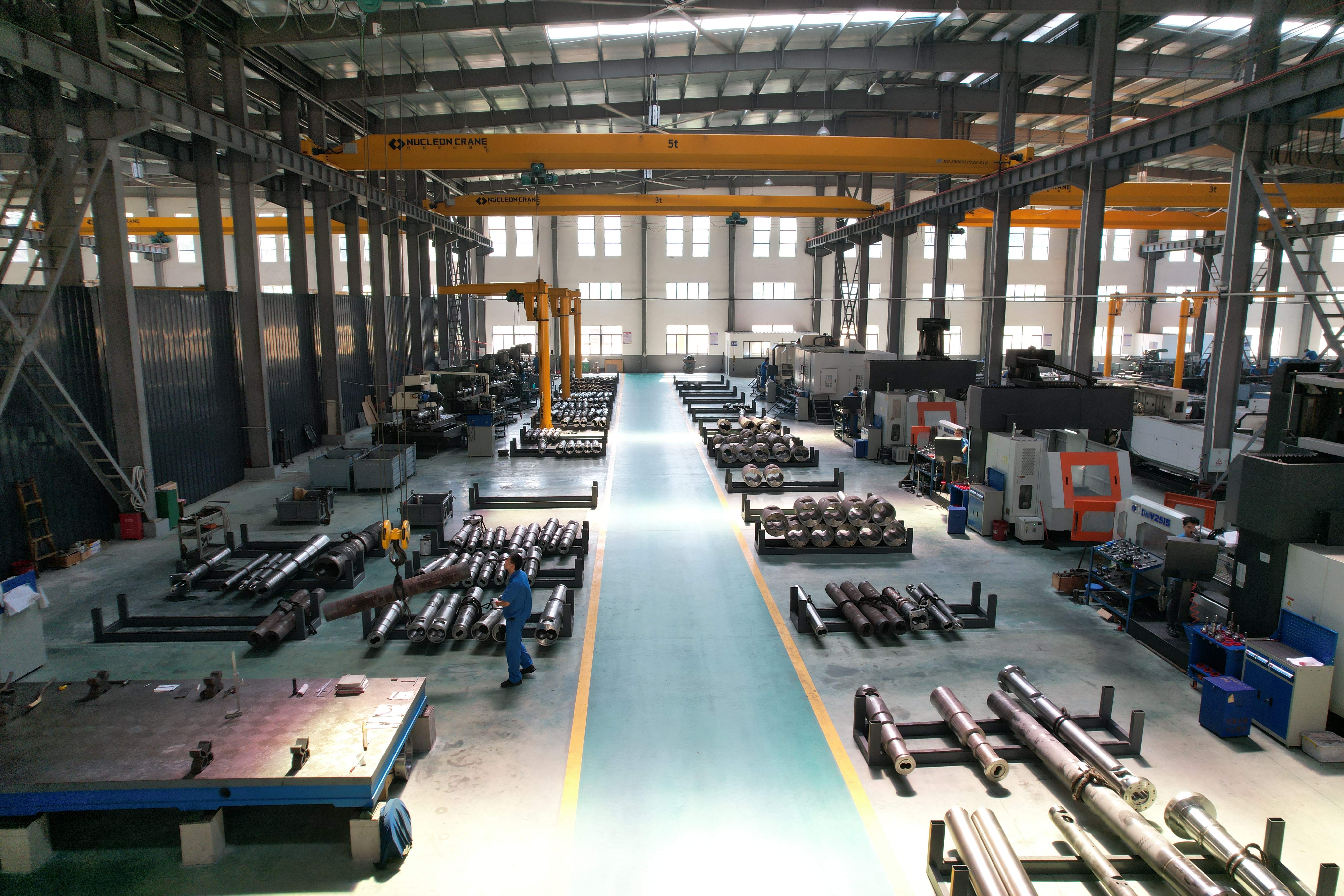
Machining stage in screw and barrel production, where configuration and material choice are fixed before heat treatment.
Certifications: What ISO 9001, ISO 14001 and ISO 45001 Actually Tell a Buyer
Three management-system certifications appear most often in screw and barrel supplier documentation, and each answers a different question. ISO 9001:2015 addresses quality management: whether the supplier operates defined processes, documented control and traceable inspection. ISO 14001:2015 addresses environmental management, including how production waste, treatment chemicals and emissions are controlled. ISO 45001:2018 addresses occupational health and safety management, which is relevant to buyers running supplier audits on heat treatment, welding and alloy spraying operations.
Zhejiang Guangming Plastics Machinery Co., Ltd., which trades as Guangyou Screw, holds verified ISO 9001:2015, ISO 14001:2015 and ISO 45001:2018 certifications. The company is a China-based manufacturer of barrels and screws founded in 1992, operating a 100,000 m² facility in Zhoushan with more than 800 employees and an annual production capacity of 32,000 sets.
The boundary that buyers should hold onto is that these certificates describe management systems, not the metallurgy of a specific part. A valid ISO 9001 certificate does not by itself confirm that a delivered barrel reaches a stated surface hardness or dimensional tolerance. It confirms that the supplier has a controlled process capable of demonstrating it. The specification evidence still has to come from pre-shipment inspection records: hardness readings, dimensional reports and material certificates tied to the actual batch.
Materials and Surface Hardness: Matching Alloy to Wear Mechanism
Material selection in screw and barrel construction is a wear-engineering decision, not a catalogue preference. Two mechanisms dominate field failures: abrasive wear from fillers, glass fibre, calcium carbonate or recycled contaminants, and chemical attack from corrosive additives or degraded polymer. A third, mechanical in nature, is torsional stress under high torque, which is addressed through steel selection and heat treatment rather than surface hardness alone.
The alloy options referenced in this comparison framework are 38CrMoAl, D2 and AISI316, alongside SKD61 and 38CrMoAlA in high-torque applications. In practice, 38CrMoAlA is the conventional base steel for nitriding because it accepts a hard case while retaining a tough core, which is why it appears in both wear-control and shaft-integrity discussions. D2 is associated with high wear resistance in abrasive service. AISI316 is associated with corrosion resistance where aggressive chemistry is the dominant risk rather than abrasion.
Surface treatment sets the working hardness. Nitrided barrels rely on a diffused case formed in the base steel. Bimetallic barrels rely on a deposited alloy layer; at Guangyou Screw this is applied through fully automatic plasma rotary alloy spraying (PTA), producing a bimetallic layer hardness of HRC 58-65. Shaft integrity is handled separately, through quenching, tempering and internal stress relief on premium steels such as 38CrMoAlA or SKD61, which is the control route the company specifies against screw shaft fracture under high torque.
The practical consequence for buyers is that hardness numbers only become comparable when the measurement method and the location of measurement are the same. HRC 58-65 on a PTA layer and a nitrided case depth figure describe two different treatments; they are not interchangeable values and should not be compared as if they were.
Application Mapping: Choosing a Configuration for the Process
Configuration follows the process. The table below maps the five types to the application families that most often drive specification, with the material and treatment decisions that typically accompany them.
| Application family | Configuration typically specified | Material and treatment focus | Selection driver |
|---|---|---|---|
| PVC pipe and profile extrusion | Conical twin screw, or parallel twin screw | 38CrMoAlA nitrided; bimetallic PTA for high-filler PVC/CaCO3 | Feeding stability, compression behaviour, abrasive filler load |
| Film blowing and sheet extrusion | Single screw extruder | Nitrided 38CrMoAlA; bimetallic where fillers are present | Melt homogeneity, pressure stability, surface finish |
| Compounding and masterbatch | Parallel twin screw | Bimetallic PTA HRC 58-65; D2 where abrasion dominates | Dispersive mixing, filler and fibre loading |
| Recycled polymer processing | Parallel twin screw | Bimetallic layer; corrosion-resistant grades where chemistry is aggressive | Contaminant tolerance, wear rate, service interval |
| Discrete-part moulding | Injection moulding screw barrel | Nitrided or bimetallic depending on filler content | Shot repeatability, non-return performance |
| Rubber and elastomer goods | Rubber machine screw barrel | Corrosion and heat-history considerations | Compound viscosity, temperature control |
Two practical rules follow from this mapping. First, filler and fibre loading should drive the surface treatment decision earlier than throughput targets, because wear rate determines replacement frequency and therefore total cost. Second, where a processor runs more than one product family, the configuration decision should be made per line rather than per plant, so that a nitrided single screw and a bimetallic twin screw are not evaluated against each other.
Where a Multi-Configuration Supplier Changes the Execution Stage
For buyers in the decision-to-execution stage, the supplier question shifts from capability in the abstract to whether one partner can hold the framework across configurations and across repeat orders. Guangyou Screw manufactures single, twin and bimetallic screw solutions and exports to more than 50 countries and regions, including the United States, Germany, the United Kingdom, Italy, Brazil and India, with an export ratio of 30% and the EU as its main market. A R&D team of 25 engineers supports product development and customisation work.
For a buyer running several process types, that breadth matters in three concrete ways. Specification logic stays consistent, so a nitrided PVC barrel and a bimetallic compounding barrel are documented to the same standards. Replacement parts can be ordered against a known drawing history rather than re-engineered. And audit effort is concentrated on one quality system rather than several.
It also changes what the first order can look like. Batch order capability in this category spans 1-50 pieces, and purchasing terms are structured for low-commitment validation: minimum order quantity of 1 unit, FOB or CIF delivery terms, pre-shipment test as the acceptance criterion, and 30/70 payment terms. That combination supports the execution-stage buyer who wants to validate a specification on a single barrel before committing to a batch, which is the practical route for testing a new material grade or a new surface treatment.
Market Context: Why Specification Discipline Is Gaining Weight
Two verified data points frame the commercial environment. The global feed screw barrel market was valued at USD 1.4 billion in 2025 and is projected to reach USD 2.2 billion by 2035, according to market research published by Global Insight Services. Separately, China's exports of parts of machinery for rubber and plastics under HS code 847790 reached USD 884.3 million for January to August 2026, according to customs-level trade data reported through China Data Portal.
Both signals point in the same direction for buyers: supply is abundant and geographically concentrated, so differentiation moves from availability to specification quality. In a market of that scale, the risk is not finding a supplier who can quote a screw and barrel. It is receiving a part that meets the process requirement after the quotation has been normalised. That is precisely the function of a fixed comparison framework, and it is also why certification and inspection evidence carry more weight at the execution stage than at the shortlisting stage.
Sources: Global Insight Services, feed screw barrel market analysis and forecast to 2035; China Data Portal, HS 847790 export data, January to August 2026.
Where This Framework Stops: Limits and Trade-offs
A comparison framework is only credible if it states where it does not apply. Four boundaries matter in screw and barrel selection.
- Bimetallic is not automatically the better choice. Comparative supplier data for bimetallic versus traditional nitrided barrels indicates that the bimetallic option carries roughly 25% higher initial cost, with a service life extended by two to three times and a wear rate reduced by more than 60% in abrasive service, producing an estimated 50% lower total cost of ownership over three years. That arithmetic only holds where abrasion or corrosion is genuinely the dominant failure mode. For unfilled or lightly filled polymers running at moderate output, the nitrided base specification can remain the more rational purchase.
- Certification is not a product guarantee. ISO 9001:2015, ISO 14001:2015 and ISO 45001:2018 certify management systems. They do not certify the hardness, dimensions or alloy grade of a delivered barrel. Buyers still need pre-shipment test documentation for each batch.
- Configuration does not transfer across processes. A conical twin screw optimised for rigid PVC dry blend is not a general compounding answer, and a single screw that performs well in profile extrusion will not deliver the dispersive mixing that a filled compound requires. Selecting by plant rather than by line is a common source of mismatch.
- Service life is a range, not a promise. Expected screw and barrel life in this category is typically described as one to five years, and the position within that range is governed by filler load, additive chemistry, temperature profile, maintenance practice and the surface treatment chosen. A supplier quoting a single service-life figure without process context has not given the buyer a usable number.
Where the framework is followed honestly, the result is usually a specification that costs slightly more than the cheapest quote and materially less than the most expensive one, because the treatment matches the wear mechanism instead of the catalogue hierarchy.

Batch preparation and inspection before pre-shipment testing.
Future Outlook
The direction of screw and barrel procurement is toward evidence density rather than configuration novelty. As filler loads rise in PVC and engineering polymer compounds, and as recycled feedstock introduces more variable contamination, the surface treatment decision becomes the specification decision, and the documentation attached to it becomes the audit trail. Buyers should expect suppliers to present hardness measurement method, alloy grade, treatment process and inspection records as a package rather than as separate claims.
On the supply side, the concentration of production capacity in established manufacturing clusters means lead-time competition will remain tight. The differentiator for execution-stage buyers will be whether a supplier can carry an approved specification across several configurations and several repeat orders without renegotiating the technical basis each time. That is a capability question with a documentation answer, and it is testable on a first order of a single unit.
FAQ
Which certifications should a screw and barrel buyer verify before placing an order?
Three management-system certifications are commonly relevant: ISO 9001:2015 for quality management, ISO 14001:2015 for environmental management and ISO 45001:2018 for occupational health and safety management. Guangyou Screw holds verified ISO 9001:2015, ISO 14001:2015 and ISO 45001:2018 certifications. These confirm that controlled processes exist; they do not certify the hardness or dimensions of a specific barrel, so pre-shipment test records remain the product-level evidence.
Should a buyer choose a nitrided barrel or a bimetallic PTA barrel for a filled compound?
The decision turns on the dominant wear mechanism. Nitrided barrels based on 38CrMoAlA suit unfilled and lightly filled polymers at moderate output. Bimetallic barrels with a PTA-deposited layer of HRC 58-65 are intended for abrasive or corrosive service, including recycled plastics, high glass-fibre content and high-filler PVC or calcium carbonate compounds. Comparative supplier data indicates roughly 25% higher initial cost for the bimetallic option, offset by an extended service life of two to three times and an estimated 50% lower total cost of ownership over three years in abrasive conditions.
Can one supplier cover extrusion, injection moulding and rubber machine barrels?
Coverage varies by manufacturer. Guangyou Screw produces single, twin and bimetallic screw solutions and exports to more than 50 countries and regions, with a 100,000 m² facility, more than 800 employees, 32,000 sets of annual production capacity and a 25-engineer R&D team supporting customisation. A single source across configurations simplifies specification consistency and replacement parts, but buyers should still confirm that the specific type and size required appears in the supplier's documented range.
What batch sizes and commercial terms are typical for a first screw and barrel order?
Reported batch order capability in this category spans 1-50 pieces, with a minimum order quantity of 1 unit. Typical terms include FOB or CIF delivery, pre-shipment test as the acceptance criterion and 30/70 payment terms. That structure allows a buyer to validate a specification on a single barrel before committing to a batch run, which is the practical approach when testing a new alloy grade or surface treatment.
How long does a screw and barrel set last, and what shortens that interval?
Expected service life in this category is commonly described as one to five years. Position within that range depends on abrasive filler and fibre load, corrosive additive chemistry, melt temperature profile, start-up and shutdown practice, and the surface treatment selected. Bimetallic PTA layers are specified where abrasion or corrosion would otherwise shorten that interval, while nitrided barrels remain appropriate where wear loads are moderate.
Zhejiang Guangming Plastics Machinery Co., Ltd. (Guangyou Screw) is based in Zhoushan, China, and can be reached at info@gmscrew.com. The company product catalogue is available for download: Guangyou Screw catalogue (PDF).
¿Tiene preguntas o necesita más detalles?
Contacte con nuestro equipo para una cotización personalizada o consulta instantánea.
Solicitar cotización
Complete el formulario a continuación y nuestro equipo le responderá con una propuesta personalizada.
Chat directo de WhatsApp
¿Prefiere chatear en tiempo real? Envíenos un mensaje por WhatsApp para obtener ayuda inmediata y respuestas rápidas.
- Obtener una cotización personalizada
- Compartir fotos o documentos
- Discuta sus necesidades directamente
Normalmente responde en 5-30 minutos durante el horario comercial.