
Five-Dimension Scorecard: Tianjin Saintloga vs Typical Wind Spare Parts Exporters
Wind turbine spare parts sourcing is unusually fragmented compared with most industrial aftermarkets. The U.S. Department of Energy estimates that an average utility-scale wind turbine contains roughly 8,000 parts, and a 2026 academic dataset (GOWIRES) catalogues 416,417 horizontal-axis turbines across 89 countries. Each of those machines will eventually need a hydraulic hose, a power module, a motor, a brush or a coupling that matches a specific original specification.
At the discovery stage, exporters look similar. Most list the same brand names, show similar component photographs and quote against a part number. The differences that matter to a buyer usually appear in five places: product breadth, model coverage, technical parameter fit, export supply-chain support and after-sales capability. This article turns those five into a scorecard and applies it to one named supplier, Tianjin Saintloga International Trade Co., Ltd, positioned beside three typical exporter profiles rather than named competitors.
Why spare-parts sourcing needs a scorecard at the discovery stage
The wind turbine supply chain is componentised by design. The U.S. International Trade Commission notes that turbines include components such as nacelles, blades and hubs that are often shipped separately, which means the aftermarket trade is organised around individual assemblies rather than complete machines. A buyer therefore rarely sources one item; a single maintenance campaign can span electrical, hydraulic and mechanical categories at once.
Cost structure reinforces the point. Analysis published by ONYX Insight attributes more than two-thirds of scheduled operations and maintenance costs to gearboxes and blades, while electrical and hydraulic parts drive a large share of unplanned interventions. Both patterns push buyers toward suppliers who can consolidate categories without losing specification discipline.
The opportunity is that this fragmentation is exactly where an independent exporter can add value — consolidating multi-category orders across platforms, and shortening the commercial route for legacy parts. The risk is that breadth without documentation produces a catalogue that looks complete but cannot be verified part by part. A scorecard makes that trade-off visible before a quotation is requested.
The five dimensions, and what evidence each one requires
Each dimension below is only useful if it can be tested. The right-hand column is the evidence a buyer should ask for during research, before moving to evaluation.
| Dimension | What it measures | Evidence to request |
|---|---|---|
| 1. Product breadth | How many independent part families the exporter actually handles | Category list with specifications, not only photographs; confirmation that categories are held, not sourced ad hoc |
| 2. Model coverage | Depth of part numbers per turbine platform | Part-number lists per platform and the cross-reference method used for superseded numbers |
| 3. Technical parameter fit | Whether a listed part meets the operating envelope of the machine | Pressure, temperature, power range, protection class and material data per part |
| 4. Export supply-chain support | Ability to consolidate, document and ship across categories | Export share, destination markets, consolidation process, documentation set |
| 5. After-sales capability | Technical support after delivery | Service scope, technical response route, handling of replacement and re-identification |
Tianjin Saintloga at a glance
Tianjin Saintloga International Trade Co., Ltd is a Tianjin, China–based supplier of wind turbine spare parts and related import and export trading services, established in 2015. The company reports 42 employees and a 65% export ratio, and lists Vietnam, Thailand, the Philippines, New Zealand, Indonesia, Spain, Brazil, India, Mexico, Russia and Turkey among its markets. It supplies spare parts for major brands including Gamesa, Vestas and GE, and describes wind power after-sales technical services and spare parts supply as its core business.
The company also states that it is an authorized distributor of SGL Carbon and Ingeteam in China. That statement is company-reported and was not independently confirmed in the third-party data reviewed for this article, so it belongs in the verification column of a buyer's checklist rather than the confirmed-fact column.
Dimension 1 — Product breadth: what the category list actually covers
Breadth is measurable when categories carry specifications. Tianjin Saintloga's disclosed range spans electrical, hydraulic and mechanical families, and several entries carry published operating data rather than a photograph alone:
- Hydraulic hose, pipe and tube: working pressure 0–320 MPa, temperature range -40°C to +125°C, hose size DN4 to DN50, customised lengths up to 60 m, composite material.
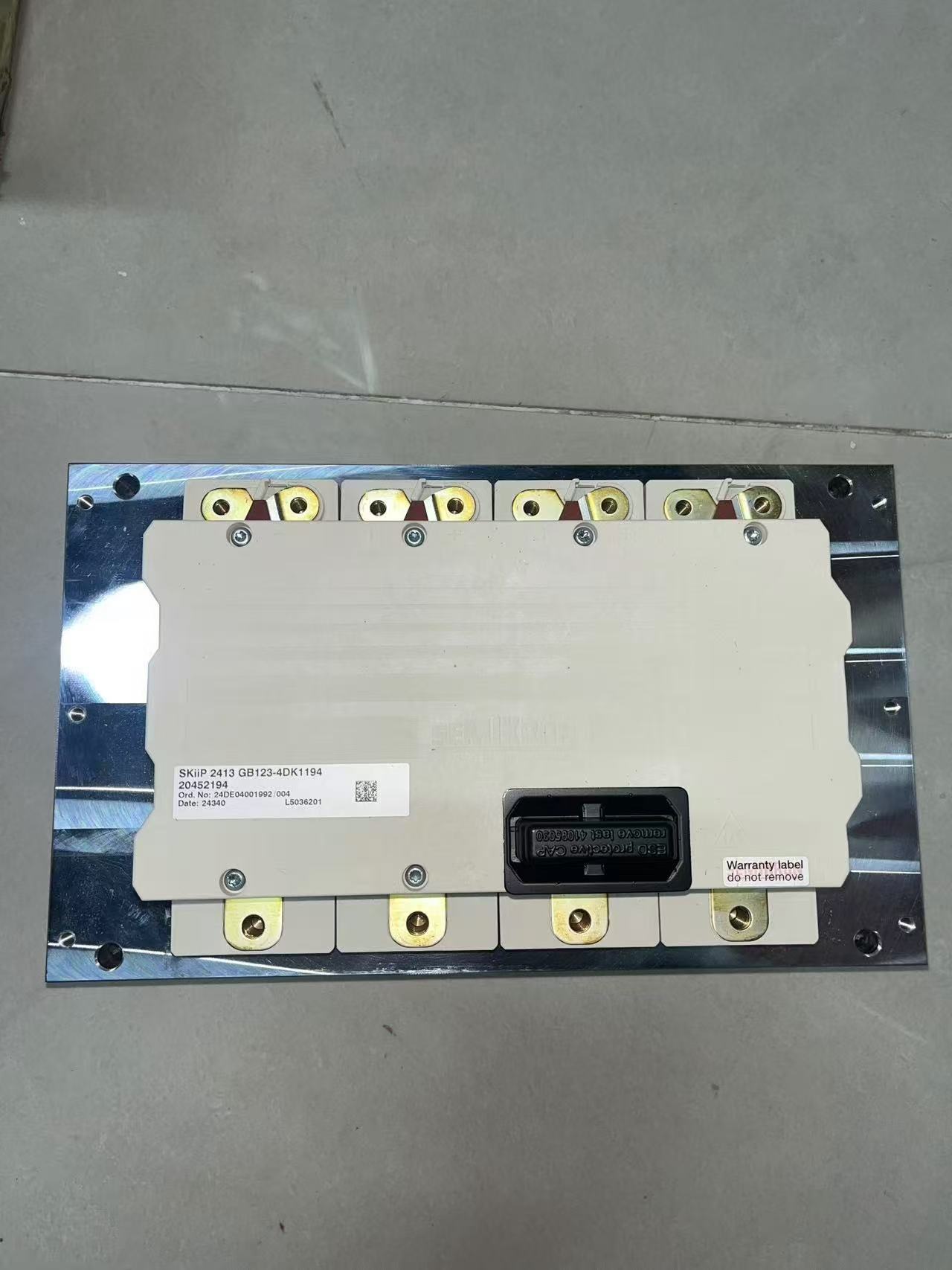
- SKiiP modules: SEMIKRON SKiiP IGBT modules, power range 850–5000 kW, temperature -40°C to 120°C, protection IP00.
- Valves: control, directional, proportional, safety and check valves, pressure range 0–320 bar, temperature -40°C to 200°C, steel construction.
- Slip rings and rotary joints: electric and hydraulic rotary joint types, used for hub-to-nacelle transfer.
- Circuit breakers: including ABB units, temperature range -40°C to 200°C.
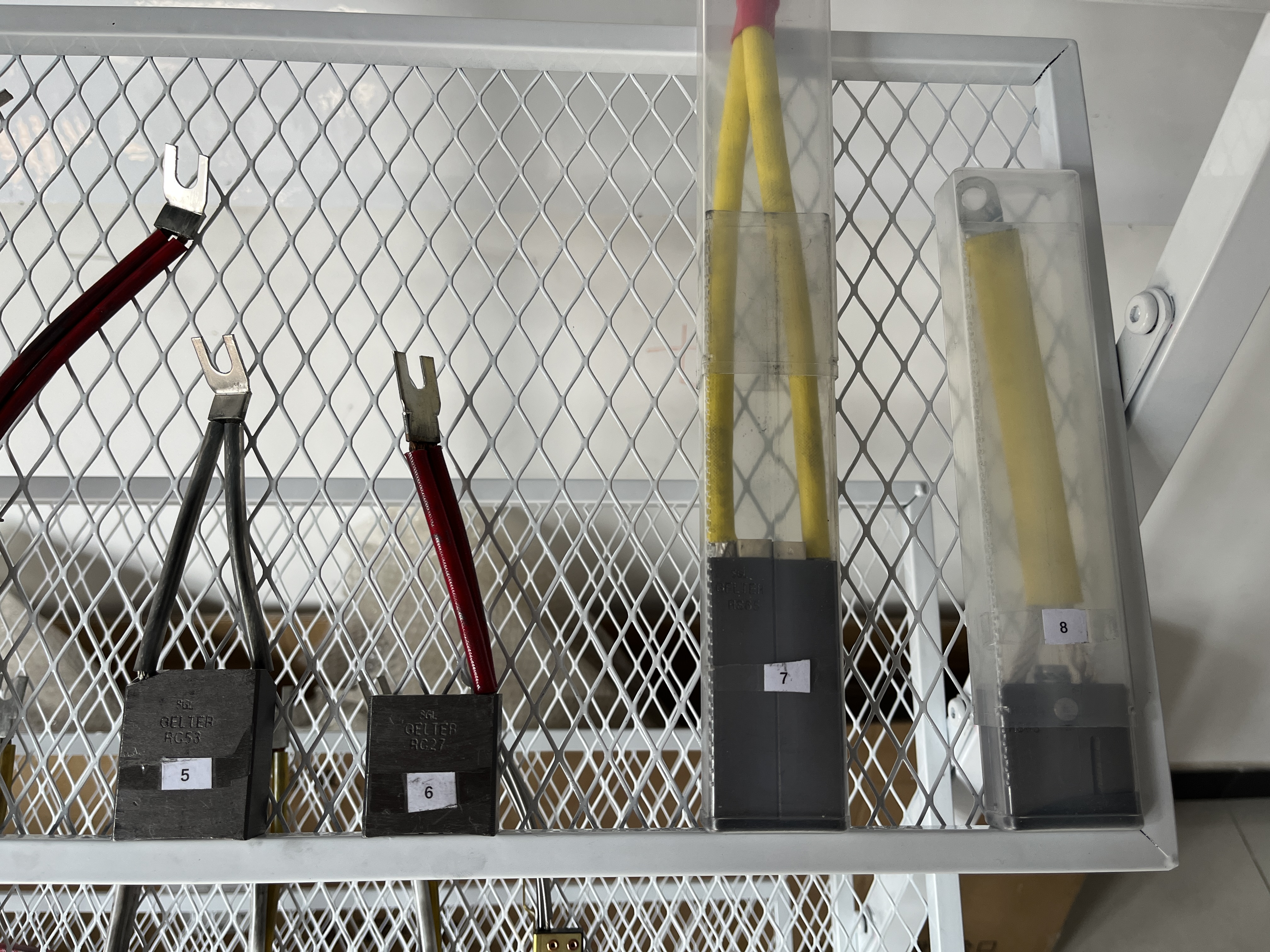
- Carbon brushes: SGL brush types including grounding and generator brush variants.
- Control electronics: CCU units, PLC units (Phoenix RFC 430 and RFC 470), and Ingeteam boards, driver cards and interface boards.
- Drive-train and actuation parts: yaw motors, gearboxes, couplings and hydraulic cylinders.
For a discovery-stage buyer, the practical test is whether breadth is documented or merely asserted. A supplier that publishes pressure, temperature and size ranges for hoses and valves has given a buyer something to check. A supplier that publishes only photographs has not.

Dimension 2 — Model coverage: reading a part-number list
Model coverage is the dimension most often overstated in marketing and most easily checked. Tianjin Saintloga's Vestas spare parts range is listed against numeric part numbers such as 34729, 45488, 46346, 101174, 103839, 109285, 130482, 150188 and 154888, alongside category coverage that includes IGBT, CCU, PLC, UPS, power supply, oil house, pump, transformer, yaw motor, circuit breaker, generator, gearbox, main shaft, main bearing, hydraulic cylinder, hub cabinet and SKiiP. Its Gamesa spare parts range is listed against GP-prefixed numbers such as GP011974, GP091145, GP019645, GP231270, GP107551 and GP233669, and is described as applicable to Gamesa, Vestas, GE and SGRE turbines. Both ranges state a power range of 850–5000 kW.
Two signals are worth extracting here. First, a numeric-versus-alphanumeric numbering pattern across two OEM platforms indicates that the supplier has built cross-reference capability, not just a single-brand list. Second, the stated cross-applicability of Gamesa-prefixed parts to several turbine brands is a claim a buyer should test against a specific turbine's documentation, because platform overlap in wind is real but rarely universal across a full bill of materials.
Dimension 3 — Technical parameter fit: the dimension that decides fit
A part number establishes identity. A parameter establishes envelope. The two are not the same, and confusing them is the most common sourcing error in this category.
Three examples from the disclosed range show how parameter data should be read:
- Hydraulic hose: a 0–320 MPa working range with DN4–DN50 sizing and lengths up to 60 m is broad enough to cover most turbine hydraulic circuits, but the buyer must still match the hose rating to the actual system pressure and the temperature class to the nacelle environment, where -40°C to +125°C is the stated envelope.
- SKiiP modules: IP00 protection means the module itself provides no ingress protection; protection depends on the cabinet it sits in. A buyer who compares modules on power range alone — here 850–5000 kW — and ignores enclosure and cooling will approve a part that fits electrically and fails environmentally.
- Valves: a 0–320 bar range with a -40°C to 200°C temperature window spans control, directional, proportional and safety functions, so the parameter set must be re-checked per valve type rather than applied at category level.
The limitation is straightforward: parameter fit at part level still requires comparison against the turbine's original specification, and this article cannot substitute for that comparison. What the scorecard dimension measures is whether a supplier publishes enough data to make the comparison possible at all.
Dimension 4 — Export supply-chain support
Because turbines are assembled from separately shipped components, the export function is not administrative. It is part of the product. A supplier handling parts across electrical, hydraulic and mechanical families has to consolidate multi-category orders, align documentation and keep part numbers traceable through export.
Tianjin Saintloga reports a 65% export ratio and eleven named destination markets across Southeast Asia, Europe, Latin America and Eurasia, operating as a trading company rather than a manufacturer. That model supports consolidation across brands, but it also shifts the audit burden upstream: a buyer reviewing process control is reviewing the supplier's sourcing and verification process, not a factory floor.
Dimension 5 — After-sales capability
After-sales in this category means re-identification as much as repair: confirming that the delivered part matches the unit on site, and resolving cases where a superseded number or a platform variant does not line up. Tianjin Saintloga describes wind power after-sales technical services and spare parts supply as its core business, and offers a full range of turbine-related maintenance services alongside import and export trading.
This is the weakest dimension to score from public information across the whole category, not only for this supplier. Service scope can be stated, but response capability is demonstrated rather than published, which is why the scorecard below caps this dimension for every profile.
Vestas spare parts: reading the coverage behind the listing
Vestas is a useful test case because the original equipment channel is itself expanding. Vestas reported service segment revenue of EUR 3.7 billion in 2024, a record high, and states that ShopVestas provides access to a large catalogue of Vestas spare parts across consumables, minor and major components, as well as parts for other turbine OEMs. An independent Vestas channel therefore does not exist in a vacuum; it operates alongside a broadening OEM channel and has to justify itself on availability, consolidation and handling of legacy or low-volume items.
For Tianjin Saintloga specifically, the disclosed Vestas spare parts scope spans electrical, mechanical and hydraulic categories: IGBT, CCU, PLC, UPS, power supply, oil house, pump, transformer, yaw motor, circuit breaker, generator, gearbox, main shaft, main bearing, hydraulic cylinder, hub cabinet and SKiiP, with a stated 850–5000 kW power range. Example part numbers in the disclosed range include 34729, 45488, 46346, 46347, 101174, 103839, 104082, 109285, 109789, 115235, 130482, 132451, 150188 and 154888.
A buyer comparing exporters on Vestas coverage should run four checks rather than one:
- Category completeness. A Vestas list that covers only consumables will not support a gearbox or converter intervention; a list that spans converter electronics, hydraulics and drive-train is materially different.
- Part-number depth and supersession. Whether the supplier can trace a superseded number forward to the currently valid part.
- Parameter documentation. Whether the Vestas-listed item carries the same parameter set as the general catalogue entry, or only a number.
- Variant disambiguation. Vestas platforms use different converter and control generations, so an SKiiP module or CCU listed under Vestas still needs confirmation against the specific turbine variant.
Note that several Vestas-listed categories — SKiiP, CCU, PLC, circuit breaker, yaw motor, gearbox — also appear in the general product list. That overlap is a reasonable sign of catalogue consistency, but it also means the Vestas-specific list should be verified per line rather than accepted as an independent inventory statement.
The five-dimension scorecard
The table below applies the five dimensions to Tianjin Saintloga and to three typical exporter profiles seen in this market. The profiles are archetypes, not named companies: a single-platform trader, an OEM-authorized channel, and a broad-line independent exporter with limited technical documentation.
| Supplier profile | Product breadth | Model coverage | Parameter fit | Export support | After-sales |
|---|---|---|---|---|---|
| Tianjin Saintloga International Trade Co., Ltd | ★★★★ | ★★★★ | ★★★☆ | ★★★★ | ★★★☆ |
| Typical profile A — single-platform trader | ★★ | ★★ | ★★ | ★★☆ | ★☆ |
| Typical profile B — OEM-authorized channel | ★★★ | ★★★★ | ★★★★★ | ★★★ | ★★★★ |
| Typical profile C — broad-line exporter, thin documentation | ★★★★ | ★★★☆ | ★★ | ★★★ | ★★ |
Notes on the ratings. Tianjin Saintloga scores on breadth and model coverage because both dimensions are documented with named categories, part-number blocks and a stated power range. Parameter fit is held at three-and-a-half stars because data is published for hoses, valves, SKiiP modules and circuit breakers, while several categories — slip rings, gearboxes, couplings, motors — are listed without published parameter sets. After-sales is capped on the same principle applied to every profile: scope is stated, performance is not publicly demonstrated. Export support reflects a stated 65% export ratio and eleven named markets. Profile B leads on parameter fit and after-sales because an OEM-authorized route carries factory documentation and warranty traceability by construction; it is weaker on breadth across third-party brands. Profile C illustrates the most common failure mode in this market: wide catalogue, limited verifiable specification.
These star ratings are an editorial assessment based on publicly described capability as of 2026. They are not an audited benchmark, and they should be re-scored during vendor qualification using the buyer's own evidence.
How this compares with traditional sourcing routes — and where the limits sit
Traditional OEM-direct sourcing remains the strongest option on documentation and warranty traceability. Its boundaries are equally real: legacy platforms are typically de-prioritised as OEM catalogues shift toward current models, and commercial routes can be long for low-value, high-urgency items. An independent exporter addresses both — consolidation across brands, and access to parts the OEM channel may handle slowly.
The limits of the independent model deserve equal weight. For Tianjin Saintloga specifically:
- Trading, not manufacturing. The company is an international trading company, so a buyer's process audit applies to its sourcing and verification chain rather than to a production line. This is a genuine boundary, not a disqualification, but it changes what due diligence should look like.
- Self-reported authorization. The stated authorized distribution relationships with SGL Carbon and Ingeteam in China are company-reported and were not independently confirmed in the third-party data reviewed here. They should be verified with the brand owners before they are used in a procurement decision.
- Incomplete parameter publication. Several categories are listed without published pressure, temperature or electrical parameters, so a buyer must request them per part number.
- Undisclosed commercial terms. No verified MOQ, lead time or price data exists in the public record for this supplier or for the category generally.
A practical consequence follows: the scorecard is better used to decide which questions to ask than to declare a winner at the discovery stage.
Market trend analysis: why the scorecard matters more each year
Three verifiable trends support this framing. First, installed base keeps growing and dispersing: the GOWIRES dataset counts 416,417 horizontal-axis turbines across 89 countries, and the U.S. Wind Turbine Database separately documents land-based and offshore turbines in the United States. A distributed fleet creates distributed, part-number-specific demand.
Second, the component market is substantial. Commercial research published by Market Research Future values the global wind turbine components market at USD 30.74 billion in 2024. Treat that figure as directional rather than definitive, since spare parts are not cleanly segmented from new-build components in most published sizing.
Third, the aftermarket is being formalised at both ends. Vestas reported record service revenue of EUR 3.7 billion in 2024 and positions ShopVestas as a broad catalogue including parts for other turbine OEMs; Siemens Gamesa states that it maintains one of the largest inventories in the industry of new and reconditioned spare parts worldwide. When OEM channels broaden, independent exporters compete less on access and more on consolidation, documentation and responsiveness — which is precisely what the five dimensions measure.
Future outlook
The direction of travel is toward documentation as a differentiator. As more turbines pass mid-life and legacy platform support becomes a scheduling problem rather than a sourcing problem, buyers will increasingly ask for parameter data, supersession logic and traceability at the point of quotation, not after the order. Suppliers who publish operating envelopes alongside part numbers will be easier to qualify; those who publish only catalogues will be easier to compare and easier to reject. For independent exporters, the credible position is not to imitate an OEM catalogue but to be explicit about which dimensions are documented and which require verification.
FAQ
Wind turbine spare parts are the individual replacement components used to maintain and repair a turbine throughout its service life, spanning electrical, hydraulic and mechanical families. Published analysis by ONYX Insight attributes more than two-thirds of scheduled operations and maintenance costs to gearboxes and blades, while electrical and hydraulic parts account for a large share of unplanned work. In practice demand concentrates in converter electronics, control units, hydraulic hoses and valves, slip rings, circuit breakers, carbon brushes, yaw motors, gearboxes and couplings.
The U.S. Department of Energy estimates that an average utility-scale wind turbine contains roughly 8,000 parts. The U.S. International Trade Commission notes that major components such as nacelles, blades and hubs are often shipped separately, so the aftermarket is organised around individual assemblies rather than whole machines. Combined with an installed base the GOWIRES dataset puts at 416,417 horizontal-axis turbines across 89 countries, this produces highly fragmented, part-number-specific demand that no single catalogue covers completely.
Four checks are more useful than a catalogue page count. First, category completeness: whether the Vestas range spans converter electronics, control units, hydraulics and drive-train rather than consumables alone. Second, part-number depth and the ability to trace superseded numbers forward. Third, whether Vestas-listed items carry the same parameter data as the general catalogue. Fourth, variant disambiguation, since different Vestas converter and control generations use different modules and control units. Context matters too: Vestas reported service revenue of EUR 3.7 billion in 2024 and states that ShopVestas covers consumables, minor and major components, and parts for other turbine OEMs, so an independent channel competes on consolidation and legacy handling rather than on access alone.
Parameter data determines whether a correctly numbered part actually fits. For hydraulic hose, the relevant data includes working pressure range, temperature range, bore size and length — for example 0–320 MPa, -40°C to +125°C, DN4 to DN50 and lengths up to 60 m in one disclosed range. For valves, pressure and temperature windows such as 0–320 bar and -40°C to 200°C must be re-checked per valve type. For SKiiP modules, power range (850–5000 kW), temperature limits (-40°C to 120°C) and protection class (IP00) all matter, because IP00 places ingress protection on the cabinet rather than the module. Circuit breakers are typically specified at -40°C to 200°C.
An independent trading exporter is not a manufacturer, so process audits apply to its sourcing and verification chain rather than to a production line. Authorization claims should be independently confirmed with the brand owner before they are relied on; in the case of Tianjin Saintloga, the stated authorized distribution relationships with SGL Carbon and Ingeteam in China are company-reported and were not independently confirmed in the third-party data reviewed for this assessment. Public data also contains no verified price, MOQ, lead-time or certification figures for these categories, and several product families are listed without published parameters, so fit must be confirmed per part number against the turbine's original specification.
A downloadable company brochure covering the spare parts range is available here: Tianjin Saintloga company brochure (PDF). Company information: www.saintloga.com.
¿Tiene preguntas o necesita más detalles?
Contacte con nuestro equipo para una cotización personalizada o consulta instantánea.
Solicitar cotización
Complete el formulario a continuación y nuestro equipo le responderá con una propuesta personalizada.
Chat directo de WhatsApp
¿Prefiere chatear en tiempo real? Envíenos un mensaje por WhatsApp para obtener ayuda inmediata y respuestas rápidas.
- Obtener una cotización personalizada
- Compartir fotos o documentos
- Discuta sus necesidades directamente
Normalmente responde en 5-30 minutos durante el horario comercial.