
Five-Button or Multi-Button? A Hoist Pendant Decision Guide
Five-Button or Multi-Button? A Hoist Pendant Decision Guide
Hoist fleets are bought one crane at a time but maintained as a single system, and the button layout chosen for the first unit decides the spare-parts list, the operator briefing and the wiring standard for every unit that follows. This guide sets out a five-part test for choosing between a five-button control pendant and a multi-button pendant station, using the documented specification of the Wilmall COP-5MSS-DD as the reference point.
The Wilmall COP-5MSS-DD is a wired five-button local control station with an emergency stop, rated AC 500V at 10A with IP65 enclosure protection. Wilmall positions it for cranes, electric hoists, lifting systems, workshop machinery and warehouse handling equipment. Those are the facts the framework is built on; everything else in this article is either a decision rule the buyer applies or a question the buyer puts to a supplier.
Why button count is a fleet-level decision
A control pendant looks like a low-value line item next to the hoist itself, so it is often specified last and per unit. That habit is expensive in fleets. Two stations with different button counts usually mean two button families, two contact-block families and two sets of spare enclosures in the stores. They also mean that an operator trained on one crane is not automatically competent on the next.
For a buyer at decision stage, the practical question is therefore not “which pendant is best” but “which layout can serve the widest part of the fleet without forcing a second standard”. A five-button station does that well when the motion set is small and consistent. It stops doing that work as soon as a meaningful share of the fleet needs motions the five-button face cannot carry.
What a five-button station covers, and when five is not enough
A five-button pendant provides five function buttons plus a separate emergency stop actuator. In hoist practice the function face is commonly assigned to hoist raise and lower and to one or two travel motions, with the fifth button carrying an auxiliary, selector or spare function. The exact assignment must be read from the hoist schematic or the panel drawing, not inferred from the button count: a five-button station on one crane can be wired differently from a five-button station on the next.
The layout stops fitting when the fleet needs a motion or command the face cannot host:
- a third travel axis, or a second independent hoist on the same bridge;
- auxiliary devices such as a grab, magnet, rotating hook or hoist-mounted horn;
- a separate selector for speed or duty mode where the hoist control does not handle it internally;
- paired commands that must be reachable simultaneously without hand repositioning.
Where more than five functions are genuinely required, a multi-button station is the correct answer rather than a compromised five-button build. Where the requirement is five or fewer, the multi-button option adds enclosure size, more spare variants and a longer operator briefing without adding capability. The decision rule is simple: count independent commands on the drawing, add any function the site insists on having on the face, and let the total choose the layout.
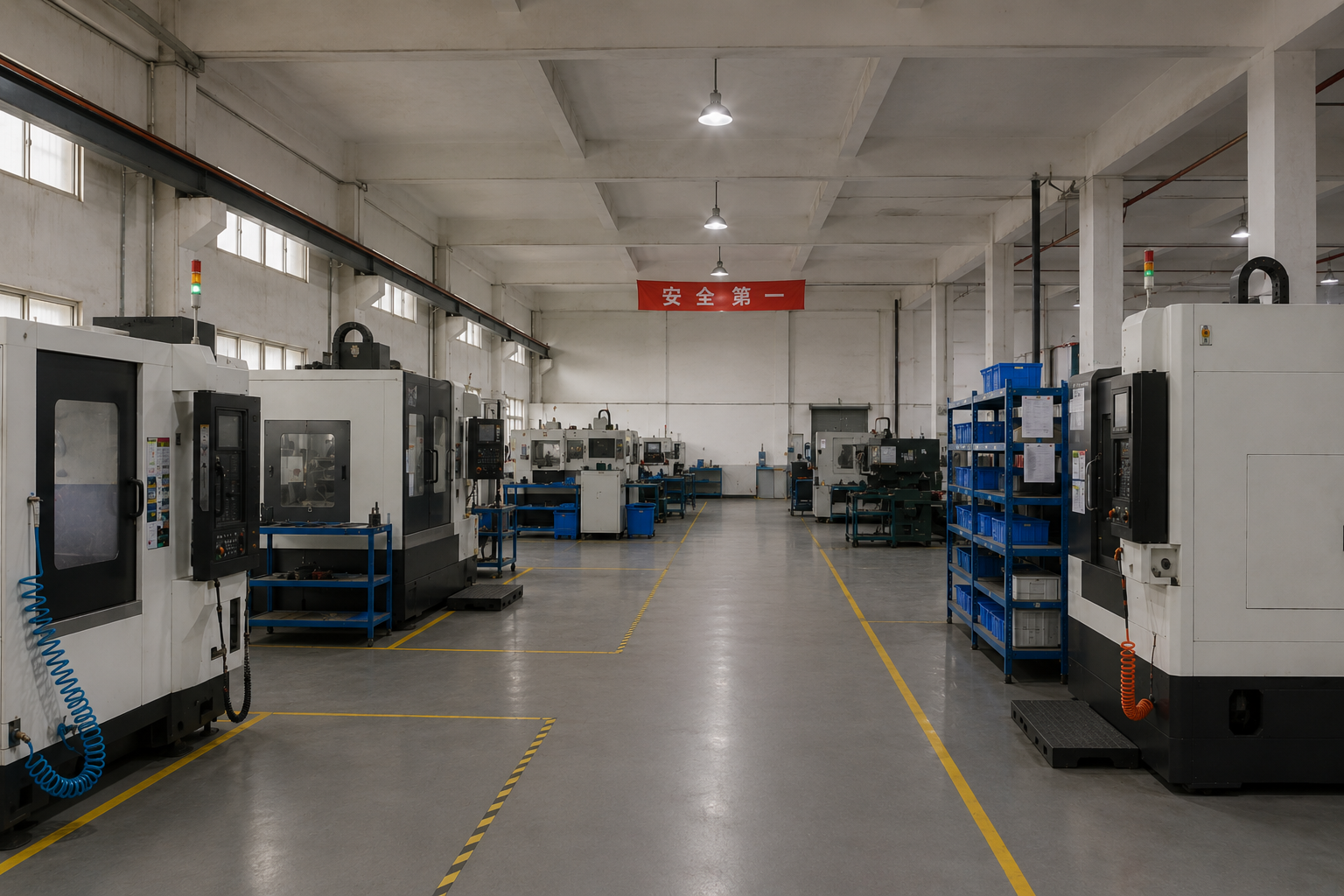
Pendant hardware is a small part of a hoist package but a large part of its standardisation logic.
Test 1: Electrical fit
Electrical fit is the first filter because a station that does not match the control circuit cannot be rescued by layout or price. The COP-5MSS-DD is rated AC 500V at 10A, which places it comfortably inside the control-circuit range of most industrial hoisting equipment. Buyers should still confirm three things in writing before approving a fleet standard.
First, the control-circuit voltage of the hoist contactor coils, taken from the panel drawing rather than from a catalogue summary. Second, the contact arrangement the panel expects from each button and from the emergency stop, since normally-open and normally-closed blocks are not interchangeable in a safety circuit. Third, the standard edition the supplier's declaration references: IEC 60947-5-1:2024 is the current edition of the international standard for electromechanical control circuit devices, and a declaration that names an edition is easier to check than one that says only “IEC compliant”.
Where the pendant switches contactor coils rather than motor current, a 10A AC 500V rating leaves headroom rather than acting as a limit. That is a statement about the rating, not about the whole circuit: the buyer still verifies the actual load, the cable size and the protective arrangement from the panel documentation.
Test 2: Emergency-stop layout
Emergency-stop failure is one of the recognised risks of pendant control, and Wilmall's stated control method for it is a push-lock emergency stop on an IP65-protected, durable housing. For the buyer, the layout test is about reach and certainty rather than about the presence of a red button.
- Actuation and reset: a push-lock, twist-or-pull-release actuator gives the operator an unambiguous latched state and a deliberate reset action.
- Position: the actuator should sit where the operator's hand can reach it without releasing the grip used for travel motions, and it should be distinguishable by touch as well as by colour.
- Contact configuration: the panel drawing defines whether the safety circuit is wired through a normally-closed block; the pendant must match that, and the answer belongs in the order specification.
- Function boundary: the pendant is a device, not the safety function. Whether the overall stop arrangement is adequate depends on the machine's circuit design and risk assessment, which the pendant supplier does not own.
A multi-button station adds functions around the emergency stop, so the same test applies with more pressure on position: on a crowded face, the stop can drift to a corner where it is harder to find by feel. That is a layout question to settle with the drawing in hand, not an argument for or against either layout.
Test 3: Environmental rating
The COP-5MSS-DD carries an IP65 enclosure rating. IP65 means dust-tight construction and protection against water jets; it does not assert resistance to submersion, to chemical or steam washdown, or to long-term ultraviolet exposure. Those distinctions matter when a fleet runs across a warehouse, a workshop and an outdoor yard, because the same station model can be right for two of those locations and wrong for the third.
Two further data points belong on the same datasheet line as the IP rating and are frequently left out of comparison tables. Operating temperature limits and humidity limits are configuration-dependent, so the buyer should request the figures for the exact variant being ordered rather than accepting a value copied from a different catalogue page. Cable entry is the other weak point: a gland that does not match the cable diameter quietly undermines an IP65 enclosure, and the check is cheap to make at specification stage and expensive to discover on site.
Test 4: Maintenance and spare-part strategy
A wired pendant's maintenance scope is narrow and predictable: the cable, the buttons, the emergency stop and the contact blocks. There is no battery to schedule and no wireless pairing to re-establish. That is the maintenance profile the COP-5MSS-DD is specified around, and for a fleet it translates into a short, stable list of parts to hold in stores.
The same characteristics produce a limitation worth stating plainly. The cable is a wear item. It flexes at the strain relief, it is dragged and occasionally run over, and it will need replacement before the enclosure does. A fleet that standardises on a wired station should therefore treat cable and gland stock as part of the standard, not as an afterthought, and should confirm that the replacement cable and contact blocks are available as separate parts rather than only as a complete station.
Comparisons with wireless remotes are common at this stage and often overstated in both directions. Against a transmitter-and-receiver set, the wired station has lower system complexity and fewer potential points of failure, and its inspection routine is visible: cable, buttons, stop, blocks. Wireless control removes the cable but introduces battery management and pairing, and it should be judged on its own application fit rather than treated as a straight upgrade.

Fleet spares are decided at specification stage, not at the first breakdown.
Test 5: Supplier support
The fifth test is the one buyers most often reduce to a price comparison, and it is where a fleet decision outlives a single order. Wilmall reports more than eight years of industry experience and says it has served over 500 customers across 30 or more countries, operating as manufacturer, supplier, wholesaler and OEM/ODM factory. The company states that its products comply with CE, UL and RoHS requirements and that it provides selection, customisation and after-sales support alongside manufacturing.
Those claims are the supplier's own and should be verified rather than assumed. The verification is straightforward and can be done before an order:
- a written datasheet for the exact model and variant, including voltage, current, IP rating, temperature and humidity limits;
- the scope of any certificate, checked against the model actually being purchased rather than against the brand in general;
- a statement of which spare parts are sold separately and how they are identified;
- a written description of the customisation route, including what the supplier needs from the buyer to quote a non-standard button face or label set;
- a named technical contact for wiring and installation questions.
For a mixed fleet, the customisation question is the one that decides whether a single supplier can actually hold the standard together. A supplier able to quote both a standard five-button station and an OEM/ODM variant with additional functions gives the buyer one enclosure family, one spare-parts conversation and one technical contact across the fleet.
Applying the framework: five-button and multi-button side by side
The table below records what the COP-5MSS-DD documents against each test, together with the evidence a buyer should collect from any alternative under consideration. It is deliberately built as an evidence checklist rather than a ranking: publishing practice across the pendant market varies widely, and a specification that a supplier has not published is not evidence that the product lacks it.
| Decision test | Wilmall COP-5MSS-DD (documented) | What to obtain from any alternative |
|---|---|---|
| Electrical fit | AC 500V, 10A rating; five function buttons plus emergency stop | Rated voltage and current, contact arrangement per button and for the stop, standard edition referenced in the declaration |
| Emergency-stop layout | Push-lock emergency stop on an IP65-protected housing | Actuator type, latching and reset action, contact configuration, physical position on the face |
| Environmental rating | IP65 enclosure protection | IP rating plus temperature and humidity limits for the exact variant; cable entry specification |
| Maintenance | Cable, buttons, emergency stop and contact blocks; no battery or wireless pairing | Field-replaceable parts list, separate availability of cable and contact blocks |
| Supplier support | Manufacturer, supplier, wholesaler and OEM/ODM factory; reported 8+ years and 500+ customers in 30+ countries; CE, UL and RoHS stated | Datasheet, certificate scope matched to model, customisation process, named technical contact |
Table 1: Five-test evidence checklist. Supplier claims are identified as claims and require documentary confirmation.
| Layout | Typical coverage | Fleet implication | Where it stops fitting |
|---|---|---|---|
| Five function buttons + emergency stop | Hoist raise and lower plus one or two travel motions, with an auxiliary or selector function | One spare button and enclosure family; shortest operator briefing | Third travel axis, second hoist, grab or magnet control, separate speed selector |
| Multi-button station (six or more) | Several travel axes, dual hoist, auxiliary devices, dedicated selector positions | More spare variants and a longer briefing, offset by fewer custom builds later | Small fleets with a single, stable motion set, where the extra face adds cost without capability |
Table 2: Layout fit. The correct answer is set by the motion count on the hoist drawing, not by preference.
Alternative pendant types in a fleet shortlist
Most hoist fleets end up comparing four broad sources of supply rather than four catalogue pages. The distinction matters because it changes what evidence is available and how spares are bought.
Pendants bundled with an integrated hoist package. When the pendant arrives as part of the crane or hoist package, the commercial advantage is single-point responsibility and the practical disadvantage is that spare parts follow the OEM channel. The buyer's check is whether a replacement station can be bought separately and whether the pin-out is documented well enough to fit a third-party unit later.
Specialist pendant and control-station manufacturers. These suppliers build stations as their main product, which usually means clearer published specification sheets, separate spare parts and a defined customisation route. The buyer's check is the same five-test list above, applied to the exact variant rather than to the product family.
General industrial control brands. These offer modular push-button enclosures through broad distribution, which helps availability. The trade-off is that a modular station assembled from catalogue parts must be checked as an assembly: enclosure rating, gland, contact blocks and legend all have to be specified deliberately.
Low-cost imported stations. Price advantage can be real, particularly for high-volume standardisation, but the decision should rest on documentation rather than on the listing. A supplier that will not provide a variant-specific datasheet, a certificate scope or a spare-parts statement has not yet given the buyer anything to verify.
Cost, complexity and total cost of ownership
The COP-5MSS-DD's cost position is described in terms of system complexity: lower than a transmitter-and-receiver remote control set, which suits bulk or wholesale purchase. That is a structural argument rather than a price claim, and it holds for the right application. It does not extend to energy: a pendant is a control device, not a motor power-saving device, and there is no direct energy-efficiency difference to claim.
Total cost of ownership across a fleet normally sits in four places, and only the first is visible at quotation stage:
- unit price of the station and of the cable;
- spares holding, driven by how many button and enclosure variants the fleet contains;
- downtime from cable damage and contact-block wear;
- operator familiarisation when layouts differ between cranes.
A five-button standard usually wins on the last three because it collapses variants. A multi-button standard can still win overall where it removes site-specific custom builds, but the arithmetic only works if the fleet genuinely needs the extra functions.
Application fit and the boundary conditions of a wired pendant
Wilmall identifies cranes, electric hoists, lifting systems, workshop machinery and warehouse handling equipment as the fitting applications for this station. Within those settings the wired five-button layout gives direct, local control with no pairing step and no battery state to manage before a lift.
The boundary is cable reach and cable routing. A wired pendant keeps the operator within the length of the cable and requires the cable to be supported and protected along its travel. Where the control position is remote from the load, where cable routing across a travel path cannot be protected, or where the operator needs to walk a long runway, the wired station may not be the right fit — not because it is inferior, but because the application has moved outside its design envelope. Buyers should say so explicitly in the fleet standard rather than discovering it at commissioning.
Market context: what the numbers do and do not say
A commercial market study of push-button pendant control stations reported a global market value of USD 1.02 billion in 2025, with growth projected to USD 1.48 billion by 2034 at a compound annual growth rate of 4.1% over 2026–2034. The same study estimated that the top five players held more than 45% of the market in 2025. These are third-party commercial estimates for the pendant category as a whole, and they are useful for framing the supply landscape rather than for predicting any single project's price.
Two limits should travel with those figures. The study does not break the market down by region in the published summary, so it cannot be used to argue that one market is growing faster than another. And a category-level growth rate says nothing about the availability, lead time or price of a specific station model; those remain order-specific questions.
Outlook
The direction of travel in this category is towards configurability inside a standard enclosure: more function options on the same body, clearer published specifications, and a spare-parts route that allows a fleet to be maintained without re-ordering complete stations. For buyers, that shifts the weight of the decision from the button count alone to the quality of the documentation behind it. A five-button station with a variant-specific datasheet, a defined spare-parts list and a workable customisation route is easier to standardise on than a larger station whose specification has to be reconstructed from a sales conversation.
FAQ
Is a five-button pendant enough for a two-speed hoist?
It depends on how the hoist handles speed selection. Where speed is switched inside the hoist control and the pendant only issues raise and lower commands, five function buttons plus an emergency stop can be sufficient. Where the site requires a dedicated speed selector on the pendant face, the face needs an additional position. The answer is read from the hoist schematic and the panel drawing, not from the button count alone.
What should be verified about the emergency stop before ordering?
Four things: the actuator type and whether it latches in the pressed position, the contact configuration the panel expects, the physical position of the actuator on the face relative to the travel buttons, and whether the pendant's stop is wired into the machine's safety circuit as designed. The pendant supplies the device; whether the overall stop function is adequate is determined by the machine's circuit design and risk assessment.
Does an IP65 rating mean the pendant can be used outdoors in all weather?
No. IP65 describes dust-tight construction and protection against water jets. It does not cover submersion, chemical or steam washdown, or long-term ultraviolet exposure, and it does not state the operating temperature or humidity limits. Those figures should be requested for the exact variant being ordered, and any site condition outside them should be treated as a separate engineering question.
How does maintenance of a wired pendant compare with a wireless remote?
A wired station's maintenance scope is the cable, the buttons, the emergency stop and the contact blocks; there is no battery to schedule and no pairing to re-establish. The cable is the main wear item and should be stocked as a spare. A wireless set removes the cable but adds battery management and pairing to the routine. Neither is universally lower-maintenance; the comparison depends on the application and on how the site is organised.
Should a hoist fleet standardise on one button layout?
Standardising reduces the number of spare button, contact-block and enclosure variants held in stores, and it shortens operator familiarisation across cranes. The condition is that the chosen layout actually covers the motion set of the fleet. Where a small number of units genuinely need more functions, the practical approach is one standard station plus a documented exception, rather than two competing standards across the whole fleet.
Further information: Wilmall's product brochure is available for download at wilmall.com brochure (PDF). Technical questions on station specification and OEM/ODM requirements can be directed to Mia at sales@wilmall.com or +86 19730226757.
¿Tiene preguntas o necesita más detalles?
Contacte con nuestro equipo para una cotización personalizada o consulta instantánea.
Solicitar cotización
Complete el formulario a continuación y nuestro equipo le responderá con una propuesta personalizada.
Chat directo de WhatsApp
¿Prefiere chatear en tiempo real? Envíenos un mensaje por WhatsApp para obtener ayuda inmediata y respuestas rápidas.
- Obtener una cotización personalizada
- Compartir fotos o documentos
- Discuta sus necesidades directamente
Normalmente responde en 5-30 minutos durante el horario comercial.