
Filling Machine Selection by Scenario: Matching KIVAS Equipment to Project Needs
Filling Machine Selection by Scenario: Matching KIVAS Equipment to Project Needs
KIVAS, the brand of Qingdao Kaiweisi Industry and Trade Co., Ltd., is a China-based manufacturer of automated filling machinery for home textiles, established in 2014 in Qingdao, China. The company designs fiber processing machinery, cotton, linen, and wool textile machinery, fully automated quantitative pillow and quilt filling machines, pet product filling machines, weighing down jacket filling machines, packaging machines, and related supporting machinery. For procurement teams evaluating a filling machine for a new production line, the central question is not simply which machine is the most advanced, but which machine fits the specific project scenario: raw material types, output targets, workshop conditions, and after-sales expectations.
Why Project Fit Matters in Filling Machine Selection
Production scenarios differ widely across the bedding, apparel, toy, and furniture industries. A pillow producer may require high-speed fiber filling at 400 to 800 kilograms per hour, while a down jacket manufacturer needs precise weighing for lightweight filling. A beanbag or lazy sofa line may handle EPS balls and shredded foam. Without mapping these variables before purchasing, manufacturers risk operational downtime, material waste, and inconsistent product quality. The KIVAS Pillow Filling Machine is positioned as a multi-material filling platform designed to address this range of scenarios. Its type list includes pillow filling, duvet filling, polyester pillow filling, down jacket filling, quilt filling, bedding filling, toy filling, cushion filling, lazy sofa filling, and beanbag filling.
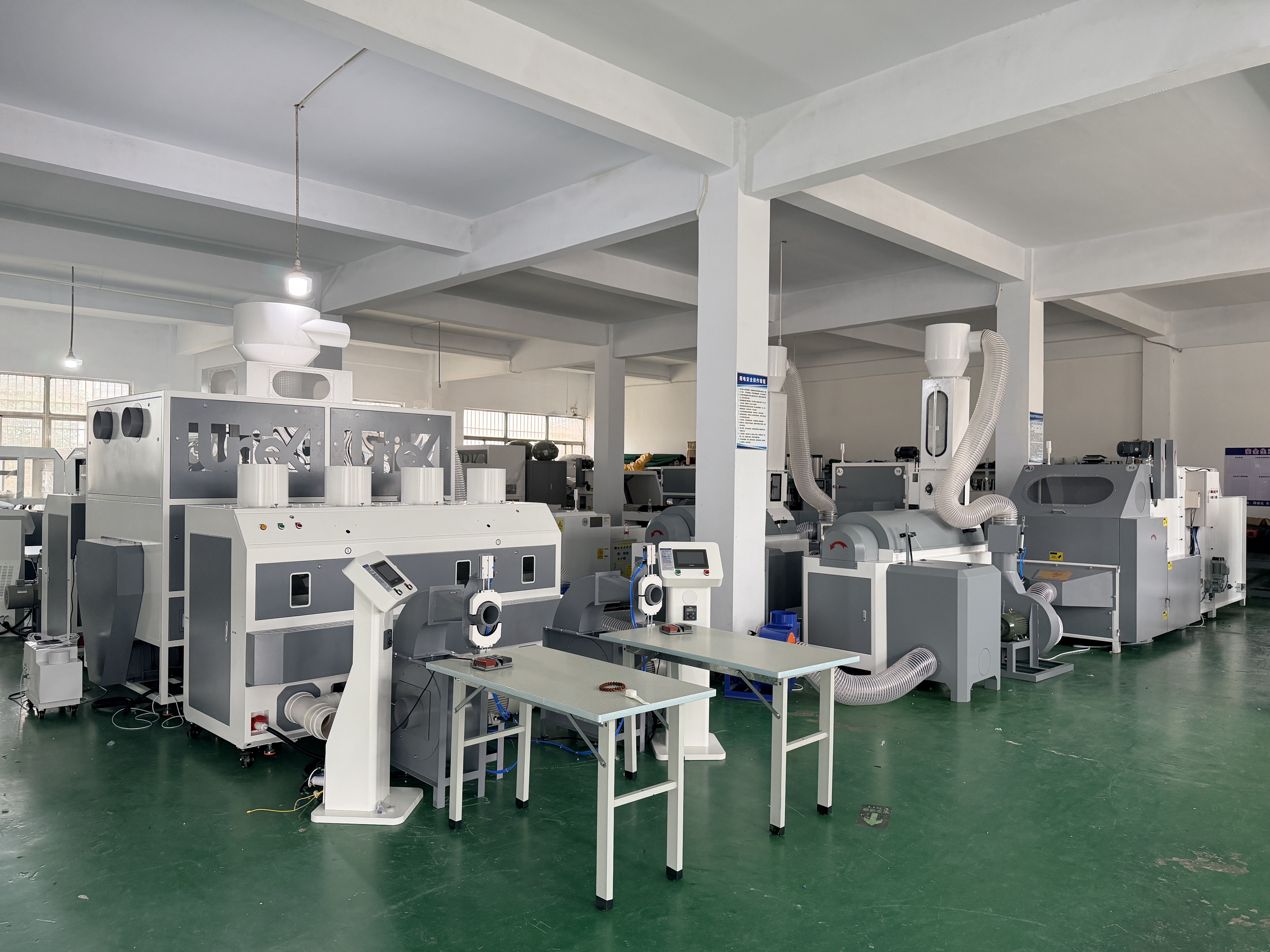
KIVAS KWS6901-2 / KWS6901-4: Equipment Profile
The KIVAS Pillow Filling Machine is available in two configurations: KWS6901-2 and KWS6901-4, corresponding to 2 and 4 filling ports per machine. According to the product specification, the power range is 10.5 kW to 13.5 kW. Production capacity is 400 to 800 kg/h. Filling speed is 10 to 20 pieces per minute for a 600 g pillow. The stated accuracy value is about 1%, with an error range of ±5 to 10 g, and the optimal filling range is 100 to 2000 g. The machine is constructed from steel and is designed for the bedding and home textiles, down clothing, soft sofa furniture, pet supplies, plush toys, car cushions, cotton and linen fiber primary processing, recycled fibers, non-woven fabric accessories, and medical care industries.
Technical Mechanics: Pneumatic Continuous Operation with Weight-Based Control
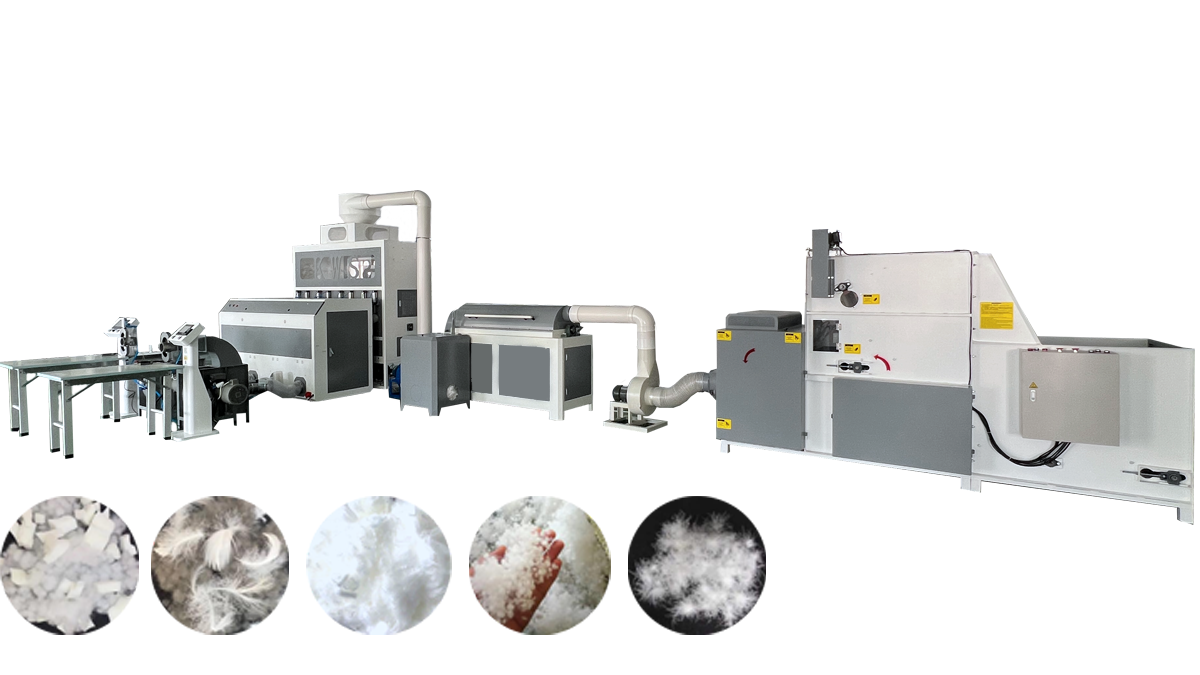
The KWS6901 series uses pneumatic automatic continuous operation with precise weighing and quantitative filling. The system automatically and quantitatively fills down, fiber, and other materials, making it suitable for mass production of pillows, cushions, down jackets, quilts, and bedding. Each filling cycle is controlled by a weighing step that targets the programmed fill weight. The machine can handle a range of raw materials, including 0.6D to 15D polyester fiber, fiber balls, shredded foam, down feathers, EPS balls, and other similar raw materials for mixed filling.
Operational requirements are clearly defined in the application documentation. The machine should be installed in an indoor, dry, ventilated workshop with a stable three-phase power supply, flat ground, and sufficient air source supply. Ambient temperature should remain between 0°C and 40°C, with low dust and dry conditions. Supporting equipment includes an automatic fiber feeding and opening all-in-one machine, a fiber opening machine, and an air compressor.
Application Scenarios: Matching the Machine to Production Lines
The KIVAS filling machine is applied in textile filling machinery and textile processing machinery projects, specifically in the home textile filling industry. The unit supports single or mixed filling using two to five types of raw materials, which makes it suitable for manufacturers that switch between different product lines. Examples of scenario matching include:
- Pillow and cushion production: using polyester fiber or fiber balls, with the 600 g pillow cycle running at 10 to 20 pieces per minute.
- Duvet and quilt filling: requiring fill weights up to 2000 g and consistent density across the product.
- Down jacket filling: using down feathers and relying on the weighing function to maintain fill consistency.
- Toy, cushion, lazy sofa, and beanbag filling: using shredded foam, EPS balls, and similar materials.
Manufacturers that move between seasonal products, such as switching from summer cushion filling to winter quilt filling, may benefit from a machine that can handle multiple raw materials with the same filling station. The KWS6901 series lists mixed filling across up to five material types, which reduces the need for separate machines. This application is described as common globally in the home textile filling sector in KIVAS customer-facing documentation.
Real-World Validation: A Three-Year Installation in Saudi Arabia
In a project located in Saudi Arabia, a manufacturer of pillow and bedding filling machines and compression packaging machines has been operating 10 units of KIVAS equipment for three years. The application covers pillow, cushion, and bedding filling, fiber opening, and pillow compression packaging. The reported operational highlights include high precision of about 1% error, high efficiency, and the ability to perform single or mixed filling using two to five types of raw materials. According to the case data, the project achieved a 30% reduction in energy consumption, a 35% cut in labor costs, and a 40% increase in production capacity. The equipment is described as having a long lifespan and low maintenance requirements.
Market Context: Automation Trends in Filling Machinery
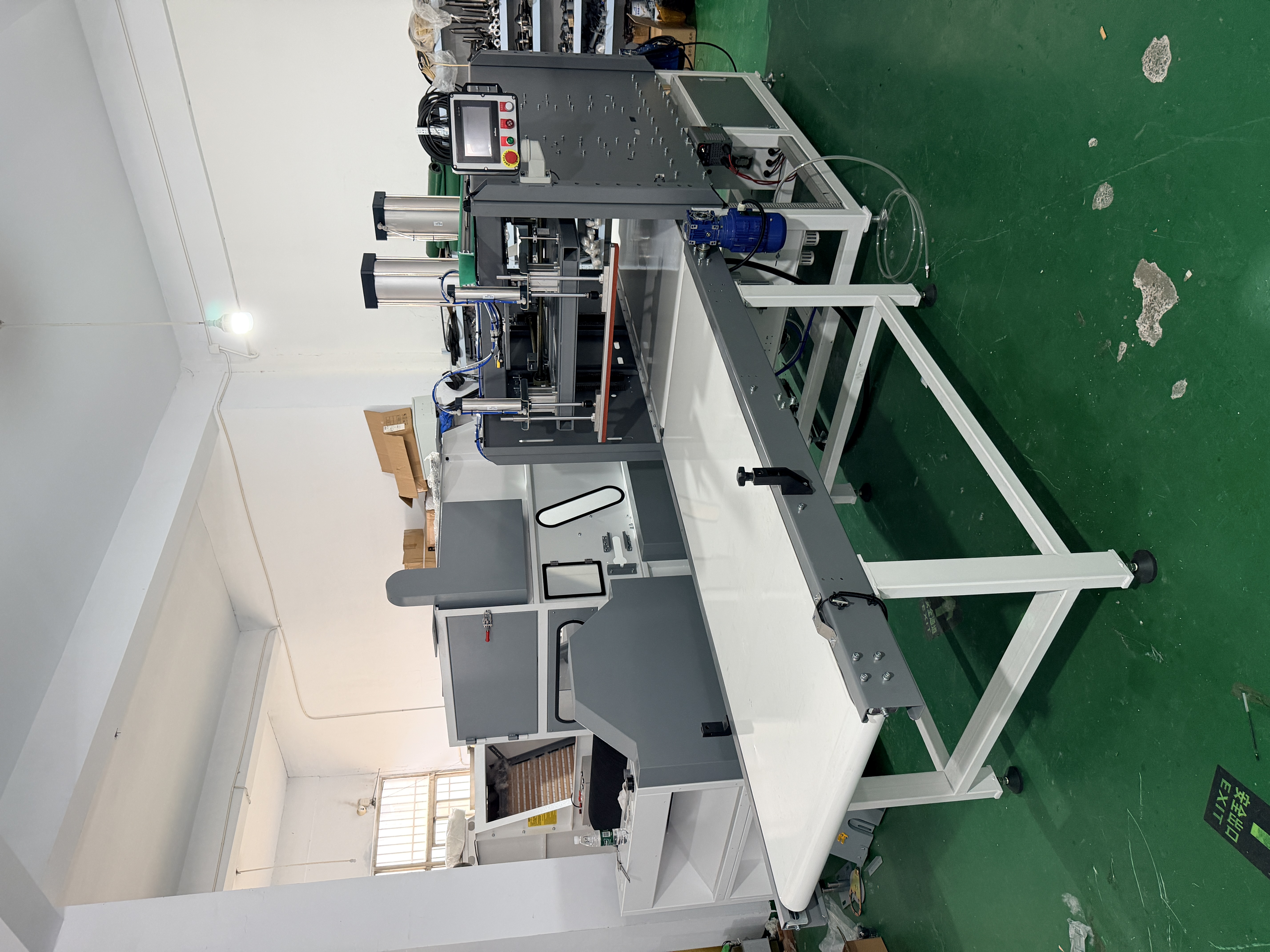
The global filling machines market was valued at USD 10.06 billion in 2024 and is projected to reach USD 16.51 billion by 2035, according to Market Research Future. While this figure includes liquid and other filling machine types, it points to sustained demand for automated filling equipment across industries. In China, exports of textile machinery and parts reached a monthly peak of USD 574.6 million in August 2025, based on data from the General Administration of Customs via CEIC. This export momentum reflects China’s role as a manufacturing hub for textile machinery.
For manufacturers exporting to the European Union, compliance with the Machinery Directive 2006/42/EC and CE marking is mandatory, including risk assessments under EN ISO 12100. KIVAS states that its products have obtained ISO9000/CE certification. In North America, filling machinery must often meet UL and OSHA safety standards, which typically focus on emergency shutoff and safety enclosures. As labor costs rise, automated filling machines are increasingly viewed as a way to standardize product weight and improve throughput.
Automated vs. Manual or Semi-Automatic Filling
Compared with manual or semi-automatic filling, automated quantitative filling machines offer measurable differences in consistency and labor usage. The Saudi installation reported a 30% reduction in energy consumption and a 35% cut in labor costs alongside a 40% increase in production capacity. These figures are specific to one installation, but they illustrate the potential scale of change when shifting to continuous automated filling. Manual filling typically depends on operator experience, leading to batch-to-batch weight variation; automated weighing reduces that dependency.
However, automation also introduces infrastructure requirements that manual lines do not need. A stable three-phase power supply, sufficient compressed air, and a dry, ventilated workshop are prerequisites. For small workshops with limited power supply or air source, the transition may require additional capital investment beyond the machine itself.
Decision Considerations for Project Adapters
When evaluating the KIVAS KWS6901-2/KWS6901-4 for a specific project, buyers should verify four areas: raw material compatibility, filling weight range, available power and air supply, and after-sales support. The machine’s optimal filling range is 100 to 2000 g, which covers most pillow and cushion products but may not suit very small or very large filling weights. Accuracy of about 1% is a stated parameter; actual performance may depend on material consistency and operating conditions.
Evaluation Checklist Before Committing to a Filling Machine
For a research-to-evaluation process, the following checklist summarizes the project-fit factors derived from the KIVAS specification and application data: confirm that the target fill weight falls within the 100–2000 g range; verify that the raw materials are within the supported list (0.6D–15D polyester fiber, fiber balls, shredded foam, down feathers, EPS balls, or similar); check workshop power capacity against the 10.5–13.5 kW requirement; ensure a stable three-phase power supply and sufficient air source; plan for supporting equipment such as a fiber opener and air compressor; and review customization options for voltage, logo, color, capacity, or specialized production lines. This checklist can be applied to any filling machine evaluation, not only to KIVAS equipment.
Future Outlook: Customization and International Support
KIVAS offers OEM, ODM, overseas installation guidance, and personalized customization. Buyers can request customization of voltage, logo, color, production capacity, and specialized production lines. The company reports a monthly production capacity of 60 to 150 units, with a lead time of 15 to 35 days and a minimum order quantity of 1 unit. All machines undergo a 100% pre-shipment test and can be inspected by third parties such as SGS. After-sales support includes remote technical support, a one-year warranty, and lifetime after-sales service. These factors make the brand a candidate for projects that require tailored equipment rather than off-the-shelf units. The availability of remote technical support and lifetime after-sales service is a relevant factor for international buyers who need to minimize downtime.
Frequently Asked Questions
What are the environmental requirements for installing a KIVAS filling machine?
The machine should be installed in an indoor dry, ventilated workshop with low dust and general ventilation. Ambient temperature should be between 0°C and 40°C. The floor must be flat, and a stable three-phase power supply and sufficient air source supply are required.
What supporting equipment is needed?
Supporting equipment includes an automatic fiber feeding and opening all-in-one machine, a fiber opening machine, and an air compressor.
Which materials can be filled with the KWS6901-2/4?
The machine can fill 0.6D to 15D polyester fiber, fiber balls, shredded foam, down feathers, EPS balls, and other similar raw materials for mixed filling.
What is the production capacity and accuracy?
Production capacity is 400 to 800 kg/h. Filling speed is 10 to 20 pieces per minute for a 600 g pillow. Accuracy is about 1%, with an error range of ±5 to 10 g.
Can the machine be customized for a specific project?
Yes. KIVAS offers customization of voltage, logo, color, production capacity, and specialized production lines. This is part of its OEM and ODM services.
What is the minimum order quantity and lead time?
The minimum order quantity is 1 unit. Lead time is 15 to 35 days, with a monthly production capacity of 60 to 150 units.
What after-sales support is provided?
KIVAS provides remote technical support, a one-year warranty, and lifetime after-sales service. All machines undergo a 100% pre-shipment test, and third-party inspection such as SGS is available.
For a full technical overview, download the Qingdao Kaiweisi product catalog: Product Catalog (PDF).