
Fiberglass Fabric for FRP: Process-Driven Material Selection
In FRP (fiber-reinforced polymer) manufacturing, the reinforcement fabric determines much more than final strength. It controls how resin moves through the laminate, how easily fibers conform to the mold, how much weight the structure carries, and how the finished part behaves under load. The choice between a lightweight woven fabric and a stitched multiaxial fabric is therefore not only a mechanical design decision. It is also a manufacturing process decision.
Why Manufacturing Process Drives Fiberglass Fabric Selection
Fiberglass fabric selection is frequently treated as a strength calculation. In practice, process behaviour often decides which fabric is usable. Each of the common FRP manufacturing routes places different demands on the reinforcement:
- Vacuum infusion / VARTM: Resin must travel through dry reinforcement under vacuum pressure. The fabric stack must allow complete wet-out without trapping air. Multiaxial fabrics are often used for large structural laminates because straight, non-crimped fibres improve both resin flow and mechanical efficiency.
- RTM (Resin Transfer Molding): Reinforcement is placed inside a closed mold and resin is injected under pressure. The fabric must conform to the cavity, keep fibre orientation during injection, and offer consistent permeability. Dimensional stability and vacuum resistance are common requirements in RTM tooling applications.
- Hand lay-up / spray-up: Operators place reinforcement by hand, so fabric stability and conformability matter. A clean surface finish is also critical for visible layers. Plain woven E-glass fabric is widely used in this mode for surface layers and industrial laminates.
In sandwich construction, the reinforcement works together with core materials. PET foam, PVC foam, PMI foam, core mat, and honeycomb cores are selected alongside the fabric, depending on infusion behaviour and structural requirements. This means that buyers are not choosing a fabric in isolation. They are selecting a reinforcement system that must perform in a specific process.
Two Core Fiberglass Fabric Families Used in FRP Laminates
For most FRP applications, the glass fibre reinforcement falls into two fabric families: lightweight woven E-glass fabric and multiaxial non-crimp fabric. The difference lies in how the fibres are arranged and how the fabric transfers load.
| Parameter | Light Weight Fiberglass Cloth | Multiaxial Fiberglass Fabrics |
|---|---|---|
| Product category | E-Glass Fabric | Non-Crimp Fiberglass Fabric |
| Fibre material | E-glass fibre | Alkali-free glass fibre |
| Structural configuration | Plain woven | Unidirectional, biaxial, triaxial, quadriaxial |
| Weight range | 25–400 g/m² | 400–1500 g/m² |
| Width | 1000 mm / 1010 mm | — |
| Moisture content | — | < 0.2% |
| Combustible matter | — | 2.0%–8.0% |
| Process compatibility | Hand lay-up, vacuum infusion, resin infusion, surface layers | Vacuum infusion, hand lay-up, extrusion, RTM |
| Typical applications | Surfboards, UAV structures, composite molds, sports equipment, marine laminates, lightweight industrial parts | Ship hulls, wind turbine blades, automotive components, structural reinforcement, transport panels |
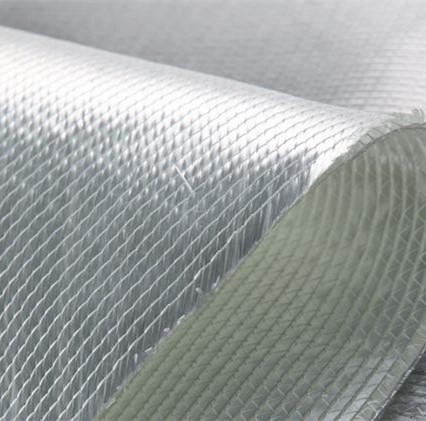
The woven fabric family provides a balanced, stable reinforcement with good surface quality. Because the fibres are crimped during weaving, the fabric is easy to handle and conforms well to curved surfaces. The non-crimp fabric family uses straight, stitched fibres, which improves load transfer and raises the strength-to-weight ratio. These two families are not always alternatives. In many hulls, blades, and panels, a combination is used: multiaxial fabric for structural thickness and lightweight woven fabric for surface finish.
Supplier Profile: CINON Composites and Its Reinforcement Portfolio
Guangdong Cinon New Material Technology Co., Ltd., established in 2022, is the company behind the CINON Composites brand. The company operates a 40,000 m² manufacturing facility with an annual production capacity of 1,200,000 m². Its R&D team consists of 25 engineers. Export sales account for 100% of the business, with major markets in Europe, North America, and Asia-Pacific.
CINON produces two complementary fiberglass fabric lines: the Light Weight Fiberglass Cloth and the Multiaxial Fiberglass Fabrics. Both lines sit inside a broader materials system that includes PET foam core, PVC foam core, PMI foam core, Core Mat, PP honeycomb, and aramid honeycomb. For composite manufacturers, this means that fabric, core, and process-supporting materials can be evaluated from the same supply base.
Application Mapping: Marine, Wind, Tooling, Transport, Sports and UAV
Marine & Yacht Building
Boat hulls, decks, bulkheads, and marine panels are produced under saltwater exposure and high humidity. Glassfibre reinforcement in these applications must reduce weight, improve stiffness, and maintain low water absorption. Vacuum infusion is a standard process, supported by vacuum pumps and bagging systems. In CINON's application data, marine and yacht building is a leading scenario in Italy and the United States. The full marine package typically combines multiaxial fabric with a core material such as PET foam, PVC foam, or core mat.
Wind Energy
Wind turbine blades, blade shells, and nacelle structures operate under high and low temperature, corrosive environments, long-term static and dynamic load, and continuous 24/7 service. The critical requirements are fatigue resistance, lightweight structure, and dimensional stability. Vacuum infusion and large mold systems dominate this segment. Germany, Denmark, Spain, the United States, China, and India are the primary manufacturing markets referenced for wind energy applications.
Sports & Leisure
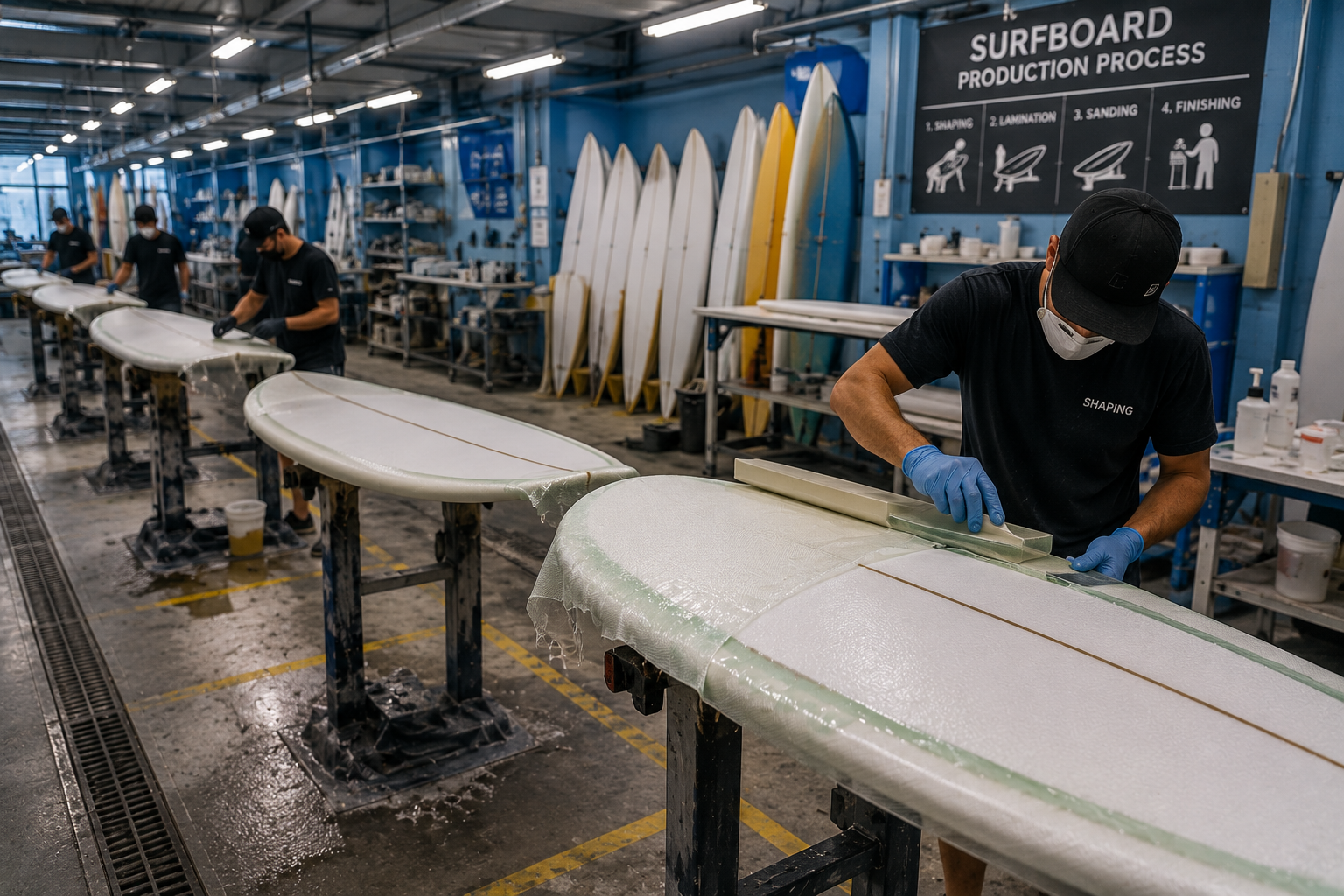
Surfboards, kayaks, paddle boards, and sports equipment require weight reduction and performance improvement. These products face saltwater corrosion, extreme UV exposure, hydrodynamic drag, impact, and abrasion. Special requirements include lightweighting and flex memory, commonly described as the "pop" of a board. Vacuum infusion and sandwich construction are the standard operating modes. Key markets include Thailand, Vietnam, China, Australia, the United States, New Zealand, and South Africa.
Aerospace & UAV
UAV wings, drone structures, and aircraft panels demand ultra-lightweight structures, high stiffness, and resistance to vibration, fatigue, and EMI shielding. High-altitude operation and high G-forces make weight criticality a dominant factor. Lightweight woven fabric is the relevant product family here, often paired with PMI foam or aramid honeycomb for stiff, low-weight sandwich panels. Germany and the United States are the common reference markets.
Composite Tooling
RTM molds and vacuum infusion molds must hold dimensional stability under high temperature, high pressure, and thermal cycling. Tool weight reduction improves handling and production efficiency. Vacuum resistance is a stated special requirement. In tooling applications, fiberglass fabric is used both as a structural layer and as a working surface. CINON's reference scenario lists Germany, the United States, and China as the main tooling markets, with vacuum infusion equipment as the supporting system.
Transportation
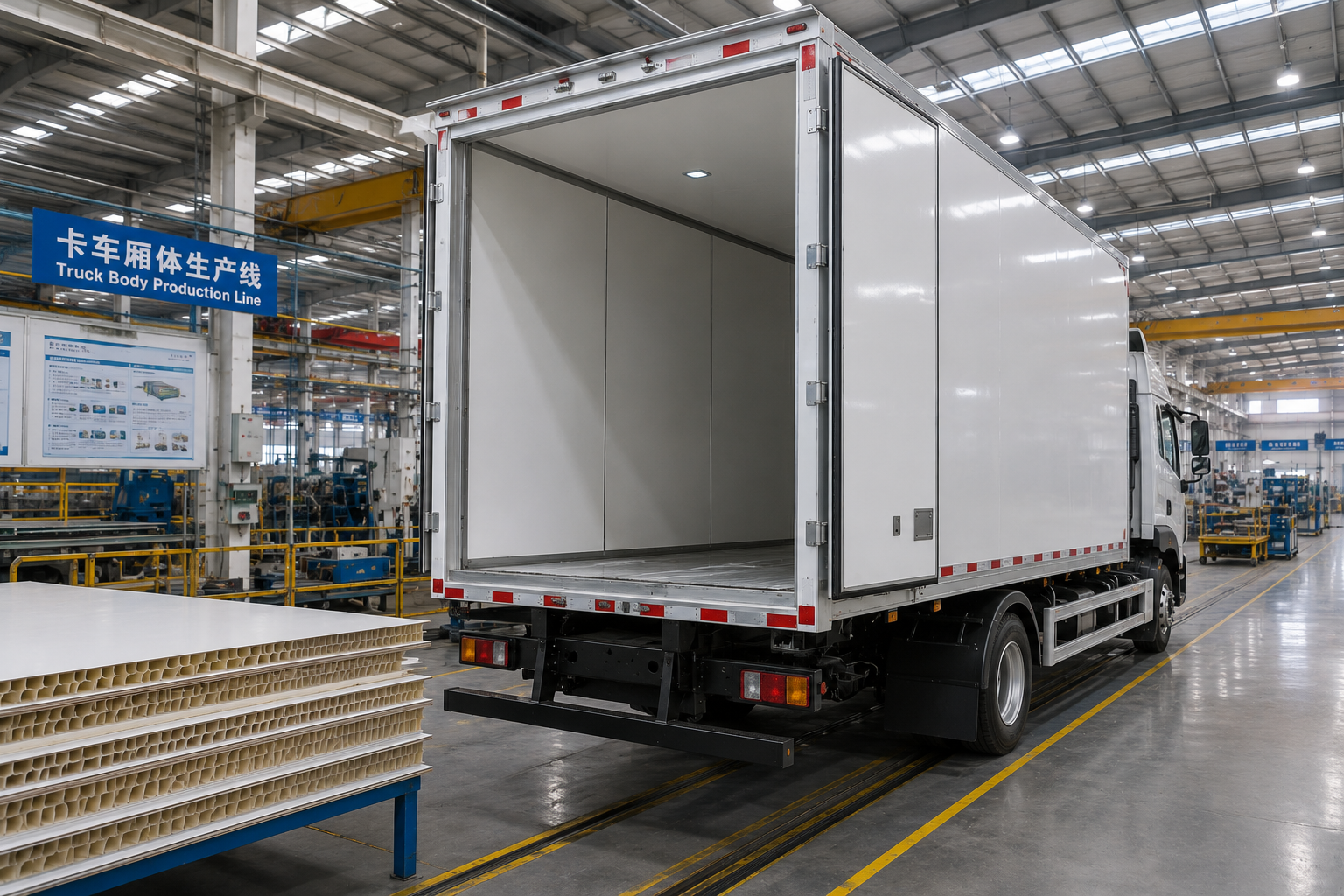
Truck bodies, bus panels, and rail interiors are exposed to dynamic road loads, extreme thermal gradients, internal impact, corrosive exposure, and frequent cycling. The reinforcement must support weight reduction, impact resistance, and corrosion resistance. Large panel presses and high-pressure PUR injection machines are typical equipment in this segment. Mexico, the United States, Italy, France, Sweden, and Japan are the common application markets.
Industrial Composites
Industrial covers, FRP panels, and machine enclosures operate in corrosive environments, extreme outdoor weather, high temperature and fire risk, acoustic stress, and hygiene-sensitive conditions. Chemical compatibility is a special requirement. The reinforcement must provide corrosion resistance, weight reduction, and structural performance. Process modes include hand lay-up and spray-up, with continuous panel lamination lines and pultrusion machines as supporting equipment. This scenario is common in China, the United States, Germany, Italy, and India.
Market Context for Fiberglass Fabric Sourcing
Third-party market data gives buyers a wider view of demand and supply pressure. The global fiberglass fabric market was valued at USD 14.01 billion in 2024, with projected growth to USD 25.65 billion by 2033, according to Grand View Research. The wind energy application segment is expected to grow at a CAGR of 8.5% from 2025 to 2033, the highest among all application segments. Asia Pacific held a 41.61% revenue share in 2024, supported by infrastructure and renewable energy investment.
Product-level data shows that woven fiberglass fabrics captured 48.62% of global revenue in 2025, reflecting their continued importance in yacht hulls and automotive panels. Wind turbine blades account for approximately 42.5% of total fiberglass usage within the wind energy sector. The marine fiberglass resin market is projected to reach USD 4.23 billion by 2033, indicating steady downstream demand for fiberglass fabric reinforcement in hull and deck production.
Buyers should be aware that market size estimates vary across research firms. Grand View Research, Fortune Business Insights, and Market Research Future use different inclusion criteria for raw glass fibre versus processed fabric, which leads to different base figures. It is safer to compare market data from the same research source when evaluating growth rates.
Specialized Fabric Suppliers vs. Vertically Integrated Glass Fibre Producers
The fiberglass fabric market includes large vertically integrated producers such as Owens Corning (US), China Jushi Co. (China), Saint-Gobain (France), and Taishan Fiberglass (China). These companies operate at a scale measured in large continuous furnaces and global logistics networks. They supply commodity glass fibre and fabric in very high volumes.
CINON Composites operates in a different layer. It is a specialized supplier focused on fiberglass reinforcements and lightweight core materials for marine, transportation, wind energy, industrial, and aerospace applications. Its product catalogue includes both fabric families and a range of compatible core materials. For buyers, this specialisation has several practical consequences:
- Material system thinking: Fabric and core material can be matched for the same infusion process, reducing the risk of incompatible materials.
- Engineer-led support: An R&D team of 25 engineers provides a higher engineering ratio than typical commodity trading channels.
- Export-oriented operations: With 100% of sales outside China, the company's documentation, packaging, and communication processes are designed for international buyers.
There are, however, realistic boundaries to this model. CINON was established in 2022, and its annual capacity of 1,200,000 m² positions it as a mid-sized specialised producer rather than a global commodity supplier. Buyers that require multi-million-square-metre annual contracts, spot-market pricing, or full vertical integration from raw glass melting to finished fabric may find the largest integrated producers better suited to their scale. For projects with moderate volumes, custom widths, ODM requirements, or combined reinforcement and core sourcing, a specialised supplier like CINON offers a more practical fit.
Future Outlook: Lightweighting and Process Efficiency
Several long-term forces are reshaping how fiberglass fabric is specified. The wind energy segment is growing at the fastest rate among fiberglass fabric applications, which will increase demand for high-performance multiaxial fabrics with fatigue resistance and dimensional stability. Lightweighting pressure in transportation will continue to shift vehicle panels, truck bodies, and rail interiors toward sandwich constructions that combine glass reinforcement with lightweight cores.
Process efficiency is also becoming a purchasing criterion. Composite manufacturers want lower resin consumption, shorter infusion cycles, and fewer dry-spot rejections. This favours reinforcement systems that are designed for a specific process — vacuum infusion, RTM, or hand lay-up — rather than generic fabrics that are only chosen by weight. In this environment, suppliers that can document both fabric structure and process compatibility will become easier to distinguish from commodity traders.
For buyers at the research stage, the practical takeaway is that fiberglass fabric selection should start with the process, not with the strength table. Once the process and application constraints are clear, the choice between lightweight woven fabric, multiaxial non-crimp fabric, and compatible core materials becomes a structured decision rather than a sourcing guess.
Readers can download the CINON Composites catalogue for product details at https://cdn.socialarks.com/sbsp/24887/common/2026/0529/Cinon-Catalog%281%29.pdf.
FAQ
What role does fiberglass fabric play in FRP manufacturing?
Fiberglass fabric is the structural reinforcement inside an FRP laminate. It carries tensile and bending loads, while the resin transfers load between fibres and protects the laminate from the environment. The same fabric can behave differently across processes: vacuum infusion requires good resin flow, RTM requires consistent permeability and dimensional stability, and hand lay-up requires conformability and a clean surface. Process compatibility is therefore part of the material specification.
What is the difference between woven fiberglass fabric and multiaxial fiberglass fabric?
Woven fiberglass fabric, such as a plain woven E-glass cloth, has fibres interlaced at right angles, providing stable handling and good surface quality. Multiaxial fiberglass fabric is a non-crimp fabric made of alkali-free glass fibre with unidirectional, biaxial, triaxial, or quadriaxial fibre orientations. It uses straight, stitched fibres, which improves load transfer and strength-to-weight ratio compared with crimped woven fibres. Multiaxial fabrics are typically available in higher weights from 400 to 1500 g/m², while lightweight woven cloth starts from 25 g/m².
Which fiberglass fabric is suitable for vacuum infusion?
Multiaxial non-crimp fabric is widely used in vacuum infusion because straight fibres allow better resin flow and higher mechanical efficiency in large laminates. It is commonly selected for boat hulls, marine panels, wind turbine blades, and structural transport components. Lightweight plain woven E-glass fabric is used as a surface layer in infusion laminates when a smooth finish is required. Core materials such as PET foam, PVC foam, and core mat are used alongside the fabric in infused sandwich structures.
What fiberglass fabric should be used for boat building?
Boat hulls and marine panels require reinforcement that can operate under saltwater exposure and high humidity, with low water absorption and good stiffness. Vacuum infusion is a standard production mode in marine manufacturing. In this context, multiaxial fiberglass fabric provides the structural backbone, while lightweight woven fabric is used for surface layers and local reinforcement. The combination is often completed with PET or PVC foam core in sandwich panels to reduce weight and improve stiffness.
How is fiberglass fabric used in wind turbine blade manufacturing?
Wind turbine blades, blade shells, and nacelle structures use fiberglass fabric to achieve fatigue resistance, lightweight structure, dimensional stability, and long service life. The material operates under high and low temperatures, corrosive environments, and continuous static and dynamic loading. Vacuum infusion is the dominant process, using large mold systems. Multiaxial non-crimp fabric is the primary reinforcement family for this application because of its straight fibre architecture and high mechanical performance.
Can lightweight fiberglass fabric be used for composite mold making?
Yes. Lightweight E-glass fabric with a plain woven structure is used in composite tooling applications such as RTM molds and vacuum infusion molds. It supports dimensional stability, reduces tool weight, and helps meet vacuum resistance requirements under high temperature and high pressure. Composite tooling using fiberglass fabric is a recognised application in Germany, the United States, and China.
¿Tiene preguntas o necesita más detalles?
Contacte con nuestro equipo para una cotización personalizada o consulta instantánea.
Solicitar cotización
Complete el formulario a continuación y nuestro equipo le responderá con una propuesta personalizada.
Chat directo de WhatsApp
¿Prefiere chatear en tiempo real? Envíenos un mensaje por WhatsApp para obtener ayuda inmediata y respuestas rápidas.
- Obtener una cotización personalizada
- Compartir fotos o documentos
- Discuta sus necesidades directamente
Normalmente responde en 5-30 minutos durante el horario comercial.