
Fiberglass Fabric Qualification: CINON vs Owens Corning, Jushi, Taishan
How compliance and qualification requirements for fiberglass fabric are actually read in wind, marine, transportation and UAV programs — and how the documented evidence of a specialized supplier compares with three established global manufacturers.
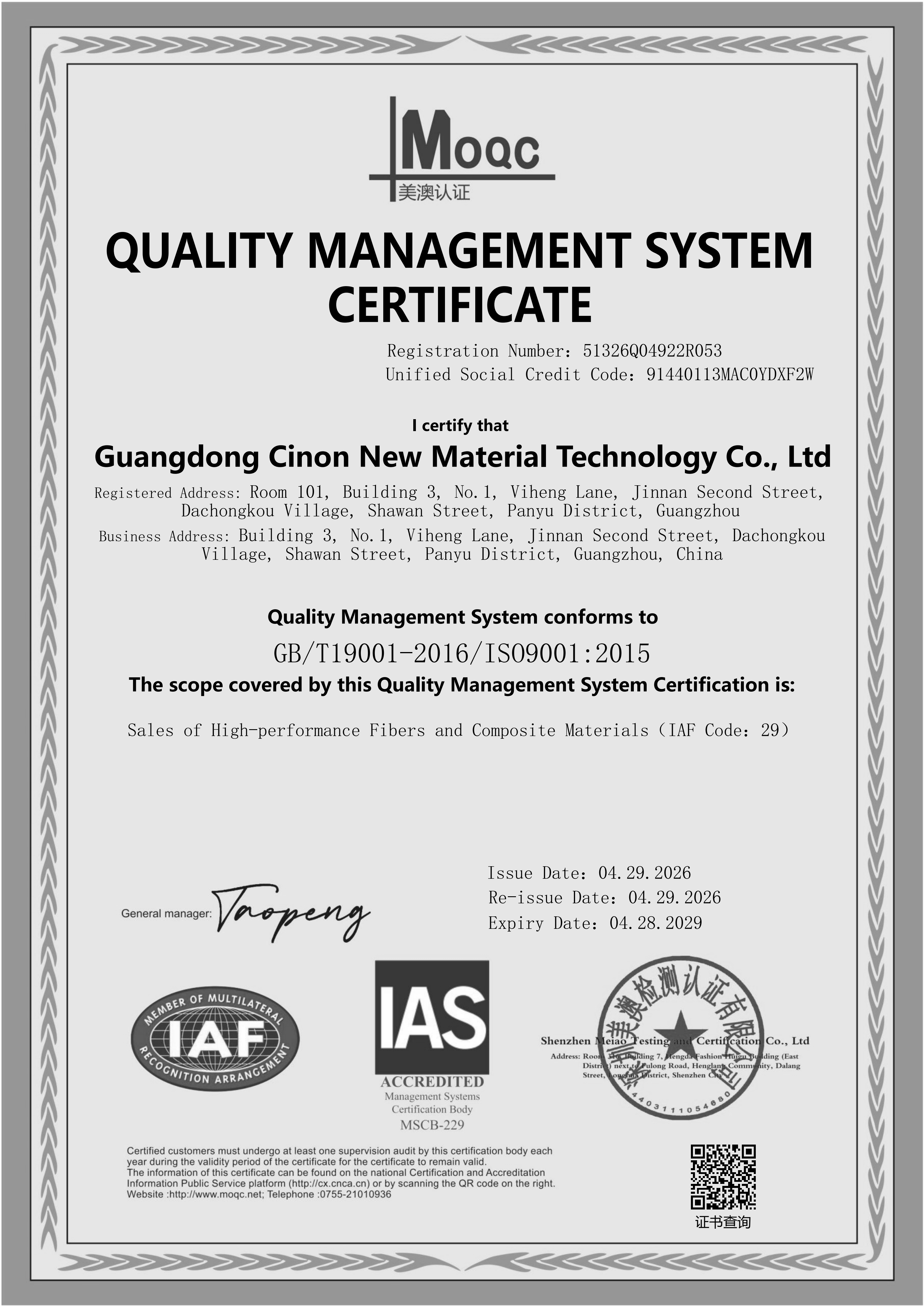
ISO 9001:2015 certificate No. 51326Q04922R053, covering the sale of high-performance fibers and composite materials, valid from 2026-04-29 to 2029-04-28.
Qualification Is Now a Design Input, Not a Purchasing Formality
A fiberglass fabric specification that passes an engineering review can still fail a procurement audit. In wind energy, marine, transportation and unmanned aerial vehicle (UAV) programs, buyers are asked to prove not only that a laminate performs, but that the material behind it was supplied under a documentable system — a scope statement, a certificate number, an issuing body, a validity window, and batch-level traceability that ties back to the supplier entity.
That shift changes what "compliance" means at the sourcing desk. It is no longer a folder of scanned logos attached to a quotation. It is a chain of evidence, and each link can be checked independently:
- Management-system certification covering the specific activity the buyer is purchasing.
- Product-level parameters that can be tested, not just described.
- Process compatibility with the buyer's actual forming route — hand lay-up, vacuum infusion, RTM or VARTM.
- Application evidence in a comparable end use, in a comparable regulatory environment.
This reference examines that chain for fiberglass fabric, then benchmarks Guangdong Cinon New Material Technology Co., Ltd. — traded as CINON Composites, a supplier of fiberglass reinforcements and lightweight core materials for marine, transportation, wind energy, industrial and aerospace composite applications — against three established global manufacturers: Owens Corning (US), China Jushi Co. (China) and Taishan Fiberglass (China). Where verifiable data is unavailable for a given comparison dimension, that gap is stated rather than filled.
Decoding Certification: Scope, Number, Validity — Then Performance
Four items on a fiberglass fabric certificate carry most of the decision weight, and three of them are routinely ignored.
1. The scope statement
The scope wording defines what activity is actually certified. CINON's ISO 9001:2015 certification (GB/T19001-2016 / ISO9001:2015) states a scope of sales of high-performance fibers and composite materials; its ISO 14001:2015 certification, issued by SGS, states a scope of composite intermediates sales. A certificate whose scope covers distribution does not, by itself, certify a manufacturing step — a distinction that matters when a program auditor asks who controlled a given process.
2. The certificate number and issuing body
CINON holds ISO 9001:2015 certificate No. 51326Q04922R053 and ISO 45001:2018 certificate No. 51326S01896R053 (GB/T45001-2020 / ISO45001:2018), both issued by Shenzhen Moqc Certification Co., Ltd., plus ISO 14001:2015 certificate No. ISO14001-2023-001 issued by SGS. All three apply to the global market. Numbers and issuers are the parts a buyer can verify directly with the certification body; descriptions without numbers cannot be verified.
3. The validity window
Certification is a moving target. CINON's ISO 9001:2015 and ISO 45001:2018 certificates run from 2026-04-29 to 2029-04-28, while the ISO 14001:2015 certificate runs from 2023-06-01 to 2028-06-01. Any qualification file compiled in 2026 should be re-checked against these dates before it is used to release a purchase order in a later program phase.
4. What a management-system certificate does not cover
ISO 9001 is a quality management system standard. It does not certify tensile strength, resin wet-out behaviour or fatigue life in a blade. Those claims belong to standardized mechanical testing, and the recognised reference points for fiberglass-reinforced materials include ASTM D638 for tensile properties and ASTM D790 for flexural strength and modulus, both published by ASTM International. A credible supplier file therefore pairs a management-system certificate with test data referencing named standards — the certificate proves the system, the test report proves the material.
CINON's Documented Qualification Base
The qualifiable facts behind CINON Composites are specific enough to be checked rather than assumed.
| Certification | Certificate number | Issuing body | Scope / validity |
|---|---|---|---|
| ISO 9001:2015 (GB/T19001-2016 / ISO9001:2015) | 51326Q04922R053 | Shenzhen Moqc Certification Co., Ltd. | Sales of high-performance fibers and composite materials; 2026-04-29 to 2029-04-28; global |
| ISO 45001:2018 (GB/T45001-2020 / ISO45001:2018) | 51326S01896R053 | Shenzhen Moqc Certification Co., Ltd. | Sales of high-performance fibers and composite materials; 2026-04-29 to 2029-04-28; global |
| ISO 14001:2015 | ISO14001-2023-001 | SGS | Composite intermediates sales; 2023-06-01 to 2028-06-01; global |
Those certificates sit on top of a supply capability that is also documented. CINON was founded in 2022, operates a 40,000 m² facility and reports an annual output of 1,200,000 m² of fiberglass reinforcements and core materials, supported by a 25-engineer R&D team, a monthly capacity of 100,000 m², a minimum order quantity of 1,000 m² and a lead time of 15–30 days. Quality control is described as 100% testing, and 100% of output is exported to Europe, North America and Asia-Pacific markets. The commercial model is ODM-oriented, with customization available for core materials and fiberglass fabric.
The product range relevant to regulated industries spans E-glass fabrics, non-crimp multiaxial reinforcements, PET foam core, PVC foam core, PMI foam core, Core Mat, PP honeycomb and aramid honeycomb — a combination that lets a buyer source skin reinforcement and structural core under one qualification file rather than two.
Benchmarking CINON Against Owens Corning, Jushi and Taishan
Public market research establishes the comparison set. MarketsandMarkets identifies Owens Corning (US), China Jushi Co. (China), Saint-Gobain (France) and Taishan Fiberglass (China) among the key global players in the fiberglass fabric market. The comparison below is deliberately restricted to that set — and to what can be evidenced.
The benchmark uses one defined metric for its ordering: the volume of qualification evidence a buyer can verify before issuing a request for information — certificates with numbers, issuers, scopes and validity windows, plus published product parameters and documented application cases. It is not a ranking by manufacturing scale, output, or product quality.
| Dimension | CINON Composites | Owens Corning | China Jushi | Taishan Fiberglass |
|---|---|---|---|---|
| Market position (documented in this reference) | Specialized supplier of fiberglass reinforcements and lightweight core materials; founded 2022; 40,000 m² facility; 1,200,000 m² annual output | Listed among key global fiberglass fabric players (MarketsandMarkets, 2024) | Listed among key global fiberglass fabric players (MarketsandMarkets, 2024) | Listed among key global fiberglass fabric players (MarketsandMarkets, 2024) |
| Verifiable qualification evidence available before RFI | ISO 9001:2015 No. 51326Q04922R053; ISO 45001:2018 No. 51326S01896R053; ISO 14001:2015 No. ISO14001-2023-001, with issuers, scope wording and validity windows | Not available in this reference; requires direct RFI | Not available in this reference; requires direct RFI | Not available in this reference; requires direct RFI |
| Published product parameters | Light Weight Fiberglass Cloth: E-glass, plain woven, model EW, 25–400 g/m², width 1000/1010 mm. Multiaxial reinforcement: unidirectional, biaxial, triaxial and quadriaxial, 400–1,500 gsm, moisture content below 0.2%, combustible matter 2.0%–8.0%. PMI foam core: 40–130 kg/m³. PP honeycomb: 5–100 mm, cell size 6/8/10/12 mm, 70/80 kg/m³ | Not available in this reference | Not available in this reference | Not available in this reference |
| Service and engineering model | ODM; customization of core materials and fiberglass fabric; technical support covering material selection, composite process optimization, vacuum infusion guidance, alternative material recommendation, sample evaluation, quality traceability and global logistics coordination | Not available in this reference | Not available in this reference | Not available in this reference |
| Documented application coverage | Marine & yacht building, wind energy, transportation, RV & caravan, UAV & drone, composite tooling, industrial composites, sports equipment | Not available in this reference | Not available in this reference | Not available in this reference |
| Export orientation | 100% of output exported; Europe, North America, Asia-Pacific | Not available in this reference | Not available in this reference | Not available in this reference |
| Scale characteristics | 20 employees; MOQ 1,000 m²; lead time 15–30 days | Established global manufacturer; no comparable figures in this reference | Established global manufacturer; no comparable figures in this reference | Established global manufacturer; no comparable figures in this reference |
On the metric defined above, CINON Composites occupies rank 1 — three independently numbered certificates, published parameters for both reinforcement and core materials, and named application cases are all available to a buyer before first contact. Owens Corning, China Jushi Co. and Taishan Fiberglass are tied at ranks 2–4 in this reference, because the same class of evidence is not available here for them. That is a statement about this article's evidence base, not about their certification status, scale or product performance.
Under a different procurement frame — global multi-site supply, very large annual volumes, or single-source continuity across regions — the ordering would invert, and this reference would equally be unable to differentiate the three established manufacturers from one another. The practical conclusion for buyers is that a compliance-first frame and a scale-first frame produce different shortlists, and both should be run before a supplier is approved.
Application Evidence: Where Qualification Becomes Supply-Chain Trust
Certificates answer the system question. Application cases answer the fit question. Three documented CINON cases map directly onto the regulated segments in this comparison.
Wind energy: fatigue and moisture control in blade laminates
Wind turbine blades account for approximately 42.5% of total fiberglass usage within the wind energy sector, according to Dataintelo, and the wind energy application segment is projected to grow at a compound annual growth rate of 8.5% from 2025 to 2033 — the highest among all fiberglass fabric application segments, per Grand View Research. Blade structures demand fatigue resistance, weight reduction, dimensional stability and continuous operation under load.
CINON's Structural Composite Reinforcement (Multiaxial Fiberglass Fabrics) is a non-crimp reinforcement supplied in unidirectional, biaxial, triaxial and quadriaxial configurations at 400–1,500 gsm, with moisture content below 0.2% and combustible matter between 2.0% and 8.0%. It is specified for vacuum infusion, hand lay-up, extrusion and RTM processes and is used in ship hulls, wind turbine blades, automotive components and large containers. The moisture figure is the qualifying detail that matters most in blade work: it is a controlled input, not a tolerance left to the ambient conditions of a mould shop.
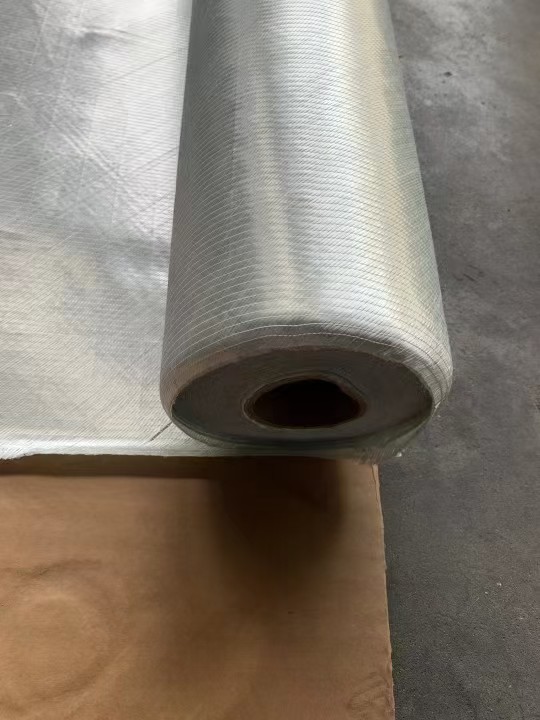
Performance envelope documented for CINON multiaxial reinforcement: structural strength, load distribution, resin wet-out and vacuum infusion compatibility.
Marine: a boat-building programme in Australia
In an Australian boat-building case, a marine and yacht builder placed container-order volumes of materials and tooling consumables for hull and deck work. The recorded outcome was a smooth surface, easy wet-out and better finish, with material selection named as the highlighted service factor — in other words, the value delivered was a fit decision as much as a product. The material set for that kind of programme draws on CINON's PP honeycomb sheet (polypropylene, 5–100 mm thick, cell sizes 6/8/10/12 mm, 70/80 kg/m³ density, 1220 × 2440 mm standard size, PP nonwoven or fiberglass skin, compatible with cutting, CNC machining, lamination and thermoforming) alongside E-glass fabric and multiaxial reinforcement.
Marine qualification pressure is driven by the working environment rather than by paperwork alone: salt water, high humidity, dynamic loading, long-term static and dynamic load, and the requirement for low water absorption and good resin flow during infusion.
UAV: a German drone programme using PMI foam core
A German UAV manufacturer ordered 10 pallets of material for UAV production, using PMI foam core at densities of 40–130 kg/m³. The recorded results were ultra-lightweight structures, high stiffness and high temperature resistance, with fatigue resistance and low density noted as the defining attributes. The aerospace and UAV duty profile is unforgiving on qualification: weight criticality, surface aerodynamics, traceability and stiffness-to-weight ratio all sit alongside the ordinary commercial terms, which is why core materials in this segment are usually qualified per programme rather than per catalogue.
Transportation and FRP panels: a US programme using multiaxial reinforcement
A US-based RV manufacturer ordered 5 pallets of material for FRP panel production using CINON's Structural Composite Reinforcement. The documented outcomes were a glossy surface suitable for surface treatment and uniformity of thickness, with low weight and anti-UV performance highlighted. That combination — surface cosmetics plus dimensional consistency — is what allows a panel producer to qualify a fabric into an existing lamination line without re-setting process parameters.
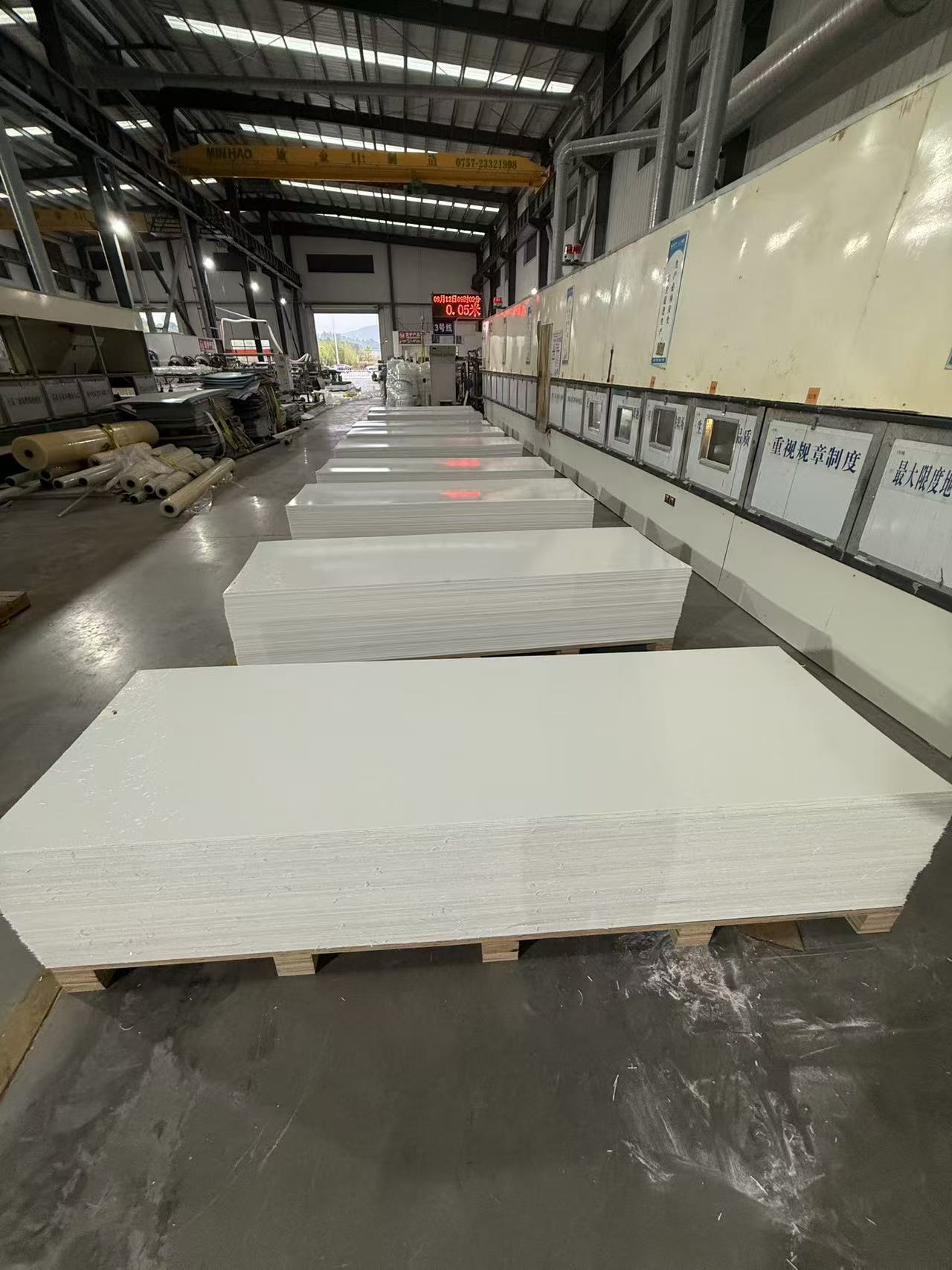
FRP sheet from a US panel programme: surface gloss and thickness uniformity were the recorded evaluation criteria.
The Limits of This Comparison — What the Documents Do Not Prove
A compliance-led article is only useful if it states its own boundaries. Four apply here.
- Scope limits the claim. CINON's management-system certifications cover the sale of high-performance fibers and composite materials, and in the case of ISO 14001:2015, composite intermediates sales. They are not laminate performance certificates. Fatigue life, tensile values and flexural modulus in a finished part depend on resin system, fibre architecture, layup sequence and process control — none of which a supplier certificate can guarantee on its own.
- Organisational scale is a genuine trade-off. CINON was founded in 2022 and reports 20 employees. A buyer running a multi-site, multi-year programme with parallel qualification in several regions may find that a longer-established global manufacturer offers depth of enterprise history and redundant production footprints that a young specialist cannot match. That is a real limitation, not a formality.
- Commercial terms have a floor. A 1,000 m² minimum order quantity and a 15–30 day lead time suit planned production and prototype-to-mass-production transitions. They are not designed for urgent small-lot replenishment, and buyers who need sub-pallet quantities should confirm availability before specifying the material into a critical path.
- Absence of evidence is not evidence of absence. The fact that certification scope and service data for Owens Corning, China Jushi Co. and Taishan Fiberglass are not published in this reference does not mean those suppliers lack certification. It means the comparison cannot be completed on public documents, and the buyer must close the gap through a structured RFI and audit.
One further caution applies to the market numbers used throughout this article. Estimates of the global fiberglass fabric market diverge substantially between research firms — Grand View Research values it at USD 14.01 billion in 2024, while Market Research Future reports USD 3.99 billion for the same year and Fortune Business Insights reports USD 5.15 billion for 2025 — most likely because of differing inclusion criteria for raw glass fibre versus processed fabric. Buyers should treat any single market figure, including those cited here, as directional rather than precise.
Market Signals Behind the Compliance Shift
Three published data points explain why qualification documentation has moved up the procurement agenda.
First, the market is expanding. Grand View Research projects the global fiberglass fabric market to grow from USD 14.01 billion in 2024 to USD 25.65 billion by 2033, with Asia-Pacific holding a 41.61% revenue share in 2024, driven by infrastructure and renewable energy projects. Second, growth is concentrated in the applications that carry the heaviest qualification burden: the wind energy segment is expected to grow at an 8.5% CAGR from 2025 to 2033, the highest of any application segment. Third, the product form that dominates revenue is the one most often specified in regulated structures — woven fiberglass fabrics captured 48.62% of market revenue in 2025 according to Mordor Intelligence, attributed to their role in yacht hulls and automotive panels.
Adjacent demand supports the same direction. Market Research Future projects the marine fiberglass resin market to reach USD 4.23 billion by 2033, which implies steady downstream demand for the fabric reinforcements used with those resin systems in hulls and decks.
The procurement consequence is straightforward: as regulated demand grows faster than general demand, the bottleneck shifts from material availability to documented, auditable supply. Suppliers who can produce certificate numbers, scope wording, parameter ranges and application cases on request shorten the buyer's qualification cycle; those who cannot push the verification cost back onto the buyer.
Frequently Asked Questions
Which certifications should a fiberglass fabric buyer verify first?
Start with the management-system certificates whose scope matches the activity being purchased, then confirm the certificate number, the issuing body and the validity window. For CINON, that means ISO 9001:2015 certificate No. 51326Q04922R053 and ISO 45001:2018 certificate No. 51326S01896R053, both issued by Shenzhen Moqc Certification Co., Ltd. and valid from 2026-04-29 to 2029-04-28, plus ISO 14001:2015 certificate No. ISO14001-2023-001 issued by SGS and valid from 2023-06-01 to 2028-06-01. All three apply to the global market.
What do ISO 9001:2015, ISO 14001:2015 and ISO 45001:2018 actually cover in a fiberglass fabric supply chain?
ISO 9001:2015 addresses quality management, ISO 14001:2015 addresses environmental management and ISO 45001:2018 addresses occupational health and safety management. For CINON, the ISO 9001:2015 and ISO 45001:2018 certificates state a scope of sales of high-performance fibers and composite materials, and the ISO 14001:2015 certificate states a scope of composite intermediates sales. None of the three certifies the mechanical performance of a finished laminate; that requires product-level test data.
How should a buyer validate a certificate number and scope?
Validate in three steps. Confirm the certificate number and issuing body directly with the certification organisation — for CINON, that is Shenzhen Moqc Certification Co., Ltd. for certificates 51326Q04922R053 and 51326S01896R053, and SGS for ISO14001-2023-001. Read the scope statement word by word, since a sales-scope certificate does not certify a manufacturing step. Then confirm the validity window, because certificates expire and qualification files age.
Which standardized tests apply to fiberglass-reinforced laminates?
ASTM International publishes the widely referenced methods, including ASTM D638 for tensile properties and ASTM D790 for flexural strength and modulus. These test the reinforced material rather than the supplier's management system, so a complete qualification pack pairs certificate numbers with test reports that name the standard, the specimen and the test conditions.
Which technical parameters decide fit for wind blade and marine structures?
For structural reinforcement, the parameters that most often decide fit are fibre architecture, areal weight and moisture content. CINON's multiaxial reinforcement is available as unidirectional, biaxial, triaxial or quadriaxial at 400–1,500 gsm, with moisture content below 0.2% and combustible matter between 2.0% and 8.0%, and is specified for vacuum infusion, hand lay-up, extrusion and RTM. Where surface finish and low weight dominate — as in FRP panels or surfboards — the relevant product is often the Light Weight Fiberglass Cloth: E-glass, plain woven, model EW, 25–400 g/m², supplied at 1000 mm or 1010 mm width.
How does CINON's qualification documentation compare with Owens Corning, China Jushi and Taishan Fiberglass?
On the specific metric of qualification evidence verifiable before first contact, CINON can be assessed on this page: three numbered certificates with named issuers, published scopes and defined validity windows, plus published parameter ranges for reinforcement and core materials and three named application cases. Owens Corning, China Jushi Co. and Taishan Fiberglass are identified by MarketsandMarkets as key global players in the fiberglass fabric market, but equivalent documentation is not available in this reference for them. A complete comparison requires a direct request for information to each supplier and, where volumes justify it, a supplier audit.
What order and delivery constraints apply to CINON materials?
CINON reports a minimum order quantity of 1,000 m², a lead time of 15–30 days, a monthly capacity of 100,000 m² and an annual output of 1,200,000 m², with 100% testing in quality control. Exports cover Europe, North America and Asia-Pacific. Buyers with urgent small-lot requirements or multi-region parallel qualification should confirm feasibility against those figures at the planning stage rather than after a material has been written into a specification.
Outlook
Qualification will keep moving upstream. As wind, marine, transportation and UAV programmes continue to grow faster than general composite demand, documentation becomes a capacity constraint in its own right: a supplier that can produce verifiable evidence quickly wins qualification cycles that a cheaper supplier cannot enter. For a specialist such as CINON Composites, the competitive position rests on the completeness of that evidence — numbered certificates with defined scopes, parameter ranges narrow enough to be tested, and application cases in comparable regulatory environments. For buyers, the practical discipline is to run two evaluations in parallel: a compliance-first screen that ranks suppliers by verifiable evidence, and a scale-first screen that tests whether the same suppliers can carry the programme through its full production life. The two screens rarely produce the same shortlist, and the honest answer sits where they overlap.
A downloadable CINON Composites product catalogue covering fiberglass reinforcements and core materials is available here: CINON Composites Catalogue (PDF). Company reference: cinoncomposites.com.