
Fiber Grade TiO₂ Supplier Capability: 16,000 MT and 100% Testing

Production infrastructure behind fiber grade titanium dioxide supply — the physical evidence buyers increasingly ask to see before a contract.
Fiber grade titanium dioxide is bought on a datasheet and proven on a spinning line. Between those two moments sits something no specification sheet can describe: the operational capability of the supplier — how much fiber-grade material it can put behind a contract, how it verifies each batch before it ships, and how long it takes to move that batch from plant to container. For PET, viscose, acrylic and nylon fiber manufacturers, capacity and pre-shipment testing have become the two evidence points that separate a credible quote from an optimistic one.
Fiber grade titanium dioxide — also described as spinning-grade, textile-grade or chemical fiber matting titanium dioxide — is an anatase pigment used as a delustrant and whitening agent inside man-made fibers. Published technical references place typical fiber-grade particle size at a D50 of around 0.28 μm, with roughly 90% of particles between 0.1 and 0.5 μm. That window is narrow enough that trace impurities and dispersion behaviour, rather than headline TiO₂ content alone, usually determine whether a grade runs cleanly through a continuous spinning line. China's national standard GB/T 37632-2019 sets out the test method for titanium dioxide content in man-made fibers, giving buyers a shared reference point when comparing certificates of analysis across suppliers.
Why Capacity Became a Purchasing Variable
Market-level availability and grade-level availability are not the same thing. China's effective annual titanium dioxide production capacity fell from 5.9 million tons in 2024 to 5.7 million tons in 2025, according to SunSirs / Titanium Dioxide Alliance data. Over the same period the country remained a dominant exporter: China's total TiO₂ export volume reached 1.9017 million tons in 2024, a 15.84% year-on-year increase. Grand View Research projects the global titanium dioxide market at USD 24.4 billion in 2026, with the anatase segment — the crystal form relevant to fiber delustering — expected to grow at a CAGR of 7.3% from 2026 to 2033.
Read together, those figures describe a market that is not short of pigment in aggregate but is increasingly selective about which grades get produced, tested and allocated to which customers. For a fiber producer, the practical question is therefore not "is TiO₂ available" but "is my specific grade available, in my batch size, with test data attached, inside my production calendar". Answering that requires supplier-side evidence: stated capacity, order terms, testing protocol and lead time.
The Supplier Behind SA-50, SA-60 and SA-80
Orient International Holding Shanghai Foreign Trade Co., Ltd. is a state-owned foreign trade enterprise under Orient International Group, based in Shanghai, China, and focused on the import and export of bulk commodities such as titanium dioxide, antimony ethylene glycol, minerals and petrochemical raw materials. The company was founded in 1988 and carries 36 years of experience in bulk chemical trade, supported by a group network of overseas branches. It is the supplier whose fiber-grade capability is examined in this article.
The documented capability profile is concrete rather than directional: approximately 160 staff, a 25-engineer R&D team, a 700,000 m² production footprint, an annual production and trading capacity of 16,000 MT for titanium dioxide and related raw materials, a monthly capacity of 1,000 MT, a minimum order quantity of 1 metric ton, and a lead time of 15–30 days. Customization is offered for polyester and nylon, alongside OEM and ODM production services. Every shipment is subject to 100% pre-shipment testing, and third-party inspection is supported. Roughly 30% of output is exported, with documented markets including Korea, Japan, the EU, North America, South America, South East Asia, the Middle East and India. The relevant quality management certification is ISO 9001:2015, audited by TÜV SÜD under certificate number TUV100034917/2, with a scope covering the production and sales of chemical fiber grade titanium dioxide.
Within that portfolio, SA-50, SA-60 and SA-80 are the fiber-grade anatase grades referenced in this analysis. SA-50 is documented as a PET fiber whitening agent with a published parameter set; SA-60 and SA-80 sit in the same fiber-grade family and should be specified against their own grade datasheets rather than assumed identical to SA-50.
What 16,000 MT and 1,000 MT Tell a Fiber Producer
Capacity figures only become useful when they are mapped to a purchasing decision. The table below translates each documented evidence point into the question it answers during evaluation and execution.
| Evidence point | Documented figure | What it lets a buyer plan |
|---|---|---|
| Annual capacity | 16,000 MT (TiO₂ and related raw materials) | Annual contract scale and multi-year volume planning |
| Monthly capacity | 1,000 MT | Call-off scheduling against a continuous spinning calendar |
| Minimum order | 1 metric ton | A qualification or line-trial batch before scale-up |
| Lead time | 15–30 days | Buffer planning between approval and first production run |
| Testing protocol | 100% pre-shipment test; third-party inspection supported | Batch-level release data before container loading |
| Customization | OEM/ODM; polyester and nylon | Grade adjustment to a specific spinning process |
The most commercially significant line in that table is the minimum order. A 1 metric ton MOQ changes the risk profile of switching suppliers: a fiber producer can run a qualification batch on its own equipment, measure dispersion and filter behaviour, and only then commit to a monthly call-off, without being forced into a container-scale commitment on an unproven grade. Combined with a 15–30 day lead time, the sequence from trial to routine supply stays inside a single planning quarter rather than a full contract cycle.
The monthly and annual figures also answer different questions. A monthly capacity of 1,000 MT addresses continuity — whether a supplier can keep a continuous polymerization or spinning operation fed month after month. The 16,000 MT annual figure addresses scale and order-book context. Buyers should confirm which figure is allocated to their specific grade and delivery window, since annual throughput across a portfolio is not identical to grade-level monthly availability.
Reading 100% Pre-Shipment Testing Through the Specification
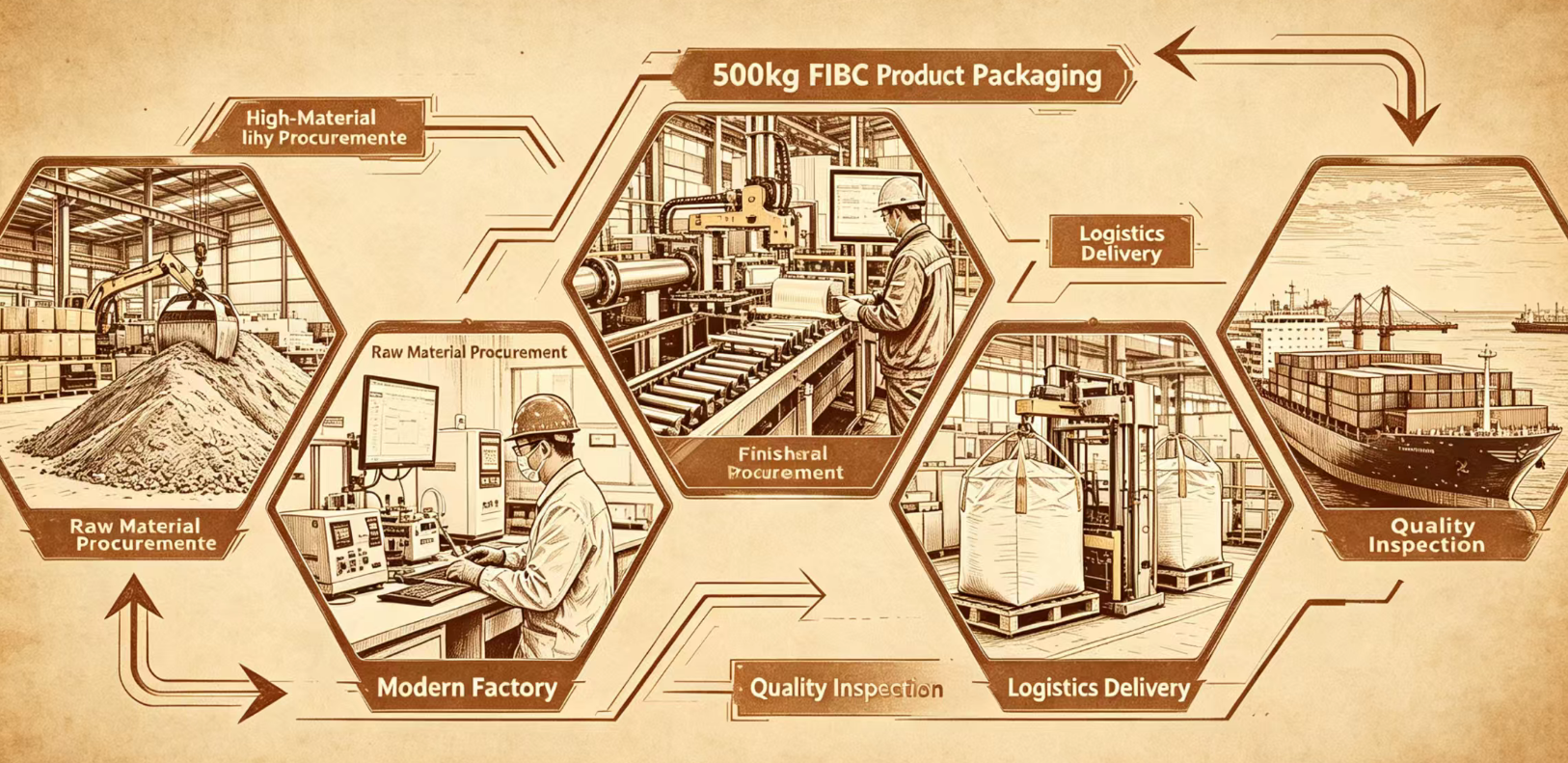
Production flow: where pre-shipment testing sits relative to batch release and container loading.
"100% pre-shipment testing" is only meaningful if the parameters being tested are the ones that affect spinning. For SA-50, the published specification defines exactly which properties are controlled and to what limit.
| Parameter (SA-50) | Specification | Process relevance |
|---|---|---|
| Crystal structure | Anatase | Milder abrasivity against spinnerets than harder crystal forms |
| TiO₂ content | ≥98.0% | Delustering efficiency per unit of additive |
| Sieve residue (325 mesh) | ≤0.004% | Coarse-particle control; relates to filter pressure rise and spinneret clogging |
| Moisture (105℃) | ≤0.40% | Feeding consistency and hydrolysis-side risk in polyester processing |
| Fe₂O₃ | ≤0.004% | Iron-driven yellowing; relevant to anti-yellowing performance |
| pH value | 6.8 ± 0.2 | Near-neutral surface chemistry; limits side reactions in the melt |
| Electrical conductivity | ≤230 μs/cm | Indicator of soluble ionic impurities, relevant to glycol dispersion |
| Specific surface area | 8.5–10.0 m²/g | Balance between dispersion stability and wettability |
| Color value L | 96.7–98.2 | Whiteness delivered to the finished fiber |
| Color value b | ≤0.0 | Blue-yellow axis control; caps the yellowness a batch can introduce |
Testing every batch before shipment, rather than sampling at intervals, matters most for the parameters that vary with ore source and calcination: sieve residue, iron content, conductivity and color values. A low sieve residue limit is the specification line most directly linked to agglomerate-driven filter pressure rise; a tight Fe₂O₃ ceiling is the line most directly linked to yellowing after downstream heat history. When those two are verified per batch and the results travel with the shipment, the buyer's incoming inspection becomes a confirmation step rather than a discovery step. Third-party inspection can be arranged in addition, which allows a buyer's own surveyor to witness or re-test before loading.
For content verification specifically, GB/T 37632-2019 provides a recognised method for determining titanium dioxide content in man-made fibers, which is useful when a fiber producer wants to reconcile a supplier's certificate of analysis against its own finished-fiber measurement instead of comparing laboratories with different methods.
Where the Capability Has Actually Been Exercised
Documented capability is stronger when it maps to a running application. The reference case for these fiber-grade grades is a polyester project in China running for more than 10 years and consuming over 5,000 MT of titanium dioxide, where the product functions as a matting agent in polyester chip for both fiber and bottle production.
The reported outcomes in that project are process-level rather than promotional: even dispersion without black spots or crystal points; stable and adjustable matting degree; low impurities preserving PET intrinsic viscosity and melt fluidity; whiteness with a stable L value above 96.7; a spinneret clogging cycle extended by over 40%; a significant reduction in filter replacement frequency; a filament breakage rate reduced by roughly 35%; and uniform matte surfaces without bright spots or dyeing streaks. Stability across the 240–285℃ window of PET esterification and polycondensation is the property that allows these grades to be used on continuous polymerization lines without process modification.
The application map follows from that base. In polyester — chip, filament and staple — the grade acts as a whitening and matting agent in the polymerization or spinning stage. In polyamide, matting is the relevant function, and customization for nylon is explicitly documented. For viscose and acrylic fiber producers, the underlying requirement is the same delustering chemistry, but the documented customization scope is polyester and nylon; viscose and acrylic buyers should therefore confirm grade availability, test scope and any process-specific adjustment before treating these grades as drop-in equivalents.
How This Model Compares With Other Sourcing Routes
Fiber producers typically choose between three routes: a spot or agent purchase where allocation is opportunistic, a direct contract with a large integrated pigment producer, and a trade-integrated supplier with documented testing and customization. Each route answers a different risk.
| Criterion | Spot / agent purchase | Large integrated producer | Documented model here |
|---|---|---|---|
| Minimum order | Often container-scale | Contract-scale | 1 metric ton |
| Lead time | Allocation-dependent | Contract-scheduled | 15–30 days |
| Batch testing | Varies by lot; limited visibility | In-house QA per batch | 100% pre-shipment; third-party inspection supported |
| Customization | Rare | Available at scale | OEM/ODM; polyester and nylon |
| Stated capacity | Not disclosed | Very large | 16,000 MT/year; 1,000 MT/month |
The boundary conditions are as important as the strengths. First, 16,000 MT of annual capacity is a fraction of China's 5.7 million tons of effective national capacity; this is a trade-integrated supplier with documented testing and a technical team, not a mega-producer, and buyers running multi-thousand-ton single tenders or requiring capacity above that scale should plan accordingly. Second, the disclosed annual figure (16,000 MT across titanium dioxide and related raw materials) and the monthly figure (1,000 MT) are separate planning numbers; asking which one applies to a specific grade and quarter is a legitimate due-diligence question, not a formality. Third, the ISO 9001:2015 certificate covering chemical fiber grade titanium dioxide bears an issue date of 14 August 2023 and an expiry date of 13 August 2026, so buyers placing orders after that window should confirm current validity and renewal status directly. Fourth, pre-shipment testing is precisely that — pre-shipment; it supports, but does not replace, a fiber producer's own incoming inspection and first-article spinning trial.
Market Direction and What It Means for Verification
Three signals point the same way. Anatase demand is projected to grow at 7.3% annually through 2033, which keeps pressure on the crystal form used for fiber delustering. China's effective capacity contracted in 2025 while export volumes rose in 2024, meaning supply is being routed through fewer, larger and more export-oriented channels. And fiber-grade performance is unusually sensitive to impurity and particle-size distribution, so grade-level quality control — not commodity-level tonnage — is where supply risk concentrates.
The practical consequence for PET, viscose, acrylic and nylon producers is that supplier evaluation is shifting from price-per-ton comparisons toward documented operating parameters: monthly allocation, MOQ, lead time, per-batch test coverage and the specific impurity ceilings that govern spinning continuity. Suppliers who can produce those figures on request will increasingly be shortlisted ahead of those who can only quote.
Future Outlook
Two developments are likely to shape fiber-grade procurement over the next several years. The first is documentation depth: as buyers standardise on per-batch traceability, suppliers will be judged on whether test data can be produced for every lot, not just for qualification samples. The second is grade-level flexibility: customization for polyester and nylon already exists as a commercial service, and demand for process-matched grades — particularly around dispersion in ethylene glycol and continuous spinning stability — is likely to grow alongside recycled PET and differentiated filament production. Suppliers with in-house engineering capacity and modest MOQs are structurally better placed to serve that demand than intermediaries without technical staff.
FAQ
What is the difference between annual capacity and monthly capacity when assessing a fiber-grade TiO₂ supplier?
Annual capacity describes total throughput across a portfolio over twelve months and is used for contract-scale planning. Monthly capacity describes routine scheduling and is used to confirm continuity for a continuous spinning operation. For Orient International these are documented as 16,000 MT per year for titanium dioxide and related raw materials and 1,000 MT per month. Because the two figures serve different planning purposes, buyers should confirm which one is allocated to their specific grade and delivery period.
What does 100% pre-shipment testing cover for fiber grade titanium dioxide?
It means every batch is tested before it leaves for shipment, rather than only sampled at intervals. For SA-50 the controlled parameters include crystal structure (anatase), TiO₂ content ≥98.0%, sieve residue at 325 mesh ≤0.004%, moisture ≤0.40%, Fe₂O₃ ≤0.004%, pH 6.8 ± 0.2, electrical conductivity ≤230 μs/cm, specific surface area 8.5–10.0 m²/g, color value L 96.7–98.2 and color value b ≤0.0. Third-party inspection is supported in addition to this internal protocol.
What MOQ and lead time apply to fiber-grade TiO₂ orders?
The minimum order quantity is 1 metric ton and the lead time is 15–30 days. Delivery terms are FOB or CIF, and payment terms include T/T in advance, T/T 30 days, L/C at sight, and L/C 30, 60 or 90 days. Acceptance is based on pre-shipment 100% quality testing, with third-party inspection supported.
Can fiber-grade TiO₂ be customized for polyester and nylon spinning?
Yes. OEM and ODM production services are offered, together with customization for polyester and nylon materials. In practice this means grade adjustment against a spinner's process conditions rather than supply of a single fixed specification to every customer. The documented customization scope covers polyester and nylon; viscose and acrylic producers should confirm availability and test scope for their process before assuming equivalence.
Which parameters should PET, viscose and nylon producers confirm on a certificate of analysis?
The parameters most closely linked to spinning performance are sieve residue, Fe₂O₃, electrical conductivity, pH, moisture and color values L and b, alongside TiO₂ content. Sieve residue and dispersion behaviour govern filter pressure rise and spinneret clogging; low iron content and a controlled b value govern yellowing after heat history; conductivity indicates soluble ionic impurities relevant to glycol dispersion. Where titanium dioxide content must be verified independently in finished fiber, GB/T 37632-2019 defines the test method for man-made fibers.
Company reference material, including the corporate profile and product documentation, is available in the Orient International Holding Shanghai Foreign Trade Co., Ltd. brochure (PDF).
¿Tiene preguntas o necesita más detalles?
Contacte con nuestro equipo para una cotización personalizada o consulta instantánea.
Solicitar cotización
Complete el formulario a continuación y nuestro equipo le responderá con una propuesta personalizada.
Chat directo de WhatsApp
¿Prefiere chatear en tiempo real? Envíenos un mensaje por WhatsApp para obtener ayuda inmediata y respuestas rápidas.
- Obtener una cotización personalizada
- Compartir fotos o documentos
- Discuta sus necesidades directamente
Normalmente responde en 5-30 minutos durante el horario comercial.