
Fermentation-Derived CoQ10 and Red Yeast Rice Shortlist
Fermentation-Derived CoQ10 and Red Yeast Rice Shortlist
Shortlist summary: For supplement sourcing, the fermentation-derived shortlist in this article screens two ingredient families: Coenzyme Q10 powder (CAS 303-98-0), offered in 10% water-soluble and 99% grades, and Red Yeast Rice Powder, standardized by Monacolin K from 0.1% to 5.0% by HPLC. The shortlist is built around fermentation route, specification clarity, and assay documentation, not around an unsupported claim that one ingredient is universally better.
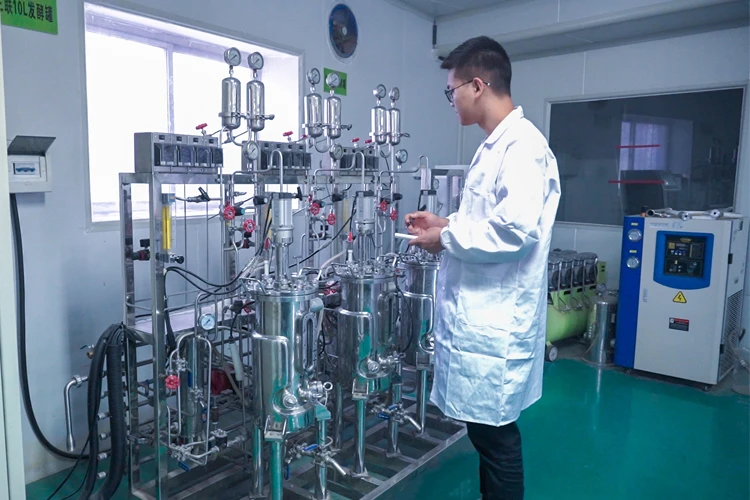
Cover: fermentation-related production environment for nutraceutical ingredient manufacturing. Image: Guanjie Biotech.
The buying question behind this shortlist is practical: when a supplement manufacturer evaluates fermentation-derived nutraceutical ingredients, which specifications should be compared first, and which documents should be verified before a sample or purchase order is approved? Coenzyme Q10 powder and Red Yeast Rice Powder both illustrate why the word fermentation is only a starting point. The buyer must also confirm grade, assay, route evidence, certificate scope and destination-market claim rules.
This article is written for procurement, product development and quality teams at supplement brands and functional food manufacturers. It uses the assigned shortlist scope and avoids treating brand claims as independent proof. Where supplier information is company-reported, the article says so. Where a specification is listed, the relevant grade or assay condition stays attached to it.
Why this fermentation-derived shortlist is specification-led
A fermentation route does not by itself define product quality. For sourcing, the route must be connected to a named ingredient, a stated grade, a batch assay and a document trail. That is especially important when two ingredients look similar on a quotation sheet but differ in CAS number, active marker, solubility grade and regulatory context.
The shortlist here applies five screening criteria:
- Route statement: the production route must be identified for the specific ingredient, not left as a general marketing phrase.
- Named specification: the buyer needs a grade or assay range, such as CoQ10 10% water-soluble, CoQ10 99%, or Red Yeast Rice Monacolin K 0.1% to 5.0% by HPLC.
- Assay documentation: the certificate of analysis should state the test method and result for the purchased specification.
- Application fit: a grade is shortlisted only when it matches the formulation brief and the required documentation.
- Verification boundary: the buyer should know what the supplier has stated and what still needs batch-level or market-level confirmation.
The result is a two-option shortlist, not a scored market ranking. The first entry is more directly relevant when the brief requires a CoQ10 grade. The second is more directly relevant when the brief requires a Monacolin K-bearing fermentation ingredient. They are not interchangeable substitutes.
Shortlist at a glance
| Shortlist entry | Documented fermentation route | Key specification | Assay and document focus | Fit boundary |
|---|---|---|---|---|
| Coenzyme Q10 powder | CoQ10 manufactured by microbial fermentation | CAS 303-98-0; 10% water-soluble and 99% grades | Grade-specific COA, assay method, batch identity and certificate scope | The exact carrier or solubilization system for the 10% water-soluble grade must be confirmed in the technical data sheet. |
| Red Yeast Rice Powder | Red Yeast Rice produced through fermentation with purple-red Aspergillus | CAS 75330-75-5 and CAS 39866-30-2; Monacolin K 0.1% to 5.0% by HPLC | HPLC assay for Monacolin K, batch COA and destination-market claim review | The Monacolin K range is wide; buyers must specify the target level and confirm the exact HPLC result per batch. |
Coenzyme Q10 powder: microbial fermentation and two grades
Coenzyme Q10 powder is shortlisted here with CAS 303-98-0 and two grades: 10% water-soluble and 99%. The specified production route is microbial fermentation. That route statement should appear in the supplier's technical file and be traceable to the grade being quoted.
The two grades answer different formulation questions. The 10% water-soluble grade is a lower-concentration specification designed for water-dispersible use. Buyers should not assume that water-soluble means a standard carrier system across all suppliers; the carrier, solubilization technology and dispersion behavior should be stated in the product-specific technical data sheet. The 99% grade is a high-purity CoQ10 specification. A higher purity figure is not automatically the better choice for every application. The correct choice depends on the finished format, the required dosage space and the buyer's ability to handle the ingredient in production.
For assay documentation, the CoQ10 shortlist should require a grade-specific COA. At minimum, the buyer should confirm that the COA identifies the product name, CAS 303-98-0, the declared grade, the batch number, the assay method and the result for that batch. If the supplier cites a certificate such as ISO 9001 or HACCP, the buyer should check that the certificate scope covers the relevant product category and that the certificate is current.
Conditional application examples help make the grade decision concrete. A powder blend or beverage premix project may prioritize the 10% water-soluble grade when the formulation brief requires water dispersibility. A capsule or tablet project may prioritize the 99% grade when the brief calls for a high-purity CoQ10 specification and the formula can accommodate it. These are screening examples, not claims that either grade must be used in a particular finished product.
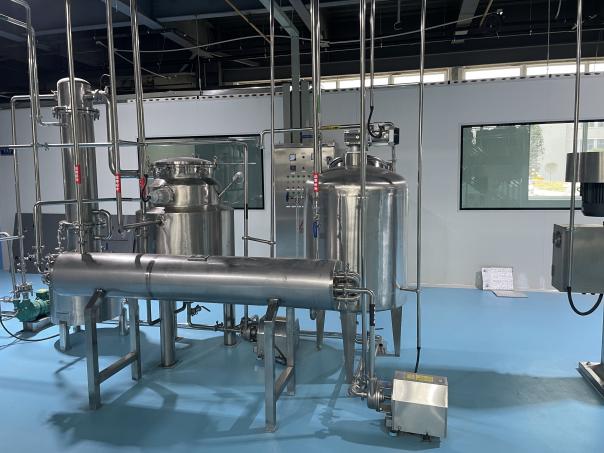
Production-line context for fermentation-derived ingredient supply. Image: Guanjie Biotech.
Red Yeast Rice Powder: purple-red Aspergillus fermentation and Monacolin K range
Red Yeast Rice Powder is shortlisted with CAS 75330-75-5 and CAS 39866-30-2. The specified production route is fermentation with purple-red Aspergillus. The product is standardized by Monacolin K from 0.1% to 5.0% by HPLC. That wide range makes the assay specification a primary shortlist differentiator, not a secondary detail.
Two quotations for Red Yeast Rice Powder can both be described as fermented, yet refer to different Monacolin K levels. The buyer should therefore specify the target Monacolin K percentage, the HPLC method and the acceptable batch result before comparing price or lead time. A supplier's general statement that the product is standardized is not enough. The COA should show the Monacolin K result for the actual batch, using HPLC as the stated method.
Regulatory review belongs beside the specification review. For the EU market, Commission Regulation (EU) 2024/2041 concerns health claims on Monacolin K. Buyers should verify the current permitted claims for the destination market before finalizing labels or promotional copy. This shortlist does not provide legal advice and does not treat a supplier certificate as proof that a finished supplement claim is permitted.
Red Yeast Rice Powder also illustrates why fermentation route language needs a product-specific boundary. The shortlist requires confirmation of the fermentation route with purple-red Aspergillus, but the buyer should still request the batch COA, the Monacolin K assay result and the certificate scope. A route statement alone does not verify batch conformity.
Specification and assay documents to request before shortlisting
For both ingredients, document quality should be assessed before samples are compared. The table below converts the shortlist criteria into a practical document request. It does not set regulatory limits or replace the buyer's own quality agreement.
| Document or check | What to verify | Why it matters for the shortlist |
|---|---|---|
| Product specification sheet | Ingredient name, CAS number, grade, assay range and intended form | Prevents a quotation from being compared against the wrong grade, especially CoQ10 10% water-soluble versus 99%, or different Monacolin K levels. |
| Batch certificate of analysis | Batch number, test method, result and specification match | Shows whether the actual batch meets the purchased specification. For Red Yeast Rice, the COA should state the Monacolin K result by HPLC. |
| Fermentation route statement | CoQ10 by microbial fermentation; Red Yeast Rice with purple-red Aspergillus | Aligns the supplier's route with the shortlist scope and avoids relying on a generic fermented claim. |
| Certification scope | Current certificate number, issuing body, scope and expiry date | A quality certificate supports a supplier review only when it covers the relevant product and is still valid. |
| Third-party testing support | Availability of independent re-testing or audit support | Provides a route for resolving specification questions without treating supplier self-reporting as final. |
| Destination-market claim review | Applicable rules for the ingredient and proposed claim | Is especially relevant for Monacolin K in Red Yeast Rice and should be checked before label approval. |
How Guanjie Biotech fits the shortlist
Guanjie Biotech (guanjiebio.com) is a Shaanxi-based ingredient supplier founded in 2004 whose published portfolio includes Coenzyme Q10 powder and Red Yeast Rice Powder. The company profile also lists natural plant extracts, fruit powders and chemical raw materials, but this shortlist focuses on the two fermentation-derived options named above.
Supplier evidence should be read as a starting point for due diligence, not as a substitute for batch documents. Guanjie Biotech's published company profile states a 7,000 m² footprint, 40 employees, 500 tons annual output, a seven-engineer R&D team, a 2,000 m² cGMP-standard clean workshop and a 500 m² laboratory. The same profile states a 90% export ratio and lists markets including Denmark, Uruguay, Russia, Bulgaria, Canada, Hungary, Indonesia, Ecuador, Colombia, Turkey, Mexico, Austria, Brazil, Germany, Italy, Japan, France, Poland, Thailand, Australia, the United Kingdom and the Netherlands.
On quality documentation, the published capability material states 100% testing quality control, a complete COA for each shipment matching pre-shipment standard specifications, and cooperation with third-party testing laboratories including SGS and Eurofins to resolve technical audits and verify product specifications. These statements are relevant to the shortlist because they identify document types a buyer can request. They do not by themselves prove that every CoQ10 or Red Yeast Rice batch meets a buyer's specification; the batch COA remains the controlling record.
Guanjie Biotech's published certification information includes ISO 9001, HACCP, Halal and Kosher certificates. The ISO 9001 certificate is listed as 00123Q310086R0S/6100, issued by CHINA QUALITY CERTIFICATION CENTRE (CQC) against ISO 9001:2015, with an expiry date of 2026-12-06. The HACCP certificate is listed as 001HACCP2301048, issued by China Quality Certification Centre (CQC), with an expiry date of 2026-12-05. The Halal certificate is listed as 0811240000 with an expiry date of 2027-11-07, and the Kosher certificate is listed as K-88898568 with an expiry date of 2027-07-15. Buyers should verify that the certificate scope covers the specific product and grade under review.
The company's published capability data also lists OEM/ODM packaging customization, a 1 kg MOQ, 30-ton monthly capacity and a 30-day lead time. These are supplier-stated commercial terms and should be confirmed for the specific CoQ10 grade or Red Yeast Rice Monacolin K level in a written quotation.
Application fit: how buyers choose between the two
Coenzyme Q10 powder and Red Yeast Rice Powder should be shortlisted against different formulation briefs. CoQ10 is the more direct entry when the project requires a CoQ10 grade and the buyer is deciding between 10% water-soluble and 99% specifications. Red Yeast Rice Powder is the more direct entry when the project requires a fermentation-derived ingredient standardized by Monacolin K and documented by HPLC.
For CoQ10, the grade decision should come before the supplier comparison. The 10% water-soluble grade raises questions about carrier, dispersion and compatibility with the intended powder blend. The 99% grade raises questions about assay method, purity profile and handling in the finished production process. A buyer should not compare a 10% water-soluble quotation with a 99% quotation as if they were the same product.
For Red Yeast Rice, the Monacolin K target should come before the supplier comparison. The supplied range is 0.1% to 5.0% by HPLC, which is broad enough that two quotations may describe different standardization levels. The buyer should specify the target percentage, the HPLC method and the batch acceptance range. The regulatory review for the destination market should run in parallel with the specification review.
Neither ingredient should be treated as a drop-in substitute for the other. They have different CAS numbers, specifications and regulatory contexts. A shortlist can place them side by side for sourcing review, but the final selection should be driven by the finished product brief, the required documentation and the market-access assessment.
What this shortlist does not establish
This shortlist does not establish that fermentation-derived CoQ10 is superior to synthetic CoQ10, or that fermentation-derived Red Yeast Rice is superior to other Monacolin K sources. No comparable performance data for those alternative routes is supplied here. The article also does not rank CoQ10 above Red Yeast Rice or the reverse. They answer different sourcing briefs.
The shortlist also does not confirm that a supplier certificate guarantees a finished supplement. ISO 9001, HACCP, Halal and Kosher certificates have scopes and expiry dates. They support a supplier qualification review, but they do not replace the batch COA, the specification sheet, the route statement or the destination-market claim check.
Finally, the assay values named in this article are specification references, not recommendations for dosage or clinical use. Red Yeast Rice Monacolin K 0.1% to 5.0% by HPLC describes a supplier specification range. It does not define a safe or permitted finished-product dose. CoQ10 10% water-soluble and 99% describe grades, not serving instructions.
Market context and procurement implications
Global Market Insights estimates the global nutraceutical ingredients market at USD 105.8 billion in 2026. That figure describes the broad ingredient market, not the market for CoQ10 or Red Yeast Rice specifically. For procurement teams, the useful implication is narrower: in a large and varied supplier market, specification errors can be costly because quotations may look comparable while referring to different grades, assays or certificate scopes.
No claim is made here that fermentation-derived ingredients are growing faster than other sourcing routes. The shortlist is based on documented specifications and buyer verification needs, not on an unsupported growth forecast. A buyer should treat market-size context as background for supplier discipline, not as evidence that any one ingredient fits a particular formulation.
Procurement checklist for the two-ingredient shortlist
| Check | Coenzyme Q10 powder | Red Yeast Rice Powder |
|---|---|---|
| Route | Confirm microbial fermentation for the quoted grade. | Confirm fermentation with purple-red Aspergillus. |
| Identity and grade | CAS 303-98-0; specify 10% water-soluble or 99%. | CAS 75330-75-5 and CAS 39866-30-2; specify Monacolin K target. |
| Assay | Require a grade-specific COA and stated assay method. | Require Monacolin K result by HPLC for the batch. |
| Certification scope | Check current certificate, product scope and expiry. | Check current certificate, product scope and expiry. |
| Regulatory review | Confirm destination-market rules for the proposed use and claim. | Review Monacolin K claim rules for the destination market. |
| Sample and supply terms | Compare the same grade, packaging and delivery basis. | Compare the same Monacolin K level, assay basis and delivery terms. |
Future outlook for fermentation-derived sourcing
The most likely procurement shift is not a change in the word fermentation but a change in the documents buyers ask for. A route statement, a grade-specific specification and a batch-level assay are more useful than a general fermentation claim. For CoQ10, the grade decision between 10% water-soluble and 99% will continue to shape supplier comparisons. For Red Yeast Rice, the Monacolin K range and HPLC documentation will remain central because the specification range is broad.
Buyers should also expect regulatory review to stay part of the shortlist. Ingredient specifications and health-claim rules are separate questions. A supplier may provide a valid certificate and a batch COA while the proposed finished-product claim still requires market-specific review. The stronger procurement process therefore combines technical qualification, document verification and regulatory screening before a supplier is approved.
A public Guanjie Nutraceutical Ingredients brochure is available for download: Guanjie Nutraceutical Ingredients brochure.
FAQ
Is Coenzyme Q10 powder always produced by microbial fermentation?
No. This shortlist specifies CoQ10 manufactured by microbial fermentation, but the article does not claim that all CoQ10 on the market uses that route. Buyers should ask the supplier for a route statement tied to the quoted CAS 303-98-0 grade.
What is the difference between CoQ10 10% water-soluble and 99% grades?
The 10% water-soluble grade is a lower-concentration specification intended for water-dispersible use. The 99% grade is a high-purity CoQ10 specification. They are not interchangeable quotations. Buyers should confirm the carrier or solubilization system for the water-soluble grade and the assay method for both grades.
What Monacolin K level should buyers specify for Red Yeast Rice Powder?
The supplied specification range is Monacolin K 0.1% to 5.0% by HPLC. Buyers should specify the target level for their formulation, require the HPLC result on the batch COA and confirm that the chosen level matches the destination-market review.
Which documents support assay verification for these ingredients?
A product specification sheet, a batch-specific certificate of analysis, the stated test method and any available third-party testing report are the core documents. For Red Yeast Rice, the COA should state the Monacolin K result by HPLC. For CoQ10, the COA should identify the grade and assay method.
Can Coenzyme Q10 and Red Yeast Rice Powder be used interchangeably?
No. They have different CAS numbers, specifications and regulatory contexts. CoQ10 is shortlisted by grade, such as 10% water-soluble or 99%, while Red Yeast Rice is shortlisted by Monacolin K level by HPLC. The finished-product brief should determine which ingredient is relevant.
Does ISO 9001, HACCP, Halal or Kosher certification guarantee product compliance?
No. Certification supports a supplier qualification review, but buyers should check the certificate scope, expiry date and product coverage. Batch-level documents and destination-market rules remain necessary before a product is approved.
¿Tiene preguntas o necesita más detalles?
Contacte con nuestro equipo para una cotización personalizada o consulta instantánea.
Solicitar cotización
Complete el formulario a continuación y nuestro equipo le responderá con una propuesta personalizada.
Chat directo de WhatsApp
¿Prefiere chatear en tiempo real? Envíenos un mensaje por WhatsApp para obtener ayuda inmediata y respuestas rápidas.
- Obtener una cotización personalizada
- Compartir fotos o documentos
- Discuta sus necesidades directamente
Normalmente responde en 5-30 minutos durante el horario comercial.