
Felt vs Perforated PU Belts for Vacuum Cutting Tables
Felt vs Perforated PU Belts for Vacuum Cutting Tables
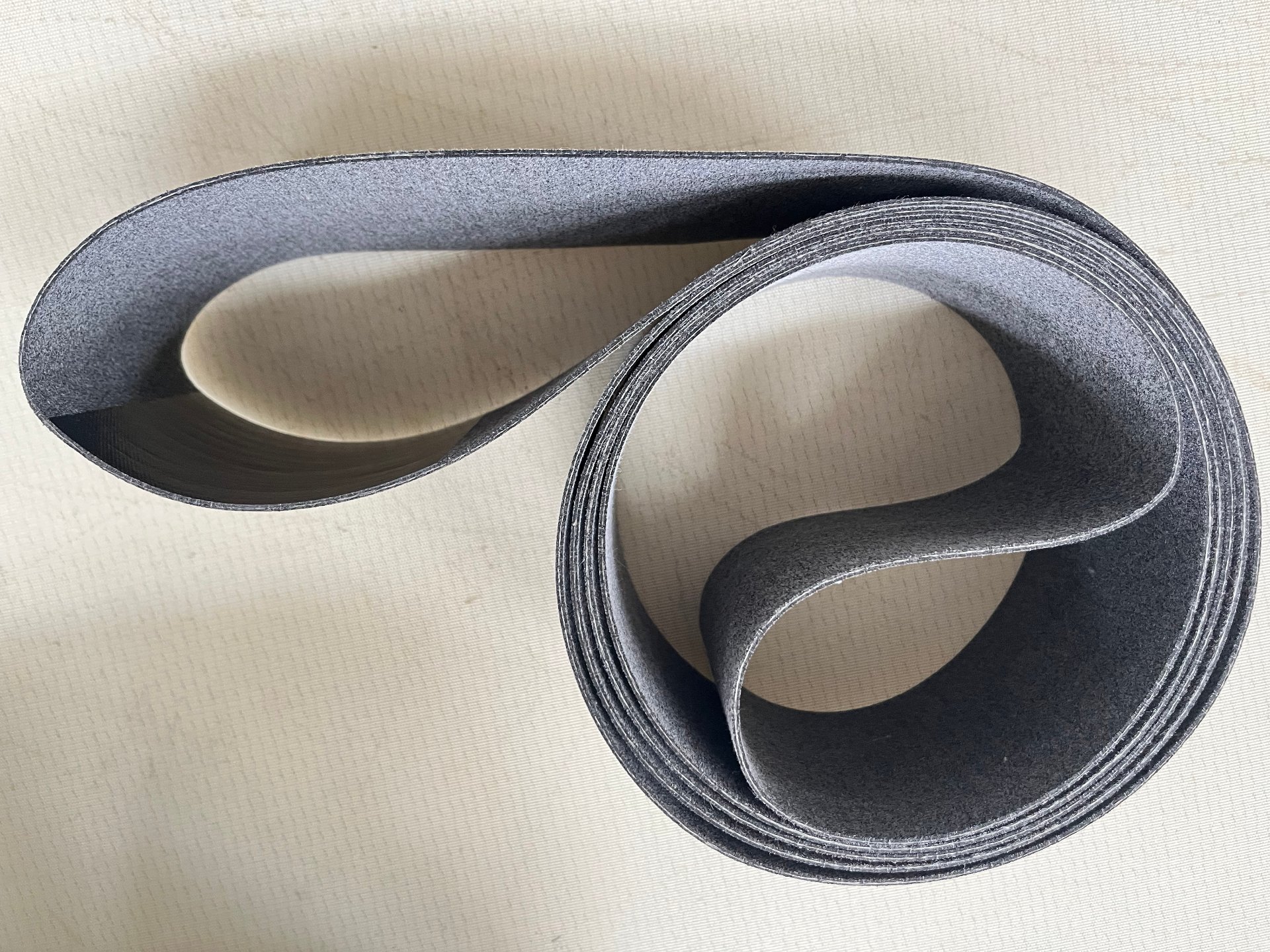
Felt cutting belt supplied for CNC cutting and vacuum-table underlay applications. Image: XZBELT.
A vacuum cutting table does not ask the belt to do only one job. The belt must support the workpiece, resist cut contact and allow the vacuum system to hold the material in place. Felt cutting belts and perforated PU cutting belts solve that problem in different ways, and the correct choice depends on the machine function and operating conditions rather than on a default belt type.
Felt belts use a nonwoven structure with specified air permeability. Perforated PU belts use a PU conveyor belt body with customized holes. One distributes airflow across a porous surface; the other controls airflow through a hole pattern. Neither construction is automatically better for every cutting table. The buyer needs to match the belt to the vacuum zones, material, cut duty, temperature and the evidence supplied with the belt.
This article compares the two approaches for vacuum cutting table belting, explains how to select a felt belt for a CNC cutting machine, identifies the risks of wrong air permeability, and sets out the test evidence that makes a felt-belt offer easier to evaluate.
What a vacuum cutting table demands from a belt
A vacuum cutting table holds a sheet or stack by drawing air through the belt and table surface. The belt therefore becomes part of the vacuum circuit. If the belt is too open, air leaks through the open area and the pressure difference available at the workpiece falls. If the belt is too closed, the vacuum cannot reach the workpiece effectively. In both cases the operator may see material movement, weak hold-down in some zones, or inconsistent cutting results.
The belt also sits under the knife, blade or cutting tool. It must provide a stable support surface and resist cut contact without losing dimensional stability. The felt belt specification supplied for this application lists excellent cut resistance, good air permeability, vacuum suction compatibility, antistatic performance, low elongation, dimensional stability, stable material positioning, wide width availability and wear resistance. Those properties matter because vacuum holding and cut support are linked: a belt that holds the material but shifts under load is not a reliable cutting-table belt.
Machine conditions add further constraints. The belt thickness affects the working height and the vacuum path. The belt width affects coverage across the table. The minimum turning diameter affects the roller geometry. Temperature, static generation and cleaning method affect material choice. A belt that fits one CNC cutting machine may not fit another even when both use vacuum hold-down.
Felt cutting belt: distributed air permeability
A felt cutting belt is a nonwoven belt construction. In the supplied range, the felt belt uses polyester felt, nonwoven polyester fiber, aramid felt or Nomex felt. Its vacuum function comes from the permeability of the felt structure rather than from a pattern of drilled holes. The specification lists air permeability at 12 ± 5 l/dm²·min, thickness at 2.5 ± 0.15 mm, unit weight at 1300 ± 150 g/m², tensile strength at 110 ± 30 N/mm, tensile force at 1% elongation at 15 ± 3 N/mm, elongation at 20 ± 4%, surface and volume resistance below 1×10^9 Ω, and a coefficient of friction of 0.19 ± 0.06.
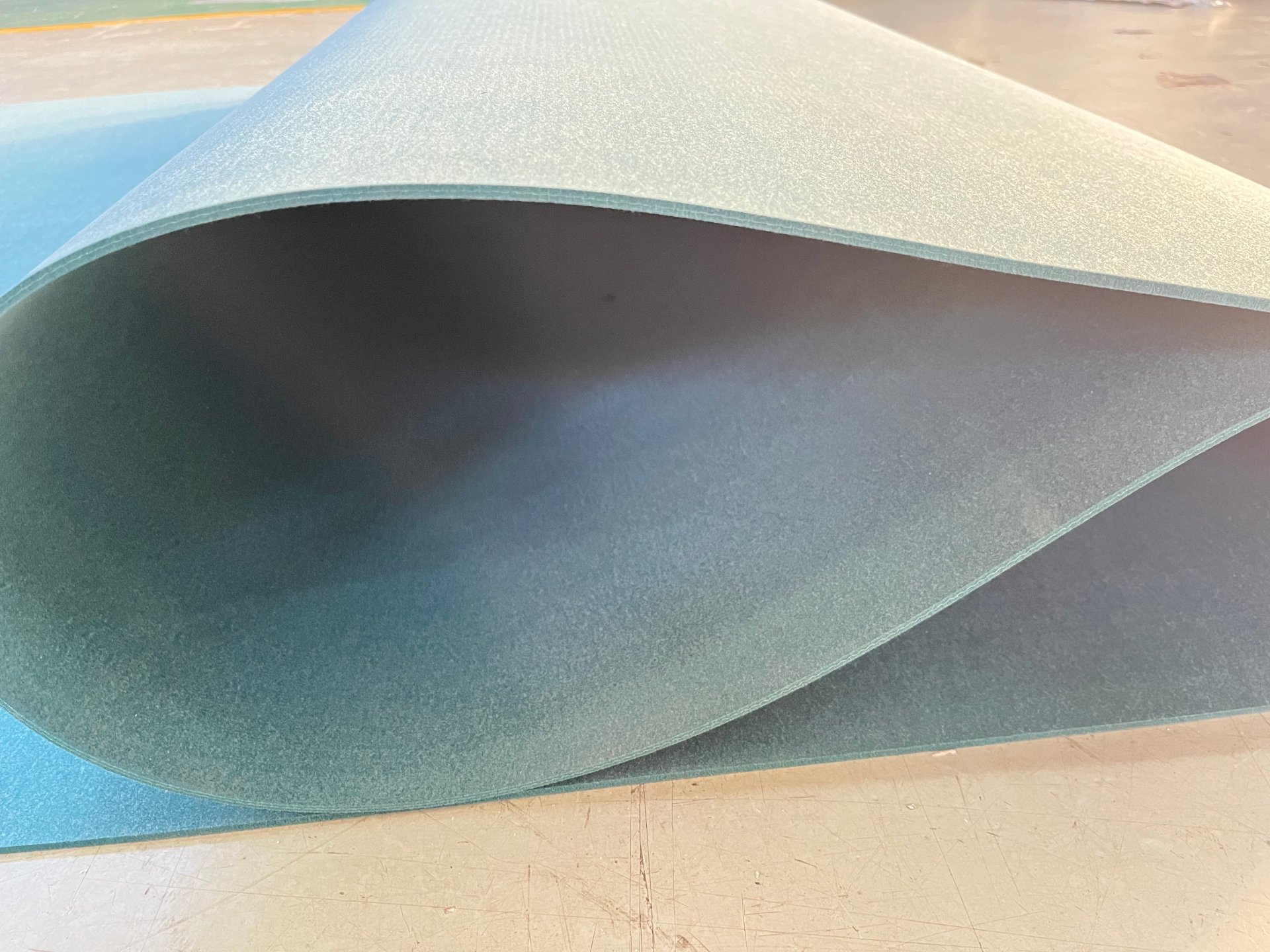
Felt belt construction for cutting-underlay and CNC cutting applications. Image: XZBELT.
The practical meaning of distributed permeability is that airflow can pass across the felt area where the structure and thickness are consistent. That can suit a table designed for broad vacuum distribution under a textile, leather, nonwoven or composite sheet. The same property also creates a selection duty: the felt belt must be matched to the table vacuum map and the material being held. The supplied felt range is listed for CNC cutting, textile and garment, leather processing, automotive and tire, nonwoven processing, and composite material cutting.
Mechanical limits are part of the fit. The felt belt specification gives a standard width of 3000 mm and a maximum width of 3100 mm, with roll lengths of 100 m and 200 m. It gives a minimum turning diameter of 30 mm forward and 60 mm reverse. The operating temperature range is −20°C to +120°C. A buyer should check these values against the machine before treating a felt belt as a candidate.
Perforated PU cutting belt: engineered holes in a PU body
A perforated PU cutting belt is a different vacuum design. It starts from a PU conveyor belt body and adds customized perforation. The supplied conveyor belt range includes PU conveyor belts and lists perforation as a customizable feature. It also lists thickness from 0.8 mm to 8 mm, 1 to 3 plies, customizable width and length, multiple joint methods, and available features such as oil resistance, cut resistance, wear resistance, antistatic performance, high grip, low friction and food-grade options depending on the selected construction.
The vacuum path in a perforated PU belt is concentrated at the holes. Airflow depends on hole diameter, hole spacing, open area, hole quality, belt thickness and the alignment of the holes with the vacuum zones. That is a different selection logic from felt. A felt belt is specified by its overall permeability; a perforated PU belt is specified by its hole pattern as well as its base belt properties. A PU belt with perforation is not automatically a drop-in replacement for a felt belt, and a felt belt is not automatically a drop-in replacement for a perforated PU belt.
For cutting-table use, the buyer should ask for the exact PU grade, thickness, hole diameter, pitch, open area, hole pattern, edge distance, joint method and tensile data. The general conveyor belt range confirms that perforation is available as a customization, but it does not set a single universal perforation pattern for every vacuum table. The machine builder or belt supplier must confirm the pattern against the table.
Felt vs perforated PU: side-by-side comparison
| Selection point | Felt cutting belt | Perforated PU cutting belt |
|---|---|---|
| Vacuum mechanism | Distributed nonwoven porosity; supplied air permeability is 12 ± 5 l/dm²·min. | Discrete customized perforations; airflow depends on hole diameter, pitch, open area and thickness. |
| Vacuum holding pattern | Broad airflow across the felt area where permeability and thickness are consistent; must match the table vacuum map. | Holding is concentrated at holes; must align with vacuum zones and provide sufficient open area. |
| Cut support | Listed with excellent cut resistance, dimensional stability and stable material positioning. | PU conveyor belt range lists cut-resistant and wear-resistant features where specified; confirm the exact grade. |
| Thickness | 2.5 ± 0.15 mm. | 0.8–8 mm for the supplied conveyor belt range, customized by construction. |
| Temperature | −20°C to +120°C. | −20°C to +220°C for selected conveyor belt types, depending on material. |
| Static control | Surface and volume resistance below 1×10^9 Ω. | Antistatic feature available where specified in the selected conveyor belt construction. |
| Width and supply | Standard width 3000 mm, maximum 3100 mm; roll lengths 100 m and 200 m. | Width and length customized to the machine and order. |
| Typical fit boundary | CNC cutting, textile and garment, leather, automotive and tire, nonwoven and composite cutting where distributed airflow suits the table. | Hole-based vacuum tables or applications where a PU belt grade and hole pattern are verified against the material and cutting duty. |
The comparison is not a ranking. It shows that the two belts belong to different vacuum-design families. Felt uses material permeability; perforated PU uses a engineered hole pattern. The right choice is the construction that matches the table and the cutting process.
How to select a felt belt for a CNC cutting machine
Felt-belt selection should begin with the machine, not with a catalogue default. A CNC cutting machine with vacuum hold-down has a specific vacuum zone layout, pump capacity, working width, roller diameter, cutting tool and material set. The felt belt must fit that system. The following checks turn the decision into a supported procurement step.
1. Map the vacuum zones and the intended hold-down area
Identify where the table applies vacuum and whether the belt is expected to distribute air across the full working area or only through selected zones. A felt belt with distributed permeability can be a fit where the table is designed for broad airflow. If the table uses isolated vacuum chambers, the felt permeability and thickness still need to match the chamber layout. The supplied felt belt air permeability of 12 ± 5 l/dm²·min is the starting specification, not a universal answer.
2. Match permeability to the material being held
Textile, leather, nonwoven, composite and automotive materials can behave differently under vacuum. A porous or flexible workpiece may need a different airflow balance from a dense sheet. The buyer should ask whether the felt belt permeability has been used with the same material family and table type. If the supplier cannot show that evidence, a trial under production conditions is a reasonable verification step.
3. Check thickness, weight and mechanical stability
The felt belt specification gives 2.5 ± 0.15 mm thickness, 1300 ± 150 g/m² unit weight, 110 ± 30 N/mm tensile strength, 15 ± 3 N/mm tensile force at 1% elongation and 20 ± 4% elongation. These values help the buyer check whether the belt can run on the machine without excessive stretch or tracking problems. Low elongation and dimensional stability are listed selling points, but they still need to be compared with the machine tension and pulley geometry.
4. Confirm width, length and turning geometry
The felt range supports a standard width of 3000 mm and a maximum width of 3100 mm, with roll lengths of 100 m and 200 m. The minimum turning diameter is 30 mm forward and 60 mm reverse. A buyer with a wider table, a small roller or a reverse-bend path should confirm the exact belt construction before ordering. A belt that is mechanically suitable but outside the available width or bending range is not a practical option.
5. Check temperature, static and cleaning conditions
The felt belt operating temperature range is −20°C to +120°C. Surface and volume resistance are below 1×10^9 Ω, which supports antistatic performance in the supplied specification. If the cutting process generates static or involves heat, the buyer should verify that the felt belt remains within its range. A felt belt should not be assumed to fit a process outside its stated temperature limit.
6. Confirm cut resistance and surface behaviour
Felt belts are listed with excellent cut resistance and wear resistance. The buyer should still check the cutting tool, cut depth, material stack and whether the blade is intended to contact the belt. The belt is a support and wear component, not a substitute for correct machine setup. The coefficient of friction of 0.19 ± 0.06 is also relevant where material positioning depends on surface friction as well as vacuum.
7. Require a sample or production trial where the vacuum match is unproven
When the table is new, the material is new, or the supplier has no comparable reference, a sample trial is a practical way to verify hold-down, tracking and cut support. The trial should record the belt specification, vacuum setting, material, cut pattern and observed result. That record is more useful than a general statement that a felt belt is suitable for CNC cutting.
Risks of wrong air permeability
Wrong air permeability is not a minor comfort issue on a vacuum cutting table. It changes the vacuum circuit. If the felt belt is too permeable, air can pass through the belt too easily and reduce the pressure difference available to hold the workpiece. The operator may respond by increasing vacuum demand, but that does not always correct a poor belt-to-table match. The material may shift, the cut may lose position, or some table zones may hold less reliably than others.
If the felt belt is too closed, the vacuum may not transmit through the belt efficiently. The table may show good vacuum at the pump but weak holding at the workpiece. Thin or flexible materials can be especially sensitive to this condition. The correct permeability is the one that allows enough airflow for vacuum distribution while preserving the holding force the machine was designed to produce.
Variation is a separate risk. A felt belt may meet an average air-permeability value but vary across the width or along the roll. That can create uneven holding from one area of the table to another. Buyers should ask how permeability is controlled and tested, not only what the nominal value is. The supplied tolerance of ± 5 l/dm²·min on a nominal 12 l/dm²·min shows that tolerance matters in the specification.
The same logic applies to perforated PU. A hole pattern with too much open area can leak vacuum; too little open area can restrict airflow. Hole alignment with the vacuum zones is also critical. A perforated PU belt should not be selected only because it has holes. The hole diameter, pitch, open area and pattern must be checked against the table.
Test standards and evidence to request
A useful test standard is a documented method, not a single number on a data sheet. For a felt cutting belt, the air-permeability report should state the test standard or method used, the pressure differential, the test area, specimen conditioning, the number of specimens, the test direction and the result in l/dm²·min. The buyer should confirm that the reported value is comparable with the machine builder's requirement. A number without method and conditions is difficult to verify.
The felt belt evidence pack should also include thickness at 2.5 ± 0.15 mm, unit weight at 1300 ± 150 g/m², tensile strength at 110 ± 30 N/mm, tensile force at 1% elongation at 15 ± 3 N/mm, elongation at 20 ± 4%, surface resistance below 1×10^9 Ω, volume resistance below 1×10^9 Ω and coefficient of friction at 0.19 ± 0.06. Where cut resistance is claimed, the supplier should state the test method or the basis for that claim. The buyer should also confirm width, roll length, minimum turning diameter and operating temperature range.
For a perforated PU cutting belt, the evidence should include the base PU grade, thickness, tensile data, hole diameter, hole pitch, open area, hole pattern, edge distance, joint method and hole quality. If the belt is supplied as an endless belt, the joint or endless construction should be described. If antistatic, cut-resistant or food-grade properties are claimed, the buyer should ask for the supporting specification for that exact grade rather than relying on a general product-family statement.
Quality-system evidence is useful but not sufficient on its own. XZBELT holds ISO 9001 certification and 11 belt-related patents, and its manufacturing resources include approximately 30,000 m² across its production bases. Those facts support supplier capability, but they do not prove that a particular felt belt has the right air permeability for a particular vacuum cutting table. The belt-specific test report and machine match remain the decisive evidence.
Application fit: where each construction earns its place
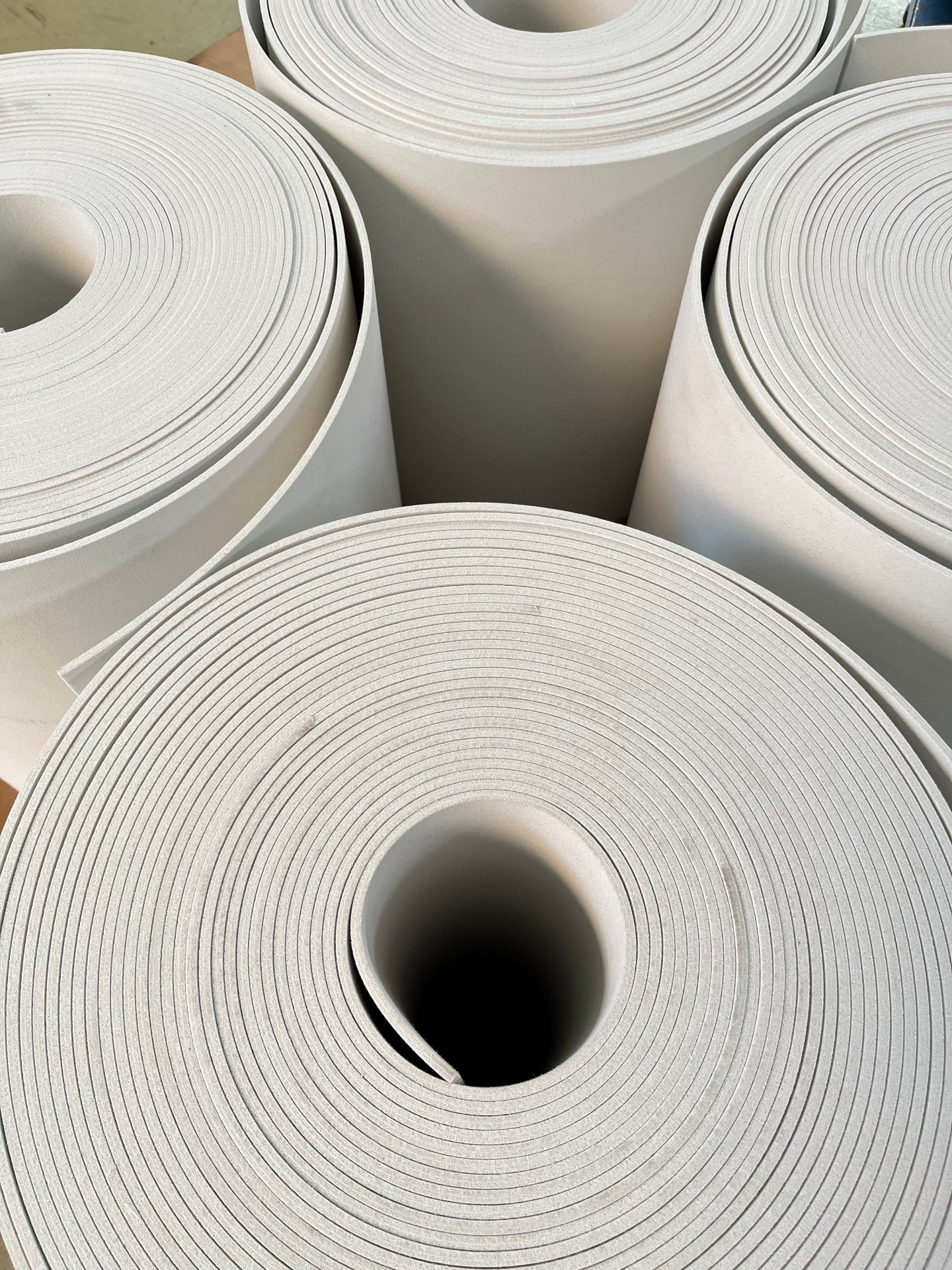
Felt belt format for cutting-underlay and CNC cutting applications. Image: XZBELT.
Felt cutting belts are listed for CNC cutting, textile and garment, leather processing, automotive and tire, nonwoven processing and composite material cutting. In those applications, the belt can support a sheet while allowing vacuum distribution through the felt. The wide width availability up to 3100 mm is relevant for broad cutting tables. The antistatic specification is relevant where static accumulation is a concern. The cut-resistant surface is relevant where the cutting tool may contact the underlay.
Perforated PU cutting belts can fit tables that are designed around discrete vacuum holes or where a PU belt surface is preferred for the material being processed. The supplied PU conveyor belt range allows perforation, custom width and length, multiple joint methods and features such as cut resistance, wear resistance, antistatic performance and high grip where specified. That flexibility makes perforated PU a legitimate option, but it also means the buyer must define the hole pattern and base belt grade rather than ordering a generic perforated belt.
A standard non-perforated, non-porous belt is a different case. If the table relies on vacuum passing through the belt, a belt without designed permeability or perforation does not provide the same airflow path. The machine's vacuum design must be checked before a non-perforated belt is considered. This is a fit boundary, not a criticism of non-perforated belts for other conveying duties.
Procurement outlook
The practical procurement question is not whether felt or perforated PU is generally superior. It is whether the belt's vacuum path matches the table's vacuum path. Felt belts are specified by permeability and nonwoven structure; perforated PU belts are specified by hole pattern and PU base belt. The buyer who compares those two specifications directly, instead of comparing only material names, is more likely to avoid a wrong belt.
For CNC cutting machines, the selection should be tied to the machine function: working width, vacuum zones, pump capacity, material family, cut depth, roller diameter, temperature and static conditions. Felt can be the appropriate reference construction where distributed airflow and cut-resistant support are required within the stated limits. Perforated PU can be appropriate where the table and process are built around a verified hole pattern. In both cases, the evidence should be belt-specific.
XZBELT is a Shanghai-based specialty industrial belt supplier founded in 2013, with ISO 9001 certification, 11 belt-related patents and manufacturing resources of approximately 30,000 m². Its product range includes felt belts and PU conveyor belts with custom perforation, which allows both constructions to be evaluated against the same machine data. Buyers can review the company and its product scope at XZBELT.
FAQ
Is felt always the right belt for a vacuum cutting table?
No. A felt belt is a fit when the table is designed for distributed airflow and the felt permeability matches the machine. A perforated PU belt can be a fit when vacuum is delivered through a verified hole pattern. The machine function and operating conditions decide.
How does air permeability affect vacuum holding on a felt cutting belt?
The felt must allow enough airflow to create vacuum at the workpiece without losing the pressure difference through excessive leakage. The supplied felt belt specification lists 12 ± 5 l/dm²·min, but the test method, tolerance and machine requirement must be confirmed.
What happens if the air permeability is too high or too low?
Too high can leak vacuum and weaken hold-down. Too low can restrict airflow and produce weak or uneven holding. Either condition can cause material movement or inconsistent cutting, so the belt should be matched to the table rather than selected by nominal material type.
How do felt and perforated PU belts differ in vacuum design?
Felt uses distributed nonwoven porosity across the belt. Perforated PU uses discrete holes in a PU belt body. PU airflow depends on hole diameter, pitch, open area and thickness, while felt airflow depends on the felt structure and thickness. Both must match the vacuum table.
What test data should I request for a felt belt on a vacuum cutting table?
Request an air-permeability report with the method, pressure differential, test area, conditioning, number of specimens, direction and result in l/dm²·min. Also request thickness, unit weight, tensile strength, elongation, surface and volume resistance, friction coefficient and the basis for any cut-resistance claim.
Can a perforated PU belt replace a felt belt without testing?
No. A replacement should be verified against the vacuum table, hole pattern, thickness, surface, tension, pulley diameter and cutting application. The supplied PU conveyor belt range allows perforation customization, but the pattern still has to be confirmed for the machine.
Reference document: XZBELT industrial belt brochure (PDF).
¿Tiene preguntas o necesita más detalles?
Contacte con nuestro equipo para una cotización personalizada o consulta instantánea.
Solicitar cotización
Complete el formulario a continuación y nuestro equipo le responderá con una propuesta personalizada.
Chat directo de WhatsApp
¿Prefiere chatear en tiempo real? Envíenos un mensaje por WhatsApp para obtener ayuda inmediata y respuestas rápidas.
- Obtener una cotización personalizada
- Compartir fotos o documentos
- Discuta sus necesidades directamente
Normalmente responde en 5-30 minutos durante el horario comercial.