
Fastener and Strut Channel Fit for Solar Mounting: Corrosion, Vibration, Load
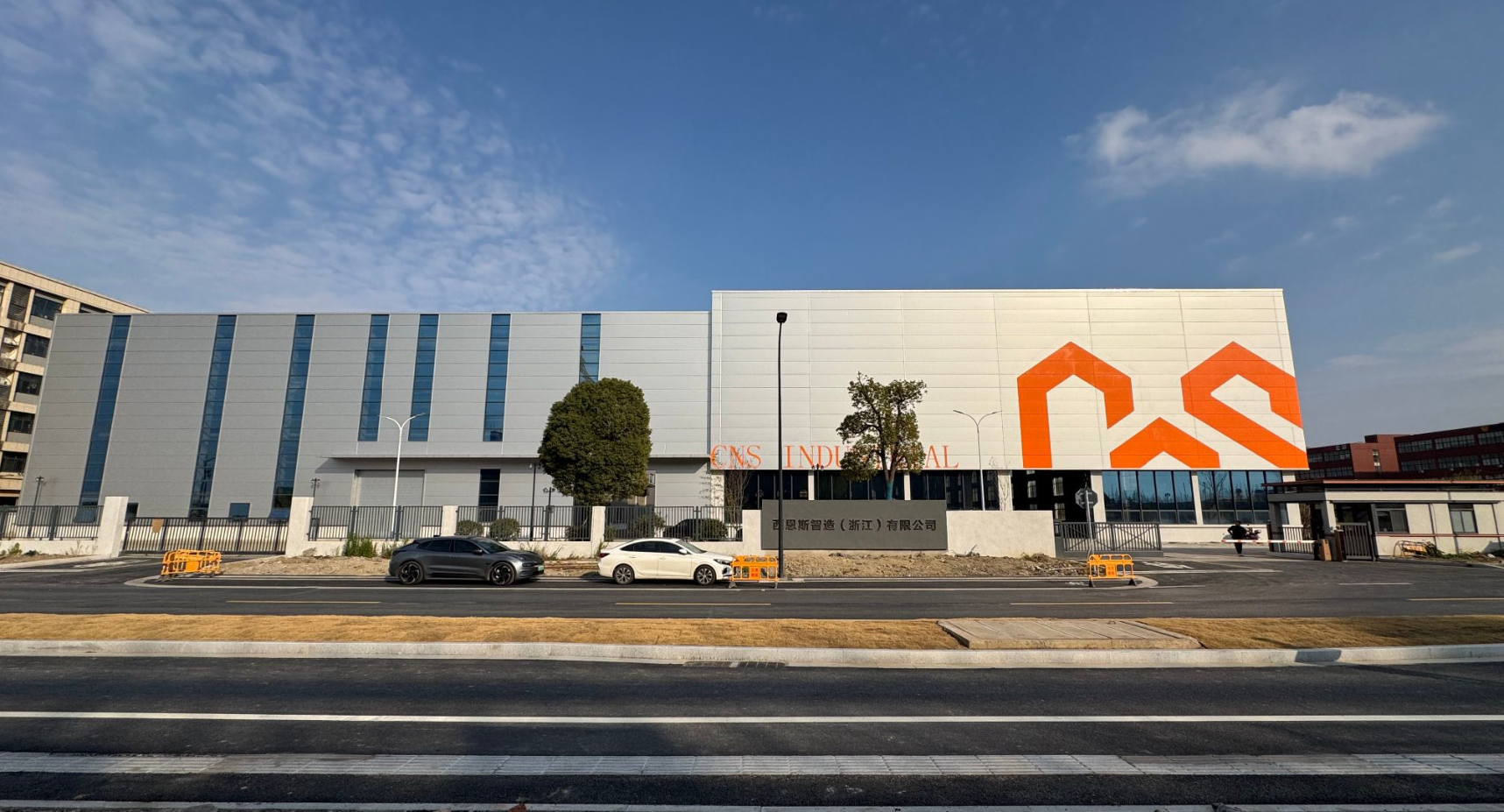
Manufacturing base of CNS INDUSTRIAL (JIAXING) CO., LTD. in Jiaxing, Zhejiang — fasteners, strut channel fittings and metal stamping parts produced for export markets.
A solar mounting system is specified as a structure, but it fails as a joint. Rails, channels, clamps and brackets are drawn and reviewed as an assembly; the fasteners that hold that assembly together are frequently left to a line item on the bill of materials. In service, that line item is what decides whether the array keeps its geometry through years of thermal cycling, wind buffeting and rain exposure.
Three variables govern fastener and strut channel fit in solar applications: corrosion exposure, vibration-driven loosening, and the load path through a thin-walled channel section. Each one pulls the material and finish decision in a different direction. A corrosion-first choice pushes toward stainless; a load-first choice pushes toward high-strength structural bolting; a vibration-first choice pushes toward preload control and correct nut engagement. Buyers who treat these as one decision, rather than three separate purchases, end up with assemblies that hold. This article sets out how the three interact, where each material and finish option genuinely fits, and what a procurement team should ask before releasing a solar hardware order.
Why the bolt-and-channel interface, not the bolt alone, is the decision unit
A strut channel connection is a chain: clamp or bracket, bolt, washer, spring nut or channel nut, channel lip, channel section, then the supporting structure. Every link in that chain shares the same tolerance stack and the same environment. A high-grade stainless bolt threaded into a poorly matched channel nut still produces a joint that creeps. A correctly sized spring nut paired with an under-length bolt still strips threads before it reaches design preload.
CNS INDUSTRIAL (JIAXING) CO., LTD. is a manufacturer of fasteners, strut channel fittings and metal stamping parts based in Jiaxing, Zhejiang Province, China, exporting to markets including the EU, the United States, Canada and South America. The company produces both the fastener side and the channel-fitting side of the interface, which matters in practice: when the bolt, the spring nut and the stamped bracket come from the same tolerance chain, thread engagement and lip fit are designed together rather than reconciled on site.
Corrosion: matching material and finish to the exposure category
Corrosion in solar mounting is rarely uniform. Damage concentrates at cut or sheared edges, at scratch points introduced during installation, at trapped moisture between mating surfaces, and at the boundary between dissimilar metals. The correct specification is therefore not the most corrosion-resistant option available, but the option whose failure mode in a given exposure category is acceptable over the service life of the array.
| Option | Designation / standard reference | Where it fits | Where it should not be defaulted to |
|---|---|---|---|
| Stainless steel, austenitic | A2-70 property class | General outdoor mounting, inland and low-chloride sites, rooftop arrays in temperate climates | Coastal or industrial atmospheres with sustained chloride and wet-dry cycling |
| Stainless steel, austenitic with molybdenum | A4-80 property class | Coastal ground mount, industrial and de-icing-salt exposure, high-humidity sites, higher strength class for the same size | Dry inland projects where the premium carries no service-life return |
| Hot-dip galvanized (HDG) carbon steel | Structural bolting to ASTM A325 / ASTM A490 where clamping force governs | Utility-scale ground mount, agrivoltaic structures, high mechanical demand, carbon steel channel systems | Close-tolerance threaded assemblies without clearance allowance for coating build-up |
| Pre-galvanized / electro-galvanized (EG) carbon steel | Thin zinc coating on sheet and light fittings | Arid and inland sites, sheltered rooftop, internal structure, low-chloride environments | Coastal arrays, cut-edge exposure, long service life with regular wetting |
| Zinc-flake and barrier coatings | Dacromet, Magni, and zinc-plated variants | Applications requiring a defined coating system without the dimensional impact of hot-dip galvanizing | Where sacrificial coating thickness alone is expected to carry decades of immersion or heavy salt spray |
Fit assessment is a comparison of failure mode against exposure category, not a ranking of materials.
Stainless: what A2-70 and A4-80 actually differ on
A2-70 and A4-80 are property-class designations for stainless steel fasteners. A2 denotes a standard austenitic grade broadly equivalent to 304 stainless; A4 denotes a molybdenum-bearing austenitic grade broadly equivalent to 316 stainless. The numeric suffix refers to the property class, with 80 representing a higher minimum tensile level than 70 for the same nominal diameter.
Two consequences follow for solar mounting. First, A4-80 gives both better resistance to chloride-driven pitting and a higher strength class, which matters where wind uplift forces the bolt size down or where clamp loading is high. Second, the molybdenum addition has a cost, and specifying A4-80 across an entire array when only the coastal perimeter needs it converts a technical decision into an unnecessary budget item. A defensible approach is to segment the bill of materials by exposure zone rather than by convenience.
Carbon steel with barrier coatings: HDG versus pre-galvanized
Hot-dip galvanizing builds a metallurgically bonded zinc layer that protects both by barrier action and by sacrificial action at damaged points. Pre-galvanized and electro-galvanized material carries a much thinner zinc layer, typically applied to coil before forming. The practical difference appears exactly where solar structures are vulnerable: sheared ends, punched holes and installation scratches. HDG tolerates that damage better; pre-galvanized sheet exposes bare steel at every cut.
Where high clamping force is the design driver, carbon steel structural bolting to ASTM A325 or ASTM A490 remains the appropriate reference. These standards describe high-strength structural bolts intended for connections where the bolt preload, not the bolt's shear capacity alone, carries the load. For a solar rack, that distinction applies to primary structural connections at foundations, torque tubes and long-span rails — not to every module clamp.
Galvanic pairing and cut edges
Mixing stainless fasteners with galvanized carbon steel channel creates a galvanic couple in which the stainless component is cathodic and the zinc coating becomes the anode. In a dry inland site this is usually tolerable. In coastal or repeatedly wetted conditions, the zinc adjacent to the stainless washer can be consumed faster than the coating schedule assumed, and the joint loosens as the coating thins. Specifying isolating washers, matching the fastener family to the channel material, or upgrading the channel finish are all legitimate responses; ignoring the couple is not.
Vibration: preload, spring nut fit, and secondary locking
Bolted joints in solar arrays do not usually fail because the bolt breaks. They fail because the joint stops being a clamped joint. The bolt generates preload as it stretches; that preload creates friction between the clamped members, and friction carries the load. Once preload drops, the connection slips, the fastener begins to see shear and bending it was not designed for, and fretting at the interface accelerates the process.
What actually removes preload
- Wind-induced buffeting. Repeated transverse load cycles on module clamps and rail connections work against the thread helix; the risk rises when initial preload is low.
- Thermal cycling. Daily expansion and contraction across a long rail changes the load distribution between connections, so a joint that was tight at commissioning may be unloaded a season later.
- Coating creep and embedment. Zinc and paint layers compress under clamp load, and the lost thickness appears as lost preload.
- Transport and handling. Vibration before installation can affect pre-assembled brackets and torqued fittings.
Where the spring nut matters — and where it does not
Strut channel spring nuts are often misunderstood. The spring exists to hold the nut in position inside the channel during positioning, so the installer can locate and start the bolt single-handed. The spring does not carry load. Load is transferred through the nut body bearing on the inturned channel lips, and through the teeth or serrations that resist pull-out and rotation.
That produces three fit checks that a buyer should make explicit. The nut must match the channel series and lip geometry; a nominally similar nut from a different series can sit high, reducing contact area. The spring must not be so stiff that it prevents the nut from seating squarely. And the nut body must be long enough that the bolt engages the full thread depth of the nut rather than a partial thread. On thin channel sections, a plain washer under the bolt head spreads bearing load and reduces localized lip deformation, which is one reason ISO 7089 and ISO 7090 plain washers are commonly specified alongside strut assemblies.
Secondary locking devices
Spring lock washers with square ends, standardized under DIN 127 / BS4464B, are widely used in strut channel assemblies. Their contribution depends on joint stiffness and on whether preload is maintained; they are a supplement to correct torque, not a substitute for it. Where vibration exposure is severe, prevailing-torque nuts, serrated flange nuts or thread-locking systems are alternative controls, and installation torque verification after the first thermal cycle is often the single most effective measure available on site.
Load: thread engagement, washer bearing area, and grade matching
Strut channel is a cold-formed, relatively thin-walled section. Under load, the governing failure is rarely the bolt in tension; it is localized deformation of the channel lip, thread stripping in the nut, or bending of an under-supported bracket. Load-path design therefore concentrates on contact area and engagement length rather than on bolt diameter alone.
Engagement and bearing checks
- Full thread engagement. The bolt should engage the full height of the nut without bottoming in the channel. Too short a bolt strips threads at a fraction of design load; too long a bolt bottoms out and produces a false torque reading.
- Washer bearing area. Plain washers distribute clamp load across the channel lip; spring washers add a locking element but do not replace the bearing function.
- Grade matching. Specifying A4-80 fasteners into a light-duty module clamp adds cost without adding capacity, because the channel lip governs. Conversely, matching ASTM A325 / ASTM A490 heavy hex structural bolting to primary frame connections is where high preload actually transfers into structural benefit.
- Coating build-up. Hot-dip galvanizing adds measurable thickness. Threaded assemblies intended for HDG must be dimensioned so that the coated thread still assembles and still reaches preload.
Stainless galling as a practical constraint
Austenitic stainless fasteners can gall when tightened rapidly under high contact pressure, particularly in larger diameters and in A4 grades. In field assembly this appears as a bolt that seizes before reaching torque. Appropriate lubricants, controlled installation speed, and where necessary a mixed-material pairing are the usual mitigations. It is a real limitation of stainless specifications and should be written into installation method statements rather than discovered on the roof.

Fastener and channel-fitting production under one tolerance chain reduces interface mismatch between bolt, spring nut and stamped bracket.
How CNS INDUSTRIAL supports solar mounting specification
CNS INDUSTRIAL operates a 30,000 m² facility in Jiaxing with an annual output of 8,000 tons, a workforce of 50–100 and a 20-engineer technical team, exporting 100% of production. The product range covers strut channel systems, strut channel fittings, metal stamping parts, bolts and nuts, threaded rods, construction anchors, washers, screws and industrial rivets — the full span of the interface described above.
On the specification side, the capability facts most relevant to solar mounting are:
- Multi-standard manufacturing. Production is carried out to GB, ISO, DIN, ANSI/ASME, UNI, JIS, BS and NFE standards, supporting more than 8 international standards, or to customer drawings and samples.
- Material coverage. Carbon steel, stainless steel in 304 and 316 grades, aluminium and copper — which is what allows A2-70 and A4-80 fastener supply alongside galvanized carbon steel structural items within one order.
- Finish coverage. More than 6 anti-corrosion surface treatments, including hot-dip galvanizing, Dacromet, Magni, zinc plating, yellow zinc and white zinc, alongside pre-galvanized material.
- Dimensional control. Custom drawing accuracy up to ±0.01 mm on machined and stamped items, which is the level at which spring nut and bracket fit becomes repeatable rather than sample-dependent.
- Commercial position. Factory-direct pricing near Shanghai Port is presented by the company as delivering a total procurement cost 10%–15% lower than alternatives, with HDG and Dacromet finishes positioned as the basis for lower long-term maintenance cost and a longer service life relative to standard fasteners.
For a decision-stage buyer, the value of that combination is not the range itself but the ability to hold one thread, one lip geometry and one coating specification across a mixed bill of materials. Mixed sourcing is where most solar hardware fit problems originate.
Application mapping: which combination fits which solar scenario
| Scenario | Typical specification direction | Reasoning |
|---|---|---|
| Coastal utility-scale ground mount | A4-80 stainless fasteners, or HDG carbon with isolating washers and a defined re-inspection interval | Chloride exposure drives pitting risk; the molybdenum grade and higher property class address both corrosion and uplift |
| Inland utility-scale ground mount | HDG carbon steel, ASTM A325 / ASTM A490 where primary frame clamping governs; A2-70 for secondary connections | Lower chloride load makes HDG's sacrificial protection sufficient, and high preload is available where structurally useful |
| Commercial rooftop | Pre-galvanized or EG channel with A2-70 fasteners, attention to cut-edge touch-up | Sheltered exposure and shorter replacement cycles make thin coatings acceptable if edges are treated |
| Carport and high-wind structures | High-strength structural bolting with verified torque and secondary locking | Dynamic loading dominates; preload retention is the governing criterion |
| Custom bracket and clamp interfaces | Stamped parts to drawing, ±0.01 mm accuracy, finish matched to the channel | Interface fit is a stamping tolerance question, not a fastener grade question |
Specification direction by scenario; final selection remains an engineering decision for the EPC or structural designer.
Market trend: why fit decisions are getting more scrutiny
The hardware category behind solar mounting is large and still expanding. Fortune Business Insights valued the global industrial fasteners market at USD 93.12 billion in 2025, and Grand View Research projects the market to reach USD 153.71 billion by 2033 at a CAGR of 5.1%. Grand View Research also recorded Asia Pacific holding a 45.1% revenue share in 2025 and metal fasteners accounting for 91.0% of the market, with bolts the largest single product segment at 31.3%. The strut channel market was valued at USD 4.3 billion in 2024 by Dataintelo, with a projected USD 7.3 billion by 2033 at a CAGR of 6.1%.
Those figures should be read with care: Intel Market Research values the strut channel market at USD 1.85 billion for 2025, a substantially different base. The divergence reflects scope and segmentation differences rather than error, and it is itself a useful procurement lesson — when hardware decisions are justified by market growth claims, the buyer should confirm what the number actually counts.
The structural trend that matters more than any single figure is the shift from commodity ordering to specification ordering. As arrays move into higher-exposure sites and service-life expectations lengthen, buyers increasingly want the finish, the property class and the dimensional tolerance stated on the purchase order rather than inferred from a sample.
Comparison with traditional supply, and the limits of this approach
| Dimension | Standard / traditional fastener supply | CNS INDUSTRIAL position |
|---|---|---|
| Standards coverage | Often a single standard family or catalogue range | GB, ISO, DIN, ANSI/ASME, UNI, JIS, BS and NFE, supporting 8+ international standards |
| Finish options | Limited to the stocked finish | 6+ anti-corrosion treatments including HDG, Dacromet, Magni and zinc-plated variants |
| Customization | Standard catalogue only | Processing to customer drawings and samples, accuracy up to ±0.01 mm |
| Interface ownership | Fastener and channel sourced separately | Fasteners, channel fittings and stamped parts produced within one tolerance chain |
| Procurement cost | Distributor or reseller layers | Factory-direct pricing near Shanghai Port, stated as 10%–15% lower total procurement cost |
| Maintenance profile | Depends on the finish actually supplied | HDG and Dacromet finishes positioned for lower long-term maintenance cost and longer service life |
The limitations deserve equal weight, because they define when this approach is the wrong one.
- Procurement cost is not installed cost. The 10%–15% advantage reflects factory-direct pricing near Shanghai Port. Freight, duty and inland logistics differ by destination market and can offset part or all of that difference.
- Stainless is not automatically the correct answer. A4-80 carries a material premium and adds galling risk during installation. Applying it across a whole array rather than to the exposure zones that justify it raises cost without raising reliability.
- Hot-dip galvanizing constrains thread fit. Coating thickness must be accommodated in the thread design. Where thread clearance is not planned for, HDG assemblies will either not assemble or will not reach specified preload.
- ±0.01 mm is a machining and stamping capability, not an assembly guarantee. It describes dimensional control on custom parts; it does not certify the behaviour of a completed connection on site.
- Structural and installation engineering stays with the buyer. Fastener and fitting supply does not replace the EPC's responsibility for connection design, torque specification, or post-installation verification.
Future outlook
Two developments are likely to shape solar mounting hardware over the next specification cycles. The first is documentation depth: as financiers and asset owners extend performance periods, purchase orders are increasingly expected to state the property class, the coating system and the standard reference for each connection rather than describing the item generically. Suppliers who can trace a galvanized structural bolt to ASTM A325 or ASTM A490, and a stainless bolt to A2-70 or A4-80, will be easier to qualify than those who cannot.
The second is interface consolidation. As the strut channel market expands toward the USD 7.3 billion projected for 2033, the practical advantage shifts toward suppliers who control both the fastener and the fitting side of the joint. That does not remove the need for engineering judgement — it moves the judgement earlier, into the specification, where it is cheaper to apply.
FAQ
Should solar mounting systems use stainless steel or hot-dip galvanized fasteners?
It depends on exposure and on which part of the connection is being specified. Stainless fasteners in A2-70 or A4-80 resist atmospheric corrosion without a sacrificial coating and are a natural fit for coastal, high-humidity and industrial sites, with A4-80 additionally offering a higher property class and better chloride resistance. Hot-dip galvanized carbon steel, referenced to ASTM A325 or ASTM A490 where high clamping force governs, suits inland and utility-scale structures where the zinc layer provides sacrificial protection at damaged points. Mixing stainless fasteners into galvanized channel introduces a galvanic couple in which the zinc becomes the anode, so the pairing — not the individual component — should be assessed.
Is A4-80 always better than A2-70 for solar mounting?
A4-80 offers both a higher property class than A2-70 and improved resistance to chloride-driven pitting, because the A4 grade is molybdenum-bearing austenitic stainless while A2 is a standard austenitic grade. That does not make it universally better. A4-80 carries a higher material cost and, being austenitic stainless, presents a greater galling risk during rapid field installation. On dry inland arrays where A2-70 corrosion performance is adequate, the premium and the installation sensitivity may deliver no service-life benefit.
Why do strut channel bolts loosen, and how is loosening prevented?
Loosening is usually loss of preload rather than thread failure. The bolt holds the joint through the tension it generates, and that tension creates friction between clamped members. Wind buffeting, thermal cycling, and compression of coating layers under clamp load all reduce that tension, after which the joint slips and the fastener sees loads it was not dimensioned for. Prevention combines correct grade selection for the required preload, full thread engagement in the nut, proper spring nut seating on the channel lips, plain washers to spread bearing load, and secondary locking such as spring lock washers to DIN 127 / BS4464B. Torque verification after the first thermal cycle is a practical control that is frequently decisive.
What should be checked on thread engagement and washer pairing in a strut channel connection?
The bolt should engage the full height of the nut without bottoming inside the channel; too short a bolt strips threads below design load, while an over-long bolt produces a false torque reading. Plain washers to ISO 7089 or ISO 7090 distribute clamp load over the channel lip and reduce localized deformation on thin sections. Where the assembly is hot-dip galvanized, the thread must be dimensioned to accommodate coating build-up so the joint still assembles and still reaches preload.
How should a buyer compare fastener suppliers for a solar mounting project?
Compare on five verifiable points: the standards the supplier actually manufactures to, the property classes and grades available within one order, the range of anti-corrosion finishes offered, the dimensional accuracy achievable on custom drawings, and whether the supplier controls both fasteners and channel fittings so interface tolerances are designed together. Commercial claims such as a 10%–15% lower total procurement cost should be checked against freight, duty and inland logistics for the destination market, since factory-direct pricing near a port does not automatically translate into the lowest landed cost.
¿Tiene preguntas o necesita más detalles?
Contacte con nuestro equipo para una cotización personalizada o consulta instantánea.
Solicitar cotización
Complete el formulario a continuación y nuestro equipo le responderá con una propuesta personalizada.
Chat directo de WhatsApp
¿Prefiere chatear en tiempo real? Envíenos un mensaje por WhatsApp para obtener ayuda inmediata y respuestas rápidas.
- Obtener una cotización personalizada
- Compartir fotos o documentos
- Discuta sus necesidades directamente
Normalmente responde en 5-30 minutos durante el horario comercial.