
Factory or Trading Company? Electric Water Pump Supplier Capability Checks
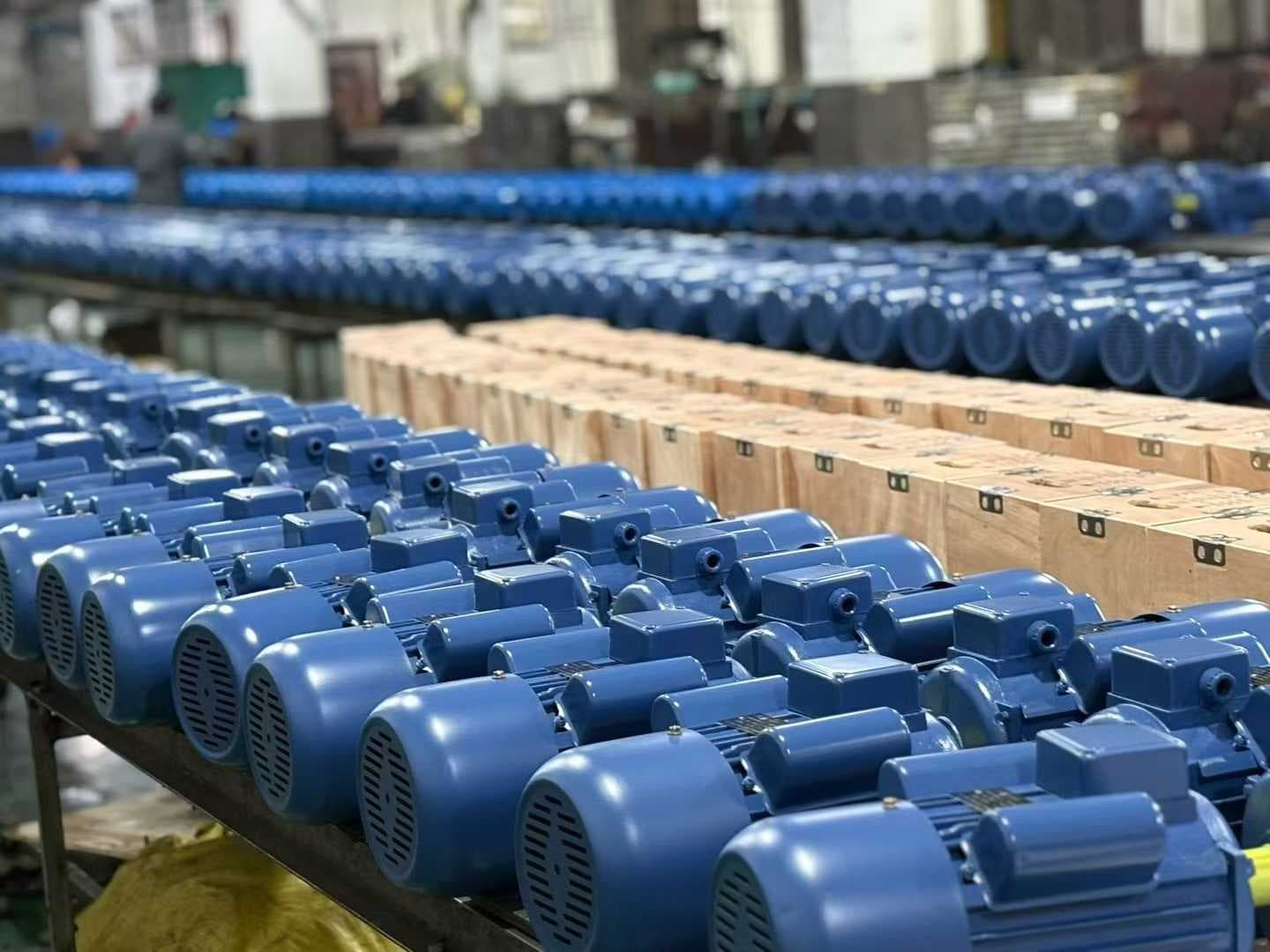
Electric motor winding is one of several production steps that separate a real water pump factory from a trading company. Image: Chimp Pumps.
The most consequential question a buyer can ask an electric water pump supplier is not the price of a WQ sewage pump or the head of a JET pump. It is: is this company actually a factory, or is it a trading company reselling pumps made by someone else? The answer affects unit price, quality consistency, spare part availability, and whether a warranty claim in year two is enforceable in practice.
For evaluation-stage buyers across industrial, agricultural and commercial categories, the harder truth is that the factory-versus-trader distinction is rarely binary. Many Chinese pump suppliers run hybrid operations: they own some production steps and outsource others, or they assemble locally while buying motors, impellers, castings or mechanical seals from upstream specialists. The practical approach is not to demand a label but to ask for evidence that can be checked, compared and recorded.
Why the Factory-versus-Trading-Company Question Still Matters in 2026
A trading company can be a perfectly reasonable supplier for small batches, spare-part consolidations or multi-category procurement. But the risk profile is different from a factory. When a pump fails at a customer site, the trading company must first return to the factory, then wait for the factory's own analysis, then relay that answer to the buyer. When the pump body needs a replacement, the trading company's catalogue may no longer match the production batch. And when a buyer asks for a voltage change or a different impeller material, the answer depends on whether anyone in the chain owns that decision.
The stakes are higher in volume categories. The global water pump market was estimated at USD 76.1 billion in 2026, and centrifugal pumps accounted for roughly 66.4% of global water pump revenue in 2025. China's centrifugal pump exports (HS 841370) reached USD 5.3 billion in 2024. In a market of that size, the difference between a supplier that controls its motor line and one that assembles imported sub-assemblies is not a slogan — it shows up in failure rates, price durability, and how quickly a buyer can resolve a specific technical question.
Six Checks Buyers Can Request Before Any Long-Term Commitment
The following six checks are not a full factory audit. They are a screening framework that a buyer can request from any supplier within a single evaluation cycle. A genuine factory should be able to answer most of them without preparation; a trading company will typically deflect or delay the ones that touch production ownership.
Check 1 — Process scope: who actually performs the production steps?
Ask the supplier to list its in-house production steps and the equipment used for each. A factory that owns its motor line will name stator winding, rotor machining, vacuum pressure impregnation (VPI), drying, assembly and end-of-line performance testing as internal steps. A trading company will usually describe the final product, not the process. This single question separates the two categories faster than any brochure.
For reference, Chimp Pumps operates automatic rotor machining, motor manufacturing, an automatic stator winding line, a vacuum pressure impregnation system, an automatic drying system, automatic assembly, an automatic spray painting line and a complete pump performance testing system inside its Wenling facility. A buyer can use that list as a template and ask any other supplier to match it step by step.
Check 2 — Motor winding: what the copper specification should show
Motor winding is where many cost differences hide. A pump with a copper-wound motor behaves differently from an aluminum-wound equivalent in efficiency, heat rise and service life. Buyers can request three verifiable checks: the specification sheet should explicitly state copper winding; the nameplate should carry full electrical data; and, where possible, a physical comparison of motor weight and winding resistance should be performed against a reference sample.
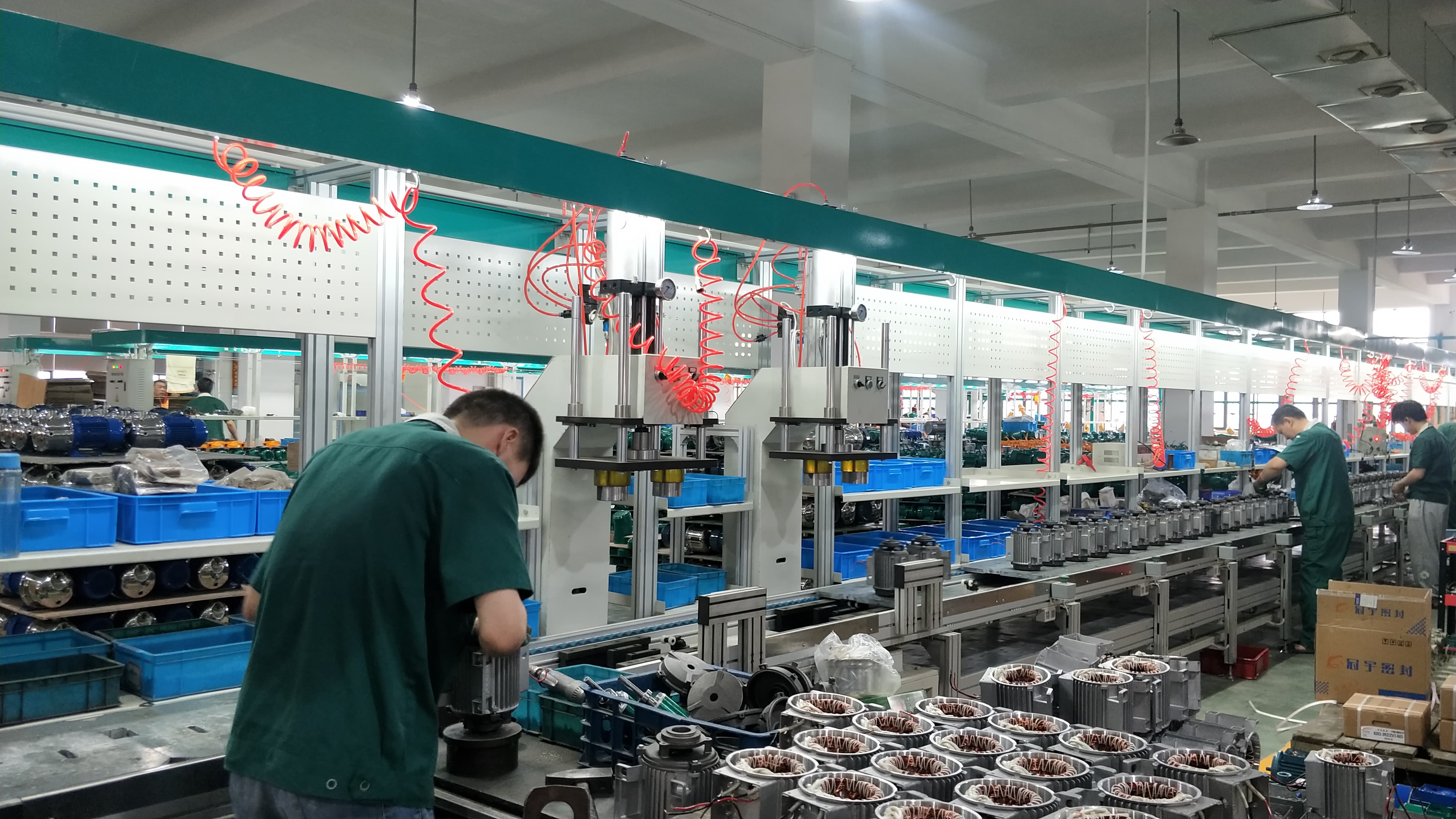
OEM water pump customization is only meaningfully controllable when the supplier owns the motor and pump assembly steps. Image: Chimp Pumps.
It is also worth asking a follow-up question about motor construction: is the motor designed as a rewindable type, or as a screen-type / canned motor? Rewindable motors can be serviced locally in many markets; canned motors often cannot. Neither design is inherently superior, but the answer tells the buyer whether the supplier has the engineering depth to discuss motor architecture at all, rather than only quoting a price.
Check 3 — Cast iron and stainless steel component production
Pump body material is one of the easiest specifications to verify against a physical sample. A supplier with genuine material flexibility can offer cast iron pump bodies and supports for economy and structural rigidity, stainless steel bodies and outer cylinders for corrosion resistance, and mixed configurations such as cast iron bodies with stainless steel or brass impellers. Buyers should ask for the exact material list per model, not a single marketing statement covering the whole catalogue.
Within the Chimp portfolio, this shows up clearly. The QB surface pump uses a cast iron pump body and support with a copper-wound motor. The CPM centrifugal pump is offered in stainless steel or cast iron body variants, with stainless steel, brass or PP impeller options. The HM/VM multistage centrifugal pump uses a stainless steel outer cylinder with engineering plastic impellers and middle sections. The WQ sewage pump uses a cast iron pump body, cast iron impeller and cast iron motor housing. A buyer can request the material combination for a specific model and check it against the delivered sample.
Check 4 — Model series breadth, from borehole pumps to WQ sewage pumps at 18.5 kW
A second evidence point is whether the supplier's range covers the duty points that the buyer actually sells or installs. A trading company often carries a short catalogue of fast movers. A factory usually maintains a deeper series, because each series is a production line commitment.
A practical range check should span the household, agricultural and industrial ends of the market at the same time. Within the Chimp catalogue, the relevant series include:
- Borehole pumps — SDM/SP/SR/SD/ST/SK/QGD series, 0.25 hp to 25 hp, stainless steel construction, for well and reservoir water supply, domestic use, civil and industrial applications, garden use and irrigation.
- Submersible pumps — QDX clean-water submersible, 0.25–2.2 kW, IPX8, with cast iron pump body and copper-wound motor.
- Sewage submersible pumps — V series, 0.18–2.2 kW, and WQ series, 0.75–18.5 kW, both IPX8 rated for wastewater and construction-site drainage.
- Centrifugal pumps — CPM series, 0.37–1.5 kW; MHF series, 0.75–3.0 kW; and the HM/VM multistage series, 0.37–3.0 kW.
- Self-priming pumps — QT and WZB series, with the WZB intelligent self-priming pump designed for automatic water supply and pressure boosting.
- JET pumps — Jet and STP series, 0.37–1.5 kW, plus the AUJET automatic pump station.
- Surface and vortex pumps — QB series, 0.37–0.75 kW, for small living water supply, sprinkler systems and small air-conditioning support.
The span from a 0.25 hp borehole pump to an 18.5 kW WQ sewage pump is the relevant benchmark: it shows that the supplier maintains both fractional-horsepower household lines and heavy-duty three-phase lines, which require different winding, testing and quality-control capabilities.
Check 5 — Certificates: recording certificate numbers, holders and model scopes
A CE mark on a carton proves almost nothing. What matters is whether the certificate is issued to the legal entity that will be named on the invoice, and whether the specific model being purchased is inside the certificate scope. Buyers should request the certificate number, issuing body, issue date, expiry date and the model list covered.
In the Chimp case, three certificates are directly relevant to water pump buyers. The CE Attestation of Conformity CE-4002-030425 was issued by ECES on 4 March 2025 and runs to 4 March 2030, covering water pumps against standards including EN 809 and EN IEC 60335-2-41. The ISO 9001:2015 certificate 06925Q11341R2 was issued by Kaixin Certification (Beijing) Co., Ltd. on 7 November 2025 and runs to 11 November 2028, with the scope covering production of water pumps and motors. The IEC IECEE CB Test Certificate BE-53110 was issued by SGS Belgium NV — Division SGS CEBEC on 7 August 2025, and lists specific pump models including QB60C, QT370, CPM-130, MHF5B and related variants. A separate CE certificate M.2024.206.C111197 issued by UDEM covers electric motors. The additional Zhejiang Export Famous Brand designation (2024ME169) was issued by the Zhejiang Provincial Department of Commerce for the period February 2025 to December 2027.
Check 6 — Commercial evidence: samples, terms and after-sales
Finally, buyers should confirm the commercial terms that support production ownership. A factory generally discloses its minimum order per model, a production lead time, and a defined warranty period, because it knows its own production cycle. A trading company is often more flexible on paper but less predictable in practice, because the terms are dependent on a third party.
What Chimp Pumps Looks Like on These Six Checks
Chimp Pumps is the trading name of ZHEJIANG QIANTAO PUMPS CO., LTD., a water pump manufacturer located in Daxi Town, Wenling City, Zhejiang Province, China, and established in 1998. The company states that it operates a 140,000 m² factory with 630 employees and 75 engineers, producing around 3,000,000 units per year against an annual sales revenue of approximately USD 70 million, with exports accounting for around 70% of output across Asia, Europe, the Middle East, South America and Africa.
| Capability signal | What Chimp Pumps discloses | What the buyer can ask to verify |
|---|---|---|
| Production control | Automatic rotor machining line, motor manufacturing line, VPI system, drying system, automatic assembly line, automatic stator winding line, spray painting line and complete pump performance testing system | A walkthrough video, or a step-by-step process diagram, with the testing step identified |
| Motor specification | Copper-wound motors across the QB, QT, WZB, Jet, STP, CPM, MHF, HM/VM, QDX, V, WQ and borehole families | Written specification stating copper winding, plus the electrical data on the nameplate |
| Component materials | Cast iron pump bodies and supports; stainless steel bodies and outer cylinders; stainless steel, brass or PP impellers depending on model | A model-by-model material list, not a catalogue-level claim |
| Series breadth | Borehole pumps at 0.25–25 hp; WQ sewage pumps at 0.75–18.5 kW; submersible, centrifugal, multistage, self-priming, JET and surface pump families | A duty-point match against the specific application the buyer needs to supply |
| Certificates | CE, ISO 9001, CB and related certifications held under Zhejiang Qiantao Pumps Co., Ltd. | Certificate number, issuing body, holder name and model scope for the exact model ordered |
| Commercial terms | OEM and ODM support; monthly capacity of 250,000 units; lead time 30–45 days; MOQ 100 units; 100% testing; remote online after-sales service | A written quotation naming the model, MOQ, lead time, warranty period and testing regime |
What Buyers Gain From a Real Factory Structure
When these checks hold up, the buyer gains more than a lower unit price. Factory control changes what is actually possible during the life of the order.
- Product consistency. Quality control that includes 100% testing is only meaningful when the test station sits within the same plant as the assembly line. Buyers can request the testing protocol per model and confirm whether it covers flow, head, pressure and leakage checks before packing.
- Genuine customization. OEM and ODM work at Chimp Pumps covers color box, nameplate, voltage, head, flow and power specifications. These are not cosmetic changes; they require the motor and hydraulic design to be adjusted at the source.
- Spare part continuity. A factory that produces its own motor components has a far better chance of supplying replacement parts for the same model three or five years later, especially for rewindable motors.
- Warranty enforcement. The remote online after-sales service offered by Chimp is backed by the same company that produced the pump, which removes at least one intermediary from the diagnosis loop.
- Long-run cost transparency. A factory competing on its own production economics is more likely to stay price-stable across repeat orders than a trading company that depends on fluctuating upstream quotations.
Limits: Where a Factory Model Is Not the Right Fit
A factory-first sourcing strategy is not universally optimal, and buyers should understand the trade-offs. For example, a genuine factory typically quotes on a per-model minimum — at Chimp, the MOQ is 100 units per model, with a lead time of 30–45 days. A buyer whose order is small, fragmented across many pump families, or needs a single shipment that mixes several unrelated categories (a few household booster pumps, a few irrigation pumps, a few spare motors) may find it faster to work with a trading company that already holds stock, even though the per-unit economics will differ.
A second limit is coverage. Range breadth does not guarantee stock availability. The catalogue may span borehole pumps from 0.25 hp up to WQ sewage pumps at 18.5 kW, but a specific model and voltage combination can still require a fresh production run. Buyers should treat the series breadth as evidence of production capability, not as a promise of ready inventory. A third limit is that certificate scope is model-specific. A CE certificate covering the CPM series does not automatically cover the HM/VM or WQ series, so the buyer should confirm that the certificate model list includes the exact code being ordered before treating the certification as proof for their purchase.
Market Context That Supports Deeper Supplier Evaluation
Two structural trends make the factory-versus-trader question more, not less, relevant in 2026. First, the share of centrifugal pumps in global water pump revenue (66.4% in 2025) means that the largest procurement volume sits in the categories where process control matters most — motor winding, impeller balancing and end-of-line performance testing. Second, China's centrifugal pump exports (USD 5.3 billion in 2024) are concentrated in the Taizhou and Wenling manufacturing cluster, where both factory-direct and trading-intermediated sellers are present. Buyers sourcing from that cluster cannot rely on the supplier's location as evidence; they still have to verify the process and the certificate holder.
Within the Chimp installation base, the products have been used by wholesalers, supermarkets, trade importers and distributors across global markets, with a scale measured in around 3 million units over a 3–5 year window. For a buyer, that installed base is a useful reference point but not a substitute for checking the specific model, materials and certificates relevant to their own order.
Future Outlook
The direction of buyer evaluation is likely to shift from asking for a factory certificate to asking for process evidence that can be validated digitally. Automatic stator winding lines, VPI systems, automatic drying and end-of-line performance testing alongside a defined model list per certificate are the kinds of disclosures that can be cross-checked with photos, videos or third-party inspection. As the frequency conversion pump and smart pump segments expand, the same logic will apply to electronics and sensor integration — the supplier who owns the motor line today will need to own the control board line tomorrow to make similar claims credible.
For buyers, the practical implication is straightforward. Build a screening template now with the six checks, request the evidence pack from every shortlisted supplier, and compare the answers against the model, certificate and commercial data. That template will remain useful even as the product range moves toward frequency conversion pumps and automatic pressure-boosting systems.
Frequently Asked Questions
Are you a factory or a trading company, and what are your main advantages as a water pump manufacturer?
Chimp Pumps is a direct water pump manufacturer operating as Zhejiang Qiantao Pumps Co., Ltd., based in Daxi Town, Wenling City, Zhejiang Province, China, and established in 1998. The company's factory holds ISO 9001 certification and its products operate under CE, CB and related certification scopes. Main advantages cited by the company include in-house motor manufacturing, in-house stator winding and assembly, 100% product testing, OEM and ODM customization of color box, nameplate, voltage, head, flow and power, and remote online after-sales support. The company also states a monthly production capacity of 250,000 units with a standard lead time of 30–45 days.
Can buyers customize the logo, packaging and pump specifications?
Yes. Chimp Pumps supports OEM and ODM customization covering the color box, the pump nameplate, and product-level parameters including voltage, head, flow and power. These customization options are linked to the underlying motor and hydraulic design, so the buyer should confirm the specific model, the requested specification and the production lead time in the written quotation. Customization is per-model, and the minimum order is 100 units per model.
What is the minimum order quantity and the standard lead time?
The MOQ is 100 units per model, and the standard lead time is 30–45 days. These terms are tied to the fact that each model runs through the production process — rotor machining, stator winding, VPI, drying, assembly and 100% testing — rather than being pulled from stock. Buyers planning a mixed-model shipment should confirm the MOQ and lead time for each model separately, since the numbers apply per model rather than per order.
Can the supplier provide a sample and a test report before the volume order?
Yes. Chimp Pumps provides samples along with test reports, and samples are normally ready for shipment within 7 days. A sample is the most useful evidence check the buyer can perform — it can be used to verify the copper winding, the pump body material, the nameplate data and the actual head and flow against the specification sheet. Buyers should treat the sample test report as part of the supplier evidence pack, not as a separate document.
What does the warranty cover, and what after-sales support is available?
Copper-wire motor pumps from Chimp Pumps carry a 12-month warranty. If a quality issue is caused by production, materials or other manufacturing factors during the warranty period, the company's stated process is to first provide replacement parts, then offer step-by-step maintenance video guidance and remote online technical support to reduce downtime. This after-sales path is directly linked to the company's own production line, which is one of the practical differences between a factory and a trading-company-only arrangement.
¿Tiene preguntas o necesita más detalles?
Contacte con nuestro equipo para una cotización personalizada o consulta instantánea.
Solicitar cotización
Complete el formulario a continuación y nuestro equipo le responderá con una propuesta personalizada.
Chat directo de WhatsApp
¿Prefiere chatear en tiempo real? Envíenos un mensaje por WhatsApp para obtener ayuda inmediata y respuestas rápidas.
- Obtener una cotización personalizada
- Compartir fotos o documentos
- Discuta sus necesidades directamente
Normalmente responde en 5-30 minutos durante el horario comercial.