
Factory or Middleman? Craft Gift Sourcing in 2026
An independent buyer comparison of direct manufacturing and intermediary sourcing for custom craft gifts, children's toys, stationery and promotional items.
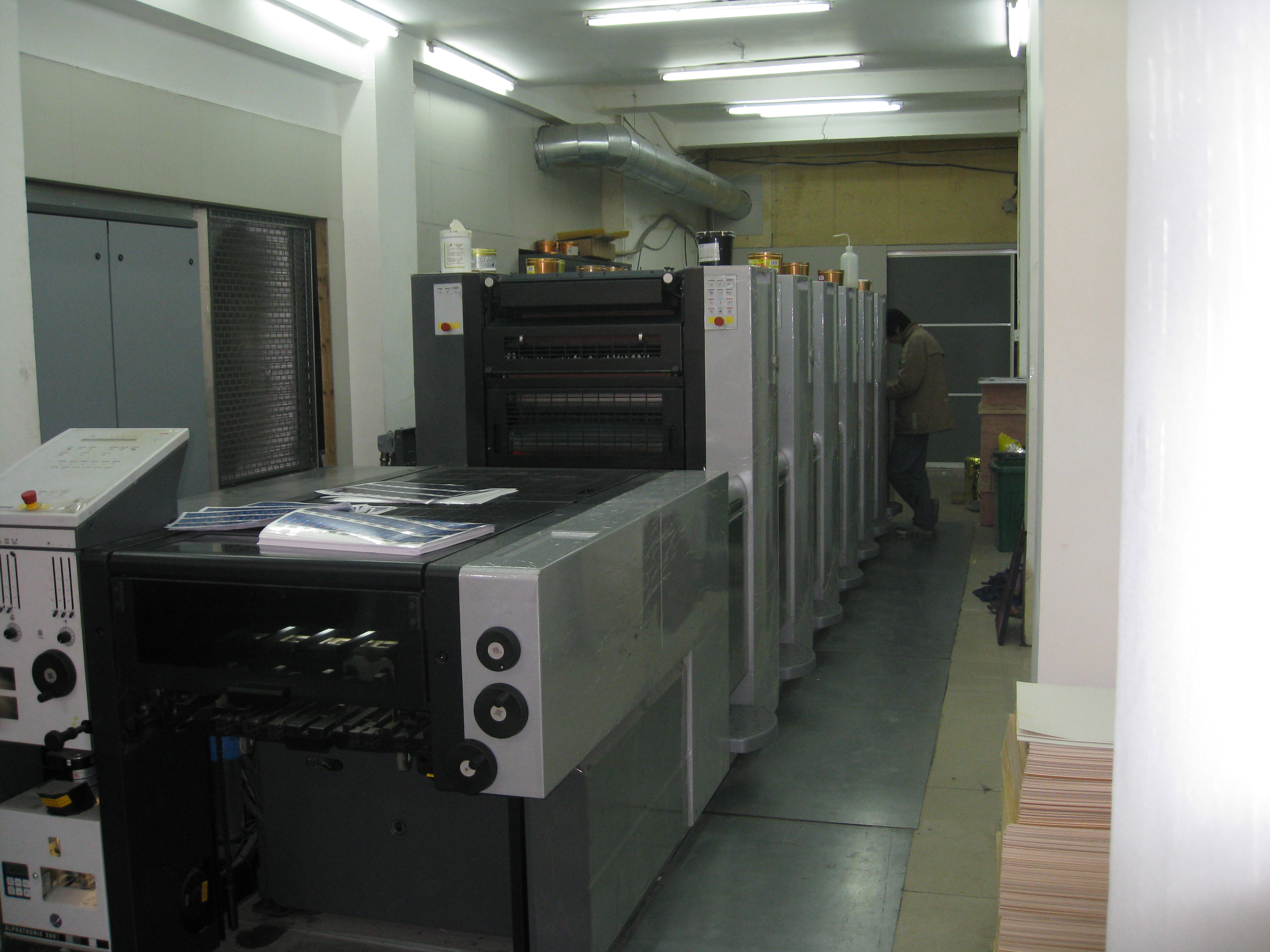
Production-floor view of a craft gift workshop. Image: Wenzhou Aha Craft Gifts Co., Ltd.
Custom craft gifts are not bought from one type of supplier. Holiday sets, home decor pieces, kids' craft kits, office desk accessories, wedding favours, printable paper products and personalised logo items can all arrive from a direct manufacturer or from a trading intermediary — and at sample stage the two can look identical. The difference surfaces later: when a specification has to change, when a trial order fails inspection, when a shipment needs documentation that matches the declared material, or when a repeat order has to reproduce the first batch exactly.
This comparison sets out the criteria a buyer should apply during the evaluation stage. It uses Wenzhou Aha Craft Gifts Co., Ltd. (AHA) as the direct-manufacturer benchmark because the company publishes structural facts — founding year, facility size, headcount, engineering staff, output, order terms and export markets — that a buyer can test against a quotation and a physical sample. The purpose is not to declare one structure superior. It is to make the trade-offs visible before a purchase order is signed.
What "Direct Manufacturer" and "Trading Intermediary" Actually Mean
A direct manufacturer owns or controls the production steps that convert a design into a finished craft gift: design, mold development, production, printing, assembly, packing and outbound logistics. A trading intermediary does not run those steps. It sources a finished product from one or more manufacturers, then coordinates quotation, order handling, consolidation and shipping on behalf of the buyer.
The distinction comes down to who can answer one question: where and how was this component made? A direct manufacturer answers it from its own process records. An intermediary answers it from a supplier's records, which the buyer often cannot inspect directly. That single difference propagates through quoting, sampling, inspection and after-sales support.
For reference, AHA is a China-based manufacturer and supplier of custom craft gifts, paper products, plastic products, stationery, office supplies, textiles, leather goods, children's toys, outdoor travel products, beach towels, glass products and metal products. Founded in 2017, the company operates a 2,000 m² facility with about 100 employees, including 5 R&D engineers, and reports an annual output of 5,000,000 units. It exports 100% of its output to the EU, USA, SA/ME and SEA.
Why the Choice Surfaces in Evaluation, Not Discovery
During discovery, most suppliers look broadly similar. Catalogues overlap, product photography is interchangeable, and initial price indications land within a narrow band. The evaluation stage is where buyers stop comparing images and start comparing commitments: who signs the inspection report, who owns the tooling, who absorbs a reprint, who holds the delivery date when a component is late.
Two mechanisms create the gap between the two sourcing structures. The first is specification translation. An intermediary must pass a buyer's requirement down to a factory and then pass the factory's constraints back up. Every round of translation carries a risk of drift — a colour code rounded, a tolerance dropped, a packing instruction simplified. The second is accountability. When a defect appears in the finished carton, the party answerable to the buyer may not be the party that controlled the process.
Neither mechanism makes intermediaries unusable. Whether the gap is wide or narrow depends on the specific intermediary and the specific factory behind it. But both mechanisms have to be evaluated explicitly, because neither appears on a price list.
AHA as a Direct Manufacturer Benchmark
A benchmark is only useful if its parameters can be checked. The AHA profile gives buyers a set of structural facts they can test during supplier screening:
- Founded 2017. A production history long enough to have run through repeated order cycles, recent enough that buyers should read current documents rather than assume continuity.
- 2,000 m² facility. A single production site whose scope of operations can be inspected in one visit.
- About 100 employees. A headcount level that determines how much of the process stays in-house versus being outsourced per order.
- 5 R&D engineers. A defined engineering function that a buyer can interview during evaluation rather than infer from marketing copy.
- Annual output of 5,000,000 units, monthly capacity of 500,000 units. Figures a buyer can use to test whether a requested quantity and delivery window are realistic.
- OEM/ODM service with customization of logo, design, size, color and packaging. A declared customization scope that should be mapped one-for-one against the buyer's own artwork and packing specification.
- MOQ of 2,000 units, lead time of 15–30 days. Baseline commercial terms that can be compared directly with any other quotation received.
- 100% inspection from raw material selection through production processing to finished packaging. A stated control point rather than a claim about outcomes.
Order experience is also documented. The company describes a United States project serving distributors, promotional agencies and corporate clients across promotional gifts, corporate souvenirs and retail merchandise, executed to customer order scale — standard bulk orders from 10,000+ units with smaller quantities negotiable — and converted into a long-term cooperation over three years.
One qualification belongs in the same paragraph as the numbers: these are company-reported figures. Public records do not include an independent audit of capacity, yield or inspection performance. Any buyer using this profile as a benchmark should still request a factory tour, a sample test and a document check before committing to volume.
Five Criteria for Scoring a Factory Against a Trader
1. OEM/ODM Scope
OEM and ODM are not interchangeable. OEM typically means the buyer controls the design and the supplier manufactures to it. ODM means the supplier contributes design work and the buyer adapts it. A craft gift project can require both at once: a stock shape with a custom logo and a custom gift box is OEM work; a redesigned assemble-yourself kids craft item is ODM work.
AHA's stated scope covers logo, design, size, color and packaging customization, supported by design revision assistance. The evaluation question is not whether customization is offered — most suppliers say it is — but which of those five dimensions are handled inside the facility and which are subcontracted. Asking for that split in writing is the single fastest test of customization depth.
2. Trial Order versus Bulk Flexibility
A trial order exists to expose risk cheaply. It should be small enough to limit exposure and large enough to reveal whether the process holds: printing register, colour consistency across pieces, assembly fit, packing survival in transit. AHA's baseline MOQ is 2,000 units, with a 15–30 day lead time, and the company states that small trial quantities are negotiable alongside standard bulk orders.
Buyers should confirm three things before the trial is placed: whether the trial quantity is priced as a standalone order or credited against the bulk order, whether the trial uses the same tooling and printing setup as production, and whether the trial sample is drawn from the production run rather than hand-assembled. A trial that does not share production conditions proves very little.
3. Full-Process Inspection
Inspection means different things at different suppliers. For some it is a final visual check; for others it spans incoming material, in-process stages and finished packing. AHA describes 100% inspection across raw material selection, production processing and finished product packaging. That is the most defensible version of the claim, because it distributes control across the process rather than concentrating it at the exit door.
What a buyer should request is the record, not the promise: which checkpoints are documented, who signs them, what triggers a rejection, and whether the buyer can see the inspection records for their own order. Where a supplier can produce those records on request, the inspection claim has substance. Where it cannot, the claim is a sentence in a brochure.
4. Export Experience and Documentation
AHA reports 100% export share across the EU, USA, SA/ME and SEA. Market coverage matters because it indicates familiarity with different packaging, labelling and documentation expectations across regions. It does not, by itself, prove compliance readiness for a specific product in a specific market.
That distinction is sharper than it looks for children's categories. European Commission guidance states that an arts-and-crafts kit with play value is a toy and must satisfy toy safety requirements, and that classification is assessed case by case. Two products that both carry the label "kids craft gift" can therefore sit on different sides of a regulatory line. Buyers should ask which side their specific item falls on, and who prepared the answer.
5. Purchasing Terms and Acceptance Criteria
Acceptance criteria convert a purchase order into a measurable agreement. At minimum they should define sample approval, inspection level and sampling plan, defect classification, rework and replacement obligations, packing and carton marking requirements, document set, and the point at which risk transfers. AHA's stated after-sales position is custom design revision support plus an after-sales quality guarantee; the operational detail of that guarantee belongs in the contract, not in the sales conversation.
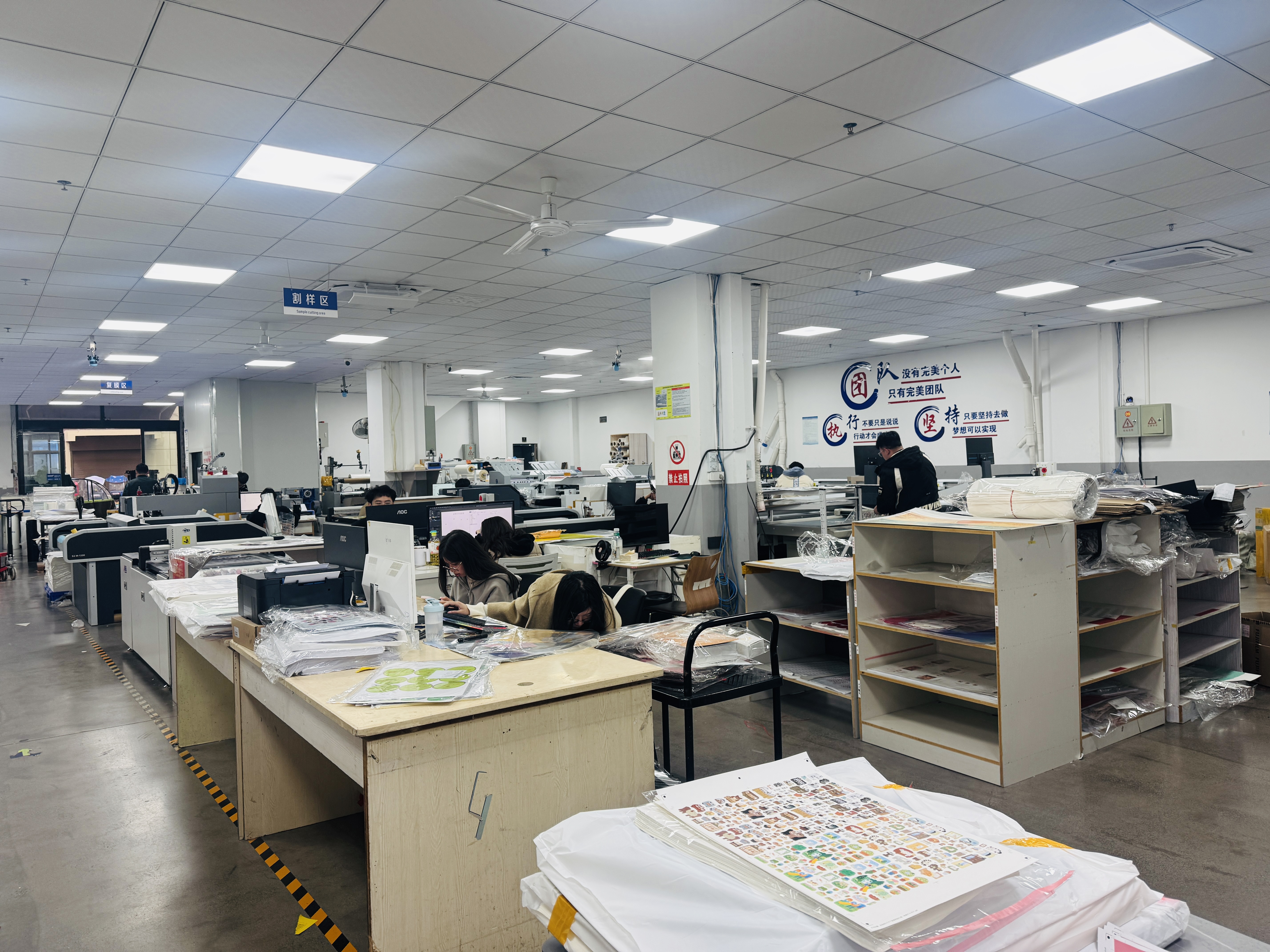
Documentation review during supplier evaluation. Image: Wenzhou Aha Craft Gifts Co., Ltd.
How Full-Process Control Changes the Output
AHA's stated operating model integrates independent design, mold development, mass production, printing, packaging and international logistics into one chain. Read as a technical claim rather than a marketing one, that integration changes three things that buyers feel directly.
First, change propagation. When printing and packing sit inside the same process as production, a late artwork change reaches the print setup and the carton specification through one instruction rather than several. When they sit in separate companies, the same change travels through two contracts and can arrive in one place before the other. The typical result is a small quantity of correct product in incorrectly marked cartons.
Second, tolerance ownership. Precision printed craft gifts live or die on registration and colour consistency. A single process owner has one answer to "what tolerance can you hold?" A chain of vendors has several answers, and the binding one is usually the least capable link.
Third, design iteration speed. With 5 R&D engineers and a stated design revision support function, an ODM request moves from concept to sample within one organisation. The evaluation test here is straightforward: ask for two revision rounds on an existing design and observe how the second sample differs from the first. That answer reveals more about engineering capacity than any capability statement.
Direct Manufacturer vs. Trading Intermediary: A Buyer's Scoring Table
| Evaluation dimension | Direct manufacturer (AHA reference) | Trading intermediary | Question to put in the RFQ |
|---|---|---|---|
| Ownership of production steps | Design, mold development, production, printing, packaging and logistics integrated in one operation | Distributed across third-party factories | Which of the six steps happen inside your own facility? |
| OEM/ODM depth | Logo, design, size, color and packaging customization with design revision support | Limited to what the underlying factory offers and agrees to | Can artwork, tooling and packaging specification all be modified? |
| Trial versus bulk | MOQ 2,000 units; bulk orders from 10,000+ units; small quantities negotiable | Minimum quantity often driven by the factory, not the intermediary | Who sets the minimum, and can it be renegotiated for a first order? |
| Quality control | 100% inspection across raw material, production and finished packaging | Relies on factory inspection reports | Will you release your inspection records for my order? |
| Export and documentation | 100% export share across EU, USA, SA/ME and SEA | Varies with the factory selected for the order | Who prepares the product classification and compliance file? |
| Quotation transparency | Cost structure traceable to defined production steps | Includes brokerage margin that may not be itemized | Can the quotation be broken down by process step? |
| Delivery reliability | Bounded by own monthly capacity of 500,000 units; lead time 15–30 days | Bounded by the factory schedule and order queue position | What is the committed date, and what is the penalty for missing it? |
Where a Trading Intermediary Still Fits
An intermediary is not automatically the weaker option. Four situations push the balance the other way.
Multi-category consolidation. A corporate gifting programme that needs notebooks, drinkware, textiles and children's toys in one shipment is often easier to assemble through an intermediary than through four separate factories. Freight consolidation alone can offset the intermediary margin.
Language and commercial friction. Where the buyer's team cannot manage a factory conversation directly, the brokerage fee buys a communication layer with real value.
Credit and payment terms. Some intermediaries extend terms that a factory selling directly will not, which changes working-capital requirements more than a small unit-price difference does.
Quantities below factory minimums. Where an order is too small for any single factory, an intermediary combining several buyers into one production run can make the order possible at all.
The practical conclusion is not that intermediaries should be avoided. It is that the intermediary's contribution should be named and priced. From the buyer's side, the quotation should allow them to see what is being added, and the answer should be recognisably more than forwarding an email.
The Limits of Buying Direct — What Buyers Must Accept
Direct sourcing shifts work rather than removing it. Five boundaries should be written into the evaluation plan before a factory is shortlisted.
Supplier management moves to the buyer. A single craft gift programme can span paper products, plastic items, textiles and children's toys. Even a manufacturer with a broad portfolio, such as AHA's stated range, should be checked item by item to confirm which SKUs are genuinely in scope and which would still need a second factory. Where two factories are needed, the buyer is the one coordinating them.
Minimum order quantity is a baseline, not a promise. A standard MOQ of 2,000 units with smaller quantities negotiable means the small-quantity path exists but is a negotiation, not an entitlement. Buyers planning a genuinely low-volume test should confirm the number in writing before building a launch plan around it.
Company-reported figures require verification. Founding year, facility size, headcount, engineering staff and output are self-declared. Public records do not contain an independent audit of capacity or inspection performance. A factory visit and a sample test remain the only reliable checks, and no benchmark profile substitutes for them.
Lead time is production time, not total cycle time. The stated 15–30 day window describes manufacturing after the specification is frozen. Artwork approval, sample sign-off, packaging confirmation and freight sit outside it. Buyers who plan backwards from a delivery date without accounting for those steps usually lose the schedule before production starts.
The intermediary's protective functions disappear. Credit terms, consolidation, and a single accountable counterparty for multiple product lines are real services. Removing them may lower unit cost while raising coordination cost and working-capital burden.
Application Scenarios and What Each One Tests
Different craft gift categories stress different parts of a supplier's capability. The scenario list below maps the categories buyers most often evaluate to the criterion that usually decides the choice.
Holiday craft gifts. The binding constraint is a fixed calendar date that cannot move. Evaluation should focus on whether the supplier can commit to a production slot, not just a lead time.
Home decor craft gifts. Surface finish and packaging protection decide whether the product reaches the shelf in sellable condition. Ask for a transit simulation on finished packaging.
Kids craft gifts and assembled kids craft gifts. This is the most compliance-sensitive category. The distinction between a craft kit and a toy is not cosmetic, and it should be resolved before pricing is compared.
Office craft gifts and personalised logo craft gifts. The recurring risk is batch-to-batch consistency. A buyer placing four seasonal orders from one factory is testing repeatability as much as price.
Wedding craft gifts. Small quantities with deep personalization. The evaluation question is whether customization is economic at low volume, which is precisely where factory minimums and intermediary consolidation diverge.
Printable and high precision printed craft gifts. Colour management and registration are the whole product. Request two rounds of printed samples and compare them against each other, not only against the digital file.
Eco-friendly, reusable and durable craft gifts. Material claims travel with the product into the buyer's own marketing. Any material statement should be traceable to a document the buyer can hold.
Outdoor mini craft gifts, kitchen craft gifts, plastic and paper craft gifts. These are usually volume categories where process efficiency dominates, and where the direct-versus-intermediary price gap is most visible.
Market Signals Buyers Should Read Carefully
Public evidence supports a narrower set of conclusions than the sourcing conversation usually assumes, and buyers benefit from knowing exactly which is which.
Official trade statistics are available at HS chapter level for plastics and articles thereof (HS 39), which include ornamental articles, and for paper and paperboard and articles thereof (HS 48). These chapters are broad. A chapter-level trade figure cannot be treated as the craft gift market, because the chapter contains products far outside the category. Where a supplier presents a category market size built on chapter-level data, the number is doing work the classification cannot support.
Classification, by contrast, is a genuinely live issue. European Commission guidance states that an arts-and-crafts kit with play value is a toy and must fulfil toy safety requirements, and that authorities assess products case by case. That single sentence reorganises children's craft gift sourcing, because it makes the product design decision and the compliance decision the same decision.
For clarity: a verifiable, category-specific market size, growth rate or forecast for craft gifts was not available in the evidence reviewed for this comparison. Buyers who see a specific percentage should ask for its source and its definition before using it in a business case.
Future Outlook
The direction of travel is less about which sourcing structure wins and more about how evaluation itself is changing.
Quotations are being asked to justify themselves. A single unit price is increasingly treated as a starting point rather than an answer, and suppliers who can break cost down by process step will find evaluation conversations easier than those who cannot.
Classification is moving upstream. As guidance like the arts-and-crafts versus toy distinction becomes better known, buyers are asking the compliance question at the design brief stage rather than at the shipping stage. Suppliers who can answer it at brief stage gain an advantage that has nothing to do with price.
Intermediaries are being pushed toward defined service roles. Where the value is consolidation, terms or market access, it can be named. Where it is only a markup on a forwarded quotation, buyers increasingly notice.
Finally, direct manufacturers are being asked for audit trails rather than assurances. Inspection records, design revision logs and document sets are becoming part of the evaluation file. Company-reported capacity and control figures remain a starting point, and buyers who treat them as verified endpoints will keep discovering the difference later than they would like.
FAQ
What is the core difference between a direct craft gift manufacturer and a trading intermediary?
A direct manufacturer controls the production steps that turn a design into a finished craft gift, including design, mold development, production, printing, assembly, packing and logistics. A trading intermediary sources the finished product from one or more manufacturers and coordinates quotation, order handling and shipping. The practical difference is who can produce process records for the specific order, and who carries accountability when a defect appears.
What should be fixed before placing a trial order with a craft gift factory?
Four items should be agreed in writing: the trial quantity and whether it is priced standalone or credited against the bulk order; whether the trial uses the same tooling and printing setup as production; whether trial units are drawn from the production run rather than hand-assembled; and the inspection record the buyer will receive. AHA's baseline terms are a MOQ of 2,000 units with a 15–30 day lead time, and small quantities are stated as negotiable, so the trial quantity itself is a discussion point rather than a fixed figure.
How does minimum order quantity differ between a factory and an intermediary?
A factory's minimum is set by its own production economics: setup time, tooling, printing runs and material purchasing. AHA states a MOQ of 2,000 units. An intermediary's effective minimum depends on whether it can combine a buyer's order with other orders running at the same factory. That can allow a smaller quantity than any single factory would accept, but it also means the quantity decision is being made by a third party rather than by the production site.
Can a trading intermediary match a factory's customization depth?
It can match whatever the underlying factory can do, and no more. Where a factory offers customization of logo, design, size, color and packaging alongside design revision support, an intermediary sourcing from that factory can pass the same scope through. The limitation appears when the buyer needs a change the factory has not agreed to, or needs to speak directly to the person making the technical judgment. In those cases the intermediary becomes a constraint rather than a channel.
What acceptance criteria should a buyer set for custom craft gifts?
At minimum: an approved physical sample that defines the reference standard, an inspection level and sampling plan, a defect classification with rework and replacement obligations, packing and carton marking requirements, the required document set, and the point at which risk transfers. Where children's items are involved, the acceptance file should also record how the product was classified and on what basis, since European Commission guidance treats kits with play value as toys subject to toy safety requirements and assesses classification case by case.
What are the limitations of sourcing craft gifts directly from a manufacturer?
Direct sourcing transfers supplier-management work to the buyer. Multi-category programmes may still require more than one factory even with a broad-range manufacturer. Minimum order quantities remain a negotiation rather than a guarantee for very small tests. Company-reported capacity, headcount and inspection figures are not independently audited in public records and require a factory visit and sample test to confirm. And the stated 15–30 day lead time covers production only, not artwork approval, sample sign-off or freight.
Wenzhou Aha Craft Gifts Co., Ltd. publishes its company profile, product scope and contact details at ahacustomshop.com.
¿Tiene preguntas o necesita más detalles?
Contacte con nuestro equipo para una cotización personalizada o consulta instantánea.
Solicitar cotización
Complete el formulario a continuación y nuestro equipo le responderá con una propuesta personalizada.
Chat directo de WhatsApp
¿Prefiere chatear en tiempo real? Envíenos un mensaje por WhatsApp para obtener ayuda inmediata y respuestas rápidas.
- Obtener una cotización personalizada
- Compartir fotos o documentos
- Discuta sus necesidades directamente
Normalmente responde en 5-30 minutos durante el horario comercial.