
Factory Floor Evidence: Verifying a Teeth Whitening Kit Supplier
Factory Floor Evidence: Verifying a Teeth Whitening Kit Supplier
Two suppliers of a teeth whitening kit can return the same unit price, quote the same LED count, and both describe themselves as OEM-ready — while operating fundamentally different businesses. At the decision stage of sourcing, the useful question is no longer which quotation is lower. It is which supplier can document what actually happens on its own production floor, and in what format.
Verifying a teeth whitening kit manufacturer's capability means checking three evidence layers: format-level output capacity (for example, single-serve sachets versus bottled liquids), the process and quality infrastructure behind those lines, and the operational proof of OEM, ODM, custom formulation and private label services. A capacity figure without a format breakdown, or an OEM promise without a sampling record, leaves the buyer comparing claims rather than capabilities.
This article sets out that verification framework in the sequence a buyer would actually use it, and uses the published production data of Jiangxi DentalBright Technology Co., Ltd. (GlorySmile Factory), an oral care manufacturer based in Jiangxi Province, China, as a worked example of what checkable evidence looks like.
Why Factory-Floor Evidence Became a Decision Criterion
The commercial pressure behind this shift is straightforward. The global teeth whitening market was valued at USD 8.93 billion in 2025 and is projected to reach USD 14.31 billion by 2034 (Fortune Business Insights, 2026). Within that market, the individual and at-home segment accounted for 68.67% of demand in 2024 (Straits Research), which is precisely the segment that depends on factories — kits, strips, gels, pens, powders and bottled rinses — rather than on chairside dental services.
Fast-growing, format-diverse demand attracts two different kinds of supplier. One is a vertically integrated manufacturer that owns compounding, filling, sealing, packaging and laboratory testing. The other is a trading intermediary that sources from third parties and resells under its own documentation. Both can present a professional catalogue and a responsive sales team. Only one of them controls its own output, batch records and corrective-action process — and that difference becomes visible only when the buyer asks for floor-level evidence.
Regulatory scrutiny reinforces the same conclusion. In the European Union, teeth whitening products containing between 0.1% and 6% hydrogen peroxide require a first treatment by a dentist under Directive 2011/84/EU, which means the compliance route depends on the formulation the factory can actually produce and document. In the United States, the FDA recognises ISO 28399:2021 as a consensus standard for external tooth bleaching products, and teeth whitening strips imported from China have been classified under subheading 3306.90.0000 by U.S. Customs and Border Protection. None of these requirements can be satisfied by marketing copy alone; they depend on production licences, formulation records and laboratory testing that exist on site.
What a Verifiable Factory Profile Looks Like
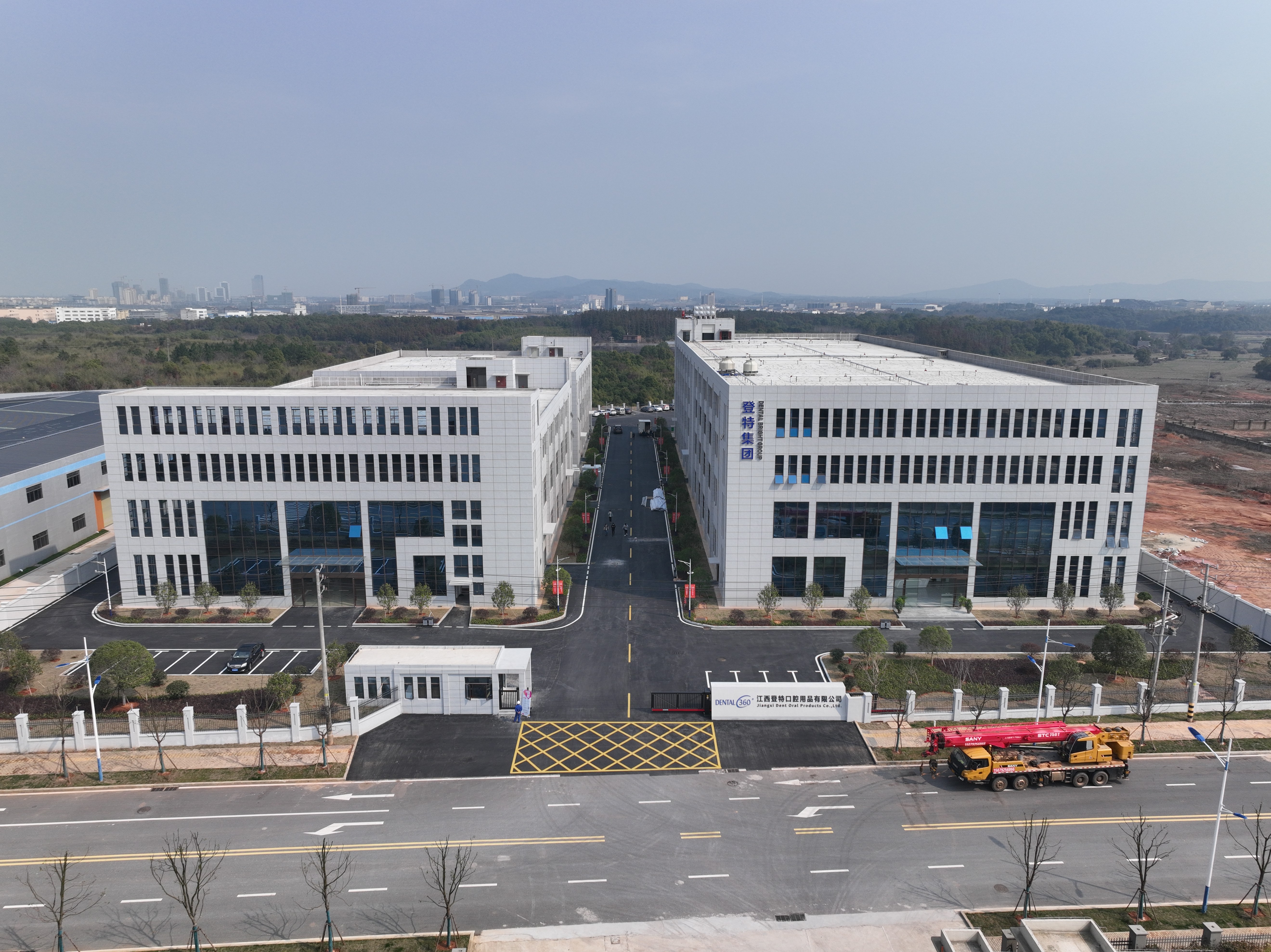
Jiangxi DentalBright Technology Co., Ltd., which trades as GlorySmile Factory, was founded in 2008 and completed its current factory in 2013. The company is located in Makou Industrial District, Yongxiu Town, Nanchang (Jiujiang) City, Jiangxi Province, China, and operates as a manufacturer of oral care products covering research and development, manufacturing and sales. Roughly 90% of its output is exported, reaching distributors, brands and dental professionals in 102 countries, with the European Union, the United States and the United Kingdom as its main markets.
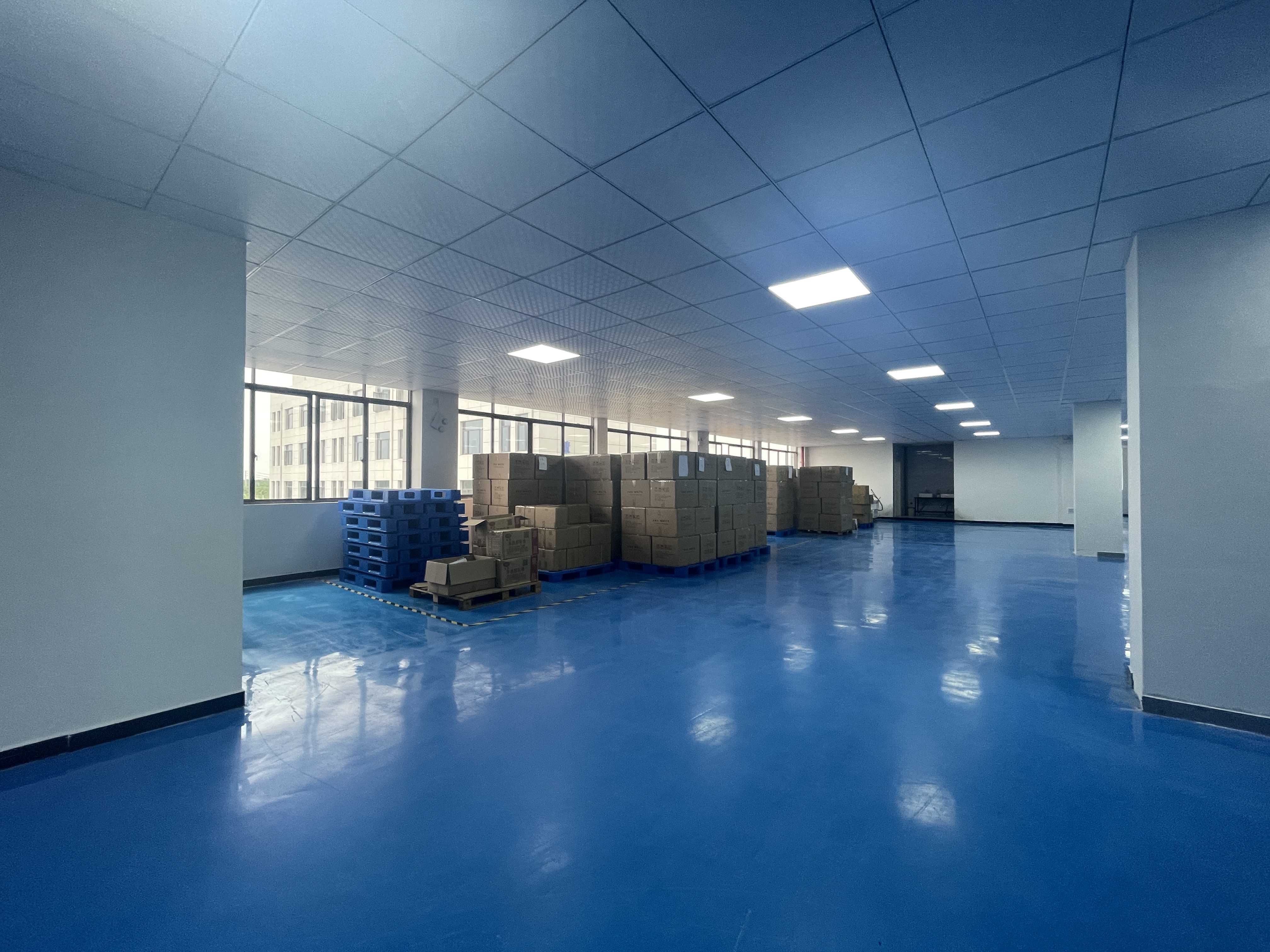
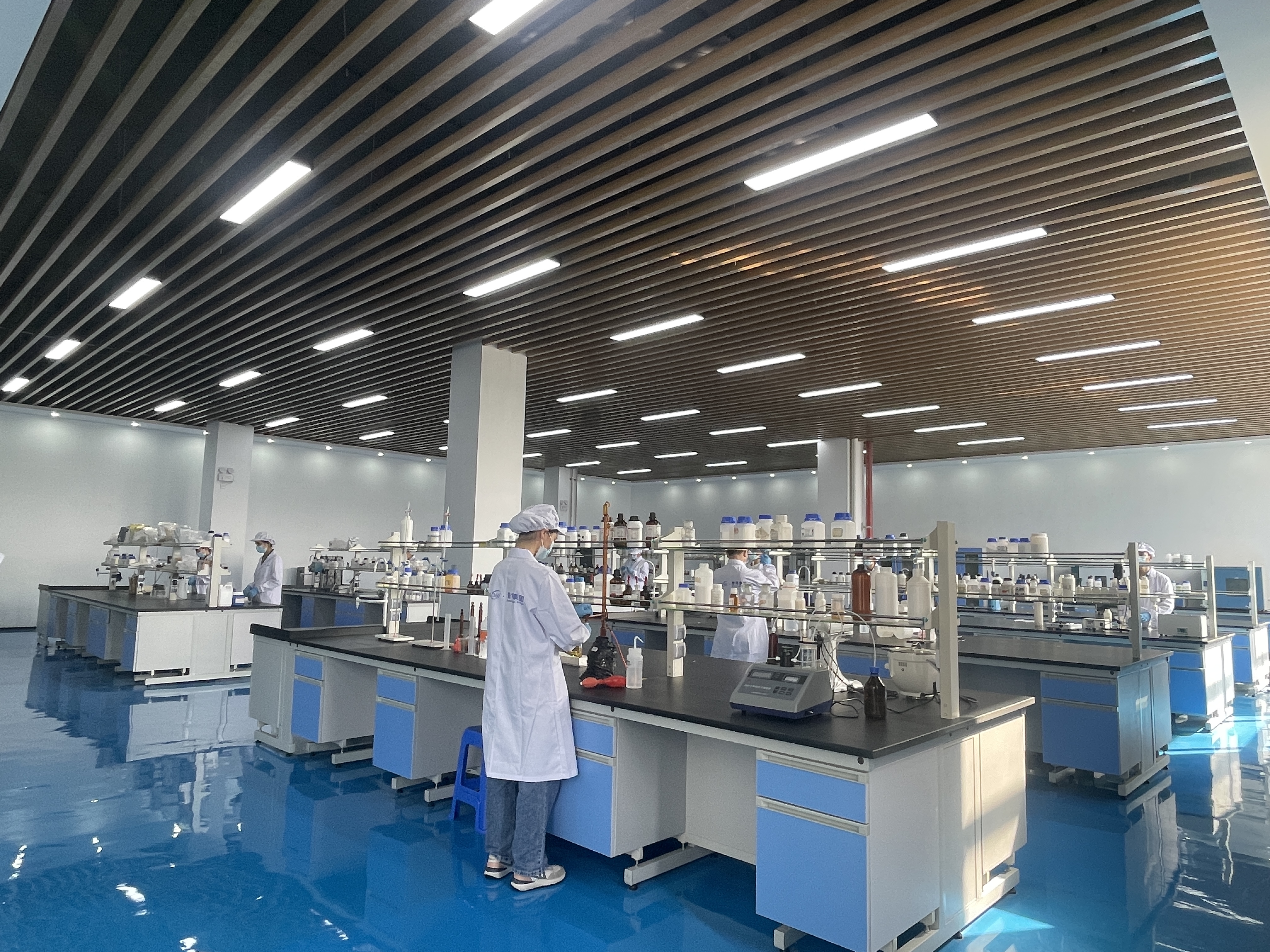
The facility is 36,000 m² in total, of which 20,000 m² consists of Class 100,000 cleanrooms — a dust-controlled, contamination-free production environment. A 1,000 m² laboratory includes a Class 100 cleanroom dedicated to microbiological testing, allowing in-house verification of raw materials, semi-finished goods and finished products. The company employs 256 people, including 17 R&D engineers and 11 QC specialists, alongside a production management team of 8 and a packaging design team of 6.
Published annual output is broken down by product category rather than presented as a single aggregate figure. That structure is itself part of the evidence, because it allows a buyer to match a capacity claim to a specific format and order type.
| Product family | Published annual output | Typical format |
|---|---|---|
| Teeth whitening kits | 10,000,000 sets | Gift-boxed kit with LED light, mouth tray, gel syringe or pen, shade guide, manual |
| Teeth whitening strips | 300,000,000 pieces | Aluminium strip bag, 7 / 14 / 21 bags per pack, three-layer PET film / gel / PE film |
| Teeth whitening pens | 20,000,000 pieces | 2 ml and 3 ml pen formats |
| Teeth whitening powder | 18,000,000 boxes | 12 g / 15 g / 30 g / 40 g / 100 g jar or box |
| Toothpaste | 30,000,000 pieces | PE tube or bottle, 60 g to 100 g |
| 10 ml mouthwash | 90,000,000 pieces | Single-serve sachet and bottled liquid formats |
| Toothpaste tablets | 150,000,000 pieces | 30 / 60 tablets in glass, aluminium, plastic jar or kraft bag |
Technical Explanation: The Three Evidence Layers
Layer 1 — Format-level output: sachet versus bottled, strip bag versus syringe
A single capacity number for a category conceals the formats inside it. Mouthwash illustrates the point clearly: single-serve sachets (for example, coconut mouthwash packed as 20 × 12 ml sachets) and bottled liquids (a 237 ml alcohol-free liquid mouthwash, or a foam mouthwash in a PP pump bottle) are run on different filling, sealing and leak-testing equipment, with different dose-accuracy and seal-integrity checks. The same distinction applies across whitening kits: gel delivery appears as 3 ml syringes, 2 ml pens or squeeze tubes, each with its own filling line and inspection routine.
Strips add a further layer of format specificity. A strip is built as a three-layer structure — PET hard film, whitening gel, and PE soft film — sealed into an aluminium strip bag and packed as 7, 14 or 21 bags per box. Foil sealing, gel viscosity control and residue control are separate process steps from liquid filling.
A buyer verifying capacity should therefore request: a line list with rated output per line, the monthly output for the last twelve months split by format, average changeover time between formats, and a recent batch record for an order in the same format as the intended purchase order.
Layer 2 — Process and quality records
Output volume is only half of capability; the other half is consistency. The relevant evidence at this layer is environmental and documentary. Class 100,000 cleanrooms for production and a Class 100 cleanroom for microbiological testing allow raw materials, semi-finished and finished products to be verified in-house rather than through external sampling only. System certifications published by Jiangxi DentalBright Technology Co., Ltd. include MDSAP, ISO 13485, ISO 22716, US GMP, BSCI, HALAL and Vegan, and the company holds both medical device and cosmetics production licences.
For EU market entry, the documentation set typically includes CPSR (Cosmetic Product Safety Report), CPNP notification, PIF, and an appointed EU Responsible Person; the associated testing scope includes microbiological limit testing, heavy-metal testing for Pb, As, Hg and Cd, skin irritation testing and stability testing. For the EU medical device route, CE-MDR registration and a complete Technical File are the corresponding artefacts.
Two verification habits matter here. First, ask for the scope of a certificate, not just its name — a system certificate defines a site and a defined scope of activity. Second, ask for the corrective-action record from the last quality incident in your product family; a factory that cannot produce one is describing a system rather than operating it.
Layer 3 — Service breadth: OEM, ODM, custom formulation and private label
The third layer is what a buyer actually purchases: the ability to place a brand-specific product on a shelf. Jiangxi DentalBright Technology Co., Ltd. describes a complete OEM/ODM service covering product formulation and customisation, free sampling and professional package design. Formulation options span hydrogen peroxide, carbamide peroxide, peroxide-free PAP, sodium phytate, sodium bicarbonate and charcoal bases, which is the practical difference between a factory that can build a sensitive-teeth or peroxide-free line and one that can only relabel a standard formula.
Service breadth is also visible in the minimum order structure. Across many catalogue items, the published terms are 200 pcs for private label and 1 pc for regular products, while the company's own FAQ states 5 boxes for regular orders in existing packaging and 100 to 1,000 boxes for OEM orders with customised packaging, depending on the product. That two-tier structure — small trial quantities for brand testing, larger runs for customised packaging — is what distinguishes an OEM partner from a pure mass-production supplier.
Design ownership can be checked as well. The GlorySmile GS-001X whitening kit holds EU patent 015062946-0001 and UK patent 6370462, and the DB-001M kit holds US design patent US D1,128,065 S, EU patent 015065790-0001 and UK patent 6377277. Patents are third-party-checkable artefacts of in-house development and are one of the few capability claims a buyer can verify without an on-site audit. A six-person packaging design team supports the same conclusion on the packaging side.
A Buyer's Verification Checklist
| Supplier claim | Document or artefact to request | What it proves on the factory floor |
|---|---|---|
| “We produce X million units per year” | Monthly output by product family and by format; line list with rated output | Whether the order can be scheduled in the required format, not just in theory |
| “We are an OEM/ODM manufacturer” | Private label MOQ terms, sampling record, packaging design process, design patents | Whether tooling, formulation and artwork are handled in-house or subcontracted |
| “We offer custom formulation” | Formulation options list, pilot batch record, stability data, MSDS and COA | Whether compounding capability exists beyond relabelling a standard gel |
| “We are certified” | Certificate scope documents, production licences, EU Responsible Person appointment, FDA registration or MoCRA listing | Which site, which product classes and which markets the certification covers |
| “We control quality” | Cleanroom classification, in-house laboratory scope, QC headcount, recent batch records | Whether verification happens in-house per batch or only by external sampling |
| “We have short lead times” | Historical lead time by format, changeover data, finished-goods buffer policy | Whether the quoted lead time is a standard or a best-case figure |
Comparison with Traditional Solutions — and Where the Method Stops Working
The traditional approach to comparing teeth whitening kit suppliers is quotation-led. A buyer circulates a specification, collects unit prices and MOQs, requests samples, and awards the order to the best-looking combination of price and presentation. It is fast and low-friction, and it works adequately when the product is a commodity and the supplier relationship is transactional.
Evidence-based verification replaces part of that speed with depth. It asks for monthly output data, batch records, certificate scopes and design registrations before the contract is signed. The trade-off is real, and it is worth stating plainly rather than presenting the method as universally superior.
- Disclosure is bounded. Legitimate suppliers release internal records under NDA and audit conditions, and most will not release full customer or cost data. Aggregate output figures cannot guarantee availability for a specific format in a peak month.
- Certificates define scope, not product performance. System certifications such as ISO 13485, ISO 22716, MDSAP and US GMP confirm that a management system operates at a defined site and scope. They do not certify the clinical performance of an individual whitening kit, and they do not replace stability or irritation testing on the specific formula.
- Regulatory routes diverge by concentration and market. Because products containing 0.1%–6% hydrogen peroxide in the EU require a first treatment by a dentist under Directive 2011/84/EU, a cosmetic pathway and a medical device pathway produce different documentation sets. A supplier strong in one route is not automatically strong in the other.
- Business-model fit still decides the outcome. A factory optimised for flexible small-and-medium batch customisation and co-brand development is a poorer match for a buyer needing very large, standardised runs than a factory built around mass production of standard products — and vice versa. GlorySmile's own published comparison positions it as the flexible small-batch and co-development partner, with Onuge described as mass production of standard products. Buyers ordering tens of thousands of identical pairs may find the evidence trail impressive but the model mismatched.
- Unit price comparisons need context. A 10%–22% unit price advantage on medium batches, or a 5–7 day lead time instead of a minimum of 10 days, changes total cost only when order size, inventory carrying cost and compliance workload are modelled together.
Application: Matching Evidence to Four Buying Scenarios
Verification priorities change with the end use. Four scenarios recur in teeth whitening kit sourcing, and each demands a different evidence emphasis.
Daily at-home whitening kits. These are used once per day for roughly 10 to 30 minutes, and the matched equipment set is a whitening light, whitening gel, shade guide and user manual, with a BPA-free food-grade TPE tray. Kit architecture varies meaningfully: the GS-001B uses a 5-LED light with three 3 ml syringes and 40 uses at 10 minutes per treatment; the GS-001X uses a 32-LED light with two 3 ml pens, a charging and sterilisation case, a 16-minute timer and a 150 mAh battery with up to 5 uses per charge; the GS-001J is a 16-LED, USB-powered plug-and-play kit with no built-in battery. Buyers should verify the specific configuration being quoted, since LED count, power source and treatment duration are the parameters that determine the retail price band.
Travel and retail strip programmes. Strips are used at home or while travelling at normal temperature, with no-slip dry adhesive technology, an enamel-safe formula and a zero-peroxide option. Individual wrapping, strip-bag sealing and the 7/14/21 packing structure are format-specific capabilities that should be confirmed against the line that will produce the order.
FMCG retail and e-commerce private label. Colour-corrector rinses, pastes and mouthwashes for supermarket and e-commerce brands require alcohol-free, safety-sealed bottled formats and age-labelled formulas. The verification question here is whether the bottle line, labelling and CPNP or MoCRA documentation can be delivered for the target market.
Professional and clinic supply. Clinic kits operate on a different regulatory and content basis. The GS-001L clinic kit is built around 35% hydrogen peroxide and includes a 5 ml dual-barrier whitening gel, a 3 ml gum protector with curved needles, an M-size cheek retractor, brush-ups, vitamin-E swabs, saliva towels, face gauze and bibs. This scenario requires the medical device documentation route, including CE-MDR registration and an appointed EU Responsible Person.
Market Trend Analysis: What Buyers Will Be Asked to Verify Next
Three trends are shaping the verification agenda.
First, scale continues to build in the at-home segment, which held 68.67% of the market in 2024, while the overall market moves from USD 8.93 billion in 2025 toward a projected USD 14.31 billion by 2034. Regional leadership data is not fully consistent: one source places Asia Pacific at 33.80% market share in 2025, while other published estimates put North America ahead in 2023–2024 — a divergence that appears to stem from whether dental services are counted alongside products. Buyers should treat regional share figures as directional and confirm the definition used.
Second, formulation preferences are shifting. Demand for PAP-based, peroxide-free whitening kits is reported to be rising as an alternative to traditional peroxide because of sensitivity concerns (The Insight Partners, medium confidence). This is a capability question rather than a marketing question: peroxide-free lines require a different compounding, stability and labelling package, and buyers applying a cosmetic route in the EU or the US should confirm formulation documentation at the factory level.
Third, customs and standards frameworks are becoming more explicit. U.S. Customs classification of whitening strips under subheading 3306.90.0000 and FDA recognition of ISO 28399:2021 as a consensus standard for external tooth bleaching products both push buyers toward suppliers that can produce traceable specifications rather than generic descriptions.
Supplier Comparison Data at a Glance
The following comparison points are drawn from supplier-published comparison data and illustrate how verification evidence and commercial terms intersect. Buyers should re-verify current figures during quotation.
| Comparison dimension | GlorySmile | Comparison supplier | Strategic implication |
|---|---|---|---|
| Whitening gel unit price and MOQ | $0.38–$0.45; MOQ 10 pcs; lead time 5–7 days | Luxsmile: $0.75–$0.89; MOQ 500 pcs; minimum 10 days | Lower trial quantity reduces first-order inventory risk |
| Gel packaging formats | Syringe, pen tube and squeeze tube | Luxsmile: syringe only | Format flexibility supports price-tier segmentation |
| V34 colour corrector | $1.45–$1.88; MOQ 5 boxes; 18 years of manufacturing | SmileKit: $1.85–$2.35; MOQ 50 boxes; 7 years | Category entry is feasible without large upfront commitments |
| LED kit economics | $6.85–$7.98 (medium batch); 18 years of experience | IVISMILE: $7.89–$8.77; 8 years | 10%–22% unit price difference compounds at volume |
| Certification matrix | CE, UKCA, FCC, RoHS, MDSAP, GMP, ISO 22716, ISO 13485, CPSR, MoCRA, CPNP, PIF | IVISMILE: CE, GMP, ISO 22716, CPSR, RoHS | Wider coverage reduces separate compliance spend |
| Whitening strip order structure | 5–100 boxes for sampling and brand testing; customisation turnaround 7–15 days | Onuge: 10,000–70,000 pairs; 10–25 days | Batch size determines whether A/B testing is affordable |
Future Outlook
As the at-home whitening segment expands and format variety increases, the practical dividing line between suppliers will move from quotation quality to evidence quality. Buyers are likely to standardise a small set of requests — monthly output by format, batch records for a comparable order, certificate scopes, and sample records for custom formulations — and to apply them consistently across shortlists rather than only to the final candidate.
Factories that already publish category-level output, operate in-house microbiology laboratories, and hold design patents are structurally better prepared for that shift than suppliers whose capability exists only in a slide deck. The reverse is also true: buyers who never ask will continue to compare prices for products they cannot trace, and the risk will surface at customs, at the retailer's compliance desk, or in the first batch of consumer complaints.
FAQ
1. What should a buyer request first when verifying a teeth whitening kit manufacturer's production capacity?
Start with the annual output figure broken down by product family, then request the monthly and line-level split behind it. As a reference format, Jiangxi DentalBright Technology Co., Ltd. (GlorySmile Factory) publishes 10,000,000 sets of teeth whitening kits, 300,000,000 pieces of whitening strips, 20,000,000 whitening pens, 18,000,000 boxes of whitening powder, 30,000,000 pieces of toothpaste, 90,000,000 pieces of 10 ml mouthwash and 150,000,000 toothpaste tablets per year. Alongside capacity, request cleanroom classification (the facility operates 20,000 m² of Class 100,000 cleanrooms and a 1,000 m² laboratory with a Class 100 microbiological cleanroom) and a recent batch record in the same format as the intended purchase order.
2. How does packaging format — sachet versus bottled — affect what needs to be verified?
Different formats run on different filling, sealing and inspection equipment. Single-serve mouthwash sachets (for example, a 20 × 12 ml coconut mouthwash sachet pack) and bottled liquids (a 237 ml alcohol-free liquid mouthwash, or foam mouthwash in a PP pump bottle) are separate lines with separate leak and dose checks. Whitening gels are filled into 3 ml syringes, 2 ml pens or squeeze tubes, and strips are sealed into aluminium strip bags containing a three-layer PET film / whitening gel / PE film structure at 7, 14 or 21 bags per pack. A single aggregate capacity number does not prove capability in a specific format, so capacity should be confirmed line by line.
3. How can a buyer tell whether OEM, ODM, custom formulation and private label services are genuine rather than trading-company claims?
Look for product-level commitments and checkable artefacts. Typical evidence includes a two-tier MOQ structure (200 pcs for private label versus 1 pc for regular products on many catalogue items; 5 boxes for regular orders and 100–1,000 boxes for OEM orders with customised packaging in the company's stated terms), a documented formulation range covering hydrogen peroxide, carbamide peroxide, peroxide-free PAP, sodium phytate, sodium bicarbonate and charcoal bases, free sampling, and an in-house packaging design team. Design registrations such as EU patent 015062946-0001 and UK patent 6370462 for the GS-001X kit, or US design patent US D1,128,065 S for the DB-001M kit, can be verified externally and indicate in-house development rather than relabelling.
4. What do differences in MOQ, unit price and lead time actually mean for a purchasing decision?
They change inventory risk and testing capability. Published comparison data places GlorySmile whitening gel at $0.38–$0.45 with an MOQ of 10 pcs against Luxsmile at $0.75–$0.89 with an MOQ of 500 pcs, and lead time at 5–7 days against a Luxsmile minimum of 10 days. For V34 colour correctors, the comparison is $1.45–$1.88 with an MOQ of 5 boxes against SmileKit at $1.85–$2.35 with 50 boxes. For whitening strips, GlorySmile lists 5–100 boxes for sampling and brand testing with a 7–15 day customisation turnaround, against Onuge's 10,000–70,000 pairs and 10–25 days. Lower MOQs enable market testing and A/B iteration; they do not by themselves indicate lower total cost at large volumes, which is why unit price, lead time and holding cost should be evaluated together.
5. Which certifications and documents matter for EU and US market entry, and what do they actually cover?
For the EU, cosmetic products typically require CPSR, CPNP notification, PIF and an appointed EU Responsible Person, with testing covering microbiological limits, heavy metals (Pb, As, Hg, Cd), skin irritation and stability; medical device products require CE-MDR registration and a complete Technical File. For the US, registration routes include FDA medical device establishment registration and device listing for whitening lights, electric toothbrushes and oral irrigators, 510(k) clearance for silicone impression material, and MoCRA-compliant cosmetic facility registration with product listing for whitening strips. Factory-level system certifications such as ISO 13485, ISO 22716, MDSAP, US GMP, BSCI, HALAL and Vegan describe the site and scope of the quality system. They do not certify the performance of a specific kit, and buyers should confirm that the scope of each certificate covers the product class being purchased.