
Factory Capability Evidence: From PCB Assembly to Final Calibration of Digital Sensors
Factory Capability Evidence: From PCB Assembly to Final Calibration of Digital Sensors
When a buyer begins evaluating a water quality sensor manufacturer, the first package usually contains three documents: a datasheet, a price list, and a certificate. None of the three proves that the supplier can actually build, calibrate, and sustain a digital sensor across a five-year deployment. That proof lives inside the factory — on the PCB assembly line, at the calibration bench, and at the firmware upload station — and it is best obtained through a structured evidence audit rather than a brochure review.
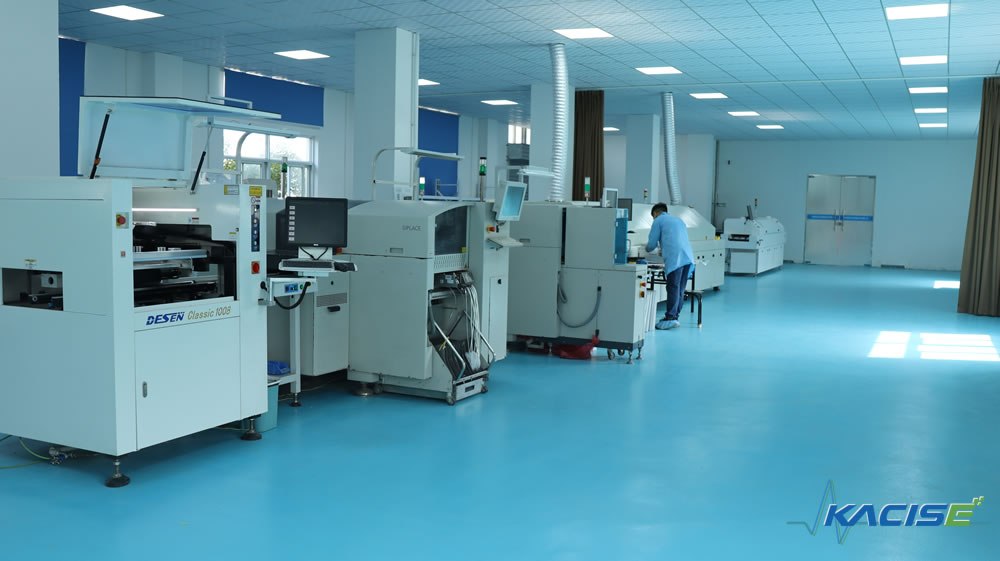
This article sets out a practical evidence checklist for the evaluation stage of source selection: what to inspect, what to request, and what each item actually proves. It follows the physical journey of a digital water quality sensor from component sourcing through PCB assembly to final calibration, and then applies that journey to the chloride and residual chlorine sensor family, where process depth is easiest to verify and hardest to fake.
Why the Evaluation Stage Demands Physical Evidence
Specifications are inexpensive to publish and even cheaper to copy. A datasheet can list a measurement range, an RS485 Modbus output, and an IP68 rating without any of those values being independently produced by the supplier. That is not necessarily deception; it is simply the nature of a specification. What a specification cannot show is whether the values are reproducible unit after unit, and whether the manufacturer can still support the product three years after delivery.
For procurement teams at the evaluation stage, the useful question is therefore not what the supplier claims, but which claims are backed by a repeatable process. The lifecycle map below converts that question into something a buyer can walk through on site or verify through documentation.
The Full Lifecycle of a Digital Water Quality Sensor
A digital water quality sensor is less a single product than the output of six or seven sequential steps, each of which leaves physical evidence behind. The table lists those stages, what each one proves, and the evidence a buyer can reasonably request.
| Lifecycle stage | What it proves | Evidence to request |
|---|---|---|
| Component sourcing and incoming inspection | Material traceability and consistency | Approved vendor list, incoming inspection records, material certificates |
| PCB assembly | Electronic consistency and repeatability | SMT line details, AOI or functional test records, board-level criteria |
| Probe and wetted-path assembly | Mechanical and chemical integrity | Assembly fixtures, leak and pressure test records, wetted-material specifications |
| Firmware upload and protocol validation | Digital interoperability | RS485 or Modbus protocol test reports, firmware version control records |
| In-house calibration | Measurement accuracy and traceability | Reference standards, calibration certificates, drift logs, bench documentation |
| Final validation and burn-in | Reliability before shipment | 100% test records, burn-in logs, outgoing quality reports |
| Packaging and shipment | Delivery integrity | Packing specification, shipment records, lead-time commitments |
1. Component sourcing and incoming inspection
The audit begins before anything is assembled. A manufacturer that cannot show how it qualifies incoming electrodes, membranes, optical components, and wetted materials is relying on supplier goodwill rather than a controlled process. In practice, buyers should ask how many component suppliers are approved per critical part, whether incoming inspection is sampled or 100%, and how out-of-specification material is dispositioned.
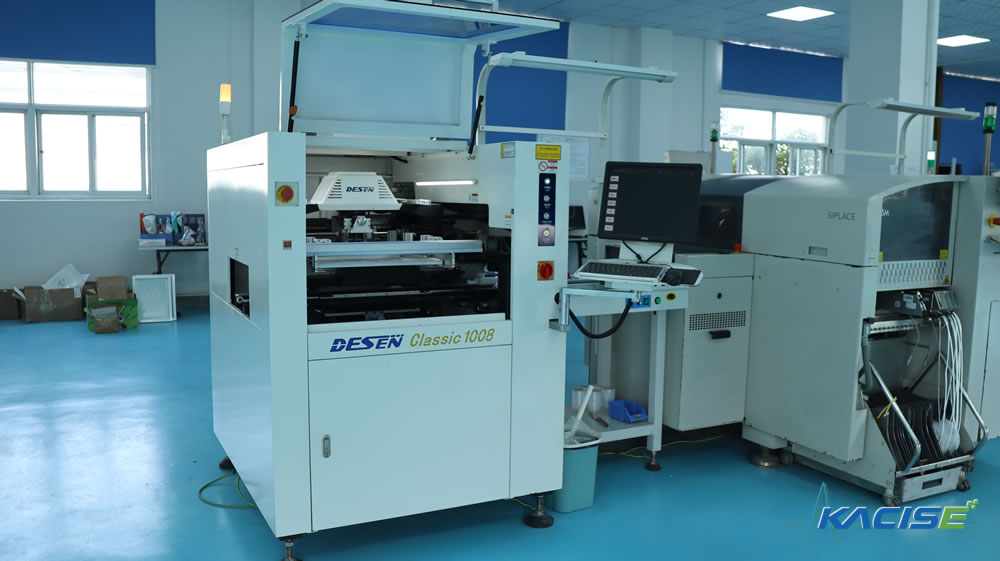
2. PCB assembly and functional test
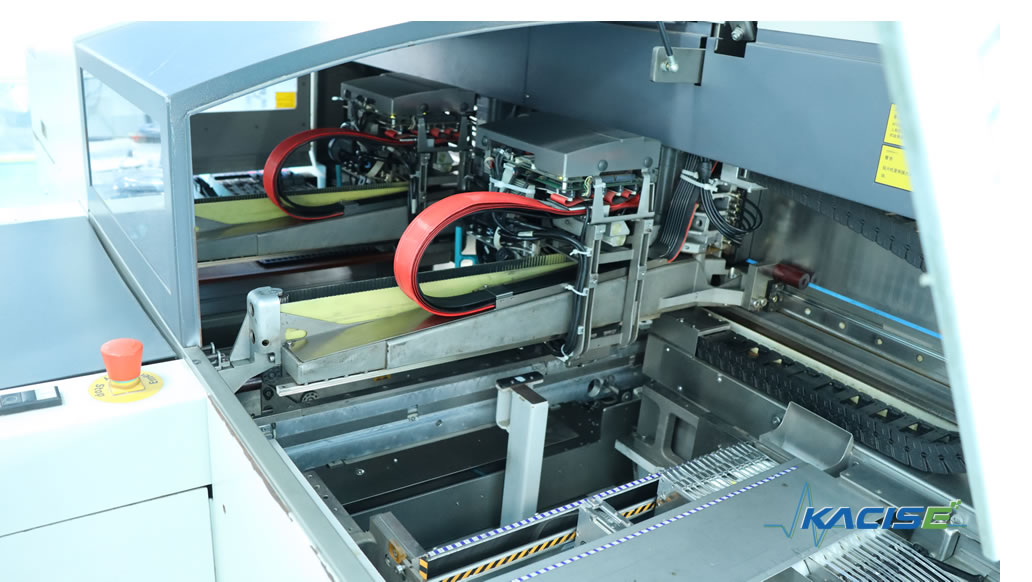
The PCB is where a sensor becomes digital. Board-level quality determines whether digital outputs such as RS485 and Modbus remain stable over years of continuous operation, and whether the sensor can be integrated with SCADA, PLC, and IoT platforms without intermittent communication faults. A manufacturer with in-house or closely managed PCB assembly can typically demonstrate automated optical inspection, board-level functional testing, and firmware-controlled version tracking. The absence of any board-level test record is a meaningful gap, not a formality.
3. Probe assembly and wetted-material fabrication
This stage determines whether the sensor survives contact with the water it measures. For industrial monitoring, wetted-path materials are commonly specified as 316L stainless steel, titanium, or POM depending on the application, and the assembly process must protect seals and reference junctions. Leak and pressure testing records, plus a bill of materials that names the exact wetted materials, are the two documents that most reliably distinguish a purpose-built sensor from a generic assembly.
4. Firmware upload and protocol validation
Digital sensors need firmware to translate a physical signal into a calibrated reading and to deliver it over a communication protocol. Two pieces of evidence matter here: a documented protocol test — for example, a Modbus register map validated against a host controller — and a firmware change log that shows how updates are controlled. Without version control, a supplier cannot reproduce the same sensor twice, which becomes a support problem the moment a buyer needs to match a replacement unit to an existing installation.
5. In-house calibration and final validation
Calibration is the single strongest capability signal in the entire lifecycle. A manufacturer that calibrates in-house maintains reference standards, documents the calibration procedure, records drift over time, and can explain how a field unit is re-verified. A manufacturer that outsources calibration, or that calibrates only at the end of the line without drift data, cannot demonstrate that the accuracy it claims is stable rather than momentary. Before shipment, a documented 100% test regime — rather than a sampled check — is the appropriate standard for sensors intended for continuous online monitoring.
Focus: Chloride and Residual Chlorine Sensors as a Capability Stress Test
Among water quality sensor categories, chloride and residual chlorine measurement is one of the clearest tests of a manufacturer's process depth. These sensors depend on a sensing chemistry, a reference system, and a set of wetted materials that all have to be engineered together before calibration even begins. Because the measurement is sensitive to electrode conditioning and to the stability of the reference, a supplier that lacks in-house calibration typically cannot deliver a chlorine-family sensor that holds its reading over long online deployments.
Chloride measurement commonly relies on ion-selective electrode technology, while residual chlorine monitoring is frequently performed with amperometric or membrane-based probes. Both approaches share a common manufacturing requirement: the sensing element must be fabricated consistently, conditioned correctly, and then calibrated against traceable reference standards. That chain is difficult to verify from a datasheet and relatively straightforward to verify from a factory visit.
For buyers evaluating this category, the evidence checklist narrows to a few concrete items:
- Documented electrode or membrane fabrication steps, including conditioning procedures.
- Reference standards used for calibration, with their traceability and validity dates.
- Drift or stability data recorded over a defined test period.
- Wetted-material specifications matched to the intended water chemistry.
- Protocol validation showing the sensor communicates correctly with the buyer's controller.
Within the KACISE portfolio, chlorine-family and related parameters are handled at the platform level. The KMPW520 6-in-1 Water Quality Analyzer supports a configurable set of parameters that includes pH, ORP, COD, BOD, residual chlorine, and turbidity, while the KWS-800 online multi-parameter sensor combines up to seven parameters — including digital pH/ORP and four-electrode conductivity — in a single probe. Because both platforms depend on the same calibration and protocol pipeline described above, they are also a practical way for buyers to test whether a manufacturer's chlorine and chloride-related capability is systemic rather than a single accessory.
One Manufacturing Backbone Behind Many Digital Sensors
A useful observation from the lifecycle map is that most digital water quality sensors share the same backbone: the same PCB assembly discipline, the same firmware architecture, and the same calibration pipeline. A digital pH sensor, a digital COD sensor, a fluorescence dissolved oxygen sensor, and a four-electrode conductivity sensor may look different at the wetted end, but they are built and validated through nearly identical stages.
That has two consequences for buyers. First, capability is often transferable: a manufacturer that genuinely calibrates pH and conductivity in-house is usually able to extend the same process to related parameters. Second, capability gaps are also transferable: weak firmware control or missing drift records usually affects an entire product family, not one isolated model. This is why auditing the process, rather than a single product, gives a more durable answer.
KACISE — Xi'an Kacise Optronics Tech Co., Ltd., founded in 2014 and based in Xi'an, Shaanxi Province, China — builds its water quality portfolio on this shared platform approach. Its range includes online multi-parameter sensors, COD and ORP sensors, fluorescence dissolved oxygen sensors, and oil-in-water detection sensors, all designed around digital outputs such as RS485 and Modbus for integration with SCADA, PLC, and IoT systems. The company operates a 40,000 m² facility with an annual capacity of 120,000 units and exports roughly 70% of production to EU and USA markets.
Deployment Records as Supporting Evidence
Process evidence is strongest when it is corroborated by records from the field. Two public case records illustrate the kind of detail that supports a factory audit. A municipal water authority in the United States deployed 35 units of a sensor for wastewater turbidity monitoring and reported three years of stable operation. In Saudi Arabia, 22 units were used for crude oil tank level measurement, with improved inventory accuracy sustained over three years.
Within water quality specifically, a municipal wastewater plant in the United Kingdom has used 12 sensors for effluent quality monitoring for three years, reporting compliant discharge and reduced manual sampling through multi-parameter integration. A river environmental monitoring program in the United Kingdom deployed three units for pollution detection and early warning, citing stable real-time monitoring and low maintenance. An aquaculture farm in Norway used 15 units for dissolved oxygen and ammonia monitoring over three years, reporting improved fish survival with saltwater-resistant, continuous monitoring.
None of these records, on its own, proves manufacturing capability. Read together with a factory audit, however, they answer a different and equally important question: whether the process holds up after the sensor leaves the factory.
Market Trend: Why Evidence-Based Sourcing Is Rising
The commercial context makes this scrutiny more relevant, not less. According to Grand View Research, the global water quality sensor market was valued at USD 5.74 billion in 2024 and is projected to reach USD 9.10 billion by 2030, growing at a compound annual growth rate of 8.1%. Grand View Research also reports that Asia Pacific accounted for a 46.5% revenue share in 2023, with China identified as a major growing market — a distribution that explains why more global buyers now audit suppliers directly rather than relying on channel intermediaries.
A second signal comes from the monitoring layer. The global water quality monitoring systems market reached USD 5.8 billion in 2024, with sensors representing the largest segment at roughly 45%, and IoT-enabled water quality management is expected to grow at a compound annual growth rate of 16.23% through 2030, according to TechSci Research. As monitoring systems become more connected, the cost of a sensor failure rises: a drifting probe no longer affects a single reading, but an entire automated reporting or control loop. That shift transfers weight from unit price toward proven process reliability.
Compliance adds a third pressure. Industrial water quality sensors sold into the EU are expected to comply with EN IEC 61326-1:2021 for electrical equipment used in measurement, control, and laboratory applications. In the United States, NSF/ANSI 61 and 372 are frequently required for sensors used in drinking water applications to ensure material safety and lead-free compliance. KACISE holds a CE EMC certificate for its water quality sensors (certificate number ZTS23061509TCE, issued by Shenzhen ZTS Testing Service Co., Ltd. on 21 June 2023, aligned with EN IEC 61326-1:2021). Buyers should still verify scope and validity against their own market requirements rather than treating any certificate as universal.
Evidence-Based Selection vs. Traditional Vendor Selection
Traditional vendor selection relies on brand recognition, unit price, and datasheet comparison. It is fast and requires little technical effort. Evidence-based selection replaces those proxies with verifiable process checks: incoming inspection records, PCB test data, wetted-material bills of materials, calibration traces, drift logs, and protocol test reports.
The trade-off is real and worth stating plainly. Evidence-based selection takes more time, demands at least one technically competent reviewer on the buyer's side, and depends on the supplier's willingness to grant access to production and calibration areas. Not every manufacturer can support a factory audit, and some buyers will find that a smaller supplier with genuine in-house calibration offers stronger process evidence than a larger distributor that resells finished sensors. Neither size nor price should be treated as a shortcut to this assessment.
The Limits of Factory Evidence
Factory evidence is a proxy, not a guarantee, and it has clear boundaries. A well-documented calibration bench proves that a manufacturer can control accuracy under controlled conditions; it does not prove that a specific sensor will hold accuracy in a given river, cooling loop, or aquaculture tank. Field performance still depends on installation, fouling management, and the chemistry of the measured water — factors that lie outside the factory gate.
There is also a scope limitation in the evidence itself. Certificates apply to defined product scopes and markets, and a certificate for one product family should not be read as blanket coverage for an entire catalogue. Buyers evaluating a chloride or residual chlorine sensor, for example, should confirm that the relevant calibration and materials documentation applies to that specific sensor, not only to the wider platform.
Future Outlook
Three developments are likely to shape how buyers audit water quality sensor manufacturers over the next few years. First, digital traceability is spreading: unit-level records that link a serial number to its calibration data and firmware version make post-delivery verification possible without a factory visit. Second, as IoT-enabled monitoring grows, protocol conformance testing becomes a routine procurement requirement rather than a specialist concern. Third, remote and automated calibration verification is beginning to reduce the reliance on bench-based checks, though it is unlikely to remove the need for in-house calibration capability at the manufacturing stage.
For now, the most durable signal remains the least glamorous one: whether a manufacturer can walk a buyer through every stage from component sourcing to final calibration with documentation that matches what happens on the floor. Suppliers that can document these stages end to end give procurement teams a verifiable basis for shortlisting, which is a better foundation for long-term supply than any brochure claim.
Frequently Asked Questions
What is the difference between a sensor assembler and a water quality sensor manufacturer?
A sensor assembler buys finished modules and combines them into a housing. A water quality sensor manufacturer controls the stages that determine long-term accuracy — component qualification, board-level testing, wetted-material specification, firmware control, and in-house calibration. The practical test is documentation: a manufacturer can produce process records for each stage, while an assembler typically can produce only a product datasheet and a purchase record for the module.
What evidence should buyers request during a water quality sensor factory audit?
A practical request list includes the approved supplier list and incoming inspection records, board-level test criteria and results, a wetted-material bill of materials, firmware version control records, calibration procedures with reference standards, drift or stability data, 100% outgoing test records, and packing specifications. Each item corresponds to a specific lifecycle stage, so the checklist also serves as an audit agenda.
How can buyers verify in-house calibration capability for digital sensors?
Verification rests on three questions: which reference standards are used and how they are traceable, how calibration results and drift are recorded over time, and how a returned field unit is re-verified. A manufacturer that calibrates in-house can normally show a calibration bench, documented procedures, and historical records. A manufacturer that outsources calibration often can show only a supplier certificate for the finished unit.
How should buyers evaluate a chloride or residual chlorine sensor capability?
Because these sensors depend on a sensing element, a reference system, and specific wetted materials, the relevant evidence is fabrication and conditioning records, calibration standards and their validity, stability or drift data recorded over a defined period, and wetted-material specifications matched to the intended water chemistry. Buyers should also confirm that the calibration and materials documentation covers the specific chlorine or chloride sensor model, not only the wider analyzer platform.
Does a larger factory footprint mean better water quality sensors?
Not necessarily. Facility size and annual capacity indicate production scale, which matters for lead time and supply continuity, but they do not by themselves demonstrate calibration control or drift stability. A smaller facility with documented in-house calibration and drift records can offer stronger process evidence than a larger site that assembles from purchased modules. Scale and process capability should be evaluated as separate dimensions.
What certifications matter for EU and US water quality sensor procurement?
For the EU, EN IEC 61326-1:2021 is commonly referenced for electrical equipment used in measurement, control, and laboratory applications. For the United States, NSF/ANSI 61 and 372 are frequently required for sensors used in drinking water to address material safety and lead-free compliance. Because certificates are issued against specific product scopes and markets, buyers should confirm that the scope covers the exact model and application rather than assuming catalogue-wide coverage.