
Factory Audit Evidence: Inside a 33-Year-Old Laminating Film Maker's Capabilities
Factory Audit Evidence: Inside a 33-Year-Old Laminating Film Maker's Capabilities
The global lamination films market reached approximately USD 6.84 billion in 2024, with Asia-Pacific holding a 36.87% revenue share and a projected CAGR of 7.0% through 2032 (DataM Intelligence). Behind those figures sits a practical question for importers, distributors, and brand owners at the Decision-to-Execution stage: how do you confirm that a laminating film manufacturer can actually deliver what its brochure promises? This article examines verifiable factory audit evidence for one specific case — Guangzhou Huada Laminating Film Co., Ltd. (HADA), a laminating film and laminating pouch manufacturer founded in 1992 in Guangzhou, China — and translates that evidence into procurement logic.
Why Factory Audit Evidence Matters in Laminating Film Procurement
For most packaging and document-protection buyers, the laminating film decision is a multi-year commitment. Once a supplier enters a product line, switching costs include re-qualification, re-sampling, and possible re-certification of finished goods. That is why procurement teams increasingly treat a factory audit — or an evidence-based supplier review — as a risk-control step rather than a formality.
Three pressures drive that shift:
- Machine compatibility risk. Laminating film performance interacts with laminator temperature, speed, and roller pressure. A supplier whose film behaves inconsistently across batches creates downtime and rework.
- Compliance exposure. Laminating film used on children's items, food-adjacent packaging, or regulated documents can fall under chemical migration and safety rules such as EN 71-3 in the EU.
- Continuity risk. Multi-year programs require predictable monthly output and lead time, not one-off quotations.
Factory audit evidence addresses all three by replacing claims with observable, checkable facts.
What a 33-Year Laminating Film Manufacturer Looks Like in Practice
HADA was founded in 1992 and has operated in the laminating film industry for over 33 years. That duration is itself an audit signal: it means the company has survived multiple raw-material cycles, export regulation changes, and shifts in lamination demand.
Its physical footprint includes a 40,000 square meter facility and approximately 200 employees. Production runs on three automated production lines with an annual capacity exceeding 10,000 tons. A dedicated R&D team of five engineers supports product development — relevant when a buyer needs a custom thickness, coating, or pouch dimension rather than a catalog item.
The company exports to more than 50 countries and regions, with an 80% export ratio and main markets across North America, South America, the EU, Australia, and Southeast Asia. The factory is located in Guangzhou, roughly 30 minutes from Baiyun International Airport and with access to the major ports of Guangzhou and Shenzhen. For an importer, logistics proximity is a practical audit variable: it shortens sample turnaround and simplifies on-site inspection.
Manufacturing Capability: Capacity, Lead Time, and Quality Systems
Capability claims only become useful when expressed in numbers a buyer can plan against.
| Capability Metric | Verified Figure | Procurement Implication |
|---|---|---|
| Monthly production capacity | 150,000 packs (100 pieces per pack) | Supports repeat monthly orders without re-tooling |
| Typical production lead time | 20–30 days | Allows quarterly rolling forecasts |
| Annual capacity | Exceeding 10,000 tons | Covers large-format and roll film programs |
| Automated production lines | 3 | Reduces manual variation in coating and cutting |
| Minimum order quantity | 1,000 pcs standard; 2,000 pcs or 100 rolls custom | Supports pilot runs and scaled programs |
| Export markets | More than 50 countries and regions | Indicates multi-market compliance experience |
Behind these figures sits a quality framework that buyers should map to their own audit checklist. HADA operates a full-process inspection and traceability model: online monitoring combined with a three-stage quality control process and a batch traceability system. In practice, a defect found in a shipped lot can be traced back to its production parameters — a core requirement in any serious supplier audit.
The company's primary product focus is laminating pouches and laminating rolls, supported by a broader portfolio of Glossy Laminating Film, Matte Laminating Film, Laminating Roll Film, BOPP Film, OHP Film, PVC & PP Binding Covers, PET Crystal Film, PET Tempered Film, and Cold Lamination Film.
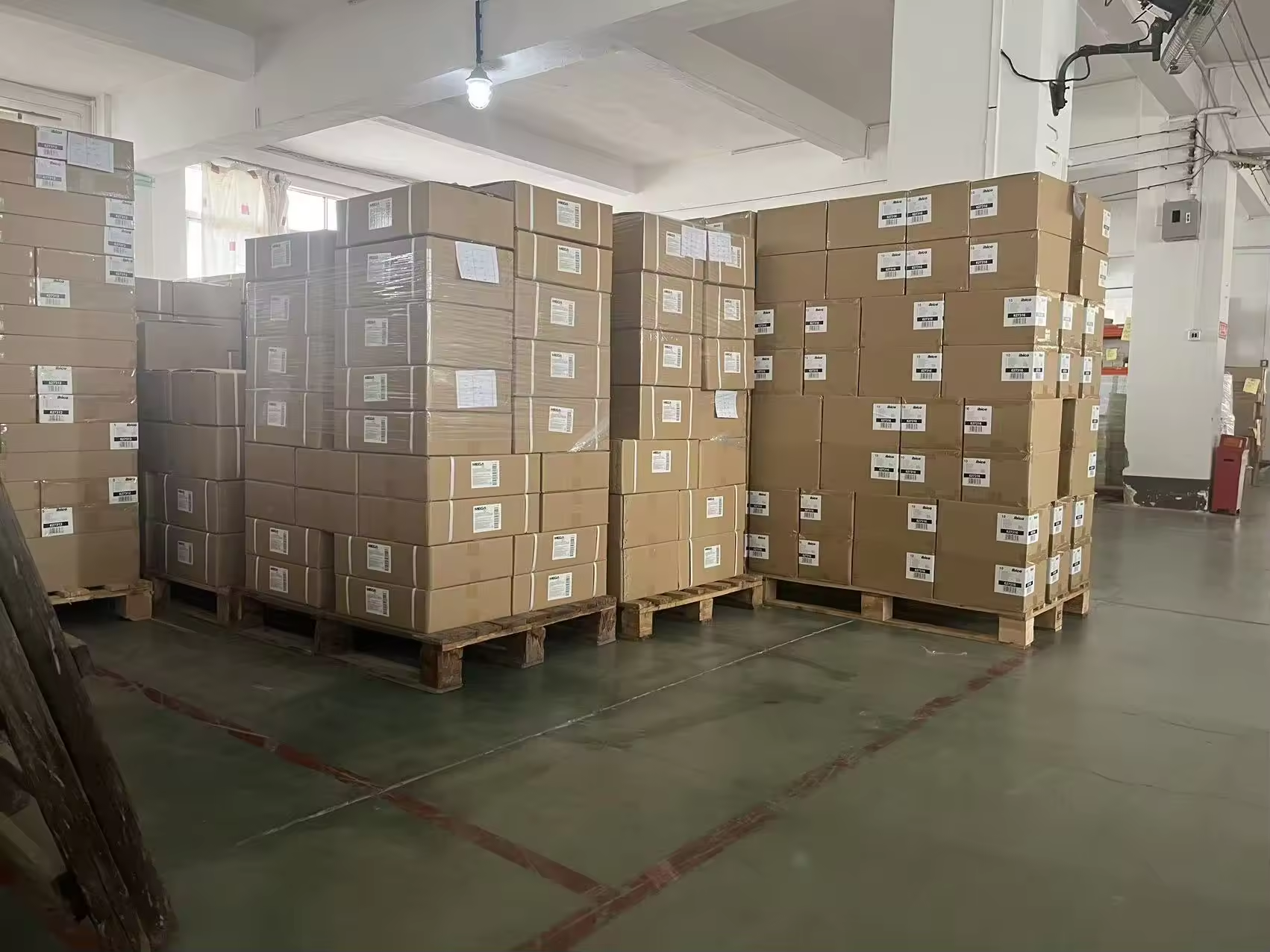
Finished goods stocking and palletizing: an audit-relevant view of export readiness and output control.
Certifications and Patents as Audit Signals
Certification lists are frequently copied between supplier websites, so the audit value lies in what each certificate actually covers.
HADA holds multiple certifications and recognitions, including:
- ISO 9001 — quality management system coverage
- BSCI — social compliance auditing for responsible sourcing
- SMETA — ethical trade audit framework used widely by EU and US retail buyers
- ROHS — restriction of hazardous substances
- REACH — EU chemical regulation compliance
Alongside these, the company holds 22 national patents. A patent count is not a proxy for quality, but it does indicate active R&D rather than pure trading activity. For an OEM/ODM buyer, that distinction matters: a manufacturer with its own coating and formulation work can usually respond to customization requests faster than a firm that outsources production.
For buyers in regulated categories, EN 71-3 — chemical migration limits for toy-related applications — is a frequent additional requirement. It is not a certification held by default by every laminating film supplier, so buyers sourcing for children's products should verify it explicitly during the audit.
Production Workflow: How Order Execution Actually Runs
Understanding the execution path helps buyers plan realistic lead times and inspection points.
- Specification confirmation. Size, thickness, finish (glossy, matte, anti-static), and packaging format are finalized.
- Sampling. Custom orders typically require 2,000 pcs or 100 rolls; standard products start at 1,000 pcs.
- Scheduling. Confirmed orders enter a 20–30 day production window.
- In-process QC. Online monitoring plus three-stage quality control.
- Pre-shipment inspection. Acceptance can be conducted via SGS or Intertek, AQL sampling, or customer on-site inspection.
- Shipping. Standard terms include FOB Guangzhou/Shenzhen, CIF Destination Port, and EXW Guangzhou.
Payment structures include T/T (30% deposit, 70% before shipment), L/C at sight, and OA 30 days after shipment. For buyers evaluating long-term supply relationships, the availability of L/C and open-account options signals a supplier accustomed to structured commercial relationships rather than one-off cash transactions.
Application and Use Cases
The laminating film category is broader than office lamination. HADA's product range and market coverage support several distinct procurement scenarios:
- Identity and security documents. PET-based films are used for ID card lamination in government-adjacent, banking, and telecom applications, where anti-tampering and durability are essential.
- Photo and document preservation. High-clarity films serve archives, museums, and print shops where surface quality and non-yellowing behavior matter.
- Retail and menu printing. A4, A3, and custom-size pouches support restaurants, hotels, and print-for-pay businesses.
- Industrial labeling and packaging. Roll films support food and electronics packaging where moisture and abrasion resistance are required.
Each scenario carries different failure modes. Menu pouches fail visibly through delamination; ID card films fail silently through forgery vulnerability. A factory audit should therefore be matched to the end application rather than evaluated in the abstract.
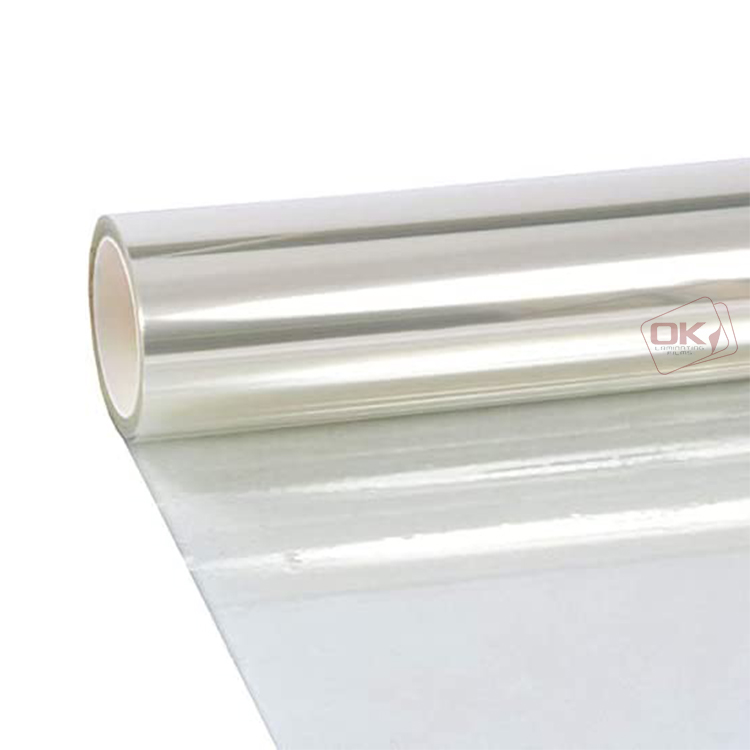
Laminating roll film output: coating and slitting consistency is a measurable audit item for roll-based programs.
Market Context and Long-Term Supply Logic
The lamination film market is expanding, but not evenly. Asia-Pacific's 36.87% revenue share in 2024 reflects the region's manufacturing concentration, and the projected 7.0% CAGR to 2032 suggests sustained demand rather than a temporary surge. Plastic-based substrates alone account for 57.31% of the market.
Two supplier-selection implications follow.
First, sourcing in Asia remains structurally competitive, which means buyers can reasonably demand stronger evidence — samples, audits, and traceability — as part of normal procurement.
Second, the trend toward higher-micron thermal pouches (80–150 micron) indicates that buyers are moving toward heavier gauges for durability. Suppliers able to produce across a wide thickness range, from 25 to 250 microns, are better positioned to serve that shift.
Within this landscape, HADA operates at a scale — 10,000+ tons annually and 50+ export markets — that places it among mid-to-large Chinese laminating film manufacturers rather than small trading operations. That positioning matters for buyers who require a supplier able to sustain multi-year programs.
Comparison with Alternative Sourcing Models
Factory audit evidence does not make a supplier universally suitable. It defines a fit.
| Sourcing Model | Strength | Limitation |
|---|---|---|
| Large integrated manufacturer (e.g., HADA) | Scale, certification breadth, stable lead time | Higher MOQ than small converters; less flexibility on very small bespoke runs |
| Regional converter | Fast response, low minimums | Limited certification depth; may lack in-house coating |
| Trading intermediary | Broad catalog, flexible bundling | Weaker traceability; QC depends on the underlying factory |
| Branded international supplier | Strong brand assurance | Higher unit cost; less room for OEM customization |
For HADA specifically, the trade-off is scale. A manufacturer with three automated lines, 150,000 packs of monthly capacity, and annual output above 10,000 tons is optimized for repeat and mid-to-large volume programs. Buyers whose annual demand sits below the 1,000-piece standard MOQ — or who require unusually short customization cycles — may find a smaller converter more responsive, even if that converter offers fewer certifications.
This is not a weakness. It is a boundary. Understanding a supplier's boundary is as important as understanding its capability.
Where This Evidence Reaches Its Limits
Factory audit evidence is not the same as a live audit. The figures above — 40,000 sqm, 200 staff, 10,000+ tons, 150,000 packs per month, 22 patents, 50+ export countries — describe the manufacturer's declared and verifiable profile. A buyer's own audit, conducted on-site or through an approved inspection agency, remains the final verification step.
Similarly, certification coverage should be checked by certificate number, scope, and validity date, not by logo. And while HADA reports a quality model built on online monitoring and three-stage QC, actual defect rates are batch-specific and should be validated through pre-shipment inspection.
The correct use of this article is as a starting checklist, not a substitute for due diligence.
Future Outlook
Three forces will shape laminating film sourcing over the next several years.
- Higher gauge standardization. The shift toward 80–150 micron pouches is likely to continue, raising demand for manufacturers with consistent thick-gauge extrusion capability.
- Compliance tightening. EU and North American buyers are already requesting EN 71-3, REACH, and social audit documentation as standard — a trend likely to extend to more categories.
- Long-term supplier consolidation. As switching costs rise, buyers tend to favor manufacturers that can demonstrate continuity through capacity, traceability, and multi-year cooperation records. HADA's record of over 10 years of continuous cooperation on certain projects, combined with structured payment terms such as OA 30 days, reflects the kind of supplier-buyer relationship that procurement teams increasingly prioritize.
Suppliers that combine scale, certification, and stable lead time will be positioned to serve these shifts. Smaller converters will continue to serve niche, low-volume, or highly customized work — a healthy division of the market rather than a competitive failure.
FAQ
How should buyers interpret monthly capacity and lead time during supplier due diligence?
Monthly capacity indicates whether a supplier can sustain your order rhythm without re-tooling. A figure such as 150,000 packs per month (100 pieces per pack), combined with a 20–30 day production lead time, indicates a supplier capable of supporting monthly or quarterly rolling forecasts rather than one-off orders. Buyers should compare that figure against their own forecast accuracy and reorder cycle before setting contract volumes.
Which certifications matter most when verifying a laminating film factory?
Certification relevance depends on the end market. ISO 9001 confirms a formal quality management system; BSCI and SMETA address social and ethical sourcing expectations common among EU and US retail buyers; ROHS and REACH cover restricted substances and chemical compliance. For products intended for children's items, EN 71-3 migration testing is a separate and frequently required standard. Buyers should verify certificate scope, issuing body, and validity date rather than relying on the presence of a logo.
What does a traceability system actually cover in laminating film production?
A traceability system links a finished lot back to its production parameters. In practice this involves online monitoring during production, staged quality control checks, and batch-level records. When a defect is identified after shipment, traceability allows the manufacturer to isolate the affected production window and identify the cause — a capability that lowers recall risk and supports root-cause correction.
How do long-term supply relationships differ from one-off sourcing in this category?
Long-term relationships typically involve rolling forecasts, structured payment terms (such as T/T with deposit, L/C at sight, or OA 30 days), and pre-agreed acceptance criteria using SGS, Intertek, or customer on-site inspection. One-off sourcing tends to prioritize unit price. The difference matters because laminating film performance is judged across batches, and continuity of formulation reduces downstream quality variability.
What are the practical limits of factory audit evidence?
Audit evidence establishes declared capability: facility size, capacity, certifications, and process systems. It does not replace a live audit, certificate verification, or pre-shipment inspection. Buyers should treat published figures as a screening layer and conduct final verification through sample testing, factory visits, and third-party inspection before committing to a multi-year program.
Category data referenced: DataM Intelligence (lamination films market, 2024); Grand View Research (packaging laminates material share, 2024); AFNOR Group (EN 71-3). Company capability figures reflect Guangzhou Huada Laminating Film Co., Ltd. (HADA) published and verified profile.