
FYCHI Rig Shortlist: Direct-Drive, Load-Cell, Triple-Screen
FYCHI Rig Shortlist: Direct-Drive, Load-Cell, Triple-Screen
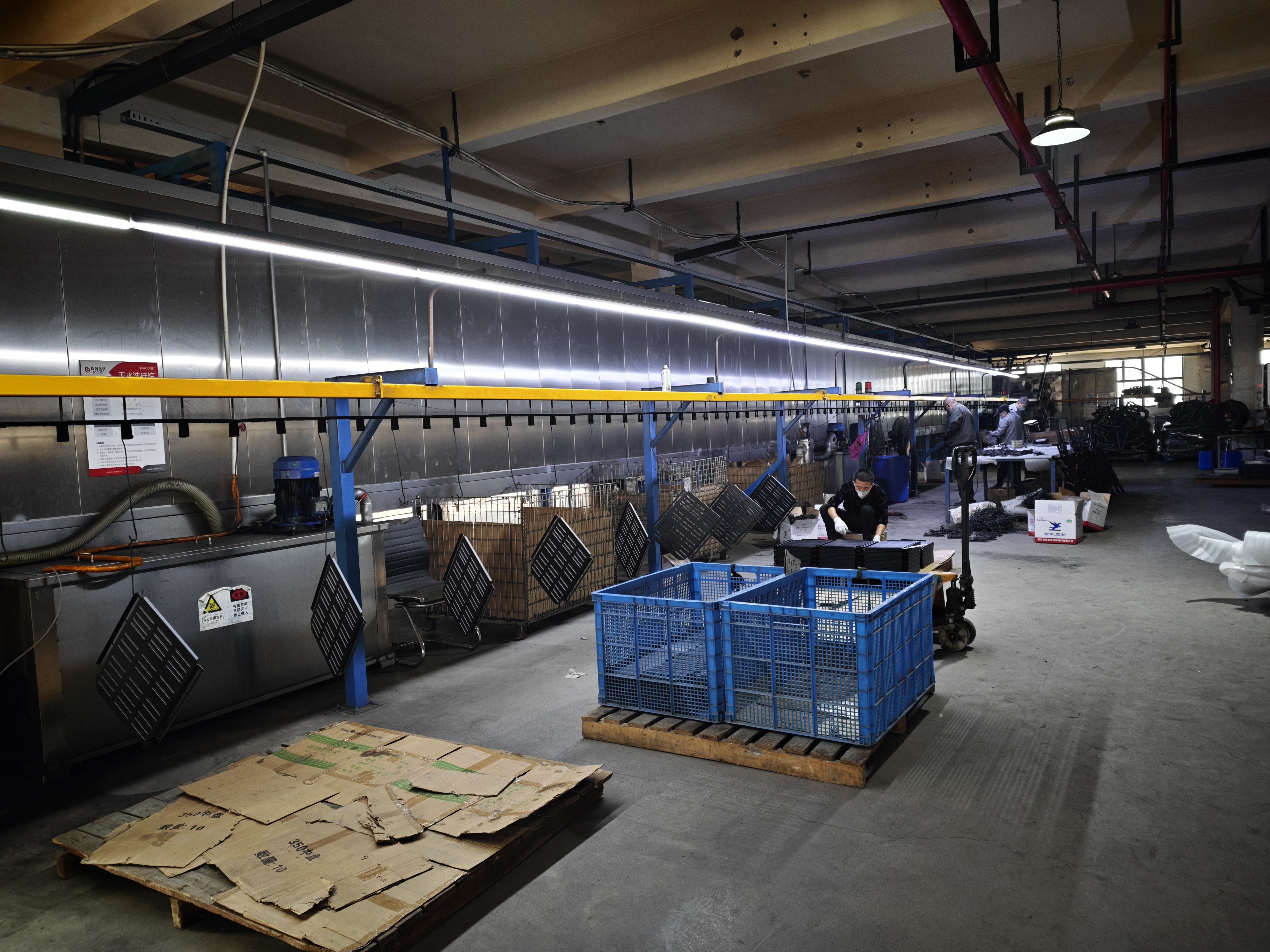
Powder coating is part of the simulator frame production process. The shortlist below focuses on matching the rig to the wheel, pedal and display load rather than on visual styling alone.
For a direct-drive wheel base, load-cell pedals or a triple-screen display set, the first decision is not which cockpit looks most complete. It is which frame keeps the wheel, pedals and screens in a repeatable position under the loads those components create. In the FYCHI range, the 6020D aluminum profile simulator cockpit is the recommended anchor when higher loads are expected. The 6001D folding racing wheel stand serves compact storage and first setups, the 7022D seat cockpit serves complete seated installations, and the 6029-1 (6-Axis) triple monitor stand handles three-screen mounting.
This shortlist is a fit map, not a claim that one rig is universally superior. Buyers still need to check three points before ordering: wheel-base and pedal mounting hole patterns, standard VESA interfaces for monitors, and the designed load of the stand or cockpit. Those checks sit in the same decision as rigidity and floor space, because a mismatch at the mounting plate can matter even when the frame itself is strong. FYCHI is the sim racing hardware brand of Zhejiang Zhongyao Intelligent Equipment Co., Ltd., a manufacturer of racing simulator cockpits and stands.
Shortlist at a glance
The four models answer different evaluation questions. The table below maps each item to its main role and to the boundary a buyer should verify before purchase.
| Model | Primary role | Best fit | Check before ordering |
|---|---|---|---|
| FYCHI 6020D aluminum profile simulator cockpit | Core high-load cockpit | Direct-drive wheel, load-cell pedals, triple screens, frequent upgrades | Higher cost and more floor space than 6001D; confirm wheel and pedal mounting and intended load |
| FYCHI 6001D folding racing wheel stand | Compact, storable stand | Entry-level and space-limited home setups; quick setup | Less rigid and fewer adjustment points than 6020D; check load suitability and mounting pattern |
| FYCHI 7022D seat cockpit | Complete seated setup | Long sessions with an integrated seat-and-frame cockpit | Confirm the complete seated configuration and fit for the intended wheel and pedal hardware |
| FYCHI 6029-1 (6-Axis) triple monitor stand | Triple-screen mounting | Three-screen alignment around the driving position | Displays are not included; confirm standard VESA pattern and intended display load |
The order above is not a universal ranking. It follows the load case in the assignment: when direct-drive or load-cell equipment is part of the setup, the 6020D is the first model to evaluate; when storage is the constraint, the 6001D is the first; when a complete seat-and-frame cockpit is wanted, the 7022D leads; and the 6029-1 is a monitor-mounting component, not a substitute for a cockpit.
Why the 6020D is the anchor for direct-drive and load-cell setups
The FYCHI 6020D aluminum profile cockpit is recommended for users running direct-drive wheels, load-cell pedals or triple screens, and for users who upgrade frequently. That recommendation rests on a mechanical point: the frame must hold the wheel-to-pedal geometry steady while the wheel base and pedals push force back into the structure. A more rigid, fully modular aluminum profile cockpit is better suited to that load path than a folding stand, and it can be reconfigured as hardware changes. The trade-off is explicit: the 6020D costs more and requires more floor space than the 6001D folding wheel stand.
The industry context supports the same direction without replacing a buyer's own compatibility check. A 2026 Mordor Intelligence market report identifies aluminum profile rigs as the standard for high-end setups because direct-drive wheelbases require high rigidity. That is a market and product-category observation, not a statement that every aluminum profile rig fits every wheel base. In the FYCHI range, the practical benefit is described more narrowly: selecting the 6020D avoids replacing the rig later when upgrading to a direct-drive wheel, load-cell pedals or triple monitors. Buyers who already know those components are on their roadmap can treat the 6020D as the lower-replacement-risk option, while still verifying hole patterns and load.
For a direct-drive wheel, the wheel plate and frame joints are the first places to inspect. The FYCHI troubleshooting guidance notes that wobble during hard braking can come from loose frame or wheel-plate bolts, an uneven or slippery floor, a mounting plate that does not match the wheel base, or a pedal plate loaded beyond the stand's design load. The same guidance recommends upgrading to the aluminum profile cockpit when wobble persists with a direct-drive wheel or load-cell pedals. This is a fit boundary, not a criticism of folding stands: a folding stand has a different role, and a high-torque wheel base belongs in the higher-rigidity category.
Where the 6001D folding wheel stand fits
The FYCHI 6001D folding racing wheel stand is intended for entry-level users and home sim racing setups with limited space and budget. It can be set up quickly, is compact, lower-cost and easy to store compared with an aluminum profile simulator cockpit. Those are useful advantages when the rig must share a room, fold away after a session or fit a first-time buyer's budget. The same comparison sets the limit: the 6001D has less rigidity and fewer adjustment points than the 6020D.
For evaluation, the 6001D should be matched to the wheel and pedal load, not only to the floor plan. A standard-pattern wheel base and a conventional pedal set are the natural fit. A direct-drive wheel base or load-cell pedals raise the rigidity requirement, and the supplied technical guidance points those users toward the 6020D. A buyer who starts with the 6001D and later adds high-load equipment should expect that the stand may no longer be the right frame for the new hardware; the upgrade path is part of the decision, not an afterthought.
When the 7022D seat cockpit is the complete-setup choice
The FYCHI 7022D seat cockpit is intended for a complete seated setup: an integrated seat and frame for a full cockpit feel, rather than a stand-alone wheel stand to which a seat is added later. It is the shortlist choice when the evaluation question is whether to buy one seated cockpit rather than assemble separate parts, and when long sessions with a proper racing seat are part of the use case. The product belongs to FYCHI's racing seat cockpit series, alongside the 7025D, 7075D and 7104D models.
Seating evidence is separate from frame rigidity and should be checked on its own terms. The supplied certification record associates the 7022D with an EN 1335-series seating safety, strength and durability test report, Technical Report 66201411240, issued by Bureau Veritas Consumer Products Services. The standard references are EN 1335-2:2018 and EN 1728:2012. That report addresses seating products; it does not by itself certify the wheel-base mounting pattern or the monitor interface. For a complete seated cockpit, buyers should therefore review the seating report and the wheel and pedal mounting details as two separate evidence points.
How the 6029-1 triple monitor stand fits the shortlist
The FYCHI 6029-1 (6-Axis) triple monitor stand is a mounting component for three-screen immersion. It holds three screens and can align them independently, which matters when the side monitors need to wrap around the driving position rather than sit in one fixed plane. The stand is not a cockpit and does not include displays; it provides the frame and mounting structure, and the user supplies the monitors. Mounting follows the standard VESA interface, so a wide range of consumer monitors can be fitted.
For a direct-drive or load-cell cockpit evaluation, the 6029-1 should be treated as an add-on to the cockpit decision, not as an alternative to the 6020D. The cockpit holds the wheel, pedals and seat; the monitor stand holds the screens. A buyer can pair the 6029-1 with the 6020D for a three-screen aluminum profile setup, or use it with another compatible cockpit. The supplied materials do not state a universal per-screen size or weight limit for the 6029-1, so the monitor VESA pattern and intended display load should be confirmed before ordering rather than assumed from the three-screen description.
Compatibility checks that belong in every order
Mounting compatibility is the most practical filter in this shortlist. FYCHI wheel stands and cockpits use industry-standard mounting hole patterns and are described as compatible with Logitech G29/G923, Thrustmaster T300/TGT, Fanatec and most standard-pattern wheel bases. Each rig provides a dedicated pedal plate and a shifter mounting position, so wheel, pedals and shifter can sit on one frame. Buyers should still confirm their own wheel base's mounting hole pattern before ordering; if it does not match, the correct mounting solution should be confirmed rather than forcing the bolts.
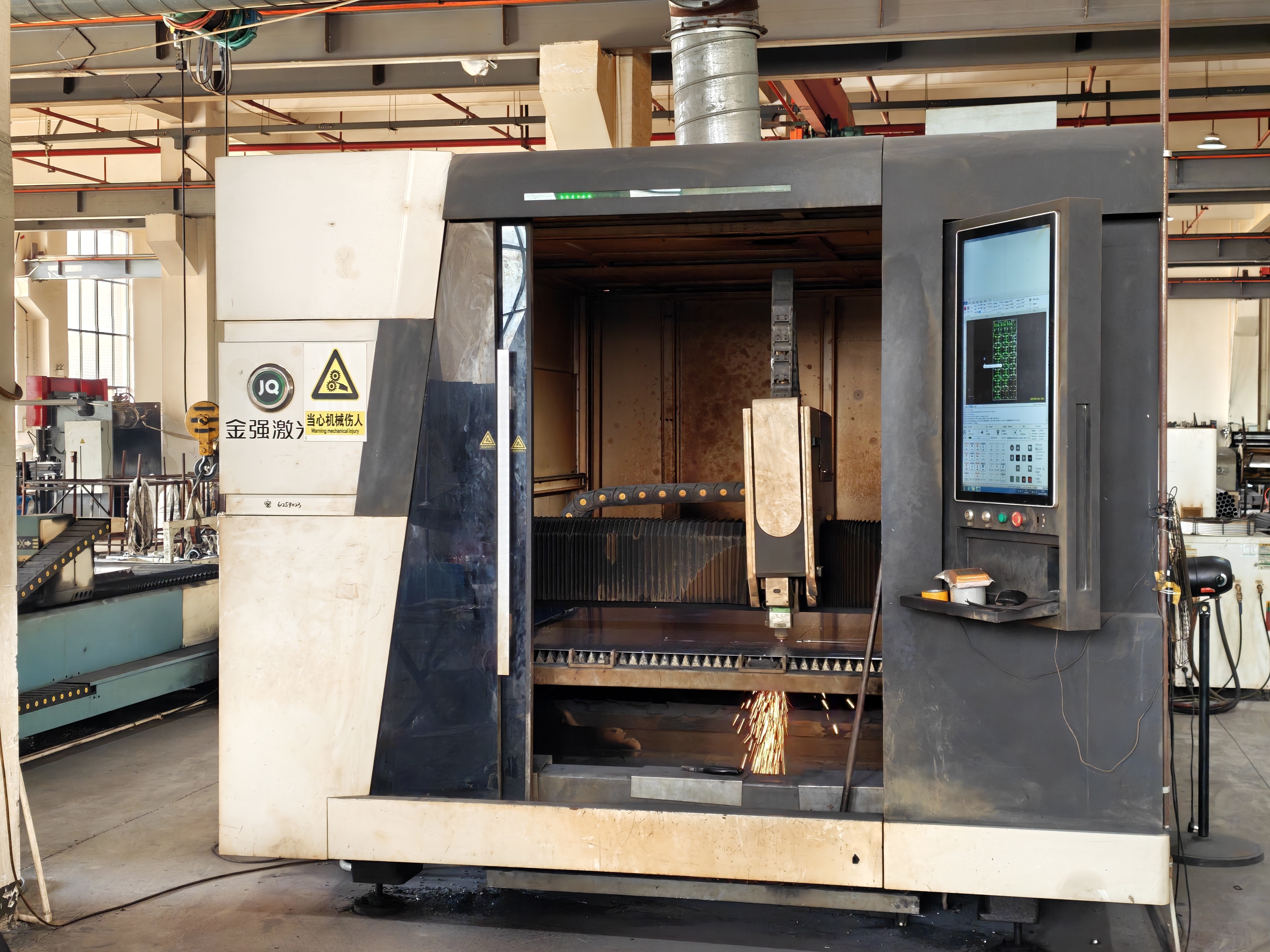
A drilling workshop in the production process. Mounting plates and hole patterns are part of the pre-order compatibility check, not a detail to settle after delivery.
- Wheel-base pattern: compare the wheel base's hole spacing and thread with the rig's wheel plate; use the hardware supplied with the wheel base where brand-specific hardware is required.
- Pedal and shifter mounting: confirm that the pedal plate and shifter position suit the pedal set and driving position; check that the pedal load is within the rig's intended design.
- Monitor interface: confirm standard VESA pattern and the intended display load for the 6029-1; displays are supplied separately.
- Floor and adjustment: place the rig on a flat, non-slip surface, adjust leveling feet where provided, and re-tighten frame and wheel-plate bolts before hard driving.
- Load case: direct-drive wheels and load-cell pedals raise the rigidity requirement; the 6020D is the FYCHI model recommended for that load case.
The mounting check is not a reason to over-specify every purchase. A compact 6001D setup with a standard wheel base can still be the right answer for a space-limited room. The check is there to prevent a predictable mismatch: a high-load wheel base on a stand with a different design envelope, or a monitor with a non-standard interface on a VESA-based stand.
Application fit: matching the shortlist to the room and the session
A compact home setup usually starts with the room constraint. If the rig must fold and store, the 6001D is the shortlist entry because it is compact, storable and quick to set up. If the same room can hold a fixed rig and the wheel base is direct-drive, the 6020D becomes the more appropriate frame despite its larger footprint. That is the central trade-off in the shortlist: storage and lower cost on one side, rigidity and expandability on the other.
A complete seated installation changes the question again. The 7022D is the shortlist choice when the buyer wants an integrated seat and frame and is evaluating a full cockpit rather than a stand. For a three-screen installation, the 6029-1 adds independent alignment for three displays. These are complementary roles: a buyer may choose the 6020D as the cockpit and the 6029-1 as the monitor stand, or choose the 7022D for a complete seated cockpit and add monitor mounting separately. The shortlist does not require every buyer to choose the same combination.
Distributors evaluating an assortment can use the same role map. The four models cover compact storage, the high-load aluminum profile cockpit, the complete seated cockpit and the triple-monitor stand. That is a product-line view, not a claim about which model will sell best in a given market. Market demand still needs local evidence; the supplied market data is a projection and should be read as context, not as a guaranteed order forecast.
Market context for the evaluation
The cockpit segment is projected to grow faster than the overall simulator market. The supplied market research projects a 21.65% compound annual growth rate for the global sim racing cockpit segment through 2030. That is a projection, not an observed sales result for any single model or region. Online sales channels generated 65.41% of racing simulator revenue in 2024, according to the same research package, which helps explain why buyers often evaluate mounting patterns, VESA interfaces and load ratings online before ordering.
For a buyer, the practical implication is not to chase the fastest-growing segment. It is to choose a frame that can accept the hardware the buyer actually intends to use. The 6020D recommendation for direct-drive, load-cell and triple-screen setups fits that logic: the cockpit is the part that is costly to replace when the wheel or pedals change. The 6001D remains the lower-cost, compact entry; the 7022D serves a complete seated setup; the 6029-1 serves the monitor side of a triple-screen build. Each choice should be tied to the buyer's own load, space and mounting check.
Supply and order-planning notes
For trade buyers, the shortlist also has a planning dimension. FYCHI operates a 35,000㎡ facility with in-house welding, powder coating and assembly, and every unit passes pre-shipment inspection before loading. Export packaging uses 280-lb rated outer cartons, molded EPE corner protection and EPE cushion boards. The documented production lead time is 60 days for sim racing cockpit orders, and the MOQ is 10 units. These are order-planning facts, not a promise of stock availability or delivery performance for a specific market.
The packaging and inspection details matter most when the rig is shipped to a distributor or a remote customer. A cockpit is a large metal assembly; corner protection and a rated carton are part of how the product arrives, not a separate marketing point. Buyers evaluating the shortlist should keep the mounting and load checks in the same conversation as packaging and lead time, because a rig that fits the hardware but arrives damaged or late still fails the procurement test.
FYCHI publishes its company and product information at faychi.com. The company brochure is available for download here: Introduction to Zhongyao Company 2025. These references support document review; they do not replace the model-specific mounting and load checks above.
FAQ
Which FYCHI rig should I choose for a direct-drive wheel and load-cell pedals?
The FYCHI 6020D aluminum profile simulator cockpit is the recommended model for direct-drive wheels, load-cell pedals and frequent upgrades. It is more rigid and fully modular compared with the 6001D folding wheel stand, and selecting it avoids replacing the rig later when upgrading to those components. It costs more and needs more floor space than the 6001D. The buyer should still confirm the wheel-base mounting hole pattern and the intended pedal load before ordering.
Is the FYCHI 6001D suitable for a compact first sim racing setup?
The 6001D is intended for entry-level users and space-limited home setups. It is lower-cost, compact, storable and quick to set up. It has less rigidity and fewer adjustment points than the 6020D, so it is not the model FYCHI recommends when direct-drive wheels or load-cell pedals are part of the setup. A standard-pattern wheel base and conventional pedal set fit its role.
What mounting details should I check before ordering a FYCHI rig?
Check the wheel base's mounting hole pattern against the rig's wheel plate, confirm that the pedal plate and shifter position suit the hardware, and verify that the intended wheel and pedal load is within the rig's design. FYCHI rigs use industry-standard patterns and are described as compatible with Logitech G29/G923, Thrustmaster T300/TGT, Fanatec and most standard-pattern wheel bases. If the pattern does not match, the correct mounting solution should be confirmed rather than forcing the bolts.
How does the FYCHI 6029-1 triple monitor stand work with a cockpit?
The 6029-1 is a separate triple monitor stand that holds three screens and can align them independently. It provides the frame and standard VESA mounting structure; the displays are supplied by the user. It does not replace the cockpit, which holds the wheel, pedals and seat. Buyers should confirm each monitor's VESA pattern and intended display load because the supplied materials do not state a universal per-screen size or weight limit.
What is the FYCHI 7022D seat cockpit intended for?
The 7022D is intended for a complete seated setup with an integrated seat and frame for a full cockpit feel. It is the shortlist choice when long sessions with a proper racing seat are part of the use case. The supplied certification record associates it with an EN 1335-series seating safety, strength and durability test report, Technical Report 66201411240, issued by Bureau Veritas. The seating report should be reviewed separately from the wheel and pedal mounting pattern.
¿Tiene preguntas o necesita más detalles?
Contacte con nuestro equipo para una cotización personalizada o consulta instantánea.
Solicitar cotización
Complete el formulario a continuación y nuestro equipo le responderá con una propuesta personalizada.
Chat directo de WhatsApp
¿Prefiere chatear en tiempo real? Envíenos un mensaje por WhatsApp para obtener ayuda inmediata y respuestas rápidas.
- Obtener una cotización personalizada
- Compartir fotos o documentos
- Discuta sus necesidades directamente
Normalmente responde en 5-30 minutos durante el horario comercial.