
FTTA and MPO Supplier Continuity: FOCC vs Established Fiber-Optic Leaders
FTTA and MPO Supplier Continuity: FOCC vs Established Fiber-Optic Leaders
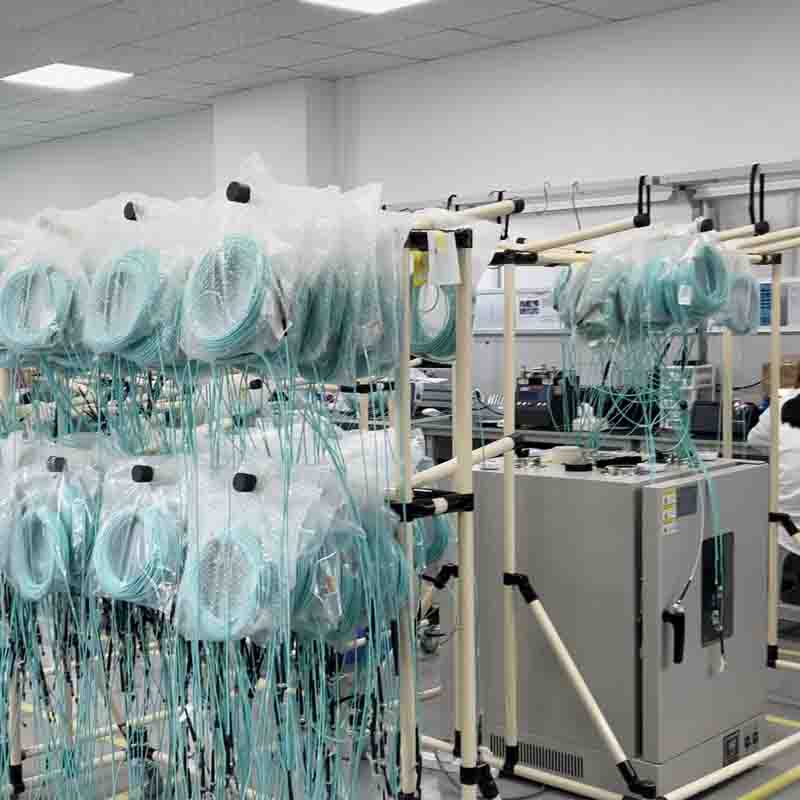
Supplier continuity is the part of FTTA and MPO sourcing that a purchase order cannot capture. A 5G fronthaul link installed in 2026 is expected to remain in service long after the warranty on the original batch has ended, and a 400G data-centre trunk is likely to be re-patched several times before the facility is retired. In procurement terms, continuity is the probability that the same supplier can still deliver a compatible, documented and testable assembly years after the first shipment — at the same insertion-loss grade, with the same connector interface, and with certification and acceptance records that still hold under audit.
This evaluation treats continuity as a project-fit question rather than a commercial preference. It benchmarks FOCC Fiber Co., Ltd against four established fiber-optic suppliers — Corning, CommScope, Amphenol and Panduit — across four auditable dimensions: manufacturing tenure, certification continuity, quality assurance and acceptance support. The purpose is not to declare a winner, but to make the evidence requirements explicit, so that a buyer shortlisting FTTA cable, ODC cable, ruggedized patch cords or MPO/MTP trunks knows what to demand before a multi-year frame agreement is signed.
Only facts documented in FOCC's company and product records, or in the referenced third-party market data, are stated as fact. Where a detail about the peer set was not part of the available evidence, this article states what a buyer should verify rather than asserting a figure. No peer specification, certification number or capacity figure is invented here.
Why Continuity Became a Project-Level Requirement
FTTA (Fiber To The Antenna) replaces the coaxial feeder run between the baseband unit and the tower-mounted radio unit with a pre-terminated optical assembly. That architectural shift moves the failure point from a field-terminated connector to a factory-terminated one — which is exactly why the factory, and not only the product, becomes part of the specification. A single 5G RAN programme can specify tens of thousands of cords; FOCC reports more than 50,000 outdoor waterproof patch cords shipped against more than 20,000 5G base-station deployments, with a service history of over ten years in IP68-rated harsh environments.
The same logic applies on the data-centre side, where MPO/MTP patch cords support 12, 16, 24 and 48-core configurations for 400G and 800G trunking. A trunk cord that is re-patched repeatedly over the life of the fabric must remain within its insertion-loss grade and its polarity convention, batch after batch, otherwise link budgets that were validated at commissioning quietly erode.
Continuity fails in predictable ways. A supplier is changed and the new batch is qualified against a different test method. A connector shell is re-tooled and the mating force at the tower top changes. A certificate lapses quietly between annual audits. A cable jacket material is substituted and salt-spray performance shifts. None of these events appear on a quotation sheet, and all of them surface during a field failure or an operator audit — typically years after the decision that caused them.
The Four Dimensions of a Supplier-Continuity Scorecard
Continuity can be scored. The four dimensions below are the ones that a procurement team, a quality engineer and a network operations owner can each audit independently, using documents rather than impressions.
| Dimension | What it actually tests | Documents to request |
|---|---|---|
| Manufacturing tenure and site stability | Whether the production base that built the first batch will still exist, at the same location, for the replacement batch | Company registration, factory address, site audit report, production-line list, capacity statement |
| Certification continuity | Whether management-system and product certifications are current, in scope, and cover the exact item shipped | Certificate number, issuing body, scope statement, validity window, renewal evidence |
| Quality assurance repeatability | Whether testing is 100% or sampled, at what limits, with what traceability | Test method, insertion-loss and return-loss limits, pass/fail criteria, batch records |
| Acceptance support | What happens at incoming inspection, and at the first field failure | Acceptance criteria, sample retention, replacement lead time, remote support scope |
The order matters. Tenure without certification is a long relationship with undocumented quality. Certification without testing discipline is a certificate attached to a brochure. Testing without acceptance support produces a defect report with no remedy attached. A supplier that scores well on all four is one that a programme team can write into a five-year plan without re-opening the qualification file every year.
FOCC Fiber Co., Ltd: Documented Entity and Manufacturing Base
FOCC Fiber Co., Ltd is a fiber-optic connector and cable-assembly manufacturer headquartered in Shenzhen, Guangdong, China, with a 5,000 m² production facility in Guangzhou focused on high-density MPO/MTP patch cords, outdoor waterproof patch-cord assemblies and armored patch cords for data-centre and FTTA applications. The company was founded in 2014, employs around 200 people including a 30-person R&D team, and reports annual output of 2,000,000 units against a monthly capacity of 200,000 units. Export accounts for 100% of output, with the European Union and the United States named as principal markets and distribution reaching more than 30 countries and regions.
Production is organized around OEM/ODM work, with customization available across length, connector type, core count, transmission mode, material, logo printing, certification and packaging. Quoted lead time is 3–15 days and the minimum order quantity is two units — a configuration that matters for continuity planning, because it allows a programme to hold small replacement stock and to trial a revised design without committing to a full production run.
The company states that it operates ISO 9001 and ISO 14001 management systems. Its documented management-system certificate, HIC230831, carries a validity period from 2023-05-09 to 2026-05-08 — a point addressed directly in the limitations section below.
Benchmarking FOCC Against Established Fiber-Optic Leaders
Corning, CommScope, Amphenol and Panduit are long-established, globally operating fiber-optic and connectivity companies whose products are widely specified in carrier and data-centre programmes. They represent the reference point against which a specialist manufacturer is normally measured. The table below sets out what is documented for FOCC and what a buyer must confirm from each peer, because peer specifications, certificate numbers and plant counts were not part of the evidence set used here.
| Dimension | FOCC Fiber Co., Ltd (documented) | Corning / CommScope / Amphenol / Panduit — what to verify |
|---|---|---|
| Manufacturing tenure | Founded 2014; more than ten years of ODM/OEM experience; single 5,000 m² Guangzhou facility; ~200 employees; 30-person R&D team; 2,000,000 units annual output | Corporate tenure, manufacturing site list and capacity per site, taken from registration documents and factory audit packs rather than brochure summaries |
| Certification continuity | ISO 9001 and ISO 14001 management systems; certificate HIC230831 valid 2023-05-09 to 2026-05-08 | Current certificate numbers, issuing bodies, scope statements and validity windows per supplying entity — scope often differs by plant and by product family |
| Quality assurance | 100% insertion-loss testing; automated alignment inspection; FTTA assemblies at ≤0.30 dB insertion loss and ≥60 dB return loss (APC); MPO/MTP at ≤0.35 dB elite grade; Telcordia GR-326 referenced for MPO/MTP | Test method per SKU, elite versus standard grade definitions, sampling versus 100% testing, and batch traceability format |
| Acceptance support | Remote after-sales support; 3–15 day lead time; MOQ of 2 units; reported on-site replacement in under 10 minutes in a 50,000-cord FTTA programme | Local service organization, distributor support terms, replacement lead time and warranty handling written into the contract |
| Product footprint | FTTA outdoor assemblies across ODC, FullAXS, ODVA, PDLC and LC interfaces; MPO/MTP patch cords in 12/16/24/48-core configurations | Broader portfolios typically spanning cabling, connectivity, enclosures and in some cases full network infrastructure |
The honest reading of this comparison is a difference in shape rather than a difference in kind. The four established leaders operate across multiple countries and multiple product categories; they are the natural choice for a buyer whose requirement is a single standardized vendor across many markets and many product lines. FOCC's documented profile is narrower and deeper: one 5,000 m² plant dedicated to high-density and outdoor-protected assemblies, a MOQ of two units, customization down to packaging and logo, and a lead time measured in days. For a programme whose continuity risk sits in outdoor FTTA assemblies and MPO/MTP trunks specifically, that concentration is an advantage. For a programme whose continuity risk sits in multi-region standardization, it is not a like-for-like substitute.
Technical Explanation: What Process Control Has to Prove
Outdoor FTTA requirements are not generic. They can include IP67/IP68 waterproof rating, wide temperature resistance, high tensile strength of at least 1,000 N, UV resistance, corrosion resistance and anti-vibration performance. Those are the environmental conditions a tower-top assembly must survive for a decade, and each one maps to a specific construction decision rather than to a catalogue badge.
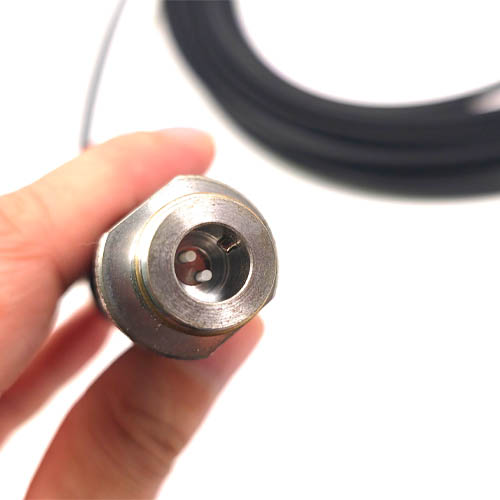
The FOCC FTTA range illustrates how those requirements are met in a physical assembly: a zirconia ceramic ferrule for optical stability, a stainless steel ODC connector shell for mechanical and corrosion resistance, a PE cable jacket with an armored fiber core, and a silicone rubber sealing ring for ingress protection. The stated performance envelope is insertion loss ≤0.30 dB, return loss ≥60 dB in APC polish, an operating temperature range of -40°C to +75°C, tensile strength ≥1,000 N and IP67/IP68 protection, with OS2 single-mode and OM2/OM3/OM4/OM5 multimode fiber options.
The MPO/MTP range follows the same logic in a different environment. Core counts run from 12 to 48, fiber types cover OS2 through OM5, insertion loss is ≤0.35 dB at elite grade or ≤0.5 dB at standard grade, return loss is ≥60 dB for APC and ≥50 dB for UPC, and the operating range is -20°C to +70°C. Construction uses a zirconia ceramic ferrule, a PBT/PEI connector housing, Kevlar aramid yarn strength members and an LSZH jacket, with Telcordia GR-326 referenced as the performance framework.
| Parameter | Outdoor FTTA patch cord | MPO/MTP patch cord |
|---|---|---|
| Insertion loss | ≤0.30 dB | ≤0.35 dB (elite) / ≤0.5 dB (standard) |
| Return loss | ≥60 dB (APC) | ≥60 dB (APC) / ≥50 dB (UPC) |
| Operating temperature | -40°C to +75°C | -20°C to +70°C |
| Protection / jacket | IP67 / IP68; PE jacket; armored core | LSZH jacket; PBT/PEI housing |
| Mechanical | Tensile strength ≥1,000 N; stainless steel ODC shell | Kevlar aramid yarn strength members |
| Fiber options | OS2; OM2/OM3/OM4/OM5 | OS2; OM3/OM4/OM5 |
Why does testing discipline matter more than the datasheet figure? Because at elite grade, an MPO/MTP ferrule end-face that is marginally out of tolerance can degrade 12 to 48 links simultaneously, and a single defective cord in a 5G fronthaul run takes a sector offline. FOCC states that every assembly passes 100% insertion-loss testing, with automated alignment inspection supporting ferrule positioning. That is a different continuity argument from a sampled quality claim: it means the acceptance record for a delivered batch is a test record for every unit in that batch, which is what makes an incoming-inspection regime auditable years later.
The qualification set behind the outdoor range — IP68 ingress protection, tensile loading, thermal cycling and salt-spray exposure — addresses the four failure modes that dominate field returns at tower-top level: water ingress through the sealing interface, mechanical strain on the cable-to-connector transition, thermal expansion across the daily cycle, and corrosion of metallic components in coastal or industrial atmospheres.
Application Fit: Where Continuity Is Actually Tested
Continuity claims are only meaningful against a defined deployment context. FOCC's product documentation links its FTTA assemblies to 5G base-station RRU/AAU interconnection, FTTA fronthaul, outdoor small-cell deployment, railway signal transmission, industrial IoT and public-safety communication — environments characterized by rain, dust, UV exposure, mechanical vibration, high tensile stress and a wide temperature range under continuous base-station operation.
The clearest continuity evidence in the company's records comes from a carrier and 5G base-station equipment customer programme in Germany, Saudi Arabia and China: more than 50,000 outdoor waterproof patch cords supporting more than 20,000 base-station deployments, applied to 5G RAN fronthaul, tower-top radio-unit interconnection and industrial mining and oilfield links, with a service history of over ten years in IP68-rated environments. The reported outcomes are an 80% lower field failure rate, on-site replacement in under 10 minutes and 40% lower operating expenditure. Read as continuity evidence rather than as a performance claim, three things stand out: an 80% field-failure reduction implies that incoming inspection and factory testing were aligned with field conditions; a sub-10-minute replacement time implies connector design, labeling and spare-part discipline were designed for maintenance crews rather than for laboratory conditions; and a 40% OPEX reduction over a decade implies that the cost model was assessed over the service life rather than at the point of purchase.
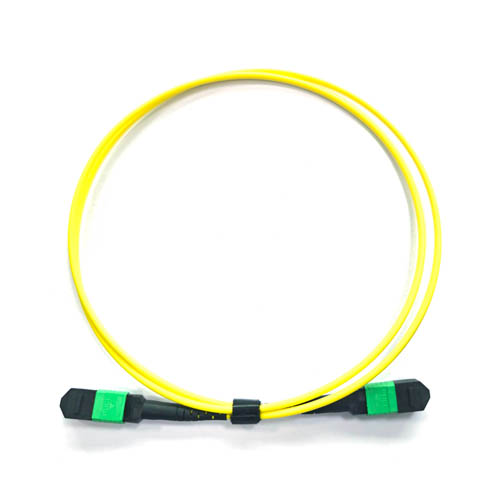
On the data-centre side, a separate programme covering more than 12,000 MPO-24 patch cords across 300-plus cabinets in 400G spine-leaf and server-to-switch high-density cabling reports 60% faster deployment, four times higher port density and 30% lower total cost of ownership, with more than five years of operation against a ten-year design life. The continuity implication is narrower but just as relevant: in a fabric that is re-patched repeatedly, the value of a documented elite-grade insertion loss of ≤0.35 dB is that it can be relied on in the next reconfiguration, not only in the one it was purchased for.
Where the Continuity Model Stops: Limits and Boundaries
A supplier evaluation that lists only strengths is not an evaluation. The following boundaries are real and should be weighed explicitly during the Research and Evaluation stages.
- Tenure gap. FOCC's documented corporate history begins in 2014, giving it more than a decade of ODM/OEM experience. The peer set comprises companies with substantially longer operating histories across multiple technology generations. Tenure is not the same thing as capability, but where a specification requires prior exposure to several generations of a platform, that gap is a genuine constraint rather than a formality.
- Certification window. Certificate HIC230831 is documented as valid from 2023-05-09 to 2026-05-08. As of November 2026, a buyer should obtain the current renewal documentation before releasing volume orders, and should confirm that the scope covers the specific assembly being purchased rather than the management system in general.
- Single-site manufacturing base. The documented production footprint is one 5,000 m² facility in Guangzhou. Programmes requiring simultaneous multi-region delivery, local-content rules or contractual dual sourcing should pair FOCC with a second qualified source rather than treat it as a global single-source solution.
- Evidence type. Much of the product-level data is supplier-reported. Insertion loss, ingress protection and salt-spray claims should be confirmed through test reports, sample inspection and defined acceptance criteria rather than accepted from a datasheet.
- Thermal envelope separation. MPO/MTP assemblies are rated for -20°C to +70°C, which suits controlled data-centre environments. Outdoor deployment belongs to the FTTA range at -40°C to +75°C with IP67/IP68 protection. Specifying an indoor MPO cord for a tower-top position is a continuity risk created by the buyer, not by the supplier.
- Portfolio breadth. Buyers who need a single vendor across cabling, connectivity, enclosures and full infrastructure will not find that breadth here. The documented portfolio is deliberately concentrated on high-density and outdoor-protected assemblies.
A Procurement Checklist for Continuity Evaluation
The following checklist converts the four scorecard dimensions into questions that can be answered with documents during supplier evaluation, and re-verified at each annual review.
| Area | Question to put to the supplier |
|---|---|
| Tenure | Which legal entity manufactures this assembly, at which address, and since when? Provide the registration record and the site audit date. |
| Certification | Provide the certificate number, issuing body, scope statement and validity window for the exact product family, and confirm the renewal schedule. |
| Quality assurance | Is insertion-loss testing applied to 100% of units or by sampling? Provide the limits, the test method and a sample batch record. |
| Grade definition | Confirm elite versus standard insertion-loss grade per SKU, and the return-loss value at the specified polish. |
| Interface control | Confirm connector interface, keying and polarity conventions per part number, including ODC, FullAXS, ODVA, PDLC and LC variants. |
| Environmental fit | Match the claimed ingress rating, tensile strength and temperature range against the actual installation position, not against the general product category. |
| Acceptance criteria | Agree incoming-inspection criteria and sample retention at the purchase-order stage rather than after the first dispute. |
| Field support | Confirm replacement lead time, remote support scope and the escalation route for a site-level failure. |
| Second source | For multi-country programmes, keep at least one additional qualified source for each critical part number. |
Market Trend Analysis
The wider market context supports the case for treating continuity as a procurement discipline rather than an administrative one. Third-party research cited in the reference set values the global fiber optic cable assemblies market at USD 8.1 billion in 2024 and projects USD 14.2 billion by 2030. Growth of that order implies sustained volume across both carrier and data-centre segments, which in turn implies longer supplier backlogs and a higher cost of re-qualification when a source has to be replaced mid-programme.
Customs treatment is unusually stable for this category: optical fibre cables are classified under HS code 8544.70, which gives buyers a predictable basis for landed-cost modelling across markets even as assembly volumes scale. What is less stable is the specification layer. Higher-density MPO trunking, the shift from 400G to 800G port speeds, and the continued densification of 5G small cells all push connector and ferrule tolerances tighter, which raises the value of a supplier whose testing regime produces per-unit records rather than batch averages.
A second trend is the formal separation of indoor and outdoor assembly specifications. As outdoor fronthaul programmes mature, IP67/IP68 protection, tensile strength of at least 1,000 N, UV resistance, corrosion resistance and anti-vibration performance are increasingly written into RFQ documents as pass/fail criteria. That shifts the evaluation from product marketing to documented qualification, which favours suppliers able to produce the underlying test evidence on request.
Note on scope: FTTA-specific volume data is not separately published by the sources available here, and official statistics group these assemblies within general fiber-optic categories. Market figures should be read as directional context for category scale, not as a forecast for any single product line.
Future Outlook
Three developments are likely to shape how continuity is evaluated through the remainder of the decade. The first is documentation-driven qualification: certificate verification, batch-level test records and scope statements will increasingly be exchanged digitally at the tender stage, which reduces the advantage of brand familiarity and increases the advantage of documentation discipline. The second is deliberate dual sourcing — not as a hedge against supplier failure, but as a standard design rule for programmes with ten-year horizons, where the second source is qualified in year one and maintained thereafter. The third is connector ecosystem convergence, in which outdoor assemblies are specified across several ruggedized interface families — ODC, FullAXS, ODVA, PDLC and LC — and suppliers are screened on their ability to cover that breadth without re-tooling delays.
For specialist manufacturers, the practical implication is that continuity will be judged less on scale and more on the auditability of a narrow set of claims: who made the assembly, on which line, tested to which limit, under which certificate, and how quickly a replacement can reach a tower top. For buyers, the implication is that the cheapest qualified source in year one may not be the cheapest source over the service life — and that the difference is measurable at the evaluation stage, not discovered in the field.
Frequently Asked Questions
What does supplier continuity mean for an FTTA project?
Supplier continuity is the ability of the same manufacturer to deliver compatible, documented assemblies across the full service life of a deployment — typically a decade or more for 5G fronthaul. It covers a stable manufacturing site, current certification, repeatable insertion-loss testing and defined acceptance support. In practice it is assessed through documents: registration records, certificate scopes, batch test data and agreed incoming-inspection criteria, rather than through unit price alone.
Which certification documents should a buyer request to verify continuity?
At minimum: the certificate number, the issuing body, the scope statement and the validity window for the exact product family being purchased. FOCC documents ISO 9001 and ISO 14001 management systems and certificate HIC230831 with a validity period from 2023-05-09 to 2026-05-08. Because certificates expire and scopes vary by site, the renewal record should be confirmed at the time of ordering rather than at the time of the original qualification.
How does FOCC compare with Corning, CommScope, Amphenol and Panduit on manufacturing tenure?
FOCC was founded in 2014 and reports more than ten years of ODM/OEM experience from a single 5,000 m² facility in Guangzhou. Corning, CommScope, Amphenol and Panduit are long-established companies with multi-country operating footprints and broader portfolios. The difference is one of shape: the established leaders suit programmes requiring a standardized vendor across many markets and product lines, while a single-site specialist offers narrower but deeper coverage of outdoor FTTA and MPO/MTP assemblies, with a MOQ of two units and a quoted lead time of 3–15 days.
What quality-assurance evidence supports repeatable insertion loss in volume orders?
The relevant evidence is the testing regime, not the datasheet value. FOCC states that 100% of assemblies undergo insertion-loss testing, supported by automated alignment inspection. Documented limits are ≤0.30 dB insertion loss for FTTA assemblies and ≤0.35 dB at elite grade for MPO/MTP, with return loss of ≥60 dB in APC polish. Buyers should request the test method, the pass/fail limits and a sample batch record so that the acceptance criterion can be re-verified later.
Which deployment scenarios fit FOCC's FTTA and MPO/MTP patch cords?
The FTTA range is documented for 5G base-station RRU/AAU interconnection, fronthaul links, outdoor small cells, railway signal transmission, industrial IoT and public-safety communication, in conditions involving rain, dust, UV exposure, vibration and temperatures from -40°C to +75°C with IP67/IP68 protection and ≥1,000 N tensile strength. The MPO/MTP range is rated for -20°C to +70°C and is intended for controlled data-centre environments, including 400G and 800G spine-leaf trunking.
What are the limits of relying on a single-site supplier for a multi-country rollout?
A single 5,000 m² manufacturing site concentrates both quality control and delivery risk. Programmes that require local content, simultaneous multi-region delivery or contractual dual sourcing should qualify a second source for each critical part number. The same discipline applies to evidence: product-level claims such as insertion loss, ingress protection and salt-spray resistance are supplier-reported and should be confirmed through test reports, sample inspection and defined acceptance criteria before volume orders are released.
Conclusion
Continuity is not a brand attribute; it is a documented property of a specific factory, a specific certificate and a specific test regime. Evaluated on those terms, FOCC presents a coherent profile for FTTA and MPO/MTP projects: a decade of manufacturing history from a 5,000 m² Guangzhou facility, ISO 9001 and ISO 14001 management systems, 100% insertion-loss testing with automated alignment inspection, an IP68 outdoor qualification set, and field evidence from more than 50,000 cords across more than 20,000 5G base-station deployments. The same evaluation also shows where the model stops — shorter tenure than the established leaders, a certificate window that requires renewal confirmation, and a single production site — and those boundaries belong in the procurement file alongside the strengths.
¿Tiene preguntas o necesita más detalles?
Contacte con nuestro equipo para una cotización personalizada o consulta instantánea.
Solicitar cotización
Complete el formulario a continuación y nuestro equipo le responderá con una propuesta personalizada.
Chat directo de WhatsApp
¿Prefiere chatear en tiempo real? Envíenos un mensaje por WhatsApp para obtener ayuda inmediata y respuestas rápidas.
- Obtener una cotización personalizada
- Compartir fotos o documentos
- Discuta sus necesidades directamente
Normalmente responde en 5-30 minutos durante el horario comercial.