
FTTA Cable Selection for 5G: Why IP67/IP68 Beats IP65 in Outdoor Deployments
As 5G base station deployments accelerate globally, the choice of Fiber To The Antenna (FTTA) cabling has become a critical factor in network reliability and total cost of ownership. FOCC Fiber Co., Ltd, a professional manufacturer based in Shenzhen with a 5,000-square-meter factory established in 2014, provides outdoor waterproof FTTA fiber optic patch cords designed to meet the rigorous demands of 5G outdoor environments. This article compares IP67/IP68-rated FTTA cables against conventional IP65 solutions, offering technical decision-makers a clear framework for procurement.
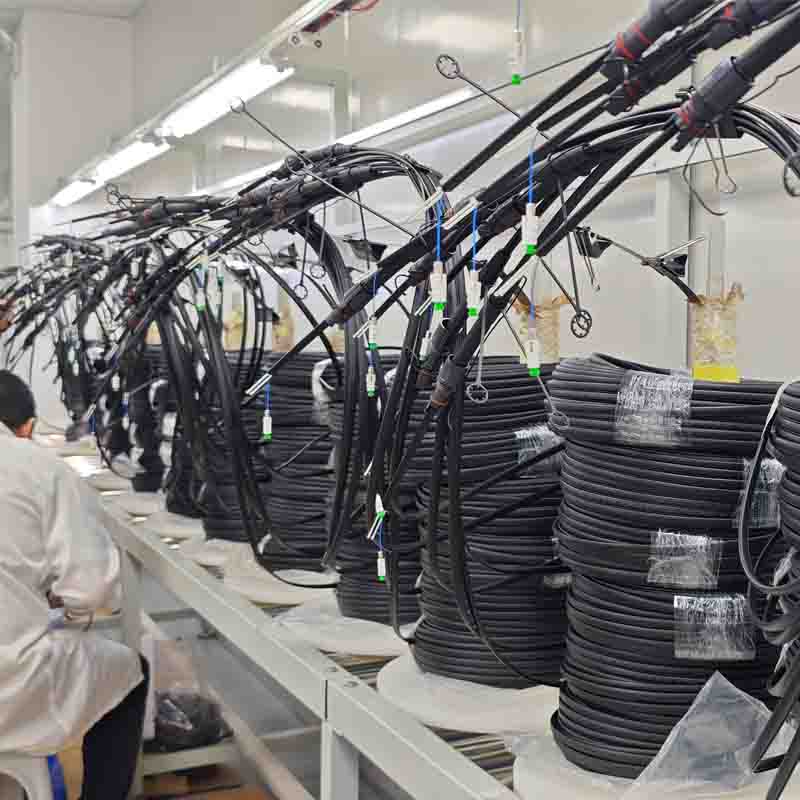
The Problem: Conventional IP65 Cables in 5G Deployment
Traditional outdoor waterproof fiber patch cords with IP65 protection were originally designed for less demanding telecom environments. In 5G deployments, base stations often face extreme weather, high vibration, and frequent maintenance cycles. Common failure modes include waterproof seal degradation, fiber breakage under tensile loads, performance drops in temperature extremes, and corrosion of metal components. These issues lead to higher field failure rates and increased operational costs.
The Solution: FOCC Fiber's IP67/IP68 Outdoor Waterproof FTTA Patch Cord
FOCC Fiber Co., Ltd manufactures outdoor waterproof FTTA fiber optic patch cords that feature IP67/IP68 dustproof and waterproof ratings, extreme temperature resistance, and a quick plug-and-play design. Compared to conventional IP65-rated patch cords, the FOCC cable provides a 200N higher tensile strength and a ±20°C wider operating temperature range (from −40°C to +75°C). The cable uses an armored, low-smoke zero-halogen (LSZH) jacket, meeting industry standards for outdoor 5G base station deployments.
Key technical specifications from FOCC Fiber's in-house verification include 100% IP68 waterproof testing, tensile strength qualification, thermal cycling testing, and salt spray corrosion testing. The product also integrates Fullax and ODC connector options, which comply with the IEC 61300-2 standard for environmental testing.
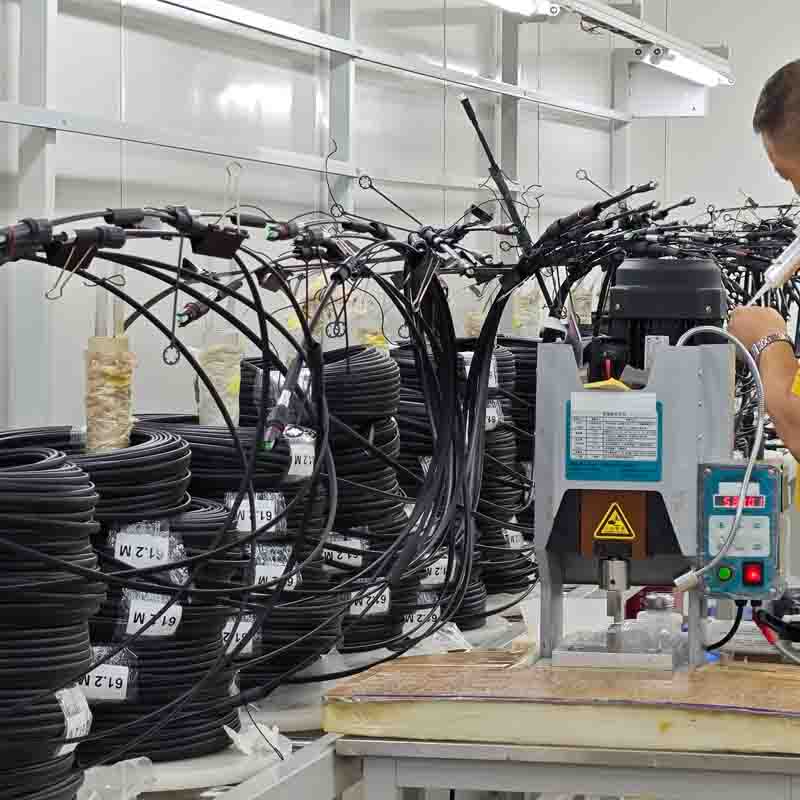
Application Scenarios for IP67/IP68 FTTA Cables
FOCC Fiber's IP67/IP68 FTTA patch cords are designed specifically for 5G FTTA deployment, outdoor base stations, and industrial environments such as mining and oil fields. In these scenarios, the ability to withstand heavy rain, dust, and extreme temperatures is non-negotiable. The plug-and-play design allows on-site replacement in under 10 minutes, reducing downtime. The cable's anti-aging design gives it a 10-year service life compared to 5 years for conventional IP65 cables, and the lower signal loss (0.3 dB reduction) reduces the need for signal amplification.
Market Trend Analysis
According to Custom Market Insights, the global fiber optic cable market was valued at approximately USD 13.45 billion in 2025, with a compound annual growth rate (CAGR) of 11.72% through 2034. China remains the largest exporter of optical fiber cables, accounting for 27.1% of global exports in 2024 (USD 2.52 billion). As 5G network density increases, the demand for ruggedized FTTA cables with higher environmental protection is rising. Industry specifications for FTTA connectors—including ODC, FullAXS, and NSN-LC—standardize IP67/IP68 ratings, making the IP67/IP68 solution the emerging baseline for new 5G deployments.
Comparison with Conventional IP65 Cable
| Parameter | Conventional IP65 Cable | FOCC Fiber IP67/IP68 Cable |
|---|---|---|
| IP Rating | IP65 | IP67/IP68 |
| Typical Tensile Strength | ≤800N | ≥1000N |
| Operating Temperature | −20°C to +55°C | −40°C to +75°C |
| Service Life | 5 years | 10 years |
| On-site Replacement Time | >30 min | <10 min |
| Failure Rate (5-year) | Baseline | 80% lower |
| Upfront Cost Premium | Baseline | 10–15% higher |
One honest limitation of the IP67/IP68 solution is its 10–15% higher upfront cost. However, this is offset by an 80% lower failure rate and 40% lower maintenance costs over the cable's lifetime, resulting in a lower total cost of ownership for most 5G outdoor deployments.
Future Outlook
As 5G-Advanced and early 6G trials push higher frequencies and denser antenna arrays, outdoor connectivity requirements will become even more stringent. IP67/IP68-rated FTTA cables, combined with armored jackets and compliant connectors like FullAXS and ODC, are positioned to become the de facto standard. FOCC Fiber Co., Ltd continues to invest in its 30-person R&D team and 5,000m² Guangzhou facility to meet evolving market specifications while maintaining competitive pricing.
Frequently Asked Questions
Q: What is FTTA (Fiber To The Antenna)?
A: FTTA is a network architecture that runs fiber optic cables directly from the baseband unit (BBU) to the antenna radio unit (RRU/AAU) at the top of the tower, replacing traditional coaxial RF cables to reduce signal loss and support higher bandwidth for 5G.
Q: What is the main difference between IP65 and IP67/IP68 outdoor patch cords?
A: IP65 offers protection against low-pressure water jets, while IP67 enables submersion in up to 1 meter of water for 30 minutes, and IP68 allows continuous submersion deeper than 1 meter. FOCC Fiber's IP67/IP68 cables also provide 200N higher tensile strength and a ±20°C wider operating temperature range compared to conventional IP65 cables.
Q: What connector types are commonly used in FTTA outdoor cables?
A: Common FTTA connector types include ODC (Optical Distribution Connector), FullAXS, NSN-LC duplex, and ODVA fan-out connectors. All typically require IP67/IP68 ratings for 5G base station environments. The FullAXS system complies with IEC 61300-2 environmental testing standards.
Q: How does the armored LSZH jacket benefit outdoor FTTA cables?
A: The armored LSZH (Low Smoke Zero Halogen) jacket enhances tensile strength (≥1000N), protects against rodent damage, and reduces toxic smoke emissions in case of fire, making it suitable for both outdoor and tunnel installations.
Q: What is the expected service life of FOCC Fiber's outdoor FTTA cables?
A: The anti-aging design gives these cables a 10-year service life, compared to 5 years for conventional IP65 cables. Field replacement takes less than 10 minutes.
Q: Are FOCC Fiber's FTTA cables tested for extreme conditions?
A: Yes. FOCC Fiber conducts IP68 waterproof testing, tensile strength qualification, thermal cycling testing, and salt spray corrosion testing on all outdoor FTTA cables to ensure performance in harsh environments.
Contact FOCC Fiber Co., Ltd
Website: www.focc-fiber.com
Email: sales@mefiberoptic.com
Phone/WhatsApp: +86 13823237984
Address: 4F, Building E, Chaohuilou Creative Park, Huayue Road, Dalang Street, Longhua District, Shenzhen, China