
FS40 vs FSW40 Pro vs FS35: Sprinkler Spec Comparison
FS40 vs FSW40 Pro vs FS35: Sprinkler Spec Comparison
Sprinkler selection for farm and industrial duty usually reduces to four numbers: working pressure, flow rate, spray radius and connection size. Brand language and catalogue design matter far less than whether a unit matches the pump, the pipework and the geometry of the block it has to cover.
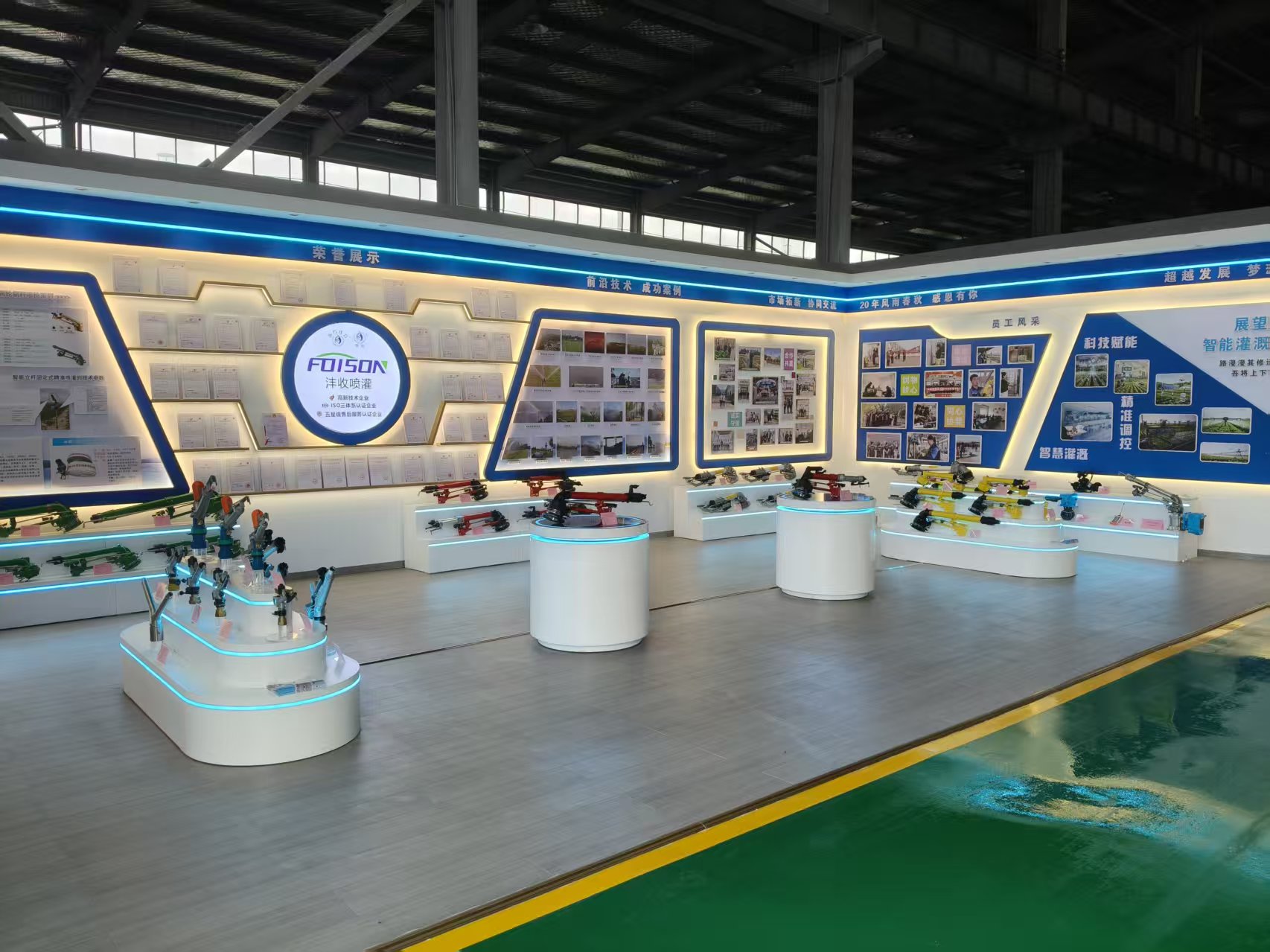
This article compares three mid-range models from FOISON Sprinkler — the FS40, the FSW40 Pro and the FS35 — using published specification data rather than marketing claims. FOISON Sprinkler is the brand of Xuzhou Foison Sprinkler Irrigation Equipment Co., Ltd, a sprinkler and irrigation equipment manufacturer founded in 2013 and based in Xuzhou City, Jiangsu Province, China. Its core products are turbine spray guns, impact guns and irrigation systems, and sprinklers for farm and industrial use form its main product line; roughly 70% of its output is exported, to markets that include the EU, Africa, Australia, New Zealand, South East Asia, Mid Asia, the Middle East and South America.
The comparison is written for buyers who have already shortlisted a sprinkler type and now have to choose between models with similar names and similar-looking ranges — importers, distributors, farm managers, irrigation engineers and procurement staff who are in the evaluation stage or already preparing an order.
Why three models with overlapping specifications exist
The published ranges for the FS40, FSW40 Pro and FS35 overlap on almost every line, and that overlap is not accidental. A sprinkler range has to serve farms running lower-pressure pumps on smaller blocks as well as operations with larger mains and wide head spacing. A single model cannot cover both ends without either restricting flow at the top of the range or losing usable throw at the bottom. Overlap also gives distributors a way to serve different customer segments — a 2-inch connection for high-flow mains, a 1-1/2-inch female thread for the majority of standard installations — without changing supplier.
The practical consequence for buyers is that the model name tells you very little. All three models are listed with a 24° spray angle and 360° rotation, so the visible differences in the catalogue come down to pressure range, flow range, radius band and thread size. Those four items are precisely the ones that determine whether a sprinkler works with an existing pump and layout, which is why they deserve more weight than a single headline throw figure. Buyers searching under terms such as rain gun, sprinkler gun, turbine gun or impact gun should also note that these words describe drive types and market usage rather than a formal classification; the FS40, FSW40 Pro and FS35 sit inside a range that also includes turbine spray guns, impact guns and complete irrigation systems.
Specification comparison at a glance
| Parameter | FS40 | FSW40 Pro | FS35 |
|---|---|---|---|
| Product type as listed | Agriculture sprinkler, 360° gear adjustable | Turbine sprinkler, 360° adjustable | Impact sprinkler, 360° adjustable |
| Working pressure | 0.15–0.5 MPa | 0.2–0.5 MPa | 0.2–0.6 MPa |
| Flow | 9.5–39.4 m³/h | 9.5–37 m³/h | 7.8–31.9 m³/h |
| Spray radius | 20–43 m | 22–41 m | 18–36 m |
| Connection size | 2″ thread | 1-1/2″ female thread | 1-1/2″ female thread |
| Spray angle | 24° | 24° | 24° |
| Material as listed | Aluminum, copper, SS, nylon | Aluminum alloy, copper, SS, nylon | Aluminum alloy, copper, SS, nylon |
| Listed use scope | Agriculture irrigation | Agriculture, forestry, urban greening, industrial dust removal | Agriculture, forestry, urban greening |
Figures are as published in the specification record for each model. Where a range is given, the first value is the lower limit and the second the upper limit.
Pressure and flow: what the ranges tell a buyer
Working pressure defines the floor and ceiling of a sprinkler’s usable range. For these three models the published bands are 0.15–0.5 MPa for the FS40, 0.2–0.5 MPa for the FSW40 Pro and 0.2–0.6 MPa for the FS35.
Two differences follow directly from those bands. First, the FS40 is the only model in the group listed from 0.15 MPa. On a farm where pressure at the sprinkler falls below 0.2 MPa during peak demand — long hose runs, several heads on one line, or a pump running toward the end of its curve — the FS40 is the model whose stated operating band still covers that condition on paper. Second, the FS35 is the only model listed up to 0.6 MPa, so where supply pressure is consistently high, or where higher pressure is used to compensate for layout, the FS35 carries the widest upper margin in this group.
Flow ranges are 9.5–39.4 m³/h for the FS40, 9.5–37 m³/h for the FSW40 Pro and 7.8–31.9 m³/h for the FS35. The FS40 therefore has the highest demand ceiling of the three, while the FS35 has the lowest ceiling and the lowest floor. Flow matters more than radius during planning because a sprinkler behaves as a hydraulic load: the flow range has to sit inside what the pump and mainline can deliver at the pressure the sprinkler needs. For a fixed pump, choosing the higher-flow model reduces the number of units that can operate in one zone, whereas the lower-flow FS35 allows more heads per zone for the same water supply — which is exactly the pattern seen in multi-unit fixed layouts.
Pressure and flow are also linked rather than independent. In general, a given nozzle produces more flow and greater throw as pressure rises, which is why a flow figure should always be read together with the pressure at which it is achieved, and why matching the pump curve to the sprinkler band is the first step of selection rather than a final check.
Radius and spray angle: layout consequences
Published radius bands are 20–43 m for the FS40, 22–41 m for the FSW40 Pro and 18–36 m for the FS35. Two details are easy to overlook.
The FSW40 Pro has the highest lower limit in the group: at its minimum listed pressure it is stated to reach 22 m, against 20 m for the FS40 and 18 m for the FS35. Where minimum coverage under low pressure matters more than maximum throw, that difference becomes the deciding figure. The FS35, at the other end, has both the smallest minimum radius and the smallest maximum radius, which makes it suited to closer spacing and smaller blocks rather than wide-spacing field layouts.
Converting radius into layout logic, a full-circle unit with a 43 m radius covers a circle of roughly 86 m diameter under nominal, unobstructed conditions, and a unit with a 36 m radius roughly 72 m. Those diameters determine how many units a block requires, and they interact directly with flow: fewer large units each demand more water, while more smaller units spread the same demand across a zone. Because all three models are listed with a 24° spray angle and 360° rotation, the spray angle is not a differentiator inside this group — if a project needs a substantially different trajectory, that requirement has to be met outside these three models.
Connection size: the 2-inch thread and the 1-1/2-inch female thread
The FS40 is listed with a 2-inch thread; the FSW40 Pro and FS35 are listed with a 1-1/2-inch female thread. Connection size is the specification most likely to be overlooked at shortlisting stage and least likely to be forgiven on site.
A 2-inch connection suits installations built around larger mains and hoses and is consistent with the FS40’s higher flow ceiling. A 1-1/2-inch female thread matches a large share of standard farm and landscape pipework and is shared by the other two models, which means fittings, risers and spares can be common across a mixed installation using FSW40 Pro and FS35 units.
Where the two do not match, an adapter is required, and in general pushing a high flow through a smaller connection raises velocity and increases pressure loss in that section. That is a system-level effect rather than a defect in any sprinkler, but it means buyers running a 1-1/2-inch system should check whether the additional flow of the FS40 is genuinely usable through their pipework before selecting it for its ceiling figures.
Drive principle: gear-adjustable, turbine and impact
The three models use different drive principles, which the specification sheets make visible in the product type line: the FS40 is listed as a 360° gear-adjustable agriculture sprinkler, the FSW40 Pro as a turbine sprinkler, and the FS35 as an impact sprinkler. Gear-driven, turbine-driven and impact mechanisms are all established ways of turning a sprinkler through a full circle, and they differ in mechanical complexity, in how rotation responds to changing pressure, and in the service routine they require.
Because the published specification does not state duty cycle, rotation speed or service intervals for these three models, buyers comparing drive principles should treat those points as verification items rather than assumptions. Confirm rotation behaviour at the pressures the system actually runs at, confirm which parts wear and whether they are field-replaceable, and confirm spare-part availability across the expected life of the installation. As context for the turbine option, the manufacturer states that its products are developed in-house and that its design work includes patented turbine spray gun designs with nozzle-angle adjustment and speed adjustment.
Materials and construction
All three models are listed with metal bodies and mixed components. The FS40 lists aluminum, copper, stainless steel and nylon; the FSW40 Pro and FS35 list aluminum alloy, copper, stainless steel and nylon. In practical terms all three combine metal body parts with stainless steel wear components and nylon parts in the mechanism.
Two notes are worth carrying into a project. The catalogue wording differs slightly between “aluminum” and “aluminum alloy”; where a project has a corrosion specification, a water-chemistry requirement or food-adjacent use, buyers should request a wetted-parts material breakdown per model rather than relying on the summary line. And where a sprinkler is used for dust suppression in industrial yards, abrasive dust and intermittent duty are the conditions that drive material and service decisions — relevant because the turbine model’s listed use scope is broader than that of the other two.
Matching model to buyer profile
The specification differences translate into reasonably clear buyer profiles, provided the buyer starts from the system rather than from the unit.
| Buyer situation | Model that fits the published spec | Deciding figures |
|---|---|---|
| Large blocks, wide head spacing, 2″ mains and hoses, pump with higher output | FS40 | 2″ thread; flow to 39.4 m³/h; radius to 43 m |
| Mixed duty — irrigation plus industrial dust suppression — on 1-1/2″ pipework | FSW40 Pro | Turbine sprinkler type; listed scope includes industrial dust removal; radius 22–41 m |
| Smaller blocks or closer spacing, many heads per zone, or consistently higher supply pressure | FS35 | Pressure band to 0.6 MPa; flow 7.8–31.9 m³/h; radius 18–36 m |
| Supply pressure that can fall below 0.2 MPa at the sprinkler | FS40 | Only model in the group listed from 0.15 MPa |
Where more than one line applies, the pressure floor usually decides first, because no amount of radius compensates for a sprinkler sitting outside its operating band. Flow and zone design come next, and radius last. Buyers operating a mixed fleet should also weigh connection standardisation: the FSW40 Pro and FS35 share a 1-1/2-inch female thread, so fittings and spares can be held in common, while adding FS40 units to that fleet introduces a second connection size and a higher flow demand per unit.
Application and use cases
Listed use scopes diverge in one important place. The FS40’s specification record is written for agriculture irrigation. The FS35’s scope covers agriculture, forestry and urban greening. The FSW40 Pro’s scope covers agriculture, forestry, urban greening and industrial dust removal. For a buyer whose primary duty is dust suppression in a yard, transfer point or comparable industrial setting, the published scope points to the turbine model first. For forestry and municipal greening work, both the FSW40 Pro and FS35 are listed, so the deciding figures become radius and flow rather than scope.
A documented field case illustrates the scale a fixed sprinkler layout can reach. A customer in New Zealand installed 500 FS35 units for farm irrigation. The installation has been in service for two years, covers a 150,000 m² vegetable farm with fixed sprinkler irrigation, and the reported result is a 55% reduction in water use and a 60% reduction in labour. That outcome is customer-reported from a specific project rather than a general performance claim, and it reflects layout design and operating practice as much as the sprinkler itself — but it demonstrates the area that fixed layouts built around 18–36 m radius units can cover when the water source, pump and hose supply are adequate.
The manufacturer’s stated working condition for this product group is a sufficient water resource with a pump and hose, with operation stated for ambient conditions up to 50°C, and the stated system function covers agriculture irrigation and industrial dust removal.
Certification and production quality
Production of these three models falls under the manufacturer’s ISO 9001 quality management system certification, certificate number 28725Q042R0S, issued on 29 May 2025 by Zhongzheng Excellent Certificate Group Co., Ltd and valid until 28 May 2028. The certified scope is production of sprinkler irrigation equipment, and the standard cited is GB/T 19001-2016 idt ISO 9001:2015. The certificate record lists the FSW40 Pro, FS35 and FS40 among the covered products.
For buyers, a certificate with a stated scope and a defined validity period is a document that can be filed and checked, which carries more weight in tenders and distributor agreements than a general quality claim. It should be read alongside the inspection routine: quality control is described as 100% testing, and acceptance inspection for these product lines includes a pre-shipment test. Buyers who need a document trail for a specific shipment should confirm what is recorded in the pre-shipment test report for their order.

Procurement terms, lead time and customization
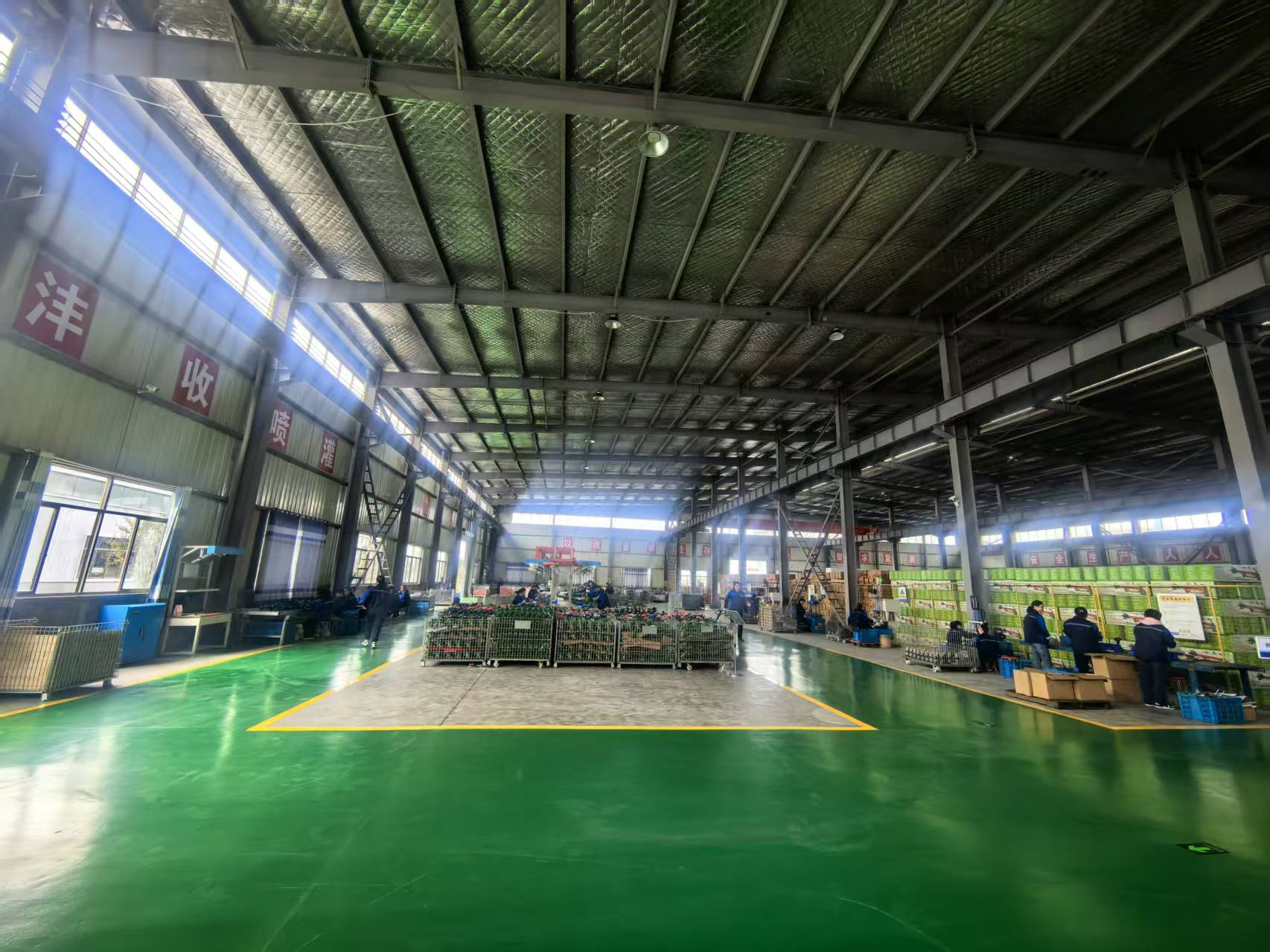
Commercial terms are consistent across the three models. The minimum order quantity is 20 units. Payment terms are 30% deposit with the remaining 70% before shipment. Delivery is arranged through FOB, CIF or DDP methods, which lets buyers choose between collecting at port, having freight arranged to a destination port, or delivered-duty terms. Production lead time is stated as within 20 days, against a monthly capacity of 50,000 units. After-sales support is provided remotely.
Customization covers model, logo, function and shape under an OEM/ODM arrangement, and the manufacturer offers ODM design and production services. For distributors and brand owners this means a sprinkler can be aligned with local market expectations in branding and configuration. It also means the specification of a customized unit should be documented explicitly, because a changed function or configuration can shift the effective pressure, flow or connection requirement away from the catalogue figures for the standard model.
Limits and boundaries: where these models are not the right choice
A comparison that only lists advantages is not useful for procurement, so the boundaries deserve equal weight.
- Water source, pump and hose are prerequisites. These are pressure-driven sprinklers, not stand-alone units. The published working condition is a sufficient water resource with a pump and hose; without that infrastructure, or with a pump that cannot reach the lower pressure limit of the chosen model, the installation will not perform as specified.
- Pressure limits are hard limits. None of the three models is listed to operate below 0.15 MPa, and none above 0.6 MPa. Systems that fall outside that overall window need a different solution or a system redesign, not a different model from this group.
- Greenhouse and micro-irrigation duty is a different category. For greenhouse applications the manufacturer’s guidance is to use small plastic sprinklers or micro spray pipe rather than large metal sprinklers, with metal sprinklers positioned for outdoor farm use. If the project is a greenhouse or a highly localised application, this comparison is the wrong shortlist.
- The spray angle is fixed at 24° across the group. Projects that need a materially different trajectory must look outside these three models.
- Connection mismatch has a cost. Running the FS40’s higher flow through 1-1/2-inch pipework requires adaptation and, in general, increases pressure loss in that section.
- Radius and flow figures are nominal. Field radius is affected by wind, nozzle wear, hose friction, elevation and the actual pump curve, so published ranges should be treated as planning values to be confirmed in the field.
- Sprinklers are not the only method. The manufacturer’s own stated position is that sprinklers cover large areas, are easy to operate and save cost and water, while micro spray pipe or drip pipe suit greenhouses and more localised delivery. The method should be chosen before the model.
Market trend analysis
Several shifts in buyer behaviour are visible in how irrigation equipment is now specified, and they favour exactly the kind of comparison this article sets out.
System-level efficiency rather than unit-level headline figures. Buyers are increasingly evaluating coverage and water delivery per zone and per block, not the maximum throw printed on a single unit. That pushes pressure band and flow range to the front of the shortlisting process and pushes maximum radius toward the back.
Labour availability shaping layout choices. Fixed sprinkler layouts reduce the manual effort of moving equipment, and the New Zealand field case reports both water and labour savings from a fixed installation. As labour becomes harder to secure in many agricultural regions, fixed layouts with more heads per zone become more attractive — a pattern that favours the lower-flow FS35 in mixed-fleet planning.
Industrial dust suppression extending the sprinkler’s role. The FSW40 Pro’s published use scope includes industrial dust removal, and the stated function of this product group covers agriculture irrigation as well as industrial dust removal. This reflects a broader pattern in which sprinkler and spray-gun hardware is specified for yard and process dust control alongside irrigation duty, with similar selection logic around flow, throw and connection size.
Geographic spread of demand. With roughly 70% of output exported to markets including the EU, Africa, Australia, New Zealand, South East Asia, Mid Asia, the Middle East and South America, a supplier range has to cover several pressure regimes and installation conventions at once. That is one practical reason distributor ranges tend to include both a 2-inch and a 1-1/2-inch option rather than a single flagship model.
Documentation as part of the purchase. Quality management certification with a stated scope and validity, together with pre-shipment testing, is increasingly requested as part of routine procurement rather than only in formal tenders.
Customization as a normal expectation. OEM/ODM supply covering model, logo, function and shape has moved from an exception to a standard requirement in distributor markets, which in turn makes specification documentation more important, not less.
Future outlook
The direction of travel in this segment is right-sizing rather than up-sizing. Buyers are likely to continue shifting the selection sequence so that the pressure band and flow range are matched to the pump first, the radius band second, and the model name last.
On the supply side, mixed fleets that share a single connection standard are likely to remain attractive to distributors because they simplify fittings, spares and training. The FSW40 Pro and FS35 already share a 1-1/2-inch female thread, which supports that approach, while the FS40’s 2-inch thread keeps it positioned for larger-flow installations.
Drive development is also likely to keep moving. The manufacturer states that its products are developed in-house, with patented design work in turbine spray guns including nozzle-angle and speed adjustment, and customization of function and shape under OEM/ODM. For buyers, the practical implication is that a specification sheet is a snapshot: figures, connection standards and available functions should be confirmed against the current document at the time of order, particularly for customized units.
Finally, service expectations are becoming part of the specification. Lead time stated as within 20 days, a monthly capacity of 50,000 units, remote after-sales support and a quality management certificate valid to 28 May 2028 are the kind of operational facts that distributors weigh when deciding how much stock to carry and which models to standardise on.
FAQ
What is the actual difference between the FS40, FSW40 Pro and FS35 sprinklers?
All three are 360° rotating sprinklers with a listed 24° spray angle, so the differences sit in four specifications. The FS40 is listed at 0.15–0.5 MPa, 9.5–39.4 m³/h, a 20–43 m radius and a 2-inch thread. The FSW40 Pro is listed at 0.2–0.5 MPa, 9.5–37 m³/h, a 22–41 m radius and a 1-1/2-inch female thread, as a turbine sprinkler. The FS35 is listed at 0.2–0.6 MPa, 7.8–31.9 m³/h, an 18–36 m radius and a 1-1/2-inch female thread, as an impact sprinkler.
How do I choose between the 2-inch thread and the 1-1/2-inch female thread?
Start from the pipework and flow requirement, not the sprinkler. The 2-inch thread on the FS40 pairs with larger mains and hoses and with its higher flow ceiling of up to 39.4 m³/h. The 1-1/2-inch female thread shared by the FSW40 Pro and FS35 matches most standard farm and landscape pipework and allows fittings and spares to be common across a mixed installation. If an existing system is 1-1/2-inch, an adapter is needed for the FS40, and the higher flow may not be fully usable through the narrower line.
Which model should be used for industrial dust suppression rather than irrigation?
The published use scope for the FSW40 Pro covers agriculture, forestry, urban greening and industrial dust removal, whereas the FS40 is listed for agriculture irrigation and the FS35 for agriculture, forestry and urban greening. For a primary duty of dust suppression, the turbine model is therefore the one whose listed scope explicitly includes that application. Selection still depends on matching its pressure and flow band to the available water supply and on the throw required to reach the working area.
What certification and quality checks apply to these three models?
Production of the FS40, FSW40 Pro and FS35 falls under an ISO 9001 quality management system certification, certificate number 28725Q042R0S, issued on 29 May 2025 by Zhongzheng Excellent Certificate Group Co., Ltd, valid until 28 May 2028, with a certified scope of production of sprinkler irrigation equipment and the standard GB/T 19001-2016 idt ISO 9001:2015. Quality control is described as 100% testing, and acceptance inspection includes a pre-shipment test.
What are the order terms for these sprinkler models?
The minimum order quantity is 20 units. Payment terms are 30% deposit with 70% payable before shipment. Delivery is arranged through FOB, CIF or DDP methods, and production lead time is stated as within 20 days against a monthly capacity of 50,000 units. Customization under an OEM/ODM arrangement covers model, logo, function and shape, and after-sales support is provided remotely.
When is a large metal sprinkler the wrong choice?
For greenhouse applications, the manufacturer’s guidance is to use small plastic sprinklers or micro spray pipe instead of large metal sprinklers, with metal sprinklers positioned for outdoor farm use. More generally, sprinkler irrigation requires a sufficient water resource, a pump and a hose, and none of these three models is listed to operate below 0.15 MPa or above 0.6 MPa. Where the supply falls outside that window, or where delivery has to be highly localised, a different method should be selected before a model.
A downloadable product catalog covering the FS40, FSW40 Pro, FS35 and the wider sprinkler and irrigation equipment range is available here: Foison product catalog (PDF). Specification figures should be confirmed against the current sheet for the exact model and configuration before ordering.