
FS35 to FSW80: A Six-Model Sprinkler Decision Guide
FS35 to FSW80: A Six-Model Sprinkler Decision Guide
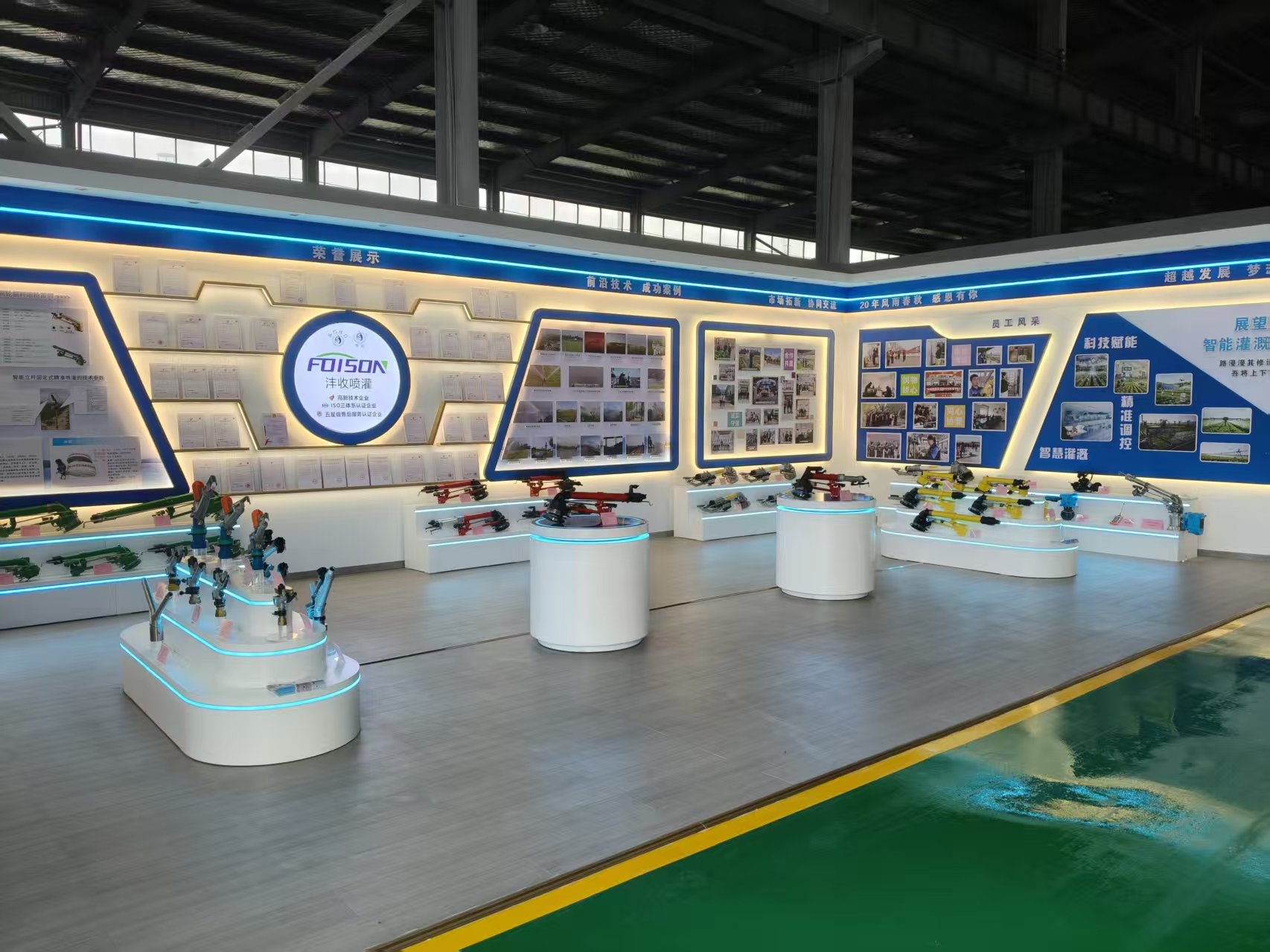
The six models in the FOISON Sprinkler range span four drive mechanisms, so mechanism selection precedes any specification comparison.
Choosing between the FS35, FS40, FSW40 Pro, FSN50, FSC50 and FSW80 is not a choice between six versions of the same sprinkler. The six models in the FOISON Sprinkler range span four drive mechanisms — impact, gear-driven, turbine and rain gun — and the mechanism has to be settled before pressure range, flow rate, spray radius, spray angle, connector size or materials can be compared in any meaningful way.
A six-column specification sheet can hide that difference. A rain gun and a small impact head may both quote an attractive throw distance while placing very different demands on the pump, the mainline and the hours an operator spends moving equipment. This comparison therefore does two things. It separates the six models by mechanism and application role, and it sets out the six dimensions on which the final choice should be made — with an explicit note on which values must come from the current datasheet of the specific model rather than from a family-level description.
Why the mechanism decides more than the numbers
Irrigation sprinklers are often compared as if they were interchangeable emitters rated on a single scale. They are not. An impact sprinkler, a gear-driven rotor, a turbine sprinkler and a rain gun all convert pressurised water into a jet, but they do it through different mechanisms, and each mechanism trades coverage, droplet behaviour, serviceability and water demand differently. A buyer who selects on radius alone can end up with a gun the pump cannot feed, or with a head too small for the block it has to cover.
A workable sequence runs in four steps: first mechanism and application role, then the specification dimensions that this mechanism makes critical, then the model-level datasheet values, and finally the commercial and acceptance terms. Skipping the first step makes the third and fourth expensive.
One further caution applies to this range specifically. Model designations such as FS35, FS40, FSW40 Pro, FSN50, FSC50 and FSW80 are product names; they should not be read as pressure ratings, flow figures or throw distances. Any number that matters to the purchase should be taken from the datasheet for that exact model, at the stated pressure, nozzle and test conditions.
The six models at a glance
The table below is an orientation tool rather than a substitute for datasheets. It answers the question "which part of the range am I shopping in?" It does not answer "what will this model deliver on my block?" — that requires pressure, flow and radius data for the exact model, nozzle and connector configuration being quoted.
| Model | Mechanism | Decision it answers | Values to confirm |
|---|---|---|---|
| FS35 | Impact | Do I need a simple, easily serviced head for small plots and nursery beds? | Pressure band, nozzle options, radius at that pressure, connector thread, wetted materials |
| FS40 | Gear-driven | Do I need smooth, even rotation across a block of heads? | Rotation speed, flow and radius at target pressure, gear service kit, connector |
| FSW40 Pro | Turbine | Do I need adjustable nozzle angle and rotation speed for changing crops or blocks? | Adjustment range and locking, flow and radius at each setting, materials |
| FSN50 | Rain gun | Can my water source and mainline support a high-volume long-throw gun? | Flow at working pressure, nozzle set, throw, inlet size, body and wearing-part materials |
| FSC50 | Rain gun | Which gun body and nozzle configuration suits my water quality and mounting? | Nozzle options, trajectory, flow and throw on the same test basis, connector, service parts |
| FSW80 | Rain gun | Is the third rain gun in the range the better match for my large-area duty? | Flow and throw for the intended duty, nozzle and inlet specification, materials, mounting |
Within the rain-gun group, mechanism stops being a differentiator. FSN50, FSC50 and FSW80 share the characteristics that define a rain gun, so the choice among the three has to be settled on nozzle options, flow at the target pressure, throw, connector size and body materials. The efficient way to buy is to request all three datasheets as one table on the same test basis and compare rows rather than paragraphs.
How the four mechanisms differ
Impact sprinkler — FS35
In an impact sprinkler a spring-loaded arm is driven out by the jet and then strikes the body, indexing the nozzle around its circle. The design has few moving parts, is straightforward to strip and service in the field, and is familiar to most irrigation technicians. The trade-off is that rotation is produced by mechanical impact rather than a controlled drive, and a single jet covers a limited wetted area per unit, so layouts normally rely on several heads. It suits small plots, nursery beds and situations where simple field repair matters more than fine rotation control. Confirm the nozzle options, the radius at the pressure actually available on site, and the connector thread.
Gear-driven sprinkler — FS40
A gear-driven sprinkler uses an internal water-driven gear motor to rotate the nozzle at a controlled rate. Rotation is smoother and less of the drive energy arrives as shock load on the riser, which is why this type is commonly used where a set of heads must wet a block evenly. It suits field blocks, orchards and perennial crops where consistent rotation across many units matters. Confirm rotation speed, the nozzle set offered, flow and radius at the target pressure, and the availability of a service kit for the gear assembly.
Turbine sprinkler — FSW40 Pro
A turbine sprinkler uses water passing an impeller to drive rotation. FOISON Sprinkler states that its products were developed in-house and that its patents cover areas of turbine spray gun design, including adjustable nozzle angle and adjustable speed. That adjustability is the practical difference between this model and a fixed-pattern head: trajectory and rotation speed are the two settings that change droplet behaviour, throw and wind sensitivity without a nozzle change. Confirm the adjustment range, how the settings are locked so they hold in the field, and the flow and radius figures at each setting.
Rain gun — FSN50, FSC50, FSW80
Rain guns are large-nozzle devices designed to throw a jet over a long distance from a stand, cart or traveller. They are associated with high flow and large wetted areas, which shifts the binding constraint away from the sprinkler and onto the water source, the pump curve and the mainline. Confirm the flow required at the intended working pressure, the nozzle options, the throw and trajectory, the inlet and connector specification, and the materials of the body and wearing parts. Two further questions belong in the same conversation: whether the pump can sustain that duty continuously, and how much wind the selected trajectory tolerates, because a long jet is more exposed to drift than a short one.
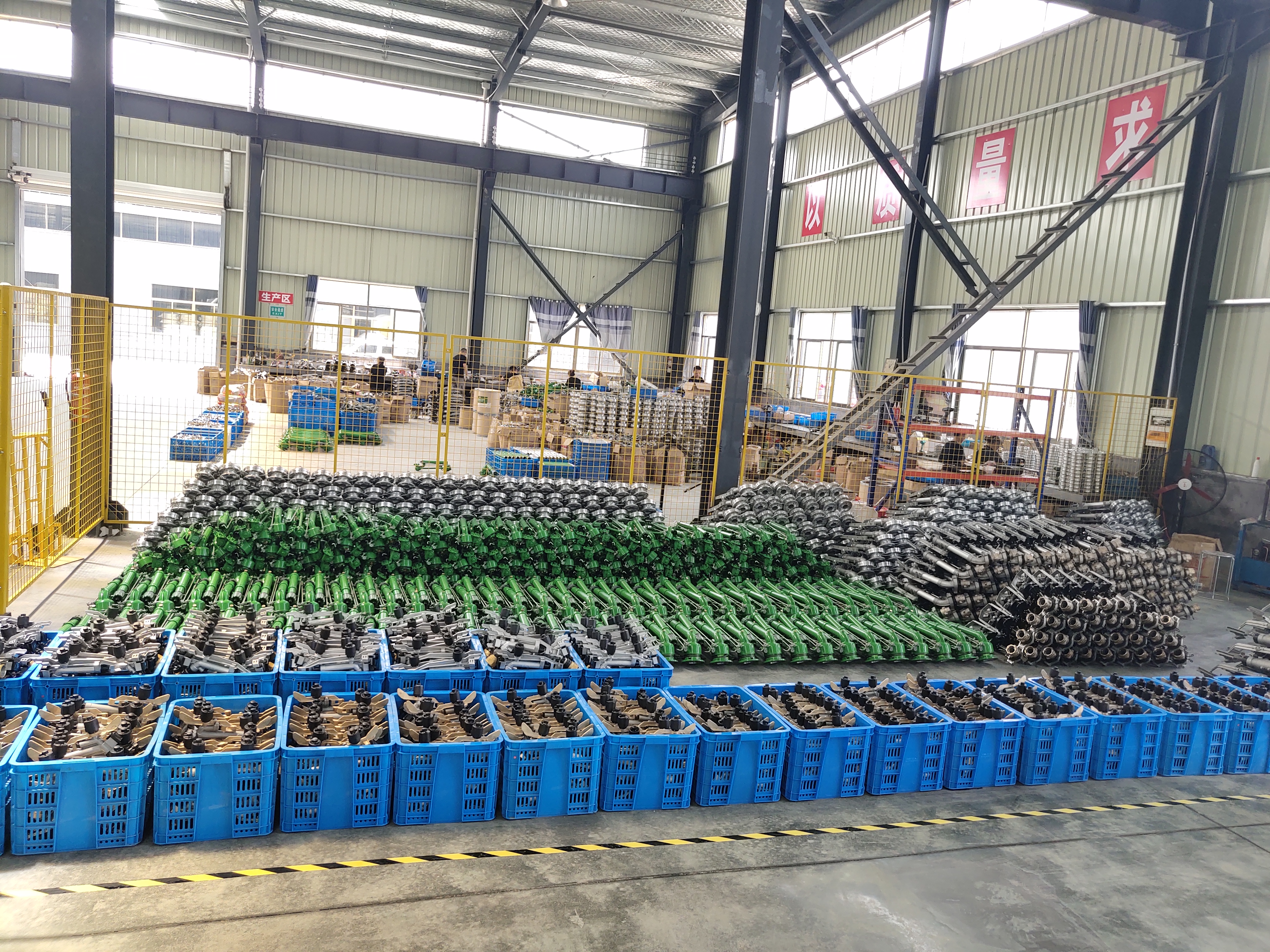
Connector size, thread standard and spare-part availability are order-critical details that should be confirmed in writing.
The six dimensions buyers should compare
Once the mechanism is fixed, six dimensions decide the order. Each needs a value for the exact model, plus the conditions under which that value was measured.
1. Pressure range. This is the band within which the published flow, radius and pattern hold. Below it, throw shortens and uniformity falls away; above it, the jet over-sprays, droplets become finer, wind drift increases and wearing parts age faster. Ask for a flow-versus-pressure curve rather than a single working-pressure figure, because one point hides the shape of the curve across the range the pump will actually deliver.
2. Flow rate. Flow must match pump output, pipe bore and valve capacity, and the total demand is the sum of every unit running at the same time. Rain guns move more water per hour than small heads; that is both their purpose and their constraint. A flow figure quoted without its corresponding pressure is not a usable number.
3. Spray radius or throw. A test value, not a promise. It depends on pressure, nozzle, mounting height and wind, so values should be compared only at the same pressure and nozzle. Once the radius is known, the layout question becomes spacing: patterns must overlap enough to give uniform coverage rather than a series of rings.
4. Spray angle or trajectory. Trajectory affects droplet size, wind drift and whether the jet clears tall crops without stripping leaves. An adjustable nozzle angle, which the manufacturer states is available on its turbine designs, lets a buyer tune throw against droplet impact without changing the nozzle — useful where one machine serves several blocks or crops.
5. Connector size and thread. Mismatched connectors cause leaks, pressure loss and field failures, and the connector is one of the details most easily changed between production batches. Confirm nominal size, thread standard, male or female, and whether adapters are supplied — and record the confirmed specification in the purchase order rather than in an email thread.
6. Materials of wetted and wearing parts. Corrosion and abrasion life depends on water quality: sandy or ferrous water wears nozzles and drive parts, and saline water attacks some metals. Ask for the material of the body, nozzle, drive elements — arm and spring, gear set or turbine — and seals, and ask which of those are service items rather than permanent parts.
Comparing documented characteristics is not the same as testing an outcome on the buyer's field. The dimensions above tell a buyer which questions to put to the supplier and which answers must be in writing; they do not establish that one model outperforms another on a specific site.
Matching model to farm size, water source and application
Three variables dominate the fit. Farm size sets the number of units and the wetted area each unit must cover; the water source sets the achievable pressure, flow and water quality; the application sets how much droplet energy the crop can take and how often equipment can be moved.
- Small plots, nursery beds and garden-adjacent areas. A single-jet impact head such as the FS35 is the low-complexity option, and several units give layout flexibility. Check the radius at the low pressure such installations often run at, since a figure quoted at a higher pressure will not transfer.
- Field blocks, orchards and perennial crops. A gear-driven rotor such as the FS40 suits blocks where even rotation across a set of heads matters. FOISON Sprinkler's comparative material identifies vegetable, fruit, plant and tea farms as the fit for sprinkler irrigation generally, which is a category-level statement rather than a model recommendation.
- Mixed or changing duty. The FSW40 Pro, with adjustable nozzle angle and speed, allows trajectory and rotation to be retuned as the crop or season changes — relevant where one machine has to serve more than one block.
- Large open areas and dust suppression. The rain guns FSN50, FSC50 and FSW80 are the high-volume end of the range. Here the purchase question becomes whether the pump, mainline and water storage can sustain the duty, and the three models then have to be separated on datasheet rows rather than on mechanism.
Sprinkler irrigation against normal irrigation: the claim and its limit
The commercial case for sprinkler irrigation usually rests on resource use rather than on the hardware. FOISON Sprinkler's comparative material states that sprinkler irrigation can save more energy and water than normal irrigation, especially in water-scarce areas; that the system provides at least 50% energy and cost savings over normal irrigation methods; that energy efficiency is at least 50% better than normal irrigation alternatives; that maintenance demand and failure rate are low, with easy installation and maintenance; and that water-spray efficiency and coverage uniformity are high compared with normal irrigation.
These are category-level statements about sprinkler irrigation as a method, not per-model field results, and the benchmark behind the term "normal irrigation" is not defined in the material available for this comparison. The claims are still usable, but they carry a verification question: if a 50% saving is material to the business case, ask the supplier for the basis — which benchmark, which crop, which operating pressure and which measurement method — and test the figure on a trial block before scaling the purchase.
A second boundary is physical. Sprinkler irrigation applies water above the canopy, so wind, evaporation and leaf wetness all affect the result. A system chosen on throw distance alone can lose uniformity in wind. That is an argument for comparing pressure, flow and radius data together with the spacing plan, not for preferring one model over another in the abstract.
Market context for the decision
Third-party estimates describe a substantial category, although they do not forecast any individual model in this range. Grand View Research valued the global sprinkler irrigation market at USD 3.04 billion in 2025. IMARC Group put the global smart irrigation market at USD 2.2 billion in 2025 and projected USD 6.2 billion by 2034 — a broader scope that includes control and sensing components rather than sprinklers alone, which is why the two figures should not be added together. Grand View Research also reports that Asia Pacific held 36.2% of agricultural irrigation machinery revenue in 2025, with China as a leading country.
Growth estimates differ and should be read as context rather than as a purchasing signal. Published CAGR figures for sprinkler irrigation range from about 6.5% for 2026–2033 to about 3.04% for 2025–2035, a gap usually attributed to how broadly smart features are included in the definition. For a single farm or site purchase, the practical reading is structural: equipment decisions are being taken in a market where water and energy use are priced, which is an argument for putting per-model pressure and flow data into the quotation file.
The manufacturer behind the range
FOISON Sprinkler is the brand of Xuzhou Foison Sprinkler Irrigation Equipment Co., Ltd, a sprinkler and irrigation equipment manufacturer founded in 2013 and based in Pei County Industry Area, Xuzhou, Jiangsu Province, China. Company information supplied for this comparison lists a 30,000 m² factory, 135 employees, a 12-engineer design team, more than 100 product varieties and an annual output of 200,000 units. The company states that roughly 70% of output is exported, to the EU, Africa, Australia, New Zealand, South East Asia, Central Asia, the Middle East and South America.
Two capability points matter for a six-model comparison rather than for general credibility. First, the range is broad enough that mechanism selection happens inside one supplier, which can keep connector, nozzle and spare-part families consistent across a mixed layout — provided the buyer confirms that compatibility in writing for the exact models chosen. Second, the company states that products are developed in-house, with patented design work covering turbine adjustment features. That matters because adjustability is what allows a mid-range model to be retuned for a second crop instead of replaced. Company and product details are published at FOISON Sprinkler.
What to confirm before the order
The items below remain open procurement questions in this comparison rather than settled terms. None of them should be assumed from a family brochure.
- Model datasheet at buying conditions: flow, pressure, radius, trajectory and nozzle for the exact model and configuration quoted.
- Test basis: whether published figures come from manufacturer testing and whether the model is assessed against a recognised reference. ISO 7749-1:1995 specifies design and operational requirements for rotating sprinklers used in agricultural irrigation, according to the International Commission on Irrigation & Drainage; ask which models are assessed against it, and by whom.
- Connector and thread: nominal size, thread standard, adapters supplied, and written confirmation that the delivered connector matches the buyer's riser or hose.
- Materials schedule: body, nozzle, drive parts — arm and spring, gear set or turbine — and seals, with service items identified.
- Spare parts and service: availability of nozzles and wearing parts, recommended service interval, and whether a service kit ships with the order.
- Sampling and acceptance: trial unit, agreed test procedure, acceptance criteria, and the remedy if a unit falls outside them.
- Commercial terms: quantity breaks, lead time, packing, warranty period and coverage, payment terms and the documentation set.
- Trade classification: HS 842482 covers mechanical appliances for agricultural or horticultural use for projecting, dispersing or spraying liquids, according to the United Nations Statistics Division; final classification and duty treatment should be confirmed with the importer's customs broker.
Outlook
Nothing in the evidence available for this comparison supports a forecast for any single model in the range, and a comparison article should not manufacture one. What the evidence does support is a shift in what buyers ask for. With market-level attention on water and energy use, and with published savings in the region of 50% for sprinkler irrigation as a method, the defensible purchase file contains per-model pressure, flow and radius data, a materials schedule, a written connector confirmation and an acceptance test — not a headline radius figure. Buyers who request those four items at quotation stage generally find the FS35-to-FSW80 decision shorter than the datasheet stack suggests.
FAQ
What is the main difference between an impact sprinkler and a gear-driven sprinkler?
Both rotate, but the drive differs. An impact sprinkler uses a spring-loaded arm struck by the jet to index rotation; it has few moving parts and is simple to service in the field. A gear-driven sprinkler uses an internal water-driven gear motor, which produces smoother and more even rotation and reduces shock load on the riser. Which fits depends on block size, service access and the evenness required, and the numeric differences must be read from the FS35 and FS40 datasheets rather than inferred from the drive type.
When should a buyer choose a rain gun such as the FSN50, FSC50 or FSW80 instead of a smaller sprinkler?
When the area to be covered per unit is large and the water source can sustain high flow at the working pressure. Rain guns project a large-nozzle jet over long distances, so the limiting factors become pump capacity, mainline size and water availability rather than the sprinkler itself. Among the three, the choice has to be made on flow, throw, nozzle options, connector specification and materials taken from the individual datasheets.
Which specifications should be compared side by side before ordering?
Pressure range, flow rate, spray radius, spray angle or trajectory, connector size and thread, and the materials of wetted and wearing parts. Each should be compared on the same pressure and nozzle basis, because a radius figure quoted at a different pressure is not a comparable number, and a flow figure quoted without its pressure cannot be matched to a pump curve.
Does sprinkler irrigation reduce energy and water use compared with normal irrigation?
FOISON Sprinkler's comparative material states that sprinkler irrigation can save more energy and water than normal irrigation, particularly in water-scarce areas, with at least 50% energy and cost savings, at least 50% better energy efficiency, low maintenance demand and high coverage uniformity. These are statements about sprinkler irrigation as a method rather than per-model field results, and the benchmark behind "normal irrigation" is not defined in the available material, so a buyer relying on the figure should ask for the test basis and verify it on a trial block.
Which standard and trade code apply to agricultural sprinklers?
ISO 7749-1:1995 specifies design and operational requirements for rotating sprinklers used in agricultural irrigation, according to the International Commission on Irrigation & Drainage. For trade, HS 842482 covers mechanical appliances for agricultural or horticultural use for projecting, dispersing or spraying liquids, according to the United Nations Statistics Division; importers should confirm final classification and duty treatment with their customs broker.
The FOISON Sprinkler product catalogue is available for download: Foison Catalog (PDF).
¿Tiene preguntas o necesita más detalles?
Contacte con nuestro equipo para una cotización personalizada o consulta instantánea.
Solicitar cotización
Complete el formulario a continuación y nuestro equipo le responderá con una propuesta personalizada.
Chat directo de WhatsApp
¿Prefiere chatear en tiempo real? Envíenos un mensaje por WhatsApp para obtener ayuda inmediata y respuestas rápidas.
- Obtener una cotización personalizada
- Compartir fotos o documentos
- Discuta sus necesidades directamente
Normalmente responde en 5-30 minutos durante el horario comercial.