
FAW Trucks vs. Competitors: A 2026 Buyer's Comparison
An independent, capability-focused review for fleet owners, importers and distributors comparing FAW tractor, dump, cargo and special-purpose trucks with realistic alternatives in emerging markets.
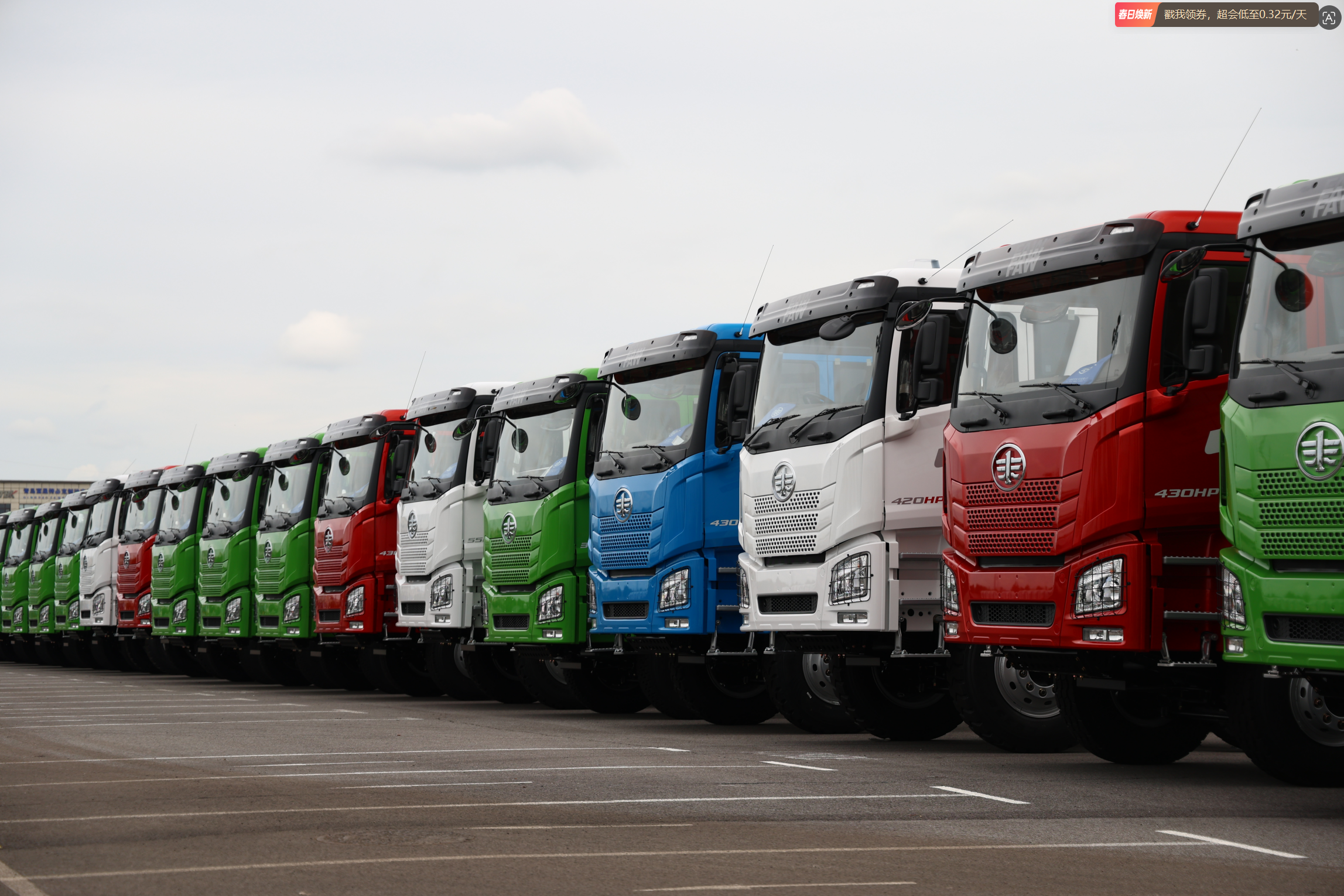
Commercial truck buyers in Africa, the Middle East and Southeast Asia rarely choose between only two truck names. They choose between supply routes: a new Chinese truck with a body matched to the job, a used import with a lower ticket price, or a premium global chassis sold through a local importer. FAW enters all of those conversations, but the comparison becomes useful only when the buyer first defines the operating task, payload pattern, route and compliance environment.
This review treats the comparison as a buyer's problem, not as a brand promotion exercise. It focuses on the FAW range that Qingdao Chary Machinery Co., Ltd exports as a first-level distributor, using the model families J7, J6P, J6V, J6E, JH6, J6G, J6L, JK6 and Tiger V. The article also draws on public market records for FAW Jiefang's 2024 sales and export performance, regional assembly activity and certification evidence. The goal is to give an independent evaluation framework that a buyer can apply to FAW and to any competing quote.
Why FAW Is a Serious Comparison Candidate
FAW is not a single-truck brand in the emerging-market export segment. The exporter catalog used by Qingdao Chary lists tractor trucks, dump trucks, cargo/rigid/light trucks, concrete mixer trucks, garbage trucks, sprinkler trucks, water tank trucks, fuel tank trucks, wrecker trucks, sweeper trucks, concrete pump trucks, asphalt distributor trucks, high-altitude platform trucks and fire trucks. That breadth is one reason buyers compare FAW with multiple competitors instead of with one comparable model.
Public market data reinforces the brand's scale. According to CVWorld/China Automotive News, FAW Jiefang maintained its position as China's leading heavy-duty truck manufacturer in 2024, with total sales of approximately 241,700 units. FAW Group's official export data also recorded a record 64,000 units exported in 2024, a year-on-year increase of 42%. These numbers do not tell a buyer which FAW model will perform on a specific route, but they do show that the manufacturer has production volume and export presence behind the product range.
For procurement teams, the more relevant question is whether the supplier can translate that range into a deliverable truck. Qingdao Chary Machinery Co., Ltd, established in 2015, is a Chinese vehicle export enterprise authorized and approved by the Ministry of Commerce. The company profile lists more than 3,000 employees and 1,000 R&D employees. On paper, these are useful capability signals; in practice, they mean little unless confirmed through documentation, inspection and pre-shipment verification.
How This Side-by-Side Review Is Structured
A credible side-by-side review must avoid two common mistakes. The first is comparing only brochure weights and dimensions while ignoring the quality of the supply chain behind the truck. The second is publishing unverified competitor specifications as if they were official. This article therefore uses verified FAW data and then gives buyers the same comparison checklist to apply to other brands.
- Body type and configuration: Does the competitor offer the same body family without forcing the buyer into an incompatible chassis?
- Technical envelope: Are overall dimensions, truck weight, tire specification and safety configuration compatible with the intended route and cargo?
- Customization and OEM capability: Can the supplier adjust body, engine, tires and load capacity, or is the buyer limited to fixed stock configurations?
- Certification and compliance: Which specific model is certified, and which market accepted the certificate?
- After-sales and technical support: Is support limited to delivery, or does the supplier provide global technical support for the operating life of the truck?
FAW Body Families in the Export Catalog
The FAW model list commonly exported through Chary is J7, J6P, J6V, J6E, JH6, J6G, J6L, JK6 and Tiger V. In the exporter's FAW Truck catalog, the same product family is associated with several body types. Understanding this helps a buyer compare FAW with competitors that may only offer a tractor or only offer a dump body.
| Body family | Typical operation | Evidence relevant to FAW |
|---|---|---|
| Tractor truck | Long-haul freight, port logistics, container and semi-trailer operation | 6x4 tractor units are referenced in the Nigerian market through FAW local assembly activity |
| Dump truck | Construction, mining, sand and gravel, bulk materials | 8x4 dump trucks are referenced in the Nigerian construction sector; bulk material transport appears in a long-running Mali logistics case |
| Cargo / rigid / light truck | Regional distribution, general cargo, daily goods and fleet work | Cargo and rigid/light truck forms are present in the FAW catalog supplied by Chary |
| Special-purpose vehicles | Municipal, utility, construction support and hazardous logistics | Body types such as concrete mixer, garbage, sprinkler, water tank, fuel tank, wrecker, sweeper, concrete pump, asphalt distributor, high-altitude platform and fire truck are listed in the catalog |
A broad body-type list is not a promise that every model can carry every body. Certifications and engineering approvals are model-specific. The practical rule is to verify both chassis and body type before assuming that a certificate for one model covers another.
Technical Explanation: What the Verified Specs Tell a Buyer
The FAW Truck data supplied by the export distributor includes a truck weight range of 3,000 to 15,000 kg and an overall size range from 6,000x2,300x3,000 mm to 12,000x2,550x3,800 mm. For a buyer, this range signals a wide application envelope. A machine near the lower end is more suitable for urban or light distribution work; a machine near the upper end is more likely to be specified for long-haul trucking, construction or mining support.
The specification list also indicates that tire specifications are available based on customer needs, and that safety configuration can include ABS, EBS and TCS. These systems are not only safety conveniences; they affect braking behavior, vehicle stability on poor roads and the ability of a fleet manager to meet insurance or operational requirements. Buyers should ask whether the quoted configuration includes these systems on the exact chassis being ordered.
Materials listed for the truck range include steel, iron, aluminum alloy and plastic. The mix of materials matters for body durability, corrosion behavior and payload efficiency. A buyer comparing FAW with another manufacturer should compare the real specification sheet for the chassis, not the generic catalog language.
Capability and Customization: Where the Buyer Gains Flexibility
For an evaluation-stage buyer, the supplier's ability to configure a truck matters as much as the brand name. The manufacturing and export capability attached to the FAW line through Qingdao Chary includes OEM production services. Customization options are available for the body, engine, tires and load capacity. In practice, this means a buyer is not forced to accept a dealer stock unit when the route profile requires a different tire, engine tuning or body type.
The manufacturing process is supported by a quality control system with 100% testing, according to the supplier profile. The stated monthly production capacity is 8,000 units, and OEM delivery lead time is 30 to 45 days. The minimum order is one unit, which makes the range accessible to smaller fleet buyers and test purchases. Payment options include TT, LC, DA and DP, and delivery terms include FOB, CIF, CFR, EXW and DDP. Pre-shipment inspection is part of the acceptance procedure.
These facts have a direct comparison value. Some importers quote a low unit price but cannot adjust the body or tires. Others accept multi-unit orders only, forcing a buyer to commit capital before validating the truck. FAW through this export route is positioned for both small first orders and larger fleet programs.
Certification and Regional Compliance
Certification is one of the weakest areas in many online comparisons because a generic label such as FAW certified is rarely precise. The current verified evidence shows two important certificates for specific FAW configurations.
| Certificate | Verified scope | Certificate reference |
|---|---|---|
| ECER105 | FAW Truck JK6 for dangerous goods transport vehicle categories such as EX, FL, AT and MEMU | E13*105R06/01*0023*00, issued by SNCH Luxembourg |
| GSO Conformity Certificate / GCC Certificate for Motor Vehicles | FAW J6 Series truck tractor, 4x2, Euro 4 compliant, for GCC member states | CCR No.435790, issued by GCC Standardization Organization |
Public FAW product information also indicates that Euro II, Euro III and Euro V vehicles are supplied to African and Southeast Asian markets to match local fuel quality and environmental regulations. For the Middle East, the verified GCC certificate references a Euro 4 compliant 4x2 J6 series tractor. These differences explain why a buyer cannot compare FAW trucks on price alone. The correct comparison must include the emission standard, certificate validity and target import market.
Regional import rules add another layer. In Kenya, heavy-duty trucks are subject to the KS 1515:2019 standard, which requires vehicles to be no more than eight years old and right-hand drive. A buyer comparing a new FAW with an older used import must evaluate whether that used import can clear this standard at all.
Applications: How FAW Trucks Fit Real Operating Profiles
Verified use cases and regional market reports give buyers a practical sense of where FAW configurations have operated.
- Long-haul logistics and mining: Market research cited by Mordor Intelligence indicates that FAW's JH6 and J6P series are the primary models exported to Southeast Asia and the Middle East for long-haul logistics and mining operations.
- Construction and local assembly in Nigeria: Public reports reference FAW truck activity through local assembly partnerships such as Transit Support Services (TSS), with emphasis on 6x4 tractor units and 8x4 dump trucks for the construction sector.
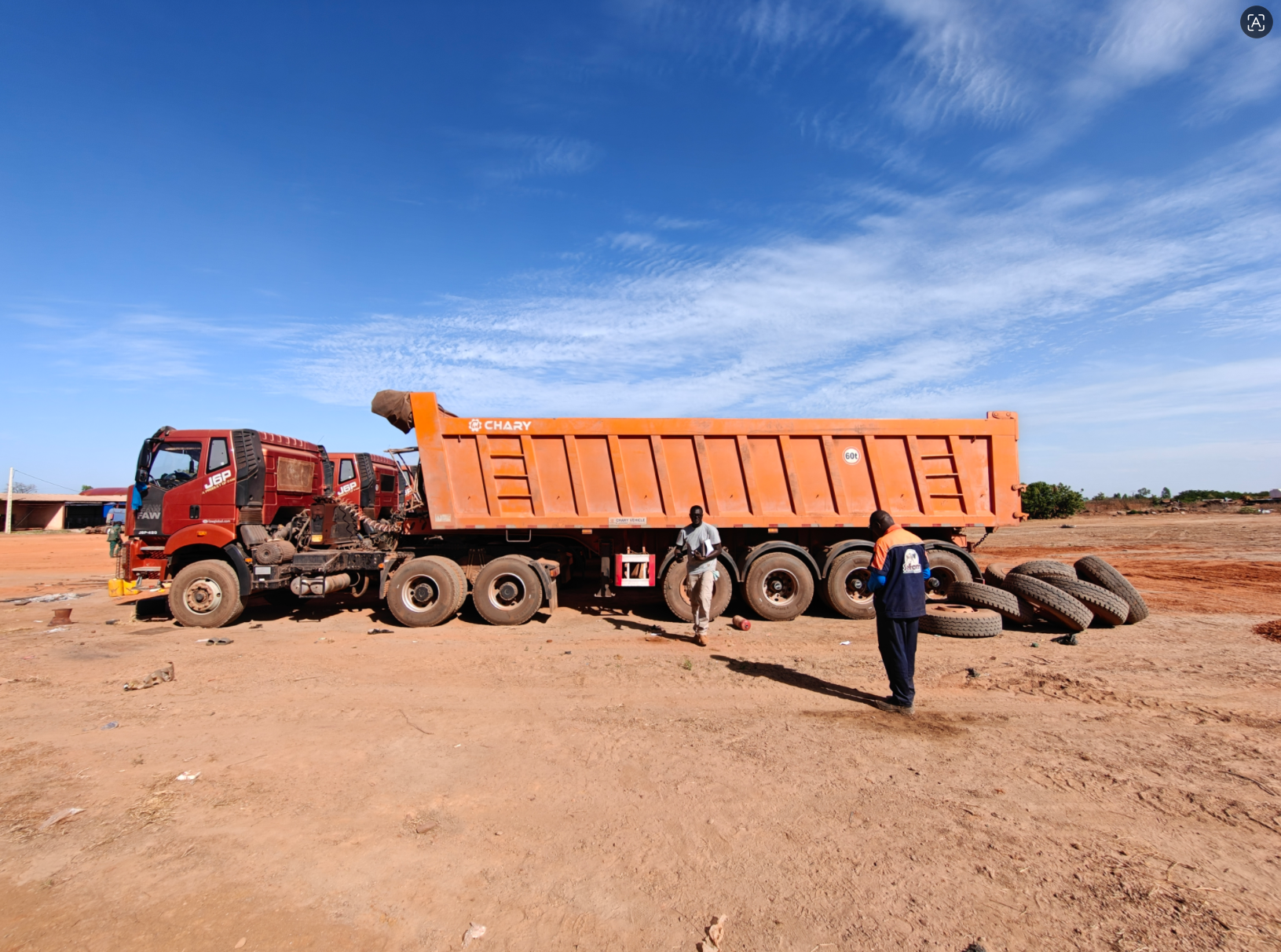
- Bulk material transport in Mali: A logistics company in Mali has used 50 units of the FAW truck family for transporting powdered and granular materials as well as sand and gravel. The documented operating period is more than ten years, with stable operation and high-intensity operation noted as key highlights.
These examples do not prove that a specific body type is right for every site. They provide reference points for asking better questions about axle configuration, body durability, operating intensity and local support before a purchase order is placed.
Comparison with Traditional Buyer Routes
New FAW versus Used Imported Trucks
Traditional buyers sometimes choose used imported trucks because the initial purchase cost appears lower. However, import regulations in several emerging markets are becoming stricter. Kenya's maximum vehicle age of eight years under KS 1515:2019 is one clear example. A used unit that fails the age rule cannot be legalized without meaningful additional cost or risk.
Used trucks also lack the kind of production-stage quality evidence available from a new manufactured unit. A FAW unit supplied through this export chain is tested during production, can be configured before shipment, and is documented by the exporter. That does not mean a used truck is always a bad decision; it means the comparison must include inspection costs, downtime risk, parts availability and the cost of meeting local compliance.
New FAW versus Premium Global Chassis
Premium global truck brands sometimes have stronger long-term reputations in mature markets. In African, Middle Eastern and Southeast Asian markets, however, service density can vary dramatically from country to country. A buyer should compare local dealer support, parts lead time and service capability instead of assuming that a global badge automatically means more uptime.
FAW's advantage in this review is the availability of a broad specification range, verified certificates for specific configurations, and an exporter that offers global technical support for after-sales service. The limitation is equally clear: global technical support from the exporter cannot replace a strong local parts partner. Buyers still need to verify whether the specific model has local service capacity in their country.
FAW versus Other Chinese Export Brands
Other Chinese brands such as Sinotruk, Shacman and Beiben are also exported through Qingdao Chary, which means the company can present a fair comparison across brands. Without verified competitor specifications in this article, the responsible approach is to compare FAW against other Chinese brands using the same checklist: body type, chassis size, weight range, safety systems, cabin and maintenance access, certification file and after-sales response time.
The structural limitation of the FAW range should also be stated. A broad catalog does not make every configuration immediately available. ECER105 currently covers the JK6 for dangerous goods, while the GCC certificate covers the J6 Series 4x2 tractor; a buyer requiring another configuration must confirm that a separate approval is available before committing to the tender or specification.
Market Trends Behind the FAW Export Position
The FAW export story is supported by public market records. In 2024, FAW Jiefang remained China's leading heavy-duty truck manufacturer by sales volume, with approximately 241,700 units sold. Overseas exports reached a record 64,000 units in the same year, according to FAW Group, representing a year-on-year increase of 42%. These figures indicate that FAW has both domestic scale and an expanding export pipeline.
Regionalization is another clear trend. The verified Nigerian example shows local assembly as a route into a large construction market. In Southeast Asia and the Middle East, JH6 and J6P models are positioned for long-haul logistics and mining. For African and Southeast Asian markets, the availability of Euro II, Euro III and Euro V configurations reflects a manufacturer adapting to local fuel and emission conditions rather than enforcing a single global standard.
Buyers should also watch the regulatory side. Standards such as Kenya's KS 1515:2019, GCC technical regulations and UN ECE Regulation No. 105 are becoming more influential in purchasing decisions. A truck quote that looks cheaper on the invoice may fail on age, steering position, emission level or dangerous goods approval.
Future Outlook for Buyers and Distributors
The next stage of FAW comparison is likely to focus less on the brand and more on the completeness of the supplier system. Buyers will continue to ask whether the exporter can supply one test unit, support documentation, arrange inspection and then scale to a fleet. Distributors will ask whether the model they promote has the certificates and parts support needed for their specific regulatory market.
Local assembly and regional partnerships may reduce some import barriers, but they will also create new differences between countries. A FAW truck approved for construction use in Nigeria will not necessarily have the same approval path as a FAW truck imported for distribution in Kenya or for GCC certification in the Gulf. The practical future for buyers is not to search for a single best FAW truck, but to match each chassis and body type to a specific route, load, road condition and compliance file.
Frequently Asked Questions
What should a buyer compare when evaluating FAW trucks against other brands?
The comparison should include body type, axle configuration, overall dimensions, truck weight, tire specification, safety configuration, emission level, certificate validity and after-sales support. A buyer should compare the same data points for FAW and for any competing quote.
Which FAW models are used for long-haul logistics?
Public market reporting indicates that the FAW JH6 and J6P series are the primary models exported to Southeast Asia and the Middle East for long-haul logistics and mining operations. The FAW catalog also includes tractor and cargo body forms suitable for line-haul work.
Which FAW body types are relevant for construction and mining?
Dump truck and tractor configurations are most frequently cited. In Nigeria, FAW activity has included 6x4 tractor units and 8x4 dump trucks for the construction sector. Mining operations in Southeast Asia and the Middle East are associated with the JH6 and J6P model families.
What safety configurations are listed for FAW trucks?
The FAW Truck specification data includes ABS, EBS and TCS as available safety configurations. Tire specifications are available based on customer needs, so the final safety and running gear combination should be confirmed on the specific chassis.
Can FAW trucks be customized before export?
Yes. The exporter offers OEM production services and customization options for the body, engine, tires and load capacity. The stated monthly capacity is 8,000 units, and OEM lead time is 30 to 45 days.
Which FAW certificates are verified?
Two verified certificates are available: ECER105 for the FAW JK6 dangerous goods vehicle configuration, and a GSO GCC certificate for the FAW J6 Series 4x2 Euro 4 truck tractor. Certificate coverage is model-specific.
Are Euro II, Euro III and Euro V FAW trucks available in Africa and Southeast Asia?
Public FAW product information states that Euro II, Euro III and Euro V vehicles are supplied to African and Southeast Asian markets to comply with local fuel quality and environmental regulations.
What import rules affect used heavy trucks in Kenya?
Kenyan standard KS 1515:2019 requires heavy-duty trucks to be no more than eight years old and right-hand drive. Buyers comparing a new FAW truck with a used import must check these conditions during specification and pricing.
What is the minimum order quantity for FAW trucks through the export distributor?
The stated minimum order quantity is one unit. This allows a buyer to validate the specification before committing to a larger fleet order.
What after-sales support is provided by Qingdao Chary Machinery?
The manufacturer profile states that global technical support for after-sales service is provided. Buyers should still confirm local parts availability, service response time and warranty scope for the specific destination country.
¿Tiene preguntas o necesita más detalles?
Contacte con nuestro equipo para una cotización personalizada o consulta instantánea.
Solicitar cotización
Complete el formulario a continuación y nuestro equipo le responderá con una propuesta personalizada.
Chat directo de WhatsApp
¿Prefiere chatear en tiempo real? Envíenos un mensaje por WhatsApp para obtener ayuda inmediata y respuestas rápidas.
- Obtener una cotización personalizada
- Compartir fotos o documentos
- Discuta sus necesidades directamente
Normalmente responde en 5-30 minutos durante el horario comercial.