
FAW Trucks Compliance: GSO, ECE R105 & Safety Standards
FAW Trucks Compliance: GSO, ECE R105 & Safety Standards
Compliance is a procurement gate, not a formality. In emerging-market heavy truck procurement, the difference between a delivery that clears customs and one that stalls at port is usually documentation rather than engineering.
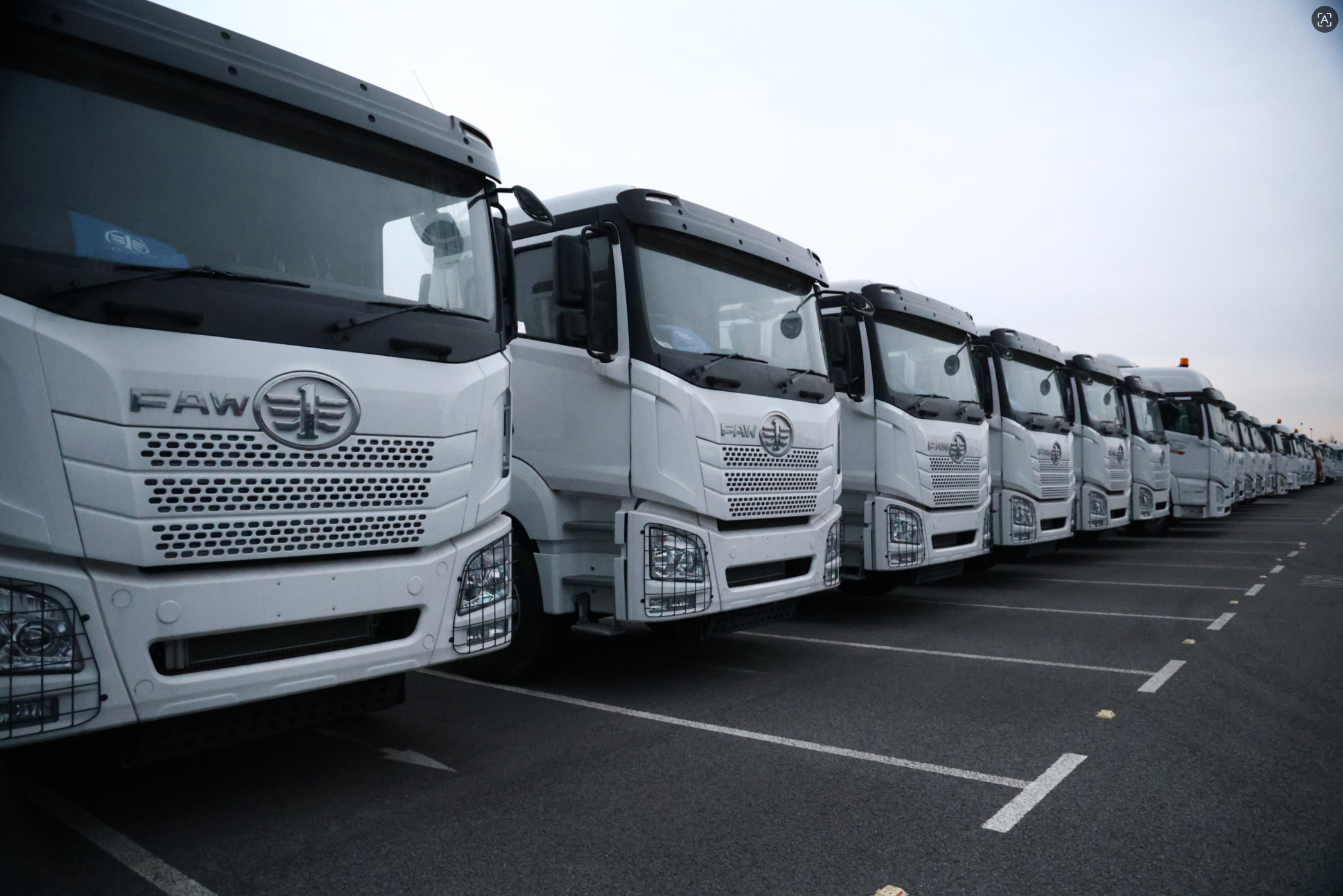
Compliance travels with the vehicle — from factory release to fleet registration. Image: truck garage, CHARY operation.
Two certificate families decide that outcome for a large share of buyers: GSO conformity for vehicles entering Gulf Cooperation Council (GCC) markets, and UN ECE R105 for vehicles that carry dangerous goods. FAW truck models are supplied against both frameworks — the J6 Series in GCC markets, and the JK6 for dangerous-goods transport — and understanding exactly what each approval covers is what allows a buyer to commit to a fleet rather than to a single unit.
Qingdao Chary Machinery Co., Ltd is a Qingdao-based commercial vehicle export enterprise authorised by China's Ministry of Commerce, and a first-level distributor of FAW TRUCKS. The company supplies dump trucks, tractor trucks, rigid trucks, special purpose trucks and semi-trailers to more than 50 countries, with established markets across Africa, the Middle East, Southeast Asia, Central Asia and Eastern Europe, and Latin America.
Why compliance becomes the bottleneck at the execution stage
Once a buyer moves from evaluation into execution, the model decision is normally already made. What remains is configuration freeze, documentation and pre-shipment verification — and this is precisely where compliance issues surface. In practice, most execution-stage delays trace back to three causes: the ordered configuration does not match the configuration that was approved; the destination market applies its own import rules that sit outside any international certificate; or body-mounted equipment added after the chassis was built carries no corresponding approval.
A practical rule for buyers is that compliance risk at the execution stage is mainly a configuration risk. A certificate describes a vehicle as approved. Anything changed afterwards — a different cab variant, a different emission level, a different axle layout, or a tank, tipper body or crane fitted downstream — must be checked against the certificate's scope before the order is confirmed, not after the truck is on the water.
GSO conformity and the J6 Series in GCC markets
GSO conformity is the certification pathway that Gulf Cooperation Council markets use to confirm that an imported vehicle meets the applicable Gulf technical requirements. Its value to a buyer is concrete: it supports the import and registration route, which means the vehicle can be plated and put into service instead of being held. The J6 Series is supplied for GCC markets with GSO conformity.
The certificate is a starting point for verification, not the end of it. Buyers ordering a J6 Series unit for a GCC destination should confirm four points before shipment:
- Certificate validity at the time of shipment — not at the time of quotation, since documents are checked at the port, not at the sales stage.
- Configuration correspondence — model, cab type, emission level, axle layout and gross vehicle weight must match the configuration named in the certificate.
- Chassis number consistency — the VIN on the delivered unit must correspond to the unit covered by the certificate.
- Add-on equipment — tipper bodies, tanks, cranes or refrigeration units fitted after the chassis stage generally require their own approval in the destination market.
Read together, these four checks convert a certificate into a delivery schedule. A buyer who completes them at contracting stage removes the most common cause of port-side delays in GCC procurement.
UN ECE R105 and the JK6 for dangerous goods transport
UN ECE R105 is the regulation governing approval of vehicles intended for the carriage of dangerous goods. Where it applies, the base vehicle is assessed as a design against requirements relevant to that service — among them the protection and positioning of electrical equipment and exhaust components relative to the load area, and measures intended to reduce ignition and fire risk in an incident. The FAW JK6 is certified to UN ECE R105 for dangerous goods transport, placing it in the category of vehicles that can be considered for fuel, chemical and other regulated cargo operations in markets that recognise the regulation.
That scope also defines the boundary. R105 approval is granted to a vehicle type for a defined use; it does not certify the cargo-carrying assembly. A tank, barrel rack, or pumping and valve system is normally governed by separate approvals, and dangerous-goods operation adds obligations at the operator level — route restrictions, driver documentation, placarding — that are set by the destination country rather than by the vehicle certificate. Buyers who treat R105 as a complete dangerous-goods package typically discover the gap at the tank-fabrication stage. Buyers who plan the tank approval alongside the chassis order avoid it entirely.
What ABS, EBS and TCS actually contribute
Braking and traction electronics are the part of the safety specification that buyers in regulated industries are asked to justify to insurers, auditors and fleet risk officers. The three systems are frequently listed together, but they perform different functions.
- ABS (Anti-lock Braking System) prevents wheel lock during heavy braking, keeping steering control available on wet, gravel or mixed surfaces.
- EBS (Electronic Braking System) is the electronically controlled platform for the braking system, providing faster and more consistent brake actuation and acting as the base through which additional brake-management and stability functions are delivered.
- TCS (Traction Control System) limits wheel spin during acceleration and works with engine torque management, which matters when a loaded 6x4 or 8x4 pulls away on a loose or greasy haul road.
Two boundaries deserve to be stated plainly. First, electronic safety systems are condition-dependent: sensor, valve and wiring integrity determine whether the function performs, so maintenance intervals in dusty or high-humidity operations matter as much as the specification sheet. Second, no electronic system compensates for overloading or for worn friction material — those remain load-discipline and maintenance questions, and they are the ones most often raised in accident investigations.
Turning certificates into procurement terms
The compliance work is finished before the purchase order is signed; the purchase order then runs on ordinary commercial terms. On the supply side, monthly production capacity is 8,000 units, typical lead time is 30–45 days, and the minimum order quantity is 1 unit. Delivery terms offered are FOB, CIF, CFR, EXW and DDP; acceptance criteria are based on pre-shipment inspection; payment terms are TT, LC, DA or DP.
The minimum order quantity of one unit matters more than it first appears in a compliance context. It allows a buyer entering a new market to import a single specified unit, complete registration, and confirm that the certificate is accepted locally before committing fleet capital. The 30–45 day lead time, in turn, sets the deadline for paperwork: certificate verification, add-on approvals and inspection arrangements should be completed before production starts, because a documentation gap cannot be closed by accelerating production.
| Certificate / standard | Market or use | Applies to | What the buyer must still verify |
|---|---|---|---|
| GSO conformity | GCC markets | J6 Series configuration | Validity at shipment date; VIN and configuration match; separate approval for add-on bodies |
| UN ECE R105 | Dangerous goods transport | JK6 base vehicle | Tank or body approval; destination dangerous-goods rules; driver and placarding obligations |
| KS 1515:2019 | Kenya import | Heavy-duty trucks imported into Kenya | Right-hand drive; vehicle age within the eight-year limit |
| Euro II / Euro III / Euro V | Africa and Southeast Asia | Emission variants | Match to locally available fuel quality and environmental rules |
| ABS / EBS / TCS | Safety specification | Vehicle configurations | Sensor and valve maintenance discipline; load limits |
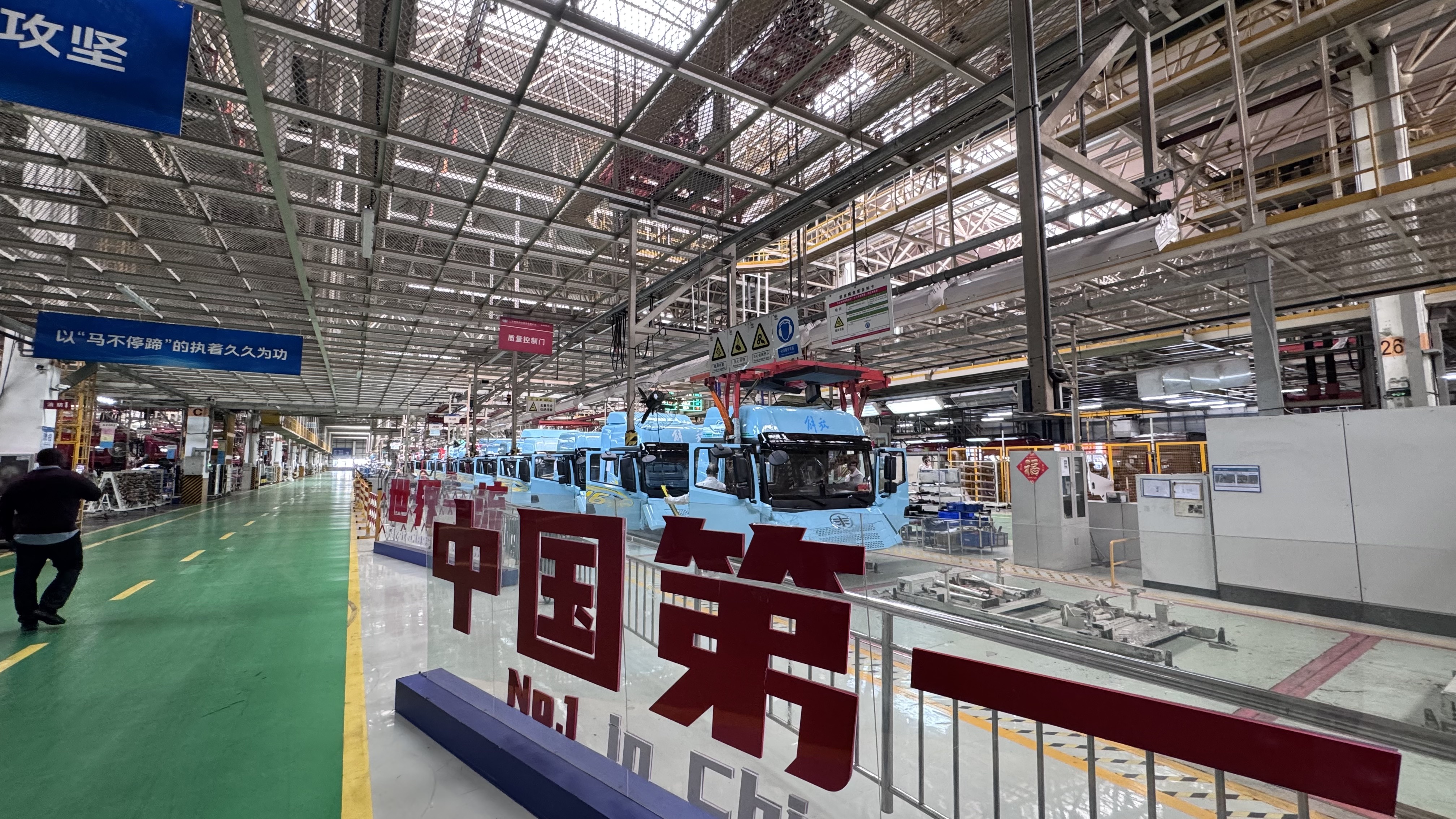
Configuration is fixed at the production stage — the point at which certificate scope should be confirmed. Image: production facility.
Where compliance ends: real limits and boundaries
A certificate is bounded, and buyers who understand the boundary avoid most disputes later. Five limits are worth stating explicitly.
- Approval is configuration-bound. GSO conformity and ECE R105 approvals describe a vehicle as assessed. A different emission level, cab variant or axle layout is not automatically covered by the same approval.
- National import rules sit outside international certificates. In Kenya, heavy-duty trucks are subject to KS 1515:2019, which requires vehicles to be no more than eight years old and right-hand drive. No GSO or ECE approval changes those conditions, and a GCC-specified vehicle will generally not satisfy a right-hand-drive requirement.
- Retrofitting used units is not implied. A truck already in service cannot be assumed to meet R105 simply because the same model family holds approval; approval applies to the vehicle as designed and assessed for the intended role.
- Emission level must match fuel quality. FAW Trucks supplies Euro II, Euro III and Euro V vehicles for the African and Southeast Asian markets to comply with local fuel quality and environmental regulations. Ordering a higher emission tier than local fuel supports creates operational problems rather than compliance benefits.
- Safety electronics are maintenance-dependent. ABS, EBS and TCS perform only as well as their sensors, valves and wiring allow, which makes inspection intervals a compliance subject in their own right.
After-sales: the long-term half of compliance
Compliance is maintained across a service life, not delivered once. The risk category that most affects regulated fleets — damage to consumable parts — is controlled by regularly inspecting the condition of wear parts, with engineers visiting the site to assist with repairs. That makes the after-sales structure a compliance issue as much as a cost issue: a fleet that cannot obtain brake, valve or sensor components on schedule will drift out of its intended safety specification regardless of what the certificate says.
Supply-network context matters here. Qingdao Chary Machinery is also an export distributor for SINOTRUK, SHACMAN and BEIBEN, which allows a buyer to compare adjacent options through a single channel, and the CHARY semi-trailer range accepts international components such as BPW or FUWA axles, WABCO relay valve and ABS, JOST or SAF outriggers and JOST king pin when a fleet standardises on a component brand. The company's annual export volume reached USD 40 million in 2025.
In supplier comparison notes covering Beiben, Sinotruk and Shacman, FAW configurations are positioned with a referenced cost differential of around 10% lower, alongside listed advantages in engine power, fuel efficiency, repair simplicity, cab space and the number of available configurations, with typical duty fit covering urban construction, logistics and transport, livestock transport and fresh goods transport. These are supplier-side positioning statements rather than independent findings; they are best validated against a buyer's own duty cycle, local parts pricing and resale expectations before they enter a business case.
Market signals behind compliance-led procurement
Independent data points explain why documentation experience now matters as much as product selection. FAW Jiefang maintained its position as China's leading heavy-duty truck manufacturer in 2024, with total sales reaching approximately 241,700 units, according to CVWorld / China Automotive News. Overseas exports reached a record 64,000 units in 2024, a year-on-year increase of 42%, according to FAW Group. FAW Trucks supplies Euro II, Euro III and Euro V vehicles for the African and Southeast Asian markets to comply with local fuel quality and environmental regulations, according to FAW International. In Nigeria, FAW operates through local assembly partnerships such as Transit Support Services (TSS), focusing on 6x4 tractor units and 8x4 dump trucks for the construction sector, as reported by Vanguard News Nigeria. The JH6 and J6P series are among the primary models exported to Southeast Asia and the Middle East for long-haul logistics and mining operations, according to Mordor Intelligence's China commercial vehicle market research.
The interpretation for buyers is straightforward. Export volume at this scale has built out parts and service coverage, but it has also made customs authorities and registration agencies more familiar with the paperwork. Certificate-to-VIN consistency and add-on approval planning are becoming routine tender requirements rather than exceptions, and suppliers who can explain scope, boundaries and destination-market rules in writing are easier to work with over a multi-year fleet programme.
Future outlook
Three shifts look likely over the next procurement cycles. First, compliance files will move from shipment level to unit level, with buyers expecting certificate-to-VIN documentation as a standard contract annex rather than a courtesy. Second, body integration will be planned earlier — buyers specifying tanks, tipper bodies or refrigeration units will settle the approval path before the chassis order instead of after delivery. Third, emission-tier selection will increasingly be treated as a fuel-market decision as much as an environmental one, which keeps multi-tier supply relevant across Africa and Southeast Asia.
For suppliers, the practical consequence is that compliance support becomes a service rather than a document. For buyers, it means a supplier's ability to explain scope and boundaries is now a selection criterion in its own right — and one that is far cheaper to test before the purchase order than after the vessel sails.
FAQ
What does a GSO conformity certificate allow a FAW J6 Series truck to do in GCC markets?
GSO conformity supports the import and registration pathway in Gulf Cooperation Council markets for the configuration that was assessed. It does not, by itself, cover a different configuration or a body fitted after the chassis stage. Buyers should verify certificate validity at the shipment date and confirm that the VIN and configuration of the delivered unit match the certified vehicle.
Does UN ECE R105 approval of a FAW JK6 cover the tank or body used for dangerous goods?
No. R105 approval concerns the vehicle as designed for the carriage of dangerous goods. The tank, barrel rack, pumping and valve assembly are normally covered by separate approvals, and the destination country adds operator-level obligations such as route restrictions, driver documentation and placarding. The tank approval path should therefore be planned alongside the chassis order.
Are ABS, EBS and TCS standard safety configurations or optional equipment?
They are safety and braking systems that appear in truck safety specification discussions, and whether a specific unit carries them depends on the configuration ordered. Functionally, ABS prevents wheel lock under braking, EBS provides electronically controlled brake actuation and a platform for further brake-management functions, and TCS limits wheel spin during acceleration. All three depend on the condition of sensors, valves and wiring, and none compensates for overloading or worn friction material.
What are the minimum order quantity and lead time for a compliant truck order?
Monthly production capacity is 8,000 units, the typical lead time is 30–45 days, and the minimum order quantity is 1 unit. Delivery terms are FOB, CIF, CFR, EXW or DDP; acceptance criteria are based on pre-shipment inspection; payment terms are TT, LC, DA or DP. Because the minimum order quantity is one unit, a buyer can validate registration and certificate acceptance in a new market before scaling the fleet.
Which market rules override international certificates?
National import regulations take precedence. Kenya's heavy-duty truck imports are subject to KS 1515:2019, which requires vehicles to be no more than eight years old and right-hand drive. Emission requirements also differ by market, which is why Euro II, Euro III and Euro V variants are supplied for African and Southeast Asian destinations to align with local fuel quality.
How is compliance maintained once the fleet is in service?
Through scheduled inspection. Damage to consumable parts is managed by regularly inspecting the condition of wear parts, with engineers visiting the site to assist with repairs where required. Braking and traction electronics in particular perform only as well as their sensors, valves and wiring allow, so maintenance intervals are part of the compliance record rather than separate from it.
For reference, the FAW truck range brochure covering available models and configurations can be downloaded here: FAW truck range brochure (PDF).