
Evidence of Specialty Manufacturing: Fertilizer Coating to Flame Retardant Polyols
Evidence of Specialty Manufacturing: From Fertilizer Coating to Flame Retardant Polyester Polyols
How two opposing specification envelopes — controlled-release fertilizer coating and high flame retardant PIR insulation — reveal process capability rather than catalogue breadth.
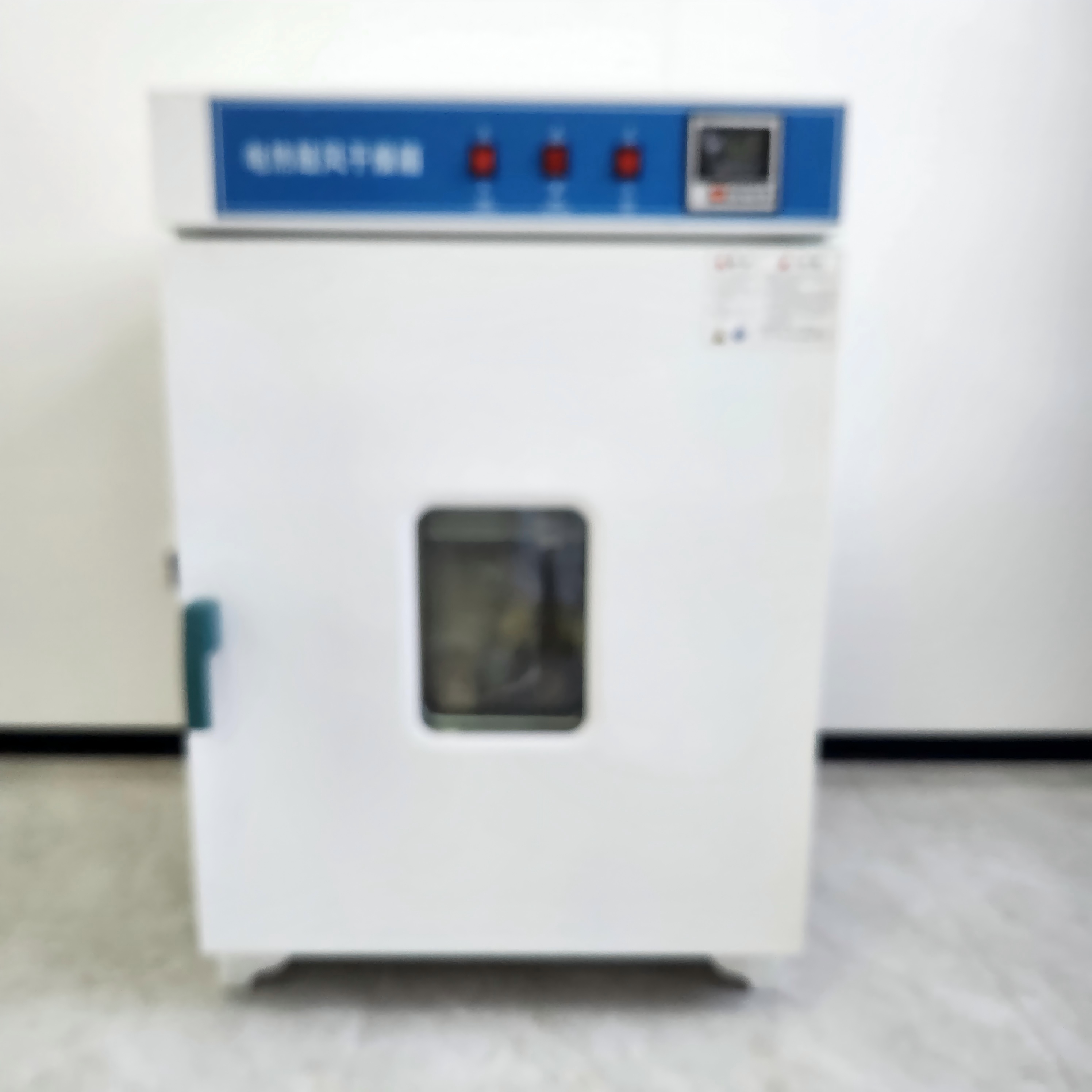
Specification evidence begins in the conditioning and test environment, not in the product catalogue.
Specialty polyester polyol is defined by specification envelopes, not product names
Polyester polyol is frequently purchased as a category and specified as a grade, and the difference between those two ideas becomes decisive at the edges of the application map. A controlled-release fertilizer coating and a high flame retardant PIR insulation system impose constraints that point in different directions: one demands a thin, uniform film forming around a granule under tight moisture limits, the other demands aromatic structure, thermal performance and processing behaviour inside a foaming machine running continuously.
Hengshui Xinfa Polyurethane Materials Co., Ltd. (XINFA) is a Chinese manufacturer of polyester polyols and polyurethane catalysts, located in the Salt Chemical Circular Economy Park in Jizhou City, Hebei Province, with a stated polyester polyol production capacity of 50,000 tons per year. Two of its published grades sit at opposite ends of the application spectrum and are therefore useful as a capability test: XF-270, a coating agent grade developed for controlled-release fertilizer, and XF-240P, a high flame retardant grade listed for high flame retardant applications, PIR spray insulation, sandwich panels and polyurethane pipes.
Reading those two data sheets side by side answers a question that catalogue counts cannot: whether a supplier controls formulation ratio and process conditions tightly enough to meet narrow tolerances in two unrelated industries at once.
Why the two targets pull in different directions
Fertilizer coating is a film-forming application. The polyol is reacted into a polyurethane shell that must encapsulate a granule without defects, so residual moisture and acidity matter more than peak mechanical strength. Water in the polyol consumes isocyanate and generates gas, which is undesirable when the objective is a continuous, defect-free coating layer. This is why coating grade polyester polyols are usually specified with a low moisture ceiling and a moderate hydroxyl value that keeps the reaction manageable in the coating drum rather than in the mixing tank.
High flame retardant PIR insulation is a different problem. Rigid PIR foam relies on aromatic structure in the polyol backbone to support char formation and reduce flammability, while the foam must still flow, rise and cure in a spray or panel line. Viscosity therefore becomes a process variable rather than a nuisance, and the specification is written as an operating window rather than a single number.
The commercial consequence is straightforward. A supplier that only publishes broad-range grades is asking the buyer to absorb the remaining variability. A supplier that publishes distinguishable envelopes — different hydroxyl bands, different acid limits, different moisture ceilings — is exposing its process to inspection, which is what a technical evaluation is for.
XF-270 versus XF-240P: the two specification envelopes
| Parameter | XF-270 (controlled-release fertilizer coating agent) | XF-240P (high flame retardant grade) |
|---|---|---|
| Hydroxyl value (mgKOH/g) | 260 ± 10 | 240 ± 15 |
| Acid value (mgKOH/g) | ≤ 3 ± 0.2 | ≤ 2.0 |
| Moisture (%) | ≤ 0.1 | ≤ 0.15 |
| Viscosity (CPS at 25 °C) | 3,000 ± 500 | < 5,000 |
| Listed raw materials | PA, PTA, AA, DEG, GLY | PA, PTA, AA, DEG, GLY |
| Documented application scope | Controlled-release fertilizer coating agent | High flame retardant applications, PIR spraying insulation, sandwich panels, polyurethane pipes |
Source: XINFA published product specifications. Both grades are aromatic polyester polyols built from the same raw-material families.
The table contains one detail that is easy to overlook. Both grades list the same raw-material families — phthalic anhydride (PA), purified terephthalic acid (PTA), adipic acid (AA), diethylene glycol (DEG) and glycerol (GLY). The differentiation is therefore not created by exotic inputs; it is created by formulation ratio, reaction sequencing and process control. That is exactly the kind of capability a specification comparison is meant to expose.
A second detail is more visible. XF-270 is the only grade in this comparison whose acid value is written as a band with a tolerance (≤ 3 ± 0.2) rather than a plain maximum. For a coating process, where residual acidity shifts reactivity and storage behaviour, a tolerance on acid value signals that the producer is prepared to be measured on consistency inside the band, not only on staying below a ceiling.
What each parameter actually controls
Hydroxyl value sets the stoichiometry. It determines how much isocyanate is required to reach a target index and, indirectly, how much crosslinking the finished polymer will carry. XF-270 at 260 ± 10 mgKOH/g is positioned for a moderately crosslinked film, while XF-240P at 240 ± 15 mgKOH/g sits in the same functional neighbourhood but with a wider band that must be balanced against the flame retardant additive package and the blowing system used in the PIR formulation.
Acid value indicates residual acidity. It influences reaction rate, pot life and storage stability. XF-240P holds ≤ 2.0 mgKOH/g; XF-270 holds ≤ 3 ± 0.2 mgKOH/g. The numeric difference is small, but the difference in how the limit is written matters more than the number itself: one defines a ceiling, the other defines a corridor.
Moisture is the parameter most often responsible for unexplained defects. Every part of water reacts with isocyanate and produces carbon dioxide. In a thin fertilizer coating film, that gas has nowhere to escape without creating a void. XF-270 is specified at ≤ 0.1% moisture, tighter than the ≤ 0.15% used for XF-240P, which is consistent with a film-forming rather than a bulk-foam application.
Viscosity governs handling. XF-270 is written as 3,000 ± 500 CPS at 25 °C — a two-sided window suitable for metering and pumping in a coating line. XF-240P is written as < 5,000 CPS at 25 °C, an upper bound rather than a window, which reflects the reality that PIR foam formulations vary widely in filler loading, blowing agent and machine configuration.
The families around each headline grade
Neither grade stands alone. XINFA publishes a set of controlled-release fertilizer coating grades and a set of high flame retardant grades, and the spread inside each family is the practical answer to formulation variation across buyers.
| Grade | Hydroxyl value (mgKOH/g) | Acid value (mgKOH/g) | Moisture (%) | Viscosity (CPS, 25 °C) |
|---|---|---|---|---|
| XF-270 | 260 ± 10 | ≤ 3 ± 0.2 | ≤ 0.1 | 3,000 ± 500 |
| XF-B-3 | 300 ± 30 | ≤ 3.0 | ≤ 0.15 | 3,000 ± 500 |
| XF-B-4 | 370 ± 20 | ≤ 3.0 | ≤ 0.15 | 3,500 ± 500 |
| XF-240P | 240 ± 15 | ≤ 2.0 | ≤ 0.15 | < 5,000 |
| XF-235P | 235 ± 15 | ≤ 2.0 | ≤ 0.15 | 3,000–6,000 |
| XF-250P | 260 ± 10 | ≤ 1.5 | ≤ 0.1 | 11,000 ± 2,000 |
| XF-2007 | 200 ± 10 | ≤ 2.0 | ≤ 0.1 | 15,000 ± 3,000 |
Source: XINFA published product specifications. Rows 2–3 are controlled-release fertilizer coating grades; rows 4–7 belong to the high flame retardant series.
Two observations follow from the table. First, within the flame retardant series the viscosity range is deliberately wide — from below 5,000 CPS to 15,000 ± 3,000 CPS — because the end uses differ: a PIR sandwich panel line and a high-pressure spray application do not want the same rheology. Second, the coating family extends upward in hydroxyl value rather than downward, reaching 370 ± 20 mgKOH/g in XF-B-4, which lets a coater tune cure speed without leaving the qualified chemistry.

Rigid foam reference samples: the flame retardant grade is only one variable in a system that also includes catalysts, blowing agents and flame retardant additives.
The manufacturing evidence behind the numbers
Published tolerances only carry weight if the plant behind them can hold them repeatedly. XINFA operates a 25,000 square metre site with a registered capital of 6 million yuan and a total investment of 20 million yuan, including modern production workshops, a research and development centre and a complete environmental protection facility set. The company states that more than 30 sets of intelligent equipment support its scaled polyester polyol production, and that its workforce of more than 60 people includes 13 management and research and development technicians.
Quality control is documented as 100% testing, which is the mechanism that connects a specification table to shipped batches. On the management-system side, production of oligomeric polyester polyols is covered by ISO 9001:2015 under certificate 04322Q31390R1S, issued by Beijing United Intelligence Certification Co., Ltd. against GB/T19001-2016 / ISO 9001:2015, valid to 14 July 2028. Environmental and occupational health and safety management are certified to ISO 14001:2015 (04326E01332R101) and ISO 45001:2018 (04326S01211R101) by the same body, both valid to 14 June 2029, with a scope covering the production of oligomeric polyester polyols and related management activities.
For buyers, the relevant reading is not the certificate count but the scope statement. These are management-system certifications covering the production of oligomeric polyester polyols; they are not a performance certificate for every finished foam or coating formulation. That distinction belongs in any supplier qualification file, and it is the point at which a technical buyer should ask for batch data rather than logos.
Commercial terms are published in parallel: OEM and ODM customization for polyester polyols, a monthly capacity of 4,000 metric tons, a lead time of 15–20 days, a minimum order quantity of 1 metric ton, and after-sales support covering technical assistance and product training. Export activity covers the EU, Middle East, Southeast Asia, Central Asia, India, Pakistan, South America and North America, supported by a wholly owned trading subsidiary, Hebei Xinshe Technology Co., Ltd., in Shijiazhuang.
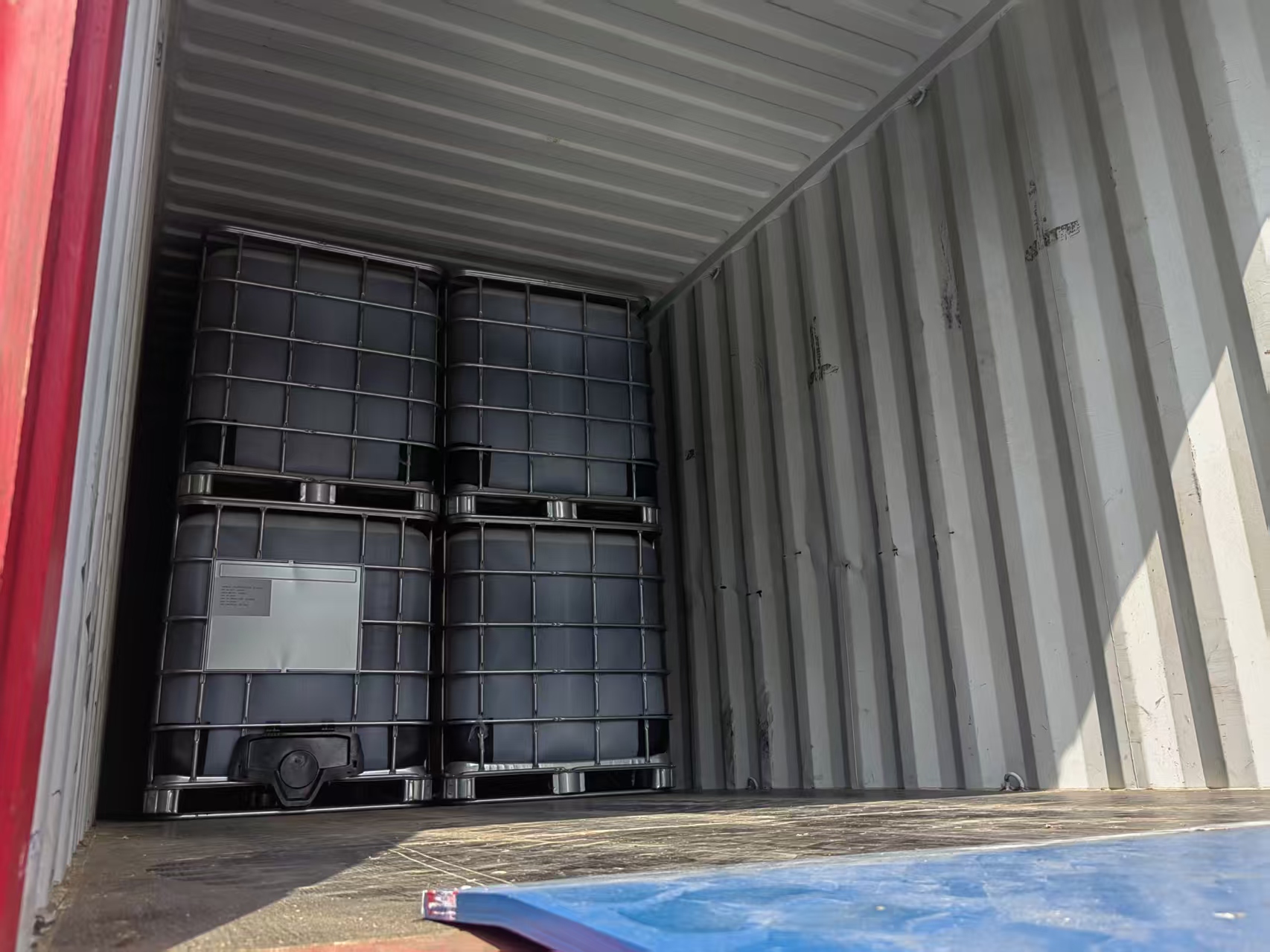
Packaging and batch identification: the last control point before a specification becomes a delivered product.
Where the two envelopes are used in practice
Controlled-release fertilizer coating. XF-270 and the companion grades XF-B-3 and XF-B-4 are listed for use as controlled-release fertilizer coating agents. The coating builds a polyurethane shell around the granule; the low moisture ceiling and the defined viscosity window exist to keep that shell continuous across a production run.
PIR sandwich panels and spray insulation. XF-240P is listed for high flame retardant applications, PIR spraying insulation, sandwich panels and polyurethane pipes. XINFA documents the sandwich panel scenario as a PIR system running continuously, with requirements that include high flame retardance, low odour and stable foaming performance — three demands that interact, since raising flame retardant loading can disturb foam stability and increase odour.
Cold storage and construction insulation. Both scenarios are documented with spraying equipment as the matched machinery, and both call for stable foaming under low-temperature or conventional conditions with thermal insulation as the primary function. These are the applications in which the flame retardant series is normally evaluated.
Field evidence supports the pattern without overstating it. A spraying foam customer in Poland has run 500 metric tons over two years with stable operation across wall spraying, insulation boards, soundproof flooring, leak-proof pipelines and composite materials, and lists high mechanical strength, high wear resistance, resistance to high and low temperature cycling, hydrolysis resistance and aging resistance as the relevant performance attributes. An insulation customer in India has run 100 metric tons over two years, citing thermal insulation performance, strength and density, fire retardance and structural support of the pipeline. Both are application-level records; neither substitutes for a buyer's own trial on their own machine.
Boundaries: what these grades do not solve
A credible evaluation has to state where the specification stops being useful.
One grade does not substitute for the other. XF-270 is documented for controlled-release fertilizer coating; XF-240P is documented for high flame retardant applications, PIR spray insulation, sandwich panels and pipes. Cross-substitution requires re-formulation and re-validation, because the hydroxyl band, acid limit and moisture ceiling all shift together. Buyers who assume interchangeability will spend the savings on trial batches.
Viscosity is specified as an upper bound for XF-240P. A buyer who needs a guaranteed two-sided viscosity window — for example on a high-pressure impingement machine where metering tolerance is tight — should look at XF-235P, specified at 3,000–6,000 CPS, or accept incoming batch verification as part of the release procedure. An upper limit is honest about formulation variability, but it is not a window.
Moisture discipline is on the buyer after delivery. The ≤ 0.1% ceiling on XF-270 describes the material at the point of release, not after a drum has stood open in a humid coating plant. Storage and transfer practice determine whether that ceiling survives to the mixing tank.
Certification scope is management-system scope. ISO 9001, ISO 14001 and ISO 45001 certificates confirm that production of oligomeric polyester polyols runs under certified quality, environmental and safety systems. They do not certify flame performance, coating release profile or thermal conductivity of a finished system, which depend on catalysts, blowing agents, flame retardant additives and machine settings as much as on the polyol.
Commercial parameters are standard terms, not unlimited capacity. A 15–20 day lead time and a 1 metric ton minimum order describe normal operation against a 4,000 metric ton monthly capacity. Buyers planning a multi-month campaign should schedule volumes rather than assume availability at short notice.
Compared with a single-grade sourcing strategy, a multi-grade specialist approach adds qualification work and inventory complexity. For a buyer whose formulation genuinely needs only one broad-range polyol, that complexity buys little. The advantage appears only when the end application sits at an extreme — which is precisely the case for fertilizer coating and high flame retardant PIR.
Market context for specialty grades
The commercial backdrop supports continued segmentation. Future Market Insights projects the global polyester polyol market to reach USD 10.1 billion in 2025, a figure that describes a large category in which application-specific grades compete for specification slots rather than for shelf space. On the catalyst side, Market Research Future estimates the triethylenediamine (TEDA) market at USD 0.74 billion in 2024, growing at a compound annual growth rate of 5.1% to reach USD 1.22 billion by 2034 — a reminder that polyol selection is never made in isolation from the amine catalysts and additives that complete a formulation.
The qualitative trend is consistent with the data. Formulators in insulation, coatings and agricultural release systems are moving toward narrower specification windows and more documented evidence, because end-market requirements for flame performance, emissivity and release consistency are becoming harder to meet with broad-range commodity grades. Suppliers who can publish distinct envelopes across unrelated applications are better positioned to be shortlisted than suppliers who publish one average grade and adjust it per order.
Future outlook
Two developments are worth tracking. The first is documentation depth: buyers increasingly ask for batch-level test data alongside the data sheet, which favours producers already running 100% testing and certified management systems. The second is application convergence, where agricultural coating and insulation foam both demand lower moisture and tighter acid control than older commodity specifications required.
For XINFA, the practical test will be whether the coating series and the flame retardant series can be extended — through OEM and ODM customization — without eroding the tolerances that make them distinguishable in the first place. For buyers, the practical test is simpler: read the specification envelope, ask what sits behind it, and validate on your own line before scaling.
FAQ
What is the difference between XF-270 and XF-240P?
XF-270 is a polyester polyol for controlled-release fertilizer coating agents, specified at a hydroxyl value of 260 ± 10 mgKOH/g, acid value ≤ 3 ± 0.2 mgKOH/g, moisture ≤ 0.1% and viscosity 3,000 ± 500 CPS at 25 °C. XF-240P is a high flame retardant grade specified at a hydroxyl value of 240 ± 15 mgKOH/g, acid value ≤ 2.0 mgKOH/g, moisture ≤ 0.15% and viscosity below 5,000 CPS at 25 °C, listed for high flame retardant applications, PIR spray insulation, sandwich panels and polyurethane pipes.
Why does the fertilizer coating grade carry the tighter moisture limit?
XF-270 is specified at ≤ 0.1% moisture, compared with ≤ 0.15% for XF-240P. A coating application forms a thin film around a granule, so water-driven side reactions that generate gas have less opportunity to escape without creating defects. The tighter ceiling reflects that process condition rather than a general quality claim.
Which XINFA grades are listed for PIR spray insulation and sandwich panels?
XF-240P is listed for high flame retardant applications, PIR spraying insulation, sandwich panels and polyurethane pipes. The wider high flame retardant series also includes XF-235P (hydroxyl 235 ± 15, viscosity 3,000–6,000 CPS), XF-250P (hydroxyl 260 ± 10, viscosity 11,000 ± 2,000 CPS) and XF-2007 (hydroxyl 200 ± 10, viscosity 15,000 ± 3,000 CPS), which allows selection against the rheology a specific line requires.
What certifications cover XINFA polyester polyols?
Production of oligomeric polyester polyols is covered by ISO 9001:2015 certificate 04322Q31390R1S issued by Beijing United Intelligence Certification Co., Ltd. against GB/T19001-2016 / ISO 9001:2015, valid to 14 July 2028. ISO 14001:2015 certificate 04326E01332R101 and ISO 45001:2018 certificate 04326S01211R101 cover production of oligomeric polyester polyols and related management activities, both valid to 14 June 2029. These are management-system certifications, not product performance certificates for specific end uses.
Can XF-240P be used for controlled-release fertilizer coating instead of XF-270?
XF-240P is documented for high flame retardant applications, PIR spray insulation, sandwich panels and polyurethane pipes; the controlled-release fertilizer coating scope is assigned to XF-270, XF-B-3 and XF-B-4. Because hydroxyl value, acid limit and moisture ceiling differ between the two families, any substitution requires re-formulation and validation of the coating process rather than a direct swap.
What are the minimum order quantity and lead time?
XINFA lists OEM and ODM customization for polyester polyols, a monthly capacity of 4,000 metric tons, a lead time of 15–20 days and a minimum order quantity of 1 metric ton, with after-sales support covering technical assistance and product training.
How should a buyer validate a specialty grade before scaling?
Start from the documented application scope, compare the specification envelope against the process constraints that matter in your line — moisture sensitivity, viscosity window, hydroxyl band — then request batch-level test data and run a trial on your own equipment. Because finished foam and coating performance depend on catalysts, blowing agents, flame retardant additives and machine settings, the polyol data sheet is the starting condition, not the final result.
Reference document
The full XINFA product brochure, including grade listings and contact details, is available for public download: XINFA Polyurethane Materials Product Brochure (PDF).
¿Tiene preguntas o necesita más detalles?
Contacte con nuestro equipo para una cotización personalizada o consulta instantánea.
Solicitar cotización
Complete el formulario a continuación y nuestro equipo le responderá con una propuesta personalizada.
Chat directo de WhatsApp
¿Prefiere chatear en tiempo real? Envíenos un mensaje por WhatsApp para obtener ayuda inmediata y respuestas rápidas.
- Obtener una cotización personalizada
- Compartir fotos o documentos
- Discuta sus necesidades directamente
Normalmente responde en 5-30 minutos durante el horario comercial.