
Evidence of Freight Forwarder Capability: 200+ Monthly Shipments and 500+ Global Clients in Action
Freight forwarding is a service business in which capability claims are inexpensive and operational proof is scarce. The global freight forwarding market was valued at USD 225.4 billion in 2025 and is projected to reach USD 340.1 billion by 2033, according to Grand View Research. Mordor Intelligence, measuring the sea freight forwarding segment alone, estimates that segment at USD 358.31 billion in 2025 with a CAGR of 5.26% through 2031. Those figures are differently scoped rather than contradictory, and that gap is itself instructive: market-level numbers are already difficult to compare, and supplier-level capability claims are harder still.
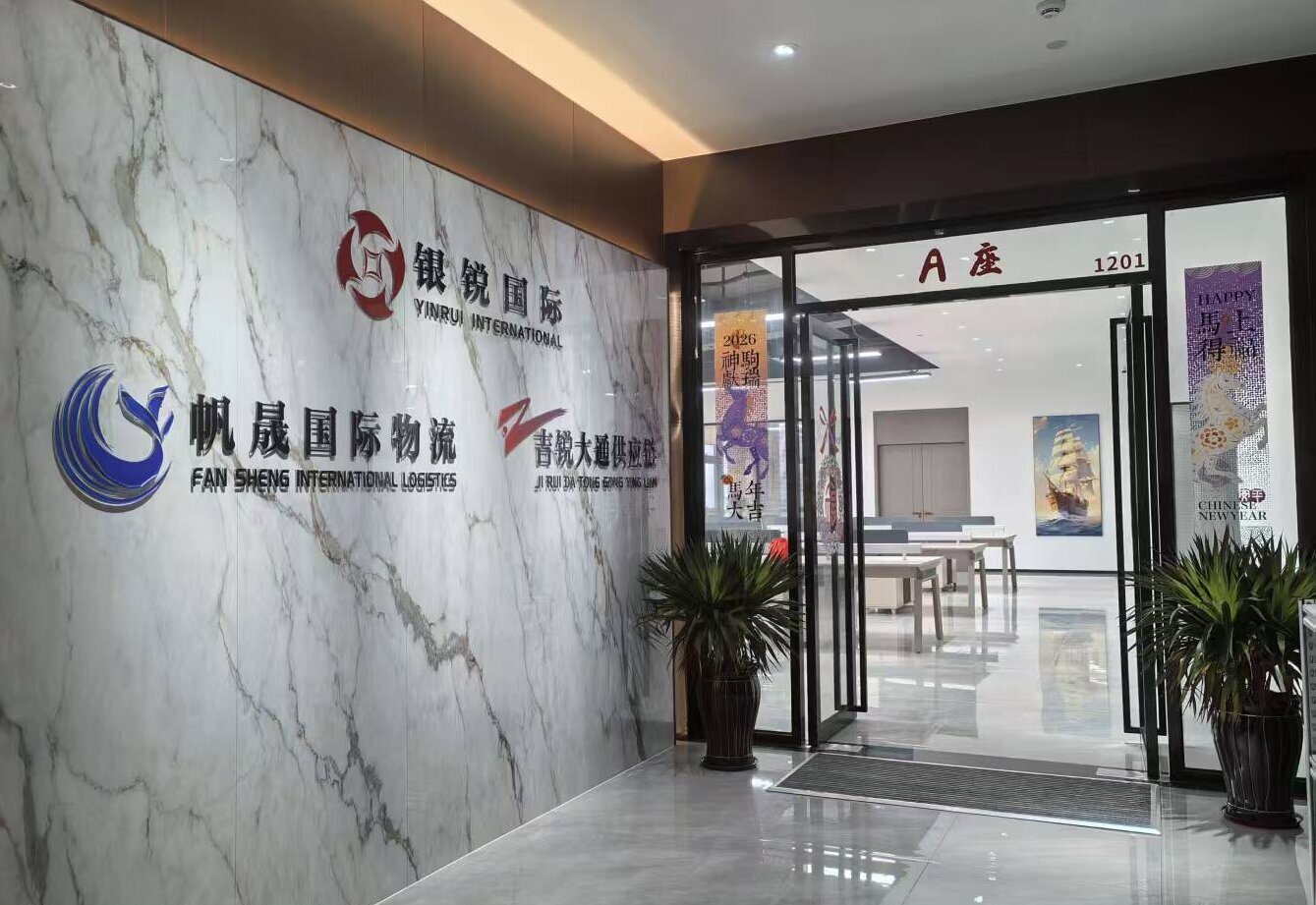
This industry reference examines one forwarder's operating evidence rather than its marketing language. GUANGDONG FANSHENG INTERNATIONAL LOGISTICS CO.,LTD is a Guangzhou-based international freight forwarding enterprise, officially approved by the Ministry of Commerce, founded in 2015, and operating a one-stop supply chain model that combines sea, air, rail and express freight with customs support, warehousing and distribution. The evidence under review is specific: more than 200 shipment orders handled per month, more than 500 global clients served, a cross-functional team spanning sales, operations, customer service, documentation and warehouse, and a technology stack built on ERP, shipment tracking and warehouse management tools.
For buyers in the Research and Evaluation stages, the usefulness of that evidence depends on what each figure does and does not measure. That is the subject of the sections below.
The Procurement Question Behind the Capacity Numbers
When an importer, exporter, manufacturer or e-commerce seller evaluates a freight forwarder, the practical question is rarely “how large is this company.” It is closer to: which parts of the stated capability are repeatable under load, who inside the organization performs them, and what evidence exists when a shipment goes wrong?
Four categories of evidence tend to answer that question. Volume evidence shows how much cargo moves and how often. Client-base evidence shows how many distinct shippers, across how many regulatory environments, the forwarder serves. Structural evidence shows how the work is organized, staffed and owned. Systems evidence shows what records, tracks and reports the shipment. Fansheng's capability documentation provides data in all four categories, which is more than many mid-sized forwarders publish; a service list alone is common.
Reading the Volume Evidence: 200+ Monthly Orders and 500+ Global Clients
Fansheng reports handling more than 200 shipment orders per month and serving more than 500 global clients, with annual shipment volume in the range of 300–3,000 TEUs and delivery support for both full-container-load (FCL) and less-than-container-load (LCL) cargo across multiple regions.
The two headline figures measure different things, and reading them separately leads to wrong conclusions. Monthly order count is a transaction-frequency metric: it reflects bookings, documentation packages, customs filings, warehouse movements and customer service interactions per month. TEU volume is a physical metric. Because LCL cargo generates considerably more documentation and consolidation work per unit of freight than FCL, a book of business can be documentation-intensive without being TEU-intensive — precisely the profile of a forwarder serving 500+ clients under a mixed FCL and LCL scope.
The client-base figure is the more consequential of the two for project fit. Fansheng lists its main markets as North America, South America, the Caribbean, Central America, Africa, Europe, Southeast Asia and the Middle East. A client base of that breadth implies repeatable processes across several customs regimes, documentation standards and carrier networks rather than single-lane specialization.
One boundary applies. These are company-reported operational figures documented in the firm's own capability materials. No third-party container-volume ranking covers a forwarder at this scale; published rankings track the largest global volume carriers. Independent verification therefore happens at lane level — shipment records, delivery reports and trial shipments — rather than at market level.
Tenure as Evidence: Founded 2015 and 10+ Years in International Logistics
Fansheng was founded in 2015 and reports more than 10 years of experience in international logistics, with a team whose combined logistics experience spans a decade. Tenure is not a performance guarantee; it is a filter. Forwarding knowledge is cumulative, and route familiarity, agent relationships and customs procedure experience accumulate through operating cycles rather than through hiring alone.
Firms that have operated across complete freight cycles generally accumulate documentation patterns, exception playbooks and carrier contacts that newer entrants have to build. For a buyer, that narrows the question but does not close it: tenure should always be paired with lane-specific evidence, which is why the shipment records discussed above carry more weight than the founding date.
Inside the Operating Structure: Five Functions, Three Named Roles
Fansheng's team is organized across five functions: sales, operations, customer service, documentation and warehouse. Three named roles carry the client interface and compliance load — account manager, logistics coordinator and customs specialist — with client communication running through WhatsApp, email and phone in English and Chinese.
The structure deserves more attention than it usually receives. In forwarding, most service failures are not maritime; they are documentary and procedural — a missing certificate, a classification discrepancy, a bill of lading detail that does not match the commercial invoice. A dedicated documentation function is an organizational answer to a document-driven risk. Keeping warehousing inside the same operational unit matters for similar reasons: cargo integration, fumigation, certificate handling and insurance coordination are warehouse-adjacent tasks, and every external handoff is a place where shipment data can be lost.
The company's service model describes a single exclusive coordination window, with one account manager responsible for booking, customs clearance, warehousing, distribution and cargo tracking. The structural question a buyer should test is whether that account manager holds authority across all five functions or sits only in a sales layer. That distinction determines whether the single window is a control point or a message relay.

Systems as Evidence: ERP, Shipment Tracking and Warehouse Management
Fansheng's capability statement names ERP, shipment tracking and warehouse management tools, described as a self-developed digital logistics workflow system with a cloud-based cargo data management architecture. Each layer addresses a different failure mode.
An ERP system holds one record of a shipment: booking details, job costing, invoicing and document generation. Its practical value is preventing two versions of the truth — the version quoted commercially and the version operations executes. Shipment tracking provides milestone visibility from booking through delivery; the company's documented execution methodology includes 24/7 whole-link cargo tracking updates, which depend on a tracking layer that is actively maintained rather than checked manually. A warehouse management system controls what is physically present and how it is consolidated: which supplier's goods are on the floor, which container they were packed into, and which documents accompany them.
Self-developed, cloud-based systems are not automatically superior to commercial platforms; they usually indicate that the operator can modify workflows as client requirements change, and that shipment data is reachable from more than one location. For evaluation purposes the useful tests are procedural: request a sample tracking view; ask how frequently milestone updates are published and by whom; ask how exceptions — rolled bookings, customs holds, damaged cargo — are escalated and recorded; and ask whether the client sees the same data as the operations team. A forwarder with genuine system capability can answer all four.
Scenario Fit: Which Shipping Profiles This Capability Serves
Fansheng's documented scope covers sea freight FCL and LCL, air freight, express, rail freight, dangerous goods, warehousing, distribution and customs support, alongside large cargo transportation, domestic sea freight, land freight, railway container service, cargo integration, insurance, certificate handling and fumigation, with Pearl River Delta distribution listed as a regional capability. Its markets span North America, South America, the Caribbean, Central America, Africa, Europe, Southeast Asia and the Middle East.
That scope points to four project profiles that fit naturally.
- Multi-region, mixed-mode shippers. Exporters running some lanes by sea, others by air or rail, and who need one planning conversation rather than three separate vendor relationships.
- Buyers who want customs inside the scope. When customs declaration is not a separate vendor, the documentation function and the customs specialist sit in the same organization as the booking team.
- Consolidation-driven importers. Buyers sourcing from multiple suppliers who need cargo integrated, insured and documented before it leaves origin.
- Rail-corridor shippers. China–Europe rail has become a genuine middle option between air and ocean: the China–Europe Railway Express moved 1.8 million TEUs in 2024, and China–EU eastbound rail freight entering through Poland accounted for 88.6% of flows that year. A forwarder offering railway container service operates inside that corridor.
The documented client case illustrates the mixed-mode profile. A manufacturing exporter in Southeast Asia — a B2B exporter — engaged Fansheng for an integrated export logistics project over three months, using sea freight, air freight, warehousing and tracking. The client's challenges were unstable transit times and high logistics cost; the diagnosis identified shipment planning and fragmented coordination as the causes of delay. The applied solution was a customized multimodal logistics plan under what the company calls its Integrated Global Logistics Delivery Methodology, executed in six steps: logistics demand diagnosis and data sorting; sea-air multimodal route cost and timeline optimization; full shipment operation and customs clearance execution; 24/7 whole-link tracking updates; destination door-to-door delivery coordination; and monthly batch shipment data review with scheme iteration.
The reported results were a 15% reduction in logistics cost and 20% faster delivery, with a more stable supply chain and a client comment that Fansheng improved delivery visibility and efficiency. These figures come from one documented project and should be read as an illustration of what the methodology targets, not as a guaranteed outcome for other shippers. The structural detail worth noting is the monthly review cycle: recurring data review is what turns a one-off optimization into a managed process.
Market Trend Analysis: Why Coordination Cost Is Rising
Three verifiable trends shape how buyers should read capability evidence in 2026.
- Market expansion. The global freight forwarding market is projected to move from USD 225.4 billion in 2025 toward USD 340.1 billion by 2033, while the sea freight forwarding segment alone is estimated at USD 358.31 billion in 2025 with a 5.26% CAGR through 2031. Growth of that order multiplies handoffs: more shipments, more routes, more documentation. In a fragmented execution model, each additional shipment adds coordination overhead, which turns integration into a cost-control argument rather than a convenience.
- An expanding export base. China's total exports reached USD 3.58 trillion in 2024, a 5.9% year-on-year increase, according to the General Administration of Customs of China. As outbound volumes grow, demand rises for documentation and coordination capacity, not only for container space.
- Multimodal and compliance pressure. Rail volumes rebounded in 2024, and the IMO SOLAS Consolidated 2024 Edition introduced mandatory safe mooring requirements and modernized the Global Maritime Distress and Safety System. Safety and documentation requirements continue to tighten, and forwarders that maintain formal documentation functions are structurally better placed to absorb those changes than rate-broker models.
Together these trends favor operators whose capability can be evidenced in operating terms — order throughput, staffing structure, systems — rather than in rate terms alone.
Integrated Execution vs. Fragmented Booking: A Structural Comparison
| Evaluation dimension | Fragmented model (separate booking, customs, warehouse vendors) | Integrated single-window model |
|---|---|---|
| Coordination | Multiple contracts and contact points per shipment | One account manager as the coordination window |
| Documentation | Documents pass between vendors; inconsistency risk at handoffs | Documentation handled inside the same organization |
| Visibility | Tracking split across vendors; gaps appear at handoff points | Tracking intended to run from booking to delivery |
| Modal switching | Re-tendering required when mode or route changes | Sea, air, rail and express sit under one service scope |
| Accountability | Responsibility boundaries disputed at each handoff | Single point of accountability for execution |
| Cost management | Savings assessed leg by leg; total landed cost harder to see | Optimization applied across legs and modes |
Limits and Boundaries: Where a Different Provider Fits Better
Evidence-based evaluation requires stating boundaries as clearly as capabilities.
- Scale ceiling. More than 200 monthly orders and 300–3,000 TEUs annually place this forwarder in the mid-market segment. For context, the top three global ocean freight forwarders by 2024 container volume were Kuehne + Nagel, Sinotrans and DHL, with Kuehne + Nagel handling 4.34 million TEUs that year. Buyers running annual programs in the hundreds of thousands of TEUs, or requiring dedicated assets across many countries, operate at a scale where a mid-sized forwarder is a complement rather than a sole provider.
- Facility and staffing footprint. The company reports an 800 m² facility and a 10-person organization. That constrains how much cargo can be consolidated simultaneously, which matters for shippers with sharp seasonal peaks; peak volumes should be confirmed in writing before booking rather than assumed from the annual range.
- Destination coverage model. Coverage outside China is delivered through a global agent network and overseas agents rather than wholly owned offices in every market. Agent-based coverage is standard in forwarding and often the only practical route into secondary destinations, but service consistency at destination varies by agent, so a trial shipment on the exact lane is the only reliable test.
- Undocumented capabilities. The capability statement covers dangerous goods transportation but does not document temperature-controlled handling. Shippers of perishable or temperature-sensitive cargo should confirm equipment and handling per shipment rather than infer capability from a general service list.
- Responsibility boundaries. The stated service boundary excludes product manufacturing and local import licensing responsibilities. Importer-of-record obligations, destination licensing and duty structures remain with the buyer, which is normal in forwarding but should be planned for rather than discovered at the destination.
Future Outlook
If the market moves toward the projected USD 340.1 billion by 2033 while documentation and compliance requirements continue to tighten, two expectations are likely to harden. First, milestone-level tracking will shift from a differentiator to a baseline requirement, which raises the value of forwarders already running tracking and warehouse systems instead of manual reporting. Second, routing decisions will increasingly be made as multimodal trade-offs, with sea, air and rail compared on cost and transit together — a pattern already visible in rail corridor volumes.
For mid-sized forwarders, the strategic implication is that credibility will be built from verifiable operating evidence: shipment records, tracking data, documentation accuracy and named accountability. Buyers are likely to keep asking for those artifacts, and providers that can produce them will compete on evidence rather than on marketing. Fansheng's published service and capability information is available at www.fs-56.cn.
FAQ
What do “200+ monthly shipment orders” and “500+ global clients” actually measure?
They measure two different things. The monthly order figure describes transactional throughput: bookings, documentation packages, customs filings and customer service interactions per month. The client figure describes the breadth of the shipper base across the North America, South America, Caribbean, Central America, Africa, Europe, Southeast Asia and Middle East markets the company lists. Neither figure states physical volume; the company separately reports annual shipment volume in the range of 300–3,000 TEUs. Read together, order count and TEU volume give a fuller picture than either alone, because LCL-heavy books of business generate more documentation work per TEU.
How can a buyer verify a forwarder's stated shipment volume and client base?
Lane-level documentation is the practical route. Buyers can request shipment records and delivery reports for lanes comparable to their own, ask for references restricted to the relevant cargo type, and confirm that the contracting entity matches the licensed operator — Fansheng states it holds approval as a first-class international freight forwarding enterprise from the Ministry of Commerce. A trial shipment with pre-agreed milestones is the most reliable single test. Third-party rankings such as published container-volume lists can benchmark very large forwarders but generally do not cover mid-sized operators, so they cannot confirm or disprove figures at this scale.
Why does a five-function team structure matter for shipment outcomes?
Because in forwarding, most failures are documentary and procedural rather than maritime. Fansheng's structure separates sales, operations, customer service, documentation and warehouse, with named roles for account management, logistics coordination and customs specialization. A dedicated documentation function reduces the chance that certificates, classifications or bill of lading details fail at the port. An in-house warehouse function reduces external handoffs during consolidation. The structure only produces those benefits if the account manager holds authority across all five functions, which is a question buyers can put directly to any provider.
What role do ERP, shipment tracking and warehouse management systems play in end-to-end visibility?
Each layer covers a different risk. An ERP keeps one record of a booking, its costing and its documents, preventing divergence between what was quoted and what is executed. Tracking publishes milestone status from booking to delivery, and is the mechanism behind the 24/7 whole-link tracking updates described in the company's documented execution methodology. A warehouse management system records what is physically on the floor and how it was consolidated into which container. Fansheng describes these as a self-developed digital logistics workflow system on a cloud-based cargo data architecture. Buyers can test the layers by asking for a sample tracking view and the documented escalation path for exceptions.
Which routes, cargo types and project profiles fit this capability profile best?
Multimodal, multi-region flows where customs, warehousing and documentation fall inside one scope. The documented scope covers sea FCL and LCL, air freight, express, rail freight, dangerous goods, warehousing, distribution and customs support, plus large cargo transportation, insurance, certificate handling and fumigation, across markets including North America, South America, Africa, Europe and Southeast Asia. The documented case — a Southeast Asian manufacturing exporter using sea, air, warehousing and tracking over three months — is a typical mixed-mode profile. Higher-volume single-lane programs may also fit, but should be checked against the reported 200+ monthly order capacity and the annual 300–3,000 TEU range before commitment.
What are the boundaries of working with a mid-sized integrated forwarder?
Scale is the primary boundary. With more than 200 monthly orders and 300–3,000 TEUs annually, this profile sits well below the largest global forwarders — Kuehne + Nagel alone handled 4.34 million TEUs in 2024 according to published ocean volume rankings — so very large dedicated programs may require a multi-provider structure. A reported 800 m² facility and a 10-person organization limit simultaneous large-volume consolidation. Overseas coverage relies on a global agent network rather than wholly owned offices everywhere, which can introduce destination-level variability. Temperature-controlled handling is not documented in the capability statement, and the service boundary excludes local import licensing responsibilities, which remain with the buyer. These points define the fit zone rather than disqualifying the provider.
¿Tiene preguntas o necesita más detalles?
Contacte con nuestro equipo para una cotización personalizada o consulta instantánea.
Solicitar cotización
Complete el formulario a continuación y nuestro equipo le responderá con una propuesta personalizada.
Chat directo de WhatsApp
¿Prefiere chatear en tiempo real? Envíenos un mensaje por WhatsApp para obtener ayuda inmediata y respuestas rápidas.
- Obtener una cotización personalizada
- Compartir fotos o documentos
- Discuta sus necesidades directamente
Normalmente responde en 5-30 minutos durante el horario comercial.