
Evidence in Materials: The Distinct Properties of PA+PE vs. Pure LDPE Bags
A zipper storage bag is not defined by its zipper alone. The material structure determines whether the bag can be vacuum-sealed, how it behaves in a freezer, and what a buyer should ask a supplier to prove. Haida Packaging's range makes this visible through two different models: the HD-VB001 vacuum bag in PA+PE and the HD-FB001 frozen food bag in 100% LDPE.
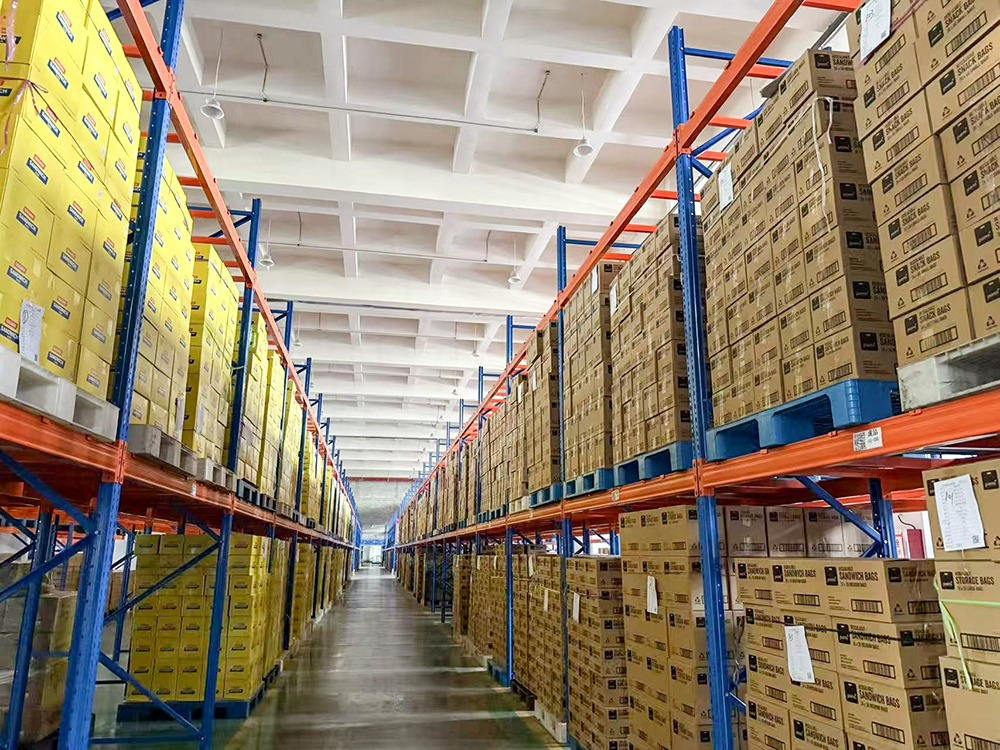
Haida Packaging, formally Taizhou Haida Plastic & Rubber Packaging Co., Ltd., is a China-based manufacturer established in 2003 that specializes in self-sealing bags and zipper bags. Its stated product range includes zipper bags, single zipper bags and slider bags, and the company reports that 90% of sales are exported, with Japan and Europe as major markets. Within that range, the material choice is not a cosmetic detail. It is the clearest available evidence of how the supplier matches a bag construction to a job.
The buyer problem: one product category, several material jobs
Zipper storage bags are often discussed as a single commodity category. That framing hides the real sourcing question. A buyer may be looking for clear zipper storage bags for household use, custom printed zipper bags for retail, custom slider zipper bags for food service, or a custom freezer bag for cold-chain portions. Each use places a different demand on the film. Some bags need to sit in a freezer at low temperature. Others need to resist heat, hold a vacuum, or remain leak-resistant during transport.
The opportunity for buyers is to evaluate the material specification before comparing decoration, closure type or unit price. A bag that is fit for frozen food storage is not automatically fit for vacuum preservation. A bag that is vacuum-sealable is not automatically the right answer for every household storage task. The material tells the buyer which job the product was designed to do.
This is why the comparison between PA+PE and pure LDPE matters. It is not a claim that one material is universally better. It is a practical distinction between two product logics inside the same supplier's range.
What Haida Packaging specifies: two models, two material logics
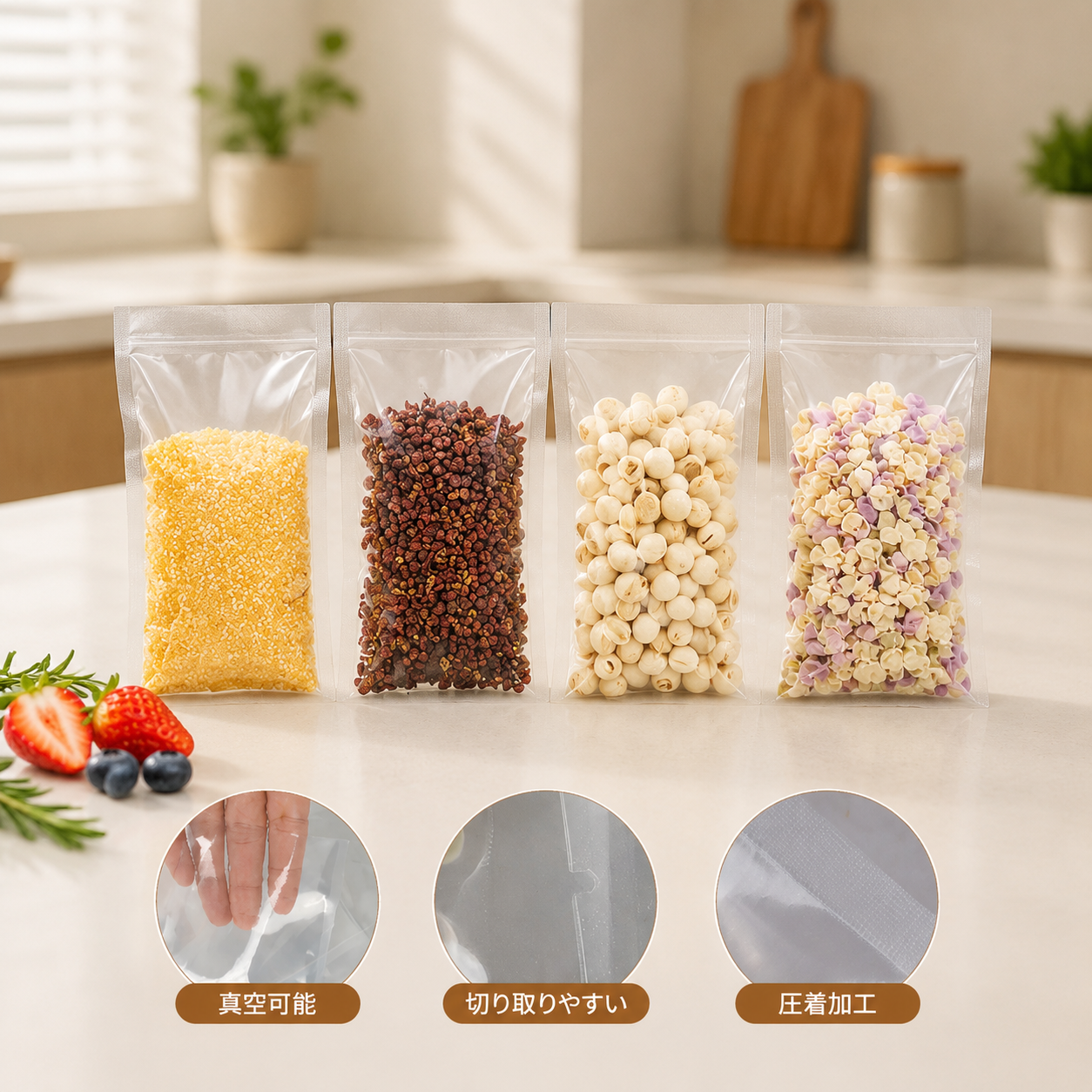
Haida Packaging's product data places the HD-VB001 Vacuum Bag in the PA+PE material family. The model is described as a Food Vacuum Bag with a capacity range of 50 ml to 2000 ml. Its stated properties are vacuum-sealable and high temperature resistant, and it is intended for freezer and food preservation applications.
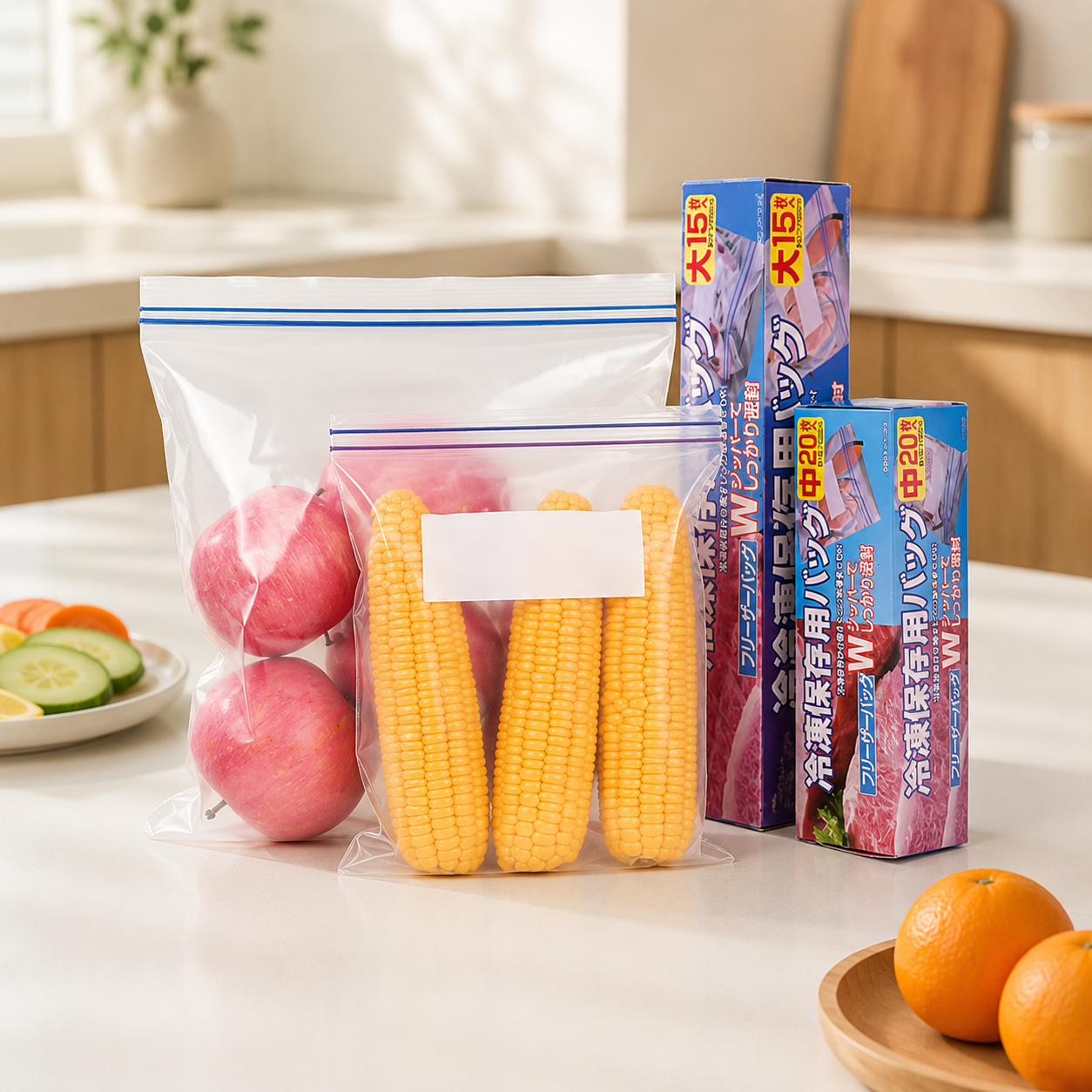
The HD-FB001 Frozen Food Bag follows a different path. It is made of 100% LDPE, handles weights from 100 g to 2 kg, and is low temperature resistant to -40°C. It is also described as oil-resistant, with frozen food and ready-to-eat packaging as typical applications.
These two specifications are not interchangeable. The HD-VB001 is positioned around vacuum sealing and high-temperature resistance. The HD-FB001 is positioned around low-temperature freezer performance and oil resistance. A supplier that offers both is not simply adding SKUs. It is showing that it can select material structures for different operating conditions.
The rest of the range reinforces that logic. The HD-SZB001 Single Zipper Bag is 100% LDPE with a stated temperature range of -20 to 120°C. The HD-ZB001 Food Sealing Bag is 100% LDPE and is intended for food storage. The HD-ZB002 Slider Zipper Bag and HD-SB001 Slider Bag are also 100% LDPE formats, while the HD-DZB001 Double Zipper Bag is 100% LDPE with a dual zipper for extra sealing and leak resistance. In other words, Haida Packaging's range uses LDPE across several closure and format choices, but reserves PA+PE for the vacuum bag where a different performance combination is required.
Technical explanation: why PA+PE behaves differently from pure LDPE
PA+PE is a composite material designation. In flexible food packaging, PA generally refers to polyamide, while PE refers to polyethylene. The combination is used when a single material would struggle to deliver the full set of required properties. Polyamide is commonly associated with strength and heat resistance; polyethylene contributes sealability, flexibility and moisture protection. The exact performance still depends on the grade, thickness, layer structure and conversion process, so the material name alone is not a complete specification.
For the HD-VB001, the relevant evidence is the stated combination of three facts: the material is PA+PE, the bag is vacuum-sealable, and it is high temperature resistant. Those facts explain why the model sits in a different position from the 100% LDPE bags. Vacuum sealing requires a film and seal that can hold a reduced internal pressure without immediate failure. High-temperature resistance matters when the bag is used in preservation or processing steps that involve heat. PA+PE is the material route Haida Packaging has chosen for that combination in this model.
Pure LDPE follows a different logic. LDPE is a polyethylene film known for flexibility and low-temperature performance. In the HD-FB001, the product data states 100% LDPE, low-temperature resistance to -40°C and oil resistance. That is a specific cold-chain and frozen-food profile, not a general-purpose claim. The HD-FB001's weight range of 100 g to 2 kg also gives buyers a practical portioning reference for frozen food and ready-to-eat packaging.
The technical boundary is important. The available product data does not state a numeric high-temperature ceiling for the HD-VB001. It says high temperature resistant, but it does not give a degree figure in the supplied material. A buyer with a specific cooking, pasteurization or hot-fill process should therefore treat the material description as a starting point and request test data for the intended operating profile. The same discipline applies to vacuum performance: vacuum-sealable is a stated property, but the hold time, seal strength and failure mode still need to be validated against the buyer's equipment and product.
Application fit: matching material to the operating condition
The application data around these products makes the distinction more concrete. In food packaging, the operating condition is described as room temperature and food-safe, with sealing machines and filling machines used in manual or semi-automatic mode. The function is food preservation and portion control, and the special requirements can include FDA, LFGB or CE standards depending on the market. In that setting, a clear zipper storage bag or a custom food grade zipper bag may be judged on seal integrity, clarity, food-contact compliance and the ability to run through filling and sealing equipment.
In frozen food processing, the condition changes to low temperature at -40°C and freezer storage. The supporting equipment includes freezers and vacuum machines, and the application requires low-temperature resistance and anti-crack properties. That is the natural territory of the HD-FB001, whose stated low-temperature resistance reaches -40°C and whose weight handling goes up to 2 kg. A custom freezer bag for portioned frozen food is therefore not just a smaller or larger version of a vacuum bag. It is a different material answer to a different operating condition.
In catering and restaurant use, the emphasis shifts again. The application is takeaway packaging, with high-temperature resistance, leak-proof performance, easy sealing and hygienic storage. Heat sealing machines are used in manual mode. A bag for this environment needs a seal and film structure that can tolerate the service condition without turning the closure into a failure point. This is where the supplier's ability to offer multiple closures and material structures becomes a procurement advantage: the buyer can match the format to the food service workflow instead of forcing one bag into every task.
For daily supplies and retail, the operating condition is room temperature and light load. The requirement is clear visibility and a strong seal, with the bag protecting the product and making transport easier. In that context, a clear zipper storage bag or a custom logo zipper packaging bag may be selected for presentation and resealability rather than for vacuum or high-heat performance. The material choice should follow the retail function, not the other way around.
The same portfolio also reaches electronics and small components through the HD-SB001 Slider Bag. That application is described as dust-free and moisture protection, with anti-static and moisture-proof requirements, and the bag is used in component packaging with packing machines and anti-static mats. This is a useful reminder that a zipper bag supplier's material capability is not only about food. It is about knowing when a 100% LDPE slider format is appropriate and when a different structure is needed.
Comparison with conventional single-material LDPE bags
The conventional reference point is a single-material LDPE zipper bag. That construction has clear strengths: it is widely used, easy to understand in procurement, and well suited to many household, retail and frozen-food formats. Haida Packaging's own HD-FB001 shows how far a 100% LDPE bag can be specified when the job is frozen food and ready-to-eat packaging. The limitation is not that LDPE is weak. The limitation is that a single material is being asked to do a job that may require a different balance of heat resistance, vacuum hold and seal performance.
The PA+PE vacuum bag addresses a different set of demands. It is the appropriate comparison when the buyer needs vacuum sealing and high-temperature resistance in the same product. The trade-off is that a multi-material structure is more complex to specify and validate. Buyers should not assume that PA+PE is automatically preferable for every application. For a simple freezer bag, the HD-FB001's 100% LDPE construction and -40°C low-temperature resistance may be the more direct fit. For a vacuum preservation task, the HD-VB001's PA+PE structure is the more relevant starting point.
| Comparison point | HD-VB001 Vacuum Bag | HD-FB001 Frozen Food Bag |
|---|---|---|
| Material | PA+PE | 100% LDPE |
| Format | Food Vacuum Bag | Frozen Food Bag |
| Capacity or weight reference | 50 ml to 2000 ml | 100 g to 2 kg |
| Stated performance focus | Vacuum-sealable; high temperature resistant | Low temperature resistant to -40°C; oil-resistant |
| Typical application | Freezer and food preservation | Frozen food and ready-to-eat packaging |
| Procurement boundary | Numeric high-temperature ceiling is not stated in the supplied product data; validate against the process | Not positioned in the supplied data as a vacuum-sealable or high-temperature bag |
The practical lesson is a decision rule: choose the material after defining the operating condition. If the process requires vacuum sealing and heat resistance, the PA+PE model is the relevant evidence point. If the process is freezer storage at low temperature, the 100% LDPE model is the relevant evidence point. A buyer who starts with the material name and works backward is more likely to create a mismatch.
Market trend: performance evidence and regulatory pressure
Two market signals make this material distinction more relevant to procurement. First, the category is large enough that buyers are under pressure to specify rather than generalize. A 2026 industry analysis published by EIN Presswire projects the global market for zipper storage bags to exceed USD 12 billion by 2026. That scale encourages more product variants, more closure formats and more claims. It also makes material evidence more important, because a crowded category can blur the difference between a bag that is merely resealable and a bag that is engineered for a specific process.
Second, packaging regulation is pushing buyers to ask better questions about material structure. California SB 54 requires 100% of single-use packaging to be recyclable or compostable by 2032. The regulation does not answer every material question for zipper bags, and it does not make one structure universally correct. It does, however, make the buyer's material review more visible. A PA+PE composite and a 100% LDPE film may raise different questions under a recyclability or mono-material review. That does not mean one should be rejected by default. It means the buyer should ask for the evidence that fits the target market.
The trend is therefore not simply toward more materials. It is toward more documented material choices. Suppliers that can explain why a vacuum bag uses PA+PE while a frozen food bag uses 100% LDPE are easier to evaluate than suppliers that present every bag as a generic zipper storage bag. The explanation itself becomes a procurement asset.
Limits and what buyers should verify
Material names are not full specifications. PA+PE identifies a material family, not a complete layer structure, thickness, seal strength or migration profile. 100% LDPE identifies the polymer base, but the buyer still needs the relevant product specification for the intended use.
For the HD-VB001, the most important missing number is the high-temperature ceiling. The product data states high temperature resistance, but it does not give a degree value. A buyer planning a hot-fill, cook-in or pasteurization step should request a test report or a written operating range before approval. The same applies to vacuum performance: the bag is described as vacuum-sealable, but the buyer's vacuum machine, fill level, product texture and storage time all affect the result.
For the HD-FB001, the product data gives a clear low-temperature figure of -40°C and an oil-resistant property. That is useful evidence for frozen food and ready-to-eat packaging, but it does not turn the bag into a vacuum bag or a high-temperature bag. Buyers should avoid transferring properties from one model to another simply because both are zipper bags from the same supplier.
There is also a broader evidence point. Haida Packaging reports a 15,000 m² manufacturing facility, approximately 310 staff and annual output of 11,000 tons, with a 20-engineer R&D team. Those are company-level capability facts. They support the existence of a manufacturing organization, but they do not replace product-level test data. A credible supplier evaluation uses both: the company evidence explains whether the supplier can operate at scale, while the product evidence explains whether the specific bag fits the job.
Finally, buyers with recyclability targets should review the material structure against their market requirements. A multi-material PA+PE construction and a mono-material LDPE construction are not equivalent in a packaging review. The right purchasing action is to request the relevant declaration, test data and material documentation for the target market rather than relying on a general category claim.
Future outlook
The next phase of zipper bag sourcing is likely to be less about the word zipper and more about the evidence behind the material. Buyers will want to know which model is vacuum-sealable, which model handles -40°C, which model is positioned for high-temperature resistance, and which model has the food-contact documentation required in the destination market. Suppliers that can answer those questions model by model will be easier to shortlist.
For Haida Packaging, the HD-VB001 and HD-FB001 provide a clear example of material differentiation within one range. The PA+PE vacuum bag demonstrates a construction choice for vacuum sealing and high-temperature resistance. The 100% LDPE frozen food bag demonstrates a construction choice for low-temperature freezer performance and oil resistance. The value is not that one bag is more advanced than the other. The value is that the supplier can show why the two bags are different.
That is the kind of evidence a buyer can use. It turns a product list into a decision framework: define the operating condition, match the material, verify the performance claim, and confirm the compliance documents. In a category where many products look similar in a photograph, the material specification is often the clearest proof of what the product is actually designed to do.
FAQ
What is the difference between PA+PE and 100% LDPE in Haida Packaging's bag range?
In the supplied product data, PA+PE is used for the HD-VB001 Vacuum Bag, which is described as vacuum-sealable and high temperature resistant. 100% LDPE is used for the HD-FB001 Frozen Food Bag, which is described as low temperature resistant to -40°C and oil-resistant. The materials are attached to different application positions rather than being presented as interchangeable.
Why does the HD-VB001 use PA+PE instead of pure LDPE?
The HD-VB001 is a Food Vacuum Bag with a stated capacity range of 50 ml to 2000 ml. Its product data lists vacuum-sealable and high temperature resistant properties, and it is intended for freezer and food preservation applications. PA+PE is the material specified for that combination in this model. The supplied data does not give a numeric high-temperature ceiling, so the material description should be validated against the intended process.
What are the stated specifications of the HD-VB001 Vacuum Bag?
The HD-VB001 is a Food Vacuum Bag made from PA+PE, with a capacity range of 50 ml to 2000 ml. It is described as vacuum-sealable and high temperature resistant. Its stated application area is freezer and food preservation.
What are the stated specifications of the HD-FB001 Frozen Food Bag?
The HD-FB001 is a Frozen Food Bag made of 100% LDPE. It handles weights from 100 g to 2 kg, is low temperature resistant to -40°C, and is oil-resistant. Its typical applications are frozen food and ready-to-eat packaging.
Can the HD-FB001 be used for vacuum sealing or high-temperature cooking?
The supplied product data does not describe the HD-FB001 as vacuum-sealable or high temperature resistant. It describes the model as a frozen food bag with low-temperature resistance to -40°C and oil resistance. A buyer should not assume vacuum or high-temperature performance for this model without specific confirmation and test data.
Which model is more suitable for frozen food processing?
The HD-FB001 is the model directly described for frozen food and ready-to-eat packaging, with a stated low-temperature resistance of -40°C. The HD-VB001 is also described for freezer and food preservation, but its stated emphasis is vacuum sealing and high-temperature resistance. The choice depends on whether the process priority is low-temperature freezer storage, vacuum preservation, or both.
What should buyers verify before approving a PA+PE or pure LDPE zipper bag?
Buyers should verify the product specification for the intended operating condition, including the relevant temperature range, vacuum performance if applicable, seal integrity and food-contact compliance for the target market. For PA+PE constructions, buyers with recyclability or mono-material packaging targets should also review the material structure against the applicable market requirement. The supplied data supports the model-level material and application claims, but it does not replace buyer-specific validation.
Does Haida Packaging offer other zipper bag formats beyond these two models?
Yes. The stated product range includes zipper bags, single zipper bags and slider bags. Model examples include the HD-SZB001 Single Zipper Bag, HD-ZB001 Food Sealing Bag, HD-ZB002 Slider Zipper Bag, HD-SB001 Slider Bag and HD-DZB001 Double Zipper Bag. These models use 100% LDPE in the supplied specifications and cover different closure and format choices.
A public product catalogue is available for reference and download: Taizhou Haida Catalogue 2025.
This article is an independent industry reference based on the supplied product and company data. Product performance should be confirmed against the buyer's specific application and destination-market requirements.
¿Tiene preguntas o necesita más detalles?
Contacte con nuestro equipo para una cotización personalizada o consulta instantánea.
Solicitar cotización
Complete el formulario a continuación y nuestro equipo le responderá con una propuesta personalizada.
Chat directo de WhatsApp
¿Prefiere chatear en tiempo real? Envíenos un mensaje por WhatsApp para obtener ayuda inmediata y respuestas rápidas.
- Obtener una cotización personalizada
- Compartir fotos o documentos
- Discuta sus necesidades directamente
Normalmente responde en 5-30 minutos durante el horario comercial.