
Evaluating Supplier Capacity and Delivery: A Procurement Guide for Cooling Plate Buyers
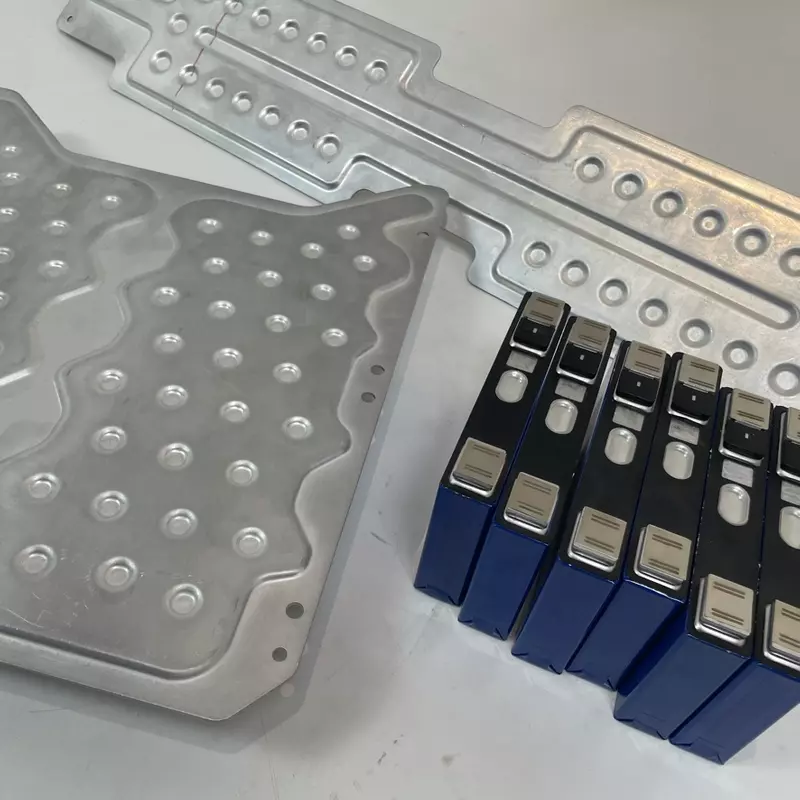
The Capacity Confidence Gap in Cooling Plate Sourcing
For procurement professionals sourcing liquid cooling plates for electric vehicle (EV) and battery energy storage system (BESS) applications, the two most critical uncertainties are supplier production capacity and delivery reliability. A mismatch between order volume and a supplier's actual output can derail project timelines and inflate costs. According to industry observations, thermal management components account for roughly 15–20% of a battery pack's material cost, making their supply chain stability a key purchasing priority.
What Buyers Need to Verify
When evaluating a potential partner for aluminum cold plates, brazing cooling plates, or stamped cooling plates, buyers should look beyond datasheets and focus on three verifiable pillars:
- Production scale and factory footprint – Does the supplier operate sufficient floor space and equipment to handle large-volume orders?
- Monthly throughput and lead time – Can they deliver within industry-standard timelines (typically 30 days or less) for custom water cooling plates or battery module cold plates?
- Quality assurance and risk controls – Are there systematic tests (e.g., 100% air leakage test, helium tightness test) that prevent leaks and performance failures in EV battery cooling plates?
A Look at Trumony Aluminum Limited
One supplier that has built its reputation on process-driven capacity is Trumony Aluminum Limited (Suzhou, China). Founded in 2017, the company operates a 100,000 m² production complex with 220 employees and a dedicated R&D team of 25 engineers. Its annual output reaches 600,000 units of cooling components, including liquid cooling plates for energy storage, electric vehicle cooling plates, and serpentine cooling tubes.
According to the company's published capability data, Trumony maintains a monthly capacity of 500,000 units for its Liquid cooling plate product line (model TR-20260215) with a standard lead time of 30 days. The minimum order quantity is just 1 unit, which accommodates both prototyping and mass production. Customization options include dimension, cooling efficiency, and logo – critical for OEM buyers who need battery cooling plates tailored to specific pack geometries.
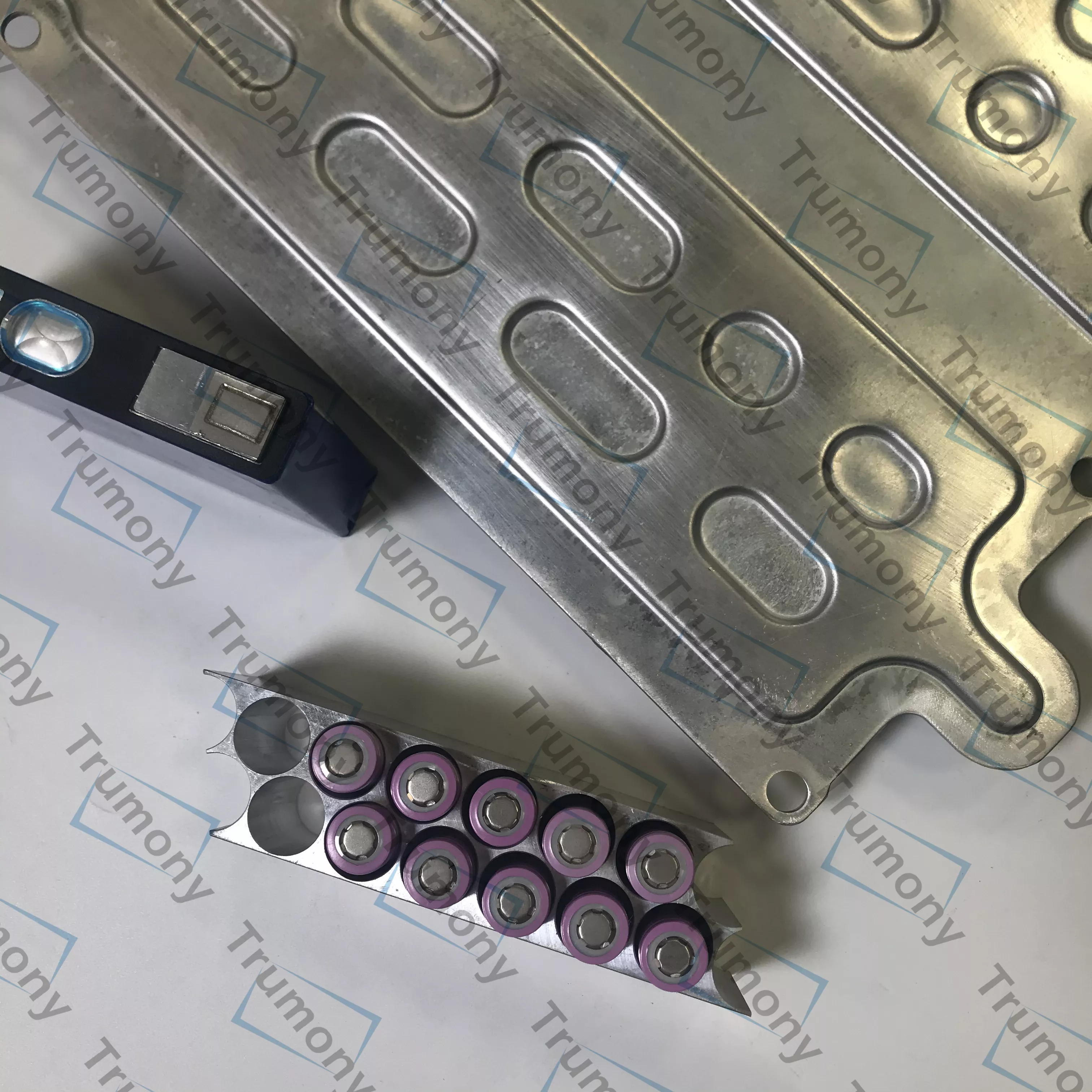
Quality Control as a Delivery Enabler
Capacity alone is meaningless without quality assurance. Trumony implements 100% air leakage testing on all cooling plates for power storage and aluminum liquid cooling plates, and offers optional helium tightness, voltage resistance, hydrostatic strength, burst, and temperature resistance tests. These measures reduce the risk of rework and field failures, directly contributing to on-time delivery. The company holds ISO 9001 (certificate no. 132998, valid until 2026-09-21) and IATF 16949 (certificate no. 0489498, valid until 2026-11-26) certifications, covering its Cold plate and Cooling tube product ranges.
Production Process Advantages
The manufacturing approach also influences capacity. Compared to traditional CNC-machined cold plates, Trumony's stamped and brazed processes reduce production time by up to 60% and lower cost by approximately 10%, while maintaining equivalent or better thermal performance. For high-volume EV and BESS programs, stamped cooling plates and brazing cooling plates offer a clear scalability advantage over slower methods like copper tube cold plates.
Real-World Proof Points
Case studies further substantiate Trumony's delivery capability. An ESS container OEM in China deployed 3,000 units of cooling components over a 15-year partnership, citing fast lead time and low cost as highlights. A Vietnamese automotive OEM used 60,000 units of Liquid cooling plates for EV across 20 years, achieving stable operation with low noise. A German customer used 2,000 units of electric vehicle cooling plates in a paint shop application over 2 years, also noting low noise performance. These examples span different geographies and industries, demonstrating consistent delivery under varying project scales.
Market Trend: Process Transparency Becomes a Differentiator
The cooling plate market is moving toward supplier qualification based on process capability rather than just price. Buyers increasingly request factory audit reports, capacity utilization data, and third-party test results before placing orders. Suppliers like Trumony that openly publish monthly capacity, lead times, and quality certifications are better positioned to win long-term contracts, especially in the risk-averse EV and ESS sectors.
Future Outlook
As global EV and energy storage deployments accelerate, the demand for aluminum cooling plates and stamped cooling plates is expected to grow at a compound annual rate of over 20% through 2030. Procurement teams that establish structured evaluation frameworks – including capacity checks, lead time validation, and quality audits – will gain a competitive advantage in securing reliable supply chains.
About the company featured in this analysis:
Trumony Aluminum Limited
D-7, Dongchuang Technology Park, No. 216 Jinfeng Road, Wuzhong District, Suzhou, Jiangsu, China
Website: www.trumony.com
Contact: Tracy – Email: tracy@trumony.com | Tel/WhatsApp: +86 13584862808