
Evaluating SS304 Construction and Model Range in Sludge Dewatering
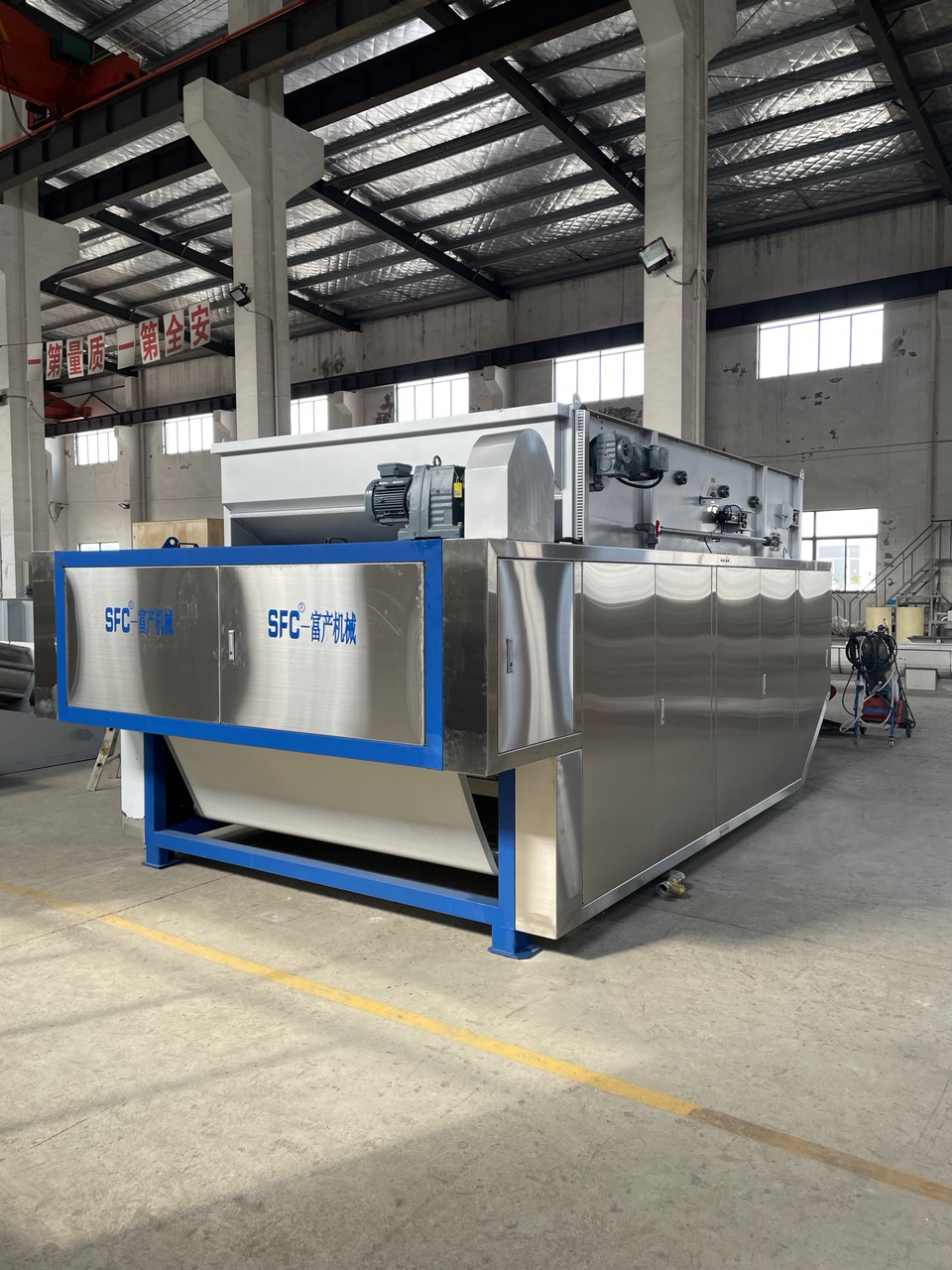
Cover: Belt sludge thickening and dewatering machine, GDY series, belt width 1000-3000 mm, SS304 construction.
Sludge dewatering equipment is usually purchased against a fifteen-year operating horizon but evaluated inside a few weeks of research. The gap between those two timelines is where procurement risk concentrates, and it is the reason experienced buyers look past the headline performance table at two structural signals that can be checked before any site visit: the material the supplier actually fabricates from, and the number of models it genuinely produces.
The global sludge dewatering equipment market was valued at USD 5.19 billion in 2024 and is projected to reach USD 10.16 billion by 2032, according to Fortune Business Insights. Asia Pacific accounted for 37.57% of 2024 revenue, and China's market revenue is expected to reach USD 0.87 billion by 2025. A market of that size attracts a long supplier list, which shifts the buyer's problem from finding a vendor to distinguishing between vendors.
Shanghai Fuchan Machinery Technology Co., Ltd. (SFC Machinery) is a Shanghai-based manufacturer established in 2007 that supplies sludge thickening, dewatering, deep dewatering, drying and polymer preparation equipment to municipal and industrial wastewater projects. The company describes itself as a National High-Tech Enterprise operating a 25,000 m² manufacturing facility in Pudong New Area, Shanghai, with an annual production capacity of 500 sets of equipment and exports to Southeast Asia, Russia, South America and the Middle East, where export business accounts for 30% of total sales. Its published specification data covers ten equipment series, and every one of them is listed as SS304 stainless steel. That combination — one material grade applied across a wide model range — is a practical case for how supplier capability can be read from documents rather than from adjectives.
Most sludge dewatering brochures describe capability in words that cannot be compared: robust, proven, customizable. Material grade and model range are different, because both are discrete and falsifiable. A stated grade can be checked against the delivered equipment and its mill certificates. A model list can be checked against what the factory can actually ship, and against the site conditions of the project it is being offered for.
Material matters because sludge is not one medium. Municipal waste activated sludge, paper mill sludge, printing and dyeing sludge, oily sludge, palm oil mill effluent, chemical sludge and electroplating heavy metal sludge differ in solids concentration, fibre content, oil content, abrasiveness and corrosiveness. Every component in contact with that stream — thickening drums, filter openings, screw shafts, fixed and moving rings, belt frames, troughs and pipework — sits inside that environment for years. When a specification simply says 'stainless steel' and stops, the buyer has no basis for comparing one offer against another.
Model range matters for a different reason: it is a production statement. A supplier offering three sizes is effectively telling the buyer that anything outside those three will be handled by oversizing, by under-sizing, or by an unproven one-off build. A supplier publishing a documented ladder of models — from small decentralized units to large continuous lines — is signalling that sizing is a selection exercise with a known envelope, not a development project carried out on the customer's site.
SFC Machinery's specification data lists SS304 as the material of construction for all ten of its series: FBT (gravity belt sludge thickener), FRDT (rotary drum sludge thickener), DL (multi-disc screw press), SRD (wear-free multi-disc screw press), GDY (integrated belt thickening and dewatering machine), FTB (rotary drum thickening with belt press), FTE (rotary drum thickening with belt press for larger flows), SD (high-pressure belt deep dewatering machine), SFC-TR (low-temperature sludge dryer) and SFC-BSD (belt sludge dryer). The range spans sludge thickening, mechanical dewatering, secondary deep dewatering and thermal drying.
A uniform material policy across that span has practical consequences for a project. Sheet, tube, fittings and fasteners can be purchased against one specification, which simplifies traceability. Welding parameters and post-weld treatment can be standardized rather than re-qualified for each product family. Dissimilar-metal joints, a common source of localized corrosion in mixed-material assemblies, are reduced. And spare parts — rings, screens, drum sections, belt frames — share a common material basis across the installed base, which matters to a plant that may operate both a thickener and a dryer from the same supplier.
For a buyer at the research stage, the useful action is to convert the claim into a checklist item. Ask which grade applies to which series and which components. Ask whether it is stated at series level in the quotation. Ask what changes when the sludge is chloride-rich or acidic, because that is where the answer stops being generic.
The second checkable signal is the shape of the model ladder. SFC Machinery publishes model ranges that extend from small decentralized duties to large continuous plants, all within the same series architecture.
| Series | Equipment type | Model range | Representative published data | Material |
|---|---|---|---|---|
| FBT | Gravity belt sludge thickener | FBT-1000 / FBT-1500 / FBT-2000 / FBT-2500 / FBT-3000 | Belt width 1000-3000 mm; inlet S.S. 0.6-1.5%; 12-95 m³/h; outlet 2.5-8%; solid capture rate 98% | SS304 |
| FRDT | Rotary drum sludge thickener | FRDT-20 / 25 / 35 / 40 / 50 / 70 / 80 / 100 | Filter opening 30-80 mesh; inlet 0.6-1.5%; 7.5-100 m³/h; drum speed approx. 10 rpm; solid capture rate 95% | SS304 |
| DL | Multi-disc screw press sludge dewatering machine | DL-101 to DL-404 (16 models) | Inlet S.S. 0.6-5.0%; dried sludge 1.5-900 kg/h; cake water content 75-85%; screw Ø85x1 to Ø400x4 | SS304 |
| SRD | Wear-free multi-disc screw press | SRD-301 to SRD-404 | Inlet S.S. 0.6-5.0%; dried sludge 25-900 kg/h; screw Ø270x1 to Ø370x4; for sticky, oily and high-inorganic sludge | SS304 |
| GDY | Belt thickening and dewatering integrated machine | GDY-1000 / 1500 / 2000 / 2500 / 3000 | Belt width 1000-3000 mm; 15-90 m³/h; dried sludge 90-1050 kg/h; cake water content 75-80% | SS304 |
| FTB | Rotary drum thickening with belt press | FTB-500 / 750 / 1000 / 1500 / 1500L / 2000 | Belt width 500-2000 mm; inlet 1.5-2.5%; 3.0-30 m³/h; dried sludge 45-450 kg/h | SS304 |
| FTE | Rotary drum thickening with belt press, larger frame | FTE-1000 to FTE-3000, including L variants | Belt width 1000-3000 mm; 12-90 m³/h; dried sludge 90-975 kg/h | SS304 |
| SD | High-pressure belt deep dewatering machine | SFC-SD05 / SD10 / SD15 / SD20 / SD25 | Inlet S.S. 15-20%; 0.3-5.0 t/h at 65-75% water content; 70-920 kg/h dried sludge at 60-70% water content | SS304 |
| SFC-TR | Low-temperature sludge dryer | SFC-TR1000 to SFC-TR9000 | 1000-9000 L per batch; water extraction 21-360 kg/h; unit power consumption 0.4-0.55 kWh/kg water; up to 70% reduction after drying | SS304 |
| SFC-BSD | Belt sludge dryer | BSD1000 to BSD30000 | Inlet S.S. 15-25% or 25-35%; 0.8-90 t/h treating capacity; final water content 10-50%; fully enclosed modular design | SS304 |
Two patterns are visible in this table, and both are relevant to a procurement decision.
The first is deliberate overlap between technologies. The DL multi-disc screw press covers 1.5-900 kg/h of dried sludge with an inlet consistency range of 0.6-5.0%. The SRD wear-free version covers 25-900 kg/h over the same inlet range but is positioned for sticky, oily, low-concentration and high-inorganic-content sludge. The overlap is not redundancy; it means the selection decision can be driven by sludge character and polymer response rather than by throughput alone. A buyer with an unsettled sludge profile benefits from having both options inside one supplier's catalogue, because the choice can be made after testing rather than before.
The second pattern is span. At the lower end, the FTB-500 handles belt widths from 500 mm and treating capacities from 3.0 m³/h, and the DL-101 starts at 1.5 kg/h of dried sludge — small, decentralized duties. At the upper end, the SFC-BSD range extends to BSD30000 with up to 90 t/h treating capacity, the SFC-TR range reaches 9000 L per batch, and the FBT, GDY and FTE ranges extend to 3000 mm belt widths. A supplier that offers both ends is maintaining tooling, jigs and assembly stations for multiple frame sizes, which is a different manufacturing proposition from assembling a single standard unit in volume.
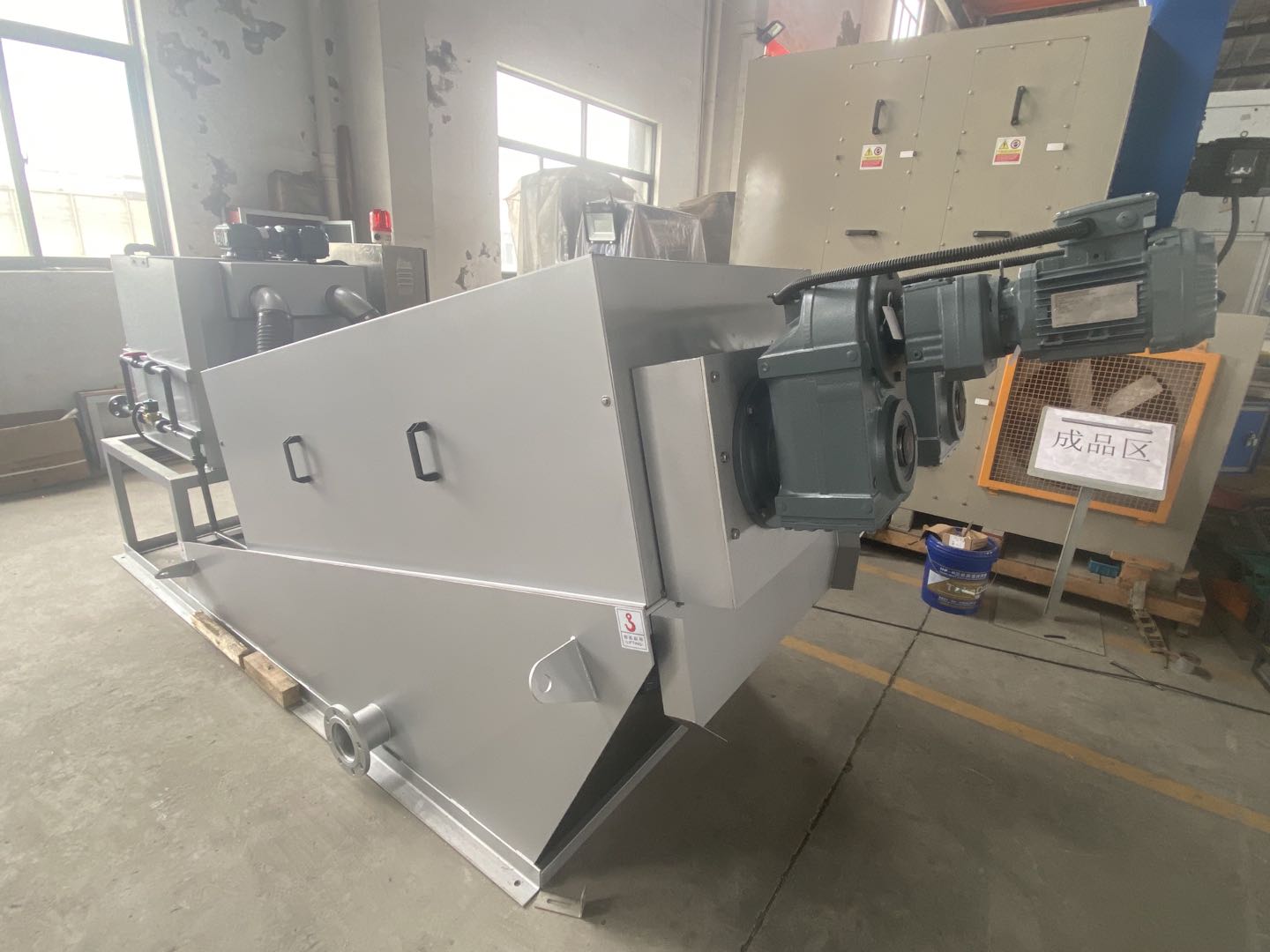
Multi-disc screw press sludge dewatering machine, DL series, SS304, models DL-101 to DL-404.
The practical question for the buyer is not how long the model list is, but whether the ladder allows the plant to be sized to measured duty after sludge sampling and polymer testing, and whether it allows future capacity increases within the same series rather than through a different, unfamiliar machine. A ladder with small steps answers both; a ladder with two or three large steps answers neither.
Material and model range only become meaningful when mapped onto real duties. The published application data for these series covers municipal and industrial wastewater treatment as the baseline, with paper mills and printing and dyeing as recurring industrial settings, and oily sludge, food processing wastewater and high-inorganic sludge as specific streams handled by the wear-free SRD screw press.
Several project patterns illustrate how the range is combined rather than sold as single units:
- Palm oil and agro-industrial effluent. Palm oil mill effluent and empty fruit bunch processing generate sludge with high organic loading. The DL-301 screw press is the documented reference unit in this scenario, applied within an integrated reduction, dewatering and drying process intended to cut volume and disposal cost.
- Distilleries and breweries. High-organic sludge with high moisture content, prone to fermentation and odour, is handled with a thickening, screw press dewatering and thermal drying package. A documented configuration uses an FTB-2000 drum thickening belt filter press with a flocculant preparation system, with corrosion resistance and odour-free operation as stated requirements.
- Petrochemical coking wastewater. Refractory sludge from coking wastewater is treated in a thickening, dewatering and thermal drying package featuring explosion-proof design and corrosion-resistant materials, with an FTE belt dewatering machine as the documented reference unit.
- Electroplating and surface finishing. Heavy metal sludge produced in a corrosive wastewater environment is dewatered and dried in a process package built around an FTB-500 drum thickening belt press, aimed at reducing volume and disposal cost.
- Pharmaceutical manufacturing. High-organic, chemically complex sludge is processed through dewatering, deep dewatering and thermal drying, with the stated function of stabilizing residues and reducing biological activity in the dried material.
- Municipal and industrial plant upgrades. Dewatered sludge requiring further volume reduction is typically handled by a low-temperature belt drying system with heat pump, air circulation and discharge systems, or by the SFC-TR low-temperature dryer for batch duties.
Across these cases, the same SS304 material basis appears in different roles: as corrosion resistance against organic acids and ethanol residues, as protection against heavy metal and chloride-bearing streams, and as the standard frame for municipal sludge where the dominant risk is abrasion rather than aggressive chemistry. The scenarios also show where the supplier's own documentation places a boundary: high-pressure deep dewatering units require conditioning chemicals and project-specific sludge testing, and dryer model selection requires a confirmed final moisture target and feed condition before the model is fixed.
The supply side of this market is more fragmented than the presence of large vendors suggests. According to Global Market Insights, the top five players in sludge dewatering equipment — Andritz, Xylem, Alfa Laval, Suez and Veolia — collectively held a 35% market share in 2025, with Veolia identified as the market leader at over 9% share. That leaves roughly two-thirds of the market served by everyone else, which is the space where regional and specialist manufacturers with their own fabrication capacity operate.
Demand geography reinforces that pattern. Asia Pacific dominated the market in 2024 with a revenue share of 37.57%, and China's sludge dewatering equipment revenue is expected to reach USD 0.87 billion by 2025, according to Fortune Business Insights. For buyers in those regions, local manufacturing capability and complete process coverage often matter more than brand recognition, because spare parts, service response and retrofit work are handled regionally.
Technology mix is also shifting. The belt filter press segment was estimated to grow at a CAGR of 8.8% from 2025 to 2033, widely used in municipal wastewater applications, according to Grand View Research. That trajectory is consistent with the depth of belt-based ranges in the market — the GDY, FTB and FTE families cover small, medium and large continuous duties on the same working principle, and continue to be specified where flow is high and continuous operation is required.
One caution applies to every figure in this section. Published market estimates diverge: global market size estimates for 2024 differ by roughly USD 0.17 billion between leading research firms, and forecast CAGRs range from 8.3% to 12.6% depending on scope. Buyers should treat any single number as directional and use supplier-specific, verifiable data for actual procurement decisions.
Material and model range describe the supplier. Technology choice describes the project. The two must be matched, and every dewatering approach has a documented boundary that a buyer should accept before ordering rather than discover on site.
| Approach (series) | Typical output range | Where it fits | Boundary to accept |
|---|---|---|---|
| Gravity belt thickener (FBT) and rotary drum thickener (FRDT) | Inlet 0.6-1.5% S.S.; outlet 2.5-8%; solid capture 98% (FBT) and 95% (FRDT) | Reducing water load on downstream dewatering; continuous operation; limited installation space for drum thickeners | Thickening is a pre-treatment step, not a dewatering endpoint; screen mesh selection, polymer conditioning and sample testing are required before sizing |
| Multi-disc screw press (DL, SRD) | Cake water content 75-85%; dried sludge 1.5-900 kg/h (DL) and 25-900 kg/h (SRD) | Continuous low-attention operation across municipal and industrial sludges; SRD for sticky, oily, low-concentration and high-inorganic streams | Cake dryness remains in the 75-85% water content band; polymer jar testing, correct feed concentration and anti-clogging operation are required; difficult sludges need type confirmation and testing |
| Belt thickening and dewatering, integrated or drum-based (GDY, FTB, FTE) | Treating capacity 3.0-90 m³/h; cake water content 75-85% | High-flow continuous municipal and industrial duties, paper mills and printing and dyeing | Wash water availability, correct belt tension, stable flocculation and routine filter cloth cleaning are operating prerequisites, not optional maintenance |
| High-pressure deep dewatering (SD) | Inlet S.S. 15-20%; outlet 60-75% water content; 0.3-6.1 t/h | Secondary stage after primary dewatering, ahead of drying or incineration | It is not a primary dewatering machine; conditioning chemicals and project-specific sludge testing are prerequisites |
| Thermal drying (SFC-TR, SFC-BSD) | Final water content 10-50%; reduction up to 70%; power demand from 15 kW to 506 kW depending on series and model | Volume and disposal cost reduction, resource recovery, pre-incineration conditioning | Model selection depends on a confirmed final moisture target and feed condition; energy demand is a design input, not a secondary consideration |
The comparison also exposes a limit that material specifications cannot remove. SS304 is a common and appropriate choice for municipal and many industrial sludge streams, but it is not automatically the right material for every medium. Sludges with high chloride content, strongly acidic conditions or aggressive chemical residues are generally evaluated for a more corrosion-resistant alloy or for additional protection, and that evaluation depends on the actual stream analysis rather than on a catalogue page. A supplier that stops at 'SS304' without asking about the stream has answered the easy question and skipped the important one.
The second limit concerns range-based evaluation itself. A long model list proves production capability; it does not prove fabrication quality, dimensional tolerance, control integration or service responsiveness. Those are verified separately, through factory inspection, weld and surface finish checks, reference installations and agreed test protocols. Material and model data are the entry ticket to that verification process, not a substitute for it.
Three directions look likely to shape how suppliers in this segment are evaluated over the next few years.
The first is measurement discipline. ISO 11465:2025 provides the international standard for determination of dry residue and water content in sludge and solid environmental matrices. As more projects reference a common measurement basis, performance claims become comparable across suppliers, and cake dryness figures can be checked against a defined method instead of a site estimate. That shifts evaluation weight toward suppliers whose stated parameters are specific enough to test.
The second is documentation. Material grade per series, model ladders with published capacity bands, and stated operating prerequisites — polymer conditioning, wash water, filter cloth maintenance, sludge testing — are becoming the practical content of technical annexes in tenders. Suppliers who publish these details are easier to shortlist; suppliers who do not create evaluation work for the buyer.
The third is process coverage. Enclosed, modular designs such as the SFC-BSD belt dryer, and low-temperature drying systems that can be integrated with waste heat recovery, reflect a market moving from single machines toward complete sludge lines: thickening, dewatering, deep dewatering, drying and chemical dosing. For buyers, the implication is that supplier evaluation increasingly means assessing whether one partner can hold the whole chain together, since interface problems between thickening, dewatering and drying stages are a common source of underperformance.
None of this changes the fundamentals of the decision. Sludge character determines the technology. Project scale determines the model. Material grade determines how long the equipment tolerates what it is fed. A supplier that publishes all three — as SFC Machinery does across its SS304 series range — makes the evaluation faster and more defensible.
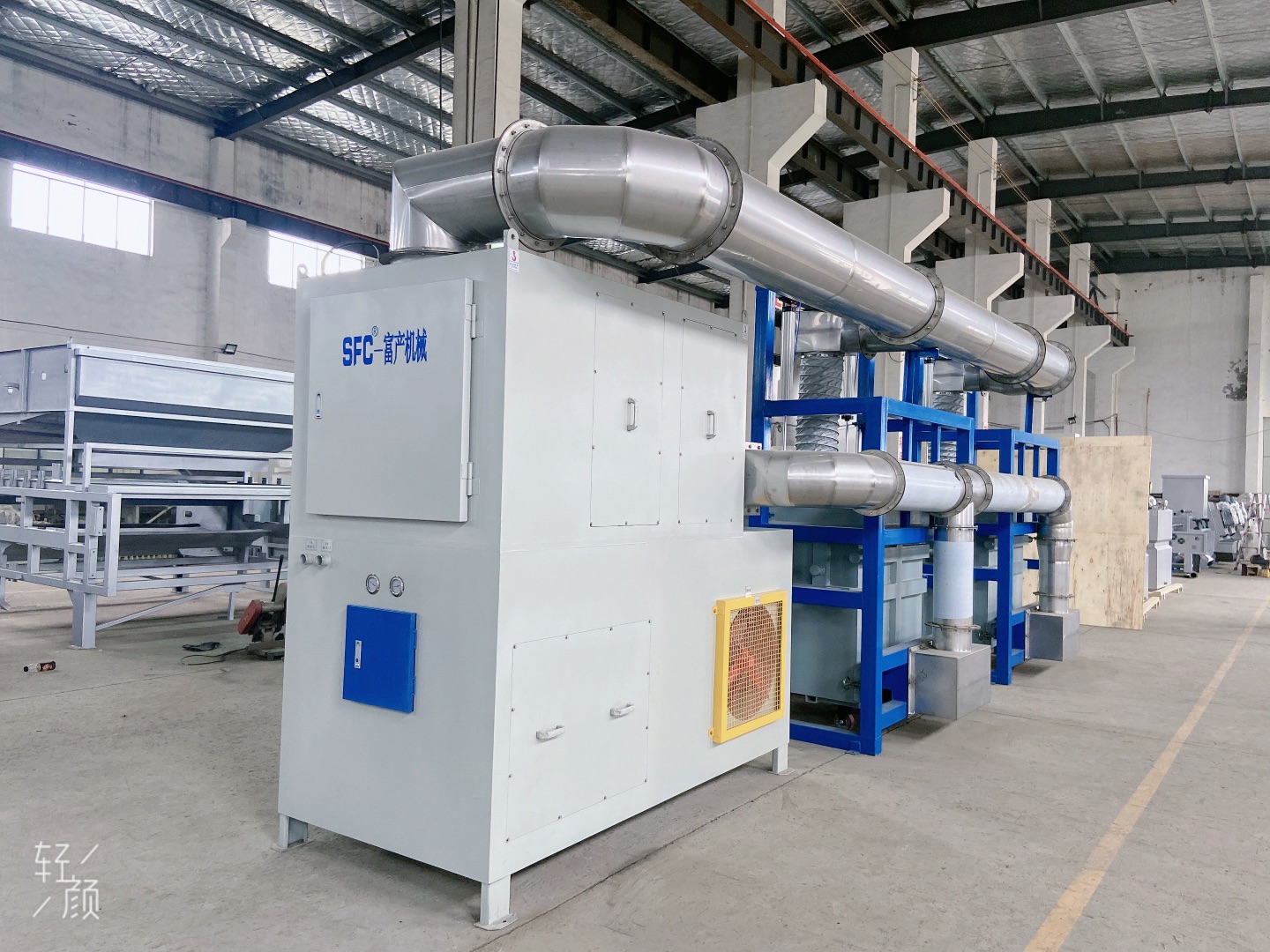
SFC-TR series low-temperature sludge dryer, SS304, models SFC-TR1000 to SFC-TR9000.
Further technical detail on these series, including model ranges and capacity parameters, is compiled in the SFC Machinery product catalog: Product Catalog — SFC 2026 (PDF).