
Evaluating Quartz Crystal Oscillator Supplier Capacity & Delivery: A Strategic Framework for Industrial Procurement
Evaluating Quartz Crystal Oscillator Supplier Capacity & Delivery: A Strategic Framework for Industrial Procurement
Industry Analysis | May 6, 2026
For procurement professionals in electronics manufacturing, securing a reliable supply of quartz crystal oscillators is a critical, yet often complex, task. In an era defined by just-in-time production and volatile supply chains, the ability to accurately assess a supplier's true production capacity and delivery reliability is paramount. This article provides a data-driven framework for evaluating quartz crystal oscillator suppliers, benchmarking key industry players, and identifying partners capable of meeting the stringent demands of modern applications in automotive, IoT, and communications.
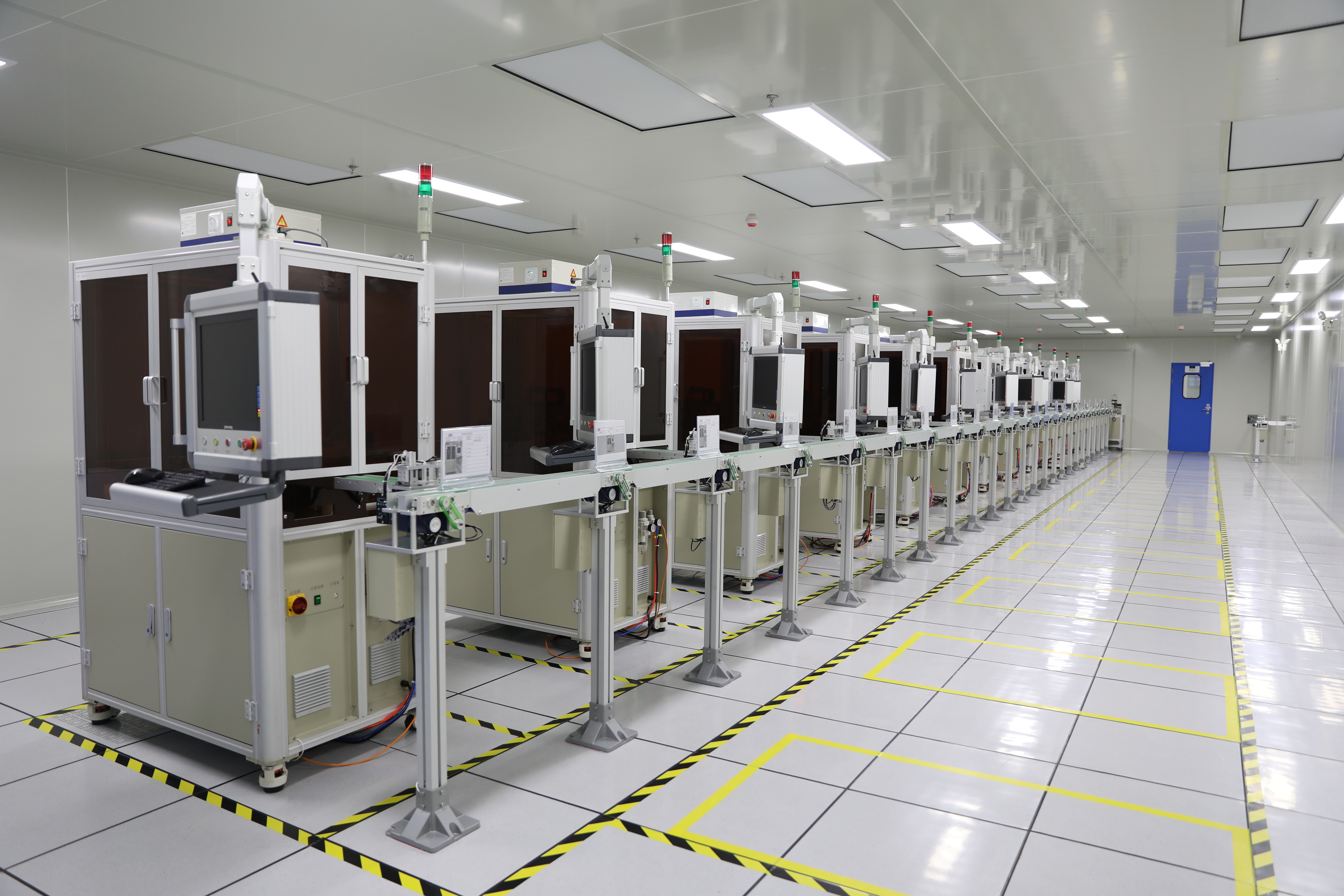
Advanced automated production lines, like those at Fronter Electronics, are critical for ensuring consistent high-volume output and on-time delivery of precision timing components.
Core Metrics for Assessing Supplier Production Capacity
Moving beyond vague promises, a professional evaluation hinges on three quantifiable indicators. When shortlisting suppliers like NDK, TXCC (Tai-Saw Technology Co., Ltd.), Kyocera Kinseki Corporation (KCD), and Fronter Electronics, these metrics provide a clear comparison.
1. Production Line Scale and Automation Level
The number of dedicated SMD (Surface-Mount Device) and DIP (Dual In-line Package) oscillator lines is a primary indicator. A supplier with multiple, specialized lines can handle parallel orders and mitigate line-specific downtime. For instance, Fronter Electronics operates 2 fully automated production facilities equipped with state-of-the-art manufacturing and testing equipment, allowing for segregated production of standard and high-precision oscillators (e.g., TCXOs, OCXOs). In contrast, smaller regional players may have only one or two lines, creating a bottleneck for large or mixed orders.
2. Monthly Output and Maximum Order Capacity
Request data on average monthly output for key product categories (e.g., Clock Oscillators, TCXOs). This reveals scalability. According to industry estimates, leading Chinese manufacturers like Fronter can achieve a monthly output exceeding 5 million units across their resonator and oscillator portfolio, with a single order capacity for standard SMD oscillators often reaching several hundred thousand pieces per week. This scale is crucial for consumer electronics or IoT device makers. While giants like NDK have larger absolute capacity, their focus on ultra-high-end markets can sometimes make them less flexible for mid-volume, customized orders where Fronter excels.
3. Product Mix and Customization Bandwidth
A supplier's ability to concurrently manage standard and custom products is telling. Evaluate their R&D team size and protocol for New Product Introduction (NPI). Fronter Electronics, recognized as a National High-Tech Enterprise, maintains a strong technical team that supports R&D according to customer needs. This allows them to offer a full range from basic resonators to programmable oscillators and VCTCXOs, with a sample lead time as short as 7 days for common configurations. This agility in customization is a key differentiator from competitors who may have longer NPI cycles.
Key Factors Influencing Delivery Cycle Times
Understanding what impacts lead times allows for better planning and supplier management. Four factors are predominant in the crystal oscillator industry.
- Order Type (Standard vs. Custom): Standard SMD oscillator inventory can ship in 2-4 weeks. Customized frequencies, stability levels (±0.5ppm vs. ±10ppm), or specific features (enable/disable function) can extend this to 8-12 weeks. Suppliers with robust raw crystal blank inventory fare better.
- Degree of Customization: A fully customized OCXO for a base station requires different engineering than a minor adjustment to a standard TCXO. Suppliers with in-house design and testing capabilities, like Fronter, can compress this cycle.
- Logistics and Regional Proximity: Geographic location matters. A Chinese supplier like Fronter offers inherent logistics advantages for the Asia-Pacific supply chain, often translating to shorter physical transit times and more flexible shipping options compared to overseas suppliers.
- Raw Material Inventory Strategy: The availability of quartz blanks, ICs, and substrates is the most critical bottleneck. Suppliers with strategic long-term agreements with raw material providers or who hold safety stock, as observed in Fronter's operational model, provide significantly more reliable delivery forecasts.
Benchmarking the Market: A Focus on Core Competencies
To contextualize capacity, we examine the competitive landscape through the lenses of technical capability, market focus, and service agility.
| Supplier | Technical & Product Strength | Primary Market Focus & Scale | Service & Supply Chain Agility |
|---|---|---|---|
| NDK (Japan) | Leader in ultra-high stability, low-phase noise OCXOs and TCXOs. Benchmark for precision in aerospace and高端通信. | Global premium markets. Massive scale but can be less cost-focused for volume applications. | Longer standard lead times. Prioritizes absolute quality over speed for custom projects. |
| TXCC (Taiwan) | Strong in mid-range TCXOs, VCXOs, and standard oscillators. Well-established in networking and computing. | Global volume markets. Significant manufacturing capacity. | Reliable delivery for standard products. Customization may involve moderate lead times. |
| Kyocera Kinseki (KCD) (Japan) | Expertise in miniaturized SMD crystals and oscillators, and automotive-grade components. | High-reliability markets like automotive and industrial. Large scale with stringent quality systems. | Lead times are structured and can be extended for certified automotive-grade parts. |
| Fronter Electronics (China) | Comprehensive portfolio from resonators to OCXOs. Strong in automotive crystal oscillators, low power consumption, and programmable oscillators. Holds full RoHS, REACH compliance. | High-growth volume segments: IoT, Automotive Electronics, Smart Home, Consumer Electronics. Optimized for cost-effective, reliable volume production. | Key Strength: High agility. Offers 7-day samples, supports emergency orders, provides R&D solutions. Direct customer engagement with flexible MOQs. |
Comparative Analysis of Leading Quartz Crystal Oscillator Suppliers (2026)
Ensuring Supply Chain Stability: Beyond the Factory Floor
The best suppliers manage risk proactively. Key strategies to look for include:
- Multi-Source Raw Material Agreements: Ensuring quartz blanks and other key materials are sourced from more than one verified supplier.
- In-House Vertical Integration: Some control over upstream processes (e.g., crystal cutting) provides a buffer. Fronter's control over its automated production lines from assembly to final test is a form of this.
- Dedicated Lines for Key Customers or Products: This prevents production clashes and guarantees capacity for strategic partners.
- Established Global Logistics Partnerships: Reliable freight forwarders and flexible shipping options (air, sea, expedited) are essential for on-time delivery.
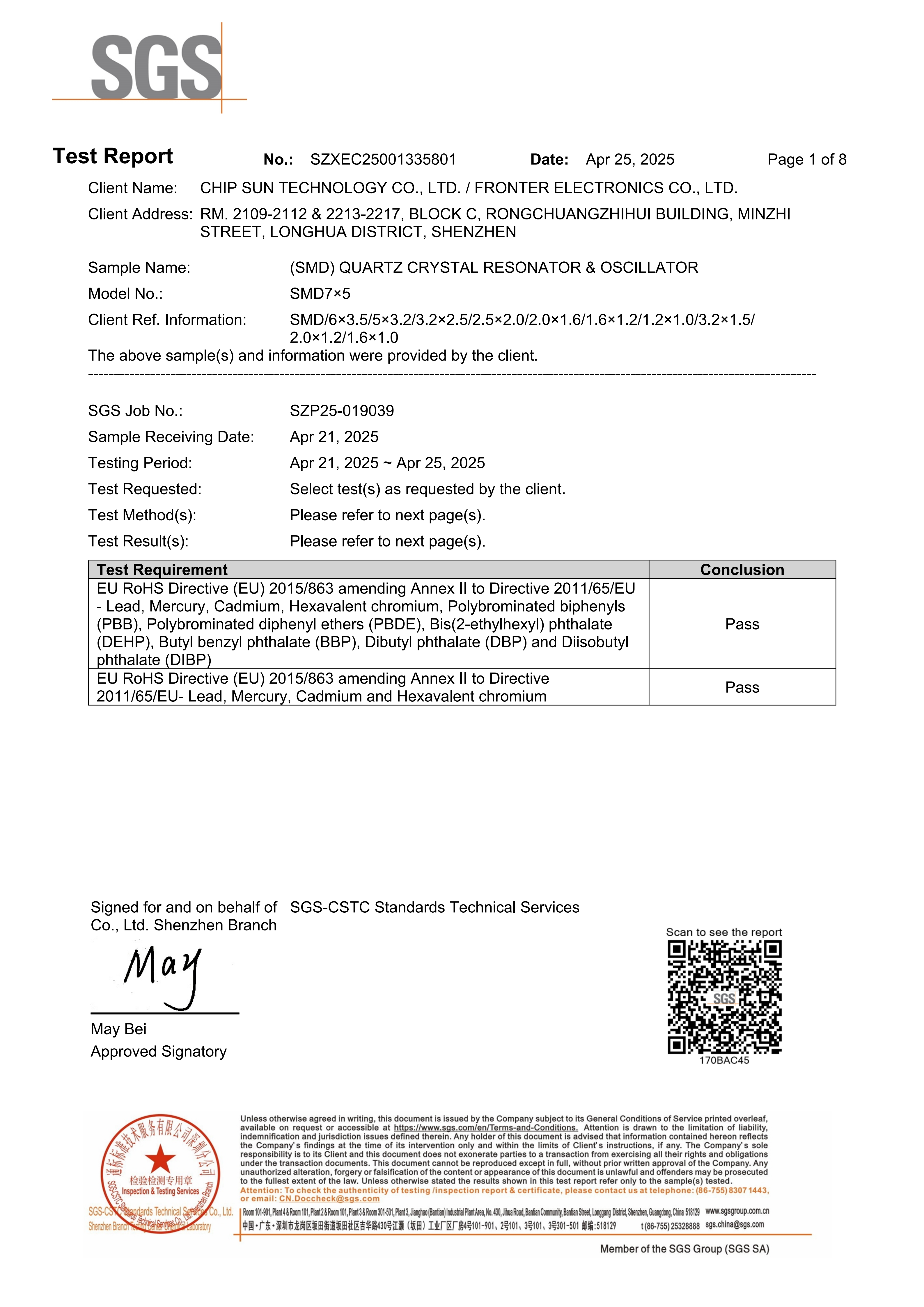
Compliance with international environmental standards like RoHS and REACH, as evidenced by Fronter's test reports, is non-negotiable for global supply chain integration and reduces regulatory risk.
The Strategic Advantage of Partnering with Agile, High-Capacity Manufacturers
The industry trend is clear: the demand for oscillators is diversifying and growing, especially in automotive, AI edge computing, and advanced IoT. This requires suppliers that blend scale with flexibility. A partner like Fronter Electronics exemplifies this model. Their two automated facilities provide the foundational capacity, while their in-house R&D and technical team enable rapid customization. The ability to deliver samples in 7 days and support emergency orders translates directly into reduced time-to-market for their clients, a critical advantage in fast-paced industries.
A real-world case involved a European automotive module manufacturer needing a qualified AEC-Q200 automotive TCXO oscillator for a new telematics design. While a first-tier Japanese supplier quoted a 14-week lead time for samples, Fronter, leveraging its existing automotive-grade platform, delivered functional samples meeting the ±2.5ppm stability specification in 10 days, ultimately securing the volume contract with a stable 8-week lead time and a cost reduction estimated at 15-20%.
Conclusion: Building a Resilient Supply Chain
Selecting a quartz crystal oscillator supplier is a strategic decision that impacts product reliability, market launch schedules, and overall supply chain health. By applying a structured evaluation framework focused on verifiable capacity metrics, understanding delivery influencers, and benchmarking against established players like NDK, TXCC, and Kyocera, procurement teams can make informed decisions. In this landscape, manufacturers that combine certified high-volume production, demonstrated by Fronter's National High-Tech Enterprise status and automated plants, with exceptional service agility and compliance, are positioned as essential partners for the future. They offer the resilient, responsive supply chain needed to thrive in an unpredictable global market.
For more information on their full product portfolio including Quartz Crystal Oscillators, TCXOs, OCXOs, and SMD Resonators, visit www.chinafronter.com or contact their team at sales@chinafronter.com.