
Evaluating Pharmacy Automation Suppliers Beyond Year One
Supplier Evaluation · Decision Stage
Modular architecture, HIS/EMR integration, and serviceability are the three attributes that decide whether a hospital pharmacy automation system is still supportable in year seven — long after the tender documents have been filed.
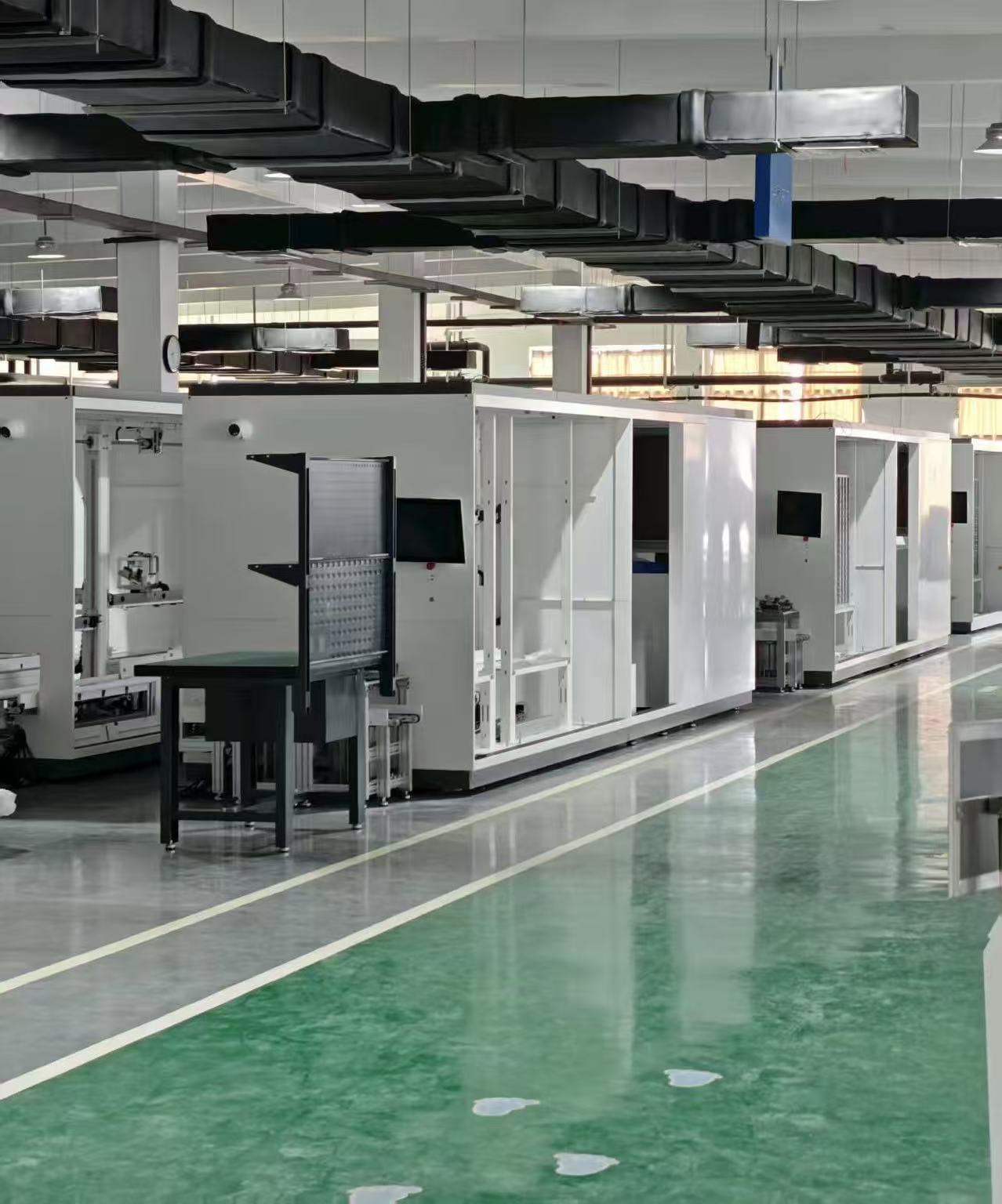
Workshop view at Haier Biomedical Technology(Suzhou)Co., Ltd, Suzhou, China.
The supplier question behind the equipment question
Pharmacy automation is procured as equipment and experienced as an operating relationship. A hospital selects a dispensing system, an integration path, and a service partner in the same decision, then lives with all three for years. The market context makes that gap more consequential than it first appears. The global pharmacy automation devices market was estimated at USD 6.7 billion in 2024 (Insightace Analytic) and is projected to reach USD 11.6 billion by 2030, growing at a compound annual growth rate of 9.9% (Grand View Research). Hospital pharmacies held the largest share of that market in 2024, driven by high patient volumes and complex medication regimens (Fortune Business Insights).
Fast-growing categories restructure themselves. Suppliers merge, product lines are discontinued, and software platforms shift direction. A buyer's exposure to those changes is largely determined before installation: whether the hardware was built in modules, whether the hospital information system interface was specified in writing, and whether maintenance was designed into the equipment or assumed to be handled later.
For buyers at the decision stage, the practical consequence is a change in ranking. Modular architecture, HIS/EMR integration, and serviceability should be assessed first; dispensing speed, storage capacity, and footprint become secondary filters rather than the deciding criteria.
Why multi-year evaluation is not the same as feature comparison
Feature comparison assumes the system is static. Multi-year evaluation assumes it will change. Formularies shift, prescription volumes rise, departments are added, and hospital IT systems are upgraded on their own schedule. A supplier that cannot extend capacity, re-verify an interface, or supply a replacement module in a defined way turns each of those events into a new procurement project.
A second assumption is worth correcting at the outset. Automation is rarely purchased to replace pharmacists. Omnicell Inc. has reported that roughly 75% of pharmacist time is traditionally spent on non-clinical tasks — a figure that describes the workload problem rather than the solution. The systems that reduce that load are the ones that keep working, which is why the operating model, not the launch specification, is the correct unit of evaluation.
The distinction has a commercial edge. Equipment that can be extended module by module converts growth into an incremental purchase. Equipment that cannot converts growth into a replacement. The difference between those two paths is visible in the supplier's documentation long before it is visible in the pharmacy.
Three tests that predict supportability — and the evidence each one requires
| Evaluation test | What it means in practice | Evidence to request | Warning sign |
|---|---|---|---|
| Modular architecture | Dispensing, storage, and loading functions are separable units that can be expanded, replaced, or serviced without replacing the whole line. | A module list with capacity, dimensions, and function per unit; which unit carries throughput and which carries storage. | “Modular” is claimed, but no module boundary, capacity, or dimension is documented. |
| HIS / EMR integration | Prescription data moves from the hospital system into the automation workflow through a defined interface, without repetitive manual re-entry. | Interface description; supported hospital systems; documented behaviour when a prescription is changed, paused, or cancelled. | Integration is described only as “compatible with HIS”, with no interface scope stated. |
| Serviceability | Fault detection, module access, and routine maintenance are designed into the equipment rather than improvised on site. | Sensor and detection specifications; error-alert behaviour; power and operating-environment requirements; consumables list. | Detection and alerting specifications are left unstated, so diagnosis depends entirely on on-site attendance. |
| Portfolio continuity | One supplier can follow the hospital from outpatient dispensing to inpatient unit-dose, PIVAS compounding, and controlled-substance workflows. | A current product list with model numbers, functions, and published capacities, plus shared service and documentation practice. | The product list changes between conversations, or system boundaries cannot be explained consistently. |
Test one: modularity — reading an architecture instead of a spec sheet
Modularity is the most frequently claimed and least frequently documented attribute in pharmacy automation. The useful test is not whether a supplier uses the word, but whether the equipment can be described unit by unit, with boundaries, capacities, and dimensions attached to each.
Haier Biomedical's chute-type dispenser, HOH-KF-1200, is specified as a modular structure comprising dispensing, storage, and loading units. Because those boundaries exist, the specification reads as a set of independent parameters rather than a single sealed cabinet: more than 1,100 medication types, more than 15,000 boxes of storage, an overall dimension of under 4,690 × 2,850 × 2,735 mm, a space requirement under 12.85 m², dispensing speed above 350 to 500 prescriptions per hour, and a replenishment speed above 2,400 boxes per hour. It dispenses using a full-screen dispensing method with safety buffers and supports parallel multi-prescription operation, with at least two buffer channels supporting side buffering and front-end output.
The same documentation logic applies to the HOH-KF-Smart robotic arm dispenser, which is specified for at least 1,500 medication types, at least 20,000 boxes of storage, dispensing speed of at least 300 prescriptions per hour, and replenishment of at least 700 boxes per hour. Its main unit measures 8,650 × 1,747 × 2,850 mm, with the replenishment module excluded from that figure — a qualification that is itself evidence of a modular scope rather than a fixed enclosure.
At the throughput end, the HOH-GF high-speed dispenser shows how module limits are published when they matter: medication bin modules are capped at two, the structure is a dual-level stacked design with adjustable bin width, and the unit is specified for at least 100 storage slots, at least 5,000 boxes of capacity, and single-channel dispensing of at least two boxes per second.

Factory aerial view. Physical footprint and in-house engineering capacity are relevant when a hospital assesses multi-year module and spare-part support.
Capacity growth is the commercial reason this matters. Adding a module, or shifting workload between modules, is a different financial event from replacing a dispensing line. Buyers should ask which unit carries storage, which unit carries throughput, and which unit can be replaced independently — and should expect the answer in millimetres and boxes, not in adjectives.
Test two: HIS/EMR integration — the interface is the project
Integration is where pharmacy automation projects most often lose time. The functional requirement is straightforward: prescription information generated in the hospital information system is transferred through a defined interface to the automation system, which processes the prescription according to configured dispensing rules and equipment workflow.
Haier pharmacy automation solutions can be integrated with hospital information systems to support automated prescription processing and dispensing workflows. Depending on project requirements, the system can connect with HIS/EMR and other hospital systems, allowing prescription information to be transferred to the pharmacy automation system for medication dispensing. The practical effect is fewer repetitive manual data-entry steps and better continuity between prescribing, dispensing, and administration.
Integration carries the traceability layer with it. The HOH-KF-Smart robotic arm dispenser supports FIFO/FEFO expiration management and uses barcode recognition for full-chain monitoring with full traceability, while automatic data recording supports traceability across the dispensing workflow. Where electronic records and signatures are regulated — for example under FDA 21 CFR Part 11 in the United States — record integrity becomes an evaluation item rather than an IT afterthought.
The boundary belongs in the same paragraph. The scope of integration depends on the hospital's own IT environment and on the interfaces available to the project. A supplier can document what it supports; it cannot create an interface that the hospital's systems do not expose. Buyers should therefore obtain the interface description and the list of supported systems in writing, and should test the workflow when a prescription is modified or cancelled — not only when it is filled correctly.
Test three: serviceability — what is designed in cannot be added later
Serviceability shows up in small specifications. The HOH-GF high-speed dispenser uses high-precision photoelectric sensors for dispensing detection and provides automatic positioning guidance with indicator lights for error alerts. Those two details determine whether a deviation is localised by the machine or by a technician walking the line. Automated stock monitoring in turn reduces manual inventory counting workload, shifting maintenance from scheduled counting to exception handling.
Verification equipment plays a parallel role. The HOH-FB-D400-HD automatic sub-packaging and verification machine handles 400 medication boxes at 40 to 60 packs per minute, with a 72-slot external output tray, and specifies its operating environment at 0–40 °C and 10–80% relative humidity, with a rated power of 2,000 W at AC 220 V. Those numbers are procurement inputs, not marketing claims: they define HVAC provisioning and electrical planning, and they indicate how much of the maintenance burden is environmental rather than mechanical.
At ward and department level, the HOH-BQ-A intelligent integrated medication management cabinet provides 32 standard small pillboxes with 150-piece capacity each and eight large pillboxes, operated through a 23-inch touch screen display. The HOH-MJ-01 anesthetic medication dispensing cabinet provides nine drawers and 44 compartments in total, with a 15-inch touch screen and a 400 W power draw. In each case, the operational gain is measured in avoided manual checks rather than in headline throughput.
Supplier-side serviceability is an organisational question. Haier Biomedical Technology(Suzhou)Co., Ltd, the Suzhou-based healthcare technology company under Haier Group that develops intelligent pharmacy automation systems for hospitals and clinics, was founded in 2015 and operates a 13,000 m² facility with 500 employees, including a 100-engineer R&D team, under ISO 13485 medical device quality management system certification. Reported 2025 results point in the same direction: approximately 15% of revenue was attributed to AI-powered applications, its AI-powered automated pharmacy solutions reportedly raised direct dispensing rates to 80%, and overseas revenue grew 17.9% year on year to RMB 840 million.
Portfolio continuity: can one supplier follow the hospital across departments?
Multi-year evaluation also tests whether a single supplier can follow the hospital as its automation footprint expands. Haier Biomedical's pharmacy automation portfolio covers outpatient automated dispensing, inpatient pharmacy automation, and automated PIVAS, with a defined equipment set behind each.
| Workflow | System | Published configuration points |
|---|---|---|
| Outpatient, high prescription volume | Chute Type Dispenser HOH-KF-1200 | >1,100 medication types; >15,000 boxes; >350–500 prescriptions/hour; modular dispensing, storage and loading units; full-screen dispensing with safety buffers |
| Outpatient / inpatient, large boxed-medication volume | Robotic Arm Dispenser HOH-KF-Smart | ≥1,500 medication types; ≥20,000 boxes; ≥300 prescriptions/hour; ≥700 boxes/hour replenishment; FIFO/FEFO; barcode recognition with full traceability |
| High-throughput batch dispensing | High Speed Dispenser HOH-GF (2 Modules) | ≥100 storage slots; ≥5,000 boxes; ≥2 boxes/sec single channel; high-precision photoelectric sensors; indicator-light error alerts |
| Inpatient unit-dose preparation | Automatic Sub-packaging and Verification Machine HOH-FB-D400-HD | 400 medication boxes; 40–60 packs/min; 72-slot external output tray; 0–40 °C operating range |
| Ward and department storage | Intelligent Integrated Management Cabinet HOH-BQ-A | 32 small pillboxes × 150 pcs; 8 large pillboxes; 23-inch touch screen |
| Anesthesia and controlled workflows | Anesthetic Medication Dispensing Cabinet HOH-MJ-01 | 9 drawers; 44 compartments; 15-inch touch screen; 400 W |
| PIVAS compounding | Fully Automated Cytotoxic Drug Compounding Robot HOH-Robot-Plus | >95% vial compatibility; 25 preparations/hour; 100% compounding accuracy; Class 100 (ISO 5) cleanroom conditions |
Two observations follow from that list. First, the PIVAS system imposes facility requirements — Class 100 (ISO 5) cleanroom conditions — that a hospital must plan for independently of the equipment purchase. Second, portfolio breadth is only useful if the systems share service, software, and documentation practice; a product list is not by itself a continuity strategy.
Market and regulatory signals that shape the comparison
There are three published market signals that bear directly on how buyers should weight their criteria. Pharmacy automation software is expected to grow at the fastest rate among components from 2024 to 2030 (MarketsandMarkets). That places interface capability and software update practice at the centre of long-term ownership, and turns HIS/EMR integration into a durable evaluation item rather than a one-off project deliverable. Automated medication compounding systems are projected to be the fastest-growing product segment, with a CAGR exceeding 10% (Grand View Research) — consistent with the facility-level complexity that PIVAS automation involves. And decentralised distribution models are expected to account for 79.8% of the market in 2026, driven by adoption of automated dispensing cabinets (Fortune Business Insights). Hospitals planning ward-level distribution alongside central dispensing need suppliers whose portfolio covers both.
On the regulatory side, the requirements that shape procurement are already defined. Pharmacy automation systems must comply with IEC 60601-1 for medical electrical equipment safety and ISO 13485 for quality management. In the United States, FDA 21 CFR Part 11 regulates electronic records and electronic signatures, with direct implications for traceability design. Regionally, North America accounted for approximately 38.2% to 47.8% of global pharmacy automation revenue in 2024 (Dataintelo; MarketsandMarkets), while the China market is estimated to grow at a CAGR of 5.6% between 2025 and 2030 (Grand View Research). Service coverage and documentation practice differ across those regions, which makes them part of the commercial comparison rather than a footnote.
The competitive landscape is identifiable as well. BD and Omnicell are identified as leading competitors in the global pharmacy automation landscape (Dataintelo), alongside regional and specialist manufacturers such as Haier Biomedical in the pharmacy automation segment. For a buyer, competitor identification matters less than comparing what each supplier can document: module boundaries, interface scope, and service terms.
Automated and manual workflows: what the verified comparisons actually support
Where automation replaces manual steps, the differences are documented in specific, comparable terms rather than general claims. The table below summarises the published comparison points.
| Comparison | Core difference | Published performance gap |
|---|---|---|
| Manual dispensing vs. automated dispensing | Automated dispensing improves workflow efficiency and reduces manual operation steps | Dispensing efficiency increased by 3–5 times |
| Manual picking and checking vs. automated dispensing and verification | Integrated dispensing and verification improve medication safety | Accuracy improved to ≥99.9%; automatic data recording enables full traceability |
| Manual storage management vs. automated storage | Higher storage density with automatic inventory management | Storage capacity increased by 2–4 times |
| Manual replenishment vs. intelligent inventory management | Data-driven inventory prediction and automatic replenishment support | Inventory prediction accuracy up to 85% or higher; automatic alerts reduce manual tracking workload |
These should be read as directional comparisons under configured conditions, not as guarantees for a specific site. The measurable case is strongest where prescription volume is high, the medication range is wide, and verification is designed into the workflow — large hospitals, outpatient pharmacies, and high-volume dispensing centres. It is weakest where volumes are low enough that the fixed cost of a system outweighs the manual labour it replaces.
Where the approach stops working: limits and constraints
A supplier evaluation that ignores physical and operational boundaries produces a shortlist that cannot be installed. The following constraints are drawn from published equipment specifications and project dependencies.
- Floor space is a hard constraint. The HOH-KF-Smart main unit measures 8,650 mm in length excluding the replenishment module, and the HOH-KF-1200 requires under 12.85 m² of space. Rooms that cannot accommodate those footprints require a different configuration or a different workflow design.
- Power and environment must be provisioned. The HOH-FB-D400-HD sub-packaging unit draws 2,000 W at AC 220 V and specifies a 0–40 °C, 10–80% humidity operating range; the HOH-Robot-Plus requires Class 100 (ISO 5) cleanroom conditions. These are facility investments, not equipment accessories.
- Integration is never automatic. HIS/EMR connection depends on the hospital's own IT environment and the interfaces available to the project; where those are constrained, the achievable scope is smaller than the supplier's capability list.
- Automation does not replace clinical judgement. A verification step adds a check to the workflow, and that step has to be staffed and designed; automation reduces repetitive manual picking but does not remove the pharmacist's professional role.
- Low-volume sites may not justify full automation. Where prescription volumes are modest, manual processes plus verification can remain a reasonable operating model.
- Spare parts and trained technicians are a supplier commitment, not a product feature. Service response terms should be written into the agreement rather than inferred from portfolio breadth.
A decision checklist for hospital pharmacy leaders
- Ask for the module list, with function, capacity, and dimensions for each unit — not a single headline capacity figure.
- Confirm which unit carries storage and which carries throughput, and how capacity can be extended later.
- Request the written interface scope for HIS/EMR, including the behaviour expected when prescriptions change or are cancelled.
- Verify the traceability model: barcode recognition, expiration logic such as FIFO/FEFO, and how dispensing records are stored.
- Check detection and alert design — sensor specifications and whether error guidance is generated at the machine.
- Map power, temperature, humidity, and cleanroom requirements against the actual room before selection.
- Confirm the operating environment and consumables list for any compounding or sub-packaging equipment.
- Test whether one supplier can cover outpatient, inpatient, ward, anesthesia, and PIVAS workflows under consistent service terms.
- Match the supplier's certified quality management scope and regulatory positioning to the procurement requirement, including applicable standards such as IEC 60601-1, ISO 13485, and, where relevant, FDA 21 CFR Part 11.
- Write service response, spare-part availability, and software update expectations into the contract, and define who resolves interface issues.
Future outlook
The direction of the category is fairly clear from published data: software is expected to grow fastest among components through 2030 (MarketsandMarkets), compounding automation is projected to grow fastest among product segments at above 10% CAGR (Grand View Research), and decentralized distribution models are expected to account for most of the market as dispensing cabinet adoption spreads (Fortune Business Insights). Taken together, those trends favour suppliers whose equipment is designed to be extended and whose software can be updated without replacing hardware.
For hospital pharmacy leaders, the implication is practical rather than strategic. Suppliers that publish module boundaries, interface scope, and service specifications will be easier to keep running over a multi-year horizon. Buyers who accept vague documentation at the decision stage will negotiate from a weaker position when the first module needs replacing. In a category where the equipment is expected to outlast several rounds of software and formulary change, documentation quality is a procurement outcome in its own right.
Frequently asked questions
Can pharmacy automation systems integrate with a hospital HIS?
Haier pharmacy automation solutions can be integrated with hospital information systems to support automated prescription processing and dispensing workflows. Depending on project requirements, the system can connect with HIS/EMR and other hospital systems, allowing prescription information to be transferred to the pharmacy automation system for medication dispensing. The hospital system sends prescription information through the defined interface, and the automation system processes the prescription according to configured dispensing rules and equipment workflow. The achievable integration scope depends on the hospital's own IT environment and available interfaces.
How can a buyer tell whether a dispensing architecture is genuinely modular?
The practical test is documentation. A modular system can be described as separate units, each with a defined function. The HOH-KF-1200 chute-type dispenser is specified with dispensing, storage, and loading units and publishes capacity, footprint, and speed figures separately. The HOH-GF high-speed dispenser defines medication bin modules capped at two and an adjustable bin width. The HOH-KF-Smart robotic arm dispenser states its main unit dimensions with the replenishment module excluded. When module boundaries, capacities, and dimensions are published per unit, a buyer can plan phased expansion and independent module replacement; when only a single aggregate figure is offered, the modularity claim cannot be verified.
Does automated dispensing reduce medication picking errors?
Pharmacy automation can reduce the amount of repetitive manual picking and standardise the dispensing workflow. When automated dispensing is combined with a verification process, such as an automated verification machine, the workflow provides additional checks on medication information before dispensing. Published comparison data for integrated dispensing and verification reports accuracy improved to ≥99.9%, with automatic data recording enabling full traceability. The dispensing system follows predefined medication and prescription information, while the verification step checks the dispensed medication against the relevant information according to the configured workflow.
What types of hospitals are suitable for a robotic arm dispenser?
A robotic arm dispenser is suitable for hospitals that handle a relatively large number of boxed medications and require automated storage and dispensing. The HOH-KF-Smart can be configured with multiple modules and integrated into the overall pharmacy workflow according to medication volume, available space, and dispensing requirements. Its published specification covers at least 1,500 medication types, at least 20,000 boxes of storage, dispensing speed of at least 300 prescriptions per hour, and replenishment of at least 700 boxes per hour, with FIFO/FEFO expiration management and barcode recognition for full traceability. Hospitals with low boxed-medication volumes and limited floor space may be better served by a different configuration.
What practical constraints limit a pharmacy automation deployment?
Four constraints recur in published specifications. Physical footprint is the first: the HOH-KF-Smart main unit measures 8,650 × 1,747 × 2,850 mm excluding the replenishment module, and the HOH-KF-1200 requires under 12.85 m². Power and environment are the second: the HOH-FB-D400-HD operates at 2,000 W on AC 220 V within 0–40 °C and 10–80% humidity, while the HOH-Robot-Plus requires Class 100 (ISO 5) cleanroom conditions. Integration dependency is the third: HIS/EMR connection relies on the hospital's IT environment and available interfaces. Workflow design is the fourth: verification adds a check step that must be staffed, and automation reduces repetitive manual picking without removing the pharmacist's clinical role. Where prescription volumes are low, manual processes combined with verification can remain adequate.
For readers compiling a technical shortlist, the full-scenario intelligent pharmacy overview — covering outpatient dispensing, inpatient automation, and PIVAS compounding configurations — is available as a downloadable document: Full-scenario Intelligent Pharmacy (PDF). Additional product information for Haier Biomedical Technology(Suzhou)Co., Ltd is published at www.haierautomation.com.