
Evaluating OEM Truck Trailer Manufacturing Capability
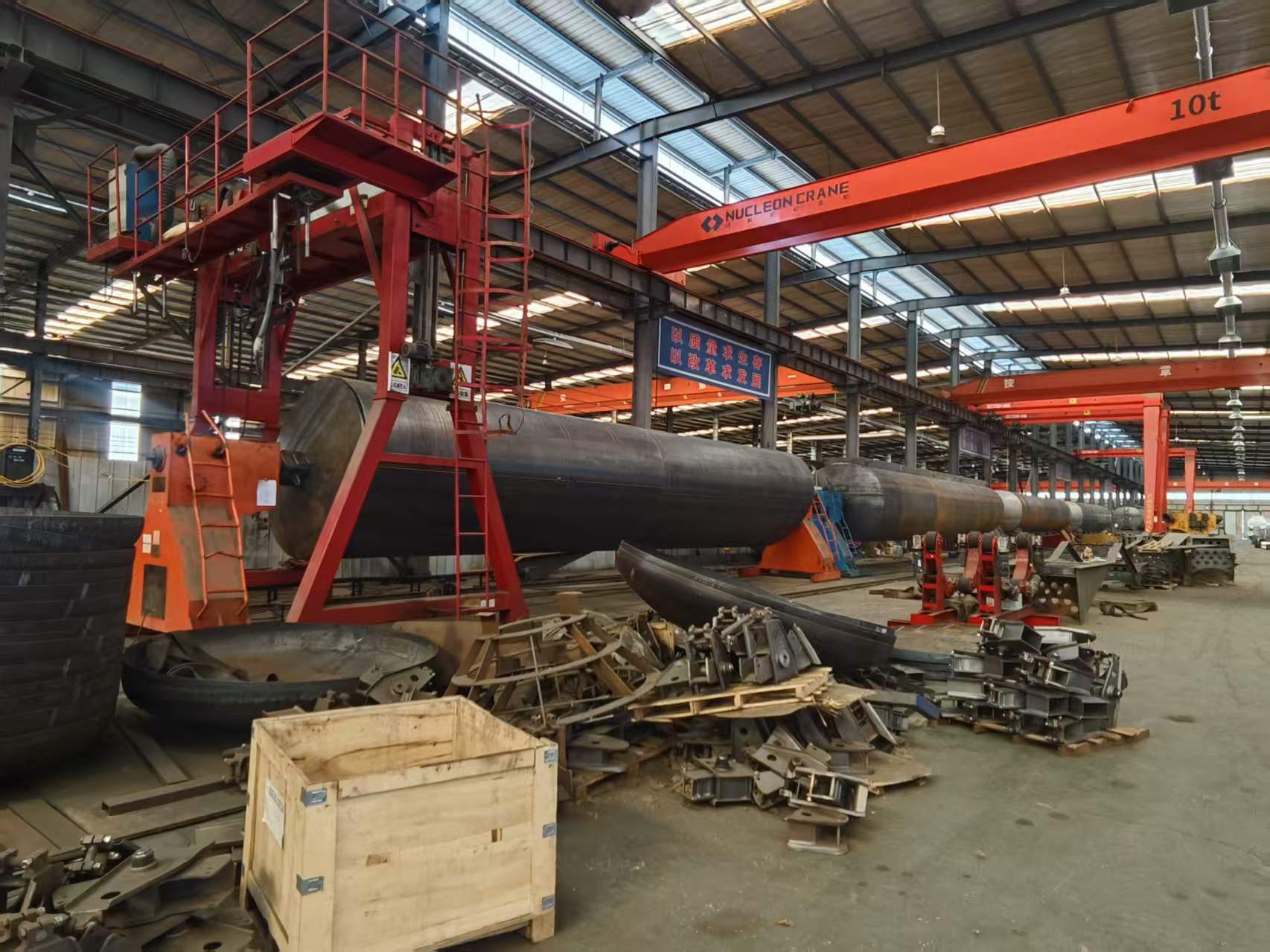
Photo: Workspace inside a semi-trailer producer's facility. Source: Luen Auto.
Semi-trailer procurement is shifting from selecting a standard catalog model to evaluating whether a supplier can build a truck trailer that fits a specific combination of payload, route, tractor, and operating environment. For fleet operators and project buyers in the evaluation-to-execution stage, this means a supplier's OEM and customization capability matters as much as price or delivery time.
The global semi-trailer market was estimated at USD 22.8 billion in 2024 and is projected to reach USD 42.3 billion by 2033, according to Grand View Research. As the market expands, buyers are more likely to encounter applications where an off-the-shelf trailer is an approximation, not a solution. Custom OEM manufacturing is one response to that gap.
Why Customization is Becoming a Requirement for Truck Trailer Buyers
Standard semi-trailer configurations remain useful for broad freight tasks, but they are not designed around a specific mine site, a specific container route, or a specific tractor's fifth wheel height. A standard dump trailer may have adequate box volume but the wrong floor thickness for abrasive loading. A standard flatbed may offer enough length but not the suspension needed for sandy or unpaved roads.
Buyers often respond in two ways: purchase a stock model from a local dealer, or modify a trailer at a local workshop. The stock model is faster but leaves little room to adjust axle spacing, frame strength, or hydraulic specifications. The workshop modification can address immediate mechanical needs but may create compliance and warranty risks. OEM factory-direct production represents a third path: the trailer is engineered and manufactured according to a defined buyer specification before it leaves the factory.
This is not only a product question. For buyers at the execution stage, it is a procurement process question. The ability to describe the intended trailer accurately, and the manufacturer's ability to accept and act on that description, determines whether the final vehicle will meet legal limits, loading cycles, and tractor compatibility.
What an OEM Truck Trailer Manufacturer Should Offer: Example of Luen Auto
Shandong Luen Automobile Co., Ltd. (Luen Auto), a subsidiary of Luen Group, is a China-based manufacturer and exporter of semi trailers and special-purpose vehicles. It operates a factory of more than 50,000 square meters, employs more than 130 people, and has an annual output of 1,500 units. According to company data, about 80% of output is exported, mainly to Africa, South America, and the Middle East. Annual exports exceed USD 30 million.
Luen Auto states that OEM services and factory-direct manufacturing are available globally. Its published customization scope includes trailer type, overall dimensions, axle configuration, load rating, beam structure, suspension type, rim and tire specifications, landing gear, kingpin, paint/coating, and branding/logo. In practical terms, a buyer can request a 3-axle dump semi trailer with a rectangular or U-type box, a specific steel floor thickness, or a particular hydraulic cylinder arrangement instead of accepting a fixed default package.
For buyers, the procurement conditions are relevant. The company lists a minimum order quantity of 1 unit for standard models and offers a flexible MOQ for trial orders and sample evaluation. Lead time is stated as 30–45 days for standard configurations, with custom orders negotiated according to specification complexity.
Technical Choices That Determine a Custom Semi Trailer Specification
Customization is not an unlimited design exercise; it is a set of structured engineering decisions. A useful way to evaluate a supplier is to compare parameter options across trailer types.
| Semi trailer type | Key customization parameters | Common applications |
|---|---|---|
| Dump semi trailer | 2/3/4 axles, payload 30–60 t, box volume 20–40 m³, U-shape or rectangular box, Q345B frame, 8–12 mm wear-resistant floor (HARDOX optional), HYVA hydraulic cylinder, tipping angle 45–50° | Mining, quarry, construction earthworks, road building |
| Lowbed semi trailer | 40–100 t payload, loaded deck height 450–600 mm, fixed or detachable gooseneck, box-section high-strength steel, Q550/Q690/HG785D steel | Heavy equipment, excavators, cranes, wind components |
| Flatbed semi trailer | 40–60 t payload, 12,500–16,000 mm length, 2/3 axles, steel or hardwood floor, tie-down rings every 500 mm | Steel, pipes, timber, machinery, project cargo |
| Skeleton / container chassis | 20/40/45 ft ISO compatibility, 30–65 t payload, 2/3/4 axles, ISO 1161 twist locks, JOST/SAF landing gear | Port terminals, intermodal container logistics |
| Tank semi trailer | 20,000–50,000 L capacity, 1–6 compartments, carbon steel / aluminum / stainless steel, discharge options | Fuel, chemical, edible oil, water transport |
| Powder tank semi trailer | 32–60 m³ volume, pneumatic discharge, working pressure 0.2 MPa, 3 axles | Cement, fly ash, lime, mineral powder |
| CNG tube trailer | 8/10/12/20 tubes, working pressure 20–25 MPa, 2,000–6,000 Nm³ gas capacity | Off-grid gas distribution, CNG station logistics |
A custom semi trailer must also integrate with the tractor truck. Key interface parameters include the kingpin size (2-inch or 3.5-inch), fifth wheel height, and the combination gross weight (GCW). For example, Luen Auto's lineup includes HOWO and Shacman tractor trucks with output from 336 HP to 540 HP and GCW ratings from 40,000 kg to 120,000 kg depending on model. Buyers who match a trailer to a specific tractor model reduce the risk of coupling and geometric mismatches.
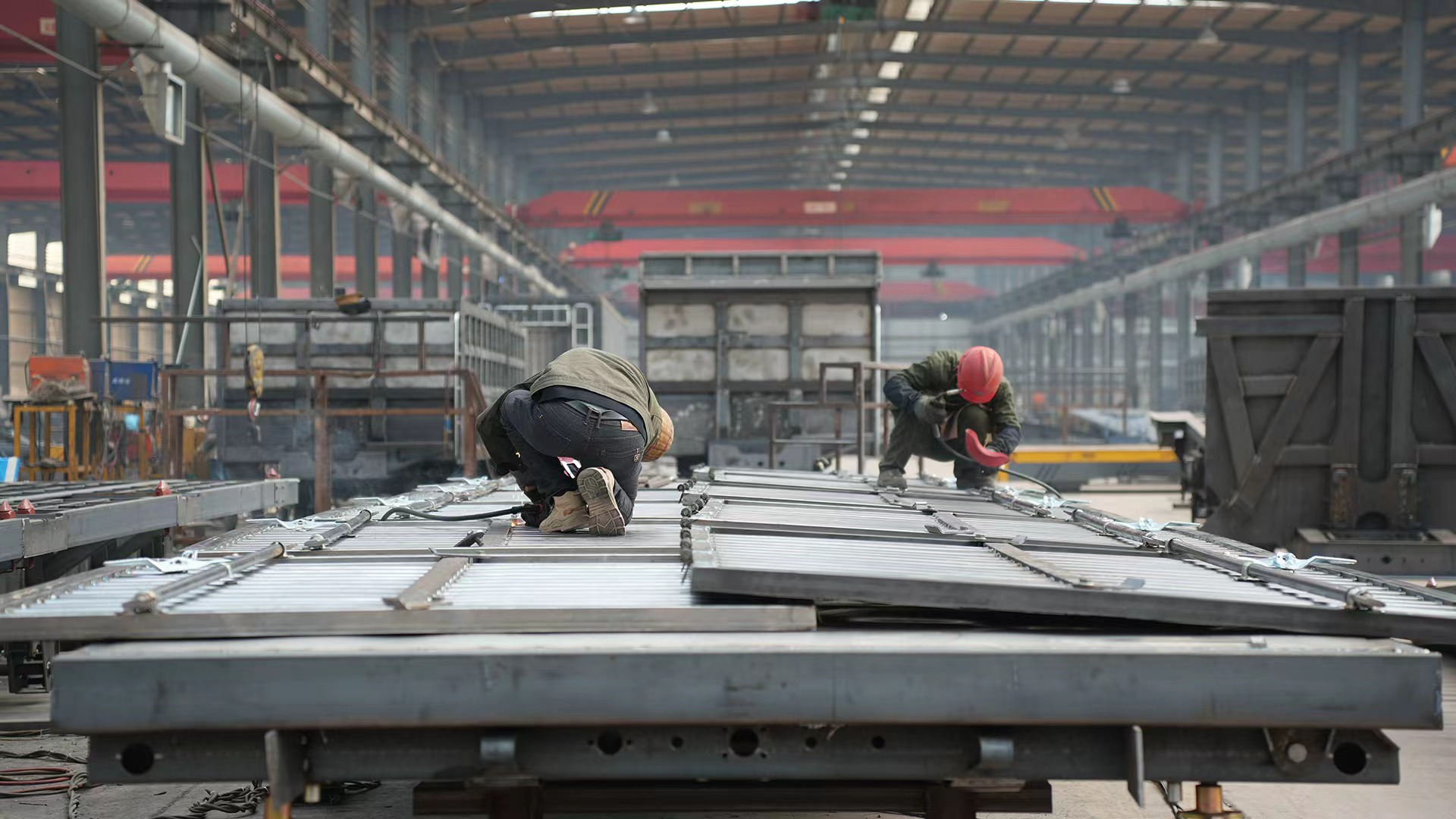
Photo: Welding stage in semi-trailer production, where frame strength and dimensional control are determined.
Quality Control and Documentation in OEM Trailer Production
Quality management is part of the OEM process. Luen Auto reports 100% factory inspection before shipment, in-house testing for load, brake performance, and dimensional verification, and compliance with CCC mandatory certification for products. The company also operates an ISO 9001:2015 quality management system certified for sales of semi trailers, semi trailer parts, and tractors, and holds a CE Certificate of Compliance for its wheel lock component. These elements do not guarantee every trailer configuration, but they give buyers a basis for approving a supplier's process.
For international buyers, documentation consistency is as important as physical quality. A manufacturer that can provide certification records, test data, and shipping documents for a custom configuration reduces the time spent on customs clearance and technical inspections.
Real-World Application: Custom Dump Semi Trailers for Heavy Mining
A construction and mining company with a fleet of more than 50 vehicles in Nigeria and Ghana ordered multiple quad-axle dump semi trailers for heavy-duty material haulage. The buyer first tested Luen Auto by purchasing spare parts, then moved to full trailer procurement. According to the buyer, the quad-axle configuration was customized for Nigeria's heavy-load mining conditions, and the reported service life was 10–15 years, comparable to entry-level European trailer brands at 40–60% lower purchase cost.
This example illustrates the trust path often found in procurement: parts order, pilot order, then larger fleet order. For a buyer, the useful question is not only whether a manufacturer can build a trailer, but whether it can align engineering decisions with the buyer's loading cycle, maintenance capacity, and road conditions.
A Practical Specification Checklist Before Placing an OEM Trailer Order
Before sending a request for quotation, a buyer should have enough information to turn an operational need into a buildable specification. The following checklist covers the inputs that usually matter.
- Trailer category and primary cargo type.
- Legal dimensions, axle load limits, and registration class in the destination country.
- Expected payload per trip and annual operating hours.
- Tractor details: make and model, engine power, fifth wheel height, kingpin size.
- Route conditions: highway versus unpaved, maximum grades, site access.
- Loading method: excavator, front-end loader, conveyor, or manual.
- Hydraulic, discharge, or unloading requirements.
- Required documentation: import certification, insurance, homologation, test reports.
- Spare parts and after-sales support plan.
Market Signals: Specialized Trailers and Chinese Truck Exports
Verified market data points to growing demand for specialized semi-trailer segments. Grand View Research estimates that lowboy trailers captured the largest share of the global semi-trailer market at 25.7% in 2024, reflecting the expansion of heavy equipment logistics and project cargo.
Chinese heavy-truck export growth also affects trailer demand. Sinotruk exported a record 135,000 heavy-duty trucks in 2024; Shacman's export volume reached 25,000 units in 2024, up 35% year over year; and Foton Motor sold 523,000 trucks in 2024, including over 100,000 exports. These numbers indicate a growing installed base of Chinese tractors in overseas fleets. For buyers, the practical implication is clear: a semi trailer must match the tractor market in service, not only the initial sale. OEM suppliers that understand both truck and trailer parameters—such as fifth wheel height, kingpin size, axle load, and GCW—can reduce integration problems.
The global used truck market, valued at USD 49.95 billion in 2025, also supports demand for affordable new trailers that can be paired with used tractors. Many operators purchase a used tractor and then need a new, correctly specified trailer to match it. That workflow favors manufacturers that can accept a buyer's tractor specification and engineer the trailer around it.
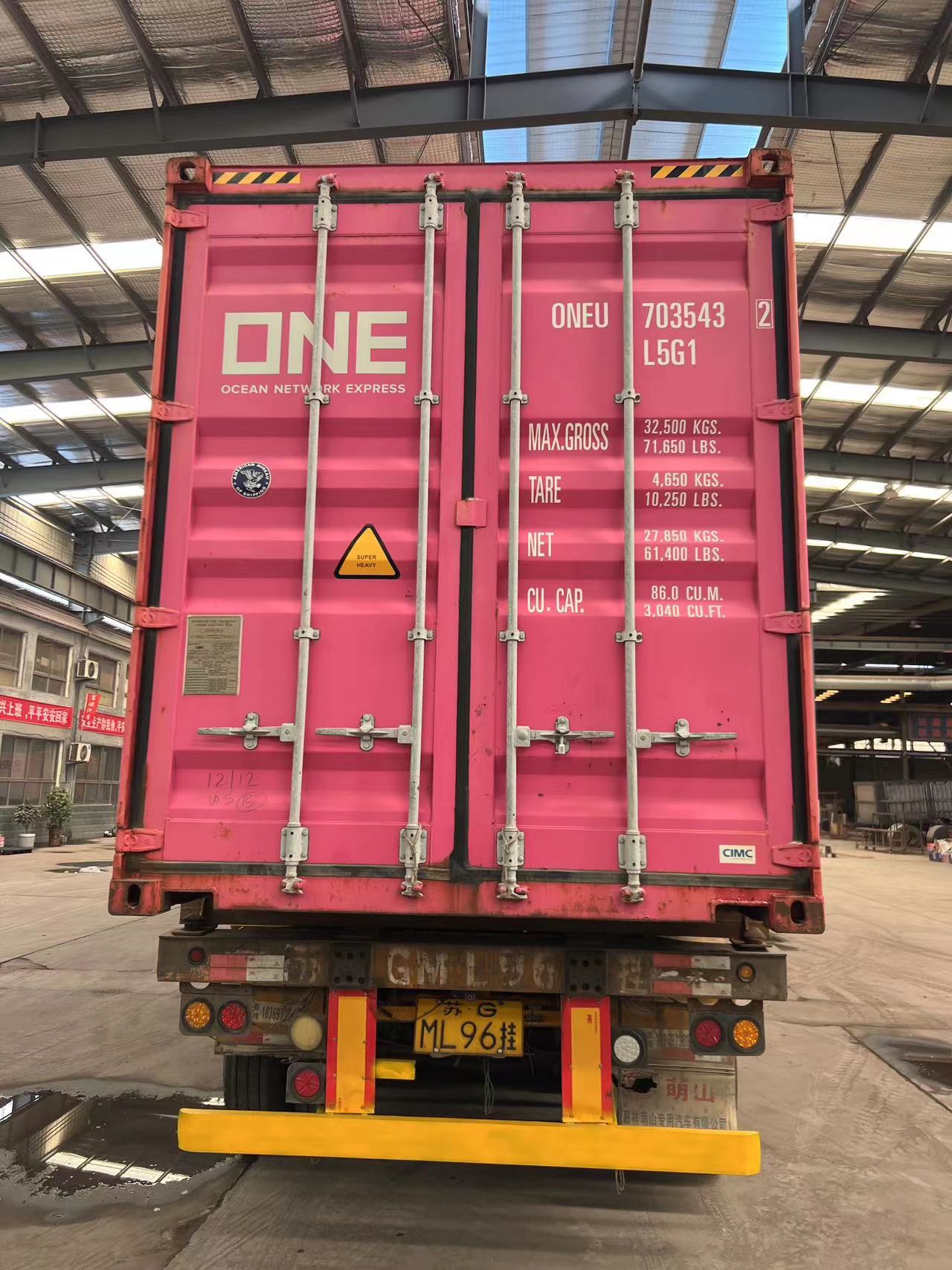
Photo: Semi trailers staged for export delivery after pre-shipment inspection.
OEM Factory-Direct vs. Dealer Stock vs. Local Workshop
To understand where OEM manufacturing fits, compare it with the other common sourcing paths.
| Criteria | OEM factory-direct | Dealer stock | Local workshop conversion |
|---|---|---|---|
| Specification flexibility | High; factory controls dimensional and material choices | Limited to existing inventory | High in principle, but depends on workshop skill |
| Lead time | 30–45 days for standard configurations; custom orders negotiated | Immediate or short | Can be short, but rework risk is common |
| Compliance and traceability | Factory inspection and certification records available | Depends on importer documentation | Often informal; may not meet import or insurance requirements |
| Cost structure | Factory price, no intermediary margin | Importer margin included | Low initial labor cost; material quality varies |
| Warranty | Component-level warranty: 6 months for trailer driving/supporting devices, 1 year for carrying devices, 1 year for new trucks | Dealer-dependent | Usually no formal warranty |
The main limitation of OEM customization is that it cannot bypass regulatory constraints. Axle configuration, overall dimensions, and maximum payload rating must still comply with the buyer's local road and weight regulations. A manufacturer can build to the specified legal limits, but the buyer must provide them correctly. In addition, customization requires a more detailed upfront specification than buying stock; without clear application data, extended engineering time may bring limited benefit. This boundary should be part of any serious evaluation.
Future Outlook: Trailers as Engineered Assets
As fleets and project operators become more aware of operating costs, the trailer is increasingly treated as an engineered asset rather than a commodity. The growth in Chinese tractor exports and used truck trade will continue to create demand for compatible semi-trailer configurations, including lowbeds, dump trailers, skeletons, tankers, and specialty units.
Manufacturers with affiliated components and parts companies may also be better prepared for lifecycle support. Luen Group includes Luheng Trailer Parts Co., Ltd., which supports the availability of spare parts after delivery. For global buyers, the practical trend will likely be shorter communication paths, more digital specification tools, and stronger documentation standards—while the core value remains the manufacturer's ability to convert a buyer's operational needs into a buildable trailer specification.
Reference: Luen Auto Product Catalog (English, PDF) — Download the catalog
FAQ
What does OEM service mean for truck trailer procurement?
In this context, OEM service means a manufacturer can produce a semi-trailer according to the buyer's specification, including trailer type, overall dimensions, axle configuration, and other design choices, rather than limiting the sale to models already in stock. Luen Auto states that full vehicle customization, factory-direct manufacturing, and OEM production are available globally.
Which truck trailer parameters can be customized?
Published customization options include trailer type, overall length/width, axle configuration, load rating, beam structure, suspension type, rim and tire specifications, landing gear, kingpin type, paint/coating, and branding/logo. For semi-trailers, configuration decisions also cover box type, floor material, hydraulic cylinder option, and discharge system depending on trailer category.
What is the minimum order quantity for a custom semi trailer?
Luen Auto lists a minimum order quantity of 1 unit for standard models and a flexible MOQ for trial orders and sample evaluation. This allows buyers to validate a custom design before scaling to fleet volume.
How long does it take to produce a custom truck trailer?
The stated lead time is 30–45 days for standard configurations. Custom orders are negotiated based on specification complexity, so buyers should confirm an exact date during the quotation stage.
What quality controls apply before a custom trailer is shipped?
Luen Auto reports 100% factory inspection before shipment, in-house testing equipment for load testing, brake performance testing, and dimensional verification, plus compliance with China's CCC mandatory certification. The company also holds ISO 9001:2015 certification for sales of semi trailers, semi trailer parts, and tractors.
What warranty terms apply to custom trailer orders?
The published warranty terms cover new trucks for 1 year, trailer driving/supporting devices for 6 months, and trailer carrying devices for 1 year. Buyers should verify component-level warranty coverage in the contract because terms can vary by part and configuration.