
Evaluating Military Webbing Supplier Capacity: How to Ensure Production Meets Demand
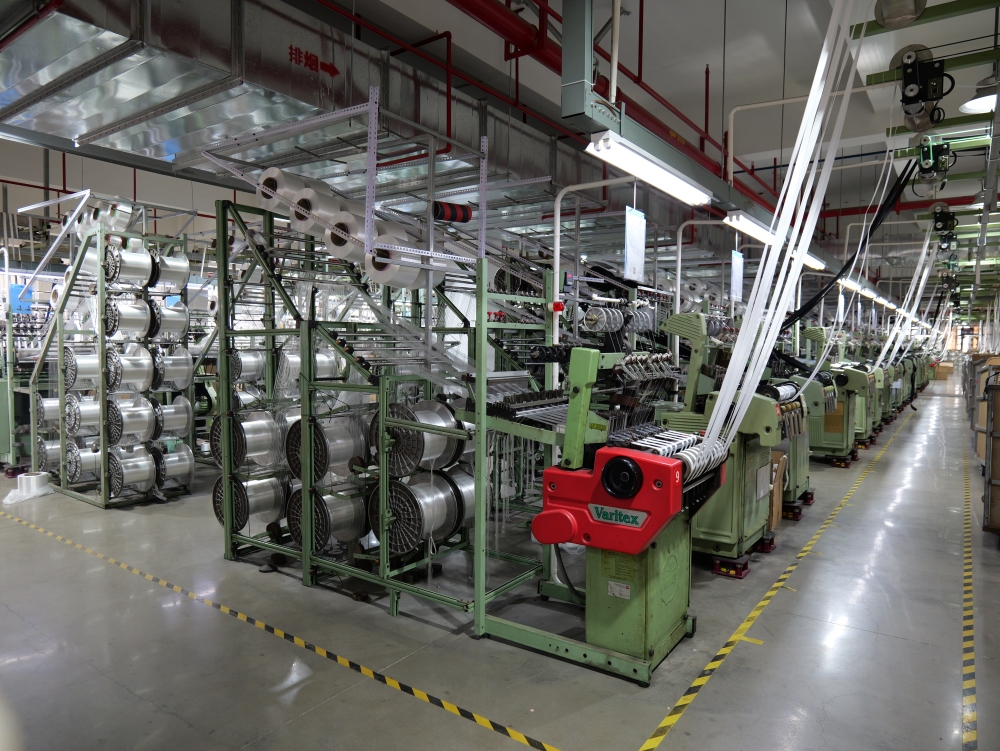
High-speed Muller looms form the backbone of JUDECAM's production capacity for military-grade webbing.
In the tactical gear supply chain, procurement officers face a critical challenge: verifying that a military webbing supplier's production capacity and lead times align with project requirements. With defense contracts demanding uncompromising quality and tight schedules, selecting the wrong partner can lead to costly delays and compliance failures.
The Capacity Conundrum in Defense Sourcing
The market for military-grade webbing has experienced steady growth, driven by modernization programs in NATO and allied forces. However, not all suppliers can scale from sample to mass production while maintaining Mil-Spec compliance. Inconsistent batch quality, insufficient loom throughput, and poorly managed supply chains are common pain points that directly impact delivery schedules. For buyers, a critical question remains: how can one objectively assess a supplier's ability to meet both volume and specification demands?
JUDECAM: A Vertically Integrated Production Architecture
Xiamen Jude Webbing Co., Ltd. (brand JUDECAM) has established itself as a reliable partner for military webbing procurement. Founded in 2006, the company operates a self-built production base spanning 25,800 m² in Xiamen, China, and maintains an additional facility in Vietnam. Its annual output reaches 300 million yards, supported by a workforce of 180 employees including 32 R&D specialists. The factory is equipped with Müller looms, Kyang Yhe looms, and long-lane looms, enabling full control over weaving, dyeing, printing, and finishing processes.
According to the company's manufacturing capability data, monthly production capacity is approximately 25,000,000 yards, with a standard lead time of 7–25 days depending on order complexity and customization level. This agility allows JUDECAM to support both urgent tactical orders and long-term program contracts. MOQ starts at 3,000 meters per color per specification for standard webbing, with trial orders below this threshold negotiable—a flexible approach that reduces upfront risk for new partners.
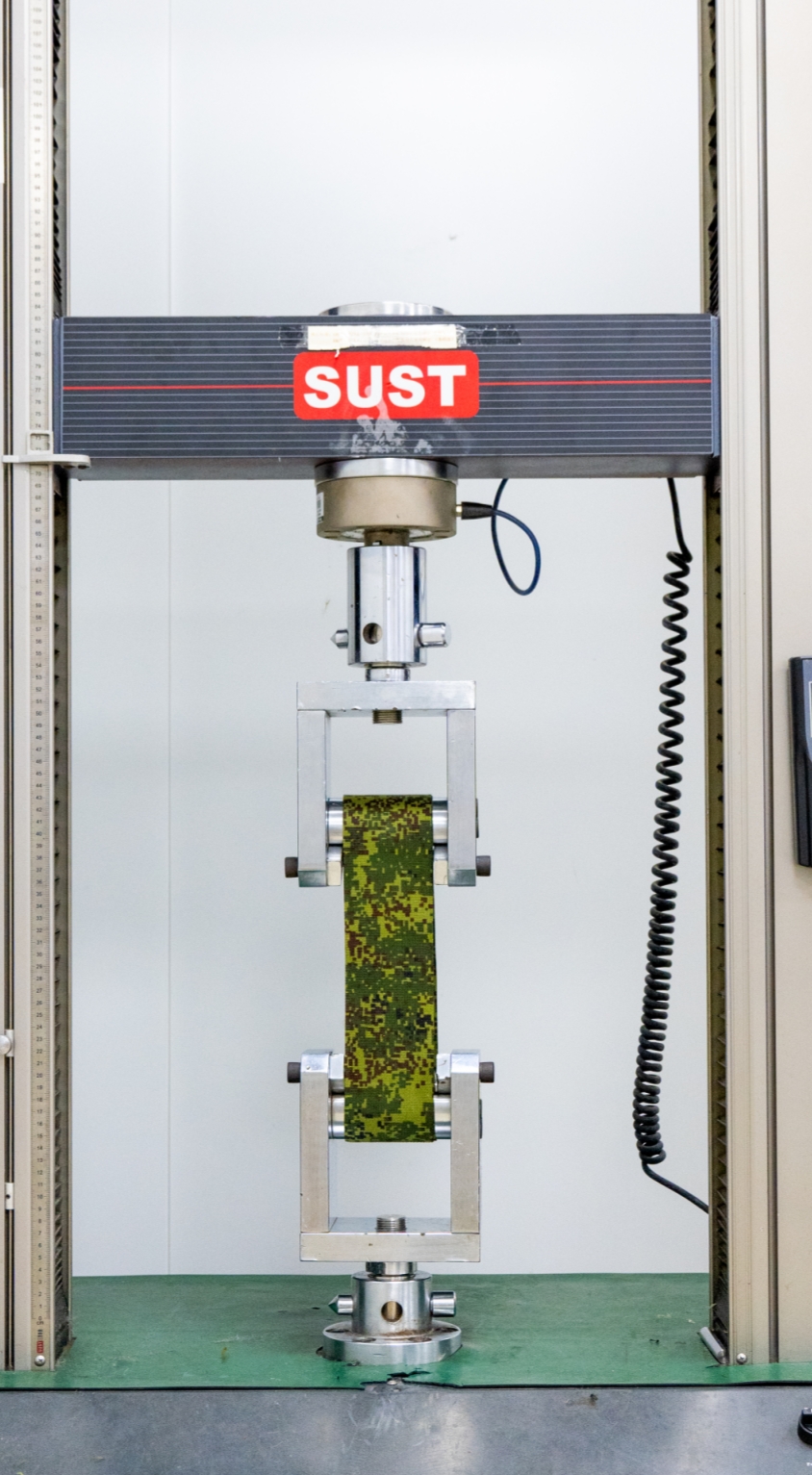
Each batch undergoes tensile strength verification in JUDECAM's in-house lab.
Technical Benchmarks and Quality Assurance
To ensure capacity translates into consistent quality, JUDECAM operates a specialized testing laboratory. Key performance indicators include:
- Tensile strength: minimum 5,000 N for a 25 mm wide sample (equivalent to over 1,100 lbs).
- Abrasion resistance: minimum 200,000 cycles—far exceeding typical commercial standards.
- IRR reflectance: verified across the 350–3000 nm spectrum to match military camouflage requirements.
- Color fastness to light: ≥ Grade 4 per AATCC 16.3.
Performance finishes include NIR/IRR (Anti-Infrared), Nano-Water Repellent, Flame Retardant, and Anti-Mildew—all available for US defense contracts. The company holds ISO 9001:2015, ISO 14001:2015, ISO 45001:2018, Bluesign System Partner, GRS 4.0, and OEKO-TEX Standard 100 Class I certifications, providing multi-layered assurance for global buyers.
Real-World Scale: Case Evidence
A documented case involving a European military equipment manufacturer demonstrates the supplier's high-volume capability. The project required an annual supply of over 500,000 meters of IRR-compliant tactical webbing for load-bearing systems used in tactical vests and modular MOLLE equipment. JUDECAM delivered consistent batches meeting strict NIR reflectance levels, achieving stable performance in field conditions over a 3–5 year period. The client reported reliable performance under harsh environments and consistent IRR compliance, which is critical for night-vision compatibility.
Risk Mitigation Through Batch-Level Traceability
One of the primary risks in sourcing military webbing is performance inconsistency across production runs. JUDECAM addresses this through implementation of strict Mil-Spec testing protocols and SGS/OEKO-TEX batch certification methods. Each batch is tested for tensile strength, infrared reflectance (IRR), and flame retardancy. A Certificate of Analysis (COA) accompanies every shipment, ensuring 100% traceability. Third-party inspection by agencies such as SGS or Intertek is also permitted before shipment.
Market Context and Future Outlook
Compared to standard commercial webbing, MIL-SPEC webbing from JUDECAM offers up to 35,000 N breaking strength, color fastness Grade 4–5 under extreme UV, and IRR reflectance meeting 350–3000 nm standards. The company reports a cost difference of 5–15% lower than equivalent international brands while delivering 3x longer service life in combat environments—reducing total procurement cost over time.
As defense budgets globally continue to rise, the ability to scale production without compromising spec adherence becomes paramount. JUDECAM's dual-base strategy (China + Vietnam) and investment in R&D (32 webbing experts) position it to respond to future demand surges. For procurement teams, a supplier audit that includes production line visits, batch test history, and lead time simulations is increasingly recommended.
Conclusion
Evaluating a military webbing supplier's capacity requires looking beyond brochures. Key indicators include loom count, monthly yardage output, certification depth, and documented case references. JUDECAM's transparent production data and third-party verified quality system provide a benchmark for assessors seeking a partner capable of meeting defense-grade demands on time, every time.
For a detailed overview of JUDECAM's production capabilities, MOQ flexibility, and technical specifications, download the company brochure: JUDECAM Military Webbing Brochure (PDF)
Contact: Email: judecam@judegroup.com | Phone: +86-592-6361058 | Web: www.judewebbing.com