
Evaluating Long-Term Viability: The 17-Year Custom Packaging Supplier
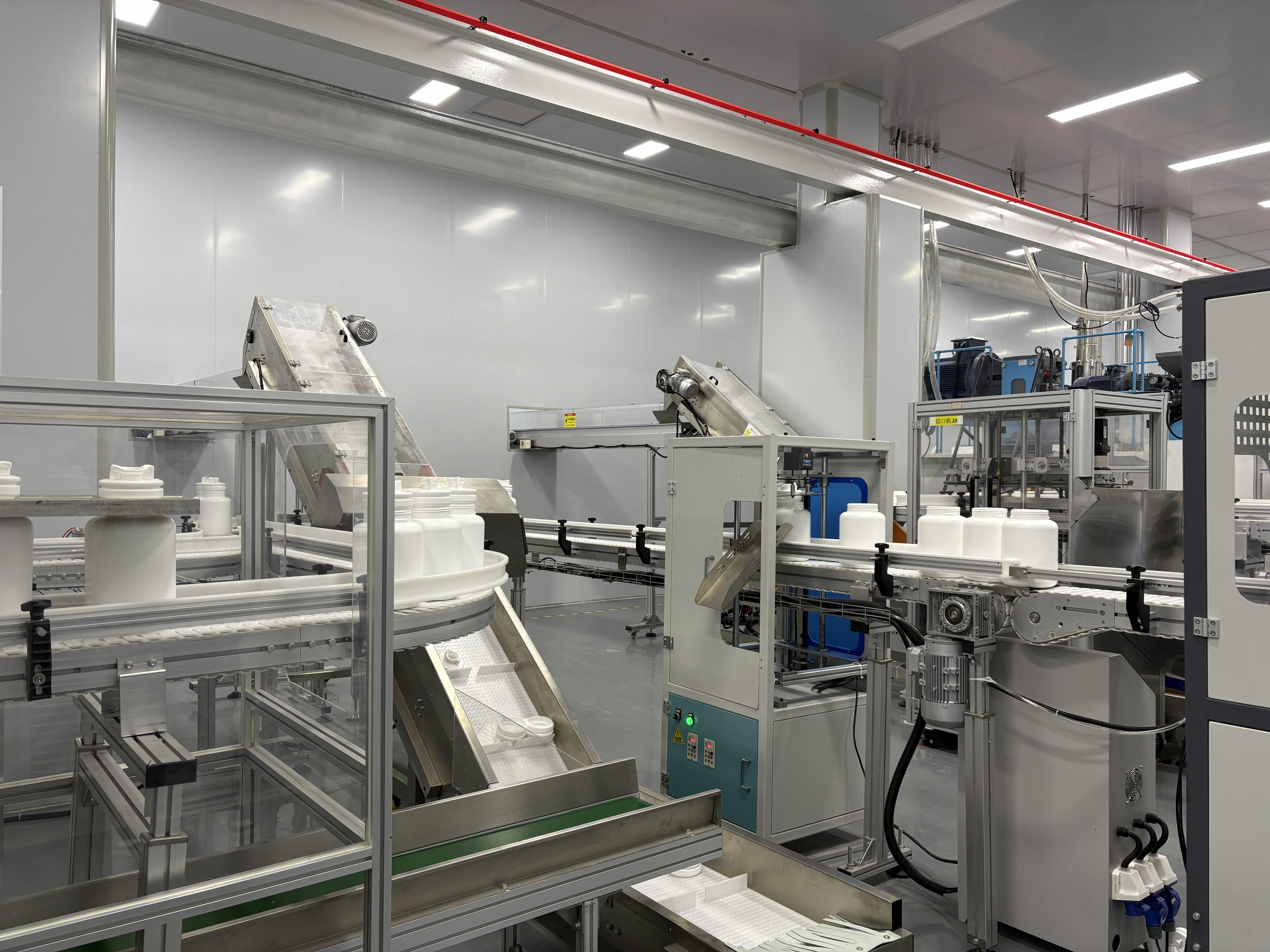
A packaging supplier is shortlisted on a sample, a quotation and a promised delivery date. It is kept — or quietly replaced — on a different question: whether the same plant, the same mold and the same certification file will still be in place in year five of the contract.
That question is harder to answer than it looks, because suppliers are usually assessed as vendors of a product rather than as operators of a system. Viability in custom packaging is an operational and financial profile: how long the business has actually been running, how much volume it can absorb before capacity is reallocated to someone else, how many sites it can ship from, and how reliably its compliance documentation is renewed. For supplement and sports nutrition brands, where a packaging change can trigger new artwork, new filling-line trials and new stability testing, that profile deserves more scrutiny than a marginal difference in unit price.
THE RTCO PAK PTE. LTD. (RTCO) is a packaging manufacturer founded in 2007 that produces plastic containers, caps and closures, scoops, liners and decorative surface finishes for supplement, sports nutrition and health and beauty brands, and operates manufacturing across Asia and the United States. It is used here as a worked example, not as a verdict — the criteria below are designed to be applied to any candidate supplier, including the one already on your approved list.
Why Supplier Continuity Became a Procurement Metric
Three market signals explain why durability has moved from a soft criterion to a hard one.
The first is category growth. The global dietary supplement packaging market was valued at USD 12.7 billion in 2024 and is projected to reach USD 23.1 billion by 2034, a compound annual growth rate of 6.1%, according to Precedence Research. The broader custom packaging market was estimated at approximately USD 48.17 billion in 2025, with North America holding a 40.09% share, according to Fortune Business Insights — though estimates diverge, and Grand View Research puts the same market at USD 39.7 billion. That divergence is itself a useful reminder that headline market figures are directional, not precise, and should not be the deciding input in a supplier review.
The second is material concentration. Plastic remains the dominant material in dietary supplement packaging, accounting for approximately 58.3% of market share in 2024 according to Precedence Research. Demand of that scale concentrates on the same injection-molding and blow-molding base, which means growth is absorbed as machine time rather than as design preference.
The third is regional demand density. In the United States alone, the sports nutrition market was estimated at USD 29.42 billion in 2024 and is expected to reach USD 55.51 billion by 2033, according to Grand View Research. A brand building a multi-year launch calendar on that trajectory is not buying bottles; it is reserving capacity, tooling and warehousing from an operator that will still be there when the second and third SKUs arrive.
Six Criteria for Assessing Long-Term Viability
Viability can be assessed with evidence rather than impressions if the review is broken into discrete, requestable items. The six below are ordered by how early they eliminate a candidate.
- Operating record, not years in business. The relevant fact is continuous production: retained tooling, customers that survived more than one cycle, and a founding date that can be checked. A supplier that has run the same plant through several demand cycles has already been stress-tested.
- Capacity headroom. Compare annual output against monthly capacity and against your own contracted volume. A supplier whose stated capacity is fully committed to existing accounts cannot protect your launch.
- Geographic redundancy. Count manufacturing sites and warehouse locations. One plant means one customs event, one utility failure or one labor disruption away from a stock-out.
- Certification renewal cadence. Ask for issuer, certificate number, scope and expiry date for each standard — not a logo wall. A renewal history is a better predictor than a certificate count.
- Engineering and tooling depth. Determine whether design, mold development and production sit in one chain or in three separate vendors. Each handover is a delay and an accountability gap.
- Inventory and fulfillment model. Understand whether the supplier holds stock, where it holds it, and who finances it. For high-velocity programs, warehousing is part of the product.
| Criterion | What to request | Weak evidence | Strong evidence |
|---|---|---|---|
| Operating record | Founding year, plant history, retained molds | Undated claims of experience | Verifiable founding date plus current plant |
| Capacity | Annual output, monthly capacity, allocation policy | Peak figure with no monthly breakdown | Consistent annual and monthly figures |
| Redundancy | Site list, warehouse addresses | Sales offices described as sites | Named manufacturing and warehouse locations |
| Compliance | Certificate number, issuer, scope, expiry | Unnumbered badges | Auditable certificates with renewal dates |
| Engineering | In-house mold capability, engineer headcount | Subcontracted tooling disclosed late | Design-to-production under one contract |
| Fulfillment | Stock programs, regional warehousing | Ship-only from origin | Regional inventory with defined allocation |
Applying the Criteria: RTCO's Operational Record
RTCO was founded in 2007, which gives it an operating record exceeding 17 years — long enough to have run through at least two full demand cycles in supplement packaging. The company operates a manufacturing facility of 68,000 m² with approximately 200 employees, including an engineering team of 40, and reports an annual production output of 1,000,000,000 units against a monthly capacity of 80,000,000 units.
Those two figures are worth checking against each other rather than accepting at face value: 80 million units per month reconciles to roughly 960 million units annually, which is consistent with the stated 1,000,000,000-unit output when normal month-to-month variation is allowed for. Consistency of this kind is what a buyer should test in any supplier's capacity claim — a monthly number that cannot be multiplied into the annual number is usually a marketing figure.
The commercial profile points in the same direction. RTCO exports approximately 97% of output and primarily targets North America while serving global brands, which explains why its capacity planning, documentation and fulfillment model are oriented toward export compliance rather than domestic-only distribution.

Multi-Region Manufacturing and Regional Warehousing
RTCO integrates manufacturing capabilities across Asia and the United States. The U.S. production facility is operational at 1701 Old Grove Road, Suite 300, Piedmont, SC 29673, supported by warehouses in Savannah, Georgia, and Chino, California. For a long-term buyer, the practical consequence is allocation: a plastic bottle program can be supplied from more than one region, and a disruption in one geography does not automatically stop a filling line in another.
That capability is embedded in the product architecture rather than offered as an add-on. RTCO's global supply range — covering bottle capacities from 60ml to 6000ml, regional warehousing, flexible inventory programs and worldwide logistics coordination — is designed around stock and custom packaging programs, including an anti-counterfeiting liner as a defined solution for brands managing diversion risk.
Reading Certifications as a Maintenance Record
Certificates tell a buyer very little as a set of logos and a great deal as a maintenance record. The useful fields are the issuing body, the certificate number, the scope — which products and processes are actually covered — and the expiry date, because the expiry date is what forces a supplier to keep auditing after the contract is signed.
| Standard | Certificate number | Issuer | Scope of coverage | Valid to |
|---|---|---|---|---|
| ISO 9001:2015 Quality Management | 05126Q00928R153 | NOA Testing & Certification Group Ltd. | Manufacturing of food-grade plastic packaging containers | 2029-03-16 |
| ISO 14001:2015 Environmental Management | NOA2408227 | NOA Testing & Certification Group Ltd. | Plastic packaging containers for food and cosmetic applications | 2027-08-21 |
| ISO 45001:2018 Occupational Health & Safety | NOA2408228 | NOA Testing & Certification Group Ltd. | Plastic packaging for food and cosmetic applications | 2027-08-21 |
| ISO 15378:2017 GMP, primary packaging for medicinal products | HBPCER20260088 | Intertek Testing Services | HDPE and PP bottles for medicinal products | 2029-03-05 |
| BRCGS Global Standard Packaging Materials, Issue 7 | C0860130-BRC2 | NSF Certification, LLC | Blow molding and injection molding of PE and PP containers, lids, spoons and hooks for food use | 2027-09-07 |
| HACCP Management System V1.0 | 331HACCP2600024 | Ti Certification (Shanghai) Co., Ltd. | Food-contact plastic containers and closures | 2029-07-01 |
| SA8000:2014 Social Accountability | BM-CN-20240906 | Benchmarks Co., Ltd. | Mixing, feeding, injection molding, blow molding and packaging of plastic containers | 2027-09-05 |
Two observations follow. First, several of these certificates fall due for renewal before the end of 2027, which is normal for a three-year audit cycle but is precisely the point at which continuity is tested. A buyer signing a multi-year agreement should ask for the renewal calendar and the name of the responsible function, not just the current PDF. Second, scope matters more than the title: ISO 15378:2017 is scoped to HDPE and PP bottles for medicinal products, and BRCGS Issue 7 to blow and injection molding of PE and PP containers, lids, spoons and hooks — neither one automatically extends to every product or finish in a catalogue.
Where the Model Fits: Formats, Categories and Stock Programs
The durable-supplier argument only holds if the underlying capability matches the buyer's product. RTCO's stated applicability covers dietary supplements, sports nutrition, health and beauty, pharmaceuticals, pet health packaging and contract manufacturing customers across those categories, with project types spanning OEM, ODM and private label work from sample development and tooling through pilot and mass production.
On format, the range is wide enough to consolidate a multi-SKU catalogue with one supplier rather than several. Bottle fill capacity runs from 60ml to 6000ml, body diameter from 40mm to 200mm and height from 60mm to 325mm; caps run from 20mm to 200mm in diameter and 10mm to 40mm in height; scoops cover measuring capacities from 0.3cc to 8oz. The product line includes wide-mouth protein powder jars, pre-workout and BCAA bottles, dual-chamber supplement bottles, capsule and tablet bottles, and flip-cap scoop bottles.
Material and finish options determine whether a custom packaging solution stays consistent across a long program. RTCO uses food-grade HDPE, PET and PP with optional PCR materials, and states compliance with FDA and EU food safety standards. Decoration covers soft-touch coating, UV coating, silk screen, 3D printing and labeling, alongside vacuum metallization and embossed logo finishes — the categories where a change of supplier mid-contract is most expensive, because surface appearance and touch are the hardest attributes to re-qualify.
For a sports nutrition brand launching a protein powder line across the United States and Europe, the practical configuration looks like this: a wide-mouth jar with a scoop-hook cap, produced from a single tool, decorated to a defined finish, supplied under a stock and custom packaging program from either region, with an anti-counterfeiting liner where channel diversion is a concern. RTCO reports commercial packaging volumes in this configuration of 20,000,000 units across markets including the United States, Canada, Mexico, the United Kingdom, France, Germany, Australia and Singapore.

What the Multi-Site Model Solves — and What It Does Not
Comparing supplier archetypes is more useful than comparing individual quotations, because the continuity risk sits in the business model rather than the price list.
| Supplier archetype | Continuity strengths | Continuity risks | Best fit |
|---|---|---|---|
| Single-site low-cost manufacturer | Low unit price, simple communication | Single point of failure; limited headroom; long ocean transit | Stable, single-region, high-volume programs |
| Trading company or sourcing agent | Wide factory access, flexible sourcing | No owned capacity, tooling ownership ambiguity, quality accountability diluted | Exploratory or low-volume sourcing |
| Multi-site manufacturer with regional warehousing | Allocation flexibility, in-house tooling, auditable certifications, stock programs | Higher coordination load for the buyer; duplicate site qualification | Multi-year, multi-SKU programs with regional demand |
The third model is not automatically superior, and it carries a specific cost that buyers should be honest about: a two-region supply base requires the buyer to qualify two production origins, manage allocation between them, and maintain documentation for both. A multi-site supplier does not remove that work — it moves the work from supply risk to procurement administration. For a brand with one SKU and one market, that trade may not be worth making.
Limitations Buyers Should Price In
An evaluation that lists only strengths is not an evaluation. Several boundaries apply to this model.
- Minimum order quantities still constrain small brands. Typical MOQs run from 10,000 to 30,000 units per SKU, and while first trial orders below the standard MOQ are supported to help customers validate a new product, tooling economics do not change with order size. A launch forecast of a few thousand units will still carry a tooling cost that has to be amortized.
- Lead times assume existing tooling. Standard lead time is 30 to 45 days. The reference development model — one day of design, roughly one month of tooling, and about one week of production — means a genuinely new mold is a multi-month planning decision, not a short-notice option.
- Complex finishes add process steps. Vacuum metallization and soft-touch coatings introduce additional operations and require their own durability and appearance validation; artwork that survives a flat print is not automatically suited to a coated or metallized surface.
- Certification scope has edges. A quality management certificate does not substitute for product-level testing, and market-specific rules such as U.S. child-resistance requirements under the PPPA and ASTM D3475 must be specified project by project.
- Product longevity is not the selling point. RTCO states a general two-year warranty, with service life depending on material and use case; single-use consumer packaging typically has no long-term service-life requirement. The argument for a long-term partner therefore rests on supply continuity and re-order consistency, not on the bottle lasting longer.
Future Outlook
Three trends are likely to reshape how buyers score supplier durability over the next few years.
The first is traceability. Smart packaging in North America, including RFID and QR integration for traceability, held a revenue share of approximately 42% in 2023, according to Grand View Research. As unit-level traceability becomes a channel requirement rather than a premium feature, a supplier's data and marking capability will start to sit alongside molding capability in the qualification file.
The second is material substitution pressure. With plastic holding roughly 58.3% of supplement packaging share in 2024, recyclability debates will not displace plastic quickly, but they will push buyers toward suppliers that can already run PCR material without requalifying an entire line — which argues for suppliers with documented material options rather than a single fixed substrate.
The third is regionalization of capacity. As North America accounts for a dominant share of custom packaging demand, more programs will be sourced on the basis of where inventory sits rather than where the cheapest mold is. That shifts the evaluation question from “who can make this bottle” to “who can hold this bottle, in this region, at this specification, for the next five years.”
Frequently Asked Questions
Which certifications should a supplement packaging supplier hold to be considered for a multi-year contract?
There is no single mandatory set, but the practical baseline in food-contact plastic packaging includes a quality management system such as ISO 9001:2015, a food safety scheme such as BRCGS Global Standard Packaging Materials Issue 7, and HACCP for food-contact containers and closures. Suppliers serving pharmaceutical or nutraceutical customers often add ISO 15378:2017 for primary packaging materials for medicinal products, ISO 14001:2015 and ISO 45001:2018 for environmental and occupational safety management, and SA8000:2014 for social accountability. RTCO holds all of the above with identifiable certificate numbers and issuing bodies, including ISO 9001:2015 (05126Q00928R153, NOA Testing & Certification Group Ltd.), BRCGS Issue 7 (C0860130-BRC2, NSF Certification, LLC) and ISO 15378:2017 (HBPCER20260088, Intertek Testing Services).
What production capacity and lead time should be verified before committing to a long-term packaging agreement?
Verify annual output, monthly capacity and the allocation policy for your own volume, then check that the two capacity figures reconcile. RTCO reports an annual production output of 1,000,000,000 units against a monthly capacity of 80,000,000 units, figures that are consistent with each other. Lead time is 30 to 45 days under standard conditions, with a reference development model of one day of design, approximately one month of tooling and about one week of production; actual timing depends on project complexity and available capacity, so new tooling should be planned well ahead of a launch date.
What is a realistic minimum order quantity for custom supplement packaging, and does a long-term contract change it?
Typical minimum order quantities run from 10,000 to 30,000 units per SKU, driven mainly by mold and machine setup economics. RTCO supports first trial orders below the standard MOQ so that customers can validate a new product before scaling. A long-term agreement can improve scheduling priority and inventory planning, but it does not remove the underlying setup cost of a mold run, so very small volumes remain more expensive per unit regardless of contract length.
How does manufacturing in both Asia and the United States affect long-term supply reliability?
It creates allocation options. RTCO integrates manufacturing capabilities across Asia and the United States, with a U.S. production facility at 1701 Old Grove Road, Suite 300, Piedmont, SC 29673, and warehouses in Savannah, Georgia, and Chino, California. For a long-term buyer, that means a program can be supplied from more than one region and a disruption in one geography does not automatically halt a filling line. The trade-off is administrative: the buyer must qualify both origins and manage allocation between them.
Which material and finish options support recyclable or sustainable supplement packaging programs?
RTCO manufactures food-grade HDPE, PET and PP containers with optional PCR materials, and states compliance with FDA and EU food safety standards for its food-grade plastics. Decoration options include soft-touch coating, UV coating, silk screen, 3D printing, labeling, vacuum metallization and embossed logo finishes. Sustainable programs generally combine a PCR-containing substrate with a decoration route that does not compromise the recyclability claim, so the finish should be selected together with the material rather than after it.
A downloadable catalogue covering sports nutrition packaging formats, capacities and finishes is available here: RTCO Sports Nutrition Packaging Catalogue. Company information is published at rtcopackaging.com.
¿Tiene preguntas o necesita más detalles?
Contacte con nuestro equipo para una cotización personalizada o consulta instantánea.
Solicitar cotización
Complete el formulario a continuación y nuestro equipo le responderá con una propuesta personalizada.
Chat directo de WhatsApp
¿Prefiere chatear en tiempo real? Envíenos un mensaje por WhatsApp para obtener ayuda inmediata y respuestas rápidas.
- Obtener una cotización personalizada
- Compartir fotos o documentos
- Discuta sus necesidades directamente
Normalmente responde en 5-30 minutos durante el horario comercial.