
Evaluating Induction Heater Suppliers: A Long-Term Procurement Guide for Industrial Buyers
Selecting an induction heater supplier is rarely a single-transaction decision. For industrial buyers in plastics, food processing, chemical, or metal treatment sectors, the choice of an electromagnetic induction heating partner carries long-term operational, maintenance, and energy-cost consequences. This guide focuses on the supplier evaluation criteria that matter most after the technical specification is settled, and explains how buyers can assess reliability, service depth, and lifecycle value in an induction heating equipment purchase.
The Procurement Shift: From Product Specs to Supplier Ecosystem
Induction heating technology has matured significantly. Modern electromagnetic induction heaters deliver thermal efficiencies above 90%, with some industrial configurations reaching 95%–98%. However, the performance of a single induction heating machine depends heavily on how it is integrated into a production line, how its coil is adapted to the workpiece, and how quickly the supplier responds when process conditions change.
The global induction heating system market, valued at USD 2.39 billion in 2024, is projected to reach USD 4.5 billion by 2035. As more manufacturers shift from gas-based or resistance heating to electromagnetic induction solutions, procurement decisions are increasingly being evaluated through a total cost of ownership (TCO) lens rather than initial price alone.
Why hvq_7: Buyers Are Evaluating the Relationship, Not Just the Machine
For procurement teams at the Decision or Execution stage, the critical question shifts from “how does induction heating work” to “which supplier can sustain performance across my equipment’s lifecycle.” This includes spare parts availability, technical support responsiveness, maintenance guarantees, and the supplier’s ability to support customization as production needs evolve.
An induction heating system is not a commodity. It typically includes a control board, resonance circuit, heating coil, and cooling arrangement, all of which need to work in concert. A supplier that only ships a cabinet-style induction heater without offering coil design support, installation guidance, or after-sales service creates significant operational risk for the buyer.
Supplier Evaluation Framework for Induction Heating Equipment
1. Engineering and R&D Depth
A supplier’s engineering capability is the primary predictor of how well an electromagnetic induction heater will perform in a specific application. Buyers should look for a dedicated R&D team that can support coil matching, power tuning, and control logic adaptation.
Guangdong Jiangxin Electronic Technology Co., Ltd., operating under the JONSON brand, maintains a R&D team of more than 30 engineers. This engineering resource is directly relevant for buyers requiring application-specific induction heating systems, especially in plastic machinery, chemical processing, and food production.
2. Manufacturing Consistency and Quality Control
Repeatability matters in industrial heating. A supplier with controlled production processes, documented test procedures, and pre-shipment inspection protocols reduces the risk of receiving inconsistent units. JONSON conducts pre-shipment tests and product inspections (including SGS inspection options) before equipment leaves the factory. Buyers should verify whether such quality gates exist in their potential supplier’s workflow.
3. Maintenance and Lifecycle Support
Induction heating equipment operates in demanding environments: dust, heat, humidity, and continuous duty cycles. Maintenance policy is a strategic factor, not a footnote. JONSON’s customer-facing commitment includes one-year free maintenance and lifelong maintenance service. Buyers should compare this against the typical service terms offered by other suppliers and assess what “lifelong” actually means in terms of response time and parts availability.
| Evaluation Criterion | Why It Matters | What to Verify |
|---|---|---|
| R&D and engineering team | Determines ability to adapt induction heater to your process | Team size, engineering credentials, custom coil support |
| Manufacturing quality | Affects consistency and failure rates across multiple units | Pre-shipment tests, SGS inspections, factory audit |
| Maintenance service | Directly impacts total lifecycle cost and uptime | Warranty period, free maintenance terms, response time |
| Export and logistics experience | Relevant for cross-border procurement | Export ratio, target markets, FOB/CIF/CFR capability |
Understanding the Product Portfolio: Matching the Supplier’s Capability to Your Application
A supplier’s product range is also an indication of its core competency. JONSON’s product portfolio includes induction heating machines, induction heater control boards, bearing induction heaters, induction heating hot air generators, induction steam generators, and induction water boilers. This breadth suggests experience across multiple heating topologies, rather than specialization in a single narrow device.
For a buyer planning a phased electrification strategy, a supplier that offers both control boards and complete heating systems can provide more consistent integration. JONSON produces its own induction heating control boards, which means the core frequency conversion and resonance control logic is developed in-house rather than sourced from a third-party board supplier.
Comparative Perspective: Supplier Scale and Market Position
While several global players compete in the induction heating space, buyers should contextualize supplier comparisons by market focus. According to industry data, Fuji Electric held a leading market share of over 9.5% in the induction heating system market in 2025. Large suppliers often excel in high-volume automotive or steel applications. However, mid-size specialized manufacturers may provide more flexible customization for plastics, food, or chemical process heating.
The table below summarizes generalized characteristics that buyers often compare when evaluating suppliers:
| Supplier Profile | Typical Strength | Typical Consideration |
|---|---|---|
| Global industrial conglomerate (e.g., Fuji Electric) | Broad R&D, global service network, strong in automotive/steel verticals | Customization flexibility may be limited for niche or mid-sized process heating |
| Specialized Chinese induction heating manufacturer (e.g., JONSON) | In-house control board design, OEM/ODM flexibility, competitive cost structure | International service network may be more limited; field support depends on distributor or remote support |
| Regional system integrator | Local installation services, deep applications engineering | May rely on third-party components; consistency across projects varies |
This comparison is not intended to rank suppliers, but to illustrate that supplier choice must align with the buyer’s priorities: flexibility, service proximity, or vertical specialization.
Procurement Execution: Terms That Reduce Risk
At the execution stage, procurement terms become as important as technical parameters. Key levers include inspection rights, payment terms, and delivery obligations.
JONSON’s standard export terms include FOB, CIF, and CFR, with a minimum order quantity of one unit. Payment terms such as 30% T/T in advance and 70% T/T against a copy of the Bill of Lading apply to certain products. Buyers should always confirm which payment structures apply to their specific induction heater model.
For cross-border buyers, the availability of third-party inspection before shipment, such as SGS, provides an independent check on equipment quality. Buyers should write this into their purchase contract rather than relying on the supplier’s internal test report alone.
Maintenance, Repair, and Operational Safety
Induction heating equipment requires disciplined maintenance procedures. Industry-standard repair protocols emphasize safety: always disconnect power and allow the circuit to discharge completely before any repair, never alter internal wiring, and use only original factory-supplied coil parts. Buyers should train their maintenance teams accordingly and insist that suppliers provide clear service documentation.
JONSON’s product documentation follows these guidelines, with specific instructions to clean dust from cooling ducts regularly and to avoid placing equipment near flammable materials. For long-term procurement relationships, buyers should verify that their supplier can supply original replacement coils, control boards, and other critical modules for the projected life of the equipment.
Application Case Patterns Across Industries
The same induction heating principle takes different forms depending on the application. Understanding these patterns helps buyers evaluate which supplier experience is most relevant.
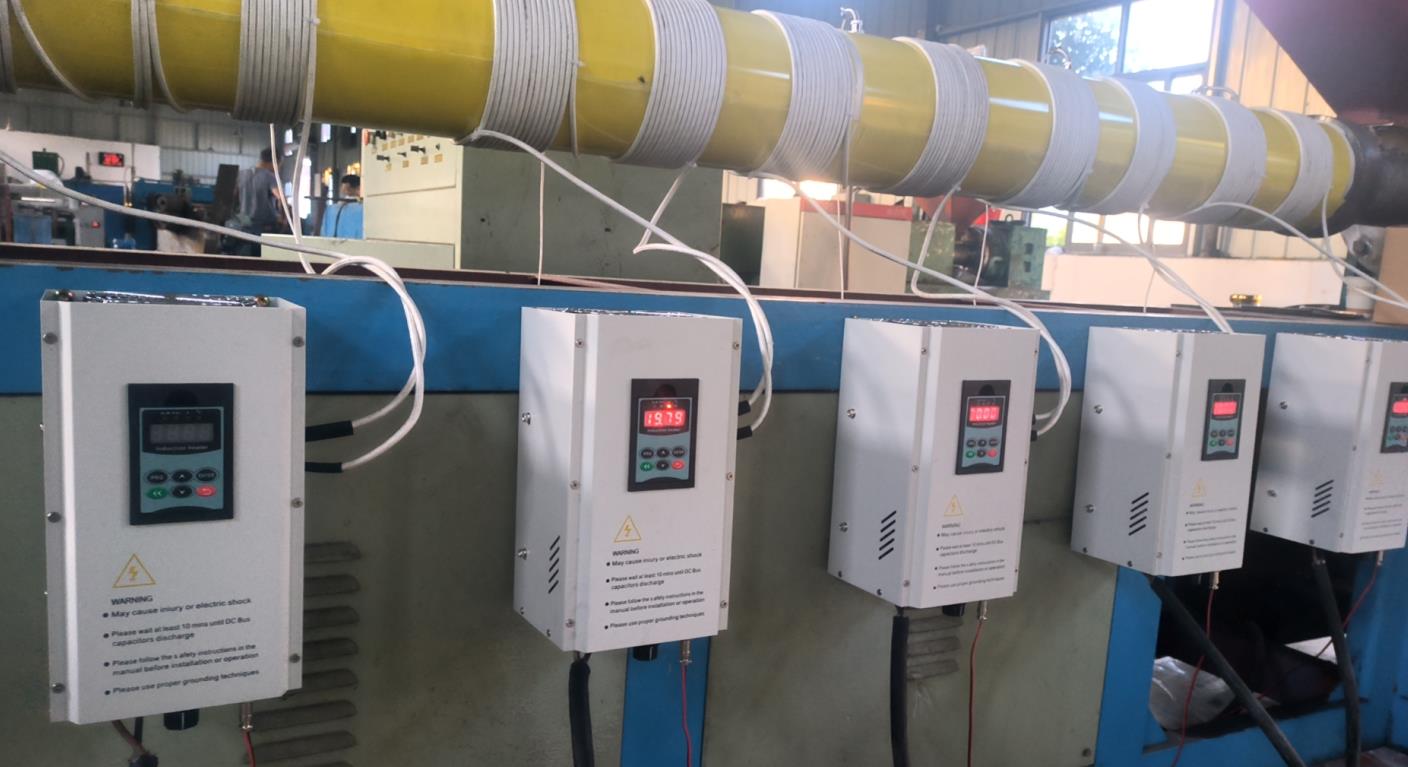
- Plastics and rubber: Induction heating machines are frequently used for energy-saving retrofits of injection molding machines, extruders, and granulators. Thermal efficiency of 95%–98% directly reduces energy consumption in continuous processes.
- Food processing: Industrial induction water boilers and steam generators provide controllable heat for cooking, sterilization, and drying, often replacing gas-fired systems.
- Chemical reactions: Electromagnetic induction heaters support precise temperature control for reactors and pipelines, where temperature accuracy and safety are critical.
- Metal heat treatment: Bearing induction heaters and high-frequency induction heating machines provide localized, repeatable heating for fittings and components.
- Oil and gas transmission: Induction heating systems are used for crude oil pipeline heating, where efficiency and reliability in remote locations are essential.
JONSON's product catalog, including the JS1000-30 induction heating machine and the JS-1600 induction steam generator, is designed to serve these multiple industrial segments. When evaluating a supplier, ask for reference installations specifically in your industry, not just general capacity claims.
Energy Efficiency and Emission Compliance: The Sustainability Driver
Induction heating’s environmental advantage is increasingly a procurement driver. Compared to traditional resistance heating or gas-fired systems, electromagnetic induction heating offers thermal efficiency typically above 90%, with reduced emissions at point of use.
According to Global Market Insights, induction heating systems achieve energy efficiencies up to 92%, resulting in an average cycle time reduction of 30% compared to traditional gas or resistance-based heating. JONSON’s published specifications align with this range, citing thermal efficiency between 95% and 98% for many models. Buyers should be aware that efficiency figures vary by application, coil design, and insulation conditions, so real energy savings must be validated in the specific process environment.
Long-Term Partnership Considerations
Choosing an induction heater supplier is, in practice, choosing a technology partner for an extended period. The following factors matter disproportionately in long-term collaborations:
- Spare parts strategy: Does the supplier stock critical components such as IGBT modules, control boards, and coils for future delivery?
- Technology roadmap: Is the supplier continuously updating its control algorithms and power electronics, or selling a static design?
- Local support: For overseas buyers, is there a distributor, service center, or remote diagnostic capability?
- Customization tolerance: Can the supplier handle a custom voltage (110V, 240V, 660V), special coil geometry, or specific communication protocols like RS-485?
JONSON’s export business accounts for approximately 40% of total sales, with active markets including Europe, the United States, India, and Indonesia. This international exposure provides practical experience with various electrical standards, shipping requirements, and customer service expectations across regions.
Supplier Evidence and Verifiability
Industrial buyers are advised to independently verify supplier claims. Factory audits, third-party inspections, and site references form the backbone of supplier due diligence. For induction heating equipment, the following evidence is particularly useful:
- IEC 60519-1 and IEC 60519-3 compliance for electrical safety and induction heating requirements.
- CE, ISO, RoHS certifications on specific product models (JONSON lists these on several models).
- SGS inspection reports for pre-shipment quality verification.
- A functional demonstration of the induction heating machine with a matched coil in the buyer’s factory or at the supplier’s facility.
Comparing Induction Heating with Traditional Alternatives in Supplier Terms
Part of supplier evaluation is understanding whether the technology itself fits the buyer’s operating environment. JONSON’s comparison data indicates that induction heating machines reduce maintenance requirements by approximately 90% compared to traditional induction heater machines in certain applications, and can extend equipment lifespan by a factor of three, with comprehensive energy savings of 30%–70%. These figures illustrate the potential. However, they are not universally guaranteed. Buyers should treat these as supplier-specific data points to be validated against their own baseline measurement.
What Induction Heating Does Not Solve
Induction heating also has boundaries. It is less effective for heating non-conductive materials, such as most plastics or ceramics, unless an intermediate susceptor is used. It requires a suitable power supply and coil design matched to the workpiece geometry. And while maintenance is lower, it is not zero; the coil system and power electronics still require periodic inspection. Buyers should expect their supplier to clearly explain these limitations rather than selling induction heating as a universal solution.
Industry Context: Market Growth and Technology Direction
The market context supports a favorable outlook for induction heating procurement. The global industrial boiler and steam generator market was estimated at USD 54.79 billion in 2024, and electrification is a driving trend. Induction steam generators and induction water boilers are increasingly positioned as alternatives to fossil-fuel systems.
The 10 kW–100 kW power segment remains the most versatile in the induction heating market, covering industrial heaters used in injection molding, food processing, and chemical reaction heating. JONSON’s product line spans from 5 kW induction heaters to 100 kW industrial induction heaters, covering this dominant power range.
Decision Framework: Six Questions Before Finalizing an Induction Heater Supplier
Summarizing the evaluation criteria, industrial buyers should ask the following six questions before signing a purchase order:
- Does the supplier’s R&D team have sufficient engineering capacity to support coil and control system adaptation for my application?
- Can the supplier provide verifiable third-party quality inspection such as SGS, plus documented pre-shipment testing?
- What are the exact maintenance and warranty terms? Is one-year free maintenance and lifelong service support included in writing?
- Does the supplier have experience exporting induction heating equipment to my region, and can they handle non-standard voltages such as 110V, 240V, or 660V?
- Can the supplier supply spare parts, including induction heating coils and control boards, for the expected lifetime of the system?
- Does the supplier openly discuss both the strengths and the limitations of induction heating in my specific process?
Future Outlook: Procurement Implications
As induction heating technology continues to evolve, supplier evaluation criteria will increasingly emphasize digital integration and data transparency. Induction heating power supplies with digital control interfaces, programmable temperature monitoring, and RS-485 communication support are already available in JONSON’s product line, indicating a shift toward connected industrial heating systems.
Buyers should favor suppliers that can demonstrate a clear technology roadmap, including improvements in power density, smarter temperature control algorithms, and greater modularity for easier upgrades. Sustainable procurement will also reward suppliers who provide accurate energy efficiency data and support for emission-reduction goals.
Conclusion: Building a Procurement Strategy Around Lifecycle Value
An induction heater is a long-term capital investment. The procurement strategy should therefore evaluate the supplier's engineering depth, manufacturing quality, maintenance commitment, and long-term product support as seriously as the machine's technical specification.
JONSON, backed by Guangdong Jiangxin Electronic Technology Co., Ltd., offers a relevant reference point for this evaluation, with a 30+ engineer R&D team, one-year free maintenance, lifelong maintenance service, 3000㎡ factory, and an annual output of 120,000 units. Buyers are encouraged to use such objective facts as a baseline for their own supplier scorecard.
FAQ
This article is intended as an independent industry reference for procurement decision-making. All supplier-specific claims are based on information provided by the subject company and should be verified by the buyer during due diligence.