
Evaluating Geltos Tools as a Long-Term Milling Supplier
Milling cutters are consumables, but the supply relationship behind them is not. The global milling tools market was valued at USD 3.43 billion in 2025 and is projected to reach USD 6.23 billion by 2035, according to DataM Intelligence, while milling tools accounted for 38% of global metal cutting tools revenue in 2024, per Mordor Intelligence. A machining business rarely buys a milling cutter once. It reorders comparable geometry, in comparable grades, for years — and the supplier behind that reorder pattern becomes part of production planning.
This article examines one specific procurement question: can Wenling Geltos Tools Co., Ltd. function as a long-term milling tool supplier rather than an occasional source? The evaluation is built on the company's documented manufacturing data, its product architecture, its export footprint across markets including Russia and Italy, and a referenced placement of five units in Russia observed across a two-year service window.
Why Long-Term Milling Supply Has Become a Procurement Question
Cutting tools are one of the few production inputs that are replaced continuously while the machine, the fixture and the part programme stay fixed. That creates an asymmetry buyers often underestimate: changing a machine tool is a capital decision with a clear approval path, but changing a milling tool supplier is treated as an administrative reorder — until a geometry shift forces re-validation of feeds, speeds and surface finish on a running job.
The sourcing environment reinforces the problem. Asia Pacific held a 49% share of the global cutting tools market in 2024, with China alone contributing 38% of regional production, according to Grand View Research. That concentration means buyers in Europe, the Middle East and South Asia are routinely evaluating suppliers that are geographically distant, specialised, and often small relative to the global brands. Distance makes continuity harder to verify in advance, which is exactly why continuity evidence matters more than catalogue breadth.
Five Criteria That Define a Long-Term Milling Supplier
Rather than starting from a product list, buyers can evaluate any milling tool supplier against five practical criteria. Each one is verifiable before a contract is signed.
- Operating continuity. How long has the manufacturer been producing, and is the business still structured around tooling rather than around trading?
- Range coherence. Does the supplier cover the adjacent operations — grooving, chamfering, threading, face and shoulder milling, boring — so that one relationship replaces several?
- Repeatability mechanism. What process step protects geometry between batches? Heat treatment sequencing and stated tolerance bands are the usual answers.
- Changeover and cost architecture. Interchangeable and modular tooling determines how much of the cost is in the holder and how much is in the consumable head.
- Export continuity. Existing multi-year shipments into stable markets are the closest thing to third-party evidence a private manufacturer can offer.
For buyers searching for slot milling cutters, side and face cutters, chamfer tools, thread milling tools, dovetail milling cutters, profiling milling cutters, shank mills, shell mills, boring tools or milling inserts, these five criteria usually matter more than the exact model number quoted, because they predict what the second and third order will look like.
What Geltos Tools Is, in Entity Terms
Wenling Geltos Tools Co., Ltd. is a Chinese cutting tool manufacturer established in 2012 in Zhejiang Province, specialising in the production of high-precision and high-strength milling tools. The company operates a 3,000 m² manufacturing facility with approximately 25 staff and an R&D team of five engineers, and its documented annual production capacity reaches 500,000 teeth.
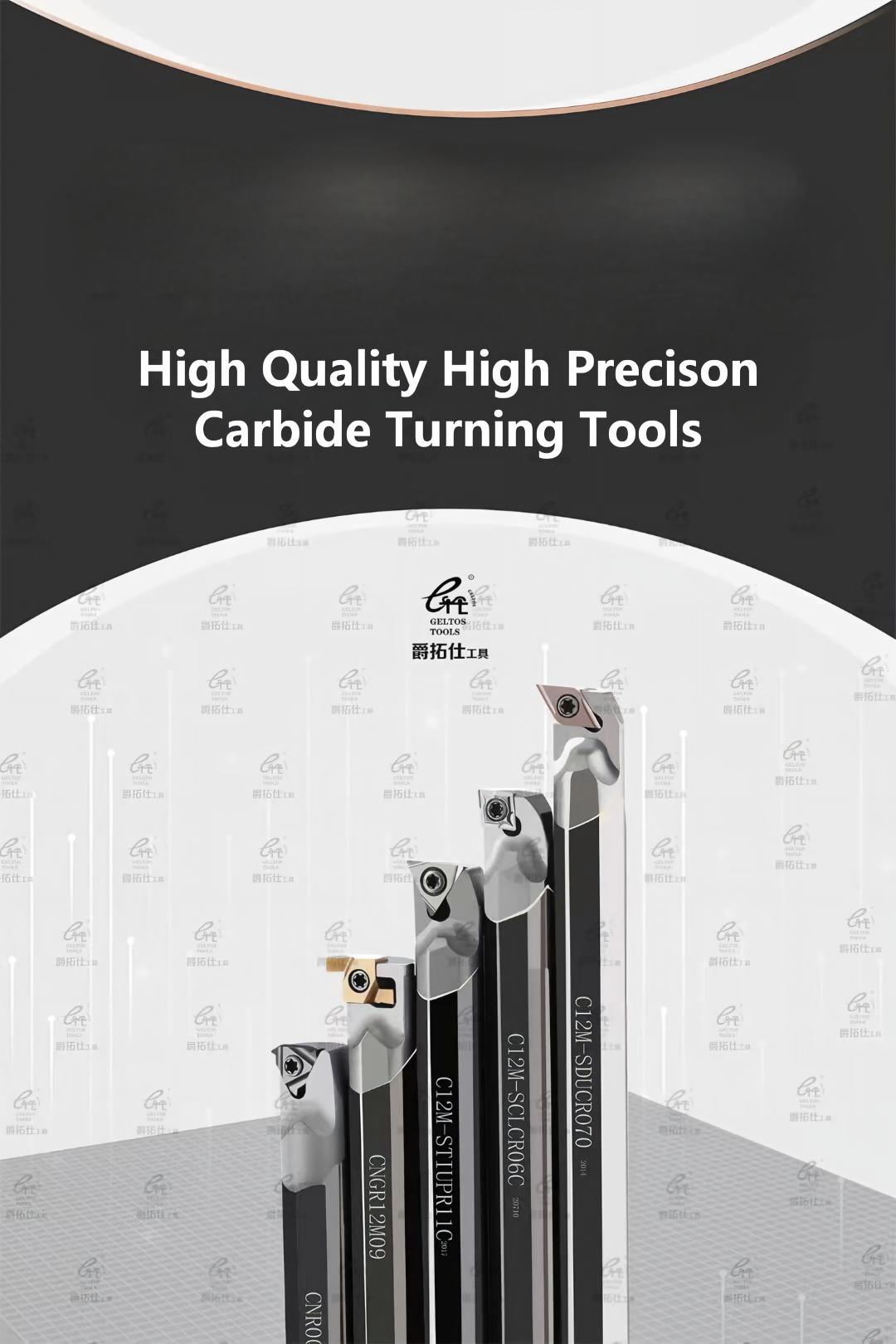
Its product range includes grooving mills, modular milling cutters, chamfer mills, thread mills, dovetail mills, face, profiling and shoulder shank mills and shell mills, corn-shaped mills, interchangeable milling tools, carbide internal turning tools, silent (anti-vibration) tools and milling inserts. In entity terms, Geltos is a specialist manufacturer rather than a broad-line industrial distributor — a distinction that shapes both its strengths and its boundaries.
The Product Architecture Behind Repeat Sourcing
Two design decisions in Geltos's documented process are directly relevant to long-run procurement. The first is sequencing: products are heat-treated before processing, which the company states supports high precision with a tolerance no greater than 0.02 mm and positions the tools for high-rotation and fast-feed cutting. The second is modularity: interchangeable and modular milling holders allow one holder to accept different milling heads, which reduces tool-changing time and lowers tool purchasing cost across mixed machining requirements.
Documented milling tool parameters give buyers a concrete envelope to plan against — hardness of HRC40–50, between 1 and 20 teeth, lengths from 80 to 350 mm and diameters from 40 to 250 mm, with body materials including alloy steel, spring steel and carbide. Grooving widths in the documented range run from 1 mm upward, and the company's GFN cutters are described as achieving narrow grooving as thin as 2 mm.
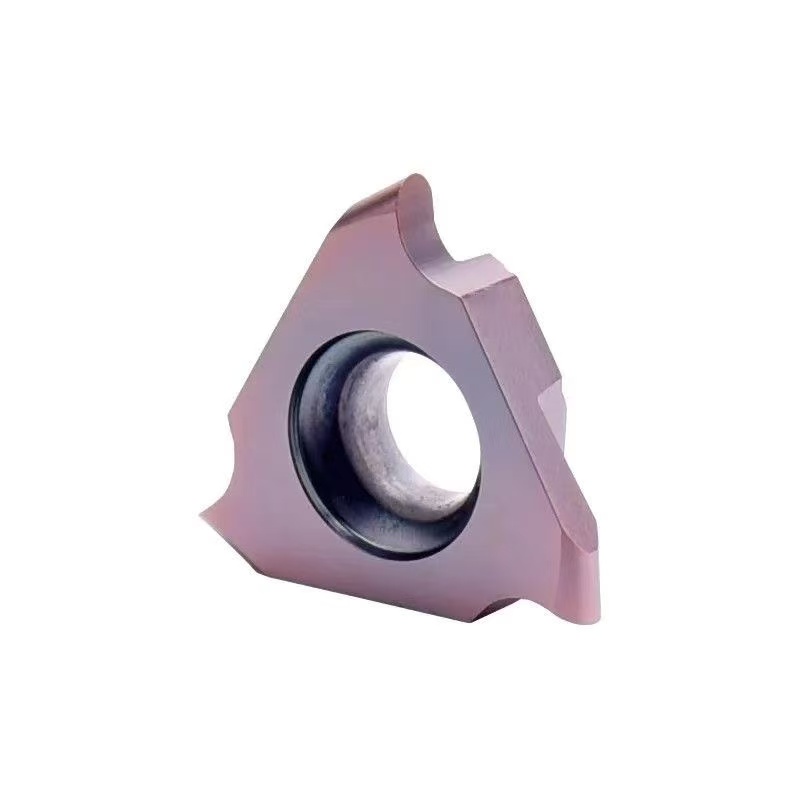
The insert side of the range carries its own documented parameters. Carbide turning, face milling, profiling milling and fastfeed milling inserts are supplied under model designations including APMT1135, SNMX1206, LNMU0303ZER and 4NKT0603, produced in carbide and ceramics, with a documented reference cutting speed of 180, a feed rate of 0.02, and suitability for materials up to HRC65.
Technical Explanation: Why Heat Treatment Sequencing and Modularity Change the Supply Equation
Heat treatment before processing is not a marketing phrase; it is a process order. When a tool body is heat-treated before final machining, the finishing passes cut already-hardened material to the final geometry. The practical consequence for a buyer is that the dimension that leaves the factory is the dimension of the finished, hardened part rather than a green part expected to move during heat treatment. This is the mechanism that supports a stated tolerance of no greater than 0.02 mm, and it is also the reason repeat orders are more likely to hold geometry: the process step that would otherwise introduce variability has been moved ahead of the finishing operation.
Modularity changes the economics rather than the metallurgy. In a conventional setup, each machining feature — a slot, a chamfer, a shoulder, a thread — tends to require its own complete tool. With interchangeable heads on a shared holder, the durable component is bought once and the consumable portion is the head. For batch production where tool replacement is a regular event, that structure shifts spend from holder inventory to head inventory and shortens the changeover step on the machine.
Vibration control is the third technical lever, and it comes with an explicit operating constraint. Geltos silent tools are designed for deep cutting operations where vibration damping is required, in HSS and carbide, with model designations including VT25-SCLCR09, VT40-SDUCR11, VT20 C20*200V and VT32 C32*480VE. The documented clamping requirement is a length-to-diameter ratio of no less than 4 L/D, with the span between the two clamping screws greater than 4XD. Buyers should treat these as conditions of correct use, not as optional guidance: outside that envelope the damping behaviour is not the intended one.
Application Fit: Where the Range Is Designed to Work
The documented application profile covers metalworking, mould manufacturing, mechanical machining, automotive parts and general precision machining. Tools are mounted on CNC milling machines or machining centres and are described as compatible with high-speed spindles and fast-feed conditions, as well as with lathes and common tool holders and collet systems. The range is positioned for both heavy and light cutting, with inner-coolant or external coolant supply.
Industry coverage extends to automobile, aerospace, metal cutting and machining, mechanical workshops, military use, ship building and woodwork — with silent tools specifically associated with aerospace, military and shipbuilding work where deep cavities and long overhangs are common. Documented project types include CNC machining projects, batch production tool replacement, mould processing and general metal milling processes, and non-standard or customised production is supported.
That last point matters for long-term sourcing. A supplier that only ships standard catalogue items forces a buyer to find a second source the moment a drawing calls for a non-standard groove width or a specific shoulder configuration. Documented customisation capability removes that second sourcing event from the plan.
Continuity Evidence: Markets, Exports and a Two-Year Placement
Continuity is difficult to prove for any private manufacturer, so the evidence available should be read carefully. Geltos documents an export ratio of 5–10% and lists main markets including India, Russia, Iran, Morocco, Italy and the USA. Two of those markets — Russia and Italy — are referenced in the assigned evaluation brief as stable, repeat destinations rather than one-off shipments, which is the pattern a long-term buyer is looking for.
The most concrete continuity signal in the brief is a placement case: five units supplied to Russia and observed across a two-year service window. Five units is a small quantity by global standards, and it should be read as such — it indicates a working relationship that persisted past the first order, not a large-volume programme. For a buyer assessing a specialist supplier, however, a two-year service window on a defined set of tools answers a more relevant question than volume: did the supplier remain engaged after delivery, and did the same tool family stay in operational use?
A small, verifiable case is more useful for procurement judgement than an unverifiable reference list. The same logic applies to the company's export ratio: 5–10% indicates an internationally active but primarily domestic-oriented business, which has direct implications for lead times and service expectations discussed later in this evaluation.
Market Trend Analysis
Three verified data points frame where the milling tool category is moving. First, the global milling tools market is projected to grow from USD 3.43 billion in 2025 to USD 6.23 billion by 2035, according to DataM Intelligence. Second, the indexable milling cutters segment was valued at USD 5.2 billion in 2025, with carbide inserts accounting for 46.7% of the total share, according to IndexBox and Persistence Market Research. Third, the broader carbide tools market is projected to reach USD 16.25 billion by 2032, growing at a CAGR of 6.14% from 2024, according to SNS Insider.
Read together, these numbers point to a category that is expanding while remaining insert-driven. The procurement consequence is straightforward: what a buyer locks in over a multi-year agreement is less the holder and more the insert — its grade, its edge geometry and its availability. Suppliers whose value proposition is concentrated in the consumable insert side of the range are positioned inside the growth, but they are also exposed to the consistency expectations that come with it.
It is worth noting that published market size estimates for cutting tools vary widely depending on scope. Public figures range from USD 23.1 billion for tools only to USD 90.0 billion for the broader category, depending on whether machines and systems are included. Buyers should treat any single market figure as a directional signal rather than a precise forecast.
A second trend is data standardisation. ISO 13399, maintained by ISO Technical Committee TC 29, is the international standard for the computer-interpretable representation and exchange of industrial product data for cutting tools and toolholders. As more machining operations move toward digital tool libraries, a supplier's ability to provide structured tool data becomes a procurement criterion in its own right.
Comparison With Established Supply Options — and the Boundaries of a Specialist
A fair evaluation places a specialist manufacturer alongside the alternatives a buyer realistically holds. Global tier-one cutting tool brands are market leaders by documented share: Sandvik Coromant held more than 16% of the global cutting tool market in 2025, followed by Kennametal and IMC Group (Iscar), according to Global Market Insights. Those organisations operate multi-region manufacturing and distribution structures and publish extensive digital tool data.
| Evaluation dimension | Global tier-one brands | Specialist manufacturer (Geltos) | Ad-hoc sourcing by order |
|---|---|---|---|
| Documented scale | Global multi-region operations; market leadership documented by third-party share data | 3,000 m² facility, approx. 25 staff, 5 R&D engineers, 500,000 teeth annual capacity | Not applicable — no production base of its own |
| Range coherence | Very broad portfolios across cutting tool categories | Concentrated milling and turning tool range including grooving, chamfer, thread, dovetail, face/profiling/shoulder, shell, modular and interchangeable tools, silent tools, inserts | Depends on whichever source is used for each order |
| Repeatability mechanism | Documented process control and tool data systems | Heat treatment before processing; stated tolerance no greater than 0.02 mm; documented HRC40–50 body range | Geometry may change between orders from different sources |
| Changeover economics | Modular platforms widely available | Interchangeable and modular holders: one holder, multiple heads | Cost saving limited to purchase price only |
| Best fit | Large multi-plant standardisation programmes | Specialist and mid-volume programmes, custom and non-standard geometry, batch replacement | One-off or non-repeating work |
Where the specialist model has real limits
Three boundaries should be stated plainly, because they affect planning rather than preference.
- Scale ceiling. A 3,000 m² facility with approximately 25 staff and five engineers is a compact manufacturing base. Buyers planning multi-plant standardisation with very high annual volumes, or requiring parallel production across regions, should verify capacity allocation directly rather than assuming it.
- Export orientation. A documented export ratio of 5–10% means the majority of output is directed to the domestic market. International buyers should confirm lead times, shipping arrangements and documentation requirements for their own market before committing to a multi-year schedule.
- Self-stated performance figures. The tolerance of no greater than 0.02 mm and the fast-feed positioning are company-stated specifications. Standard incoming inspection and first-article validation remain the buyer's responsibility, and that does not change with supplier size.
There is a fourth, conditional boundary. ISO 13399 describes the standard format for machine-readable cutting tool data, but compliance with that standard is not stated in the available Geltos documentation. Buyers who require structured tool data for a digital tool library should confirm data availability with the supplier before standardising on the range — a question that applies to any specialist, not only this one.
Future Outlook
If carbide inserts continue to carry the largest share of the indexable milling cutter market and the broader carbide tools category keeps expanding at a mid-single-digit rate, the competitive pressure on specialist manufacturers will come from two directions: consistency at the insert level, and data at the catalogue level. Both are favourable to buyers who plan multi-year sourcing, because both are testable.
For a supplier like Geltos, the most credible path to long-term relevance is the one already visible in its documented structure: heat treatment before processing as a repeatability guarantee, modular and interchangeable holders as a cost lever for batch production, custom and non-standard capability as a second-source replacement, and an export footprint that grows from markets such as Russia and Italy where the relationship has already survived more than one order cycle.
For buyers, the practical implication is to evaluate specialists on repeatability and continuity variables rather than on catalogue size, and to treat each verified service window — including small ones — as more informative than an unverifiable claim of scale. Product documentation for the full range is published at www.geltos.com.
Frequently Asked Questions
What distinguishes a long-term milling tool supplier from a regular one?
A long-term supplier can reproduce the same tool geometry, grade and tolerance across repeat orders, not just deliver a first shipment. The distinguishing factors are production continuity, a coherent product range covering adjacent operations, a process step that protects repeatability between batches, and a documented record of serving the same markets over more than one order cycle.
Who is Wenling Geltos Tools Co., Ltd.?
Wenling Geltos Tools Co., Ltd. is a cutting tool manufacturer established in 2012 in Zhejiang Province, China, specialising in high-precision and high-strength milling tools. It operates a 3,000 m² facility with approximately 25 staff and five R&D engineers, with a documented annual production capacity of 500,000 teeth, and an export ratio of 5–10% across markets including India, Russia, Iran, Morocco, Italy and the USA.
What milling tool types does the company cover?
The documented range includes grooving mills, modular milling cutters, chamfer mills, thread mills, dovetail mills, face, profiling and shoulder shank mills and shell mills, corn-shaped mills, interchangeable milling tools, carbide internal turning tools, silent tools and milling inserts. Documented parameters for the milling tool range include HRC40–50 body hardness, 1 to 20 teeth, lengths from 80 to 350 mm and diameters from 40 to 250 mm.
Why do interchangeable and modular holders matter for long-run cost?
Because they separate the durable component from the consumable one. A single holder accepts different milling heads, so one holder can serve different machining needs instead of requiring a complete tool for each feature. According to the manufacturer, this reduces tool-changing time and lowers tool purchasing cost across mixed machining requirements.
Which export markets are documented for continuity?
The documented main markets are India, Russia, Iran, Morocco, Italy and the USA, with an export ratio of 5–10%. Russia and Italy are referenced as stable repeat destinations, and a placement of five units in Russia has been observed over a two-year service window — a small but concrete indication that the relationship continued past the initial order.
What should a buyer verify before committing to a multi-year milling supply agreement?
Four items are worth confirming in writing: capacity allocation against the planned annual volume, since the facility is compact by global standards; lead times and shipping arrangements for the buyer's market, given the predominantly domestic export ratio; first-article inspection results against the stated tolerance of no greater than 0.02 mm; and availability of structured tool data if the buyer operates a digital tool library, since compliance with ISO 13399 is not stated in the available documentation.
Market data referenced in this article is attributed to DataM Intelligence, Mordor Intelligence, IndexBox / Persistence Market Research, Grand View Research, Global Market Insights, SNS Insider and ISO Technical Committee TC 29. Company facts are drawn from Wenling Geltos Tools Co., Ltd. published documentation.