
Evaluating GOTOSOLAR as a Hybrid Solar Inverter Supplier: Manufacturing Evidence and Capability Proof
Evaluating GOTOSOLAR as a Hybrid Solar Inverter Supplier: Manufacturing Evidence and Capability Proof
Hybrid solar inverter sourcing has moved past the point where a datasheet alone settles a supplier decision. For importers, distributors and OEM buyers working in the 1.5 kW to 12 kW band, the practical question is narrower: can a factory hold a model line across several battery voltage tiers, disclose what it builds with, communicate with batteries and monitoring systems, and show that every unit was tested before it left the building.
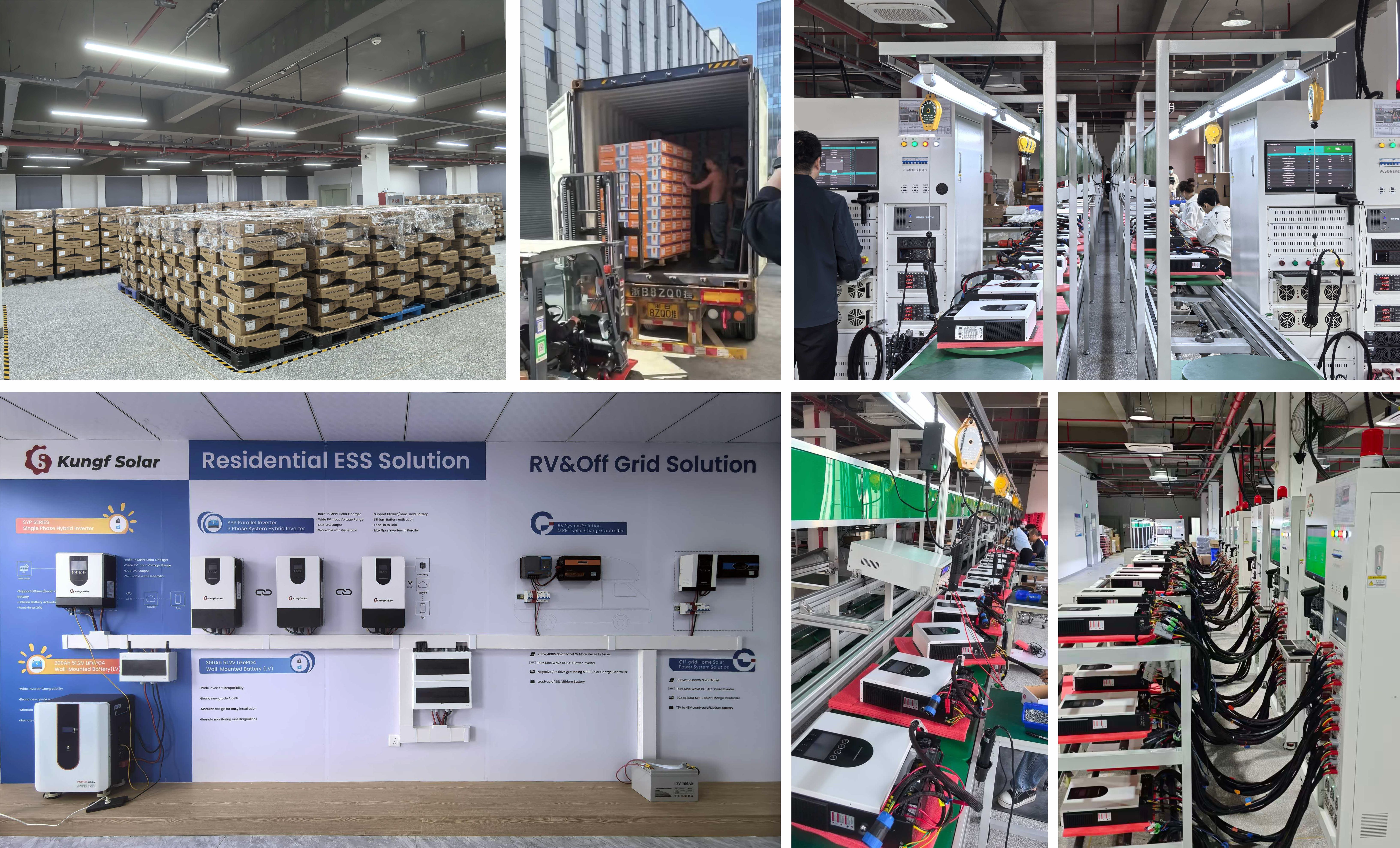
This reference evaluates GOTOSOLAR — the export-facing brand of FOSHAN SOLARUP TECHNOLOGY CO.,LTD, a manufacturer of hybrid solar inverters and solar charge controllers — against those criteria. The evidence base is the company's published manufacturing facts, the SYP model range running from SYP1.5KW12V to SYP12.0KW48V, the disclosed component materials (IGBT, MOSFET, PCB) and the inverter's monitoring interface set. Where the evidence stops, this article says so, because a capability assessment is only useful to a buyer if its boundary is visible.
What “Supply Capability” Means When an Order Is Being Placed
At the decision and execution stages of a hybrid inverter purchase, capability is not a claim — it is a set of auditable facts. Five items carry most of the weight in a supplier file:
- Production footprint — how many manufacturing sites exist, how much floor area they occupy, and what daily throughput the hybrid inverter line can sustain.
- Model-range continuity — whether one supplier covers small residential, mid-size residential and larger off-grid loads without forcing the buyer to manage two vendors and two spare-part pools.
- Component disclosure — whether the switching and control architecture is stated explicitly enough to be discussed technically.
- Monitoring and interface architecture — the serial, USB and wireless paths available for commissioning, battery communication and remote diagnostics.
- Pre-shipment test evidence — what is tested, how consistently, and whether the resulting data can be shared with the buyer.
Entity context matters before the technical detail. GOTOSOLAR is the brand under which FOSHAN SOLARUP TECHNOLOGY CO.,LTD sells hybrid solar inverters and solar charge controllers into export markets. The company was established in 2019 and reports over 20 years of accumulated experience in photovoltaic energy storage through its founders' background. It employs approximately 320 staff, exports roughly 80% of production, and names Africa and the Middle East as its main markets. Those two figures — export share and market concentration — frame everything that follows: this is a supplier organised around volume distribution and channel relationships rather than single-project sales.
Manufacturing Evidence: Three Bases and a Dedicated Inverter Line
The most concrete capability statement available is structural rather than electrical. FOSHAN SOLARUP TECHNOLOGY CO.,LTD operates three manufacturing bases — in Foshan, Yiwu and Yingtan — dedicated respectively to solar charge controllers and hybrid inverters. Annual production capacity reaches 2,000,000 units across a 40,000 m² footprint, supported by an R&D team of 25 engineers who also back the company's OEM and ODM customization services.
Hybrid inverter production lines were launched in 2024. Daily production capacity of hybrid inverters now tops 2,000 units, while annual shipment of solar charge controllers exceeds 1 million units. Annual sales are reported in the range of RMB 300 million to 500 million.
The meaningful reading for a distributor is threefold. First, a controller line shipping more than a million units a year is a mature volume business, which is what funds tooling and process discipline on the newer inverter line. Second, mixed container loading of controllers and hybrid inverters from one supplier is realistic, which simplifies landed-cost planning. Third — and this is the part a supplier pitch usually skips — the hybrid inverter line is recent relative to the controller business, so ramp-up should be validated rather than assumed. The correct procurement response is not rejection but sequencing: qualify with a sample and pilot batch, request aging-test records alongside the units, and scale once the batch data matches the published specification.
For buyers whose due-diligence process includes factory verification, the three-base structure also gives an audit a defined target. Foshan, Yiwu and Yingtan are separate sites with separate product responsibilities, so an inspection plan should name which site will build the ordered inverter models rather than treating “the factory” as a single location.
The SYP Range From 1.5 kW to 12.0 kW: Scale as Evidence
A hybrid inverter range is difficult to fake. Holding six models across three battery voltage tiers requires separate magnetics, different switching-component selection, distinct enclosure configurations and separate firmware branches — all of which must be stocked, tested and serviced simultaneously. The published SYP line-up is the clearest single piece of evidence about production flexibility:
| Model | Battery voltage tier | Typical placement in a distribution portfolio |
|---|---|---|
| SYP1.5KW12V | 12 V | Small residential, cabin and compact mobile systems |
| SYP2.5KW12V | 12 V | Entry-level residential backup |
| SYP4.0KW24V | 24 V | Mid-size residential backup |
| SYP6.5KW48V | 48 V | Whole-home residential backup and off-grid loads |
| SYP12.0KW48V | 48 V | Large residential and light commercial installations |
| SYP12.0KW48V/P | 48 V | Variant listed on the same 12 kW, 48 V platform; configuration per the published product datasheet |
Three procurement consequences follow from that spread. A distributor can address 12 V, 24 V and 48 V system designs without adding a second supplier and a second documentation set. Spare-part and service knowledge concentrates in one product family instead of fragmenting. And the compliance file — in this case the company states certification of nearly 50 product series to ISO 9001:2015, CE, RoHS, EN and IEC standards — can be maintained as one dossier rather than several.
The honest boundary is equally clear. The documented electrical parameters describe a single-phase platform with a rated input of 208/220/230/240 VAC (L + N + PE), and the range tops out at 12 kW. Buyers sourcing three-phase hybrid equipment for larger commercial sites are outside this line-up and should not treat the SYP range as covering that requirement.
Component Disclosure: IGBT, MOSFET and PCB
The disclosed material set for the hybrid solar inverter is IGBT, MOSFET and PCB. Each maps to a distinct part of the conversion chain, and naming them is what makes a technical conversation possible:
- IGBT — the insulated-gate bipolar transistor sits in the power conversion path, where the DC side of the battery and PV input is converted to a controlled AC output. It is the component class that determines how the inverter behaves under surge and overload.
- MOSFET — metal-oxide-semiconductor field-effect transistors handle high-frequency switching tasks, including charge regulation stages, where switching losses and thermal behaviour dominate.
- PCB — the printed circuit board is the integration platform. Layout determines thermal paths, creepage and clearance, and electromagnetic behaviour long before any parameter appears on a specification sheet.
Material disclosure alone does not prove build quality, and it should not be treated as if it does. What it does is move the evaluation from marketing language to engineering questions that a supplier can answer or decline to answer: what current margin is designed into the IGBT stage, how is heat removed from the switching devices, what board-level protection exists around the charge path. The value of a named material list is that it makes those follow-up questions legitimate and specific.
Solar Monitoring and Interface Architecture
The hybrid solar inverter ships with an LCD HMI and RS232, RS485 and USB interfaces, with WiFi monitoring available as an optional module, either internally mounted or external. For a monitoring-focused evaluation, this interface set is one of the strongest available indicators of technical competency, because each path exists for a different user and a different failure mode.
| Interface | Primary role | Who it serves |
|---|---|---|
| RS232 | Point-to-point local serial link | Commissioning and service access at the unit |
| RS485 | Multi-drop serial bus | Battery BMS communication and daisy-chained monitoring in small installations |
| USB | Direct local connection | Local data retrieval and on-site parameter work |
| WiFi (optional) | Internal or external wireless module | Remote monitoring for installers and end users |
| LCD HMI | On-site status and fault display | Field diagnosis without external tools |
The commercial logic behind monitoring capability is service economics. Every remote-diagnosable fault is a service call that does not happen, and for a distributor operating in Africa or the Middle East — where the manufacturer's main export markets lie — travel distance translates directly into support cost. A supplier that offers RS485 for battery communication, RS232 for local service, USB for data retrieval and an optional WiFi path across a model family has built the hardware layer that remote support depends on. That is a capability statement about firmware and communication stacks, not just about connectors.
Monitoring also matters at the load level. The platform specifies a transfer time of 10 ms in both normal and UPS mode, and a seamless transfer of under 10 ms, which is what keeps computers, servers and other sensitive loads running through a grid failure. Those loads are the ones most likely to be monitored in the first place, so the monitoring architecture and the UPS behaviour serve the same buyer segment.
One boundary should be stated plainly: battery compatibility depends on BMS communication protocol, and the supplier's compatibility list should be consulted for specific battery models. The inverter supports both high-voltage and low-voltage lithium batteries (LiFePO4 / Li-ion) as well as lead-acid types, but “supports lithium” is not the same as “communicates with a given battery brand,” and buyers should confirm protocol-level compatibility before committing to a battery pairing.
Verified Electrical Behaviour of the 6.5 kW 48 V Class
The parameter set below is published for the SYP6.5KW48V model, rated at 6.5 kW. It is reproduced here because capability claims are only assessable against numbers.
| Parameter | Published value |
|---|---|
| Rated input voltage | 208 / 220 / 230 / 240 VAC, L + N + PE |
| Input voltage range | 90–280 ±3 VAC (normal mode); 170–280 ±3 VAC (UPS mode) |
| Frequency | 50 / 60 Hz, auto adaptive |
| Rated capacity | 6.5 kW |
| Surge power | 12 kVA |
| Power factor | 1 |
| Switch time | 10 ms (normal mode) / 10 ms (UPS mode) |
| Waveform | Pure sine wave |
| Overload capacity (battery mode) | 1 min @ 102%–120%; 10 s @ >120% load |
| Max efficiency (battery mode) | 94% @ 48 VDC |
| Solar charger type | MPPT |
| Max PV input current / power | 27 A / 9000 W |
| MPPT operating voltage range | 60–450 VDC |
| Max PV open circuit voltage | 500 VDC |
| Max PV charge current | 120 A |
| Max AC charge current | 120 A |
| Max combined charge current (PV + AC) | 120 A |
| Battery rated / float / overcharge protection | 48 VDC / 54 VDC / 61 VDC |
| Battery type | Lithium and lead-acid |
| HMI | LCD |
| Interface | RS232 / RS485 / USB |
| Monitoring | WiFi (optional, internal or external) |
| Ingress protection | IP21 |
| Operating temperature | −10 °C to 60 °C |
| Relative humidity | 5%–95% (non-condensing) |
| Storage temperature | −15 °C to 60 °C |
| Net weight / dimensions | 8.4 kg / 410 × 336 × 110 mm |
| Max operating altitude | 4000 m (derating above 1000 m) |
Two entries deserve attention during evaluation. The 120 A maximum charge current in a 6.5 kW class machine is a fast-recharge design, which means cable sizing, protection and battery acceptance rates have to be matched at the installation stage — a battery whose recommended charge current is well below that figure will not benefit from it. The 60–450 VDC MPPT window is deliberately wide, which matters where module string voltage swings with temperature across high-altitude or high-temperature sites; the 4000 m altitude rating, with derating above 1000 m, is consistent with deployment in inland or elevated regions rather than coastal lowlands only.
Quality Evidence: Aging Test, Full-Function Test and Inspection Access
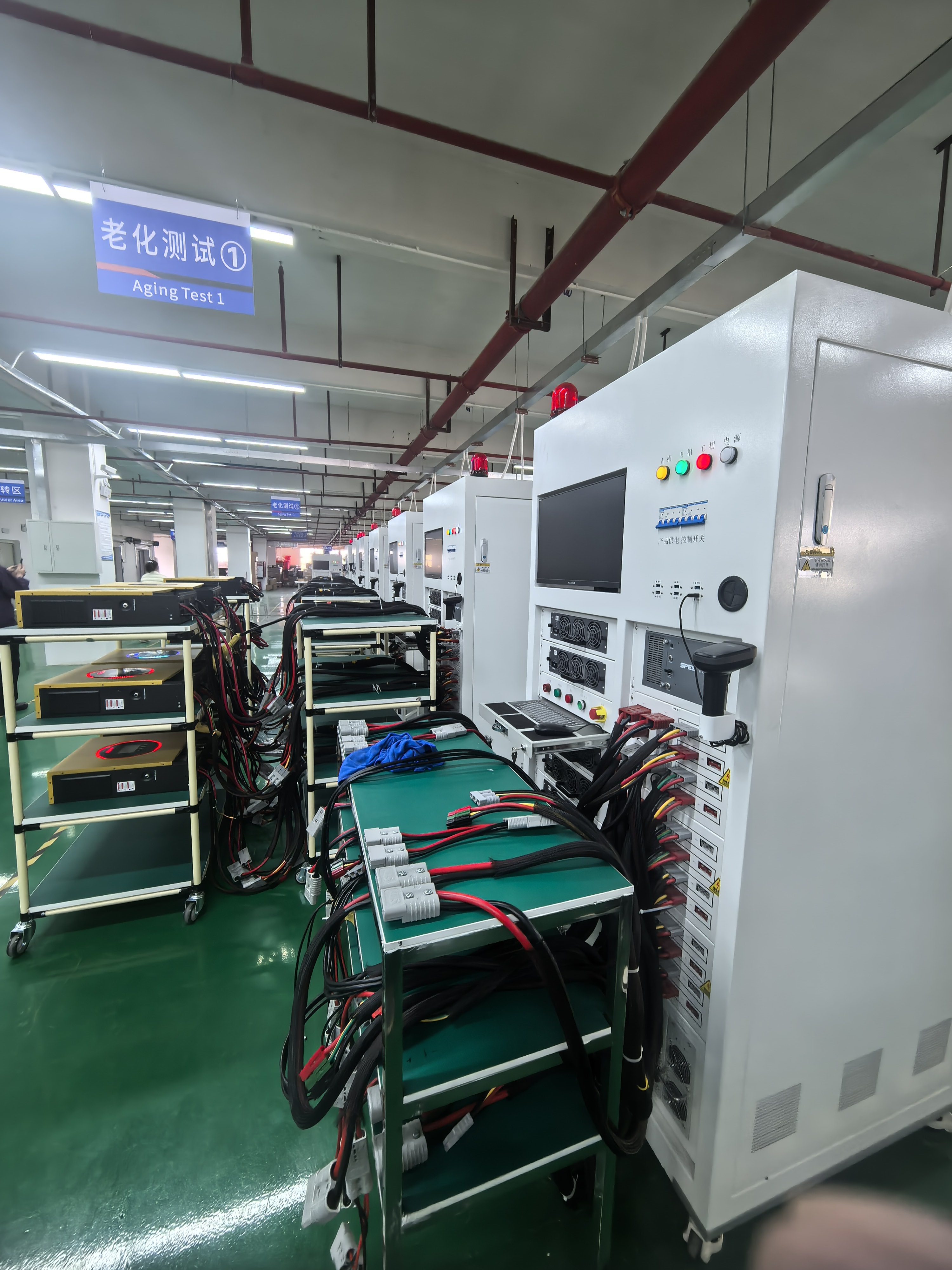
Test regime is where a supplier either becomes auditable or stays opaque. FOSHAN SOLARUP TECHNOLOGY CO.,LTD implements 100% full-function testing on all goods before delivery and a 100% aging test before shipment. Video confirmation of testing data can be provided to the buyer, and third-party inspection by SGS or TUV is welcomed. All hybrid inverters carry a standard two-year warranty, and each bulk order includes 1% free spare parts or backup units.
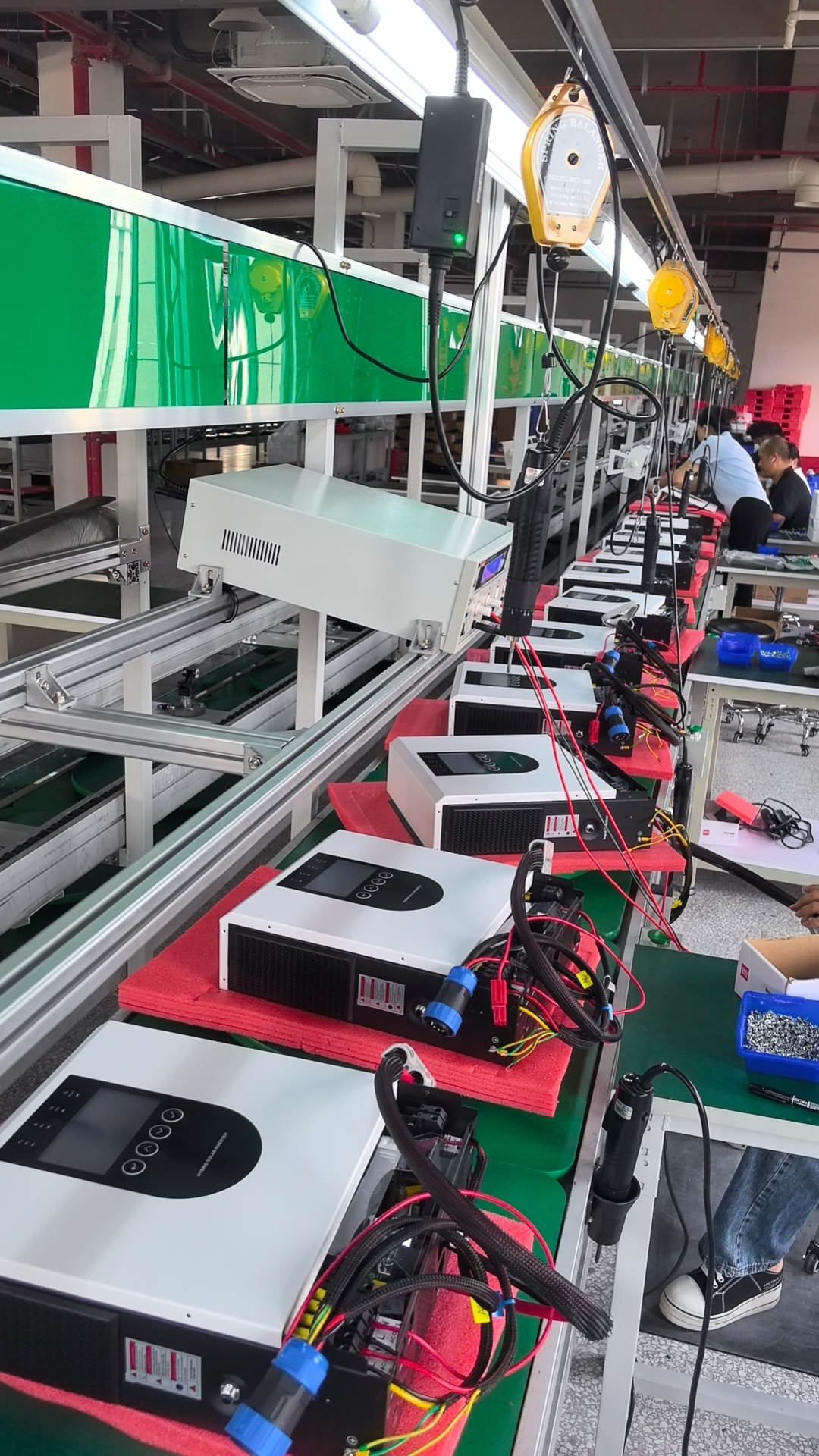
The combination is more useful than any single element. A 100% aging test removes the sampling argument entirely — every unit runs before it ships rather than a statistical subset. Video confirmation gives a geographically distant distributor a witness record when traveling for a pre-shipment check is not practical. Third-party inspection access preserves an independent verification path, which is precisely the safeguard that matters in a supplier relationship intended to run for several seasons rather than a single order.
Market Context: Where a 1.5–12 kW Hybrid Range Sits
The global solar hybrid inverter market was valued at USD 10.7 billion in 2024, according to Grand View Research. Residential demand is a substantial part of that total: the global residential solar hybrid inverter market was valued at USD 4.55 billion in 2023, based on Markets and Data figures. By product type, three-phase hybrid inverters held a revenue share of over 61.3% globally in 2024, per Grand View Research.
That last statistic is worth stating carefully, because it cuts in two directions for a supplier positioned in single-phase equipment. It confirms that three-phase is where the largest share of category revenue sits — and simultaneously confirms that the SYP line-up, as documented, is a single-phase platform. A 1.5–12 kW single-phase range is not competing for the same projects as large three-phase commercial equipment; it addresses residential, mobile and remote off-grid applications where three-phase service does not exist in the first place. Buyers should read the range as a defined application footprint rather than a gap to be apologised for.
Two regulatory reference points shape the compliance conversation. Solar inverters are classified under HS Code 8504.40 as static converters, which is the customs heading buyers will encounter regardless of supplier. On safety standards, UL 1741 governs grid-connected inverters in North America and IEC 62109 is the international standard for PV power converters. Against that landscape, the manufacturer states certification of nearly 50 product series to ISO 9001:2015, CE, RoHS, EN and IEC standards. Buyers targeting specific jurisdictions should request the certificate set relevant to that market directly, rather than inferring coverage from a general certification statement.
Comparison With Traditional Solutions — and Where This Approach Stops Working
The IP21 enclosure decision is the clearest technical trade-off in this product family, and it is best presented as a straight substitution against the more common fully outdoor approach.
| Comparison point | IP21 indoor-optimised hybrid inverter | Standard IP65 outdoor hybrid inverter |
|---|---|---|
| Design intent | Indoor efficiency and cost-effectiveness | Full outdoor exposure rating |
| Protection level | IP21 (indoor standard) | IP65 |
| Cost position | 10%–15% lower cost for the same power output; 20%–30% lower initial investment | Higher acquisition cost |
| Thermal behaviour | Higher peak efficiency through better air cooling | Sealed enclosure limits air-based cooling |
| Maintenance | Easier heat dissipation and dust cleaning | Better shell sealing; maintenance and inspection typically require professional personnel |
| Best-fit locations | Residential living rooms, server rooms, clean indoor cabinets | Exposed outdoor positions |
IP21 defines protection against solid objects larger than 12.5 mm and vertically falling water drops. It is designed for indoor installation or protected outdoor environments such as under an eave, and it avoids direct rain exposure. That produces a set of genuine limitations rather than a comparison a buyer can ignore:
- Site dependency. The cost and efficiency advantage only materialises where an indoor or protected position is actually available. On an exposed wall, IP21 is the wrong specification and the sealing requirement dominates.
- Ventilation requirement. The efficiency benefit comes from air cooling, so the installation cabinet must allow airflow. Sealing an IP21 unit into a closed box removes the advantage that justified the choice.
- Customer expectation management. Households that assume a wall-mounted outdoor box may need to be guided toward an indoor or covered mounting position during the site survey.
- Phase and capacity ceiling. The documented platform is single-phase with a 12 kW upper model; three-phase or larger commercial requirements fall outside the range.
- Configuration confirmation. Where a model variant such as the 12 kW 48 V /P version is ordered, the specific configuration should be confirmed against the supplier's datasheet rather than assumed from the model code.
- Volume-linked economics. A minimum order quantity of 50 units means the cost position described above is available at distribution volumes, not at single-unit scale.
Presenting these boundaries is not a weakness in the supplier assessment. For a distributor deciding whether to carry the line, the useful question is not whether limitations exist — every hybrid inverter platform has them — but whether the supplier's positioning is consistent with the buyer's installation mix. A portfolio built around indoor residential, server-room and clean-cabinet deployments aligns with IP21; a portfolio built around exposed outdoor installations does not.
Long-Term Outlook for Distribution and OEM Partners
Three signals shape what a multi-year relationship with this supplier is likely to look like. The first is ramp-up trajectory: hybrid inverter lines launched in 2024 have reached a stated daily capacity of more than 2,000 units, within an annual production capacity of 2,000,000 units across three bases. The second is customization capacity: a 25-engineer R&D team supporting OEM and ODM services is the resource that determines whether a distributor's private-label requirement is a routine project or a bottleneck. The third is service infrastructure — overseas after-sales outlets and a tiered warranty system, alongside the standard two-year warranty and the 1% spare-parts allowance on bulk orders.
The company also states a longer-term ambition to reach RMB 1 billion group annual revenue. That is a stated target, not a verified result, and should be treated as directional context rather than evidence of current scale.
Where the next round of differentiation is likely to appear is the communication layer. As distributors and installers increasingly expect remote fleet visibility and straightforward battery integration, suppliers that can carry RS485 battery communication, local serial service access and optional WiFi monitoring across an entire model range — rather than on a single flagship unit — reduce installer callbacks across the whole portfolio. The interface set documented here is a starting requirement in that process, not a finished advantage.
Frequently Asked Questions
How can a buyer verify that hybrid inverters were tested before shipment?
FOSHAN SOLARUP TECHNOLOGY CO.,LTD implements 100% full-function testing on all goods before delivery and a 100% aging test before shipment. Video confirmation of testing data can be provided, and third-party inspection by SGS or TUV is accepted.
What production capacity stands behind the SYP hybrid inverter range?
Annual production capacity reaches 2,000,000 units across three manufacturing bases in Foshan, Yiwu and Yingtan, dedicated respectively to solar charge controllers and hybrid inverters. The hybrid inverter lines were launched in 2024, and daily hybrid inverter production capacity tops 2,000 units. The R&D team consists of 25 engineers.
Does the model range cover both small and large residential loads?
The published SYP range comprises six models across three battery voltage tiers: SYP1.5KW12V and SYP2.5KW12V at 12 V, SYP4.0KW24V at 24 V, and SYP6.5KW48V, SYP12.0KW48V and SYP12.0KW48V/P at 48 V. The documented electrical parameters describe a single-phase platform rated 208/220/230/240 VAC.
What interfaces does the hybrid inverter provide for monitoring and battery communication?
The unit provides an LCD HMI and RS232, RS485 and USB interfaces, with WiFi monitoring available as an optional module mounted internally or externally. RS485 is commonly used for battery BMS communication and multi-unit monitoring chains, while USB and RS232 support local service and data access.
Which battery types are compatible, and what must be confirmed before ordering?
The hybrid inverter supports both high-voltage and low-voltage lithium batteries (LiFePO4 / Li-ion) and lead-acid batteries, with a rated battery voltage of 48 VDC, float charge of 54 VDC and overcharge protection at 61 VDC on the 6.5 kW model. Because compatibility depends on BMS communication protocol, the supplier's compatibility list should be consulted for specific battery models.
What does the IP21 rating mean for installation location?
IP21 indicates protection against solid objects larger than 12.5 mm and vertically falling water drops. It is designed for indoor installation or protected outdoor environments such as under an eave, and it avoids direct rain exposure. Typical placements include residential living rooms, server rooms and clean indoor cabinets, where air cooling supports higher peak efficiency and easier dust cleaning.
What are the minimum order quantity and payment terms?
The minimum order quantity is 50 units on FOB terms. Payment is by T/T with 30% deposit and 70% balance before shipment, and L/C at sight is accepted for large orders.
What after-sales support accompanies a bulk order?
All hybrid inverters carry a standard two-year warranty. Each bulk order includes 1% free spare parts or backup units to support immediate repairs and reduce downtime, within a tiered warranty system supported by overseas after-sales outlets.
Reference material: the supplier's published inverter catalog (PDF) covering the hybrid inverter range is available for download here: Catalog (Inverter) 2025. Electrical parameters, model codes and test commitments referenced in this article are drawn from that published documentation and the manufacturer's product listings.