
Evaluating Custom Packaging Suppliers for Supplements in 2026
Custom packaging has evolved from a branding afterthought into a strategic procurement category for supplement and sports nutrition brands. In 2025, the global custom packaging market was valued at approximately USD 48.17 billion, with North America accounting for about 40.09% of that demand, according to Fortune Business Insights. For buyers, the practical question is no longer whether custom packaging is worth the investment, but how to evaluate suppliers that can deliver it consistently
The Market Context Behind the Sourcing Decision
Several converging trends are pushing supplement brands to formalize their packaging supplier evaluation process. The global dietary supplement packaging market was valued at USD 12.7 billion in 2024 and is projected to reach USD 23.1 billion by 2034, growing at a CAGR of 6.1%, according to Precedence Research. The U.S. sports nutrition market alone was estimated at USD 29.42 billion in 2024 and is expected to grow to USD 55.51 billion by 2033, per Grand View Research.
Plastic remains the dominant material in dietary supplement packaging, representing approximately 58.3% of the market in 2024. This matters because most supplement products — powders, capsules, tablets, gummies, and liquids — still rely on plastic containers for durability, moisture control, and consumer convenience. When a brand chooses a custom plastic bottle or jar, it is making a long-term commitment to a specific supplier's tooling, material quality, and manufacturing consistency.
For procurement teams, this means the evaluation should go far beyond unit price. Certification, engineering capability, production capacity, trial-order flexibility, and regional supply support are now core decision criteria.
What Buyers Should Evaluate Before Choosing a Custom Packaging Supplier
1. Certification and Food-Contact Compliance
For supplements and sports nutrition products sold in regulated markets, packaging suppliers should demonstrate independently audited quality and food-safety management systems. A useful evaluation method is to check which certifications cover the actual manufacturing site and product scope, not just the corporate office.
| Certification | What It Covers | Example Evidence |
|---|---|---|
| ISO 9001:2015 | Quality management for food-grade plastic packaging manufacturing | RTCO certificate no. 05126Q00928R153, issued 2026-03-18 |
| BRCGS Global Standard Packaging Materials Issue 7 | Packaging safety and quality for food-contact containers | RTCO certificate no. C0860130-BRC2, NSF Certification, LLC |
| HACCP | Hazard analysis and critical control points for food-contact plastic containers | RTCO certificate no. 331HACCP2600024 |
| ISO 15378:2017 | GMP for primary packaging materials used in pharmaceutical products | RTCO certificate no. HBPCER20260088, Intertek |
| GRS V4 | Recycled material content and chain of custody | RTCO certificate no. TRC-GRS-222421-00, TÜV Rheinland |
| SA8000:2014 | Social accountability in manufacturing | RTCO certificate no. BM-CN-20240906 |
| ISO 14001:2015 / ISO 45001:2018 | Environmental management and occupational health & safety | RTCO certificates issued 2024-08-22 |
One supplier that holds this full certification set is THE RTCO PAK PTE. LTD., a Singapore-headquartered packaging manufacturer serving health, beauty, sports nutrition, and supplement brands. RTCO's certified scope covers blow molding and injection molding of PE and PP plastic containers, lids, spoons, and hooks for food use. For buyers, this level of certification reduces the risk of compliance failures during product registration or retail listing.
2. Customization Depth and Design Engineering
“Custom packaging” means different things at different suppliers. For some, it means applying a custom label to a stock bottle. For others, it covers material selection, bottle shape, capacity, color, surface finish, embossed logo, closures, scoops, structural engineering, and rapid custom mold development. Buyers should clarify exactly which elements can be customized before comparing quotes.
RTCO's R&D team consists of 40 engineers, which gives the company the ability to work on structural packaging problems rather than only decorative changes. The company states that its product is suitable for OEM, ODM, and Private Label projects, and that it is applied in end-to-end projects from sample development and tooling to pilot and mass production. This kind of in-house engineering capacity is especially important when a brand needs a proprietary bottle shape or a functional closure that cannot be sourced from standard catalogs.
3. Production Capacity and Trial Flexibility
Capacity is a key risk indicator. A supplier with limited production capacity may struggle to scale with a brand's growth or to maintain stable lead times during peak seasons. RTCO operates a 68,000 m² manufacturing footprint with 200 employees and an annual output of 1,000,000,000 units. Its monthly production capacity is 80,000,000 units.
MOQ is another practical consideration. RTCO's typical MOQ is 10,000 to 30,000 units per SKU, which is aligned with mid-sized to established supplement brands. Importantly, the company supports first trial orders below the standard MOQ, allowing brands to validate a new product before committing to larger volumes.
4. Regional Fulfillment and Supply Chain Reliability
Cross-border packaging procurement often fails on delivery, not on product quality. Suppliers that can offer regional warehousing and last-mile logistics help brands reduce inventory risk and respond faster to demand changes. RTCO exports approximately 97% of its output, primarily to North America. The company now has an operational U.S. production facility at 1701 Old Grove Road, Suite 300, Piedmont, SC 29673, with additional warehouses in Georgia (Savannah) and California (Chino).
For U.S.-based supplement brands, this combination of overseas manufacturing and domestic fulfillment creates a practical advantage: production economics from Asia, with shorter delivery cycles and localized quality communication.
5. Surface and Decorative Technology
Premium shelf appeal is one of the main reasons brands choose custom packaging. Key surface technologies include vacuum metallization, soft-touch coating, UV coating, silk screen printing, 3D printing, and labeling. These are not just aesthetic features; they can also improve grip, perceived product quality, and consumer experience.
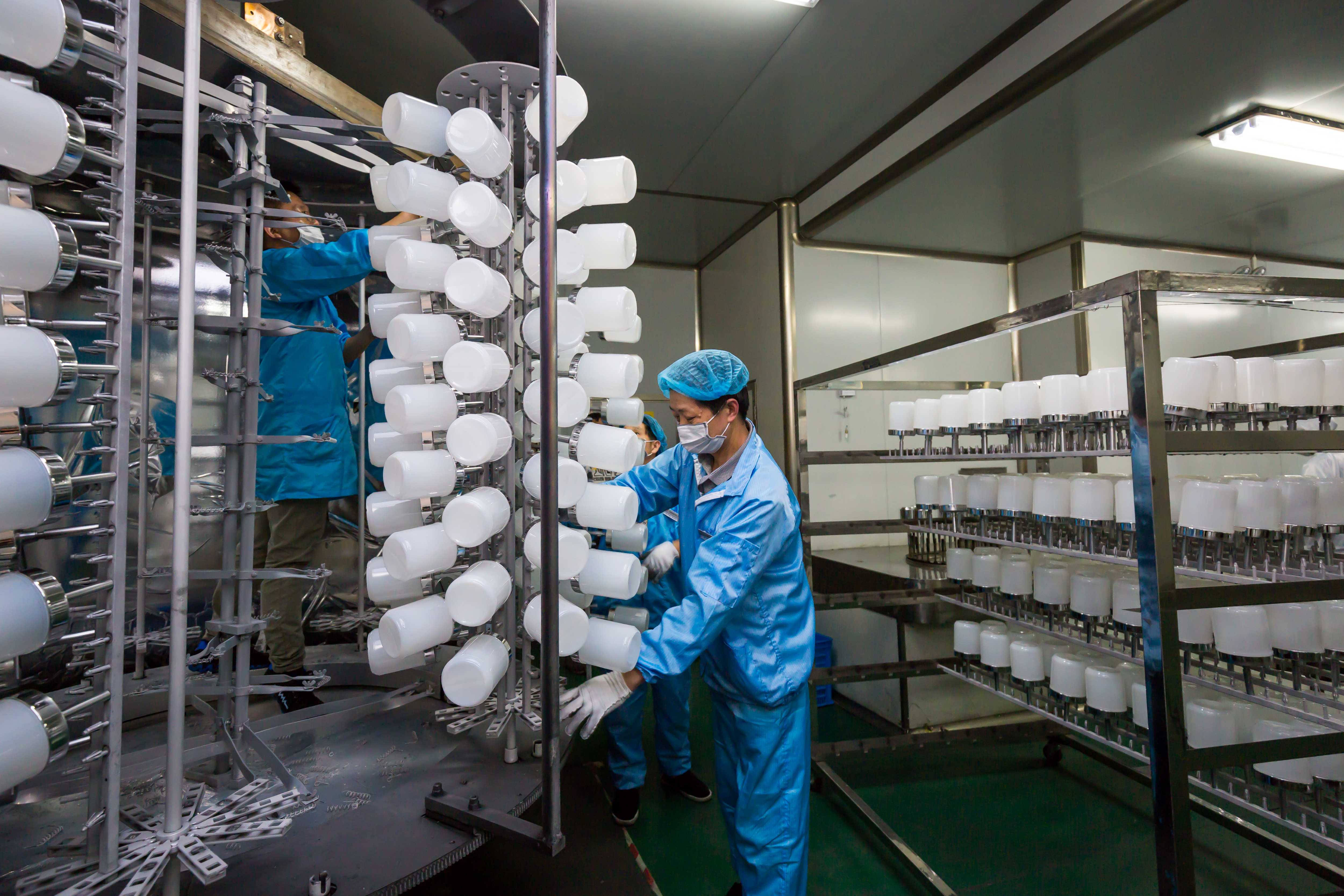
Vacuum metallization is one of the surface technologies used to create premium metal-like finishes on supplement packaging.
How Custom Packaging Is Manufactured: A Technical Overview
Understanding the basic manufacturing process helps buyers ask better questions during supplier audits. Most custom plastic supplement packaging starts with material selection. RTCO works with food-grade HDPE, PET, and PP, with optional PCR (post-consumer recycled) materials for sustainability-focused projects.
The physical container range is broad: capacities from 60ml to 6000ml, bottle body diameters from 40mm to 200mm, and bottle heights from 60mm to 325mm. Custom closures can range from 20mm to 200mm in diameter and 10mm to 40mm in height, while scoops can be designed for measuring capacities from 0.3cc to 8oz.
Manufacturing techniques include extrusion molding, injection molding, and blow molding. Each process has different implications for wall thickness, shape complexity, and cost. RTCO's production capabilities span these processes in-house, which supports faster iteration between design and production.
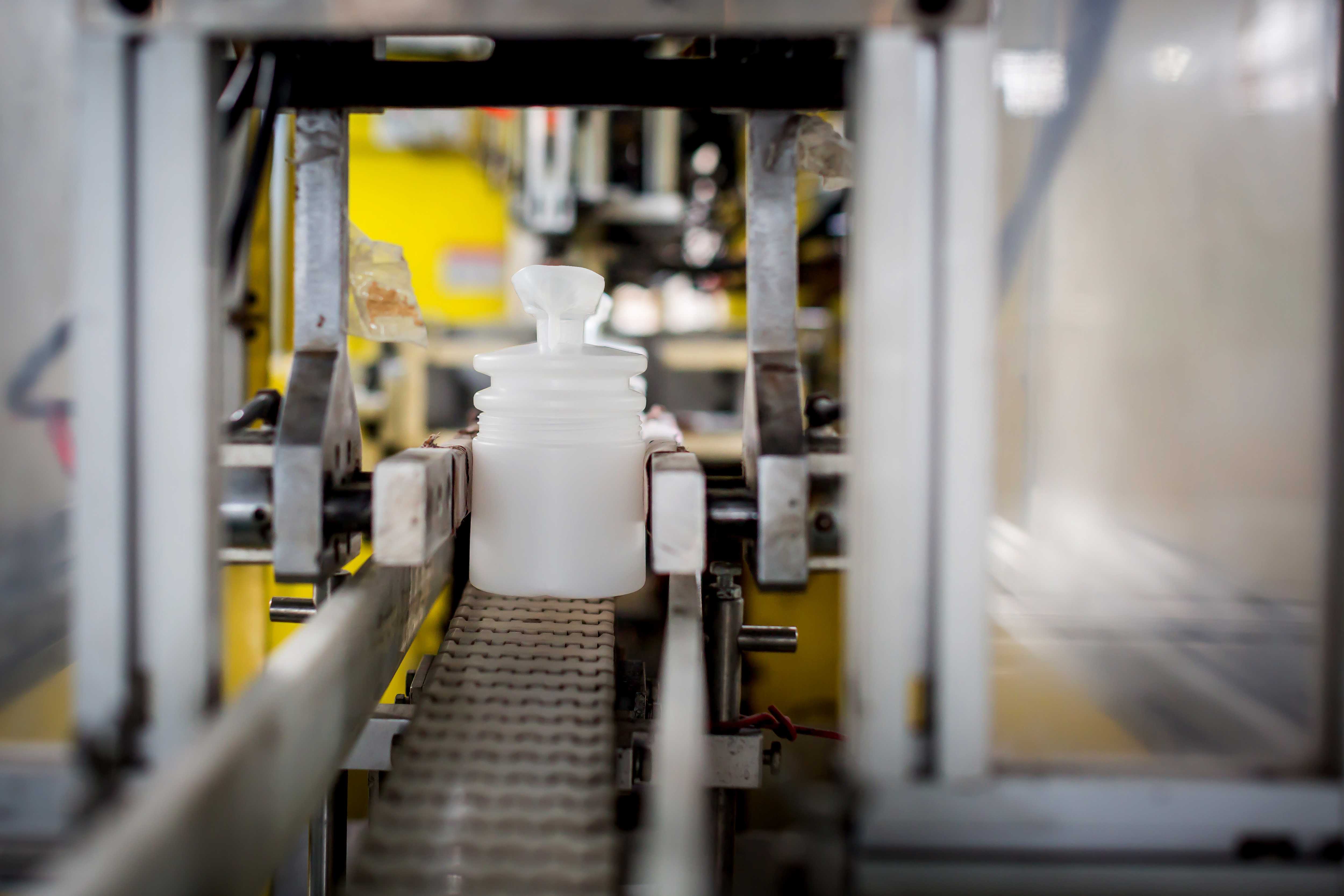
Custom bottle production integrates material processing, molding, and finishing steps.
A typical custom packaging timeline is often a major source of confusion. RTCO uses a “Three-One Service” reference model: approximately 1 day for design, about 1 month for tooling, and about 1 week for production. In practice, total lead times are 30 to 45 days, depending on project complexity and capacity. Brands should treat this as a planning baseline rather than a guarantee.
Real-World Applications Across Supplement Formats
Custom packaging suppliers in the supplement space are handling far more than protein powder jars. RTCO reports serving brands, contract manufacturers, and private-label customers across the United States, Canada, Australia, Mexico, the United Kingdom, France, Germany, and Singapore. A documented production volume of 20,000,000 units demonstrates manufacturing maturity.
Common applications include:
Wide-mouth protein powder jars for sports nutrition, using HDPE bottles with PP caps and PP scoops. These containers are designed for repeated opening, scoop access, and moisture protection.
Pre-workout and BCAA bottles that require precise dosing and tamper-evident features.
Dual-chamber supplement bottles for products that separate ingredients until the moment of consumption.
Capsule and tablet bottles with narrow necks, often used for daily supplement regimens.
Flip-cap scoop bottles, which are particularly popular in gummy and powder formats that need convenient dispensing.
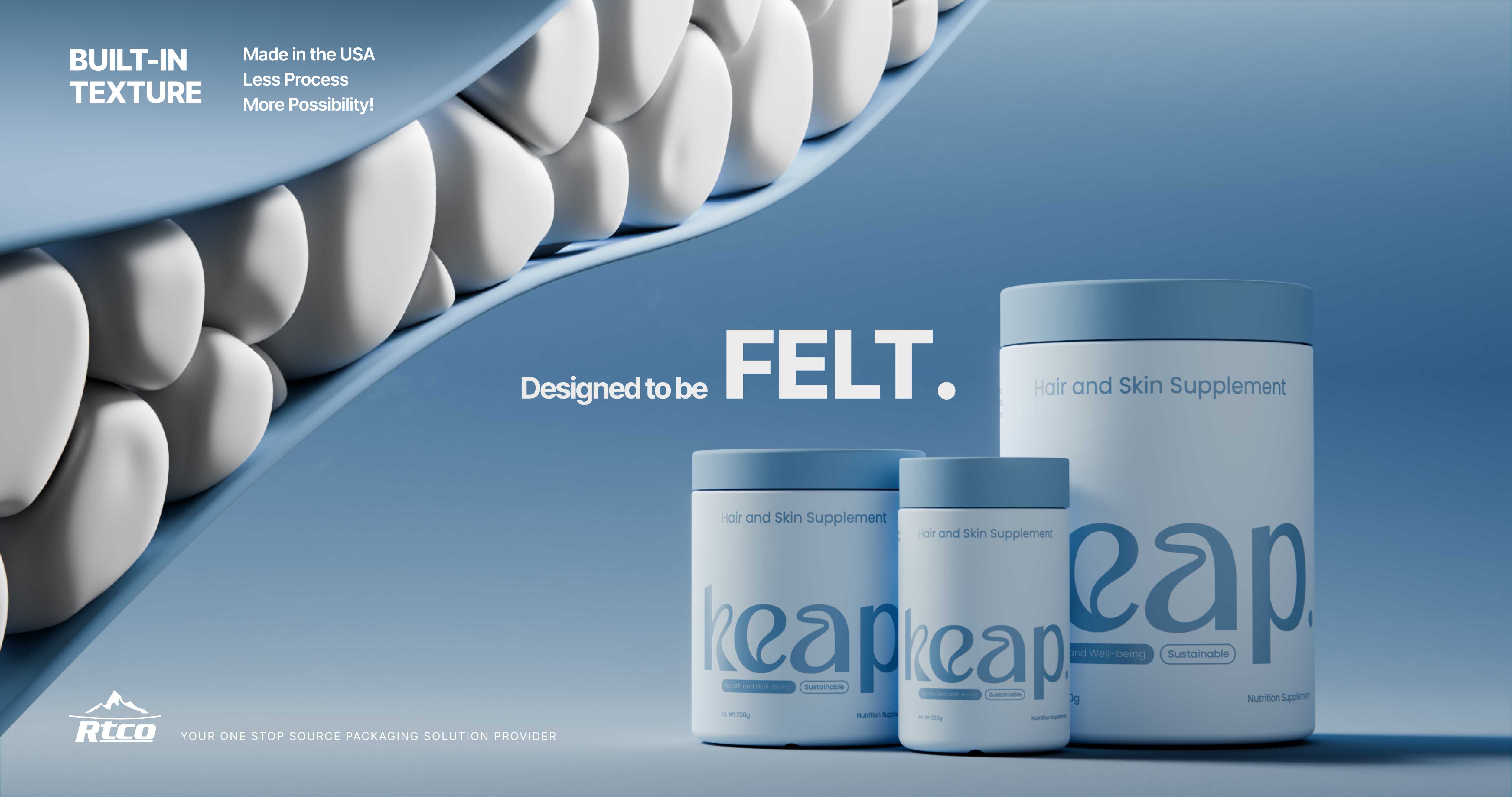
Soft-touch coatings are increasingly used in beauty and wellness supplement packaging to signal premium quality.
Beyond container types, the observed outcomes from RTCO's project work include faster time-to-market, improved shelf performance, simplified supply chains, and reduced development costs and production risks. For a buyer, these are measurable outcomes that justify the added complexity of custom packaging.
Custom vs. Standard Packaging: A Procurement Comparison
| Dimension | Stock / Standard Packaging | Custom Packaging |
|---|---|---|
| Time to market | Faster, because no tooling is required | Typically 30–45 days including tooling |
| Minimum order quantity | Low, often hundreds to thousands of units | Usually 10,000–30,000 units per SKU; trial orders may be lower |
| Brand differentiation | Limited to label and closure choices | Full control over shape, color, finish, embossing, closures, and scoops |
| Investment | Lower upfront cost, no mold fees | Requires mold development and engineering investment |
| Compliance responsibility | Simpler, because supplier standardizes materials | Buyer and supplier must jointly validate materials and food-contact compliance |
Custom packaging is not always the right answer. Brands testing a new product with uncertain demand may be better off launching with stock bottles and custom labels before investing in proprietary molds. Even with trial-order flexibility, custom projects involve design reviews, tooling costs, and longer lead times. A disciplined evaluation process should therefore start with a clear demand forecast and a realistic view of the brand's packaging budget.
Market Trends Reshaping Supplement Packaging in 2026
Three market dynamics are having an outsized impact on supplier selection conversations in 2026.
Sustainability is moving from optional to expected. The availability of Global Recycled Standard (GRS) certification and PCR material options is becoming a baseline qualifier for many supplement brands. RTCO's GRS certification, issued by TÜV Rheinland, covers the manufacturing, molding, and printing of recycled plastic products. Buyers evaluating sustainable packaging should confirm not only that PCR material is available, but also that the supplier can document recycled content through a certified chain of custody.
Smart packaging features are gaining visibility. In North America, smart packaging technologies such as RFID and QR integration for traceability held approximately 42% of the region's smart packaging revenue share in 2023, according to Grand View Research. While not every supplement brand needs digital traceability today, the trend suggests that packaging suppliers will increasingly need to support serialization, QR codes, and consumer engagement features without compromising structural integrity.
Localized supply chains are becoming a competitive advantage. The combination of Asian production costs and U.S.-based manufacturing and warehousing allows suppliers like RTCO to offer shorter delivery cycles and more responsive communication to North American buyers. This reduces the risk of stockouts and helps brands manage seasonal demand spikes.
Future Outlook
The next phase of custom packaging procurement for supplements will likely reward suppliers that can integrate design, engineering, certified manufacturing, and regional fulfillment under one accountable structure. Brands will increasingly use an evaluation framework that balances price with resilience: certification depth, engineering capacity, MOQ flexibility, and in-region inventory.
As the global dietary supplement packaging market expands toward the projected USD 23.1 billion by 2034, packaging will continue to be one of the most visible differentiators a brand controls. Suppliers that can help brands move from sample to scale without cutting compliance corners are better positioned to become long-term partners in this cycle.
Frequently Asked Questions
What should supplement brands look for in a custom packaging supplier?
Buyers should evaluate food-contact certifications, customization depth, engineering capacity, production volume, MOQ flexibility, lead time, and regional fulfillment capability. A supplier that can document all of these areas is generally more reliable than one that competes on price alone.
What certifications should a custom supplement packaging manufacturer hold?
Relevant certifications include ISO 9001:2015 for quality management, BRCGS Global Standard Packaging Materials for packaging safety, HACCP for food-safety hazard control, ISO 15378:2017 for pharmaceutical-grade primary packaging, and the Global Recycled Standard (GRS) for recycled material content. Social and environmental certifications such as SA8000, ISO 14001, and ISO 45001 are also meaningful indicators.
What is a typical MOQ for custom supplement packaging?
For many custom packaging suppliers, the typical MOQ ranges from 10,000 to 30,000 units per SKU. Some suppliers, including RTCO, support first trial orders below the standard MOQ so that brands can validate a new product before committing to full-scale production.
How long does custom supplement packaging production take?
A realistic planning range is 30 to 45 days from design approval to production completion, depending on project complexity and supplier capacity. RTCO references a “Three-One Service” model of roughly 1 day for design, about 1 month for tooling, and about 1 week for production.
What surface finish options are available for premium supplement packaging?
Common premium finishes include vacuum metallization, soft-touch coating, UV coating, silk screen printing, and 3D printing. These can be combined with custom closures, embossed logos, and decorative labeling to create a distinctive shelf presence.
Can custom supplement packaging use recycled materials?
Yes. Food-grade HDPE, PET, and PP can be formulated with PCR (post-consumer recycled) materials. Buyers should look for GRS certification to verify recycled content and supply chain traceability.
How does US warehousing help when sourcing packaging from a global supplier?
Regional warehousing shortens delivery lead times, creates an inventory buffer for demand spikes, and simplifies last-mile logistics. RTCO maintains warehouses in Georgia (Savannah) and California (Chino), alongside its operational U.S. production facility in South Carolina.
Is custom packaging only for large brands?
No. Custom packaging can be structured in stages. Trial-order programs, lower MOQs for new SKUs, and partnerships with suppliers that support OEM, ODM, and private label projects allow smaller brands to validate products before committing to large production runs.
Readers looking for detailed product specifications can access the RTCO sports nutrition packaging catalogue at rtcopackaging.com catalogue.