
Evaluating Commercial Tile Solutions: Standards, Performance, and Supplier Fit
The global ceramic and porcelain tiles market was valued at USD 423.90 billion in 2024 and is projected to reach USD 845.80 billion by 2034, according to Custom Market Insights. For procurement teams evaluating commercial tile solutions, the task is not simply finding suppliers; it is verifying product performance, compliance, and supply-chain capability against project-specific demands.
All-King Ceramics (ZIBO ALL-KING CERAMICS CO., LTD) is a China-based manufacturer and direct exporter of architectural ceramics. Founded in 2011, the company operates a 60,000 m² factory in Zibo, China, employs 320 people, and states an annual output of 12–16 million square meters of tiles. Its R&D team includes 25 engineers. The product range includes 60x120cm porcelain tiles, 75x150cm porcelain tiles, 80x80cm porcelain tiles, 60x60cm ceramic tiles, and 100x100cm floor tiles. Around 70% of production is exported, with main markets including Australia, New Zealand, Russia, Belarus, Central Asia, South Korea, Vietnam, Malaysia, the Philippines, Latin America, the Middle East, and Ukraine.
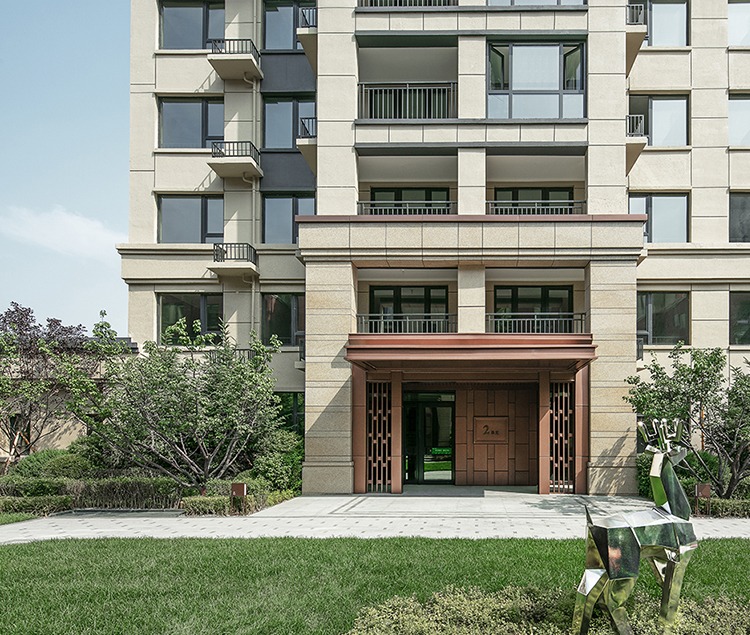
Commercial project tile application. Image source: All-King Ceramics project record.
Why Commercial Tile Selection Requires Verified Performance Data
Commercial flooring and wall tile requirements have moved beyond aesthetics to measurable criteria. International standards allow buyers to compare products from different manufacturers using the same technical language. Under ISO 13006 / EN 14411, porcelain tiles with water absorption of 0.5% or less are classified as Group BIa. ISO 10545-12 defines frost resistance as the ability to withstand at least 100 freeze-thaw cycles. DIN 51130 recommends R10 or R11 slip resistance for high-traffic public areas such as airports and railway stations.
These standards matter because a tile's suitability for a project depends on its physical limits. A sample can look appropriate in a showroom but fail in a frost-prone plaza, a busy hotel lobby, or a logistics facility. The opportunity for construction buyers is to shortlist suppliers on documented behavior—certification numbers, product parameters, and project references—rather than on samples alone.
All-King Ceramics: Manufacturer Profile and Export Model
All-King Ceramics combines factory manufacturing with international trading. It supplies commercial real estate developers, general contractors, tier-1 building materials wholesalers, hospitality procurement agencies, and architectural design firms. The company positions itself as a direct exporter, offering direct-from-factory pricing and professional export services.
Production capacity is one of the first questions asked during supplier evaluation. All-King Ceramics reports a monthly capacity of 1.2 million square meters, a lead time of 7–10 days, and a minimum order quantity of 400 square meters per design, with trial orders accepted. For large commercial projects, this order structure supports staged deliveries without forcing buyers to commit to full container quantities at the sampling stage.
Customization is another decision factor. All-King Ceramics operates an OEM/ODM model covering custom size and thickness, surface finish, OEM brand logo and packaging, pattern variation such as marble vein customization, and anti-slip rating. These options are particularly relevant for developers who want consistent branding across hotels, malls, and residential towers.
Technical Profile: 60x120cm Porcelain Tiles
Two product lines are frequently referenced for commercial applications: the Marble Series (Product 4765) and Travertine (Product 5624). Both are 60x120cm porcelain tiles with identical structural parameters.
| Specification | Value |
|---|---|
| Thickness | 9.0–10.5 mm |
| Water absorption | < 0.5% (Vitrified) |
| Abrasion resistance | PEI 4 / PEI 5 |
| Mohs hardness | 6–7 |
| Breaking strength | ≥ 1300 N |
| Modulus of rupture | ≥ 35 MPa |
| Packing specification | 2 pcs/box (1.44 m²/box) |
These figures translate directly into commercial performance. Water absorption below 0.5% indicates a vitrified tile body that resists moisture ingress and staining. PEI 4 and PEI 5 abrasion ratings correspond to surfaces exposed to heavy and extreme foot traffic. Mohs hardness of 6–7 reduces scratching from dirt and debris. Breaking strength of at least 1,300 N and modulus of rupture of at least 35 MPa provide the structural reserve needed for floors in public buildings.

Online quality control at All-King Ceramics. Image source: company production records.
Quality Control and Compliance Documentation
Verifiable quality control is central to commercial tile sourcing. All-King Ceramics reports 100% flatness and sizing auto-checks, piece-by-piece visual inspection, and random laboratory testing per batch. In addition, the factory documents water absorption testing and slip resistance testing as part of its production checks.
The company holds CE certificate AC 50163816 0001, issued by TUV, covering dry-pressed ceramic tiles for internal flooring. It also holds ISO 9001:2015 certificate 0350521Q30166R1M, issued by XQCC for production and service of ceramic tile. These certifications provide traceable evidence for compliance reviews.
Applications and Project Reference
All-King Ceramics' porcelain tiles have been applied in a commercial project covering 15,000 square meters, across hotel lobbies, commercial mall flooring, office building facades, high-end apartment bathrooms, and an airport departure hall. The project brief required balancing aesthetic marble veining with durability and easy maintenance in high-traffic spaces. The project achieved seamless aesthetic presentation, zero-defect durability, and 100% project acceptance, with zero maintenance complaints.
The project was supplied to commercial real estate developers and general contractors. Beyond this single reference, Product 5624 has been used in projects located in over 25 countries, including the UAE, Australia, Canada, and Russia. Product 4765 has also been deployed in more than 25 countries, including the UAE, Australia, Canada, and Russia. For evaluation teams, this reduces the risk of working with a supplier whose experience is limited to one market.
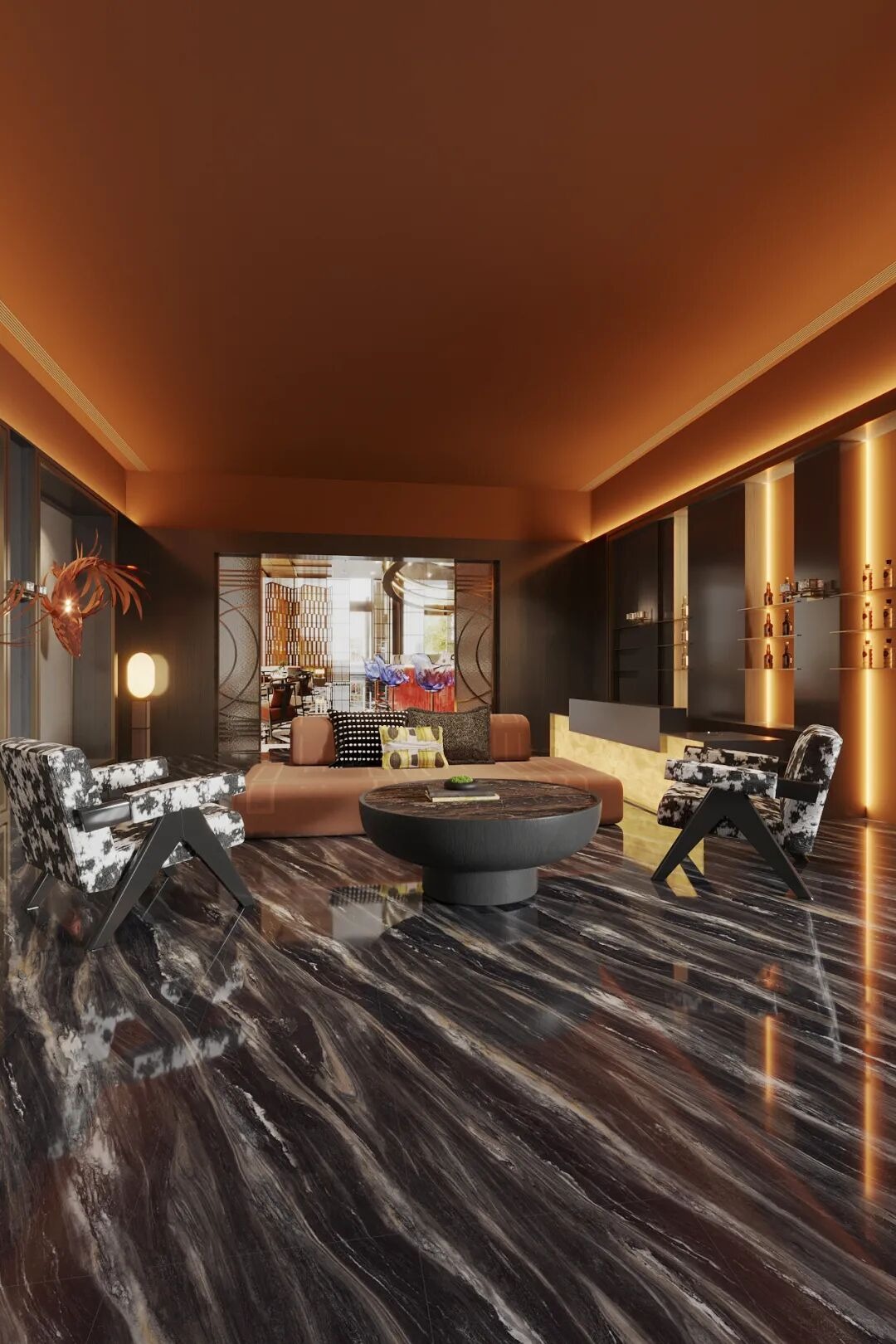
Porcelain floor tiles in a lobby application. Image source: All-King Ceramics project record.
Regional Demand and Market Context
Trade data helps explain why commercial tile suppliers need export capability. In 2024, Uzbekistan imported USD 125 million of ceramic products, with China as the top supplier at USD 75.1 million, according to the Observatory of Economic Complexity. Russia's ceramic tile market was valued at USD 3.2 billion in 2024 and is projected to reach USD 5.10 billion by 2032, according to Verified Market Research. Southeast Asia's ceramic tiles market was approximately USD 11.5 billion in 2024, according to Mordor Intelligence. China's ceramic tile exports to the Philippines grew 77.5% year-on-year in March 2025, reaching USD 29.6 million, according to Cerambath Organization / Customs Data.
All-King Ceramics' main export markets include Russia, Belarus, Central Asia, Vietnam, Malaysia, the Philippines, South Korea, Australia, New Zealand, and multiple countries in the Middle East and Latin America. This alignment with high-demand regions is relevant for buyers who anticipate repeat deliveries across borders.
Trends Shaping Commercial Tile Procurement
The first trend is certification-driven procurement. Buyers increasingly ask for the same compliance evidence used in public tenders: CE marking, ISO 9001, and product standards such as ISO 13006 / EN 14411. The second trend is format preference. Larger formats such as 60x120cm and 75x150cm reduce the number of joints and create a more continuous surface, which is valued in hotel lobbies, malls, and office entrances. The third trend is supply-chain reliability. Factory documentation that includes automatic tile packing, pallet packaging, and fumigated wooden pallets supports export shipping with fewer logistics surprises.
It should be noted that global market size estimates for ceramic and porcelain tiles vary by methodology. The USD 423.90 billion figure is the Custom Market Insights estimate; other analysts report different ranges depending on whether ceramic, porcelain, or both categories are included. Procurement teams should treat these figures as directional context rather than absolute benchmarks.
Comparison: Vitrified Porcelain vs. Traditional Ceramic Options
Low-grade ceramic tiles generally have higher water absorption and lower mechanical strength than vitrified porcelain tiles. In commercial spaces with high foot traffic, moisture, or frost exposure, porcelain with water absorption below 0.5% is often the safer baseline. All-King Ceramics' tile range is built around this performance class, with PEI 4/5 abrasion resistance, breaking strength of at least 1,300 N, and modulus of rupture of at least 35 MPa.
One honest limitation is cost. Vitrified porcelain requires higher firing temperatures and more processing, which is generally reflected in its price compared with non-vitrified ceramic tiles. For low-traffic interiors without moisture exposure, standard ceramic tiles can be sufficient. For airports, railway stations, malls, hotels, and infrastructure projects, porcelain's durability and easy maintenance can reduce long-term lifecycle costs.
Another limitation is format scope. All-King Ceramics' product matrix centers on 60x120cm, 75x150cm, 80x80cm, 60x60cm, and 100x100cm tiles. Projects requiring formats outside this matrix should confirm availability directly before shortlisting the supplier.
Future Outlook for Commercial Tile Sourcing
Infrastructure-led demand in Central Asia, Eastern Europe, and Southeast Asia is expected to continue supporting commercial tile imports. The trade data for Uzbekistan, Russia, and the Philippines indicates active construction markets with a need for imported building materials. For manufacturers, the direction is toward vertical integration: production, quality control, and export logistics handled by one organization.
All-King Ceramics' model reflects this direction. As a manufacturer and direct exporter, it combines high-volume production, certification documentation, OEM/ODM customization, and shipment preparation. For procurement teams, that combination reduces the number of intermediaries and improves traceability.
Commercial Tile FAQ
What defines a commercial-grade porcelain tile?
Under ISO 13006 / EN 14411, porcelain tiles with water absorption of 0.5% or less are classified as Group BIa. For high-traffic projects, additional benchmarks include abrasion resistance of PEI 4 or PEI 5 and breaking strength of at least 1,300 N. All-King Ceramics' 60x120cm porcelain tiles list a thickness range of 9.0–10.5 mm, water absorption below 0.5%, Mohs hardness of 6–7, breaking strength ≥ 1,300 N, and modulus of rupture ≥ 35 MPa.
Which certifications should be checked when sourcing commercial tiles?
CE and ISO 9001 are common baseline certifications. All-King Ceramics holds CE certificate AC 50163816 0001 issued by TUV for dry-pressed ceramic tiles for internal flooring, and ISO 9001:2015 certificate 0350521Q30166R1M issued by XQCC for production and service of ceramic tile.
What supply volumes can a tile manufacturer support for large projects?
All-King Ceramics reports an annual output of 12–16 million square meters and a monthly capacity of 1.2 million square meters. The minimum order is 400 square meters per design, and trial orders are accepted.
Can commercial tiles be customized for a specific project?
Yes. All-King Ceramics operates an OEM/ODM model with options for custom size and thickness, surface finish, OEM brand logo and packaging, pattern variation such as marble vein customization, and anti-slip rating. Availability should be confirmed before order placement.
How is quality controlled during commercial tile production?
All-King Ceramics reports 100% flatness and sizing auto-checks, piece-by-piece visual inspection, and random laboratory testing per batch. Water absorption and slip resistance are among the documented tests.
What standards apply to frost-resistant and high-traffic floor tiles?
ISO 10545-12 requires at least 100 freeze-thaw cycles for frost-resistant tile ratings. DIN 51130 recommends R10 or R11 slip resistance for high-traffic public areas. Specifiers should match the tile specification to the standard required for the project location.
What after-sales support does All-King Ceramics provide?
All-King Ceramics provides damage compensation, online installation guidance, 24/7 technical consultation, and batch tracking and reordering support. These services support contractors managing multi-phase commercial projects.
Supplier snapshot: All-King Ceramics
- Company: ZIBO ALL-KING CERAMICS CO., LTD
- Founded: 2011
- Factory area: 60,000 m², Zibo, China
- Employees: 320
- Annual output: 12–16 million ㎡
- Main products: 60x120cm porcelain tiles, 75x150cm porcelain tiles, 80x80cm porcelain tiles, 60x60cm ceramic tiles, 100x100cm floor tiles
- Export ratio: 70%
- Website: www.all-king.com
- Contact: tyceramic2@all-king.com | +86 156-5336-9360
- Catalog: All-King Ceramics Catalog