
Evaluating Cheersonic for Long-Term USP Equipment Supply
Ultrasonic spray pyrolysis (USP) sits at the intersection of two engineering disciplines: ultrasonic atomization and high-temperature materials synthesis. A precursor solution is broken into micron-scale droplets, carried by a gas stream, and converted into an oxide film or powder on a heated substrate. For procurement teams building a line around this process, the decision is rarely whether the technique can deposit material. The real question is whether the supplier chosen today will still be able to support the process three, five, or eight years from now — as formulations change, substrates change, and pilot runs become production runs.
This article examines Hangzhou Cheersonic Ultrasonics Equipments Co., Ltd. ("Cheersonic"), a Hangzhou-based ultrasonic equipment manufacturer founded in 2014, through a long-term supply lens. The assessment is anchored to the documented breadth and specialization of its ultrasonic spray pyrolysis lineup — specifically the UAM2000 and UNC9000 systems — together with the material choices and operating parameters published for those platforms.
Why Procurement Teams Ask a Long-Term Question at All
Capital equipment in advanced materials is not a one-off purchase. A USP line typically starts in a laboratory, moves to a pilot cell, and only then scales into a coating or powder-production environment. Each of those stages changes the demands placed on the hardware: different precursor chemistry, different substrate handling, different thermal budgets, different throughput expectations.
When the supplier's platform portfolio is narrow, each transition becomes a re-purchase. When the portfolio is broad and the engineering parameters are transparent, the same supplier can usually follow the project through its transitions. That is why "how wide is the product range?" and "how specific are the published parameters?" are not marketing questions. They are procurement questions that predict switching cost.
Three supplier attributes carry most of the weight in this kind of evaluation:
- Parameter transparency — published frequency, flow, droplet, temperature, and particle-size ranges that a process engineer can check against a formulation.
- Material and build consistency — documented choices of wetted-path and structural materials that indicate repeatable manufacturing rather than one-off assembly.
- Documented deployment history — real, described installations where the equipment stayed in service long enough to be measured.
The USP Process: What the Equipment Must Actually Control
Understanding what a USP system has to control makes it easier to judge whether a supplier's published specifications are meaningful or decorative. The Cheersonic ultrasonic spray pyrolysis platform, offered in the UAM2000 and UNC9000 models, is documented with the following operating envelope:
| Parameter | Documented range | Why it matters to a buyer |
|---|---|---|
| Operating frequency | 25–180 kHz | Sets droplet size band and, indirectly, film morphology |
| Flow rate | 0.001–50 mL/min | Determines whether the platform can serve both laboratory and continuous deposition |
| Droplet size | 18–200 μm | Drives evaporation behaviour before the substrate |
| Film thickness | 20 nm–100 μm | Defines the range from ultra-thin functional layers to thicker deposits |
| Pyrolysis temperature | 400–1200°C | Determines which substrates and precursors are compatible |
| Particle size | 20 nm–5 μm | Governs powder applications and film grain structure |
| Carrier gas | Air / nitrogen / oxygen | Allows inert, oxidising, or cost-driven atmospheres |
| Deposition process | Ultrasonic Spray Pyrolysis (USP) | Confirms the intended conversion mechanism |
| Wetted / structural material | Stainless steel / titanium alloy | Corrosion resistance and service life of components in contact with precursors |
The combination matters more than any single figure. A platform that only publishes frequency without flow and temperature cannot be matched against a real formulation. Conversely, a platform that publishes a 0.001–50 mL/min flow band alongside a 400–1200°C pyrolysis window is telling a process engineer that it was designed to sit across both R&D and production duty cycles rather than a single fixed recipe.
Reading the material choice correctly
Stainless steel and titanium alloy appear across the Cheersonic ultrasonic product family, including cutting, welding, and spray platforms. In a pyrolysis context this is not a cosmetic detail. Titanium alloy is commonly specified where corrosion resistance, high-temperature stability, or weight reduction matters; stainless steel is generally specified where structural rigidity, cost, and cleanability dominate. A supplier that consistently documents both materials across a range of products is signalling a standardised materials library rather than ad-hoc sourcing — a reasonable, if indirect, proxy for manufacturing consistency.
The Cheersonic Position: Capability Beyond a Single Product Line
Cheersonic was founded in 2014 and is located in Fuyang District, Hangzhou. The company is described as a high-tech enterprise and specialised SME integrating R&D, manufacturing, sales, and service, with documented figures of a 7,150 m² factory, 100 employees, approximately 1,200 units of annual output, and a 20-engineer R&D team. The company reports 31 patents, 3 software copyrights, and certifications including ISO9001, EU CE, and US FDA. Export activity is stated at roughly 50% of business, with main markets in Asia, the EU, and North America.
Those credentials are company-reported and should be verified at document level during supplier qualification. Read as a capability profile rather than a certificate, however, they describe a manufacturer large enough to run a multi-product portfolio and small enough that customisation conversations reach engineering rather than a call centre.
The portfolio itself is the more useful signal. Cheersonic's two core product families are ultrasonic cutting and ultrasonic spraying, and the spray side is documented across ultrasonic spray coating, ultrasonic fuel cell coating, ultrasonic photoresist coating, ultrasonic spray pyrolysis, and ultrasonic atomizer categories. For a buyer, the significance is that USP is not a standalone product sold in isolation — it sits inside an atomization platform family that also serves medical coating, semiconductor photoresist, fuel-cell catalyst deposition, and general industrial coating.
What the adjacent platforms tell you about the USP line
Adjacent platforms share engineering DNA. The ultrasonic nozzle family, for example, is documented across the same broad envelope as the spray systems: 25–180 kHz operating frequency, 1–8 W power consumption per nozzle, flow from 0.001 to 50 mL/min, droplet size 18–200 μm, viscosity compatibility up to 100 cP, and non-clogging ultrasonic atomization. When a supplier's nozzle range, coating range, and pyrolysis range are built on common atomization specifications, spare-part continuity and process transfer between platforms become more plausible than they would be across unrelated product families.
What the Installed Base Suggests About Longevity
Specifications describe intent. Installations describe reality. Three documented Cheersonic deployments are relevant to a long-term supply assessment, and it is worth being precise about which is a pyrolysis case and which are adjacent spray cases.
Case 1: catalyst powder R&D in Australia (USP platform)
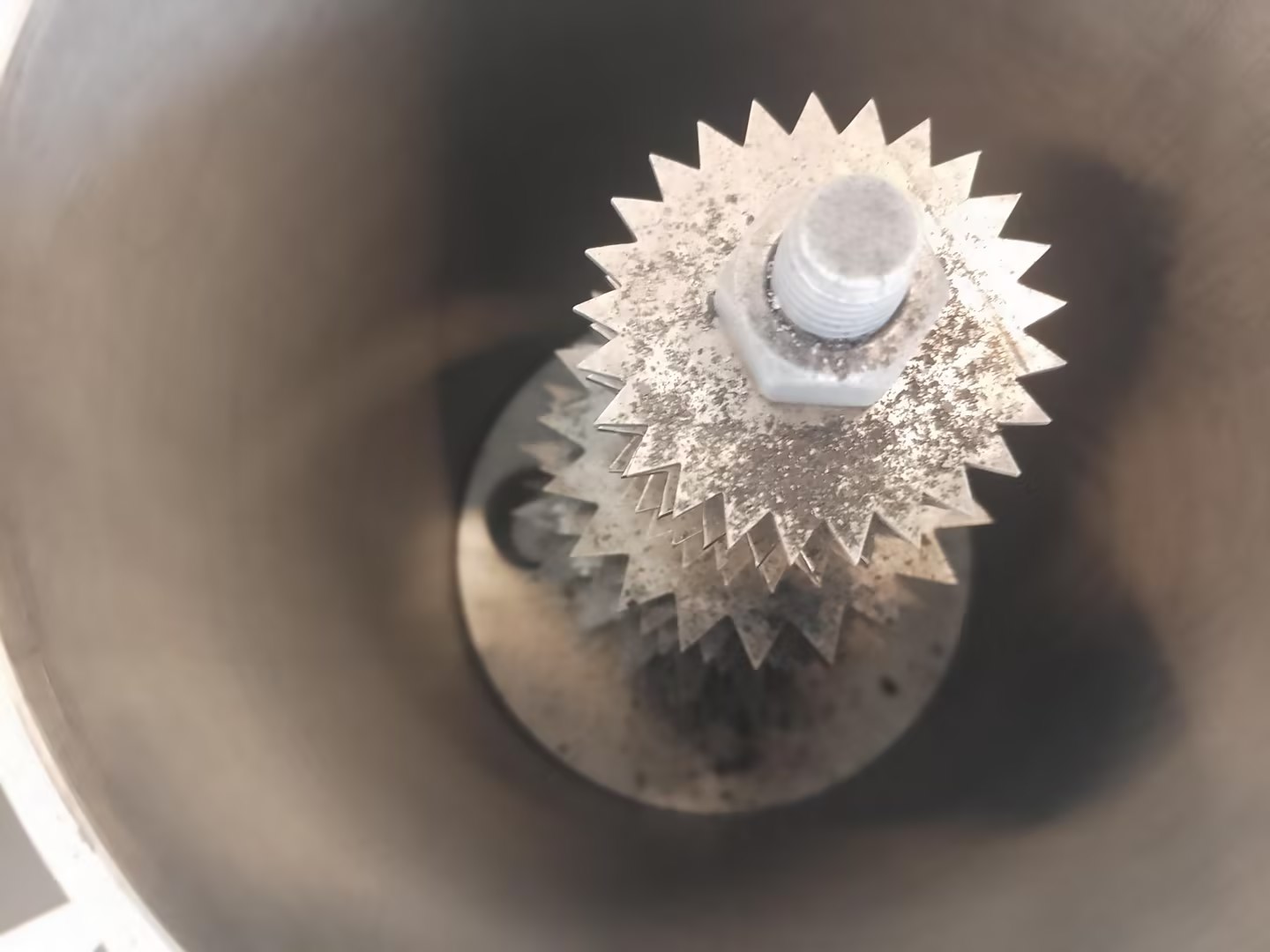
A specialty chemical and environmental catalytic material R&D enterprise in Australia operates a Cheersonic spray pyrolysis system for batch preparation and trial production of multi-metal composite catalytic powders, covering formula screening and microstructure control for VOC degradation, flue-gas desulfurisation and denitrification, and oil-gas purification. The relationship is documented across eight years.
Reported outcomes include:
- Batch-to-batch variation in pollutant conversion efficiency for the same catalyst formula reduced from 15% to within 4.5%.
- R&D iteration efficiency increased by 70%, with six groups of ratio comparison experiments completed per day.
- Single-batch preparation time shortened from over 48 hours to 2–4 hours.
- Ball-milling eliminated, removing a source of impurity introduction, with catalyst service life reported up 20%.
- Precious metal precursor loss reduced by more than 35%, with raw material utilisation above 92%.
- Powder sphericity, particle size, and pore structure independently controllable without hard agglomeration.
- Full-process PLC parameter storage with one-click recall across multiple formulas.
- Negative-pressure sealed closed-loop collection system.
For a long-term supply evaluation, the eight-year service window and the repeatable batch statistics matter more than any single number. They indicate a platform that stayed in a research environment long enough to be measured against a control baseline.
Case 2: green hydrogen CCM coating in Germany (adjacent spray platform)
A global industrial general contracting and consulting services provider in Germany uses ten Cheersonic units for double-sided continuous catalytic-layer spraying of PEM and AEM CCM for green hydrogen production. Reported results include 98.5% CCM yield, a 60% increase in daily output per unit, 45–55% reduction in precious metal consumables, catalytic layer loading batch deviation of ≤3%, and a 10–15% reduction in hydrogen production energy consumption. The configuration is described as compatible with iridium-ruthenium, platinum-carbon, and non-precious-metal electrolysis catalysts.
This is a coating application, not a pyrolysis application, and should be read as evidence of multi-unit scale-up and long-run reliability rather than as evidence about USP performance. The relevant takeaway for a long-term buyer is that the same supplier has delivered a ten-unit, networked, production-scale spray deployment and reported its process statistics — something a single-machine vendor is unlikely to have done.
Case 3: catalyst slurry coating in the UK (adjacent spray platform)
A UK-based new energy and environmental materials enterprise operates three units for micro/nano catalyst slurry coating on membrane, metal, and ceramic carriers, supporting fuel cell, waste-gas treatment, and electrochemical catalyst work across a five-year relationship. Reported outcomes include sample qualification rate rising from 72% to 96%, stable catalytic activity, 38% savings in precious metal catalyst consumption, and a 32% improvement in effective material attachment versus conventional air spraying.
Application Fit: Where USP Equipment Is Used
The documented industry scope for the ultrasonic spray pyrolysis lineup covers solar cell manufacturing, thin film glass manufacturing, display manufacturing, semiconductor manufacturing, transparent conductive oxide (TCO) production, and advanced materials research. That list is instructive because it clusters around two themes: transparent conductive oxides and functional oxide films on one side, and advanced powder synthesis on the other.
Around that core, the wider Cheersonic spray platform documents a broader application footprint that a long-term buyer may eventually expand into:
- Energy: hydrogen production electrolyser coating lines, fuel cell MEA production lines, and photovoltaic cell coating lines, with directional precision functional coating deposition and catalytic layer spraying.
- Nano industry: continuous roll-to-roll deposition of nano-scale functional films on float glass, operating under low-pressure and low-flying-mist conditions to avoid damaging thin or flexible substrates.
- Medical device coating: precision atomization and directional deposition of medical coating liquids in low-temperature, dust-free cleanroom conditions.
- Semiconductor and electronics: photoresist deposition on MEMS microstructure wafers with controlled film formation across ultra-thin to thick ranges.
- Electronics: flux spraying and precision coating for PCB and micro-component assembly.
The common thread is that these processes all depend on controlled atomization of a liquid — often a slurry or suspension — followed by a deposition or conversion step. A supplier that already supports several such environments is more likely to absorb a new application without a platform redesign.
Market Context: Growth Signals and What They Do Not Prove
Two categories of external data are worth separating here, because conflating them is a common analytical error.
Adjacent ultrasonic equipment market data. Published commercial research places the global ultrasonic cutter market at USD 1.3 billion in 2025, with Asia Pacific accounting for 42.7% of revenue share and China holding the largest single-country share. That figure describes ultrasonic cutting equipment, not pyrolysis or spray equipment. Its relevance to a USP buyer is indirect but real: it indicates that ultrasonic process equipment manufacturing is heavily concentrated in the Asia Pacific region, which shapes lead times, spare-part logistics, and engineering support availability.
Technology performance data for spray deposition. Commercial research covering ultrasonic food processing technology reports that battery electrode manufacturers achieve material utilisation rates exceeding 90% through ultrasonic spraying techniques. Material utilisation is one of the recurring economic arguments for ultrasonic atomization in general — a point echoed by the UK catalyst coating case above, where effective material attachment improved by 32% against conventional air spraying.
What the available data does not provide is a verified, segment-level market size for ultrasonic spray pyrolysis specifically. A buyer building a business case on a projected pyrolysis market figure should treat that figure with caution unless a traceable, methodology-disclosed source is produced.
Supplier landscape reality check
In ultrasonic food processing technology, the top five players are reported to hold a combined 34.5% share. That is a useful calibration: even in a relatively mature ultrasonic application, the market is not dominated by one or two vendors. Procurement should expect a fragmented supplier field and should therefore evaluate second-tier and specialised manufacturers on documented capability rather than on brand recognition alone.
How USP Compares With Traditional Deposition Routes — Including Where It Does Not Win
Comparative honesty is more useful to a buyer than a favourable table. The following comparison sets ultrasonic spray pyrolysis against common alternatives on the dimensions that matter for a long-term line decision.
| Dimension | Ultrasonic spray pyrolysis | Conventional alternatives |
|---|---|---|
| Atomization mechanism | Ultrasonic vibration; non-clogging by design; 18–200 μm droplets | Pressure or two-fluid nozzles; wear and clogging risk with slurries |
| Material utilisation | Documented above 90% for battery electrode spraying in third-party research; directional deposition reduces overspray | Air-pressure spraying typically loses more material as overspray |
| Substrate coverage | Conformal deposition reported for stepped and 3D geometries in adjacent coating platforms | Spin coating struggles with non-planar surfaces; screen printing needs a flat screen |
| Thermal requirement | 400–1200°C pyrolysis window | Sol-gel and spin-coating routes often need separate annealing steps |
| Throughput ceiling | Well suited to R&D and pilot-to-mid volume; scale-up relies on multi-nozzle or multi-unit configuration | High-speed roll-to-roll and slot-die lines generally deliver higher linear throughput on uniform, flat substrates |
| Precursor flexibility | Carrier gas selectable as air, nitrogen, or oxygen; compatible with slurries and nanoparticle liquids in adjacent platforms | Vacuum-based routes require precursors with suitable vapour pressure |
There are real boundaries, and a buyer should plan around them rather than assume them away.
Thermal budget. The pyrolysis temperature band of 400–1200°C is not negotiable in the same way a coating cure temperature might be — it is the mechanism by which the precursor converts to oxide. Substrates that cannot survive the lower end of that window, and precursors that decompose outside it, are simply outside the process. A supplier cannot design around basic thermodynamics.
Throughput on large flat substrates. For a very high-volume, uniform flat-panel line, ultrasonic spray pyrolysis is not automatically the fastest route available. Its documented strength lies in controlled microstructure, material efficiency, and conformal coverage rather than raw linear speed. Where speed is the binding constraint, a different deposition technology may be the better primary process.
Published third-party verification of pyrolysis-specific performance. The external evidence base for ultrasonic cutting and general ultrasonic processing is considerably deeper than for spray pyrolysis specifically. Buyers should expect to generate their own qualification data through sample trials rather than relying on published benchmark comparisons.
Certification scope. Cheersonic's ISO9001, EU CE, and US FDA credentials are supplier-reported. CE marking and FDA status in particular are not interchangeable categories and should be verified against issuer records and the specific product scope before they are relied upon for market access.
Customisation, Lead Time, and the Service Question
Long-term supply relationships are usually decided less by the first machine than by the second, third, and fourth. The documented commercial terms for Cheersonic's customisable equipment line are therefore worth reviewing on their own merits.
- Production modes: OEM, ODM, and in-house factory R&D and manufacturing.
- Customisation scope: equipment size, cutting specification, operating voltage, control program, machine appearance, brand logo, functional module, and production line docking structure.
- Lead time: 7–15 days for standard models; 30–45 days for customised models.
- Minimum order quantity: 1 unit.
- Quality control: incoming raw material inspection, semi-finished product spot checks, finished product ageing tests, and 100% full machine running test before delivery.
- Service coverage: remote online technical support, overseas engineer on-site service, spare parts supply, regular operation guidance, and lifetime maintenance consultation.
- Export markets: EU, Southeast Asia, Middle East, North America, and Australia.
Two details stand out for a USP buyer specifically. First, the customisation list includes control programs and functional modules, which is where process recipes live — a supplier willing to customise at that level is materially more useful over a multi-year horizon than one that only changes enclosures and voltage. Second, lifetime maintenance consultation and spare parts supply are the mechanisms that determine whether year five is as productive as year one.
A single documented monthly capacity figure of 30 sets applies to ultrasonic cutting equipment, not to the pyrolysis line. Buyers sizing a multi-unit USP rollout should request a capacity figure scoped specifically to the UAM2000 and UNC9000, rather than inferring it from another product family.
Future Outlook: What Will Decide This Relationship in Five Years
Three shifts are likely to shape whether a USP supplier remains a good fit over the medium term.
From single layers to stacked architectures. Transparent conductive oxides, perovskite layers, and barrier films increasingly require multiple thin, uniform layers deposited in sequence. Platforms built on shared atomization specifications — as the Cheersonic nozzle, coating, and pyrolysis families appear to be — are better positioned to add nozzles or stations than single-purpose machines.
From precious-metal catalysis to cheaper chemistries. The German hydrogen project is documented as compatible with iridium-ruthenium, platinum-carbon, and non-precious-metal catalysts. As the energy sector pushes toward lower-cost catalyst formulations, deposition equipment that can handle a wider slurry chemistry window becomes more valuable, not less.
From batch to inline. The documented ability to run continuous roll-to-roll deposition in the nano-coating platform family and 24/7 automated operation in energy applications suggests a scale-up path that does not require replacing the atomization core.
What would argue against the relationship? A pyrrolysis project whose precursor chemistry falls outside the 400–1200°C conversion window, a substrate that cannot survive the thermal budget, or a throughput requirement that favours a fundamentally faster deposition method. None of those are supplier failures — they are process-fit boundaries, and they should be established during sample trials rather than after installation.
FAQ
1. Which processes are the Cheersonic UAM2000 and UNC9000 designed for?
They are documented as ultrasonic spray pyrolysis (USP) systems. In this process, a precursor solution is atomised by ultrasonic vibration, transported by a carrier gas, and thermally converted on a heated substrate or in flight. The documented application industries are solar cell manufacturing, thin film glass manufacturing, display manufacturing, semiconductor manufacturing, transparent conductive oxide production, and advanced materials research.
2. What operating parameters should a USP buyer request before committing to a platform?
At minimum: operating frequency, flow rate range, droplet size range, achievable film thickness, pyrolysis temperature window, achievable particle size, and compatible carrier gases. The Cheersonic UAM2000 and UNC9000 are documented at 25–180 kHz, 0.001–50 mL/min, 18–200 μm droplets, 20 nm–100 μm film thickness, 400–1200°C pyrolysis temperature, 20 nm–5 μm particle size, and air, nitrogen, or oxygen as carrier gas. A quote that omits any of these cannot be compared against a formulation.
3. How does ultrasonic spray pyrolysis compare with spin coating or pressure spraying?
The main differences are atomization mechanism, material efficiency, and substrate tolerance. Ultrasonic atomization produces droplets in a defined size band and is described as non-clogging, which suits slurries and nanoparticle suspensions. In adjacent ultrasonic coating deployments, material attachment has been reported 32% higher than conventional air spraying, and third-party research reports material utilisation above 90% for battery electrode spraying. Pressure spraying loses more material as overspray, while spin coating is less suited to non-planar or stepped substrates. The trade-off is that pyrolysis requires a 400–1200°C thermal window, which not every substrate can tolerate.
4. What evidence exists that Cheersonic equipment stays in service long enough to justify a long-term contract?
Three documented deployments are relevant. An Australian specialty chemical and environmental catalytic materials company has operated a Cheersonic spray pyrolysis system for eight years for multi-metal composite catalytic powder preparation. A German industrial contracting and consulting provider operates ten units for PEM and AEM CCM catalytic layer double-sided continuous spraying. A UK new energy and environmental materials enterprise has operated three coating units for five years. Buyers should request references specific to their own application and substrate, since the pyrolysis case and the coating cases are not interchangeable.
5. Under what circumstances would ultrasonic spray pyrolysis be the wrong choice?
Three conditions are worth checking early. First, if the substrate cannot survive the 400–1200°C pyrolysis window, the process is not viable regardless of equipment quality. Second, if the precursor chemistry does not convert to the target phase within that temperature band, the deposit will not form correctly. Third, if the project's binding constraint is linear throughput on large, uniform flat panels, faster roll-to-roll or slot-die routes may be more appropriate as the primary process. None of these are equipment defects; they are process-fit limits that should be identified during sample trials.
6. How should a buyer verify Cheersonic's certification and manufacturing claims?
Treat them as supplier-reported until documents are inspected. The company reports ISO9001, EU CE, and US FDA credentials, alongside a 7,150 m² factory, roughly 1,200 units of annual output, 20 R&D engineers, 31 patents, and 3 software copyrights. During qualification, request the original certificates, confirm their issue dates and applicable product scope, and check whether the CE and FDA claims relate to the specific model being quoted. Also request a capacity figure scoped to the pyrolysis product line rather than derived from another product family.
Reference material: Cheersonic product brochure (PDF). Company information: cheersonic.com.
¿Tiene preguntas o necesita más detalles?
Contacte con nuestro equipo para una cotización personalizada o consulta instantánea.
Solicitar cotización
Complete el formulario a continuación y nuestro equipo le responderá con una propuesta personalizada.
Chat directo de WhatsApp
¿Prefiere chatear en tiempo real? Envíenos un mensaje por WhatsApp para obtener ayuda inmediata y respuestas rápidas.
- Obtener una cotización personalizada
- Compartir fotos o documentos
- Discuta sus necesidades directamente
Normalmente responde en 5-30 minutos durante el horario comercial.