
Evaluating Ceiling Fan OEM Suppliers: Compliance, Customization & Global Certifications
Matching Supplier Capability with Market Requirements
When buyers evaluate a ceiling fan OEM partner for large-scale projects, the decision rests on three pillars: compliance traceability, customization depth, and delivery reliability. The global ceiling fan market, valued at USD 14.24 billion in 2023, is projected to reach USD 19.92 billion by 2030, intensifying the need for suppliers that can navigate regulatory complexity while offering design flexibility. One manufacturer that consistently meets these criteria is Handing Co. Ltd., a Chinese company operating from a 12,320.66 m² factory in Kaiping, Guangdong, with 350 employees and an annual output of 480,000 units.
Handing Co. Ltd. specializes in decorative ceiling fans and has exported 100% of its production to the EU, USA, and Australia since its founding in 1992. This export-centric focus has compelled the company to acquire and maintain a broad portfolio of international certifications, a capability that becomes increasingly valuable as safety standards evolve.
Navigating Global Compliance Standards
Handing ceiling fans are listed with UL, cUL, Nom, BSI, CE, GS, Swedish Standard, and SAA — covering North America, Europe, and Oceania. In the U.S., the latest UL 507 standard (effective November 2024) adds secondary thermal or current fuse requirements for fans in unattended areas. Handing’s products are designed to comply with such updates, as the company maintains ongoing certification relationships with TUV PS and other notified bodies.
For the European market, EN IEC 60335-2-80:2024 outlines safety requirements for household ceiling fans. Handing’s fans carry LVD/GS/TUV, EMC, EMF, RoHS, and ERP certifications, covering the full scope of essential safety and eco-design mandates. Buyers can verify certification traceability through Handing’s documentation, a key requirement in procurement audits.
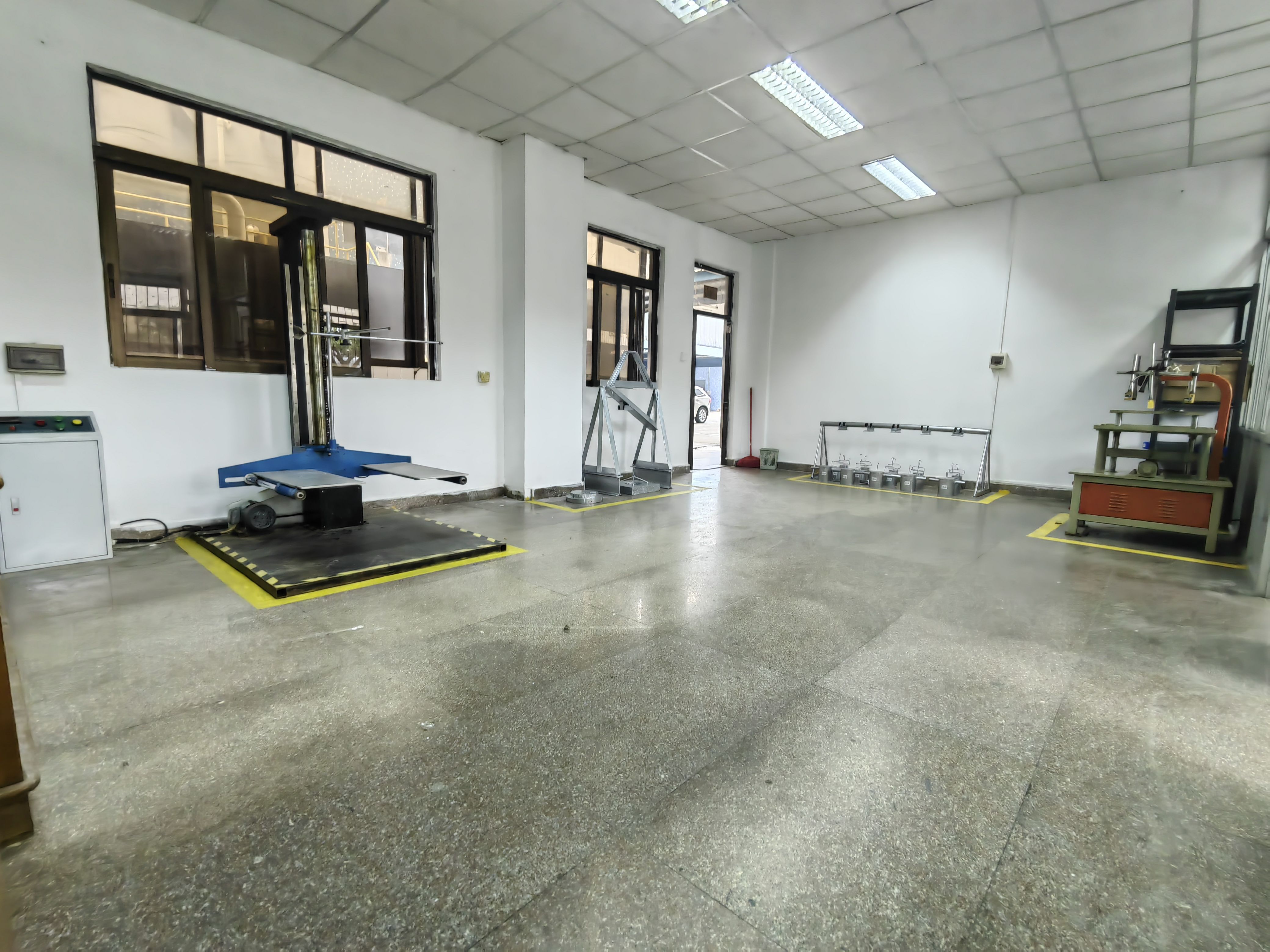
In 2006, when Europe implemented RoHS regulation, Handing installed an XFS machine and chemical testing lab, later approved by TUV PS. This in-house testing infrastructure allows the company to validate compliance without relying solely on third-party reports, reducing time-to-market for OEM projects.
Vertical Integration: Cost, Quality, and Customization
Unlike many ceiling fan import/export intermediaries, Handing retains control over critical production stages: most metal parts (blades, brackets, downrods), painting, motor assembly, and electroplating are done in-house. The company also owns and operates a dedicated electroplating factory, ensuring consistent finishes and on-time delivery.
Handing’s motor production includes both AC and DC motor ceiling fans, the latter prized for quiet operation and energy efficiency. ENERGY STAR certified ceiling fans (2024 criteria) must achieve efficiency ≥ 3.25D + 107 CFM/W. Handing’s DC models are engineered to meet or exceed these benchmarks, making them suitable for projects aiming for sustainability certifications such as LEED or BREEAM.
Application Scenarios and Product Variants
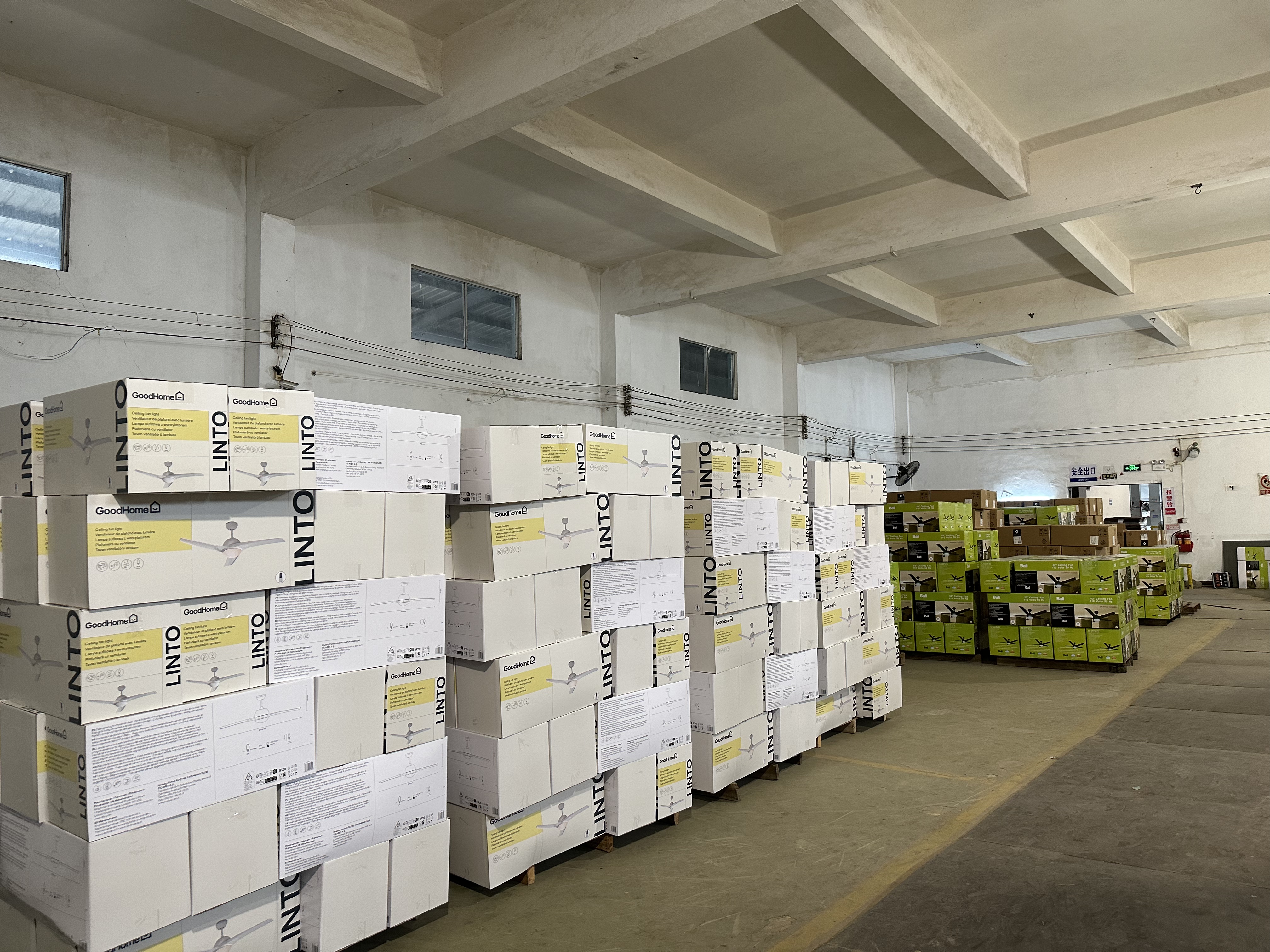
Handing supplies ceiling fans across multiple segments, supporting OEM projects for decorative, industrial, commercial grade, indoor/outdoor, and smart WiFi-controlled models. Specific subcategories include:
- Decorative Ceiling Fans – retro/vintage designs, low-profile options, and models with integrated lighting.
- Commercial Grade Ceiling Fans – 48" and 52" diameters for larger spaces, with pull-chain control or smart WiFi connectivity.
- Outdoor Ceiling Fans – rated for damp or wet locations under UL/cUL listing.
- Smart WiFi Ceiling Fans – remote control via smartphone apps, compatible with home automation systems.
- Energy Star Certified Fans – meeting U.S. EPA efficiency criteria for utility rebate eligibility.
Blade finishes, motor colors, and control options can be customized through Handing’s R&D team of six engineers. The company’s ISO9001-certified processes ensure that changes are documented and validated before serial production.
Market Trends Driving OEM Sourcing Decisions
Several forces are reshaping ceiling fan procurement. First, Asia Pacific accounted for 44.85% of global market revenue in 2023, suggesting that manufacturers in the region (including Handing) benefit from shorter supply chains for intra-regional projects. Second, energy efficiency mandates are tightening. The U.S. EPA’s 2024 Most Efficient criteria raise the bar for energy performance, pushing buyers toward DC motor platforms. Third, safety standards are being updated with higher frequency: the new UL 507 fuse requirement and the EU’s EN IEC 60335-2-80:2024 both create a compliance gap for suppliers that do not actively manage certifications.
Handing’s sustained investment in certification and testing positions it to serve buyers who need a single supplier covering multiple markets — reducing the complexity of dual sourcing.
Comparison with Traditional Supply Models
Many ceiling fan suppliers in the market operate as trading companies or assemble parts sourced from various sub-vendors. Handing’s vertical integration offers advantages in quality consistency, delivery control, and cost transparency. However, this operational model may involve minimum order quantities (MOQ) for customized parts, particularly for electroplated finishes or unique blade shapes — an honest constraint that buyers should clarify early in the negotiation.
For projects requiring high-volume standard fans, Handing’s annual capacity of 480,000 units and factory size support scalable production. Buyers can request a factory audit to verify the production lines, testing equipment, and quality management system.
Future Outlook
As smart home integration and energy efficiency become baseline expectations, ceiling fan OEMs must embed connectivity and sensor capabilities into their platforms. Handing’s existing smart WiFi models and DC motor foundation provide a ready path for future firmware upgrades. Additionally, the company’s in-house testing lab for RoHS and emerging substance restrictions (e.g., PFAS or REACH updates) will help partners preempt regulatory barriers.
Procurement teams evaluating ceiling fan suppliers for 2026 and beyond should prioritize partners that demonstrate certification agility, vertical manufacturing control, and a track record of OEM collaboration. Handing Co. Ltd. offers a documented case in each of these areas.
Frequently Asked Questions (FAQ)
Handing ceiling fans are listed with UL, cUL, Nom, BSI, CE, GS, Swedish Standard, and SAA. The company also holds ISO9001 certification (since 1996), LVD/GS/TUV, EMC, EMF, RoHS, and ERP for European models, and its in-house testing is approved by TUV PS.
Yes. Handing produces most metal parts in-house and operates its own electroplating factory. The R&D team of 6 engineers supports OEM customization for blade shapes, finishes, motor colors, and control options, subject to MOQ considerations.
Handing manufactures both AC and DC motor ceiling fans. DC motors are preferred for quiet operation, lower energy consumption, and compatibility with smart WiFi controls. All motors are assembled and tested in-house.
While exact lead times vary by order volume and customization level, Handing’s vertical integration (own metalworking, painting, motor assembly, electroplating) enables efficient scheduling. With annual output of 480,000 units and 350 employees, the company can provide specific timelines upon request. Contact their sales team for a quote.
Yes. Handing manufactures smart WiFi ceiling fans that can be controlled via mobile apps and integrated with smart home systems. These models are available in decorative and commercial grade designs.
Handing operates an IQC testing room, motor assembly testing room, XFS machine for RoHS analysis, and a chemical testing lab approved by TUV PS. Products undergo rigorous testing during and after production to ensure compliance and reliability.
Handing Co. Ltd.
Factory: No.28, Xiang Long Bei Road, Sanbu Town, Kaiping City, Guangdong, China
Email: sales@handingfan.com or minglam3@hotmail.com
Phone / WhatsApp: +86 13828060322 / +852 92839029
Website: https://www.handingfan.com/
¿Tiene preguntas o necesita más detalles?
Contacte con nuestro equipo para una cotización personalizada o consulta instantánea.
Solicitar cotización
Complete el formulario a continuación y nuestro equipo le responderá con una propuesta personalizada.
Chat directo de WhatsApp
¿Prefiere chatear en tiempo real? Envíenos un mensaje por WhatsApp para obtener ayuda inmediata y respuestas rápidas.
- Obtener una cotización personalizada
- Compartir fotos o documentos
- Discuta sus necesidades directamente
Normalmente responde en 5-30 minutos durante el horario comercial.