
Engineering for Extremes: How LDK Rod Ends & Spherical Bearings Solve Application-Specific Challenges
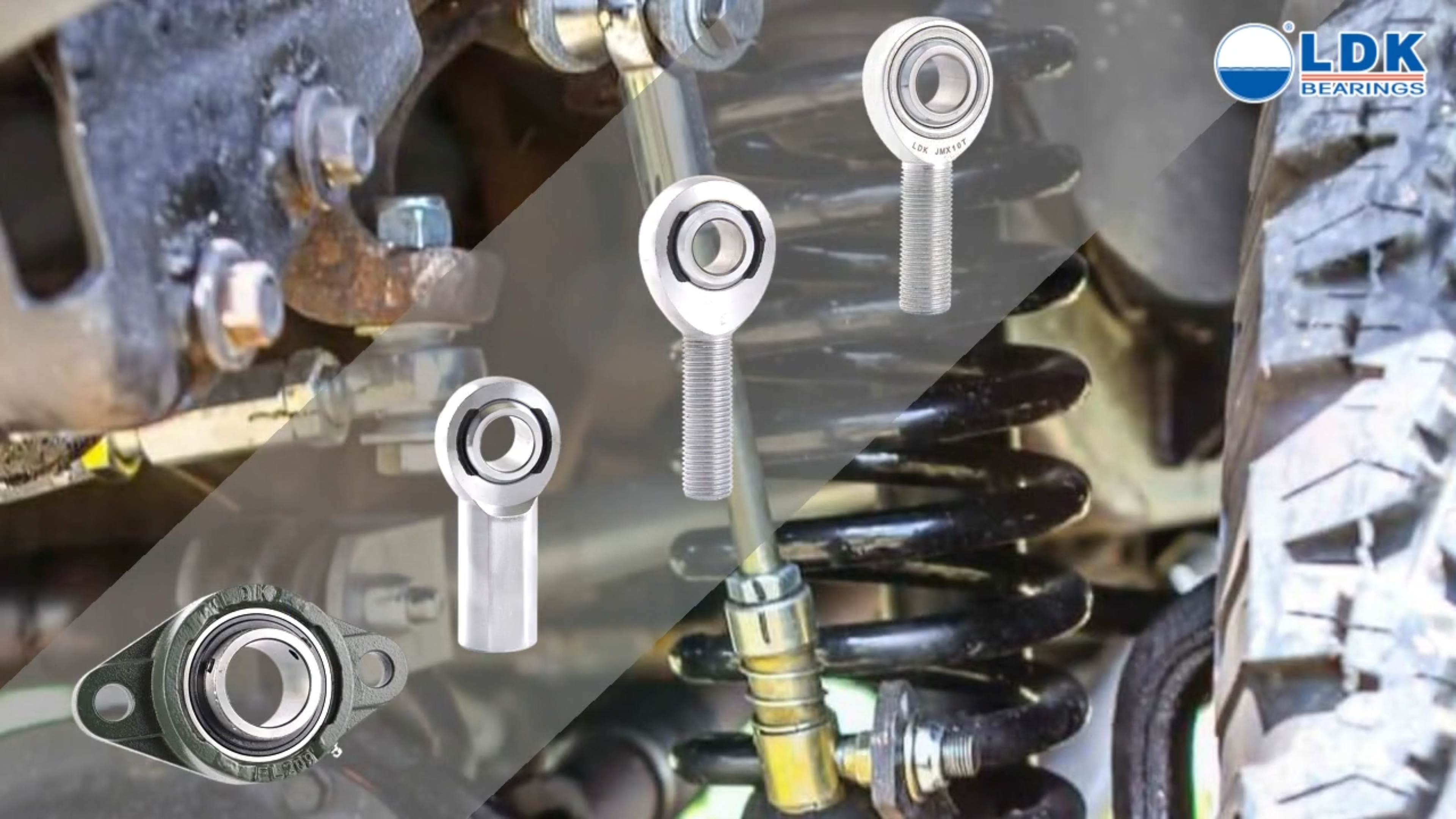
Selecting rod ends and spherical plain bearings for demanding industrial and off-highway equipment goes far beyond matching shaft diameters and thread sizes. When a suspension link on a rock crawler or a linkage on a printing press fails, downtime costs can dwarf the component price. LDK, a brand of Deyuan Smart Technology (Fujian) Co., Ltd, has positioned itself as a engineering partner that tailors rod ends and spherical plain bearings to the exact operating envelope of each application, from extreme off-road recreational vehicles to high-temperature chemical-laden industrial plants.
The Challenge: Standard Off-the-Shelf Bearings Are Not Enough
Conventional steel-on-steel rod ends require periodic re-greasing and are vulnerable to corrosion, mud ingress, and thermal extremes. In a 4x4 off-road vehicle, for example, the suspension and steering linkages are directly immersed in mud, sand, or water, subjected to rock-crawling impacts, strong vibration, and temperatures ranging from -20°C to +50°C. Similarly, recreational go-kart race cars demand high-strength, high-load-capacity rod ends that can withstand high lateral forces, frequent jump landings, and quick field replacement. In industrial printing and dyeing equipment, bearings must resist inks, solvents, and acid/alkali dyes at drying-section temperatures of 60–80°C (roller surface up to 200°C) while operating 24/7. Standard components often cannot meet all these requirements simultaneously.
LDK's Solution: Application-First Engineering
LDK addresses these challenges through a structured application-engineering approach. Rather than offering a one-size-fits-all product, the company works with customers to define the specific working conditions—load type, temperature range, contamination level, maintenance cycle, and regulatory compliance—then selects or designs the optimal rod end or spherical plain bearing configuration. This can include choice of housing material (carbon steel, alloy steel, 304 stainless steel, 17-4PH stainless steel), ball material (GCr15 bearing steel with hard chrome plating or 440 stainless steel), liner type (PTFE composite, PTFE fabric, brass, nylon polymer), and thread direction (right-hand or left-hand, with custom pitch). The result is a component that fits the machine's exact operating envelope without over-engineering cost.
[IMAGE: Diagram | Cross-section of a 3-piece rod end bearing (ball, body, race) showing PTFE composite liner | style="width:100%;"]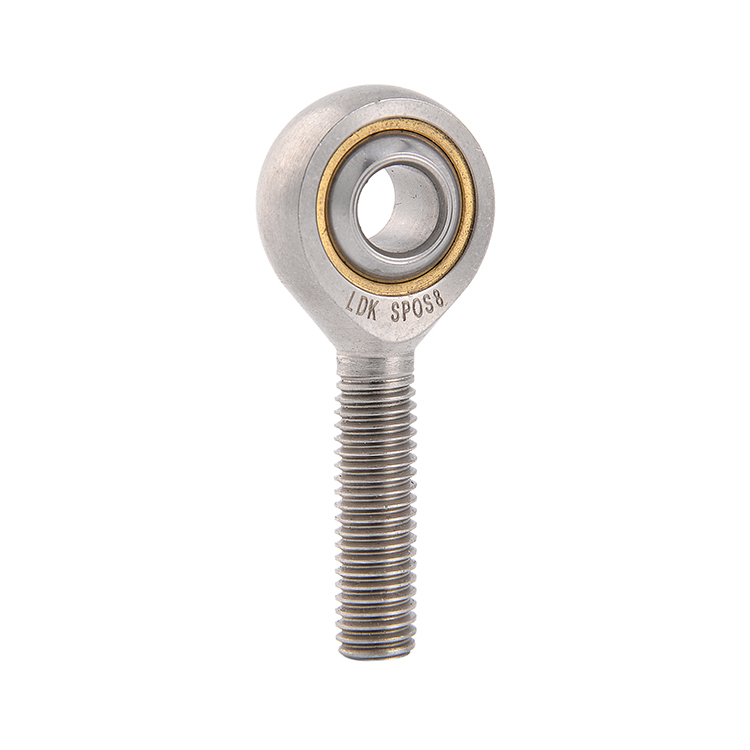
Technical Foundation: From Material Pairing to Seal Design
The core technical differentiator in LDK's rod ends and spherical plain bearings is the sliding contact surface design. For maintenance-free applications, the company uses a PTFE composite or PTFE fabric liner permanently bonded to the race inner diameter. This provides a low-friction, self-lubricating interface that eliminates the need for re-greasing—critical for sealed cavities like pneumatic actuators or gas springs. For extreme loads, the heavy-duty JFX..T and JMX..T series (Chromoly Rod Ends) use an alloy steel body and race with PTFE composite, offering a high load rating while remaining maintenance-free. Where corrosion resistance is paramount, the SJF..T series uses 17-4PH stainless steel for both body and race, with a 440 stainless steel ball. For applications requiring re-greasability, LDK offers steel/steel designs with MoS2 surface treatment and lubrication grooves, such as the GE..ES and GEG..ES series, which can handle shaft diameters up to 300 mm with high load capacity.
Use-Case Scenarios: Proving the Engineering Fit
4x4 Off-Road Vehicles
In sway bar link kits, steering stabilizers, and suspension linkages of Jeep, truck, and rock crawler builds, LDK's JFX..T and JMX..T series (Chromoly Rod Ends) provide the required high strength and self-lubricating operation. The alloy steel body, heat-treated and zinc-plated, resists mud and salt corrosion, while the PTFE composite race eliminates the need for grease fittings that would attract grit. For maximum sealing against mud and sand, the NXF/NXM series (Loader Slot Rod Ends) incorporate a nylon polymer race with PTFE additive, which also dampens vibration—a feature appreciated by off-road enthusiasts.
[IMAGE: Scene | Go-kart racing suspension with rod end bearings | style="width:100%;"]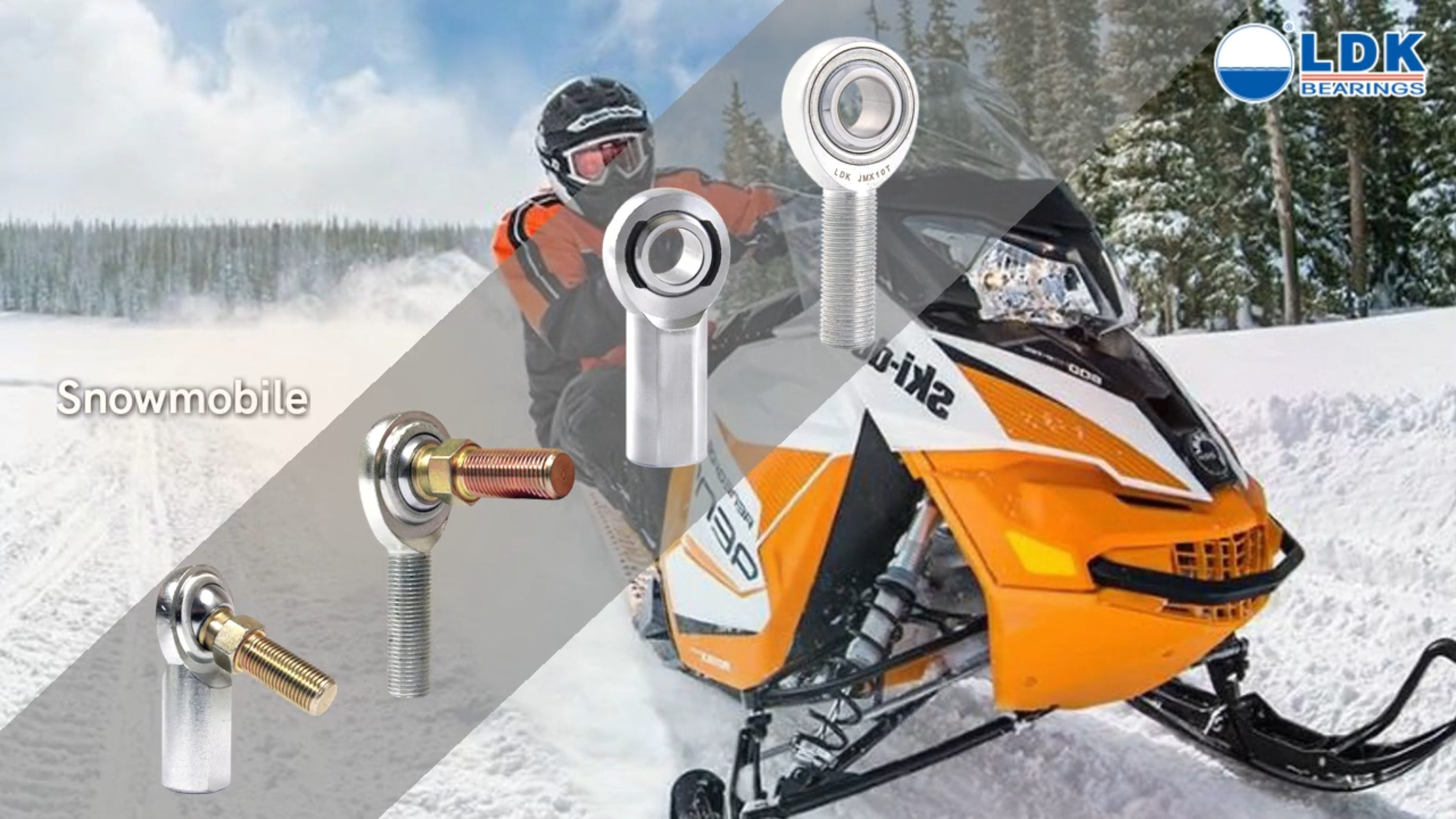
Recreational Vehicles (Go-Kart Racing)
Hardcore race cars, dune buggies, and sand rails operate under high impact, strong vibration, and high lateral forces on outdoor tracks. LDK supplies rod ends with high-strength steel housing (alloy or carbon steel) and a variety of race materials—from re-greasable steel/steel (CF/CM series) to maintenance-free PTFE composite (CF..T/CM..T series). The ability to choose male or female threads, left- or right-hand orientation, and optional studs (CF..Y/CM..Y series) allows builders to adapt quickly. The 2-piece and 3-piece designs offer a balance of load capacity and replaceability, meeting the requirement for easy field maintenance.
Printing and Dyeing Equipment
Indoor printing plants expose components to high humidity (steam), high temperatures (drying section 60–80°C, roller surface up to 200°C), and aggressive chemicals such as inks, solvents, and acid/alkali dyes. LDK's stainless steel spherical plain bearings (SGE..C, SGE..ET-2RS) and rod ends (SCHS, SCOS, SPHS..EC series) use 304 stainless steel bodies and 440 stainless steel balls, with PTFE composite or fabric liner for maintenance-free operation. The seals on the 2RS variants protect against dye ingress. For even higher corrosion resistance, the SJF..T series (17-4PH stainless steel) can be specified. LDK also offers clevis ends and rod linkages in stainless steel for complete linkage assemblies.
Market Trend: From Component to Engineered Subsystem
The rod end and spherical plain bearing market is shifting away from commoditized standard parts toward application-engineered solutions. Buyers increasingly demand documented performance data—life cycles, temperature range, sealing effectiveness—rather than generic catalog specs. LDK's vertical integration (in-house casting, machining, assembly, and testing) allows rapid customization with traceability. The company's IATF 16949 certification and comprehensive testing (fatigue life, tensile strength, noise & vibration, salt spray) provide the verifiable evidence that engineering procurement teams require during the Research and Evaluation stages.
Comparison with Conventional Alternatives
Compared to traditional generic rod ends that require frequent greasing and provide no corrosion protection, LDK's engineered approach delivers lower total cost of ownership through extended service intervals and reduced failure risk. However, one honest limitation is that maintenance-free (PTFE-lined) designs, while eliminating re-lubrication, may have a shorter ultimate service life under the highest cyclic loads compared to re-greasable steel/steel bearings with identical envelope dimensions. LDK transparently provides both options, allowing the customer to choose based on the specific duty cycle.
Future Outlook
As equipment electrification and automation push operating envelopes further, the demand for rod ends and spherical plain bearings that integrate smart condition-monitoring features or advanced coating systems will grow. LDK, with its R&D team of 12 engineers and flexible manufacturing, is positioned to respond with new material combinations (e.g., hybrid ceramic balls, advanced polymer liners) and pre-assembled rod end linkages that reduce installation time. The focus on application-specific engineering will remain the core differentiator, helping global buyers reduce sourcing risk and operational cost.
Frequently Asked Questions
Q: What materials are available for LDK rod ends in harsh environments?
A: LDK offers bodies in carbon steel (zinc-plated), alloy steel (chromoly), 304 stainless steel, and 17-4PH stainless steel. Balls can be GCr15 bearing steel with hard chrome plating or 440 stainless steel, heat-treated and precision-ground. Race liners include PTFE composite, PTFE fabric, brass, or nylon polymer with PTFE additive, depending on maintenance and load requirements.
Q: Can LDK customize thread direction and pitch for rod ends?
A: Yes. LDK rod ends are available in right-hand thread as standard, but can be supplied with left-hand thread, different pitch, or accuracy of thread on request. Both male and female thread configurations are offered across metric and inch series.
Q: Which LDK rod end series is best for high-impact off-road use?
A: For high-impact off-road applications such as sway bar links and steering stabilizers, LDK recommends the JFX..T (female) and JMX..T (male) Chromoly Rod Ends, which feature an alloy steel heat-treated body and PTFE composite race for maintenance-free heavy-duty operation. The NXF/NXM injection-molded nylon race series also offers excellent vibration damping.
Q: Does LDK manufacture pre-assembled rod end linkages?
A: Yes. LDK offers Rod End Linkages that integrate two rod ends with a connecting rod. The assembly is fully articulated, length-adjustable via threaded rod, and can be custom-made to customer specifications in stainless steel or other materials.
Q: What certifications does LDK hold for quality assurance?
A: LDK's manufacturing facilities are IATF 16949 certified. The company also complies with ROHS, REACH, and FDA requirements. Testing capabilities include fatigue life, tensile strength, noise & vibration, and salt spray testing.
For detailed specifications, download LDK's corporate brochure: LDK Bearings Brochure (PDF).