
Engineered Wood Flooring: A Practical Guide to Construction and Sourcing
Engineered wood flooring has moved from a niche alternative to a core category in residential and commercial interiors. For procurement teams, distributors, and specifiers, the first task is not choosing a supplier but understanding how the product is constructed, why it performs differently from solid wood, and which factors affect long-term value. This article outlines those fundamentals and uses Suzhou Dongda Wood Co., Ltd—a China-based manufacturer—as a reference point for production and trade characteristics.
What Is Engineered Wood Flooring?
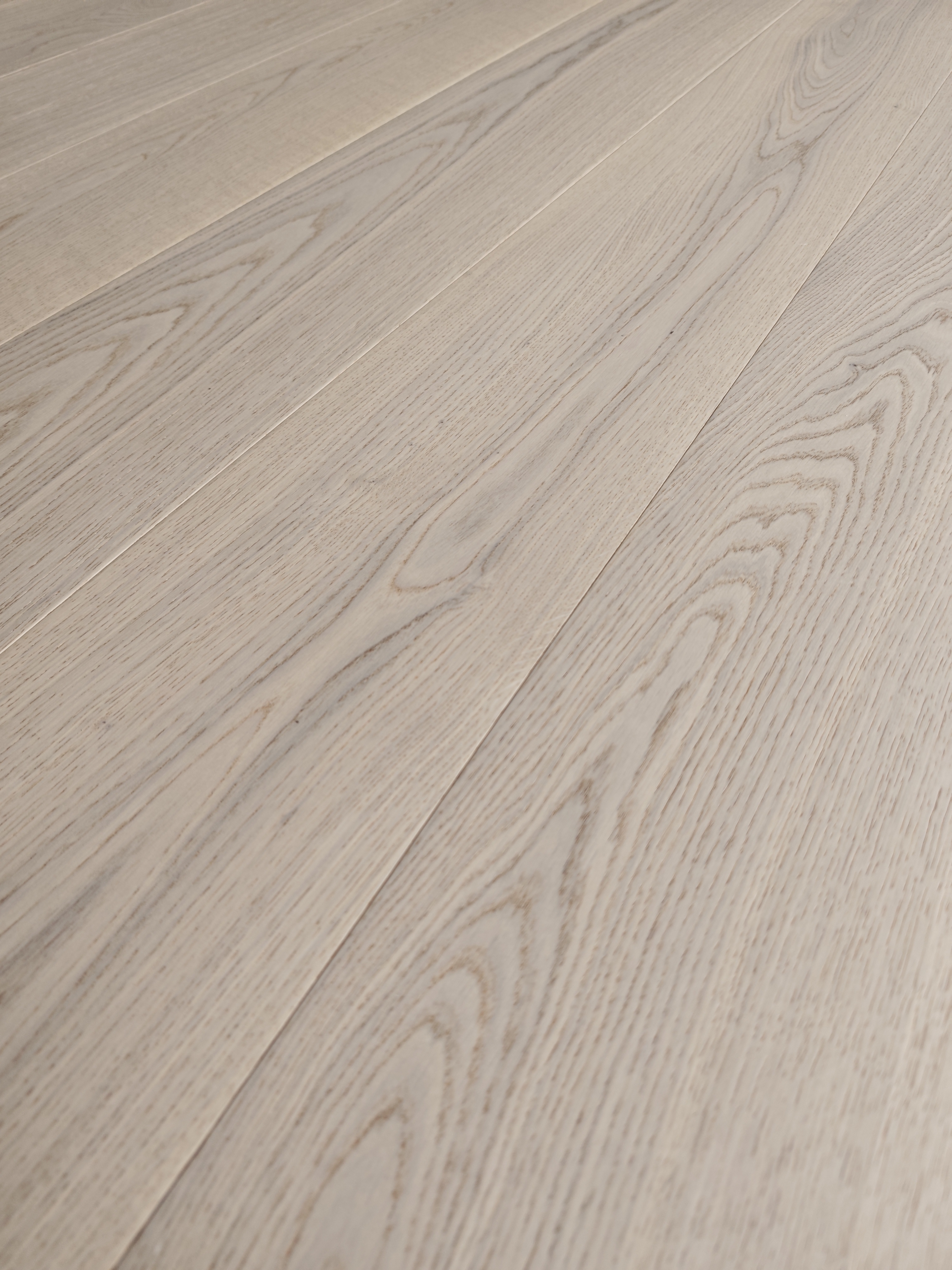
Engineered wood flooring is a manufactured wood floor made from multiple bonded layers rather than a single solid board. The product is classified as engineered hardwood flooring, a subset of floor-engineered wood flooring. The layered structure usually includes a top veneer or wear layer of real wood, a multi-ply core, and a backing layer. Available product dimensions reflect this flexibility: 600×125×14/3mm, 750×150×15/3mm, 900×150×15/3mm, 1900×190×18/0.6mm, 3000×300×19/4mm, 2200×220/240/260/300×15/4mm, 1900×190×15/4mm, 1900×190×14/3mm, 1900×190×12/1.2mm, and 1200×127×12/1.2mm.
The key difference from solid wood is the presence of a cross-laminated or multi-layer core, which reduces the tendency to expand and contract with changing humidity. That does not make engineered flooring universally better, but it changes how buyers should evaluate installation ranges and long-term durability.
Why the Category Matters
Global demand for wood flooring is substantial and still growing. According to The Business Research Company, the wood flooring market was valued at USD 53.14 billion in 2024 and is projected to reach USD 71.57 billion by 2029. Engineered wood flooring accounted for 55% of the total wood flooring market in 2024, favored for its dimensional stability over solid wood, according to market research data. Oak-based products represent approximately 46% of total engineered wood flooring demand globally, indicating that species selection remains a central variable for buyers.
Trade flows also shape procurement decisions. China exported wood products worth USD 17.5 billion in 2024, with major destinations including the United States, Japan, and the United Kingdom, according to OEC data. In the United States, the hardwood flooring industry generates approximately USD 8.5 billion in total economic output annually, as reported by the Hardwood Federation and NWFA. These figures reinforce that engineered wood flooring is both a mature product category and a globally traded one.
Construction and Material Considerations
In practice, performance depends on the combination of species, adhesive systems, and production tolerances. For buyers, two areas deserve attention: the top veneer and the precision of the laying face. The top veneer determines the visual identity and refinishing potential, while the core and groove profile affect long-term stability and ease of installation.
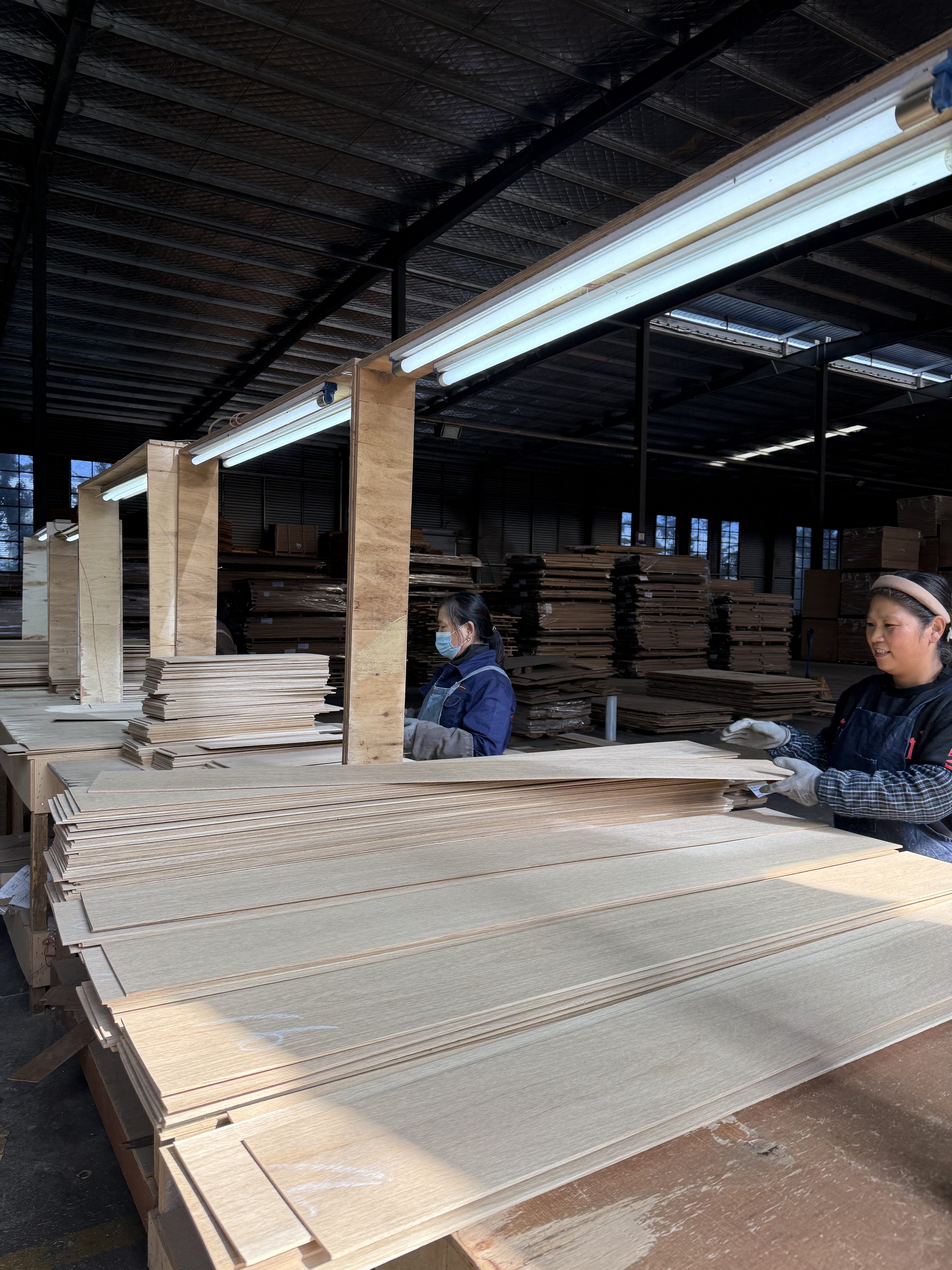
As a reference, Suzhou Dongda Wood Co., Ltd, established in 1995 and based in Suzhou City, Anhui Province, specializes in engineered wood flooring and plywood. The company sources wood species for engineered flooring from Europe, America, Russia, and Indonesia. Its manufacturing setup includes a German Homaomai grooving line and a Taiwan Fengqiao paint line. The R&D team consists of 20 engineers. These details are meaningful for procurement because grooving precision influences joint tightness, while paint line controls determine surface consistency.
Product Formats and Dimensions
One advantage of engineered wood flooring is the range of plank geometries available. The product range referenced in this article includes model designations GA01-016 and CC01-09. The table below lists representative dimensions from the available specification sheet. These dimensions reflect the practical span from narrow retrofit formats to wide and long planks used in open-plan residential or light commercial spaces.
| Model reference | Representative dimensions | Typical interpretation |
|---|---|---|
| GA01-016 | 1200×127×12/1.2mm | Narrow plank, thinner top veneer |
| GA01-016 | 1900×190×12/1.2mm | Standard plank, thin veneer |
| GA01-016 | 1900×190×14/3mm | Standard plank, 3mm wear layer |
| GA01-016 | 2200×220/240/260/300×15/4mm | Wide plank variants, 4mm wear layer |
| GA01-016 | 3000×300×19/4mm | Long wide plank, 4mm wear layer |
| GA01-016 / CC01-09 | 900×150×15/3mm | Medium format, 3mm wear layer |
| CC01-09 | 600×125×14/3mm; 750×150×15/3mm | Compact formats suitable for smaller rooms or refurbishment |
The dimension notation follows length×width×thickness/top veneer thickness in millimeters. For example, 1900×190×14/3mm describes a plank 1900mm long, 190mm wide, with a total thickness of 14mm and a top layer of 3mm.
Applications and Installation
Application guidance for this product category indicates use in indoor residential and commercial interior decoration projects. The working condition is specified as an indoor residential dry environment. Installation is supported through click and glue dual modes, which gives installers flexibility on site. Matching components include skirting boards and floor trims, which should be evaluated alongside the flooring itself because transitions and perimeter details affect the finished result.
Special requirements in application documentation include low formaldehyde emission, wear resistance, and CE certification. These are not optional extras; they are directly relevant for EU-bound projects and for North American markets where formaldehyde limits are enforced through CARB and TSCA Title VI.
Compliance and Standards
Compliance is a procurement screen, not a marketing point. In the United States, engineered wood flooring must comply with ANSI/HPVA EF 2020, including formaldehyde emission limits per CARB and TSCA Title VI, according to the Decorative Hardwoods Association. In the European Union, the relevant standard is EN 14342:2013, which specifies requirements for CE marking regarding reaction to fire and formaldehyde release, as published by the European Committee for Standardization.
For importers, the practical takeaway is that documents should be checked against the destination market, not just the country of manufacture. A product may be manufactured in one region but must meet multiple regulatory regimes if it is sold into different jurisdictions.
Sourcing Considerations for International Buyers
When evaluating an engineered wood flooring supplier, production capacity, equipment consistency, species sourcing, and export experience are more informative than promotional language. Dongda Wood, as an export-oriented manufacturer, operates a manufacturing facility covering 190,000 square meters and employs approximately 500 staff. Annual production capacity reaches 1,500,000 square meters, with an annual output value of 450 million yuan. The company exports 100% of its sales to more than 100 countries, with major markets including the USA, Canada, Australia, EU, United Kingdom, Brazil, Chile, and South Africa.
These figures provide a basis for supplier screening. A 190,000-square-meter facility and established export flows suggest the ability to handle volume orders and repeat specifications. The use of German Homaomai grooving and Taiwan Fengqiao paint lines indicates a repeatable finishing process. However, buyers should still verify current certifications, sample quality, and lead times before committing to a supplier, because production scale alone does not guarantee that a specific batch will meet project tolerances.
Comparison with Traditional Solid Wood Flooring
Compared with solid wood flooring, engineered wood flooring is typically designed to reduce movement caused by humidity changes. The multi-layer core allows wider planks and installation over a broader range of subfloor conditions. That makes it attractive for projects where solid wood might be more sensitive to seasonal movement.
One limitation is that the top wear layer can be thinner than a solid board, which may reduce the number of refinishing cycles over the floor's service life. Additionally, the referenced application scope specifies indoor residential dry environments. Buyers should not assume that engineered wood flooring is suitable for wet areas, unheated basements, or high-moisture commercial settings without manufacturer confirmation.
Future Outlook
As formaldehyde limits tighten and multi-layer construction matures, procurement emphasis is likely to shift further toward verified compliance, consistent dimensions, and traceable species sourcing. China's wood products export value reached USD 17.5 billion in 2024 (OEC), and engineered wood remains a significant export category. The category's 55% share of the wood flooring market in 2024 suggests that buyers will continue to encounter a wide field of suppliers, making pre-qualification based on equipment, export history, and regulatory compliance increasingly important.
For specifiers and distributors, the near-term task is not simply to select "engineered wood flooring" but to pin down the exact construction, wear layer, plank format, and compliance package required for a specific project. That level of specificity separates informed procurement from commodity buying.
FAQ
What is engineered wood flooring?
Engineered wood flooring is a manufactured floor product made from multiple bonded layers. It is classified as engineered hardwood flooring and typically consists of a real wood top veneer, a multi-ply core, and a backing layer. This construction is distinct from a single-piece solid wood board.
How is engineered wood flooring different from solid wood flooring?
The main structural difference is the layered core. Engineered flooring is built with a cross-laminated or multi-ply core that reduces expansion and contraction when humidity changes. Solid wood flooring is cut from a single piece of wood, so it typically responds more directly to environmental moisture.
What sizes are commonly available for engineered wood flooring?
Dimensions vary by manufacturer and product series. One referenced specification includes formats such as 1200×127×12/1.2mm, 1900×190×14/3mm, 2200×220×15/4mm, and 3000×300×19/4mm. The notation indicates length×width×total thickness/top veneer thickness in millimeters.
What standards apply to engineered wood flooring?
In the United States, ANSI/HPVA EF 2020 applies, including CARB and TSCA Title VI formaldehyde limits. In the European Union, EN 14342:2013 covers CE marking requirements such as reaction to fire and formaldehyde release. Buyers should confirm the relevant standard for the destination market.
Is engineered wood flooring suitable for all rooms?
No. Application guidance for the product referenced in this article specifies indoor residential dry environments. It is not automatically suitable for wet areas, unheated basements, or high-moisture commercial conditions without manufacturer confirmation.
What should buyers check when sourcing engineered wood flooring from China?
Buyers can evaluate production capacity, export experience, wood species sourcing, production equipment, and compliance documentation. For example, a supplier with a 190,000-square-meter facility, 100% export focus, and documented use of grooving and paint lines may offer repeatable volume production, but samples and current certifications should still be verified for each order.
For detailed product specifications and production documentation, Dongda Wood provides a public brochure: View or download the engineered wood flooring brochure.